Retail News CRM

Tag: B2B

  • API launches online B2B hub for pharmacies to source products

    API launches online B2B hub for pharmacies to source products

    Australian Pharmaceutical Industries (API) has launched an online B2B hub – MyAPI – for its wholesale pharmacy customers.

    API is a wholly-owned subsidiary of Wesfarmers Health and has more than 4000 wholesale pharmacy customers.

    According to the company, the platform offers “enhanced functionality and an elevated experience,” allowing pharmacies to research products, place orders, identify stock on hand, obtain pricing and deals, and manage their accounts.

    It also facilitates stock returns, backorder management, houses key documents and provides customer support and communications.

    “By investing in technology like MyAPI, we’re ensuring pharmacy owners have 24/7 access to critical products and essential information at their fingertips,” said Doug Swan, executive GM of wholesale and pharmacy services at Wesfarmers Health.

    “This means more convenience and flexibility, and empowers them to serve their communities with confidence knowing they have what patients need, when they need it.”

    In addition to the main features, the e-hub also supports compliance with Community Service Obligations for pharmaceutical wholesalers, including the timely delivery of Pharmaceutical Benefits Scheme items within 24 hours.

  • B2B e-commerce platform Buy2Sell reaches 1 mln hits

    B2B e-commerce platform Buy2Sell reaches 1 mln hits

    According to statistics for Buy2Sell’s Google Analytics in 2021, the platform recorded over half a million visits and 140,000 registered users.

    In 2020, the platform reached about 400,000 visits and 56,000 registered users. In two years, it has recorded one million hits and more than 200,000 registered users.

    According to Buy2Sell’s importation data for the second semester of 2021, Buy2Sell Vietnam imported more than $22 million of goods through their global network of suppliers. These goods are destined for large local buyers using the platform. The most popular items are wine, nutritional food and cosmetics.

    “We are in a growth phase. Our revenue stream provides Buy2Sell steady capital. Currently, we have received interesting offers from large investors. However, we are very humble right now in speaking about evaluation. Our focus is to deliver value, quality of service, brand influence in the community and efficiency. E-commerce is our primary goal,” Harry Morant, Buy2Sell CEO, shared.

    While most people use Google and other search engines to locate products, businesses did not have the same capabilities in the past. However, this is changing thanks to the increasing number of B2B eCommerce marketplace platforms. Now more than ever most businesses, large or small, heavily rely on B2B E-commerce marketplaces.Buy2Sell was established in 2015 and belongs to the group LLHP PTE LTD, Singapore.

    Vietnam stands to benefit as the B2B E-commerce market with the highest growth rate in Southeast Asia, reaching $13.2 billion in 2020, and is expected to grow at a CAGR of 43 percent by 2025. Buy2Sell plans to build a faster and more user-friendly platform and expand its sales, marketing, and technology teams to drive rapid growth.

  • Multi-Currency Wallet YouTrip to Grow B2B Offerings

    Multi-Currency Wallet YouTrip to Grow B2B Offerings

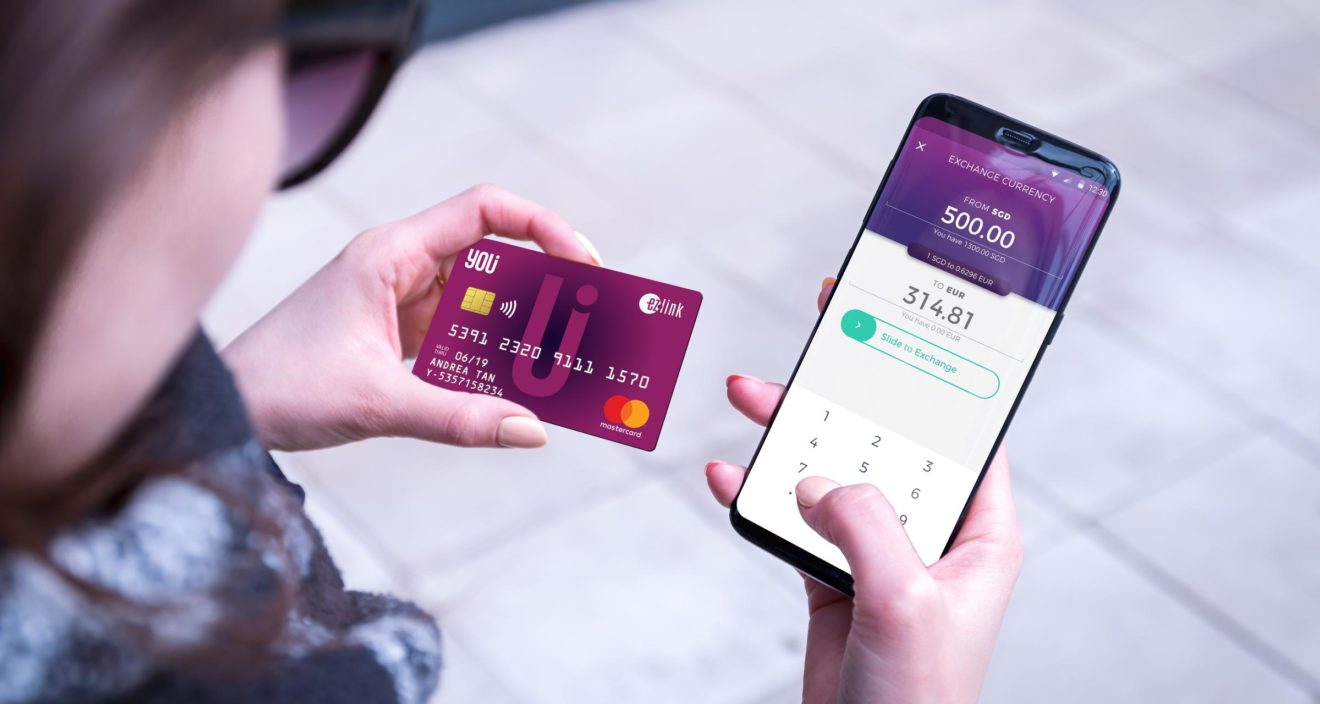
    Singapore-based YouTrip aims to scale its product offerings, including venturing into the B2B payments space, and accelerate its expansion across Southeast Asia.

    YouTrip has raised $30 million in a Series A funding round driven by returning investors from major Asian family offices and prominent financial technology investors, bringing its total funding since launch to $60 million, it said in an announcement on Tuesday.

    The company has set its sights on the growing B2B payments space, as it said SMEs are showing a strong willingness to adopt digital banking services, specifically for cross-border payments. To cater to this segment, it will be rolling out its YouBiz product in Singapore in the first quarter of 2022, and with plans to bring it to five other Southeast Asia countries in the next 12 months. It has already received over 1,000 sign-ups in a beta launch.

    It is a segment with a deep market, as companies increasingly operate in a distributed and borderless manner and we expect their cross-border payment needs to go up, Arthur Mak, co-founder said in the announcement.

    This latest round also gives us the resources to strengthen our multiple growth engines to stay resilient and well-primed for expansion into new vistas, Caecilia Chu, co-founder, said.

    YouTrip said its transaction volume has rebounded to pre-COVID levels, driven by strong traction in cross-border e-commerce transactions and return of travel spending. Exponential growth is expected in the upcoming months following the opening of more Vaccinated Travel Lanes in Singapore and progressive return of regional travel.

    According to YouTrip, it has processed over $800 million in card spending globally, with almost 20 million transactions and over 1.5 million app downloads.

  • B2B Payments Firm Spenmo Receives Funding for Regional Build-Out

    B2B Payments Firm Spenmo Receives Funding for Regional Build-Out

    The Singapore-based startup has secured one of the largest Series A funding rounds to date in the country, which will allow it to expand in Southeast Asia.

    Spenmo has announced a $34 million raise in a Series A investment round led by New York-based private equity and venture capital firm Insight Partners, according to a statement on Wednesday.

    The fundraising round, which was oversubscribed by a multiple of five, saw the participation of Lee Fixel’s Addition, Salesforce Ventures, Alpha JWC, Global Founders’ Capital, Broadhaven, Operator Partners and Commerce Ventures, alongside several high-profile angel investors.

    Spenmo helps businesses manage payments, and its products include smart corporate cards and automated bill payments. It graduated from the Y-combinator startup accelerator in 2020. Since its launch in Singapore last year, it has expanded across Southeast Asia, bringing on several thousand customers, Spenmo said.

    The company said it sees growth opportunities in the region, which has over 20 million small and medium sized businesses that  largely do not use any software to manage their payables other than piecemeal solutions such as spreadsheets or manpower.

    Our space has typically been thought of as a back-office function, but finance and accounts payables is a critical part of running a business, Mohandass Kalaichelvan, CEO and Founder of Spenmo, said.

  • Online Brokerage Launches B2B Platform

    Online Brokerage Launches B2B Platform

    Xiaomi-backed Tiger Brokers is expanding its reach into the institutional segment with the launch of a business-to-business (B2B) platform.

    Tiger Brokers is partnering Singapore-based financial advisory firm PFPFA as it launches a B2B platform for institutional partners, the company announced on Friday.

    Under the partnership, PFPFA clients will have direct access to Tiger’s online brokerage and platform, which will include technological solutions such as advanced portfolio and risk management tools.

    Tiger Brokers said it hopes to build on the success of Tiger Trade, its Singapore consumer platform that currently has close to 300,000 users since launching 1.5 years ago. It plans to rapidly grow its B2B segment in the coming months by offering its services to more financial institutions, including robo-advisors, banks, neo-banks and fund managers, the announcement said.

  • Nokia and LG Uplus to test 5G B2B digital platform in South Korea

    Nokia and LG Uplus to test 5G B2B digital platform in South Korea

    Nokia has today announced that it will conduct a 5G Business-to-Business (B2B) digital platform trial for LG Uplus. Once deployed, the platform will allow LG Uplus to reduce time-to-market for launching 5G-powered services to its enterprise and business vertical customers. The platform will also enable LG Uplus to address new business segments, including Industry 4.0, and smart factory. After deployment, the solution will promote the use of 5G by enterprises and verticals to grow their business, aligning with the Korean Government’s Digital New Deal initiative.

    The proof-of-concept test of the 5G B2B digital platform will be completed in two phases starting in February. While the first phase involves a demonstration in the Nokia Lab, the second phase with a field trial is planned in the LG Uplus Regional Operation Center in KyungNam.

    Nokia’s solution is based on multi-domain technology and ensures full automation and near real-time delivery of services. The solution includes a service platform powered by Nokia’s Digital Operations software, Cloud Operations Manager, Network Exposure Function, Registers, Cloud Packet Core, Software Defined Networking, and gNB (5G version of eNodeB), across Nokia’s cloud platform.

    LG Uplus will use the platform to cost-efficiently automate the design and deployment of 5G network slices for the delivery of new services. In addition, LG Uplus’ enterprise customers will be able to leverage 5G capabilities to enhance their business and operational efficiency leading to overall economic gain.

    The service will give LG Uplus customers the flexibility to directly control and manage the platform to meet their needs. Further, it will help LG Uplus offer newer use cases such as Smart Factory and Smart Harbor with 5G wireless connectivity and associated services like network slicing.

    Jaeyong Seo, Vice President of Smart Infrastructure Business Unit, LG Uplus, said: “We are committed to providing best-in-class and innovative services to our customers and this trial is a crucial step in this direction. Once deployed, Nokia’s 5G B2B digital platform will help us expand our enterprise business by allowing us to provide new use cases rapidly. Nokia is our trusted partner and we look forward to working with them on this important trial.”

    Kevin Ahn, Head of Korea, Nokia, said: “We are excited to conduct this pathbreaking trial for LG Uplus to enable its enterprise customers to improve business processes with 5G. Nokia’s 5G B2B digital platform will allow LG Uplus to transform its B2B service creation with agility and automation and delight its enterprise customers with new use cases and operational excellence.”

  • Visa expands acceptance of B2B payments using Stripe Connect

    Visa expands acceptance of B2B payments using Stripe Connect

    Visa, the world’s leading digital payments technology company, has teamed up with Stripe, a technology company that builds the economic infrastructure for the internet, to introduce a new set of solutions to help businesses pay and be paid on time.

    The new solutions will be on the Visa Payables Automation platform, which allows buyers to enroll, manage and pay suppliers digitally with a Visa commercial card. This new feature, which is powered by Stripe Connect, the technology company’s solution for multi-sided marketplaces and platforms, enables buyers on Visa Payables Automation to pay suppliers who are unable to accept digital payments easily and securely through the use of a virtual Visa card. This helps bring suppliers who are not plugged into the traditional banking infrastructure into the digital economy.

    “When a buyer needs to pay a supplier, the enhanced Visa Payables Automation platform allows seamless digital payments experience. The supplier will be prompted to register with Stripe Connect, provide a bank account number, and start accepting payments,” said Chavi Jafa, Head of Business Solutions, Asia Pacific, Visa. “Migrating to digital payments benefits both buyers and suppliers, as it eliminates manual processing and enhances reconciliation. This improves productivity while reducing errors and fraud. It also allows buyers and suppliers to better manage their working capital, utilizing a Visa Commercial Card.”

    “We’re excited to see Visa leverage the power of Stripe Connect to facilitate complex payments flows,” said Noah Pepper, Stripe’s Business Lead for APAC. “Less than 10 percent of commerce is online today, and that number is much lower in the B2B space. And when you consider the web has been around for over a quarter of a century, it’s clear that we’ve barely scratched the surface! We are always excited to work with forward-thinking companies in developing better tooling for businesses wanting to accelerate their shift to online.”

    Citi client, Jebhealth is the first user of the integrated Visa Payables and Stripe Connect solution.

    As an online marketplace for healthcare services, Jebhealth uses the solution to facilitate payments for its clients to healthcare service providers on its platform. By using the solution, health service providers are onboarded, just once, via Stripe Connect to become card-accepting merchants. This novel solution is now rolled out in phases and will benefit individuals, corporates and healthcare providers, and ecosystem partners in a virtual integrated pay-out network

    “The Jebhealth team believes strongly in value creation, innovation, and social good. In the backdrop of COVID-19 pandemic, the whole solution was conceptualized, developed, and launched with the help of Citi, Visa, and Stripe, while working from home,” said Jimmy Boey, Founder & CEO, Jebhealth. “With this integrated digital payment method, employees, students, and domestic helpers no longer need to bring a medical chit or cash to pay at the clinic desk whenever they visit the clinics for check-ups. This ensures every clinic visit is shorter and smoother and less exposure from the community.”

    When Jebhealth initiates a payment, a single-use virtual Citi-Visa commercial card is generated. The virtual card is then sent to the receiving healthcare service provider, after which the provider ‘charges’ the virtual card to accept and complete payment through their Stripe Connect account.

    By using a Citi-Visa virtual card, in addition to enabling digital payments, the solution ensures added safety and security. Jebhealth is able to set transaction limits on the virtual cards, including permitted current and merchant types.

    This new service is now available in 30 markets around the world.

    Tarun Minglani, Asia Pacific Head of Commercial Cards, Treasury and Trade Solutions, Citi, said, “Citi is committed to offering our clients innovative B2B payment solutions, enabling them to operate more efficiently in an increasingly digitized business environment. Our Commercial Cards business is active across 14 markets in Asia Pacific. Underpinned by digital solutions and tools, we offer our clients best-in-class products and services through our proprietary solutions as well as through our partnerships in the region. The Visa Payables Automation platform optimizes the payments process while reducing points of friction that are traditionally associated with B2B payments.”

    In 2019, Visa’s commercial card solutions generated more than US$1 trillion in payment volume, making Visa the largest card payment network for B2B payments in the world[1]. As payments migrate away from traditional plastic cards, Visa is working with its partners around the world to enable new experiences that are based on virtual cards and extending its network to collaborate with new players.

  • NuOrder launches virtual showroom as Asia sales surge

    NuOrder launches virtual showroom as Asia sales surge

    B2B e-commerce platform Nuorder is launching a virtual showroom service for brands to showcase products via an immersive online experience.

    About 40 percent of NuOrder’s sales of around US$1 billion per month come from markets outside North America and a spokesperson told Inside Retail Asia that Asia is a standout growth market for the company. The converse is among the brands currently using the platform in Mainland China.

    The move is intended to assist fashion, apparel, and outdoor brands and retailers struggling to do business during the coronavirus pandemic by allowing consumers the ability to see 360-degree views of products. The service will be available from next month.

    Product imagery will enable buyers to interact with products and gear as if seeing it in person, looking at items from all angles and zooming-in to see details close-up. Brands using the service will be able to add premium content such as runway looks, video footage, collection notes, inspirational imagery, and designer interviews to their pages on the platform.

    The firm will also offer its brand and retail partners access to a global photography network to support 360-degree product photography needs.

    “We are in a period of great change in our industry,” said NuOrder co-CEO and co-founder Heath Wells. “Our customers need a solution to present and sell their products in the absence of any travel. With the uncertainty of physical markets, trade shows and fashion events, we know that the virtual showroom will help solve the needs for brands and retailers alike during this critical time.”

  • Hong Kong Fintech Launches B2B Payments Gateway to China

    Hong Kong Fintech Launches B2B Payments Gateway to China

    Harbour & Hills has made a strategic acquisition that will allow it to facilitate USD and other major currencies’ payments to China.

    Harbour & Hills Financial Services (H&H) has acquired a controlling stake in Global Envoi, a payments processor with strong capabilities in clearing payments to China, the Hong Kong-headquartered B2B payments service provider announced on Wednesday.

    The acquisition, made for an undisclosed sum, gives H&H a vital channel to process commercial payments in USD, EUR, JPY, GBP and other major currencies to all major banks in China through Global Envoi’s exclusive partnership with Metropolitan Bank (China) for processing B2B payments in China.

    While China is the major trading partner for almost all countries, sending payments to China is still challenging for businesses, especially for the SMEs/VSEs, said Rahul Tripathi, CEO of Harbour & Hills.

    Tripathi said clients can now make direct payments to their trade partners in China in the currency of their choice with its access to the PBoC central clearing system.

    Founded in 2010, H&H offers FX clearing services in several major currencies to destinations including Indonesia, Korea and India. The firm processed $12.3 billion in cross-border money transfers in 2019.


  • DBS Launches QR-Based B2B Payments

    DBS Launches QR-Based B2B Payments

    DBS helps further propel Singapore’s cashless movement by introducing quick response code-based payments for the business-to-business segment.

    The bank hopes to boost payment speeds and is piloting the solution first in the F&B industry – a sector with limited penetration with nine out of 10 payments still being made through cash or bank transfers, according to a statement. The bank developed the solution after nearly 20 digital workshops with F&B businesses to identify bottlenecks in the payment process.

    In the new solution, which executes payments through its fund transfer service PayNow, users can consolidate multiple invoices per transaction and make full or partial payments for multiple invoices. This is also expected to effectively help improve credit terms due to the instantaneous and flexible nature of the process. The bank will roll out the new payment solution to the broader F&B ecosystem, logistics companies, and traders by the end of 2020.

    Aside from the retail segment, SMEs are expected to be a major growth driver for digital players in finance given a large gap between needs and demand.

    Many SMEs we speak to want to realize productivity gains by becoming more digital but don’t have the expertise or infrastructure to do so,» said Joyce Tee, group head of SME banking at DBS. «The lender is looking to understand SMEs’ pain points and then lay the foundation for enhanced payments capabilities one sector at a time.

    In November last year, Singaporean rival UOB also launched a payment solution aimed to capitalize on the cashless market for businesses. UOB’s Mcollect is a QR-based solution that enables instant payment and reconciliation to improve what it estimates is otherwise, on average, a four-day manual process.

  • Shiseido and Alibaba Collaborating to Please Chinese Customers

    Shiseido and Alibaba Collaborating to Please Chinese Customers

    Japanese cosmetics giant Shiseido on Sunday become the world’s first multinational cosmetic company to open a dedicated office in Hangzhou to work with Alibaba Group and co-create products specifically tailored for Chinese consumers.

    The Shiseido and Alibaba office, within walking distance of the Alibaba Xixi headquarters, will house a team of around 20 Shiseido employees by next year. The purpose is to tighten collaboration with Tmall, Alibaba’s B2C marketplace and better position Shiseido in China, said the makeup company’s China region CEO Kentaro Fujiwara.

    “China is Shiseido’s biggest and most-important market [outside of Japan]. By combining Alibaba’s strengths in digitisation and consumer engagement with Shiseido’s world-class standards in research and development, we can create products that can precisely capture the appetite of the Chinese consumer,” he said. “I hope this unprecedented collaboration will pave the way for further innovations for the entire [Shiseido] group.”

    According to Shiseido, its China business saw the fastest acceleration in 2018 with sales growth of 32.3 per cent year-on-year to RMB 11.6 billion (US$1.73 billion). China accounted for 17.4 per cent of Shiseido’s total net sales last year, making it the profitable country market, following its home market Japan. Shiseido said it expects e-commerce to generate 40 per cent of its China sales by next year.

    “Without a doubt, whether it be e-commerce or digital innovation, Alibaba is the leader. Alibaba is one of the most important strategic partners for Shiseido China as well as for the entire group,” said Fujiwara.

    Mike Hu, president of Tmall’s fast-moving consumer goods division, said Shiseido’s leadership position in the industry and its quick adaptation to digital transformation is a common value shared by Alibaba.

    “Our primary mission is to enable others, and we are always eager to work with the world’s leading companies to help them bring their best products into the China market in the most effective and efficient way. This definitely includes Shiseido, a reputable brand that is synonymous with high standard and high quality,” he added.

    “The opening of the Shiseido and Alibaba office represents an important and historical milestone of our long-term collaboration,” Hu said.

    One of Shiseido’s cosmetics brands, Za, opened a Tmall flagship store in September 2011. Since then, 12 flagship shops and 15 major brands also launched on the platform. Fujiwara said there is a plan to bring Shiseido’s mother-and-baby product brand into China later this year via Tmall.

  • KBank-Visa to pilot blockchain based B2B payments

    KBank-Visa to pilot blockchain based B2B payments

    Visa announced Kasikornbank is the first Thai financial institution to join the Visa B2B Connect pilot program. Visa B2B Connect is a new platform that Visa is developing to give financial institutions a simple, fast and secure way to process cross-border business-to-business payments.  The pilot is currently in the Bank of Thailand Regulatory Sandbox.

    Kasikornbank is the first Thai bank to be included in the pilot designed to simplify the cross-border payments.  Globally, Visa has partnered with several other financial institutions on the pilot.

    Suripong Tantiyanon, Country Manager, Visa Thailand said, “Visa is proud that we have a representation from a Thai financial institution in the pilot program.  Building on the enterprise blockchain technology, Visa B2B Connect is a new transaction platform designed for the exchange of high-value international payments between participating banks on behalf of their corporate clients. Managed by Visa end-to-end, Visa B2B Connect combines Visa’s core capabilities in security, governance and distributed ledger technology.”

    Siriporn Wongtriphop, First Senior Vice President, Kasikornbank said, “Kasikornbank is dedicated to delivering new and innovative solutions for our customers. Through our relationship with Visa, we are excited to be participating in the Visa B2B Connect pilot which is the first step of new paradigm in                               reimagining cross-border payment transactions. As the first mover in Thailand, we believe that KBank will be a leader in the industry which benefits for KBank’s enterprise clients in terms of more secured payment.”

    “Visa’s focus is to provide our financial institution partner with access to our products, tools and expertise that will enable their growth and success.  With our technological capability and network, we are pleased to partner with Kasikornbank to create a more efficient, transparent way for business-to-business payments to be made across the world,” Mr. Suripong added.

    With Visa B2B Connect, Visa aims to significantly improve the way international B2B payments are made by offering improved processing time and visibility into the transaction process – ultimately reducing the investment and resources required by banks and their corporate clients to send and receive business payments around the world.

  • Fintech transforming B2B money transfer market

    Fintech transforming B2B money transfer market

    The cross-border B2B money transfer market is ripe for disruption, as new technologies and legislative changes redefine traditional banking practices across the globe, according to Juniper Research.

    Cross-border B2B transactions will exceed $218 trillion by 2022, up from $150 trillion in 2018, the company predicts.

    Disrupting traditional cross-border B2B transactions

    B2B Money Transfer: Cross-border Market Opportunities 2018-2022 Research author Lauren Foye explained: ‘While traditional banks still facilitate the vast bulk of B2B cross-border transactions, new technologies, such as virtual accounts, eInvoicing, and blockchain technology will aid in driving businesses to solutions which provide savings in time, efficiencies, and transparency’.

    The proportion of cross-border B2B transfer values facilitated by newer Fintech start-ups and disruptive technologies, will grow from 7.5% in 2017; equating to $10.4 trillion, to reach 13.3% or $29 trillion by 2022. This will occur as more businesses utilize these efficient and transparent methods in a notoriously cloudy industry.

    Juniper cited activities by Visa and Mastercard as beacons in this space. In addition to offering its own Visa B2B Connect’ service which utilizes blockchain-based Chain Core, Visa has partnered with Fintech start-up ‘Billtrust’ to provide virtual cards for B2B transactions. Likewise, Mastercard is working with Optal, to offer virtual accounts to businesses.

    Opportunity to lead innovation charge

    Juniper believes that banks are well placed to benefit from the opportunity posed in B2B transfers. For instance, legislative changes such as PSD2 in Europe, serve as a perfect opportunity to partner with Fintechs to deliver innovative services to companies; lest institutions fall behind and see Fintechs ultimately out maneuver them.

  • Dropee Launches Full Release of its B2B Marketplace with a New Web Interface

    Dropee Launches Full Release of its B2B Marketplace with a New Web Interface

    Dropee, a local based technology start-up, today launched the full release of its B2B marketplace and introduced a new web interface to further streamline trading between suppliers and retailers.  Prior to the full release, Dropee was running on beta since early this year.

    Unlike previously, current Dropee is able to support any number of suppliers and retailers. In addition, it also brings a new web interface that contains enhancements to help improve and optimize the way suppliers trade products with retailers. For instance, suppliers now have a new dashboard that has greater functionalities to help speed up documentation processing, to better manage relationships with customers and more. Dropee full release is now accessible by registered retailers and suppliers and it is available at a same low rate, starting at RM388 per month.

    Key enhancements brought by the new Dropee are:

    1. Targeted promotional campaigns: Unlike previously, suppliers now can launch promotional campaigns where they can choose to specify which customers that are eligible for additional discounts from the listed prices on Dropee. Dropee system is flexible enough for them to key in any amount of discounts to be given to eligible customers. Additionally, frequent customers of the suppliers will be able to request to be a part of this additional discount feature by clicking on the “Request For Additional Discounts” button on the their respective dashboard.
    2. Better streamline ordering process: With the new interface, the process of ordering can be done more efficiently where retailers can place new orders and to re-order directly without relying on a sales person from the supplier to help them. Subsequently, this empowers suppliers and their sales team by enabling them to focus on closing more new accounts and servicing a larger pool of retailers than they previously could.
    3. Easier discovery of wholesale pricing goods (buyers): Different than the old interface, current Dropee allows retailers to discover products easier based on their categories of interests such as Convenience Stores, F&B Restaurants, and others which are curated by Dropee team for each category after making sure that the products listed are at wholesale prices.

    Lennise Ng, chief executive officer (CEO) and co-founder of Dropee said, “We are truly excited that the Dropee’s full release is here and we now have a new web interface. After months of running on beta, we’ve improved our system to be ready to take on any number of suppliers and retailers. We have also decided to revamp the interface of our B2B marketplace to benefit both retailers and suppliers. We are pleased with the result where it is now easier for suppliers to manage their sales and for retailers to get the best deals that meet their needs and budget.”

    Aizat Rahim, chief operating officer (COO) of Dropee said, “We’ve run a test for the new enhancements with some of our users and they have noted an increase in recurring sales due to a faster replenishment process from reduced documentation time. On top of that, their process ordering rate has increased by 30 percent within two months, based on an internal survey conducted.”

    Lennise Ng added, “Our target is to have 1000 small- and medium-sized enterprise (SME) retailers sourcing from our platform in the next six months. Currently, we have more than 1000 of products of fast-moving consumer goods (FMCG) and, the number is growing rapidly. With just a few clicks of a button, retailers can find products that they want and from the suppliers and brands that they trust.”

    “We plan to expand our on-ground sales team and form strategic partnerships with organizations who aim to provide better services to SME business owners across Malaysia. We will be looking to enter different states in the first quarter of 2018,” Lennise explained about her plan for market acquisition.

    Some of the retailers that have used Dropee include offline retailers such as Shell Select, Pusrawi and local F&B outlets such as Kopi Time, as well as, online retailers such as GrubCycle and Giftr.