
Tag: Baedal Minjok

  • Woowa Korea gets $320 million from overseas

    Woowa Korea gets $320 million from overseas

    Woowa Brothers, the operator of the popular food delivery app Baedal Minjok, said Thursday that it succeeded in securing $320 million from major foreign investors including Sequoia Capital, famous for investing in leading tech companies such as Apple and Google.

    According to Woowa Brothers, other major investors include China’s Hillhouse Capital – which is also known for investing in Chinese tech giants including Tencent and Baidu and led this round of funding – and the Singapore government-owned wealth fund GIC.

    The food delivery app developer said the investment has solidified its position as a unicorn company – an unlisted start-up worth over $1 billion – as its post-money valuation is now worth 3 trillion won ($2.66 billion).

    The company said it was able to secure such a large investment thanks to its exceptional growth.

    The Baedal Minjok app, normally referred to as Baemin, now processes nearly 27 million food delivery orders every month, up from 20 million in July. The app has 8 million monthly active users.

    Food delivery sales have more than doubled in the past three years. Baemin processed around 5 trillion won worth of food delivery orders this year, up from 2 trillion won in 2015.

    Since its founding in 2010, Woowa Brothers has received a total of 506.3 billion won in investment. Previous investors include Goldman Sachs, which invested 40 billion won, and Naver, which invested 35 billion won.

    “It’s significant that our company’s growth and future potential was recognized by reputable global investors,” said Oh Se-yoon, Woowa Brothers’ executive vice president and CSO.

    Woowa’s business interests go beyond food delivery. Its other projects include developing delivery robots powered by AI and self-driving technology and building an online system to help restaurant owners manage revenue and customers.

  • UberEats Korea launch imminent

    UberEats Korea launch imminent

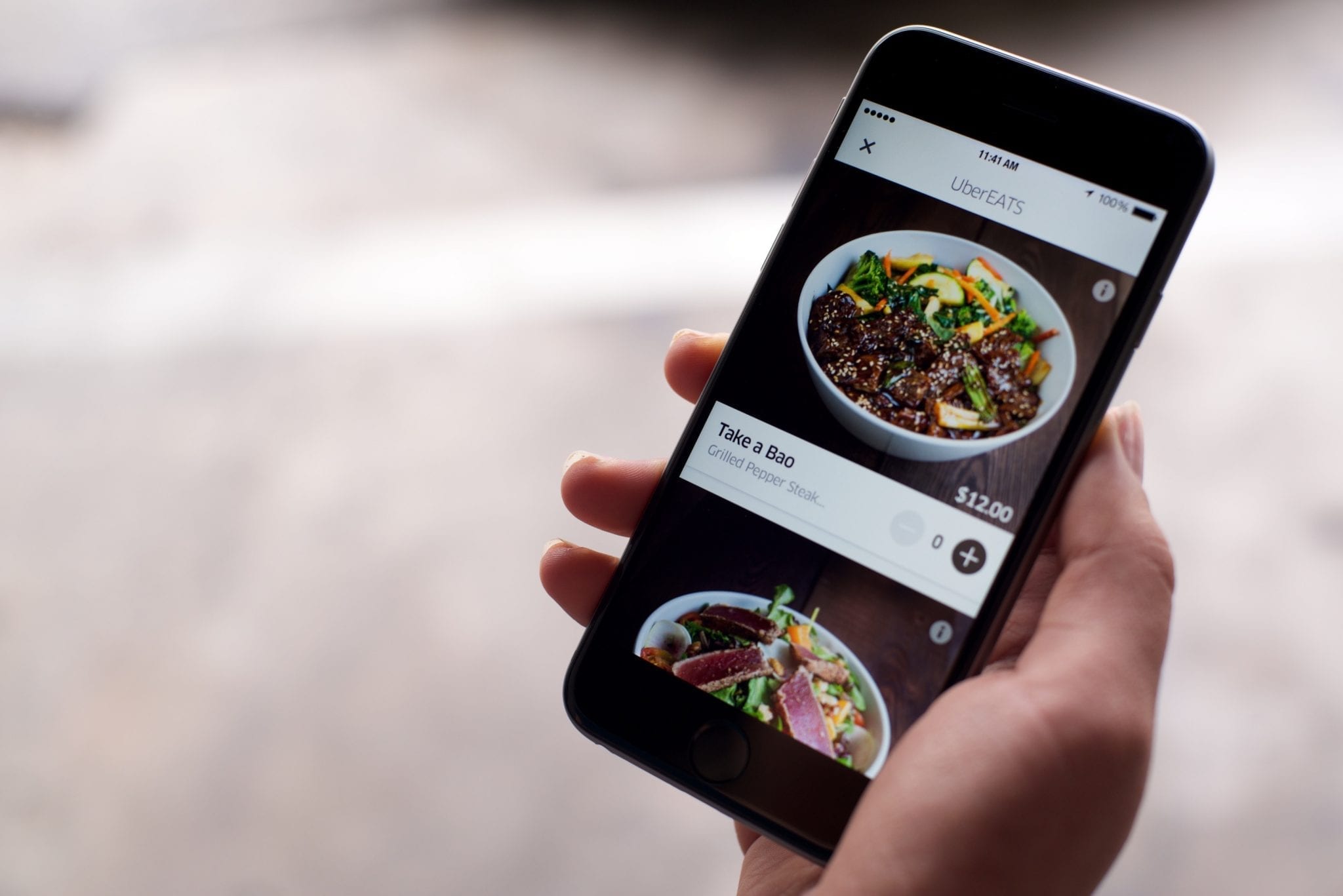
    App-based ride service provider Uber Technologies says it is planning to launch its on-demand restaurant delivery service UberEats in South Korea.

    UberEats Korea will partner with restaurants, with ordering conducted on the company’s web site or with a smartphone app.

    “The company is preparing the local launch of UberEats,” said a spokesman for Uber Korea, the local unit of Uber, on the condition of anonymity. “But at the moment, we have not decided on the exact launch date.”

    Industry sources expect the UberEats Korea delivery service to be introduced within the year.

    UberEats Korea is expected to join other local delivery apps such as Yogiyo, FoodFly and Baedal Minjok. Baedal Minjok is the market leader with more than 50 per cent market share, followed by Yogiyo and Baedaltong, which are both owned by Germany-based Delivery Hero.

    Ordering food by phone is commonplace in South Korea. However, delivery apps have become increasingly popular and now take up nearly 15 per cent of the total food delivery market which is estimated at around 12 trillion won (US$10.5 billion) annually.

    UberEats was launched as a delivery pilot in Los Angeles in 2014. Since then, it has expanded to 58 cities. The service also exists in other major Asian cities including Bangkok, Tokyo and Taipei.

  • Korea food delivery app popularity booms

    Korea food delivery app popularity booms

    Food delivery has become more accessible than ever in South Korea.

    Korea food delivery apps have brought together thousands of restaurants across the country into a single location-based platform, growing significantly over the past few years.

    According to Woowa Brothers Corp., which operates the leading food delivery app Baedal Minjok, the monthly number of delivery orders exceeded 10 million for the first time last month at 10.7 million, which was an increase from 5.2 million in December 2014 and 7.12 million in 2015.

    Woowa Brothers added that the average number of orders per customer is also increasing steadily, from 3.2 orders per month in 2014 to 3.6 orders in 2015.

    Industry watchers expect the market to continue its growth, taking into consideration new types of food delivery apps with differentiated services entering the market, such as Shikshin Hero, which delivers food from famous restaurants that typically don’t provide delivery services.

    Newly emerging dining trends like eating or drinking alone are also expected to add to the continued growth of delivery apps.

    The Ministry of Agriculture, Food and Rural Affairs and the Korea Agro-Fisheries & Food Trade Corporation predicted last year that “do it yourself hype” and “more food options for take-out or delivery” would drive Korea’s dining trends in 2017, forecasting a positive outlook for the food delivery industry.

    “A greater number of single-person households gave birth to more people drinking and dining alone, and a greater variety of food options are now available for delivery,” said a Woowa Brothers official. “Such factors led to the rapid expansion of the market.”

  • Kakao food-delivery service planned

    Kakao food-delivery service planned

    Korean internet company Kakao, known for its chat app KakaoTalk, plans to jump into the food-delivery sector.

    The Kakao food-delivery service is planned for launch by January, and it is expected to be incorporated into the app, which has four menu buttons. One of them lists extra services such as sending gifts or making reservations.

    A Kakao spokesperson says the deliveries would mainly be from franchise restaurants.

    In July, Kakao acquired a 20 per cent stake of CNT Tech, a developer of an order-receiving platform for more than 80 franchise restaurant brands in Korea.

    CNT Tech has 90 per cent of market share in the ordering platform sector. Once an order is placed through a franchise’s key number or homepage, the start-up connects orders to stores nearest the customer.

    Already companies are battling for share in the food-delivery market, including Baedal Minjok, Baedaltong and Yogiyo. Baedal Minjok, which has more than 50 per cent market share, is the only start-up that has turned around its business from losses.

    Kakao head of communications Lee Su-jin says its new on-demand service will follow the company’s business perspective that an online-to-offline service should add value both to individual service providers and customers.
    “Through our Kakao Taxi service, the annual income of taxi drivers rose by more than 3 million won [US$2650],” he says.