Tag: Bain & Company

  • Younger buyers seen as key for luxury industry

    Younger buyers seen as key for luxury industry

    The younger generation will be key for the luxury industry in the next decade as it enters a “new normal” characterised by lower growth, new research shows.

    To find success, brands will need to refocus on their customers to better anticipate and cater to their needs, according to US global consulting company Bain & Company, which ran the research for luxury fashion e-commerce group Farfetch.

    The research estimates that millennials will represent 40 per cent of the global personal luxury goods market by 2025, and the characteristics of millennial behaviour are already seeping through to older generations, which accounted for 73 per cent of luxury purchases last year.

    The resultant “millennial state of mind” is characterised by three main traits:

    • Uneasiness. Digital interaction with peers is rising when it comes to choosing a product.
    • Urgency. “I want it fast, and I want it now.” The time to make a purchase is shrinking, with younger customers taking a third less time than older customers to make decisions.
    • Uniqueness. Consumers now expect brands to align with their personal values and passions.

    Online interactions are now influencing 70 per cent of luxury purchases, which means at least one digital interaction has taken place with the brand or the product before those purchases.

    For consumers between 18 and 24 years old, 14 per cent make their first luxury purchase online, and digital traffic to websites of luxury brands is double the number of store visits.

    By 2025, says the research, online and monobrand stores will become the two largest channels for luxury sales, each accounting for 25 per cent.

    Bain & Company believes that stores will continue to play a critical role in the luxury market, accounting for 75 per cent of purchases by 2025.

    Asian consumers will continue to account for more than half of the luxury market, with generation Y (millennials) and generation Z accounting for 45 per cent.

    Headquartered in Boston, Bain & Company has 55 offices in 36 countries.

    Farfetch partners with luxury boutiques and brands and was founded in 2008 by Portuguese entrepreneur José Neves. Its online platform is in nine languages, the company has offices in 11 cities globally and it express ships items to more than 190 countries.

  • Chinese luxury spend abroad soars in 2015

    Chinese luxury spend abroad soars in 2015

    Mainland Chinese shoppers increased their spending on luxury goods overseas by 10 per cent last year according to new research from Bain & Company.

    The increase comes as a surprise given the significant slowdown in China’s economic growth, the much-publicised clampdown on gift-giving and the struggle of Hong Kong watch and jewellery retailers over the past 12 months.

    Bain & Company’s report, the 2015 China Luxury Market Study says mainlanders are shopping more on cross-border eCommerce and travelling to new destinations to indulge.

    In 2015, they shunned Hong Kong and Macau in favour of places like Japan, where spending soared 200 per cent.

    Bain’s research, which included a survey of nearly 1500 Chinese consumers, found a sizable shift in shoppers’ geographic preferences for luxury shopping in 2015. Japan, South Korea, Europe and Australia were all popular shopping destinations, due to favourable exchange rates and competitive pricing on luxury goods in these markets.

    As overseas travel among Chinese shoppers increased – up an estimated 32 per cent from 2014 – consumer reliance on Daigou, or overseas personal shoppers who buy and send luxury goods to customers in China – contracted. The growing channel choice in 2014, Daigou decreased to an approximately 43 billion RMB market last year.

    Bain attributes the drop to several factors including price adjustments by key brands that reduced Daigou margins, government efforts to tighten control over imports, including Daigou, a weakened RMB, and an increased reliance on other purchase channels – notably cross-border and overseas websites, which accounted for 48 billion RMB of the 293 billion RMB luxury spend overseas.

    The report highlights the increasing popularity of cross-border and overseas websites as luxury shopping channels: nearly half of those surveyed said they purchased luxury goods via these sites last year.

    According to Bain, increased international tourism, and growing comfort and trust in some business-to-consumer (B2C) overseas websites among China’s shoppers helped stimulate overseas purchases. This resulted in a slowdown in China’s overall luxury market, which dipped 2 per cent to 113 billion RMB last year, driven by a decline in watches, men’s wear and leather goods.

    Luxury brands seeking to overcome the economic slump and reinvigorate consumer spending domestically must employ a more tailored, localised marketing strategy, with high fashion content and adjust their pricing to reduce disparities across geographies.

    “We saw notable changes in where and how Chinese consumers acquired luxury goods last year,” said Bruno Lannes, a Bain partner based in Shanghai and author of the report.

    “Buying overseas has been a trend for years, but destinations have changed, and Daigou is declining because of multiple and converging drivers from major industry players, including the government,” he said.

    “Our research found that the industry is quickly adapting to these challenges in an effort to drive more luxury consumption at home through strategies such as global pricing and a greater focus on fashion.”

    A corollary to the drop in domestic sales is a reduction of the store footprint by most brands, with a greater focus on fewer, larger and better located stores. Many brands realise they need to regain their exclusive image, which has been somewhat blurred by over extension.

    As in 2014, the research shows the greater importance of fashion and exclusive designs to win domestically. Brands with a strong fashion heritage and stronger emphasis on original design did well in 2015.

    The survey reveals that nearly 80 per cent of respondents said they normally get information on luxury brands from the internet or apps, and a full 60 per cent identified social media channels Weibo and WeChat as their online source for information on luxury goods. As a result, brands spend, on average, 35 per cent of their marketing budget on digital, and it is growing.

    Looking ahead, Bain expects these and other 2015 trends to continue this year, prompting further challenges, opportunities and requirements for brands:

    • Macro environment expected to remain similar while the rising middle class becomes more sophisticated and knowledgeable about luxury.
    • Overseas channels will stabilise (daigou will decline). Global pricing by leading brands and government efforts to localize consumption will spur domestic growth. Global pricing, will likely spread further to other brands.
    • Luxury brands should strengthen both digital platform building (e.g., Weibo WeChat, apps) and digital content creation, with an emphasis on localisation to reflect local market preferences.
    • Luxury brands must place greater emphasis on making their brand “younger” and more fashionable to capture the next generation of trendy customers. There will also be an increased focus on “exclusivity,” both in product design and store footprint.

    “Despite persistent macro, economic and industry challenges in China, all hope is not lost for luxury brands,” said Lannes.

    “There are plenty of growth opportunities for those with more exclusive and fashion collections, digital platform engagement and digital content creation, as well as with pricing that encourages Chinese consumers to spend locally.”

  • China retail consumption to jump 50%

    China retail consumption to jump 50%

    China’s total retail consumption will jump 50 per cent to $6.5 trillion by 2020, with online transactions accounting for half of that growth, according to new research.

    Seventy per cent of those e-tail purchases will be conducted via mobile devices. Over that same five-year period, cross-border eCommerce will have grown so high – to $152.1 billion – that it will represent one-third of the country’s total foreign trade.

    So say think tanks and research firms watching the world’s second-largest economy as it transitions from its former manufacturing base to one driven by consumption. The predictions were issued by Alibaba Research Institute, the research arm of Chinese eCommerce giant Alibaba Group, as part of its inaugural “Think Tank Summit on the New Economy” held last weekend in Beijing.

    The new annual event brought together over 600 thought leaders to look at ahead at the next five years in Chinese commerce. A panel of judges surveyed research from the 40 participating organisations and picked “10 Forecasts for the New Economy,” which focused not only on the importance of eCommerce but also the impact the internet will have China’s manufacturing, logistics, rural economy and society.

    The use of data, culled from billions of transactions as Chinese consumers buy and sell goods and services online, will also play a key role.

    “China today is in the midst of transforming from an industrial-driven economy to a data-driven economy,” Gao Hongbing, dean of AliResearch and vice president of Alibaba Group, said in a statement.

    “These 10 forecasts are a small part of our observation and thinking, and we hope they can play a part in stimulating further deliberation on the society’s future development.”

    Bain & Company predicted that China’s online retail market would reach $1.52 trillion, accounting for 22 per cent of the country’s retail industry, with maternity and baby products being the strongest category and third-and fourth-tier cities driving a significant part of the growth. The Boston-based management consultancy also said that mobile Internet would make up 70 per cent of all online sales.

    Bain put the total figure for cross-border eCommerce in China at $152 billion, with AliResearch in a separate prediction saying it expects cross-border eCommerce to make up one-third of China’s foreign trade in five years. The China Center for International Economic Exchanges said “e-international trade” will change how trade overall is done and that it will account for account for 30 per cent to 40 per cent of total world trade by 2025.

    Boston Consulting Group estimated that China’s consumer market will climb $2.3 trillion, or 50 per cent, to $6.5 trillion by the close of the decade. Online will account for 42 per cent of that growth, the management consultancy said.

    The internet would also penetrate all rural areas of China, according to Zhejiang University’s China Academy for Rural Development. As a result, the Information Research Department of the State Information Center of China said the sharing economy will rise to full prominence given this full penetration of broadband coverage in China. The Institute of Information Society Studies said China would have a “soft law” system providing a framework for Internet governance by 2020 as well.

    The other predictions included one from the Information Society 50 Forum & Department of Sociology and Anthropology at Peking University, which said that data will digitise how consumers are assessed, say, in providing individual recommendations. The Information Society also noted that the vast reams of data collected as consumers buy and sell goods online will as a result erode some of their privacy.

    ZenCoo, meanwhile, predicted that social measurement and cognitive experiments will replace statistical sampling, revolutionising the fundamental theories of many disciplines including psychology, sociology, economics, and communications.

    And finally, according to the Data Center of China Internet, the 3D printing market will reach $15.2 billion, with households using them the most.

  • Chinese account for 31% of global luxury sales

    Chinese account for 31% of global luxury sales

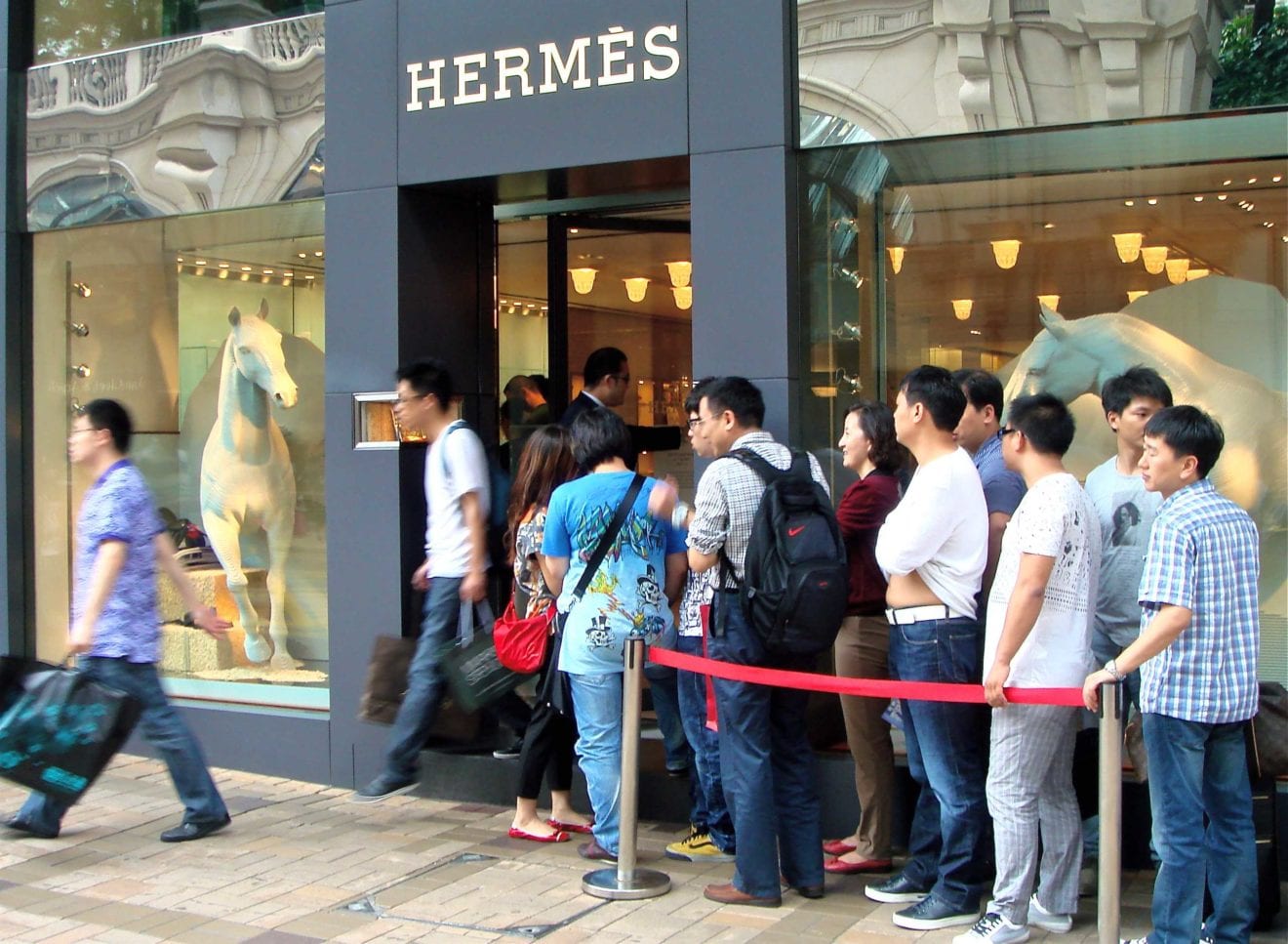
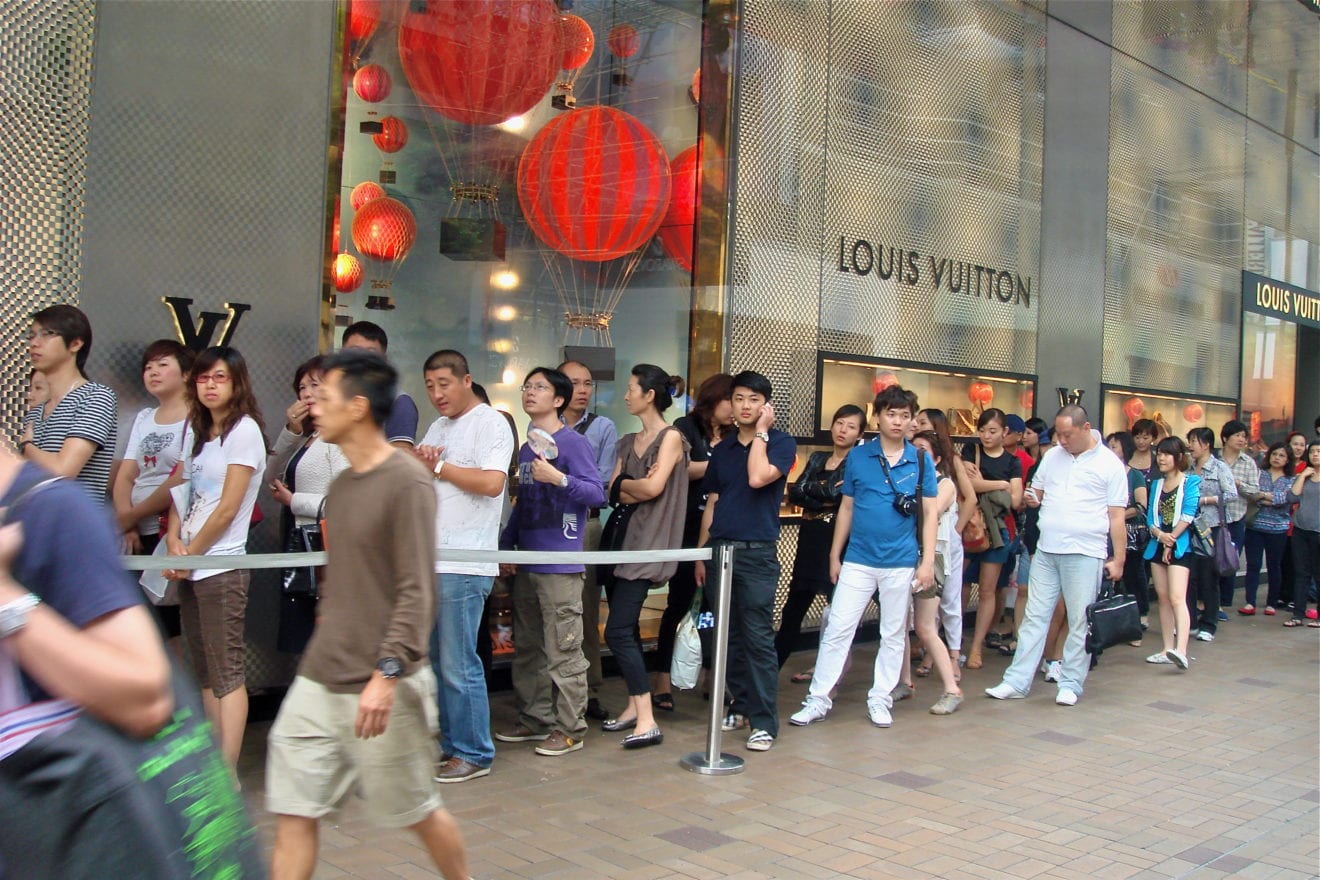
    Chinese shoppers now account for 31 per cent of the world’s annual luxury sales.

    According to Bain & Company’s 2015 Worldwide Luxury Report, the overall luxury industry will surpass €1 trillion in retail sales value in 2015.

    The market delivered healthy growth of five per cent year on year (at constant exchange rates), driven primarily by luxury cars (eight per cent), luxury hospitality (seven per cent) and fine arts (six per cent).  Aided by global currency fluctuations and continued jet-setting of “borderless consumers,” the personal luxury goods market ballooned to over a quarter trillion euros.

    That sector – including leather accessories, fashion, hard luxury and fragrance & cosmetics – reached €253 billion in 2015. This represents 13 per cent growth at current exchange rates, while real growth is significantly slowing to between one and two per cent.

    But the report warns that luxury brands will need the right pricing model to win against hard to predict currency volatility in the year ahead, which has impacted heavily on luxury retailers especially.

    While global tourists flocked to Europe and Japan to capitalise on a weak euro and yen, the Americas region, stagnant in real terms, was strongly inflated by the super dollar, thus capturing more than a third (34 per cent) of the global market spend in 2015.

    Meanwhile, Asia registered the worst historical performance (at constant exchange rates), driven by the lacklustre trend of Mainland China and the sharp drop in sales in Hong Kong and Macau.

    “For the last several years, we’ve referenced ‘luxury’s new normal’ with a deceleration of the personal luxury goods market. Now, we are starting to feel the impact of that slow-down,” said Claudia D’Arpizio, a Bain partner in Milan and lead author of the study.

    “The challenge for luxury brands in this environment is how to successfully navigate through hard-to-predict volatility.”

    According to Bain’s research, Chinese consumers continue to spend the largest share of luxury purchases (31 per cent) globally, followed by Americans (24 per cent) and Europeans (18 per cent).

    Chinese consumers are flocking to mature markets in droves, especially Europe, where an analysis of European tax-free shopping data, conducted in partnership with Global Blue, shows Chinese tax-free purchases increased by 64 per cent, particularly among the accessible and aspirational luxury segments, thanks to a weak euro.

    Americans also increased their tax-free spending in Europe by 67 per cent, aimed largely at the high end of the luxury spectrum.  Meanwhile, Russians cut their European spending by 37 per cent, and spending among the Japanese in Europe withered by 16 per cent.

    “Undoubtedly, Chinese consumers play a primary role in the growth of luxury spending worldwide,” said Federica Levato, principal at Bain and co-author of the study.

    “For years, we have known that they spend far more abroad than in Mainland China, but what’s changing is that they’re spending little money in historically popular destinations, such as Hong Kong and Macau, and are instead gravitating to new locales, such as Europe, South Korea or Japan, to benefit from currency fluctuations that drive favorable price gaps.”

    In terms of constant exchange rates, the US market did not deliver.  The “super dollar” was too expensive for many global tourists and though local consumption is growing, it was barely sufficient to offset the lost tourism revenue. Nevertheless, the US is the confirmed largest luxury market in terms of global luxury value, reaching €79 billion; New York City alone outweighed all of Japan.

    Another trend evident this year is the impact of eCommerce, which grew to seven per cent market share in 2015, nearly double its penetration since 2012. Luxury globetrotters have also fuelled the performance of airport retail, which posted 29 per cent growth in current exchange rates (18 per cent in constant exchange rates) and now accounts for six per cent of the global luxury market.

    With the growing middle class in economies such as China seeking good quality and good value, the off-price channel has more than doubled to nearly €26 billion.  Mark-downs are also increasing in prevalence across more than 35 per cent of the luxury market, with a strong relevance in department and specialty stores, as well as online.

    The Price of Luxury

    According to Bain, the number one challenge facing most luxury brands is establishing the right pricing model.

    The rise of eCommerce and global tourism growth create greater transparency around international price differentials. Additionally, price-conscious luxury shoppers are struggling to reconcile the price of luxury products with their real value. As a result, luxury brands must assess how to mitigate volatility and how best to deliver at local and global levels. This includes managing inventory to accommodate fluctuations in tourism and coordinating pricing and mark-downs across markets and channels.

    Luxury brands also face a host of tough issues such as rethinking their store footprint and the role of their stores in a world of growing digitalisation, as well as figuring out how to delight local customers even as masses of tourists flock to stores in mature markets.

    “Relentless price increases over the last decade, aimed at creating a more exclusive position in the market and maximising touristic flows are now starting to backfire on luxury brands,” said D’Arpizio.

    “They face the long-term challenge of rebuilding credibility and trust among consumers, rather than simply making shortsighted, tactical pricing adjustments to benefit from market fluctuations.”