Tag: bangalore

  • Brand Studio Lifestyle Launches Flagship Store In Bangalore; Sets Target For 75 Outlets Across India

    Brand Studio Lifestyle Launches Flagship Store In Bangalore; Sets Target For 75 Outlets Across India

    Brand Studio Lifestyle recently announced the opening of a new flagship store for the brands Highlander and Tokyo Talkies. The store is located in the JP Nagar area of Bangalore, representing the 40th store of this kind in India.

    Expansion Plans

    The opening of this flagship store is part of Brand Studio Lifestyle’s ongoing efforts to increase its retail presence throughout the city. The company has set a target to open 75 exclusive stores across India by March of next year.

    The new store covers an area of 12,000 square feet, merging scale, design, and accessibility to provide an immersive and engaging retail experience for shoppers.

    Shyam S Prasad, CEO of Brand Studio Lifestyle, commented on the significance of the new store: “This flagship store serves as a massive platform to display the range of the latest trending styles we launch each month. Customers are given the chance to explore the best in international fashion within this expansive space and experience the range of fashionable items we have available.”

    Future Store Developments

    The company plans to use the JP Nagar location as a model for their future large-format stores in metropolitan cities.

    Brand Studio Lifestyle also intends to boost its retail visibility through shop-in-shop formats across 600 sale points in large format stores and multi-brand outlets.

    Commenting on the company’s future plans, Prasad said, “In the future, we are planning to have a mix of large flagship stores ranging from 8,000-12,000 square feet and mid-sized stores of about 2,000-3,000 square feet. Our recent store openings in the UAE are considerably large, demonstrating our aspirations for both national and international expansion.”

    Questions & Answers

    What is the size of the newly opened flagship store in JP Nagar?
    The new flagship store covers an expansive area of 12,000 square feet.

    What are Brand Studio Lifestyle’s expansion plans?
    The company aims to open 75 exclusive stores across India by next March and use the JP Nagar location as a model for future large-format stores in metropolitan cities. They also plan to expand retail visibility through shop-in-shop formats across 600 sale points.

    What sizes will future stores of Brand Studio Lifestyle likely be?
    The company intends to have a mix of large flagship stores ranging from 8,000-12,000 square feet and mid-sized stores spanning 2,000-3,000 square feet.

  • Bangalore Rising as an Investment Destination for Non-Residents

    Bangalore Rising as an Investment Destination for Non-Residents

    Bangalore continues to be the most prominent non-resident Indian (NRI), investor as Indian real estate continues to grow.

    Bangalore is a preferred destination for NRI real property investment due to its lucrative prospects, abundance of property managers, consultants, and NRI’s emotional attachment home. You won’t find it in any other Indian location.

    Many property types have high appreciation rates. NRIs have many options when it comes to purchasing a home due to the high appreciation rates of Whitefield and Sarjapur. You can include residential flats, villas, and studio apartments as well as commercial buildings and many other types of assets. You can keep track of all your assets, including real estate, using the Prillionaires personal finance software. They can choose the type of project they want to invest in, depending on their schedule and money.

    NRI Investment in Bangalore Properties

    1. Cosmopolitan Lifestyle

    This city attracts NRIs because of its vibrant lifestyle. They also invest in real property in Bangalore. People of all races, religions, and ethnicities settle in different areas. Communication seems to be easier because of the city’s setting. NRIs choose a city that offers a diverse lifestyle.

    It helps them to relax. All services are included in a resident’s busy schedule.

    Communicating with NRIs who speak little English can prove difficult for those with limited English proficiency.

    2. Prevalence of Luxury Housing Segment

    There are not many cities in India that cater to the luxury housing market. Bangalore has a higher per-capita income than most Indian cities. This shows that Bangalore’s residents have a higher purchasing power than those in other parts.

    Developers and builders can easily set up luxury homes in this city. Buyers are encouraged to explore the options before buying a house.

    3. Attractive prices

    As the rupee continues to fall in value against the US dollar, property in Bangalore is readily available at affordable rates. This encourages NRIs to invest in real estate. The Foreign Exchange Management Act (or FEMA), which was simplified by the RBI to attract foreign investment has also stifled a booming sector. The Act allows Indians who are residing abroad to purchase residential and commercial property, except for agricultural land.


    4. Tax Benefits

    NRI investments in real estate have extraordinary tax benefits. NRIs can own an unlimited number of properties. Therefore, they are able to rent, sell, lease, and invest in real property. You can invest in multiple properties and get positive returns through long- and short-term capital gains, rental income, and leasing income.

    Property Laws Of Bangalore Real Estate

    Regulations govern the sale and purchase of real estate properties. These are usually land parcels or buildings. Because of their fixed nature, immovable properties can’t be moved or replaced.

    The Transfer of Property Act of 1882 regulates the sale and purchase of real property in India. The 1882 statute does not cover the idea of an apartment and its undivided land or communal spaces.

    KAOA has taken a critical step to make a comparison between the acquisition of an apartment, and its proportional undivided portion, with the acquisition of movable properties under the Transfer of Property Act.

    The buyer can be the sole owner of the unit if they have a valid title and a proportionate undivided interest.

    Bangalore, Asia’s fastest-growing city, has experienced a significant increase in NRI investment, driven both by passion and financial reasons. It is also a popular place to live, and it is the country’s IT powerhouse. Similar to the housing markets in Pune, Hyderabad, and Chennai, Bangalore has seen rapid expansion.

    The Real Estate (Regulation and Development) Act (RERA), looser investment regulations, the rupee’s depreciation relative to the dollar, attractive developer incentives, and a greater online and offline presence of developers have all contributed to the growth of the trend. These initiatives have made it easier for homebuyers to access information and allowed NRIs to invest in their home country.


  • India’s Quikr Acquires Zefo marketplace

    India’s Quikr Acquires Zefo marketplace

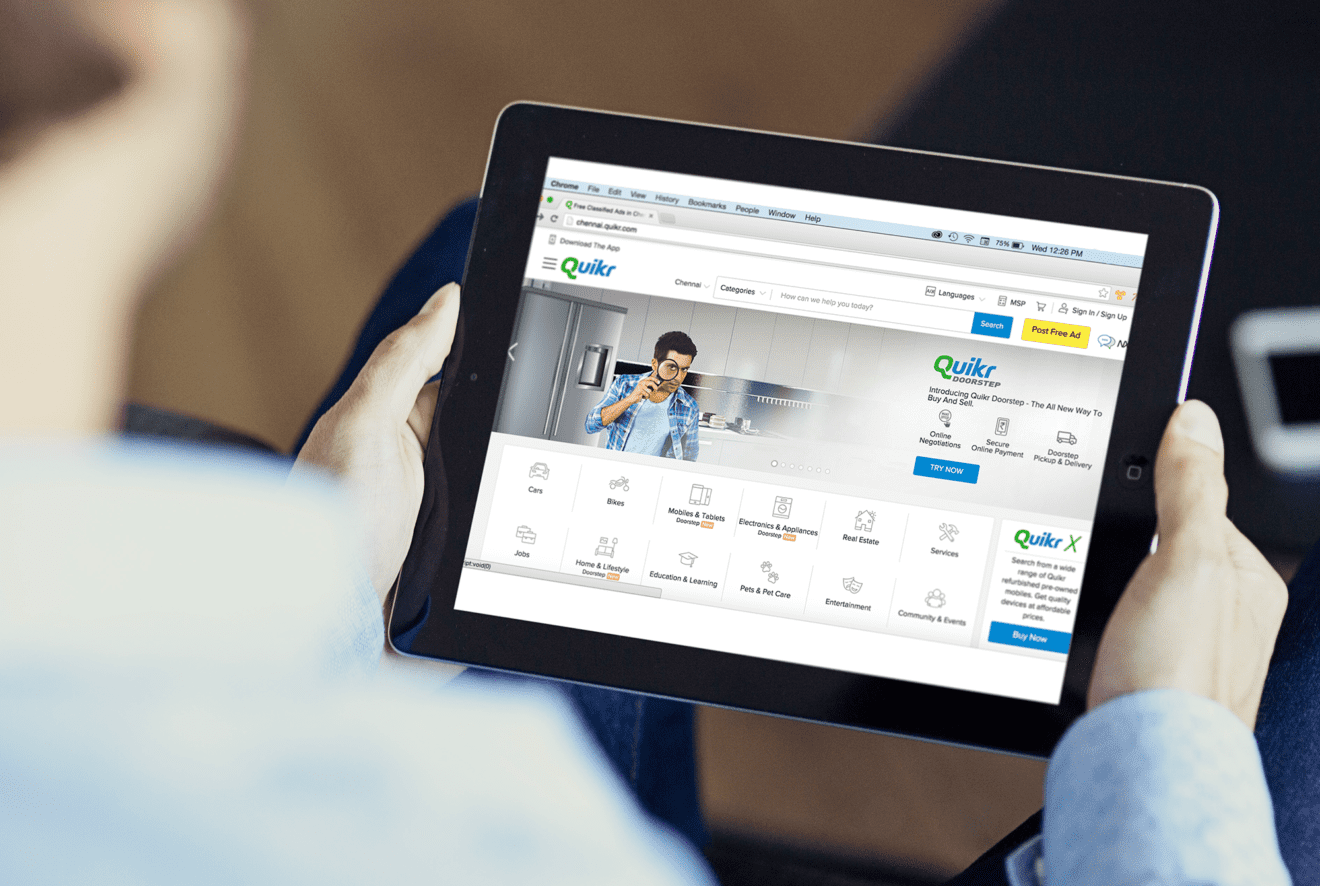
    Indian online classifieds site Quikr has bought refurbished goods marketplace Zefo, headquartered in Bangalore.

    The acquisition allows an exit strategy for Zefo’s current investors, including Sequoia Capital, and gives Quikr a pathway to expand and strengthen its pre-owned product range.

    Zefo, has a portfolio of more than 10,000 products in four cities, including Bengaluru, Mysore, Delhi NCR and Mumbai.

    “With Quikr and Zefo as a combined entity, we will be able to offer a broader selection of products at even more competitive prices along with as strong a focus on quality,” said Quikr founder and CEO Pranay Chulet.

    “With this transaction, the capabilities we have built and the offerings we have honed can now be offered to Quikr’s large customer base,” said Zefo CEO Rohit Ramasubramanian.

  • Bangalore is India’s top home for IoT startups

    Bangalore is India’s top home for IoT startups

    A study by management consulting firm Zinnov has revealed that Bangalore is the prime destination in India for an IoT startup to set up base, as it accounts for 52% of the total IoT startups in India.

    Bangalore is followed by Delhi NCR with 12%, Mumbai 11%, Hyderabad 4%, Chennai 2%, and others together accounting for 19%.

    “A wide availability of talent, thriving ecosystem of investors, access to industry experts and the presence of startup accelerators are contributing to Bangalore’s dominance,” a release from the firm said. The study on the IoT startup ecosystem in India also reveals that over 120 IoT startups were set up in India in the last decade with more than 80% of them being established after 2010.

    Cumulatively, these startups have received more than $169 million in funding since 2006. While indicating that an increasing number of connected devices is expected to propel India’s IoT market, the study titled, IoT Startups in India 2017, also states that the funding activity across use cases for such startups in India indicate a huge growth potential for them in the country.

    “While the initial wave of growth for IoT startups in India was focused on consumer applications, the next wave will be geared towards Industrial IoT,” Zinnov Engagement Manager & Delivery Head (G.A.P) Anand Subramaniam said.

    “In addition, we will also witness a host of partnerships being crafted between GICs in India and the IoT startups in the near term,” Subramaniam added.

    The study said that 67% of the IoT startups in India are in the infrastructure layer, which includes hardware components such as infrastructure sensors, embedded chips, MEMS, actuators, modules, SIM card and system design.

    The applications layer accounts for 52% of the IoT startups in India, the study revealed, stating that the IoT landscape in India is segmented across three categories based on use cases — Industrial IoT, Enterprise IoT, and Consumer IoT. Zinnov’s study also indicated 47% of the IoT startups in India fall under Consumer IoT with popular use cases being wearables, connected vehicles and connected appliances.

    Enterprise IoT is a close second place, with 40% share. In terms of funding, MedTech, security & surveillance and retail sensing have the highest share in the Enterprise IoT segment.

    Industrial IoT accounts for approximately 27% of IoT startups and has received close to $65 million in funding from investors.

  • Vodafone India aims to double SME base in Bangalore

    Vodafone India aims to double SME base in Bangalore

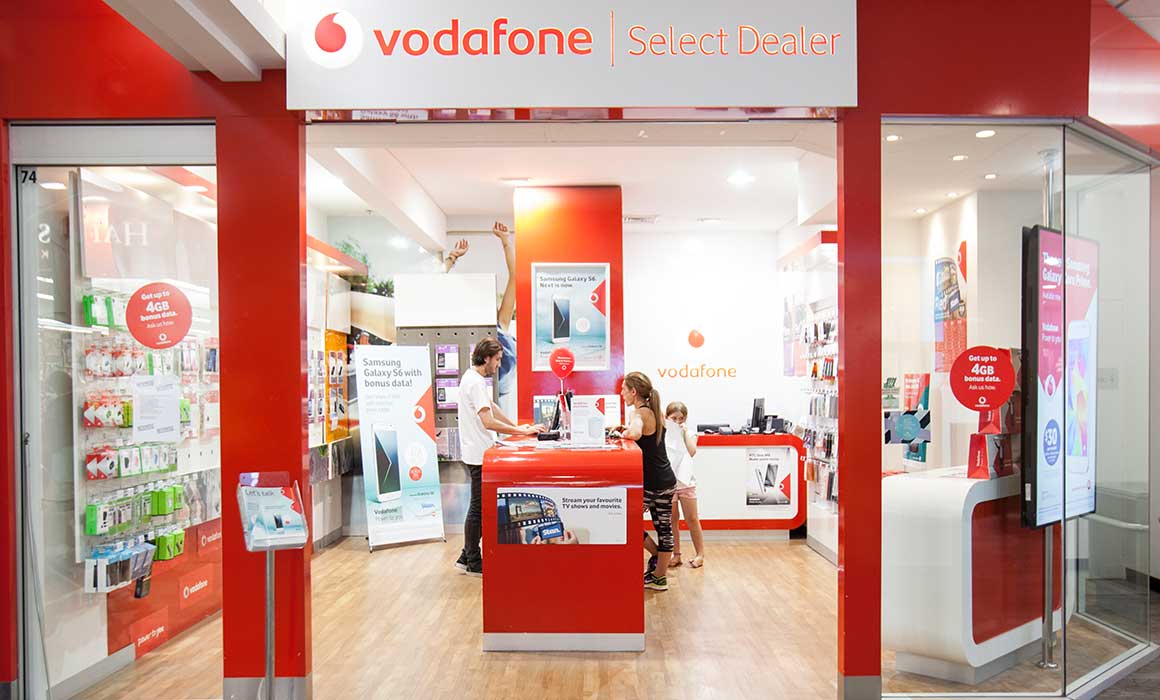
    Vodafone India has outlined a strategy aimed at doubling its SME customer base in Bangalore, known as the Silicon Valley of India.

    Vodafone Business Services announced a three-pronged plan to increase its SME coverage in the state of Karnataka – particularly capital Bangalore (Bengaluru) – and across India.

    The three spokes of the strategy are coverage, intelligence and automation. Coverage involves widening the company’s ecosystem of channel partners and advanced resellers.

    Automation will involve making it easier for SMEs to do business with Vodafone through initiatives involving opening a system access partner portal. Intelligence will involve launching six new services tailored for specific industry verticals, to complement the six already launched.

    In addition Vodafone will use the newly launched VBS cloud platform to provide SaaS to Indian SMEs. The operator has also introduced Ready Business 2.0 – an integrated suite of Vodafone communications services designed to help SMEs find answers to business problems.

    “Vodafone Business Services will help growing businesses become ready for their next phase of growth. Our newly launched cloud platform will act as a one-stop shop for SMEs for all their ICT related business needs,” VBS national head for SMEs Ajay Sehgal said.

    “With our Ready Business 2.0 proposition, our fixed, mobile and cloud solutions can empower SMEs in scaling up faster, enhancing operational efficiencies and building a more connected and productive workforce, thus making their business more responsive to customers.”

  • Spar India plans hypermarket rollout

    Spar India plans hypermarket rollout

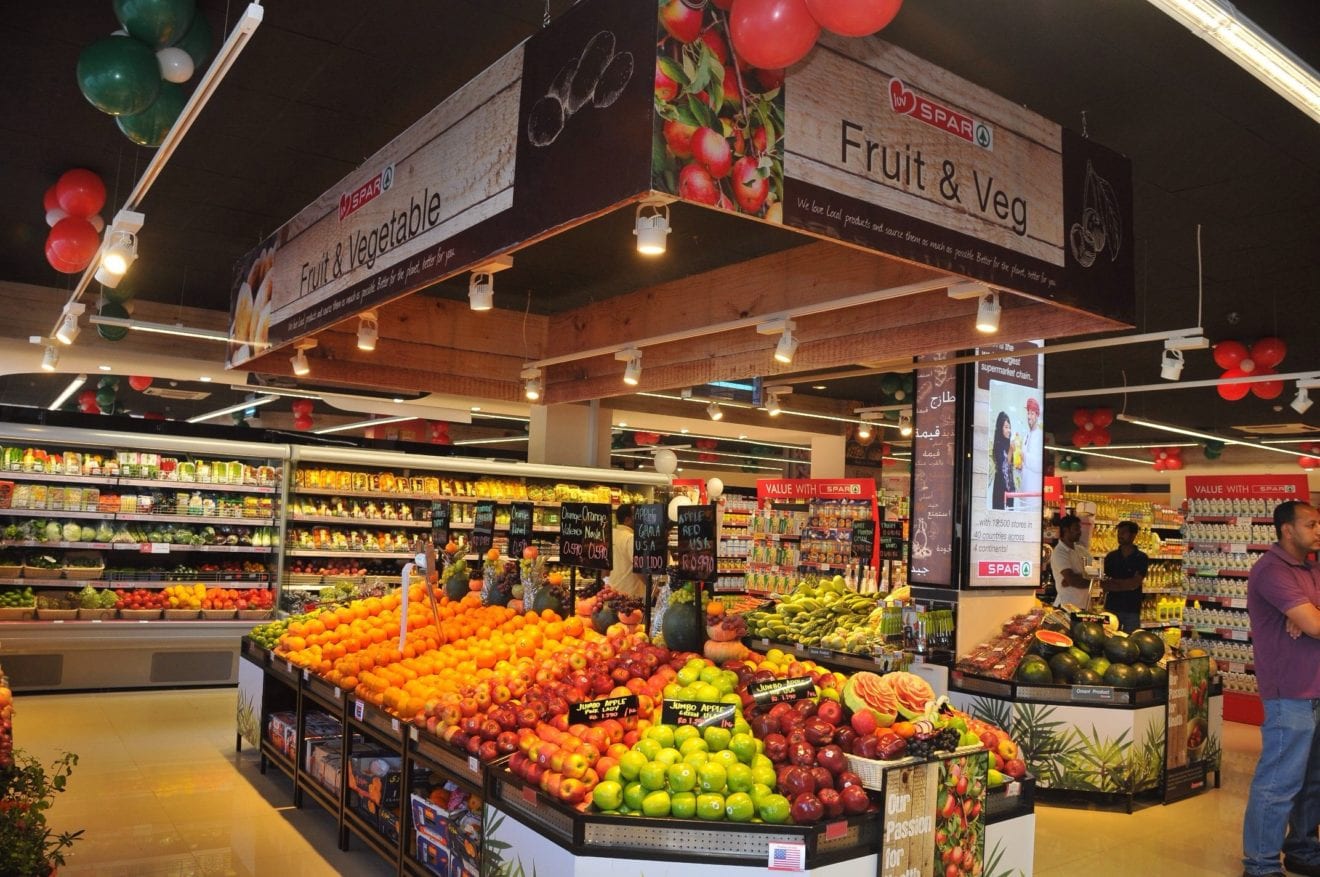
    Grocery retail model Spar says it plans “vital progress” in India – with 25 hypermarkets operational by the top of 2017.

    Netherlands-based Spar Worldwide lately reported 2014 international retail gross sales of €31.9 billion from 12,300 shops in 40 nations. It’s anticipates its India operations will attain €300 million turnover by 2019.

    The announcement was made in the course of the go to of the Dutch Prime Minister, Mark Rutte, with a Dutch Commerce delegation, to a Spar Hypermarket in New Delhi.

    Spar re-entered the Indian market final August after signing a partnership settlement with Max Hypermarkets. The partnership has already efficiently re-launched 16 Spar Hypermarkets with a further 4 openings deliberate this yr, all providing an in depth vary of meals and non-food, at aggressive costs. The hypermarkets are unfold throughout 9 places in India – 4 in Delhi, Gurgaon and Ghaziabad; 5 in Bangalore; two in Mangalore; two in Hyderabad; one in Chennai, one in Pune and one in Coimbatore.

    Spar Worldwide MD Dr Gordon Campbell stated the corporate’s progress and success in India supplies a great case research for the suitability of the Spar mannequin in rising markets.

    “The place different international manufacturers have struggled to realize traction, Spar’s model values and providing, international experience and partnership mannequin, have introduced speedy advantages for retailer, provider and, finally, the buyer.”

    Spar Worldwide unites and works in partnership with unbiased retailers by working collectively to share international scale and experience to reinforce the competitiveness of its retail companions worldwide and construct the Spar model internationally. In rising markets similar to in Asia, Spar has specialised in creating trendy provide chains to allow the environment friendly motion of products from native producers to the store shelf. In India alone, the corporate now helps over 4000 native distributors who provide meals and merchandise to the rising Spar India community.

    Viney Singh, MD of Spar India, stated: “We’re delighted with the outcomes since we transformed our first 16 hypermarkets to the Spar model. Spar’s understanding of worldwide greatest follow in retail operations and provide chain administration, mixed with our shopper understanding and native sourcing strengths have created an instantaneous uplift in retailer gross sales. The Spar model propositions of freshness and worth have been very properly acquired by the Indian shopper.”

    Globally, the Spar model now adorns 12,300 hypermarket, grocery store, neighbourhood and comfort shops worldwide, serving 13 million clients day-after-day.