Tag: bangladesh bank

  • UCB Chairman-Linked Firms to Buy Tk 103 Crore Bank Stake

    UCB Chairman-Linked Firms to Buy Tk 103 Crore Bank Stake

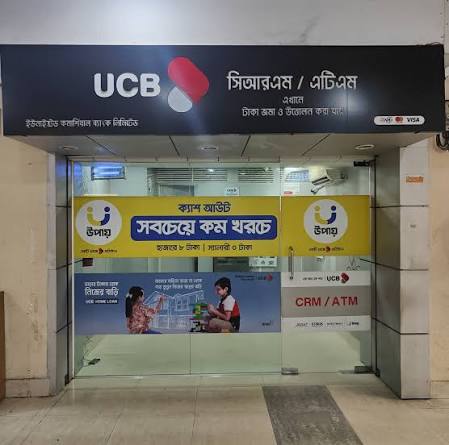
    Two industrial entities connected to United Commercial Bank PLC Chairman Sharif Zahir filed notice this week to acquire Tk 103.04 crore worth of the lender’s shares in Dhaka. The planned transaction follows regulatory approval allowing a single sponsor family to hold larger equity blocks.

    Ananta Denim Technology intends to buy 8.2 crore ordinary shares of the bank, while Z & Z Intimates plans to purchase 3 crore shares. Both buyers disclosed their intentions through the Dhaka Stock Exchange platform after central bank authorities widened ownership thresholds.

    Bangladesh Bank issued an exemption on Tuesday permitting an individual investor or family group to hold as much as 30 per cent of UCB’s paid-up capital. Under standard banking regulations, single investors face a 10 per cent cap.

    Central Bank Lifts Investor Ceilings

    The central bank relaxed the rules specifically to attract fresh capital into the institution following the dissolution of its previous board after political shifts in August 2024. Regulators are using equity waivers to stabilize balance sheets across commercial lenders whose legacy loan portfolios suffered from historical governance breakdowns.

    Trading Volume and Capital Outlays

    Shares of UCB climbed 9.52 per cent to finish at Tk 9.20 on the Dhaka bourse following the announcement. Based on the previous closing price, Ananta Denim Technology will deploy Tk 75.44 crore to complete its purchase, while Z & Z Intimates will spend Tk 27.60 crore.

    The apparel manufacturing firms tied to Zahir are absorbing equity directly from the secondary market. By purchasing listed units, the sponsor affiliates cement voting control while injecting market liquidity into a stock that traded near multi-year lows during broad financial sector restructuring.

    Balance Sheet Repair Across Private Lenders

    Private lenders across South Asia frequently rely on dominant industrial sponsors to recapitalize distressed asset books when sovereign backstops remain constrained. Bangladeshi manufacturing conglomerates, particularly export-driven apparel manufacturers, maintain operating cash flows capable of funding local equity injections that foreign private equity funds routinely bypass.

    Concentrating ownership risks returning the bank to single-family use, the very structure that forced regulatory crackdowns across the domestic sector earlier this year. For corporate depositors and commercial supply chain operators, however, a fortified balance sheet reduces funding uncertainty and stabilizes working-capital credit lines across apparel export networks.

    Subordinated Debt and Rights Issuance

    The sponsor purchases fit into a wider capital mobilization campaign launched by UCB’s reconstituted leadership. The institution is preparing a Tk 775 crore rights share issue to raise core equity from existing stockholders.

    Regulators are also reviewing the bank’s plan to issue a Tk 800 crore subordinated bond. That debt instrument ranks below general deposits and other liabilities, counting as secondary capital under central bank prudential frameworks.

    The lender must clear final approvals from capital market regulators for both the Tk 775 crore rights offering and the subordinated debt package before book-building commences.
  • Bangladesh Taka Strengthens Against US Dollar After 5.5 Years

    Bangladesh Taka Strengthens Against US Dollar After 5.5 Years

    The Bangladeshi taka has strengthened against the US dollar, ending a continuous depreciation trend spanning five and a half years, according to a report from Bangladesh Bank.

    Between August 30 and September 17 this year, the local currency appreciated by 0.77 percent against the greenback as the dollar rate dropped from a record high of Tk 123.95 to Tk 123.00.

    On a point-to-point basis from June last year to June this year, the taka gained 0.06 percent, reversing an unbroken slide from 2021 that had devalued the currency by 45.05 percent.

    Reversing a Five-Year Downward Spiral

    Dhaka saw its first sustained currency recovery since late 2020. That year, lower pandemic import bills and solid remittances allowed the taka to firm slightly to Tk 84.80.

    Import pressures resumed in 2021, pushing the dollar to Tk 85.80 by year-end. Post-pandemic commodity shocks and the war in Ukraine accelerated the slide in 2022, lifting the dollar rate 23.37 percent to Tk 105.85. The taka fell further to Tk 110.00 in 2023, Tk 120.00 in 2024, and Tk 122.33 by December 2025.

    Over the five-year span, the greenback climbed by Tk 38.20. That loss squeezed corporate margins across manufacturing hubs. It also inflated domestic retail prices on consumer staples.

    Divergence from Regional Currencies

    Trends across South and East Asia diverged from Bangladesh during the same period. Between June 2025 and June 2026, the South Korean won dropped around 11 percent against the greenback. The Sri Lankan rupee shed more than 10 percent.

    India’s rupee weakened by nearly 9.5 percent over the 12-month period, while the Indonesian rupiah lost about 9 percent. Modest gains appeared elsewhere. Both the Malaysian ringgit and Chinese yuan gained nearly 4 percent, and the Pakistani rupee firmed by about 2 percent.

    These divergent currency paths reshape cross-border sourcing costs for regional retailers and consumer goods manufacturers. Retailers buying finished goods and packaged foods from India face lower dollar procurement costs. Meanwhile, Bangladeshi factories buying dollar-denominated raw materials gain immediate relief on input invoices.

    Relief for Importers and Retail Supply Chains

    Lower landed import bills directly benefit buyers of refined fuel, edible oils, industrial chemicals, and wheat. Importers spent the past three years absorbing double-digit depreciation that pushed landed costs to records.

    Steady foreign exchange pricing removes the immediate need for emergency shelf-price increases at retail. Lower import costs ease pressure on household purchasing power. That buying power had contracted under cumulative double-digit retail inflation.

    Local-currency balance sheet losses will narrow for domestic conglomerates holding dollar-denominated commercial debt. Servicing foreign loans grew far more expensive as the dollar climbed from Tk 85 to nearly Tk 124 over five years.

    Trade Balance and Reserve Targets Ahead

    Maintaining currency stability now rests on managing import demand and keeping remittances flowing through official channels. Bangladesh Bank has relied on targeted dollar purchases to rebuild gross reserves. It avoided defending fixed pegs through emergency dollar sales.

    Corporate treasurers and retail supply directors are tracking import volumes heading into the final quarter. Any surge in capital goods orders or energy demand will test the central bank’s ability to hold the exchange rate near Tk 123.

  • Sammilito Islami Bank Files 10,000 Lawsuits to Recover Bad Debt

    Sammilito Islami Bank Files 10,000 Lawsuits to Recover Bad Debt

    Sammilito Islami Bank PLC has filed nearly 10,000 lawsuits across Bangladesh to recover defaulted loans following the state-backed merger of five troubled Islamic lenders.

    The newly formed entity began operations with a paid-up capital of Tk 35,000 crore, backed by Tk 20,000 crore from state coffers and Tk 15,000 crore from depositors. Legal filings form the primary pillar of the recovery push, supported by alternative dispute resolution mechanisms and a formal exit policy supervised by Bangladesh Bank.

    Forensic Audits and Depositor Access

    Bangladesh Bank confirmed that a comprehensive forensic audit is nearing completion. The investigation targets loan fraud, asset misappropriation, and operational irregularities carried out under the prior ownership and management of the merged institutions. The central bank’s Bank Resolution Department reviewed recovery milestones during a progress assessment this week.

    Individual depositors will gain access to their principal amounts from selected deposit accounts starting September 1. Regulators confirmed that depositors will face no haircut on their accrued profits when accessing those funds.

    The creation of Sammilito Islami Bank combined First Security Islami Bank, EXIM Bank, Social Islami Bank, Global Islami Bank, and Union Bank under the Bank Resolution Ordinance 2025. Consolidating five damaged balance sheets into a single state-owned Shariah lender represents Dhaka’s most aggressive intervention to date in halting systemic liquidity contagion.

    Branch Network and Staff Integration

    Restructuring now extends to physical networks and personnel. Regulators have reconstituted the bank’s board of directors with a focus on independent directors while rationalising roles across roughly 16,000 employees.

    Engineers recently deployed a unified IT interface across all five legacy institutions, enabling retail customers to draw funds from any location. Operational integration is currently underway across 780 branches and 1,500 business units nationwide.

    Bangladesh Bank’s resolution team will maintain regular monitoring sessions to track asset recovery numbers and enforce structural milestones through the final quarter of the year.

  • Bangladesh Closes 20,000 Mobile Accounts in Digital Lending and Crypto Crackdown

    Bangladesh Closes 20,000 Mobile Accounts in Digital Lending and Crypto Crackdown

    Bangladesh financial regulators shut down more than 20,000 mobile financial service accounts last month in an expanding crackdown on predatory lending apps, illegal gambling, and unauthorized cryptocurrency trading.

    The enforcement targets unlicensed operators that use local digital payment rails to harvest consumer data, charge interest rates reaching 800 percent, and move illicit funds across borders.

    Harvesting Data and Escalating Interest

    Fraudulent operators run mobile applications under names such as FinCash, Money, PopKash, CashNow, Drutoloan, Fast Loan, Shathi Loan, and Quickloan. During installation, these apps gain access to contact lists, photographs, and private videos stored on borrowers’ devices. Borrowers who miss payment deadlines or contest inflated rates face harassment and extortion threats to leak their personal media to family and employers.

    Scammers also deploy social media pages to advertise microloans carrying sub-market interest rates as low as 5 percent. Victims pay upfront fees and security deposits amounting to Tk 100,000 before administrators sever all contact. Bangladesh Bank confirmed that none of these digital lending applications hold operational licenses in the country.

    Arief Hossain Khan, executive director and spokesperson for Bangladesh Bank, said the central bank’s Payment Systems Department regularly inspects payment service providers and mobile operators. While operators actively track suspicious transactions, screening every single retail transfer remains a structural operational challenge.

    Unlicensed Crypto and Stricter Gambling Penalties

    Central bank investigators also identified unlicensed virtual asset platforms operating inside Bangladesh. A recent central bank inspection revealed that UAE-based platform Fasset, established in 2019 and licensed by Dubai’s Virtual Assets Regulatory Authority, operates locally without authorization. The platform permits domestic users to buy Tether using local bank accounts and mobile wallets on its peer-to-peer marketplace, allowing capital conversion into Bitcoin and Ethereum.

    To curb digital capital flight, the government enacted the Gambling Prevention Act, replacing the colonial-era Public Gambling Act of 1867. The revised statute criminalizes digital casino betting, fantasy sports, and virtual wagering conducted through mobile applications, servers, and digital wallets. Violators face prison sentences ranging from two to seven years and fines between Tk 2 lakh and Tk 5 crore.

    Across Southeast Asia and South Asia, central banks face an identical problem: rapid adoption of mobile wallets has lowered the barrier for predatory fintech syndicates operating outside formal banking supervision. For licensed digital lenders and consumer brands, the proliferation of rogue apps threatens retail trust in legitimate mobile commerce channels.

    The Bangladesh Financial Intelligence Unit and Dhaka Metropolitan Police are now reviewing transaction records across remaining mobile money accounts, with further provider audits scheduled throughout the quarter.