Tag: bank negara malaysia

  • Binance Pursues Malaysia Licence Following Five-Year Regulatory Ban

    Binance Pursues Malaysia Licence Following Five-Year Regulatory Ban

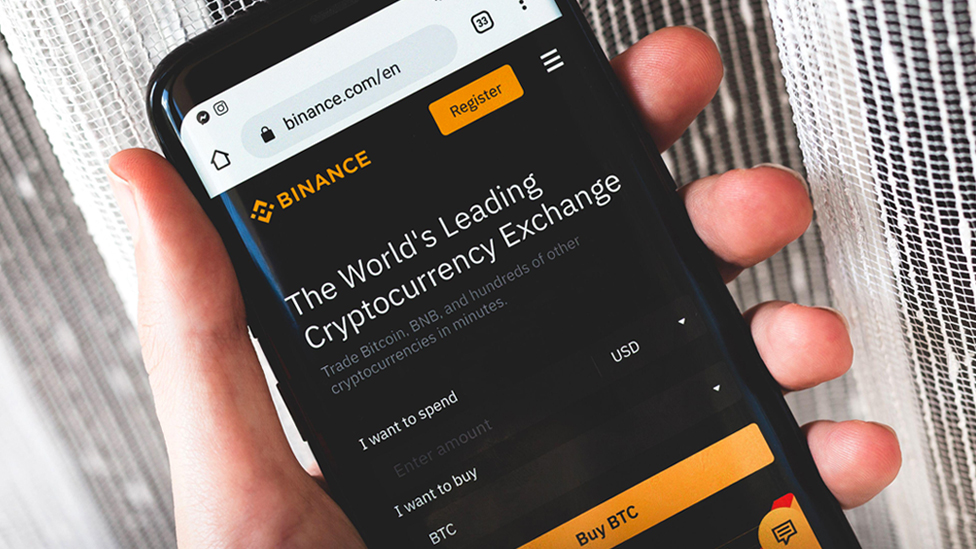
    Binance opened talks with Malaysian regulators to secure a domestic operating licence, aiming to reverse a five-year market shutout triggered by an enforcement ban in July 2021.

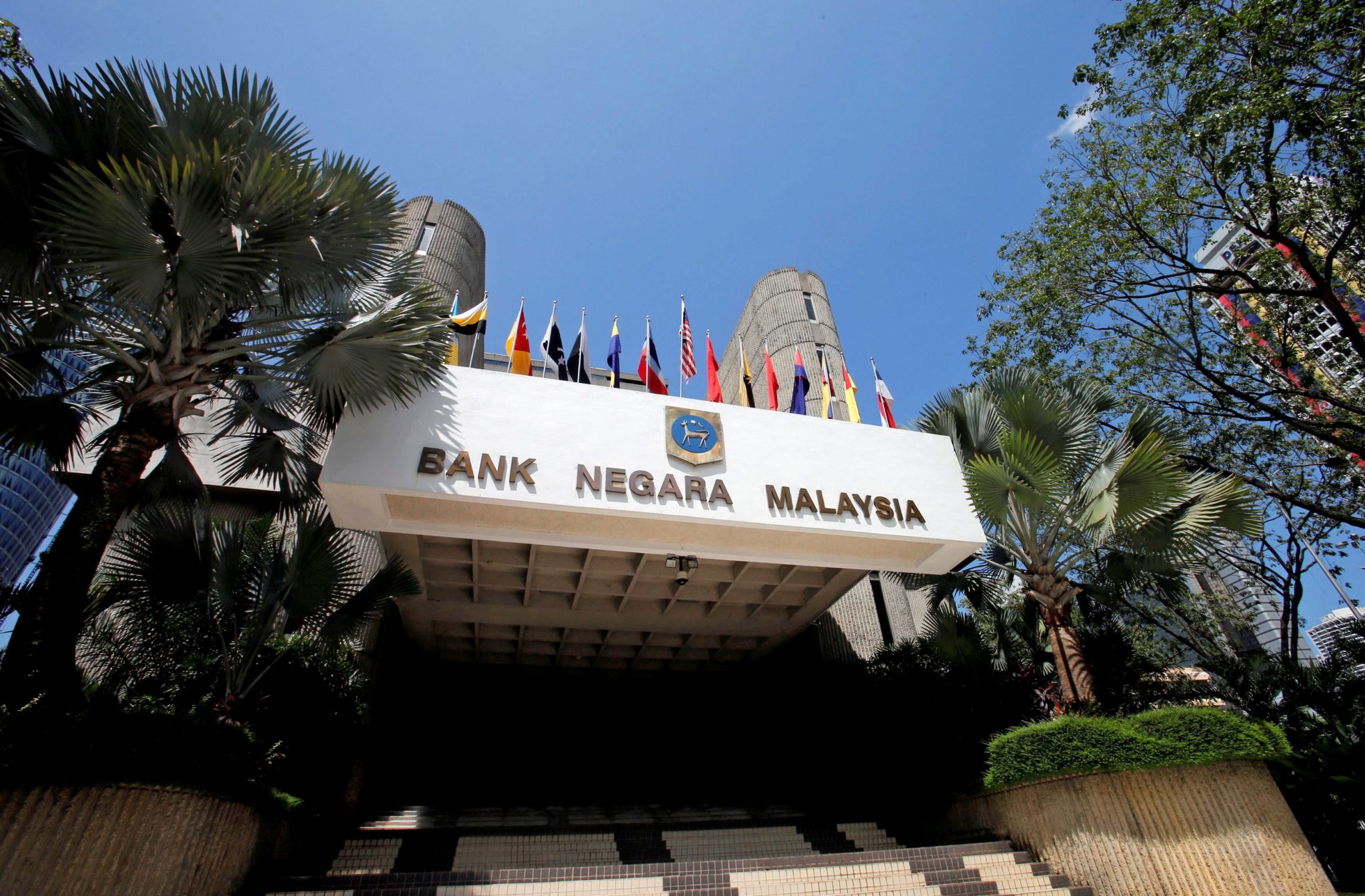
    The exchange engaged the Securities Commission Malaysia and Bank Negara Malaysia across a ten-month dialogue to establish a compliant business model. Domestic regulators previously blocked access to the platform’s mobile applications and domain names after finding it operated an illegal exchange. That enforcement package banned local marketing campaigns and cut consumer access to official community channels.

    The discussions unfold alongside broader industry fallout after Binance suffered a record US$6.3 billion security breach this week, forcing the platform to halt withdrawals and pledge full reimbursement for customer losses.

    Ten Months of Direct Regulatory Engagement

    The dialogue between the exchange and domestic authorities focuses on establishing an onshore corporate structure. Malaysian digital asset rules require exchange operators to win registered market operator status before taking local retail deposits. The company declined to detail the specific licence category requested during the ongoing filings.

    Earlier regulatory actions created a difficult starting point. The Securities Commission removed Binance from its public Investor Alert List earlier in 2024 before reversing course and re-listing the exchange in October without a stated rationale. Central bank officials maintain strict oversight on ringgit-denominated conversions to prevent unauthorized capital flows across regional borders.

    Cross-Border Peer-to-Peer Scrutiny

    Scrutiny over currency controls escalated when Malaysian lawmaker Lim Guan Eng sent a formal inquiry to the Securities Commission in September. The complaint asked officials to examine whether traders used foreign-currency listings on peer-to-peer markets to move ringgit outside approved channels. His office released that correspondence publicly on October 31.

    Management pushed back against allegations of systemic exchange violations while adjusting product availability. The platform confirmed it disabled a Papua New Guinea kina trading board that users unofficially tied to ringgit pricing, acting directly on regulatory feedback. It categorized a separate Romanian leu trade as a single unauthorized posting by a foreign account.

    Competitive Shift Across Southeast Asian Exchanges

    Securing licensed access in Malaysia would change how retail fintechs and onshore exchanges compete for digital asset volumes in Southeast Asia. Domestic operators run under tight capital mandates, serving a conservative retail market that values local deposit insurance and ringgit bank rails. An approved Binance presence would bring institutional liquidity directly into a market that previously pushed crypto investors toward offshore channels.

    Operating risk remains elevated following technical vulnerabilities across international infrastructure. Binance suspended withdrawals and committed to covering client funds after suffering a US$6.3 billion security breach, the largest recorded theft in the sector. Malaysian regulators scrutinize platform solvency and custody tools closely, meaning any security failure abroad reduces the probability of a swift domestic licence grant.

    Past Enforcement Actions and Unresolved Hurdles

    The path back to Malaysia follows half a decade of regulatory friction. The Securities Commission ordered the exchange to halt domestic operations in July 2021 after finding it solicited retail investors without registration. That order shuttered local customer service groups on Telegram and halted web marketing targeting domestic users.

    Decisions now rest with the Securities Commission and Bank Negara Malaysia on whether the platform meets custody and capital requirements. The primary metric to track is whether the Securities Commission issues an agreement in principle or removes the operator from its active alert directory.

  • DuitNow Caps Singapore Cross-Border Fund Transfers at RM3,000 a Day

    DuitNow Caps Singapore Cross-Border Fund Transfers at RM3,000 a Day

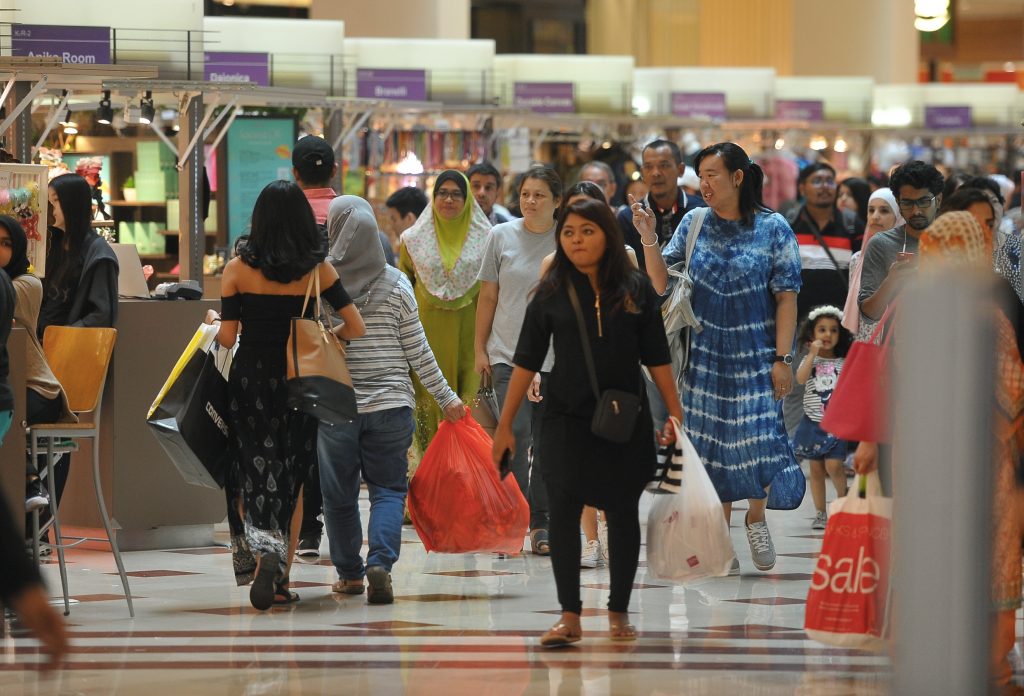
    Malaysian merchants processing cross-border remittances through the national DuitNow payment network face an outbound ceiling of RM3,000 a day for fund transfers to Singapore as of October 2026.

    Domestic business transfers across the same network clear up to RM10 million per transaction, highlighting the gap between local retail payment rails and regional settlement links.

    Operated by Payments Network Malaysia, known as PayNet, the retail payments platform functions under the primary ownership of Bank Negara Malaysia alongside commercial lenders. The infrastructure connects commercial banks and non-bank e-wallets into a single interoperable clearing system. Retailers and suppliers send and receive funds using proxy identifiers including mobile numbers, identity card records and verified Business Registration Numbers issued by the Companies Commission of Malaysia.

    Domestic Transfer Limits and Merchant Fees

    Consumer transactions clear up to RM50,000 per transfer through commercial banking applications, with transfers up to RM5,000 processed without consumer transaction charges. Above that threshold, financial institutions may levy a 50 sen fee, though individual retail banks retain discretion to waive the charge. Commercial users maintain higher headroom, clearing up to RM10 million per transaction subject to institutional credit and fraud underwriting terms.

    Point-of-sale retail payments operate through unified QR standards. Merchants deploy a single static or dynamic QR code that accepts clearing requests from all domestic mobile banking applications and licensed e-wallets. Consumer payments remain fee-free at retail counters, while merchant discount rates apply to retail enterprises depending on their merchant acquirer contract.

    E-commerce checkout integrations route directly through DuitNow Online Banking and Wallets, bypassing traditional payment card rails. The direct routing pulls cleared funds directly from buyer accounts without requiring debit card credentials. For recurring invoicing, the network deploys AutoDebit protocols that clear utility billings, subscriptions and recurring wholesale invoices under pre-authorised value limits without recurring manual approvals.

    Regional Settlement Links and Currency Controls

    Inbound cross-border retail acceptance currently covers visiting consumers from six Asian economies: China, Indonesia, Singapore, Thailand, South Korea and Cambodia. Tourists and business travellers scan local merchant QR codes using their domestic banking apps. Settlements convert automatically, crediting Malaysian merchant bank accounts exclusively in Malaysian ringgit.

    Merchants cannot hold foreign currency balances directly inside the DuitNow clearing architecture. Exchange rates for incoming tourist QR spending are determined by the originating overseas payment application at the point of interaction. This leaves cross-border sellers exposed to conversion markups set by foreign issuing institutions.

    Outbound commercial transactions across the border face structural barriers. While the bilateral corridor with Singapore enables retail peer-to-peer transfers, the daily cap of RM3,000 or S$1,000 restricts corporate trade settlement. Companies paying overseas manufacturers, regional software vendors or inventory partners require separate international clearing rails or multi-currency corporate banking accounts.

    Payment Rail Fragmentation Across Retail Chains

    Retail chains across Southeast Asia are weighing single-currency domestic payment rails against cross-border fintech platforms. The local DuitNow architecture eliminates domestic card processing interchange fees, yet fails to provide working capital accounts in trade currencies such as the US dollar.

    Cross-border procurement teams that purchase stock from Mainland China or regional suppliers cannot use PayNet rails to settle trade invoices. The limitation forces operators to run dual payment workflows: national QR and real-time bank transfers for domestic store sales, and cross-border platforms such as WorldFirst or SWIFT wire transfers for import settlement. For high-volume retail chains, maintaining dual clearing mechanisms adds operational reconciliation costs and exposure to retail foreign exchange spreads.

    The operational split gives pure-play international corporate treasury providers an opening against state-backed retail clearing systems. Commercial banks capture high spreads on foreign exchange wire transfers, driving online sellers and cross-border merchants toward multi-currency accounts that issue local clearing details in overseas markets.

    Building the Regional Payment Network

    PayNet developed DuitNow to consolidate a fragmented mobile payment sector where competing digital wallet operators deployed incompatible proprietary QR codes. The central bank intervened to mandate standardisation, creating a shared national QR code and central proxy registry.

    The central bank expanded the domestic retail clearing platform through bilateral central bank linkages, starting with Thailand and Indonesia before connecting Singapore PayNow. The bilateral linkages aim to reduce regional reliance on traditional card networks and correspondent banking systems for micro-transactions and tourism spending.

    Bank Negara Malaysia and regional central banks continue testing multilateral clearing arrangements across ASEAN economies, with broader business settlement ceilings remaining the key requirement for commercial supply chain operators.

  • Malaysia’s economy expands 4.7% in Q4 2018

    Malaysia’s economy expands 4.7% in Q4 2018

    The Malaysian economy grew at a faster pace of 4.7% in the fourth quarter (Q4) of 2018 driven by private sector activity. This compares with a 4.4% growth in Q3 2018. For 2018 as a whole, the local economy also expanded 4.7%. According to Bank Negara Malaysia (BNM), a rebound in exports of goods and services contributed towards the positive growth of net exports.

    Headline inflation declined to 0.3% from 0.5% in Q3, mainly due to transport inflation turning negative.

    The zerorisation of the Goods and Services Tax and the implementation of the Sales and Services Tax continued to exert an overall downward impact to headline inflation during the quarter.

    BNM governor Datuk Nor Shamsiah Mohd Yunus said the Malaysian economy is expected to remain on a steady growth path with private sector demand being the main driver of growth.

    She said headline inflation is expected to average moderately higher.

  • Bank Negara: US$101.4b international reserves at end-2018

    Bank Negara: US$101.4b international reserves at end-2018

    Bank Negara Malaysia’s (BNM) international reserves remained unchanged at US$101.4 billion (about RM417.06 billion) as at Dec 31, 2018, from Dec 14, 2018. The central bank said in a statement that the reserves position is sufficient to finance 7.4 months of retained imports and is 1.0 time the short-term external debt.

  • Bank Negara to extend observation period for net stable funding ratio by a year to 2020

    Bank Negara to extend observation period for net stable funding ratio by a year to 2020

    Bank Negara Malaysia (BNM) is looking to extend the observation period for the net stable funding ratio (NSFR) in Malaysia for a year to 2020. NSFR is a liquidity standard which comes under the Basel III international regulatory reforms. It refers to requirements for banks to have in place a certain percentage of stable sources of funding, such as commercial papers that have more than a year’s maturity and retail deposits, to support their asset portfolios in the longer term.

    The initial deadline proposed by the Basel committee for the NSFR standard of above 100% was Jan 1, 2018. It was then deferred to Jan 1, 2019.

    Speaking at BNM’s Financial Stability Conference, governor Datuk Nor Shamsiah Mohd Yunus said the extension takes into account the intention to conduct further on-site assessments to validate the maturity and robustness of the liquidity and funding practices of banks, and uneven progress in implementation at the global level.

    “The bank remains committed to implementing the NSFR requirements as part of overall liquidity standards applicable to licensed banks in Malaysia.”

    She added that currently all banks maintain adequate liquidity buffers against short-term liquidity stress, and the vast majority of banks already report NSFR levels above the minimum 100% based on observation data.

    On another note, Nor Shamsiah said the challenge now is when a crisis is going to strike and how it will spread.

    In navigating an uncertain future, she suggested four strategic priorities for financial stability authorities.

    First, authorities need to remain vigilant as emerging economies face mounting pressures that continue to see more volatile capital flows. Second, authorities must continue to develop and deepen their understanding of risk transmission.

    Third, authorities must have a broad policy toolkit for responding to financial stability risks. Fourth, authorities need to increase policy agility as every crisis or financial stability issue is different, and each requires a different policy response.

  • Bank Negara Malaysia seen holding policy rate

    Bank Negara Malaysia seen holding policy rate

    Malaysia’s central bank is expected to leave its benchmark interest rate unchanged at a meeting on Wednesday, as growth remains firm and a short-term dip in inflation is expected after the new government removed a much-maligned consumption tax.

    All 10 economists polled by Reuters forecast that Bank Negara Malaysia (BNM) will hold its overnight policy rate at 3.25%.

    Unlike Indonesia and the Philippines, Malaysia has hiked its policy rate just once this year, by 25 basis points in January.

    That increase was the only hike since July 2014.

    Wednesday’s meeting will be the second since May 9 elections brought a stunning change of government and the return of Tun Dr Mahathir Mohamad, premier from 1981 to 2003, as prime minister.

    It will be the first BNM policy meeting with Datuk Nor Shamsiah Mohd Yunus as governor. She assumed the post on July 1.

    Soon after taking office, Mahathir scrapped the 6% Goods and Services Tax (GST) imposed in 2015, which Malaysians said was a major contributor to rising living costs and a key reason to reject Datuk Seri Najib Abdul Razak and his long-ruling coalition.

    Scrapping GST will likely bring a significant fall in inflation rate, expected to average around 1% in 2018’s second half, Capital Economics said in a note.

    As a result, it said, “another rate hike is probably off the table”.

    In May, BNM said scrapping GST would impact inflation, but it was too early to say by how much. It projected 2018 full-year headline inflation at 2-3%.

    May’s annual inflation rate was 1.8%.

    Standard Chartered, in a note on Friday, said external pressure may push the central bank to hike its key rate, should it become a drag on the ringgit currency, though it did not say when this could happen.

    The ringgit traded at 4.033 to the dollar at midday today. It has weakened about 4.5% since April 2, a peak for the year.

    StanChart has maintained its 2018 full-year economic growth projection at 5.3%, saying the pace would “moderate from strong levels in 2017, but remain firm”.

    Prior to the election, BNM forecast 2018 growth at 5.5-6%, and has not made a fresh projection since the voting.

    The government reported 2017 growth at 5.9%.