Tag: Bank of Korea

  • Bank of Korea Projected to Lift 2026 Economic Growth Estimate Past 3%

    Bank of Korea Projected to Lift 2026 Economic Growth Estimate Past 3%

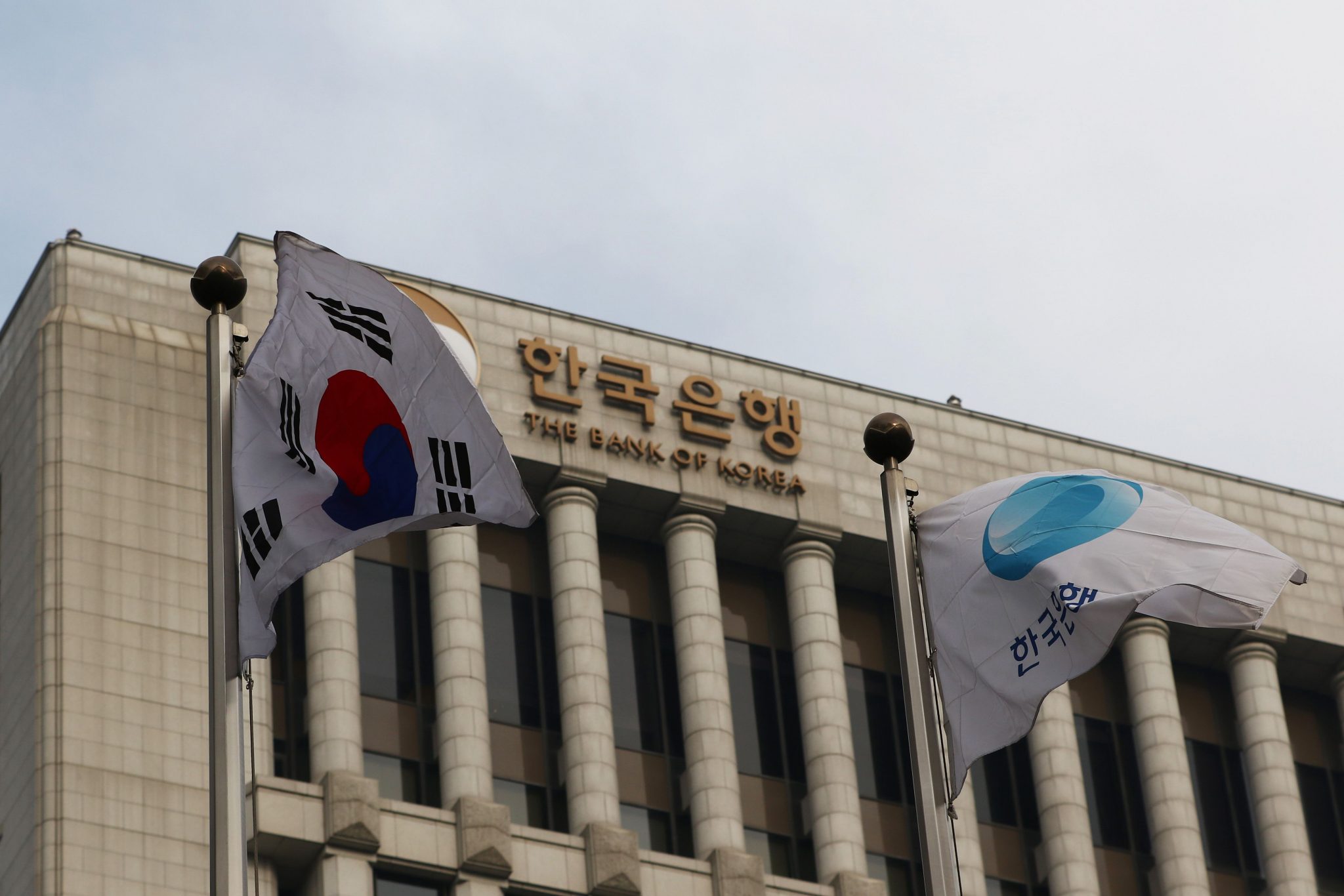
    The Bank of Korea is expected to raise South Korea’s 2026 economic growth forecast above 3 per cent from 2.6 per cent.

    Surging semiconductor exports and recovering domestic consumption are driving private analyst projections as high as 3.4 per cent. Economic forecasters surveyed by Yonhap News Agency anticipate the central bank will adjust its outlook upward during its upcoming revision cycle, reflecting stronger factory output and higher state spending supported by rising tax receipts.

    Semiconductor Supercycle Drives Upward Revisions

    Nomura Securities posted the highest forecast among respondents at 3.4 per cent. Park Jeong-woo, an economist at Nomura, noted that exponential growth in artificial intelligence inference workloads continues to outpace chip production, suggesting supply constraints could extend beyond 2027.

    Korea Investment & Securities analyst Ahn Jae-kyun projected 3.2 per cent annual growth, pointing to a combination of heavy technology exports and a rebound in local consumer demand. Other respondents placed their 2026 projections between 3.1 per cent and 3.2 per cent. Projections for 2027 moderated, landing between 2.2 per cent and 2.8 per cent across the surveyed institutions.

    Some analysts urged caution regarding the duration of the current technology cycle. Joo Won, deputy director of economic research at Hyundai Research Institute, noted that chip exports dipped in August compared to the prior month, suggesting the export boom may reach its peak between late 2026 and early 2027.

    Surplus Records and Consumer Price Pressures

    South Korea’s current account surplus for the first six months of 2026 has already surpassed the 2025 full-year record of $191 billion. Economists expect the central bank to sharply increase its previous $250 billion annual surplus projection published in May.

    For consumer-facing businesses across the region, a stronger macroeconomic baseline in South Korea provides welcome support for retail footfall and high-ticket consumer electronics, though imported inflation limits purchasing power. Central banks across East Asia face similar cross-currents as artificial intelligence hardware spending lifts headline industrial figures while currency volatility keeps domestic borrowing costs elevated.

    Economists expect the Bank of Korea to hold its 2026 consumer price inflation projection at 2.7 per cent, with elevated oil prices and the won-dollar exchange rate serving as the main hurdles to earlier interest rate cuts.
  • South Korea worries about growing economic risks, amid impeachment push for President Park

    South Korea worries about growing economic risks, amid impeachment push for President Park

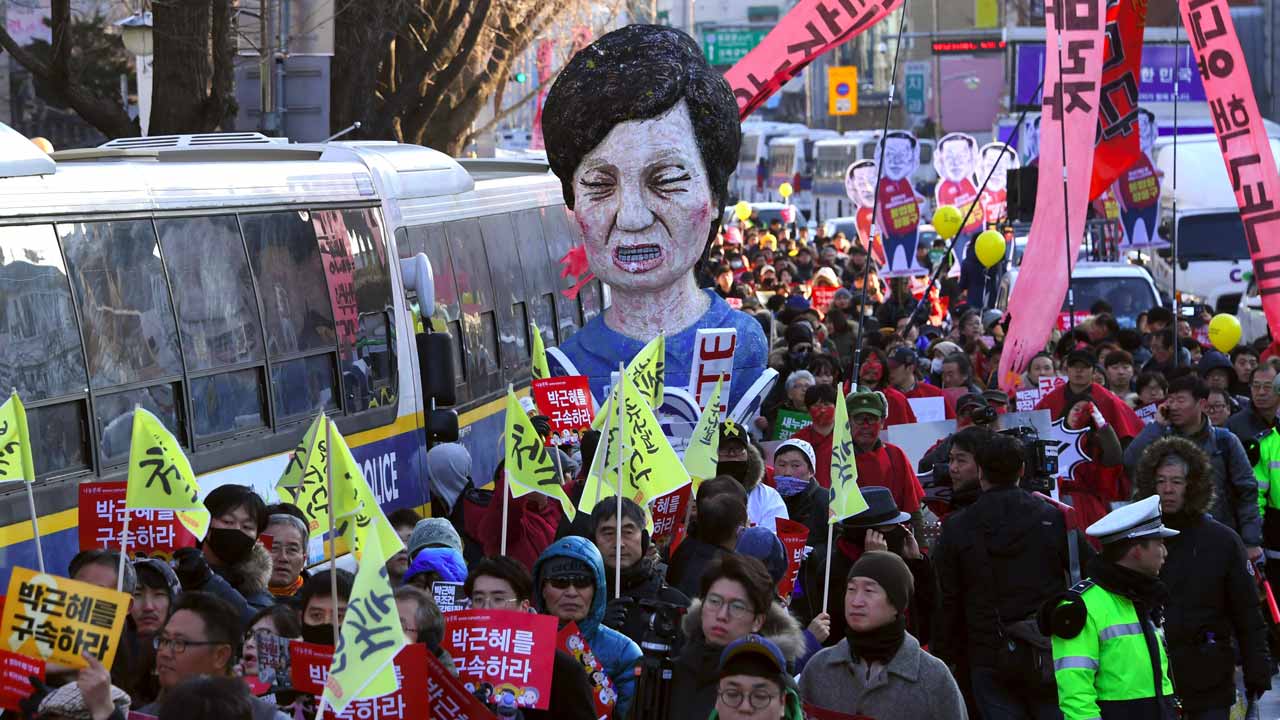
    South Korea’ finance ministry said on Thursday it is concerned about further risks to the economy from “domestic issues”, as parliament prepares to hold an impeachment vote on South Korean President Park Geun-hye.

    The ministry did not explicitly point to the deepening political scandal surrounding Park in its monthly assessment of the economy, but said it was concerned domestic issues may result in weaker consumption and investment at a time when many global uncertainties persist.

    That would put more pressure on an economy that is grappling with record household debt, dozens of zombie companies under restructuring and weak exports, which have been further dampened by Samsung Electronics Co’s decision to scrap its fire-prone flagship smartphone Galaxy Note 7 and a strike at Hyundai Motor Co.

    South Korea is bracing for another possible hit to trade if President-elect Donald Trump follows through on his protectionism rhetoric once he takes office in January, while its financial markets – like other emerging economies – have been roiled by expectations of more U.S. interest rate hikes starting as soon as next week.

    South Korea’s manufacturing activity shrank for the fourth straight month in November and export orders also fell, albeit at a slower pace than in October, a private survey showed last week.

    “We’re seeing a pause in investment and policymaking in general due to political uncertainties,” said Jung Kyu-chul, an economist at state-run Korea Development Institute.

    While the think tank forecasts the economy will grow 2.4 percent next year, down from 2.6 percent estimated for 2016, “it could easily be cut to just above 2 percent in 2017 if this scandal drags on and takes steam out of everything from consumption to investment to job market,” he said.

    The ministry report came a day after Finance Minister Yoo Il-ho cited the uncertain outlook for leadership in Asia’s fourth-largest economy as a risk to growth.

    Consumers already have turned the glummest since the global financial crisis.

    A Bank of Korea survey showed consumer sentiment last month fell to its lowest since April 2009, on the same week that Park’s approval rating sank to an all-time low of 4 percent.

    Park’s embattled presidency faces a critical juncture, with parliament expected to hold an impeachment vote on Friday.

    But even if the motion is passed, it must be upheld by the Constitutional Court, a process that could mean the political crisis will drag on for months.

    Park is accused of colluding with a friend and a former aide to pressure big business owners to pay into two foundations set up to back policy initiatives. She has denied wrongdoing but apologized for carelessness in her ties with the friend, Choi Soon-sil.

    Kwon Young-sun, a Hong Kong-based economist with Nomura Securities, sees the Bank of Korea cutting interest rates only once in 2017 if an early election is held.

    “We now expect only one 25 basis point policy rate cut to 1 percent in the fourth quarter of 2017, after a likely early presidential election in the first half of 2017,” Kwon said in a report released on Thursday.

    Previously, he had expected the bank to make two cuts to 0.75 percent, but said the country isn’t likely to see “any significant macro policy changes in the first half of 2017 until after the election,” he said.

    The ministry said private consumption has rebounded in recent months but largely due to government-led retail promotions.

  • The Bank of Korea Just Delivered a Surprise

    The Bank of Korea Just Delivered a Surprise

    South Korea’s iShares MSCI South Korea Capped ETF (EWY) slid on June 9 after the Bank of Korea cut interest rates by 25 basis points to 1.25%. This is a record low for the Korean policy rate, which is aiming to support the government’s plan for massive debt restructuring for highly indebted firms.

    Growing risks to the economy due to slow trade recovery worldwide also drove the dovish move. EWY had risen by more than 6.5% since the beginning of the month, leading to some profit booking by traders.

    The Bank of Korea Just Delivered a Surprise

    Chinese inflation falls

    Meanwhile, consumer price inflation across China rose by 2.0% in May on an annual basis against expectations of a 2.3% rise. Prices contracted by 0.5% in May, as compared to expectations of a 0.2% decline. Chinese ETFs (FXI) (MCHI) and (ASHR) were declining on June 9, prior to closing on account of the local holiday.

    Japanese indexes continue to correct

    The Japanese Nikkei 225 corrected by nearly 1% on June 9, 2016, after machinery orders added further disappointment to the Japanese economy. Machinery orders fell by 8.2% on a year-over-year basis in April, as compared to forecasts a 2% decline.

    Relatedly, the unemployment rate in the Philippines rose in the second quarter to 6.1%, despite the 5.8% rate last quarter. Thai (THD) consumer confidence in May came in marginally lower at 72.6, while retail sales in Indonesia came in slightly below estimates of 11.1% at 10.4%.

  • Bank of Korea likely to keep policy rate on hold tomorrow

    Bank of Korea likely to keep policy rate on hold tomorrow

    The Bank of Korea is likely to keep its policy rate unchanged at 1.5% during its upcoming meeting. The meeting will mainly focus on the weakness in January’s activity data. Also, there is a higher probability for another cut in GDP forecasts during the April meeting. But, t he rebounding sentiments in global financial markets and February’s macroeconomic data will help the cautious stance of a majority of the MPC members.

    The February’s monetary policy meeting’s minutes showed central bank policymakers’ reluctance regarding further rate cuts, in spite of further decline in the outlook of growth. All members had agreed that there were growing threats on the downside for growth, but only one member had voted for a rate cut.  The other members didn’t support a cut in interest rate because of the usual worries regarding financial stability, the requirement to secure the room for policy actions, the lack of further downside threats for inflation and the expected diminishing marginal impacts of additional easing actions.

    January’s activity data indicated broad weakening of growth momentum. The drop in manufacturing production was expected given the considerable decline in January exports. However, the contraction of retail sales and services production was a major concern because consumption was the main over GDP growth driver in H2 2015.

    As facility investment did not strengthen in December, it was only construction activity that kept its strength amongst the different activity indices. However, strength in February’s exports alleviated worries regarding growth. The renewed tax cut on autos will stimulate consumption as the retail sales contraction in January was mainly due to auto sales after the termination of tax cut in December. A considerable rise in February’s headline inflation to 1.3% supports most of the MPC members’ views that the central bank’s current inflation forecast is appropriate.

    The Bank of Korea is unlikely to change its policy rate throughout 2016. The unwillingness of MPC members regarding additional easing implies that the central bank is expected to keep rate unchanged even if the GDP forecast is revised downwardly from the current estimate of 3%.

    Also, BoK’s projection of potential growth in 2017 might be as low as 2.8%. Considerable surprises on the downside in growth, which can lead to a sizable reduction in the GDP growth forecast to a level of about 2% or below is expected to be a precondition for a further cut in interest rate.

    © EconoTimes 2015. All rights reserved. The EconoTimes content received through this service is the intellectual property of EconoTimes or its third party suppliers. Republication or redistribution of content provided by EconoTimes is expressly prohibited without the prior written consent of EconoTimes, except for personal and non-commercial use. Neither EconoTimes nor its third party suppliers shall be liable for any errors, omissions or delays in content, or for any actions taken in reliance thereon.