Retail News CRM

Tag: barista

  • Robot baristas to serve coffee in over 30 train stations in Singapore

    Robot baristas to serve coffee in over 30 train stations in Singapore

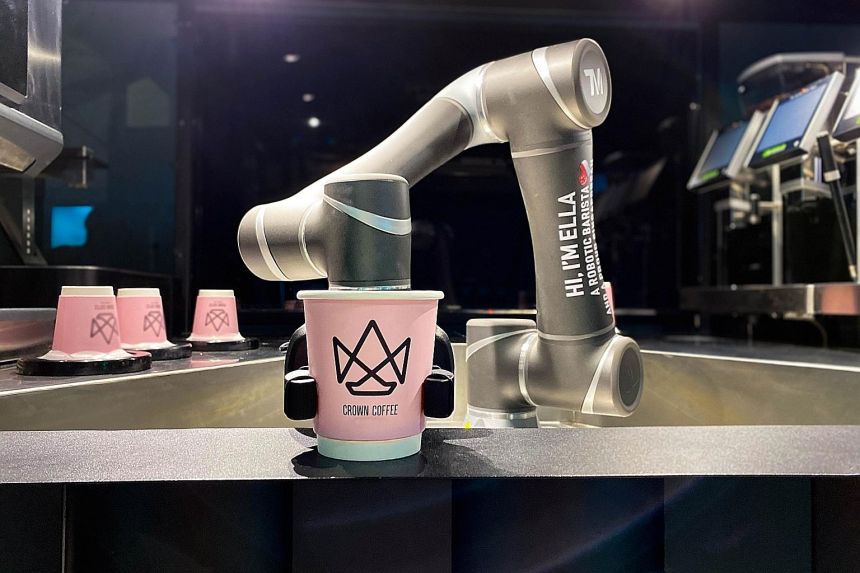
    Singapore-based Crown Digital announced yesterday that it will be installing its robotic baristas at 30 Mass Rapid Transit (MRT) stations in that country by the end of 2022.

    Dubbed “Ella,” Crown Digital’s robo-coffee kiosk is 5 sq. meters, serves a variety of coffee and tea drinks, and can make up to 200 coffees per hour. While Ella uses an articulating arm to make and serve drinks, one of its standout features is its transparent screen that can display information about drinks, orders and even full-motion videos and graphics.

    For these MRT installations, Crown Digital has collaborated with Stellar Lifestyle, which has “expertise in property and retail management, media and digital advertising solutions,” according to the Crown Digital announcement blog post. Crown Digital also wrote that Stella Lifestyle has invested an undisclosed sum in Crown Digital’s pre-Series A round of funding.

    This is the second rail network that Crown Digital has partnered with, following a pilot deal with Japan’s JR East‘s train stations signed at the end of last year. With their high-traffic audiences looking for refreshment on-the-go, transit hubs like MRT stations and airports are popular target markets for robotic coffee kiosk companies that are just now coming market such as Crown Digital, Smyze, and Cafe X.

    Another benefit to robotic coffee baristas in these pandemic times is that they are contactless. Robots don’t get sick, and don’t act as a vector of viral transmission the way that humans do.

    While there are a number of robot baristas coming to market, we have yet to see big coffee chains jump into automation. The exception is Costa Coffee, which bought Briggo last year and re-branded those Coffee Hauses into Costa Coffee BaristaBots. Though I suspect that as more deals like Crown Digital’s start popping up, we’ll soon see other big coffee brands like Starbucks and Dunkin add their own robots as well.

  • Starbucks global sales fall despite Chinese boost

    Starbucks global sales fall despite Chinese boost

    Starbucks Corp. slumped in late trading on Tuesday after reporting a sales decline that was deeper than expected and the departure of Chief Operating Officer Roz Brewer.

    Global same-store sales, a key gauge of restaurant success, fell 5% in the fiscal first quarter. That’s worse than the estimated decline of 4.2% compiled by Consensus Metrix. A 5% drop in the U.S. was just ahead of estimates, while a 5% gain in China beat expectations.

    The results show the company is facing an uneven road back following the deep impact of the global pandemic. Despite the continued weakness in many markets, strength in China and overall same-store sales that are better than the previous quarter suggest it’s past the worst.

    Brewer’s exit, however, shows a substantial shakeup is underway in the coffee giant’s C-suite. Starbucks announced earlier this month that Chief Financial Officer Pat Grismer is leaving the company due to retirement. He will be replaced by Rachel Ruggeri, senior vice president of finance for the Americas.

    Brewer is leaving to become chief executive officer of Walgreens Boots Alliance Inc.

    In spite of the management changes, Starbucks sees performance turning around quickly from here, and the current quarter’s results will be bolstered by a year-ago comparison with the start of the pandemic when commerce was the most restricted.

    In the second quarter, U.S. same-store sales will grow 5% to 10%, the company said. Comparable sales in China will nearly double, the company said, although the result will be skewed by the pandemic comparison.

    Starbucks reported fewer transactions overall, but customers spent higher amounts, continuing a trend established earlier in the pandemic. Revenue fell 5% from the prior year.

    The U.S. and China are the company’s two largest markets, and together making up 61% of its global portfolio, with 15,340 and 4,863 stores, respectively, it said. Starbucks opened 278 net new stores in the quarter, underscoring how the company is looking to aggressively expand in spite of the global upheaval caused by Covid-19. The company also reported a 15% increase in members to its loyalty program.

  • Ella takes up role as Singapore’s first robotic barista

    Ella takes up role as Singapore’s first robotic barista

    She is a barista with a very strong arm. And “Ella”, Singapore’s first fully automated robot barista, will be serving customers their caffeine fixes at CityHub mall in Lavender from Saturday (Oct 3).

    Crown Coffee, the food and beverage arm of Crown Group, said the outlet was launched in an effort to push automation and reduce physical interaction in the light of the coronavirus pandemic.

    Ella, named after Crown Group founder and chief executive Keith Tan’s wife, served a range of hot drinks to Minister of State for Trade and Industry Low Yen Ling and members of the media at a launch event on Friday.

    In a speech at the event, Ms Low, who is also Minister of State for Culture, Community and Youth, emphasized the importance of digitalization and automation in navigating the pandemic and zoomed in on Ella as a solution that creates opportunity from chaos.

    “While Covid-19 has severely impacted our businesses and economy, it has also created the impetus for us to build stronger business capabilities and seek out new growth opportunities,” she said.

    Crown Coffee’s new robot barista is able to make up to 200 cups of coffee an hour. It joins a host of new innovations spurred on by Covid-19 such as cleaning robots.

    Ella brews and serves coffee behind a transparent screen in a contactless set-up. Users will have to download the Crown Coffee mobile app, through which they can order drinks, from $4 each.

    Developed by Crown Group’s technology arm, Crown Digital, Ella is Mr Tan’s response to the cost pressures of training and retaining human workers, and a pre-emptive response to digital disruption.

    “We need to disrupt ourselves, as opposed to waiting for things to change,” said the former wealth manager, who started Crown Group in 2016 to follow his passion for coffee.

    Ella has been in development since 2017, when the first prototype was built.

    Mr Tan, 40, said Ella is part of his company’s aim to serve consistent, barista-quality coffee to more people conveniently.

    He added: “Ella’s main application will be in high-traffic areas like MRT stations or airports. Imagine you’re on your way to work and you order your coffee from the mobile app and when you get to the station your coffee is waiting for you.”

    Crown Group is currently seeking funding to expand Ella across Singapore and beyond, said a spokesman.

    Asked about the costs involved compared to employing human baristas, Mr Tan said that it will take some time for any savings from automation to accrue.

  • Australian barista Paul Bassett Expanding Coffee Bussiness

    Australian barista Paul Bassett Expanding Coffee Bussiness

    A decade after launching in South Korea, Australian Paul Bassett plans to make the most of a “positive evolution” in the local coffee culture, expanding his brand partnership with a local dairy company.

    Paul Bassett teamed with Maeil Dairies Co to launch a coffee brand named after him in 2009 – just at the time local consumers were starting to embrace specialty coffee. Their vision was to target the growing high-end coffee market.

    “Driven by a lot of curiosity for specialty coffee, the overall (Korean coffee) market has grown in the past 10 years and specialty components within the market showed some real healthy growth,” the 2003 World Barista Champion said in a recent interview.

    “I think it was the timing when we opened the (first) store and the location of the store was quite important. Had we been here 20 years ago, I am not sure.”

    South Korean’s craze for coffee has been described as dramatic in recent years. Starbucks and other premium coffee brands have sprawled into every corner of the nation’s big cities.

    South Korea’s coffee market was estimated at US$9.85 billion last year, and the specialty sector of the market is still growing.

    When Paul Bassett opened its first location in a department store in the affluent Gangnam district in 2009, it made a splash in the sector with a differentiated product lineup beyond typical Americanos and lattes.

    The brand made a name for itself with lungos, an Italian-style short black coffee with more water, a rather nascent item at the time. Lungos are weaker than espressos with additional hot water but more bitter than Americanos.

    Paul Bassett outlets, operated by M’s Seed Co, a wholly owned unit of Maeil Holdings, have also proven popular due to a variety of latte items and ice creams, with milk provided by Maeil Dairies.

    For example, its ice cream latte, similar to Italian espresso-based affugatos, is also a hit at the coffee house.

    Bassett said he has been deeply involved in selecting beans, deciding on the blending ratio and roasting profile, quality checks and product development. Baristas at Paul Bassett stores extract espresso and make drinks according to his manual.

    The 41-year-old barista says he works as a “gatekeeper of quality” to maintain quality and consistency of beans and other drinks at 96 stores, mostly located in the Seoul metropolitan area.

    “We can go into one store in one location and have the same result and same experience in all of the locations,” he said. “It’s a challenge, but it’s one of the things that is really important to us.”

    Starting with 500 million won in sales in the first year, Paul Bassett posted 93.8 billion won in sales in 2018 and aims to double the number of outlets to 200 by next year.

    Without a doubt, local coffee brands like Paul Bassett still lag far behind Starbucks. The US coffee giant generated 1.5 trillion won in sales last year and currently runs 1290 stores in Korea.

    Still, Bassett is optimistic about his brand’s further expansion on the back of a rising appetite for specialty coffee and its royal customers. To fuel growth, the barista, who makes regular visits to Korea to check the menu and train baristas, said he will work with the M’s Seed to educate South Koreans about the origin of beans and the chemistry behind coffee.

    Once consumers know every cup of coffee can tell a story from farms from Ethiopia, Guatemala and Brazil, they will crave specialty coffee more than blended coffee, he said.

    Growing up in a family that runs a restaurant in Australia and having found his true passion for coffee during his trip to Italy 20 years ago, Bassett says he wants to contribute to the Korean coffee culture.

    “I have a very intimate and personal relationship with coffee. I’ve been able to develop an understanding of coffee through so much experimentation that I understand all the little inputs and how they can impact taste,” Bassett said.

    “I feel like the journey has brought me to where I am now.”
  • Starbucks India showcases coffee craft and innovation with ‘Starbucks Barista Pride’

    Starbucks India showcases coffee craft and innovation with ‘Starbucks Barista Pride’

    Starbucks is taking beverage innovation to new heights with the simultaneous launch of 134 new, crafted beverages. Delivering on the iconic ‘Third Place’ experience, while strengthening commitment to innovation and coffee passion, the global coffee chain has introduced a new initiative called Starbucks Barista Pride where baristas from each Starbucks store will feature a beverage unique to their store, conceptualized and created by themselves.

    Till the end of February, all Starbucks stores across India will serve a specially curated beverage, enabling customers to ‘coffee hop’ and try 134 unique beverages across the 134 Starbucks stores in India.

    Based on the idea of customization and personalization, while celebrating the heart and soul of the signature Starbucks Experience, Starbucks Barista Pride is here to showcase the talent and innovation the Starbucks baristas have to offer.

    The wide range of unique beverages includes Turkish Espresso Praline available at the Chapel Road store in Mumbai, Chai White Chocolate Mocha available at the Vega Mall store in Bangalore and Winter Chocolate Cream available at the DLF Hub store in Delhi.

    “Starbucks is committed to delivering an unparalleled, unique experience for every customer. We are delighted to introduce ‘Starbucks Barista Pride’- a new coffee forward initiative which highlights the exemplary coffee skills of our Starbucks baristas and brings to our customers a wide range of artisanal beverages. At Starbucks, we believe in celebrating each customer’s individual coffee preference and profile. For us each cup of coffee is unique and especially suited to the coffee palette of our customer. With a deep understanding of coffee, our Starbucks baristas personalize each cup to perfection,” said Veetika Deoras, Head – Marketing, Category, Digital and Loyalty at Tata Starbucks Pvt. Ltd.

    “We are humbled to lead specialty coffee in India and initiatives like Starbucks Barista Pride are a tribute to our customers and reflect the Starbucks 47-year legacy of sourcing, roasting and serving world’s top Arabica coffee,” she added.

  • Barista helps launch Need Coffee specialty outlet

    Barista helps launch Need Coffee specialty outlet

    Champion barista Daniel Concepcion Roque and his partners at Where Have You Bean have opened Need Coffee in Paranaque City in Metro Manila.

    Roque, who represented the Philippines in the World Aeropress Championship last year, says he did not originally intend to open a coffee shop.

    “My best friend’s father was planning to put up a coffee shop and just needed the expertise to do it,” says Roque. “From then on, we signed a contract and opened Need Coffee.”

    In its manifesto, Need Coffee says it is not out to “reinvent the wheel” but simply to give customers the middle ground of specialty coffee in a not overly commercialised package.

    “The chains get it. The average consumer does not walk into a shop expecting their lives to change over a cup of coffee. They simply need coffee,” the manifesto says.

    “Right now, specialty coffee is seen as unnecessary, overpriced and merely a trend. Need Coffee is here to differentiate itself from the stigma of bad-tasting commercial coffee, but also learn from commercial shops.”

    Roque says the company wants to train and grow with its baristas, later partnering with them in their own ventures.
    The shop serves espresso, Americano, latte, hot chocolate or even iced mocha and rose water cold-brew latte. Light snacks are also available.

  • Starbucks Korea hosted 2nd annual Barista Championship for Partners with Disabilities

    Starbucks Korea hosted 2nd annual Barista Championship for Partners with Disabilities

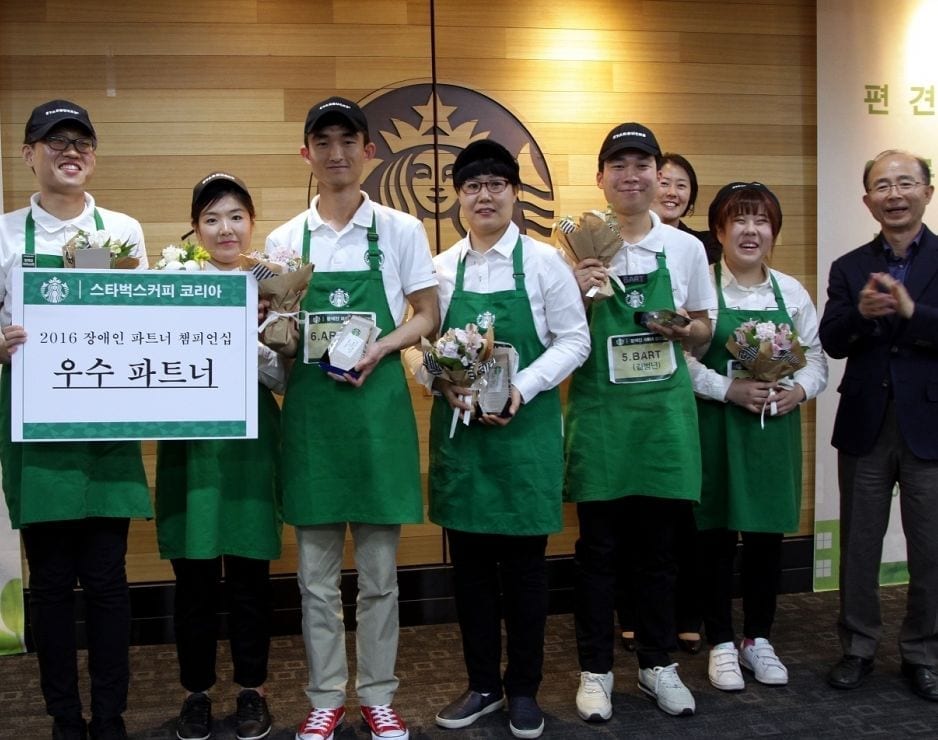
    Learning that she was the winner of Starbucks Korea’s Barista Championship for Partners with Disabilities was a surprise for Banny M.H. Choi.

    “When I found out about this championship, I wasn’t sure if I could do it, but I decided to challenge myself,” said Choi, who has a hearing loss. “When they announced that I was the winner I couldn’t believe it. I didn’t expect to earn first prize because I was so nervous.”

    Excelling in the competition was a source of pride for Choi.

    “I have always tried my best to eliminate prejudice about the disabled,” Choi said. “After winning this competition, I am confident that I can do anything regardless of my disability.”

    Starbucks Korea hosted the championship for the second consecutive year, as a way to recognize partners (employees) with disabilities. Choi and the remaining nine finalists were selected to participate based on recommendations from their district managers.

    During the competition, they were judged by three partners from the Starbucks Coffee Leadership and Operations Service Team on beverage quality, speed of service, cleanliness and latte art. As the victor, Choi received a trophy and a Starbucks Card loaded with 100,000 Korean Won (approximately USD$90.00).

    “We take pride in the fact that Starbucks is a welcoming workplace for everyone,” said S.K. Lee, president, Starbucks Coffee Korea. “We hope to demonstrate the talents of all our baristas and change perceptions about the abilities of people with disabilities.”

    The company’s effort to hire and train people with disabilities has not gone unnoticed. In April, Starbucks Korea received the presidential award from the Korea Employment Agency for the Disabled and the Ministry of Employment and Labor.

    “This year’s finalists had very impressive skills, which made it difficult to select one winner,” said Lee. “Next year, we will offer a competition in each market in the China and Asia Pacific region to recognize more of our partners.”


  • Starbucks barista from Indonesia Ryan Wibawa competes in the World Brewers Cup finals

    Starbucks barista from Indonesia Ryan Wibawa competes in the World Brewers Cup finals

    “It was like a dream come true,” said Wibawa, a Starbucks barista from Indonesia.  I felt very humbled and honored to represent my country in an international competition. The experience was the best teacher.”

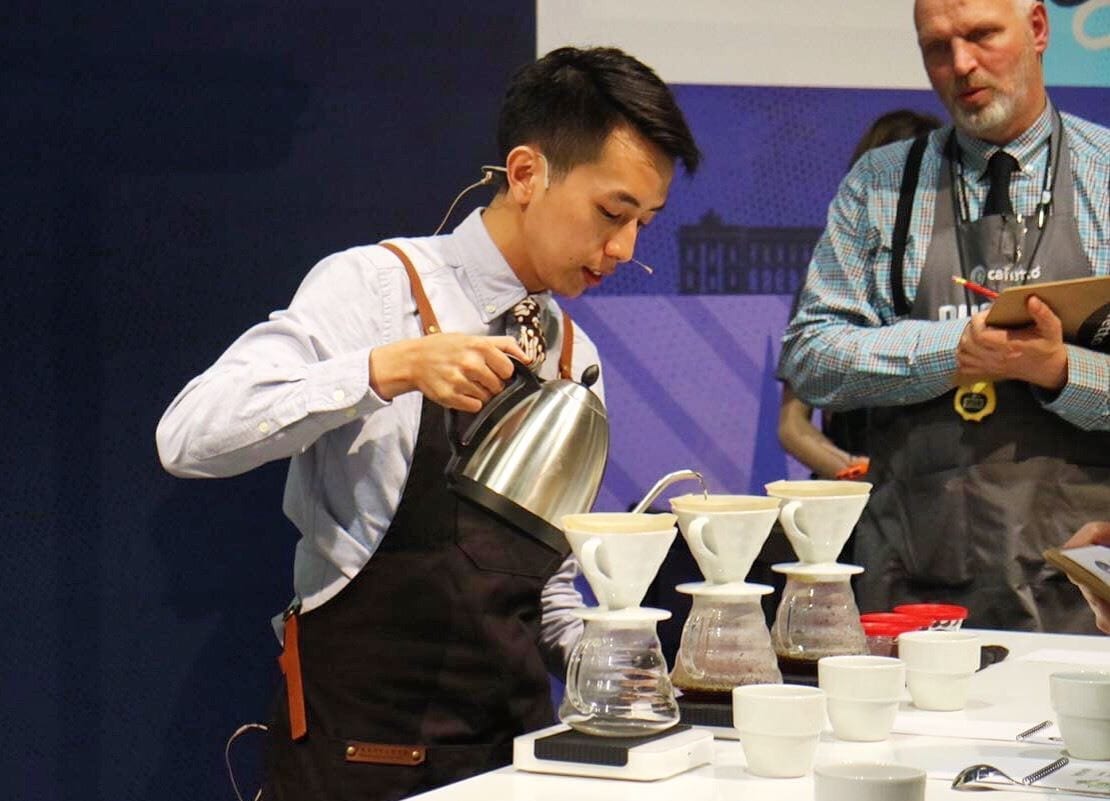
    Wibawa was matched against 36 competitors from all over the world at the championships, which took place from June 23-25 in Dublin, Ireland. As part of the competition, he crafted three coffee beverages that were judged on aroma, flavor, taste, acidity, body and balance. Wibawa also had to impress the judges with his customer service skills.

    “The competition was hard, but it was a great challenge for me,” he said. “No words can describe the feeling,” he said. “From every competition I gain something, new knowledge, new friends and new skills.”

    Although a competitor from Japan took first place, Wibawa is proud to have ranked among the top 25.

    Wibawa was first exposed to coffee when he joined Starbucks two years ago. He learned quickly and developed an enthusiasm for all things coffee, which led to being selected as his district’s coffee master in 2014. A year later, he won Starbucks Indonesia’s Barista Championships and ranked number one in the Indonesian Brewers Cup Championship. In February 2016, he placed in the top three at the China and Asia Pacific (CAP) region’s Starbucks Barista Championships. His vast experience paved the way for competing in Dublin.

    “Participating in a world competition definitely had a different feeling,” said Wibawa. “The competitors from all around the world had excellent coffee skills. It was a tough competition and a great learning experience.”

    When Wibawa is not competing, he works at Indonesia’s first Starbucks Reserve store in Jakarta, where he delights customers with his coffee craft. He also shares his expertise by training other Starbucks partners at Indonesia’s third Starbucks Reserve location in Bandung.

    “I am very lucky and grateful to have a very supportive family, friends and all Starbucks partners,” he said. “They gave me the strength to compete in the World Brewers Cup competition.”

  • Starbucks baristas vie for best of Asia honour

    Starbucks baristas vie for best of Asia honour

    Starbucks baristas from across Asia took part in the first Regional Barista Championships in Hong Kong.

    The contest, held before more than 600 spectators, drew 2000 entries from markets including China, Thailand, Hong Kong, Malaysia, Japan and Indonesia before the field was narrowed to the final 14.

    Finalists were judged on coffee knowledge, beverage mastery and customer service. Each partner had 20 minutes to demonstrate technical and communications skills, craftsmanship and knowledge of the barista profession.

    “Our judges group, made up of eight partners and one guest who is an accredited global coffee-competition judge, was immensely impressed and inspired by the professionalism and passion demonstrated by the final competitors,” said Major Cohen, senior project manager, Starbucks Global Coffee.

    The top three partners from round one of the finals were:

    • Nopparat “Yong” Arpornsuwan who joined Starbucks Thailand in 2002 as a part-time barista and is currently the store manager at the Baan Chart Khaosan Starbucks in Bangkok. She has a personal connection and understanding of coffee, having grown up near coffee farms in Thailand.
    • Hirokazu Terasaki of Japan, who joined the global coffee giant because of the friendly service culture a year ago. He is now an assistant store manager at the Maguro store in Japan.
    • Ryan Wibawa of Indonesia, who became a part-time barista with Starbucks in 2011 and just two years later was designated as a Coffee Master. Now a full-time shift supervisor at the first Starbucks Reserve store in Indonesia, Wibawa earned first-place honors in the first Indonesian Brewers Cup Championship finals in November 2015.

    Starbucks partners from China and Asia Pacific region finalists in the first Regional Barista Championships in Hong Kong. From left: Wibawa, Terasaki and Arpornsuwan.

    Arpornsuwan took top honors, based on her “perfect execution, personal storytelling and knowledge of coffee sourcing,” to become the first Starbucks Barista Champion. She was awarded a first-place trophy, a hand-crafted leather roaster brewers kit complete with coffee and accessories, and a three-week coffee experience in Seattle, which will include a visit to the first Starbucks at Pike Place Market and a tour of Starbucks Reserve Roastery and Tasting Room.

    Starbucks will celebrate additional barista champions across the globe in 2016. The company will host the Europe, Middle East and Africa Barista Championships and US Barista Championships later this year.