Tag: Bata

  • Bata’s First Indian Ceo, Sandeep Kataria, Steps Down; Panos Mytaros Steps Up As Global Successor

    Bata’s First Indian Ceo, Sandeep Kataria, Steps Down; Panos Mytaros Steps Up As Global Successor

    Sandeep Kataria, the Chief Executive Officer of Bata, has announced that he will be resigning from his role in September to seek fresh prospects. The departure will coincide with the appointment of Panos Mytaros as the corporation’s new Global CEO.

    Transition of Leadership

    Kataria, who started his tenure with the Switzerland-based footwear company in 2020, was the first Indian to spearhead the brand, which has been in business for 130 years. During his time with Bata, Kataria played a crucial role in modernizing its global operations. His tenure witnessed a significant transformation of the brand, including a revamped identity, streamlined operations, and a shift towards digital and design-led innovation.

    In a highly competitive and digital-dominated retail landscape, Kataria was credited for enhancing Bata’s market positioning across Asia, Africa, and Europe. The company expressed deep appreciation for his contributions, emphasizing his tireless dedication to the people and his passion for the Bata brand.

    Looking back at his time with the company, Kataria portrayed Bata as “a community, a legacy, and a force for good,” expressing that leading the team was one of the most significant privileges of his life. It is expected that Kataria will remain with the company for several months to facilitate a smooth leadership transition.

    Appointment of New Global CEO

    The new Global CEO, Panos Mytaros, is an industry veteran with over 30 years of experience in the footwear and leather industry. Prior to his appointment at Bata, he held the position of CEO at the Danish shoe company, Ecco.

    Graham Allan, the chairman of Bata, praised Mytaros for his deep industry knowledge and passion for footwear craftsmanship. “His track record in brand building and developing compelling footwear collections, as well as in leading complex international organizations, made him the ideal candidate to guide Bata through our next phase of growth,” Allan added.

    About Bata

    Bata, established in 1894 in the present-day Czech Republic, continues to be a family-owned business. The company sells approximately 150 million pairs of shoes annually under roughly 20 brands, including Bata, North Star, and Power.

    In India, Bata operates over 1960 stores, selling roughly 50 million pairs annually. This makes it the country’s leading footwear company in terms of both revenue and volume.

    Questions & Answers

    Who is replacing Sandeep Kataria as the CEO of Bata?
    Panos Mytaros, previously the CEO of the Danish shoe company Ecco, will replace Sandeep Kataria as the CEO of Bata.

    What significant changes did Sandeep Kataria bring about in Bata during his tenure?
    During his tenure, Kataria led a significant transformation of the brand, including a revamped identity, streamlined operations, and a shift towards digital and design-led innovation. He also helped enhance Bata’s market positioning across Asia, Africa, and Europe.

    What is Bata’s standing in the Indian market?
    With more than 1960 stores and approximately 50 million pairs of shoes sold annually, Bata is the largest footwear company in India by both revenue and volume.

  • Bata plans hundreds more stores within the next three years

    Bata plans hundreds more stores within the next three years

    Footwear brand Bata in planning to launch 100 new stores in India against the backdrop of the coronavirus pandemic.

    The openings are part of the firm’s plans to have 500 more outlets operating by 2023 in the territory above its current 1500 stores. The move is expected to improve Bata’s market penetration in semi-urban and rural areas.

    “We will open around 100 stores this year,” said Bata India chairman Ashwani Windlass, “and 80 percent of these outlets will be opened through a franchise model in tier-II and tier-III cities.”

    Stores will be selectively opened in areas that performed comparatively well economically despite the impact of the pandemic. More urban customers may be targeted with mobile shops driving into more remote regions and setting up temporarily in residential complexes.

    The firm is also boosting its efforts in e-commerce, making deliveries in more than 1300 cities. Bata management currently estimates that online sales make up 5 or 6 percent of total sales.

  • Bata Malaysia donates 60,000 pairs of shoes

    Bata Malaysia donates 60,000 pairs of shoes

    As a global leader in shoes, Bata feels a special responsibility towards all its stakeholders including the communities in which it operates across countries and regions. This is why Bata commits to donate 1 million pairs of shoes to frontliners and their families globally; the front-liners fighting the Covid-19 with admirable courage and dedication every day. The donation will impact a number of countries, in Europe, Latin America, Africa, Asia-Pacific and India.

    In Malaysia, Bata has committed to donate 60,000 pairs of Bata shoes to Polis DiRaja Malaysia in appreciation of their services to the country in facing this pandemic. The Malaysian police forces have been one of the pivotal services in combating the Covid19 pandemic in Malaysia. During the lockdown period from March 18th till May 4th, the police forces had been working in high gear in rain and shine to ensure that we, the general public adhere to the Movement Control order. It is their sacrifice that contributed to the containment of the spread of the Covid19 virus in Malaysia at large.

    Bata Malaysia is giving away 7,500 pairs of men’s shoes, 16,500 pairs of ladies shoes, 11,000 pairs of sports shoes, 14,000 pairs of children shoes and 11,000 pairs of school shoes in total with an estimated value of RM 3.6million (total 60,000pairs) to Polis Diraja Malaysia. “We are extremely grateful for their contribution to the nation, and now in return we hope that our donation of shoes will bring cheer to the police personnel and their families” said Ajay Ramachandran, Managing Director of Bata Malaysia.

    Receiving the Bata shoes on behalf of PDRM was The Inspector-General of Police Malaysia YDH KPN Tan Sri Dato’ Seri Panglima Abdul Hamid bin Bador, and The Deputy Inspector-General of Police Malaysia Yang Berbahagia Dato’ Pahlawan Mazlan Mansor.

  • Bata India opens its largest outlet store in India

    Bata India opens its largest outlet store in India

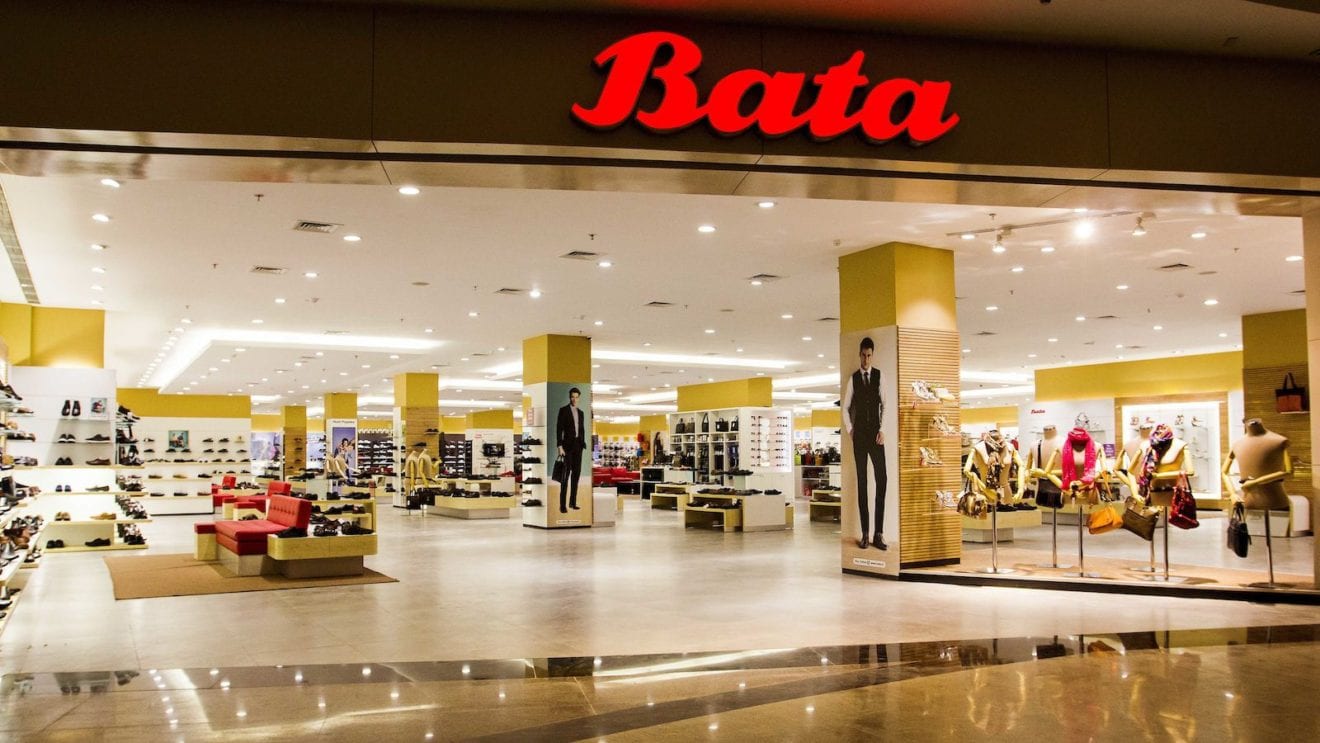
    Footwear retailer Bata India has opened a 6000sqft experiential outlet in Infiniti Mall, Malad.

    The store hosts a large Sneaker Studio, extensive fashion footwear, and handbags collection, workwear ranges for men and women among others. A highlighted feature is the outlet’s Happy Feet Centre for specialized foot care services, such as 3D foot scanning, an on-site podiatrist and a premium shoe laundry.

    The site features omnichannel enablement to allow delivery to the home of any chosen shoe, not in stock. Real-time shopper feedback is captured on the store’s NPS platform.

    “Expanding our retail footprint and channel presence continues to be our core focus for the year,” said Bata India CEO Sandeep Kataria. “All stores are being designed under the global Red format to standardize the brand imagery across the globe. We are focusing on innovating our product portfolio and are constantly increasing newness by introducing New Arrivals Every Friday.”

    Bata India has more than 150 franchise stores throughout the territory and intends to launch 500 stores by 2024.

  • Bata Malaysia Opens Their First Exclusive Kids-Only Store

    Bata Malaysia Opens Their First Exclusive Kids-Only Store

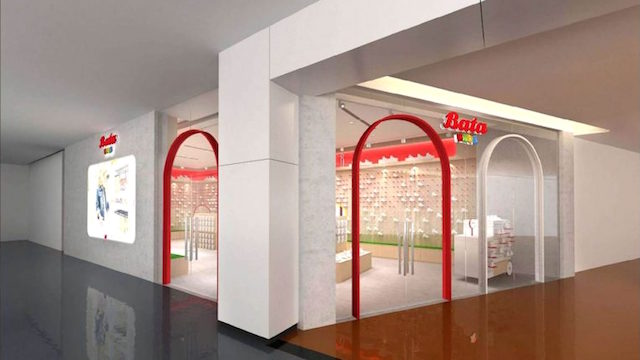
    Bata Malaysia has opened the first Bata Kids concept store at Sunway Pyramid. Located on the first floor of the mall, the store offers children’s footwear and accessories from brands such as Bubblegummers, Disney’s Marvel, Hello Kitty, Barbie, and My Little Pony.

    “The flagship store is carefully constructed to be fun and colourful in order to appeal to the kids. This extends to the store’s design as well as visual merchandising,” the company said in a statement.

    An area is designated for kids to unleash their creativity through drawing and there is plenty of room to accommodate strollers.

    Bata Malaysia is offering a promotion on October 31, where the first 10 walk-in customers to flash the Bata Malaysia Facebook/Instagram page to the cashier will receive free shoes.

    The next 40 walk-in customers will be entitled to a RM20 voucher.

  • Capillary Technologies Leads Bata’s Omnichannel CRM Journey to New Markets in Southeast Asia

    Capillary Technologies Leads Bata’s Omnichannel CRM Journey to New Markets in Southeast Asia

    Capillary Technologies, a Singapore-based company that provides consumer insights, personalised engagement, omnichannel commerce and loyalty solutions, has been appointed as a strategic partner of Bata, a leading shoe brand. The partnership will help Bata strengthen their omnichannel CRM strategies in Philippines and Vietnam.

    Beyond these two markets, for more than three years Capillary has been acting as Bata’s CRM partner in six Asian countries including Singapore, Malaysia, Indonesia, Thailand, India, Bangladesh and also three African countries – Kenya, Zambia, and Zimbabwe.

    Capillary powers Bata’s loyalty program, develops targeted & personalised, omnichannel campaigns, and performs in-depth consumer and business analytics for over 2,000 stores across these markets. With the goal to provide a unified CRM platform for all its markets, Bata will be kicking off its game plan for Philippines and Vietnam in the second half of 2018.

    “We want to bring together exceptional products, and best-in-class retail technology to realise our passion for customer delight and deliver an exceptional customer experience. To really improve our brand-customer relationships, we feel it is imperative for us to find ways to walk and talk with our consumers across the various channels and touch points they use in their buying journey. The engagement had to be consistent, connected and seamless.” said Roberto Longo, President, Asia Pacific, at Bata. “Capillary has helped us achieve this, having been our trusted partner across six countries in Asia. There was no doubt about banking on Capillary’s expertise and innovative technology to take us ahead in Philippines and Vietnam.”

    With Capillary, Bata has been able to achieve 2.2X higher returns from targeted campaigns in Singapore and as high as 57X ROI from Facebook campaigns in Malaysia. In other markets as well, the brand has seen 10X increase in ROI from its overall CRM investments. With Capillary’s assistance, the brand has won multiple awards, most recently for the best use of analytics and also for their CRM and Loyalty program in Singapore and Malaysia respectively, in 2018.

    “We didn’t want to be just another shoe brand to our consumers. A brand they might be buying from once in a while. Instead, we wanted to build a close relationship with them and become a part of their lives. Thanks to Capillary, through targeted campaigns, insight backed CRM decisions, and omnichannel engagement, we believe we have made some lifelong customers” added Longo.

    Abhijeet Vijayvergiya, President & Managing Director, Global Accounts and Asia Pacific, at Capillary Technologies, also expressed Capillary’s delight in propelling Bata’s expansion into new markets: “This year, we foresee that Capillary will continue to grow exponentially across the globe. Our association with leading brands like Bata, who have partnered with us in many markets, reinforces the fact that the trajectory we have chosen for the company is the right one. We are definitely thrilled to help Bata in expanding its footprint in the Asia region.”

    In Southeast Asia, Capillary is working with 14 million customers and has more than 14 hundred stores active on its platform, including Mitra10, Bata, Caring Pharmacy, TungLok Group and McDonald’s. Fresh off a US$20m funding round led by existing blue chip investors Warburg Pincus and Sequoia Capital, Capillary also plans to use some of the new funds in strengthening its presence in Southeast Asia, including Indonesia, after achieving a threefold growth in the region.


  • New shopping center opened in Ho Chi Minh City

    New shopping center opened in Ho Chi Minh City

    Vietnam’s newest shopping centre, Van Hanh Mall, has opened in Ho Chi Minh City, on Su Van Hanh Street in District 10.

    Built on a 90,000sqm site, the shopping complex has 55,000sqm of retail space, which is 90 per cent occupied already, by more than 200 international and local brands.

    Tenants include Bata, Charles & Keith, Levi’s, Mujosh and Nike and a raft of dining options, including Buffalo Wild Wings, Crystal Jade, Sushi Kei, Starbucks and Phuc Long coffee.

    For entertainment, there is a CGV multiplex cinema, a Superbowl amusement center and a giant European-themed bookstore.

    A Co.opXtra hypermarket, operated by Saigon Co.op and Singapore’s NTUC FairPrice, also opened, marking the brand’s third outlet in the city.

    There are nine parking floors from basement to fifth floor, enough space for 350 cars and 3000 bikes.

    Built at the cost of VND1 trillion (US$43.9 million), Van Hanh mall rentals range from US$30-60 per sqm.

  • Bata debuts AW Lab at Suntec City

    Bata debuts AW Lab at Suntec City

    Asia’s first AW Lab multi-label sneaker store has been opened at Suntec City by the Bata shoe company.

    It is part of a new approach by the 123-year-old Czech brand, now headquartered in Switzerland.

    “You are going to see things coming from Bata in the next few months that you would never have expected,” says Bata CEO Alexis Nasard.

    He says there are plans to expand the brand’s presence in Singapore, where it has had a presence since 1931. And as well as developing their product ranges, Singapore’s 41 current stores will be revamped, says Nasard. Some stores already have the new look, including the Eastpoint Mall and VivoCity outlets. Another has just opened at Northpoint City.

    Nasard says Singapore is a strategic focus for Bata because it is “the window of Asia”.

    “It’s an acid test for all of Asia Pacific. It is one of the most competitive marketplaces, with a very fickle and demanding consumer.”

  • Bata Singapore opens revamped concept store

    Bata Singapore opens revamped concept store

    Bata Singapore has officially reopened its renovated concept store at VivoCity in line with the company’s global modernisation and its “Me & Comfortable with it” manifesto.

    Covering 241 sqm, the store carries Bata’s latest Insolia and Made-in-Italy collections, which are both part of the brand’s spring/summer collection.

    Bata Singapore says it has had significant growth this year with a 170 per cent growth in sales of both men’s and women’s collections, a 145 per cent increase in the average selling price of footwear and an increase of 135 per cent in average ticket price compared to last year.

  • Mall bad news but some bright spots

    Mall bad news but some bright spots

    In just over a year, clothing retailer Hang Ten has closed more than a third of its stores.

    The 12 outlets, in suburban malls, had been bleeding money. Consumers were spending less but Hang Ten’s landlords were still charging high rents, said its general manager Andrew Kee.

    “We started to close non-profitable suburban shops since Q4 2015 to reduce losses and just concentrate on a few strategic locations.”

    The days of suburban malls as the retail sector’s bright spot are coming to an end, said property consultancies.

    For the past five years, as the rise of e-commerce and growing economic uncertainty pushed Orchard Road retailers out of business, suburban malls were fairly resilient.

    Such malls could fall back on shoppers living in the area, unlike the tourist-reliant Orchard Road, which is susceptible to competition from overseas destinations and lacklustre tourist arrivals.

    The turning point was last year, when the pace of decline of suburban rents quickened – from 1 per cent quarter-on-quarter in the first quarter to 2 per cent in the fourth quarter, said R’ST Research’s director Ong Kah Seng. This is a sign that rents in suburban malls are going downhill, he added.

    But as the challenges drag on, suburban malls are being dealt a belated reality check.

    Some mall managers are fighting back by offering short-term leases, filling their spaces with food and beverage outlets, and adding more lifestyle elements to their malls.

    According to property research consultancy R’ST Research, rents of retail properties in Orchard Road fell by about 11.1 per cent on average from 2012 to 2015.

    Over the same period, rents of suburban retail spaces dipped only marginally at about 1.4 per cent.

    The turning point was last year, when the pace of decline of suburban rents quickened – from 1 per cent quarter-on-quarter in the first quarter to 2 per cent in the fourth quarter, said R’ST Research’s director Ong Kah Seng.

    This is a sign that rents in suburban malls are going downhill, he added.

    Tenants are also feeling the heat.

    Czech shoe company Bata’s country manager Pierluigi Pontecorvo said it is increasingly difficult to operate in suburban malls now, compared with two years ago.

    Footfall has reduced “drastically”, while little has been done by malls to attract customers, he said, adding that landlords were also not flexible in reducing rental costs to help retailers cope with the challenges.

    To retain customers, Hang Ten – which has 21 stores – revamped its loyalty programme in 2015.

    With online stores such as Taobao, Zalora and Lazada gaining traction, retailers that sell mass market items and clothing are finding it harder to survive.

    Malls are hence devoting more space to food and beverage, a trend that became more prominent since mid-2015, according to real estate consultancy Knight Frank Singapore.

    Its executive director and head of retail Wendy Low said F&B, on average, makes up up to half of a suburban mall’s tenants, compared to about a quarter previously.

    Mr Desmond Sim, head of CBRE Research for Singapore and South-east Asia, said suburban malls are banking on experiential elements to draw shoppers.

    Next month, Waterway Point in Punggol will launch a new party room next to the mall’s playground on the second storey, where shoppers can hold family gatherings.

    Frasers Centrepoint Malls is working with existing tenants to pilot new ideas, including temporary short-term leases or pop-up stores, said its general manager of retail properties Stephanie Ho.

  • Bata Philippines opens at SM Megamall

    Bata Philippines opens at SM Megamall

    Partnering with the SM Group, Bata Philippines has opened its first store at SM Megamall in Manila.

    Bata PH 2

    “We never hesitated,” says Thomas Archer Bata, who attended the launch, referring to the brand’s linking up with the Sy family, which grew a shoe outlet into supermarket development conglomerate SM Group. “Also, we have had a friendship with the SM Group and the Sy family for some time.”

    Bata Shoe Co originated in Zlin, in what is now the Czech Republic, in 1894. It was founded by Tomás Bat’a, whose grandson, Thomas George, is on the management board along with his sisters Christine, Monica and Rosemarie. Thomas Archer, the chief marketing officer, is a fourth-generation cousin.

    Bata 1

    Bata 2

    Bata 3

    Bata has 5000 retail outlets in 70 countries, with a strong presence in India and a factory in Thailand since the 1970s. The company would have entered the Philippines earlier, but there were legal complications related to its trademark, says Thomas Bata. “It took many, many years to resolve. Fortunately, with the help of SM, we managed to resolve it.”

    He says the brand is going to “tread cautiously” in the Philippines with plans to open between eight and 15 stores in SM malls in Metro Manila.

    He says the company follows a “responsible capitalism moral testament” formulated by its founder: it should not be treated as a source of private wealth but, rather, as a public trust, a means of improving living standards within the community and providing customers with good value for their money.

    “We are very environment-friendly. Our factories are audited on a yearly basis for their sustainability,” says Bata. “Our founder more than 100 years ago believed in sustainability, in producing as little waste as possible, and that is still the case. We always use environment-friendly materials and suppliers.”

    Meanwhile, Bata says the company is talking to potential partners in the Philippines to work on some collaborative projects, and is planning with SM how to roll out a rural education program for young girls.

  • Bata: Shoemaker to the world

    Bata: Shoemaker to the world

    IT’S inevitable that the world’s first family in footwear, Bata, would partner with the Philippines’s premier retail family, the Sys of the SM Group.

    “First of all, their whole philosophy is business, their heritage coming from footwear. It’s particularly strong. Also, we have a friendship with the SM Group and the Sy family going on for some time. All these make them great partners, and we never hesitated. They were the only partner we were interested to work with in the Philippines,” Thomas Archer Bata said at the launch of the first Bata store in the Philippines, which can be found at the third floor of SM Megamall Building B.

    Ambassador; Bubblegummers; and Valtina Prima Ballerina

    The Bata Shoe Co., which is the biggest in the world, originated in Zlin, in what is now the Czech Republic, on September 21, 1894. It was founded by Tomás Bat’a. His son, Thomas J., propelled the company to greater profitability after suffering losses in World War II. The grandson, Thomas George, is currently in the management board with his sisters Christine, Monica and Rosemarie. Thomas Archer (who will be referred to as Mr. Bata from hereon in the article), the chief marketing officer, belongs to the fourth generation of cousins who add vigor and vitality to the company.

    Bata has 5,000 retail outlets in 70 countries. In Senegal, Rhodesia and Zimbabwe, Bata became the local name for shoes when in the 1950s, the company conquered the African continent. “Opportunities abound, everyone barefoot,” came one cable from a salesman to headquarters.

    It has a strong presence in Asia, particularly India. It also opened a factory in Thailand in the 1970s. But Bata’s entry into the Philippines came only recently. “To be completely honest, it’s because of legal reasons and legal complications related to our trademark here,” Mr. Bata bared. “It took many, many years to resolve. Fortunately, with the help of SM, we managed to resolve it and we’re back.”

    Mr. Bata, who strikes me as a mix of actors Chris O’Dowd and Aidan Quinn, is quite optimistic about his family’s prospects in the country. “We think our model and our proposal is very interesting. We think it’s fairly unique in the market today. We’re going to tread cautiously. We’re opening [between eight and 15 Bata stores in SM malls in Metro Manila], communicate and try to build our consumer base, teach people about our products. From there, we’ll see where we’re going to go.”

    The Bata business of “responsible capitalism” is guided by a “Moral Testament” left behind by its founder: The company should not be treated as a source of private wealth but, rather, as a public trust, a means of improving living standards within the community and providing customers with good value for their money.

    Bata prices curiously end in the digit 9. “Back over a hundred years ago, it was partially a marketing tactic to make the prices look even more affordable. It has been in our heritage and our blood ever since we started, and it’s just to emphasize the value [of our product],” Mr. Bata explained.

    The company has an “insistence on focusing on the local market not only as a matter of structure and strategy but, rather, as an essential aspect of the Bata brand and philosophy. Shoes always followed culture and climate.” Thus, the Weinbrenner sandals will be a hit for their tropical, outdoorsy appeal, in tune with the penchant of Filipinos who love flip-flops.

    By some quirk, towns with the company’s factories have the Bata name: Batanagar in India, Bataville in France, Bata-Kolonie in Switzerland, Batadorp in the Netherlands, Batapur in Pakistan, Borovo-Bata in Croatia and Batawa in Canada, a play on the capital Ottawa. If a factory were to be built here, it would most likely be in Batangas.

    “Never say never. You know, we have to see what opportunities come up. If we see the opportunity to produce shoes in the Philippines, it could happen,” Mr. Bata said of the possibility of Filipinos becoming “Batamen”, who are of every race, creed and nationality. A lot of the materials to produce the shoes come from Brazil. Italy is the source for premium products. Raw materials also come a little bit from China and India. These are the four main areas where Bata gets its materials from, depending on the shoes that you’re looking for.

    “We are very environment-friendly. Our factories on a yearly basis are audited for their sustainability. We manufacture our own shoes. We actually issue a Sustainability Report every year about the progress we’re making on reducing waste. We’re very lucky in so much, as our founder over a hundred years ago believed in sustainability, in producing as little waste as possible, and that exists till today. We always use environment-friendly materials, suppliers, recyclable papers in our boxes, to make as little negative impact on the environment as we can,” Mr. Bata assured.

    Bata has three creative teams, with the biggest one based in Italy. One is in Toronto, Canada and another in Singapore. “In the Philippines 50 percent of the products come from Italy, 30 percent from Singapore, 20 percent from Canada. Not all brands are here,” Mr. Bata said. “We’re bringing primarily Bata and a little bit of our other brands for the moment. We’re still very much in the learning stage for us, to see what the Filipino consumer likes the most before we commit to specific product ranges.”

    Are they open to designer collaborations? “Yes, absolutely. We’re interested to do that. We’re actually talking to potential partners in the Philippines to work on some collaborative projects.”

    What about celebrity endorsers? “It’s a possibility. We’ll see. We believe the best kind of endorsement is user experience and word-of-mouth. So we tend to focus on ‘loyalizing’ people who come to buy with us more than anything else. I won’t rule it out but for the time being, it’s not on the agenda.”

    Has the company learned that “bata” here means “child”? “Yes, I’ve heard that.” So is there a possibility to have a Bata Children’s Program here? “Very high probability. We actually intend to do that. It’s a big part of our legacy and it’s very important for our family. We have our own schools and, specifically, we focus on the education of young girls. So we’re actually planning and discussing this with SM, how we can roll this, especially in the rural communities in the Philippines.”

    Thomas J. Bata would often wear a different type of shoe on each foot as a way of constantly testing their products. At the launch, his grandson Thomas Archer wore a pair of leather brogues. “These are Bata shoes from our factory in India, in Calcutta. Very comfortable. It’s from the Ambassador line but not yet available in the Philippines, but they will be in a few weeks’ time,” Mr. Bata said with delight.

    Did you also learn how to make shoes? “Yes, I did. My holidays as a child were going to factories, making shoes and visiting stores. I’m lucky I grew up with shoes. I like shoes. Not everybody who grew up in the shoe business actually likes them!”
  • Penang outlet mall Design Village about to launch

    Penang outlet mall Design Village about to launch

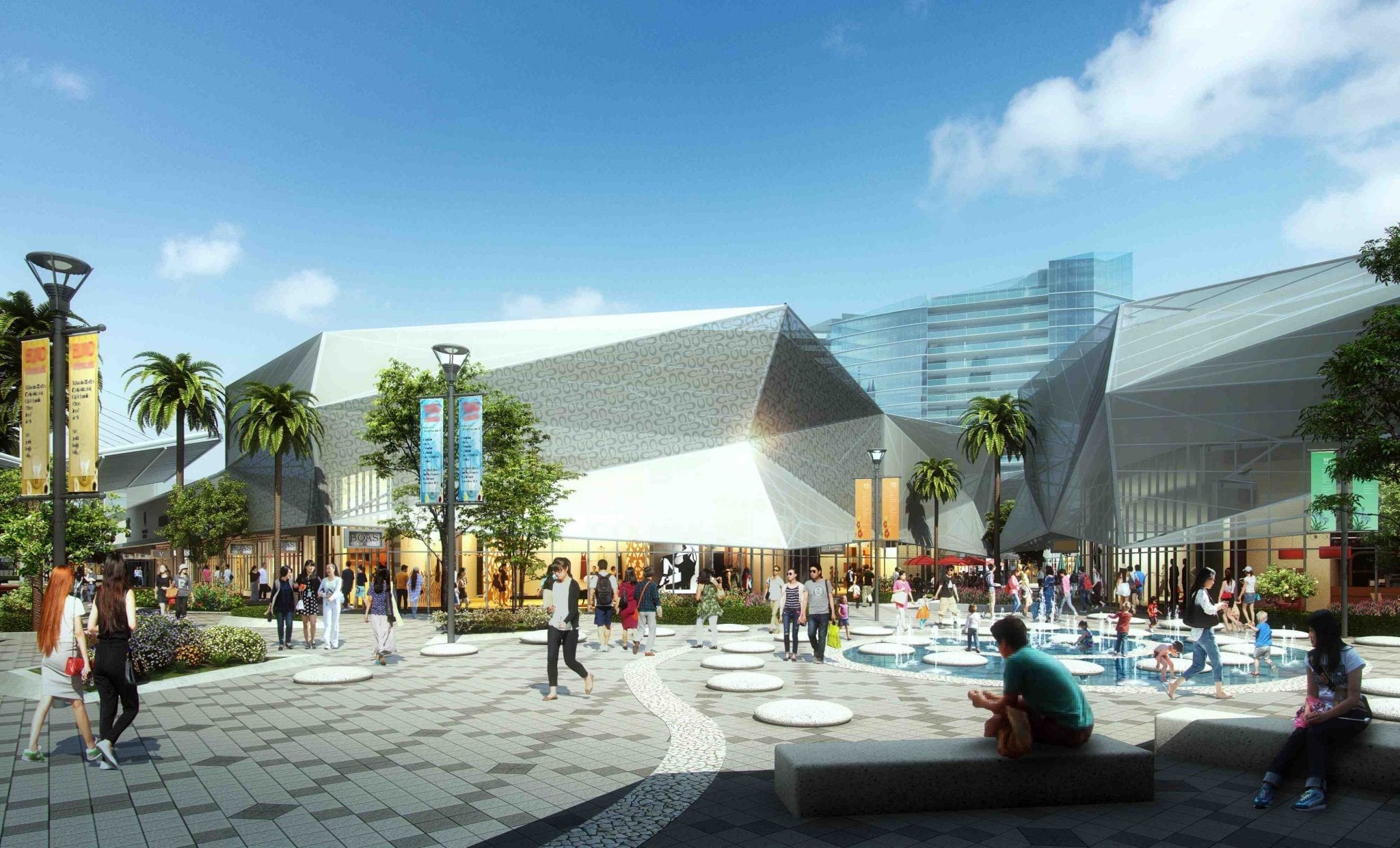
    Penang will gain its first premium outlet mall, Design Village, next month.

    In Batu Kawan in mainland Penang, it will be the biggest outlet mall in Malaysia. It was developed by PE Land, which owns and runs The Spring shopping mall in Kuching.

    The outlet mall is on a mixed-use site that will include a hotel and high-end condominiums. The single-storey mall has a net leasable space of 400,000 sqft (37,161 sqm) for 150 stores.

    There are more than 80 brands already committed to the mall, which is aiming for up to 100, says Savills Malaysia MD Allan Soo. The company is the international leasing and retail development adviser for Design Village.

    Design Village Malaysia 1

    The mall’s retail mix will be 20 per cent large-format stores, 15 per cent F&B, 7 per cent sports outlets and 5 per cent children’s stores, with 25 per cent new tenants and 28 per cent others.

    It will include the biggest Adidas outlet in Malaysia, plus the first outlet stores for Aldo and Bata. Other retailers include Banana Republic, Guess, Padini Concept Store, Sacoor Brothers, Samsonite and Starbucks.

    The mall will provide daily shuttle services to and from hotels and the airport.

    Design Village GM Aileen Tay says the mall is also working with tour companies to bring in tourists who will be offered rebates through tax-free shopping network Global Blue.

    PE Land is the retail and property development arm of Borneo-based conglomerate Pan Sarawak Holdings.

  • Bata moves infrastructure into the cloud

    Bata moves infrastructure into the cloud

    Datapipe has partnered with footwear retailer Bata to drive its digital transformation by moving its technology infrastructures to the cloud.

    Bata is seeing strong growth in Asia’s multibillion-dollar footwear market, specifically in India, China and Southeast Asia. The company tapped Datapipe, a specialist in managed cloud services for the enterprise, to manage its cloud deployment and deliver the security, speed, cost-efficiencies, and scalability required for these high-growth markets.

    Bata’s global sourcing infrastructure, hosted on Amazon Web Services (AWS), is increasingly reliant on cutting-edge cloud infrastructure for its day-to-day operations including its Point of Sale (PoS) system, warehousing, logistics, and purchase order processes. As a managed cloud-service provider and AWS premier consulting partner, Datapipe was selected to assist Bata with developing and growing its presence in Asia by unlocking operational efficiencies.

    Jason Singh, head of marketing for APAC at Datapipe said that with Bata’s rapid growth in emerging markets, the company needed an IT infrastructure that was secure, scalable, and incredibly reliable.

    “We worked closely with Bata to optimise its AWS architecture and practice. This freed up the company’s technology team to focus on other core aspects of its business. As a result, Bata’s focus is where it should be: serving its customers and managing its production facilities, while Datapipe manages its cloud deployments.”

    To bolster Bata’s digital transformation, particularly around best practice design and security, Datapipe adopted a two-phased approach to ensure an optimised environment. Datapipe first redesigned Bata’s existing cloud environment based on AWS best practices including platform based security configurations. The second phase will deploy comprehensive network and instance-based security controls and services, ensuring secure connections to Bata’s eCommerce websites for users in the region.

    Jeremy Chong, director, global footwear services at Bata said the Datapipe team has strengthened the security and efficiency of Bata’s cloud infrastructure, allowing the company to focus on business growth.

    Bata has more than 5200 retail stores in 70 countries and production facilities in 18 countries. The APAC footwear market is projected to reach US$127.2 billion in annual revenues by 2020, according to Euromonitor, up from $104 billion in 2015. Growth in the global footwear market will be fuelled by demand from developing markets in Asia, according to Verdict Financial. eMarketer, meanwhile, predicts worldwide retail eCommerce sales will reach $1.915 trillion in 2016, with double-digit growth due to hit $4 trillion by 2020.

  • Bata Indonesia sales stagnate

    Bata Indonesia sales stagnate

    Bata Indonesia says it has missed meeting its sales targets despite the nation’s improving retail sales.

    Sepatu Bata, the local arm of the European shoe giant, owns and operates stores across Indonesia and manufactures sandals and shoes under brands Northstar, Power, Bubblegummers, Marie Claire and Weinbrenner.

    The company reported sales of Rp 1 trillion in 2015, 10 per cent short of the Rp 1.1 trillion target it set when it announced expansion into the middle and upper income market segments.

    However the company still posted a profit of Rp 129 billion (US$9.7 million), up 81 per cent, on the back of an unspecified one-off asset sale which raised Rp 121 billion.

    Bata Sepatu’s cost of goods rose 19 per cent and overheads by 8 per cent.