Tag: Batam

  • Digital Realty and BW Digital to Build 1.6 Pb/s Subsea Cable Linking Singapore and Batam

    Digital Realty and BW Digital to Build 1.6 Pb/s Subsea Cable Linking Singapore and Batam

    Digital Realty executives outlined plans this week to expand distributed digital infrastructure across the Asia-Pacific region, connecting core hubs in Singapore with growing capacity markets in Indonesia and Malaysia.

    Developed with BW Digital, the Nongsa-Changi Cable System will deliver more than 1.6 petabits per second of capacity. The line connects Singapore’s SIN12 data center directly to Batam’s NDP1 facility with a targeted latency of less than two milliseconds.

    Digital Realty’s Wilfried Dudink and Govind Choudhary noted that subsea connectivity is becoming integral to artificial intelligence deployments as operators split localized inference from large model training across regional hubs.

    Splitting Training From Inference

    Workload requirements have split sharply over the past two years. Training foundational models demands contiguous megawatts of power and heavy cooling capacity. That creates bottlenecks in land-constrained cities. Inference tasks, by contrast, must sit beside enterprise users and sovereign data stores to prevent latency.

    New software frameworks like Nvidia NeMo support model training across physically separated sites. This turns subsea optical lines into direct extensions of internal data center architecture. Digital Realty is adding fiber density to feed these distributed pipelines. Its KUL10 facility in Malaysia now hosts over 6,000 cores of long-haul and regional fiber.

    As capacity develops across Southeast Asia, we increasingly see Singapore serving as a connectivity and governance hub for the region, hosting latency-sensitive and sovereign workloads in the city-state while neighboring markets provide greater capacity for larger compute and AI need.

    Subsea Links Shift Border Economics

    Landing agreements and cross-border latency targets are reshaping industrial land values. Johor in southern Malaysia and Indonesia’s Riau Islands have absorbed billions of dollars in campus commitments. Hyperscalers want cheaper land and faster utility approvals. Still, isolated compute parks face severe limits without low-latency ties back to Singapore.

    Enterprise buyers and regional logistics groups now face altered vendor choices. Companies building automation tools cannot rely on distant data centers without lag. Sub-two-millisecond links to Batam and multi-fiber routes to Kuala Lumpur solve this problem. Tenants can maintain compliance within national borders while tapping shared regional models.

    Operational risk now clusters along busy maritime corridors. Routes through the Malacca Strait and Singapore Strait face dense ship traffic. Cable armoring, diverse routing, and rapid repair access have become critical commercial factors for operators promising uptime.

    Enterprise Constraints Across APAC

    Urgency is mounting as corporate IT budgets shift from pilot trials to production systems. Operators must supply liquid-cooled racks for high-density hardware. Older raised-floor sites cannot handle these power draws.

    Digital Realty survey data covering 2,131 global technology leaders shows 40 per cent view physical infrastructure shortages as their primary roadblock, up from nine per cent in 2024. The study found 88 per cent of organizations run distributed architectures. Meanwhile, 86 per cent pursue sovereign data deployments to meet local regulations.

    Spending plans reflect that push. Enterprise respondents forecast an average 32 per cent jump in artificial intelligence budgets over the next twelve months. Fully 79 per cent plan live deployments before late 2026. Nearly two-thirds expect measurable returns on compute investments within six to 24 months.

    Next Deployments and Power Demands

    Network builds outside Asia follow a similar blueprint. In Turkey, a joint venture with Ronesans Infrastructure will deliver a 22-megawatt carrier-neutral campus in Ankara by 2028. Planned expansions in Istanbul will link Mediterranean traffic with Asian routing tables.

    Across Asia, expansions are underway in India, Japan, South Korea, Thailand, and Australia. Engineering teams are retrofitting existing halls and designing greenfield facilities. These sites accommodate direct-to-chip liquid cooling alongside high-airflow layouts for dense racks.

    Delivery timelines on the Nongsa-Changi cable route and power hookups at satellite sites present the next hurdles. Corporate IT teams are shifting over half of their private compute workloads into dedicated cloud environments. Handover dates across 2026 and 2027 will decide which regional hubs secure those incoming workloads.

  • XLSmart Begins Work on 8,000-Kilometer Subsea Cable Linking Southeast Asia to Japan

    XLSmart Begins Work on 8,000-Kilometer Subsea Cable Linking Southeast Asia to Japan

    Indonesian operator XLSmart has started construction on Candle, an 8,000-kilometer subsea fiber network. The route links Indonesia to Singapore, Malaysia, the Philippines, Taiwan, and Japan. Commercial operations will begin across all six markets in 2028.

    Consortium partners backing the system include Meta, SoftBank, Telekom Malaysia through its TM Technology Services unit, the Philippines’ Globe Telecom, and Japan’s IPS Inc. NEC Corporation will supply the marine transmission equipment. It will deploy 24 fiber pairs along the seabed.

    The Route Through Batam

    Candle lands in Indonesia at Tanjung Bemban on Batam island. That puts the cable directly opposite Singapore’s main data exchanges. Batam serves as a spillover hub for data centers and cross-border transit links while Singapore limits domestic power allocations.

    Crews have finished initial marine work and landing preparations at the site. The route gives carriers a fresh corridor for cloud, enterprise, and artificial intelligence traffic between Southeast Asian cities and East Asia.

    PT XLSMART Telecom Sejahtera Tbk is handling local operations and Indonesian regulatory filings. This is one of the operator’s major capital programs following the merger of PT XL Axiata Tbk and PT Smartfren Telecom Tbk.

    Wholesale Capacity and Route Diversity

    For regional enterprises and cloud platforms, Candle adds physical diversity away from congested legacy routes. Extra subsea lines protect against cable cuts and geopolitical friction across the South China Sea and Luzon Strait.

    Wholesale buyers gain dedicated capacity instead of leasing space on older multi-party systems. The link also expands Meta and SoftBank’s owned transmission assets between Southeast Asian hubs and Japanese internet exchanges.

    Enterprise demand across Jakarta, Manila, and Kuala Lumpur continues to drive direct subsea investment into domestic carriers. XLSmart Director and Chief Enterprise Business Officer Andrijanto Muljono said: “Candle represents a strategic investment to prepare for Indonesia’s long-term connectivity needs.”

    Consortium Lineup and Build Steps

    Planning for Candle began in late 2025 with founding members Meta, SoftBank, IPS, Telekom Malaysia, XLSmart, and NEC. Globe Telecom joined the group in April 2026 as an equity investor and the landing partner for the Philippines.

    Each landing partner oversees shore-end work, territorial water permits, and domestic terminal stations. Teams have moved from desktop studies to physical landing milestones, while NEC manufactures the cable.

    With 24 fiber pairs, Candle ranks among the highest-capacity regional systems in Asian waters. Most older subsea infrastructure in the corridor operates on 8 to 16 fiber pairs.

    Regulatory Hurdles and Timelines

    Permit applications are advancing across all six landing jurisdictions. Marine surveys, cable-laying contracts, and deep-water work must clear national maritime agencies before installation vessels lay the main trunk lines.

    On Batam, the landing station must connect directly with domestic terrestrial backbones across Java and Sumatra to carry traffic inland. Consortium engineers will run dry testing and wet plant commissioning through late 2027 before opening the system to commercial traffic in 2028.

  • DHL Express launches Rp-17-billion service center and gateway

    DHL Express launches Rp-17-billion service center and gateway

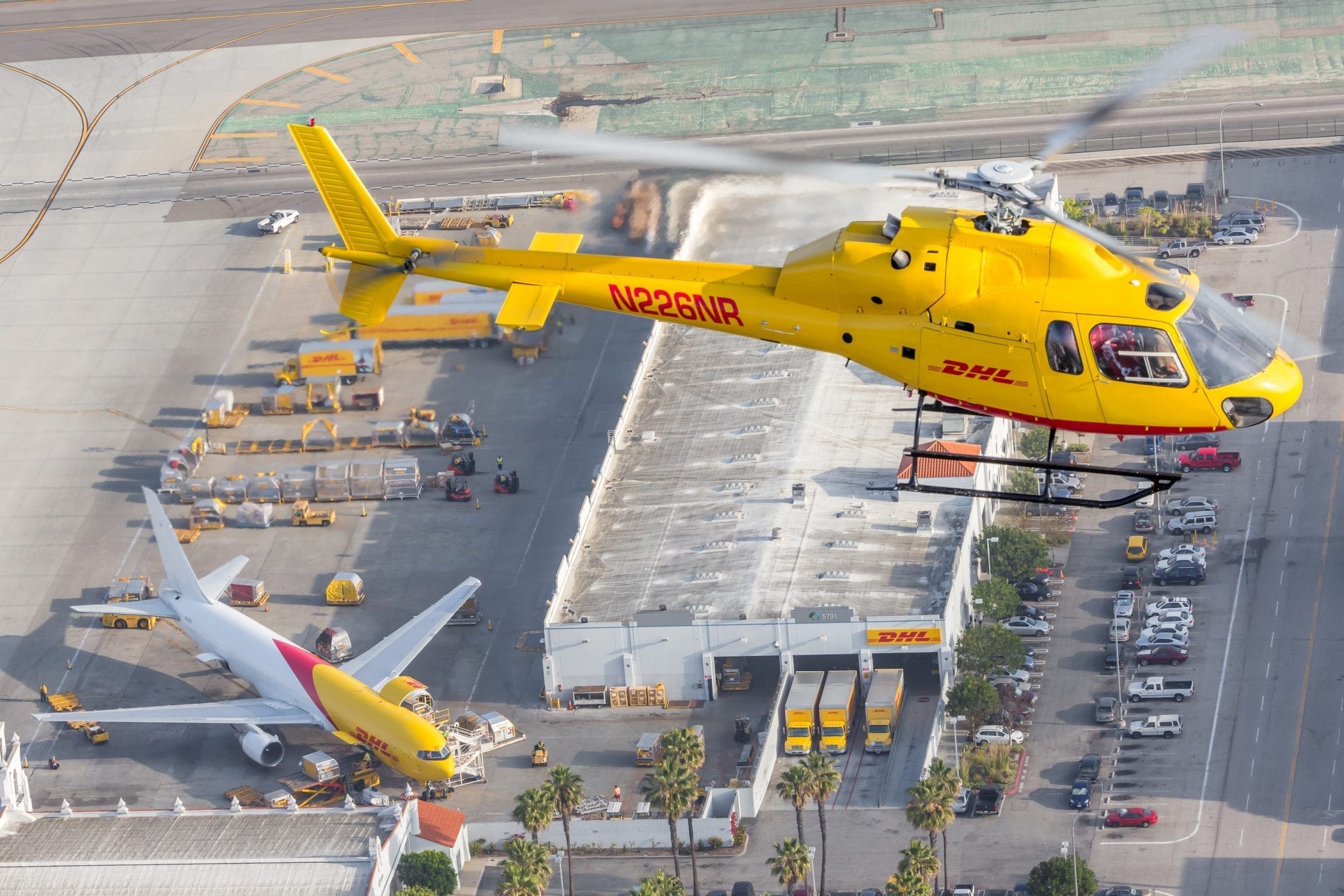
    International logistics company DHL Express, part of Deutsche Post’s DHL Group, launched a service center and a gateway worth Rp 17 billion (US$1.26 million) to support its business operations in and out of Batam, Riau Islands, on Monday.

    DHL Express decided to expand its business in Batam given its potential as the third-largest city in Sumatra, well known as an industrial area, an emerging transport hub, and part of the Indonesia-Malaysia-Singapore golden triangle.

    “This new investment could improve our network in Indonesia that consists of gateways in Balikpapan, Batam, Denpasar, Jakarta, Medan and Surabaya,” Sean Wall, executive vice president of network operations and aviation of DHL Express Asia-Pacific said.

    The new facility has the capacity to handle 2.4 million kilograms of cargo and process up to 150,000 shipments per year. About 26 people work in the 972-square-meter facility, with three certified employees for handling dangerous goods.

    The company claimed that the facility was launched at the right time because the government is considering whether to make Batam a special economic zone for companies that are involved in aircraft maintenance, repair and overhaul.

    “With the potential of Batam being opened as a special economic zone for the aviation industry, DHL’s investment will be able to support the growth of the aviation industry in Indonesia,” Ahmad Mohamad, senior technical advisor of DHL Express Indonesia, said.

  • Batam to facilitate SMEs export products to Singapore

    Batam to facilitate SMEs export products to Singapore

    The administration of Riau Islands city of Batam will facilitate the export of products manufactured by the Indonesian Micro, Small and Medium Enterprises (SMEs) to Singapore, an official has stated.

    “We are trying to facilitate (the export of products), because the products manufactured by the Micro, Small and Medium Enterprises are being exported to some neighboring countries, including Malaysia and Singapore,” head of the Batam office of the Community Empowerment, Cooperatives and Micro, Small and Medium Enterprises (SMEs), Pebrialin, said here on Monday.

    This October, the Batams administration will consult the Indonesian Embassy in Singapore to explore the market in order to facilitate the export of the SMEs products to Singapore, he added.

    As per a research undertaken by the local administration, many SMEs have shipped their products to Singapore. Unfortunately, the volumes are limited.

    According to Pebrialin, Singapore’s decision to replace the trademarks was detrimental to the Indonesian producers, because they cannot control the market directly.

    In addition, the manufacturers also face difficulty in developing their business, because they become dependent on the trademark of Singapore.

    The Community Empowerment, Cooperatives and Micro, Small and Medium Enterprises (SMEs) will also help the SMEs meet the norms applicable in Singapore and Malaysia, so that their products can be freely distributed in the market, Pebrialin added.

  • Batam to continue cooperation with Yokohama

    Batam to continue cooperation with Yokohama

    The Batam city government said it will continue cooperation, which began last year, with the Japanese city of Yokohama.

    Batam city mayor Muhammad Rudi said the cooperation would be continued as the cooperation has been a success thanks to assistance from the Yokohama city administration.

    “The assistance includes how Batam could reduce carbon gas emission and economize on power. At the airport and government hospital, power consumption could be saves by 30 percent,” Rudi cited.

    He said Batam also hopes that the Yokohama city administration to provide assistance in the form of technology needed for Batam development.

    “In seeking to reduce carbon gas emissions, denuded forests are a problem, therefore wee need more assistance to cope with the problem,” he said.

    “We are grateful with the equipment but we also need technology to use the technology products,” he said.

    Director of the Development Cooperation Department of Yokohama, Toru Hashimoto said Batam is the fourth city in ASEAN with which Yokohama cooperates.

    The three other cities are Da Nang of Vietnam, Bangkok of Thailand, and Cebu of the Philippines.

    Through the cooperation, Batam is expected to grow to be like Yokohama to become a smart city, Toru said.

    “Batam and Yokohama are equally good. In November we will have a seminar on Asia Smart City in Yokohama. We hope the mayor and deputy mayor would attend the seminar,” he said.

  • Indonesia’s ex-President Habibie to build billion-dollar apartment project in Batam

    Indonesia’s ex-President Habibie to build billion-dollar apartment project in Batam

    The company of former president BJ Habibie, who ruled Indonesia from 1998-1999, is set to built luxury apartments worth a total of US$1 billion (S$1.42 billion) in Batam.

    The project, which features 11 towers of apartments, offices, hotel rooms and a hospital on a nine-hectare plot of land, aims to attract buyers from Indonesia’s neighboring countries, particularly Singapore.

    Work on the project, called Meisterstadt, will start in the middle of this year, Ilham Akbar Habibie, President Habibie’s son and commissioner of his company, Pollux Habibie International, told thejakartapost.com at the project’s launch in Batam on Saturday that the Meisterstadt superblock would be built in four stages.

    “Initially, the plan to construct a hospital in the superblock was in the last will and testament of my mum (the late Ainun Habibie) it will be implemented in the third stage of this superblock’s construction,” said Ilham.

    Pollux Properties Indonesia president commissioner Muladi, who was known as Habibie’s right-hand man during the latter’s presidential term, Batam Free Trade Zone Authority (BPK FTZ) head Mustofa Widjaja, Batam mayor Ahmad Dahlan and Meisterstadt Batam operational general manager Yosef Eduardus attended the ceremony.

    Ilham said the property business in Batam was promising because the area was quite close to Singapore. The developer hoped Singaporeans would be the main buyers of the apartments.

    “Singapore now has 5 million residents and it has continued to grow. We hope that we can benefit the country’s population, particularly in the property sector,” said Ilham.

    He added: “It happened in Hong Kong in the 1950s, during which the region’s population had flown to several provinces of the Chinese mainland near Hong Kong. We’ve now seen a similar situation in Guangdong, in which industries and businesses from Hong Kong have flown to the city.

    “Such an effect will happen between Singapore and Batam.”

    Ilham said the company hoped that a third of the apartments in the superblock complex would be bought by foreigners while the remainder would be marketed to local buyers.

    As many as 1,575 apartments in two of the towers, which will be built in the first stage of the construction project, have been booked by potential buyers with VVIP pass cards who attended the launch. In total, 1,874 VVIP pass cards were issued for the event.

    Three sizes of apartments, namely 24.82 sq m, 42.51 sq m and 51.59 sq m, will be built in the first stage of construction from 2016 to 2019. Prices for the units start at Rp 400 million (S$41,618).

    Batam mayor Ahmad said it was time for Batam to shift from landed to vertical housing due to its limited land.

    “The land in Batam is very limited. For our urban planning, we have recommended residences with the tower or vertical building concept. From the business aspect, it is very prospective because many noted developers have built their projects here. It means they see a huge market potential here,” said the Batam mayor.

    Mustofa said the authorities need to accommodate the need for premium residential compounds in Batam.

    “The growth of the number of Batam residents is the fastest in the world because of migration. To anticipate such a rapid growth, the Batam administration will also complement this city with toll roads and overpasses, which have been included in the national strategic project,” he said.

    “The toll roads and overpasses are aimed at anticipating traffic congestion in the next 10 years.”

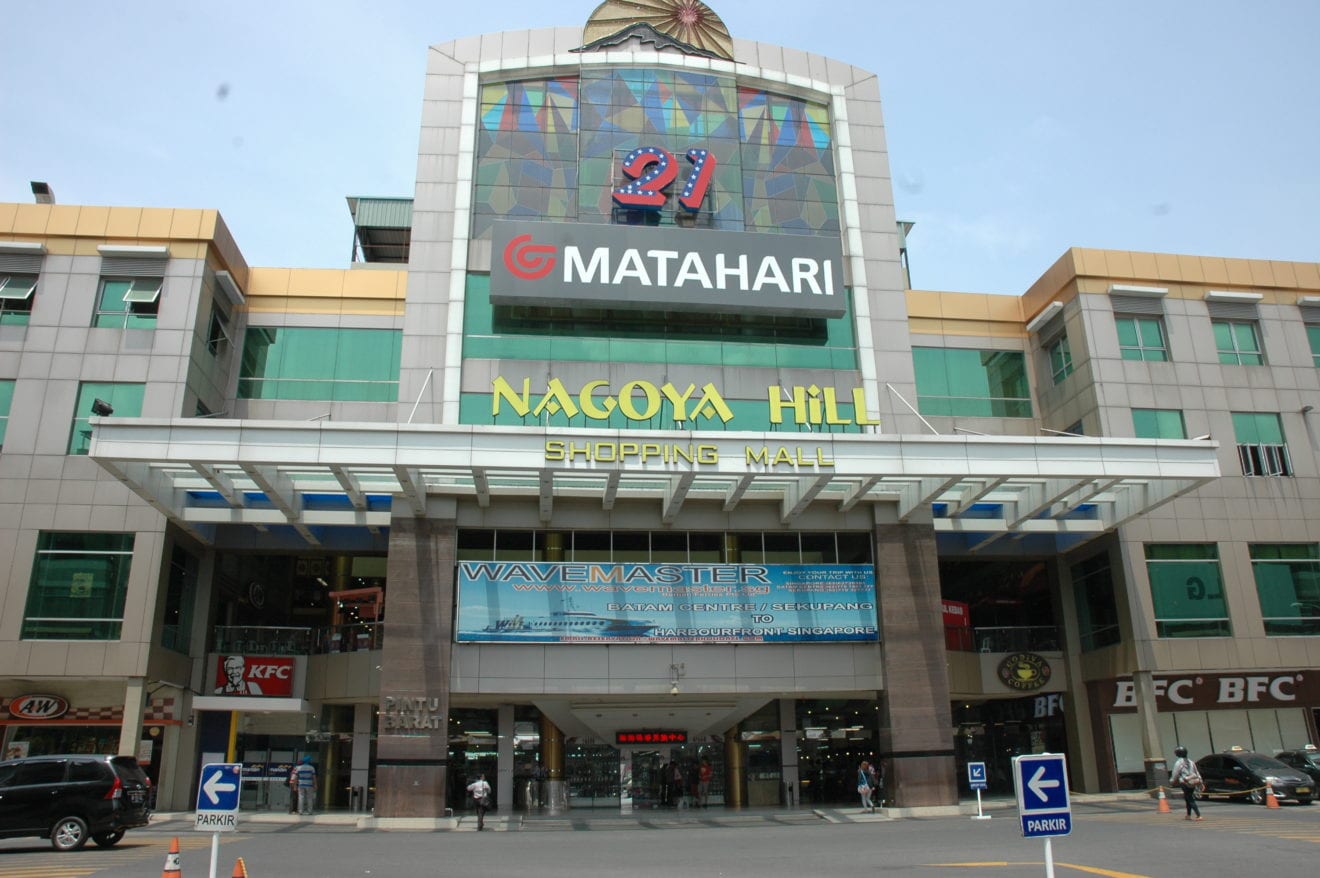
  • Matahari Indonesia makes it 110

    Matahari Indonesia makes it 110

    Matahari Indonesia has opened its 110th Hypermart in Tanjung Uncang, Batam.

    The new store has an area of about 6200 sqm stocked with a variety of household goods. It is Matahari’s third hypermart in Batam province.

    Director of communications and PR with Matahari, Danny Kojongian, said that given its developed infrastructure, Batam city has become an attractive destination for investors.

    “This new hypermart strategically strengthens the presence of Matahari in Batam. Two previous hypermart stores are located in downtown and this new outlet is located in the south of Batam which has a huge potential in the future.”

    Kojongian said Hypermart Tanjung Uncang has adopted some of the latest features of Hypermart G7 concept which is expected to strengthen the hypermart brand’s modern concept, with convenient shopping and excellent service.

    Matahari Putra Prima operates Hypermart, Foodmart and Boston Health & Beauty stores in more than 60 cities across Indonesia.