Tag: batik air

  • AirAsia Defends Finances After Reporting 831 Million Ringgit Q2 Loss

    AirAsia Defends Finances After Reporting 831 Million Ringgit Q2 Loss

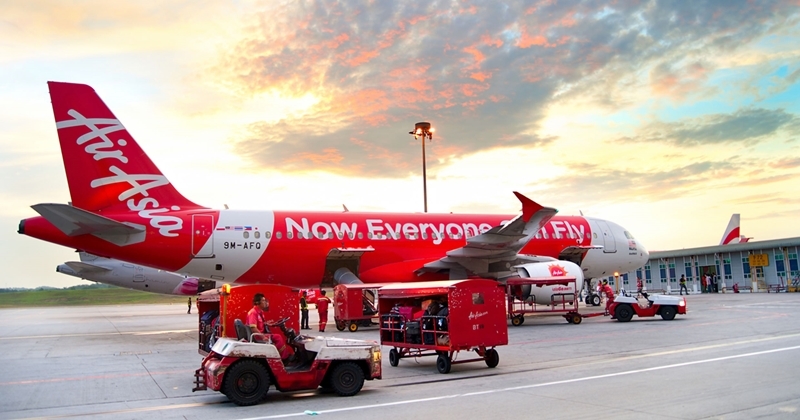
    AirAsia co-founder Tony Fernandes defended the airline’s financial resilience in Hong Kong on Friday, arguing that higher fuel prices pose far less disruption than the pandemic.

    The carrier controls roughly 60 percent of Malaysia’s domestic aviation market and operates 100 aircraft across the country. Fernandes spoke after Malaysian authorities examined whether competing carriers could absorb domestic routes if financial pressures mount.

    Government Contingency Plans

    Malaysian officials approached Malaysia Airlines and Batik Air to evaluate whether either operator could absorb domestic capacity on short notice. The inquiry formed part of government scenario planning as regulators tracked the balance sheet of the region’s largest budget carrier.

    Fernandes rejected the feasibility of such a shift during his Hong Kong briefing, stating that rival operators cannot replace 100 operational aircraft overnight. The airline’s shares fell 21 percent on Thursday following reports of the government inquiries, bringing year-to-date equity losses past 70 percent.

    Fuel Costs and Second-Quarter Deficit

    Spike in aviation fuel prices delivered an 831 million ringgit net loss for the second quarter ended June 30. Jet fuel surged 66 percent quarter-on-quarter to an average of $183 per barrel following military conflicts in the Middle East.

    Foreign exchange losses compounded the deficit, adding 331 million ringgit in extra costs during the quarter. Balance sheet disclosures show current liabilities reached 18.4 billion ringgit ($4.52 billion) on June 30, matched against cash and bank balances of 954 million ringgit.

    Regional Route Recovery

    Passenger traffic metrics show steady volume across core Southeast Asian corridors despite fare increases. Load factors across the network reached 80 percent in the third quarter, supported by advance passenger bookings for the final three months of the year.

    Management expects operating margins to stabilize as ticket prices adjust upward to cover elevated fuel surcharges. Operating units in Indonesia, Thailand and the Philippines maintain stable booking patterns heading into peak year-end travel periods.

    Liquidity and Capacity Pressures

    Fernandes told investors the second quarter represented the peak operational strain for the group’s network. The carrier is relying on ticket repricing and regional flight demand to service short-term debts without cutting its scheduled Malaysian frequencies.

    Attention turns to fourth-quarter operating results and whether passenger demand absorbs the higher fare brackets needed to offset $183-a-barrel jet fuel.

  • Malaysia Asks Airlines to Prepare to Absorb AirAsia Routes

    Malaysia Asks Airlines to Prepare to Absorb AirAsia Routes

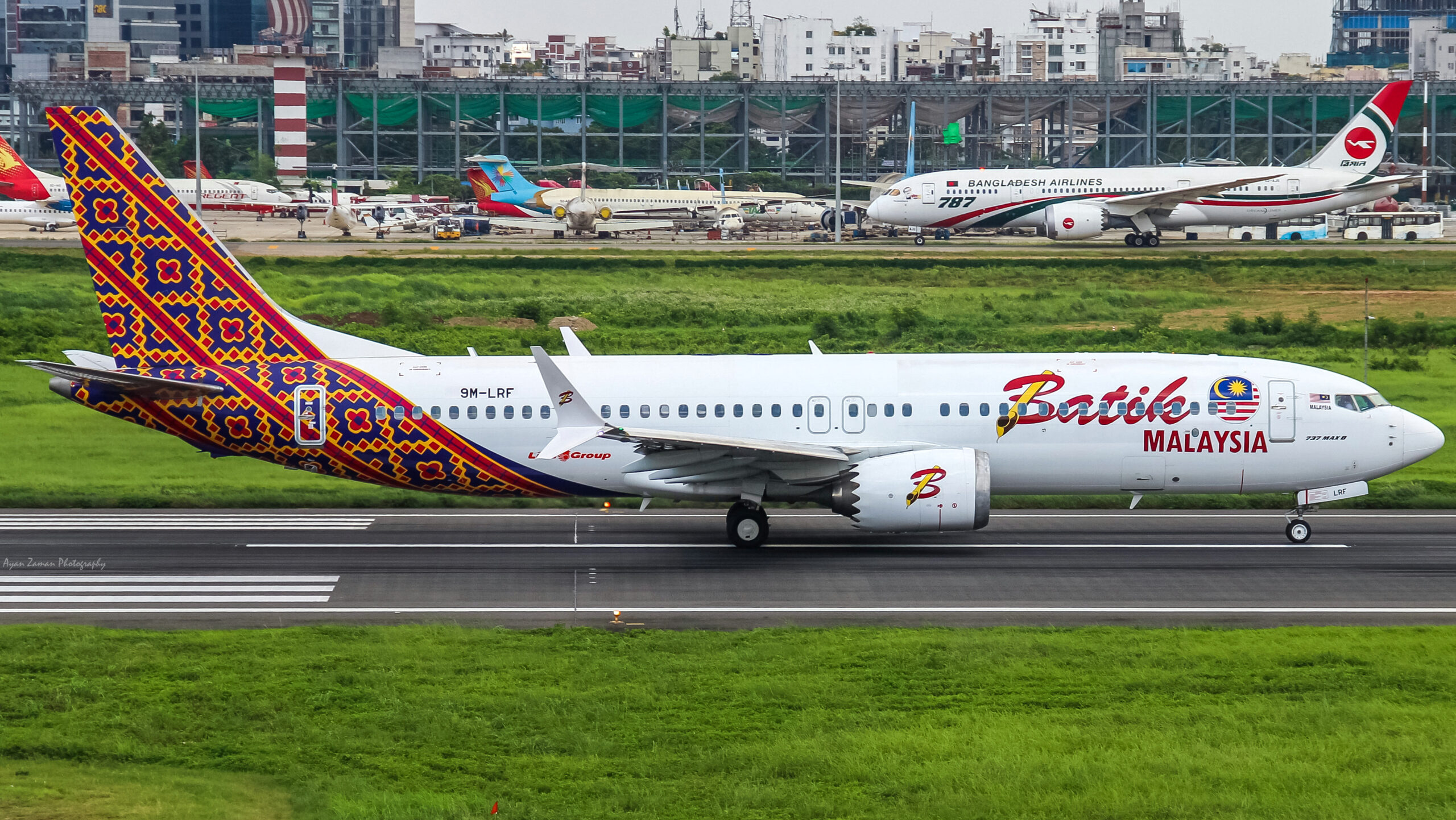
    Malaysia’s government has asked Malaysia Airlines and Batik Air whether they could absorb AirAsia’s domestic routes and passengers if necessary, as authorities carry out contingency planning while monitoring the budget carrier’s financial health.

    The discussions come as the airline, acquired by Tune Air for RM1 (US$0.25) in 2001, faces mounting financial pressure from debt and a sharp rise in fuel costs.

    AirAsia has stated that it remains focused on maintaining stable operations and that underlying travel demand remains strong, while officials noted that no takeover or transfer of operations has been decided.

    Contingency Planning and Operating Pressure

    The carrier’s operating entity, Capital A, faces the combined burden of debt accumulated during the pandemic and high operating expenses. In the second quarter of 2022, the group’s average fuel costs jumped 68 per cent year-on-year to US$151 a barrel, consuming 51 per cent of aviation revenue. Currency weakness across Southeast Asian markets against the US dollar has amplified those costs, particularly for aircraft maintenance and dollar-denominated aircraft leases.

    Both AirAsia X and parent entity Capital A previously fell into Bursa Malaysia’s PN17 classification for financially distressed listed firms. AirAsia X completed a debt restructuring in March 2022, but Capital A remains under requirements to regularise its financial condition to preserve its stock exchange listing.

    Shifting Regional Capacity Dynamics

    For regional travel retail, airport concessionaires, and tourism operators, any capacity reduction from AirAsia would alter passenger footfall patterns overnight. AirAsia built the low-cost model that feeds primary transit hubs like Kuala Lumpur International Airport Terminal 2 and regional secondary airports across Thailand, Indonesia, and the Philippines. If routes are transferred or curtailed, legacy carriers and competing hybrid operators will absorb higher-yielding corporate traffic while budget-sensitive discretionary travel slows down.

    Rival full-service and hybrid carriers stand to gain market share on key domestic trunk routes, yet taking over budget volume presents immediate fleet and staffing hurdles for Malaysia Airlines and Batik Air. Low-cost passenger yields cannot easily support legacy cost structures without state subsidies or substantial fare increases. The direct risk rests with consumer ticket pricing, where reduced seat capacity inevitably pushes up average domestic fares.

    From Token Purchase to Pandemic Shock

    Entrepreneurs Tony Fernandes and Kamarudin Meranun bought AirAsia through Tune Air in September 2001 for a token RM1, absorbing RM40 million in debt. The carrier transformed regional aviation by introducing high-density Airbus A320 fleets, online direct bookings, and low fares, surpassing 500 million passengers carried by 2018.

    Financial strains began surfacing before the global health crisis. AirAsia reported a net loss of approximately RM283 million in 2019 after fuel price increases added RM703 million to its operating costs in 2018. When border closures halted international travel in 2020, group revenue dropped 74 per cent to RM3.1 billion and full-year net losses widened to RM5.9 billion, forcing the shutdown of AirAsia Japan and a retreat from AirAsia India.

    Regulators and investors are tracking Capital A’s submission of a complete regularisation plan to exit PN17 status on Bursa Malaysia, alongside fleet reactivation milestones across its Southeast Asian subsidiaries.

  • Batik Air and Thai Lion Air’s Lion Group Set to Soar from Changi’s Terminal 4!

    Batik Air and Thai Lion Air’s Lion Group Set to Soar from Changi’s Terminal 4!

    Lion Group, the operator of Batik Air and Thai Lion Air, will relocate its operations from Terminal 3 to Terminal 4 at Singapore’s Changi Airport.

    In a strategic move aimed at enhancing passenger experience and accommodating future growth, Lion Group has announced its decision to transition its operations to Terminal 4, set to take effect in November. Following this relocation, the group is gearing up to introduce new daily flights in December to popular Malaysian destinations including Subang, Ipoh, and Penang.

    This move is tailored to meet the burgeoning air travel demand in the region. Upon completion, Terminal 4 will be home to 20 carriers, splitting its offerings between full-service airlines and low-cost operators.

    With Batik Air Indonesia, Batik Air Malaysia, and Thai Lion Air under its umbrella, Lion Group is primed to enter a competitive landscape on routes to Subang Airport. This airport is conveniently located just 24 kilometers from Kuala Lumpur’s city center, putting it in direct competition with low-cost carriers such as Scoot and Firefly.

    The Kuala Lumpur–Singapore corridor has been a hive of activity, ranked as the world’s fourth-busiest international route in 2024 and the busiest in 2023, according to flight analytics platform OAG. Not to be outdone, Lion Group currently operates 88 weekly flights connecting Singapore with various cities including Jakarta, Bali, Medan, Kuala Lumpur, and Bangkok.

    Looking ahead, Thai Lion Air plans to further broaden its horizon, with ambitions to launch flights connecting Singapore to additional Thai cities beyond Bangkok. It seems that in the realm of air travel, Lion Group is not just following the flight path, but actively charting new territories.

    Questions & Answers

    How will the relocation benefit Lion Group’s operations?
    The relocation to Terminal 4 is designed to enhance passenger experience and accommodate the anticipated growth in air travel demand, allowing Lion Group to operate more efficiently and attract more travelers.

    What new routes is Lion Group planning to introduce?
    Lion Group plans to launch new daily flights in December to Malaysia’s Subang, Ipoh, and Penang, expanding its service offerings in the region.

    How does Lion Group’s current flight schedule compare in the region?
    Currently, Lion Group operates 88 weekly services connecting Singapore to key cities such as Jakarta, Bali, Medan, Kuala Lumpur, and Bangkok, positioning itself strongly in the competitive Southeast Asian air travel market.

  • Indonesia to investigate Batik Air after pilots fall asleep mid-flight for 28 minutes

    Indonesia to investigate Batik Air after pilots fall asleep mid-flight for 28 minutes

    Indonesia’s transport ministry said Saturday it would open a probe into local airline Batik Air after two of its pilots were found to have fallen asleep during a recent flight.

    A pilot and co-pilot were simultaneously asleep for approximately 28 minutes during a flight from South East Sulawesi to the capital Jakarta on January 25, a preliminary report by the National Transportation Safety Committee (KNKT) said.

    The incident resulted in a series of navigation errors, but the Airbus A320’s 153 passengers and four flight attendants were unharmed during the two-hour-and-35-minute flight.

    The transport ministry “strongly reprimands” Batik Air over the incident, air transport director-general M. Kristi Endah Murni said, calling on airlines to pay more attention to their air crew’s rest time.

    “We will carry out an investigation and review of the night flight operation in Indonesia related with Fatigue Risk Management for Batik Air and all flight operators,” Kristi said in a statement.

    Batik Air said in a statement on Saturday that it “operates with adequate rest policy” and that it was “committed to implement all safety recommendations”.

    The pilots involved in the January 25 incident had been temporarily suspended, the statement added.

    The KNKT report, seen by AFP on Friday, was uploaded to the agency’s website in late February.

    One of the pilots had not rested adequately on the night before the flight, according to the report.

    About half an hour after the plane took off, the captain asked permission from his second-in-command to rest for a while, with the request being granted.

    The co-pilot then took over command of the aircraft, but also inadvertently fell asleep, the report said.

    “The second-in-command had one-month twin babies. His wife took care of the babies and he assisted while at home,” the report said.

    A few minutes after the last recorded transmission by the co-pilot, the area control center in Jakarta tried to contact the aircraft. It received no answer.

    Twenty-eight minutes after the last recorded transmission, the pilot woke up and realized his co-pilot was asleep and that the aircraft was not on the correct flight path.

    He immediately woke his colleague up, responded to the calls from Jakarta and corrected the flight path, the report said.

    The plane landed safely after the incident. Investigators did not identify the pilots, but said they were both Indonesians and were aged 32 and 28.

  • Batik Air Malaysia, AirAsia X Cleared To Launch Central Asia Routes

    Batik Air Malaysia, AirAsia X Cleared To Launch Central Asia Routes

    The Malaysian Aviation Commission (MAVCOM) has granted air traffic rights to Batik Air Malaysia and AirAsia X, enabling them to expand their networks into Central Asia.

    Under these newly awarded rights, Batik Air has received approval to initiate scheduled flights linking Kuala Lumpur and Tashkent, Uzbekistan. Concurrently, AirAsia X has been given the go-ahead to inaugurate a route connecting Kuala Lumpur with Almaty, Kazakhstan. The move paves the way for both Batik Air and AirAsia X to launch their first flights to Central Asia.

    According to data provided by OAG Schedules Analyser, Batik Air has already scheduled the launch of the Tashkent service, with flights set to operate twice a week from Nov. 1 using Airbus A330 aircraft. The carrier will compete on the sector with Uzbekistan Airways, which resumed the route in November 2022 after a hiatus of more than two years because of the pandemic. It currently provides a 2X-weekly service aboard A321neos.

    In the Kuala Lumpur-Almaty market, AirAsia X will be the sole operator of nonstop flights between the cities if the route launches as planned. Air Astana previously provided a direct link, but last operated the flights in October 2020.

    Alongside awarding the traffic rights for Kuala Lumpur-Tashkent and Kuala Lumpur-Almaty, MAVCOM says it approved 55 other requests between April and June 2023, consisting of 43 international and 12 domestic routes. The total represented an 87.5% increase year-on-year, signalling “an invigorated momentum within the aviation sector.” The number of air traffic applications during the second quarter of 2023 was also 5.3% higher than during the same period in 2019.

    “As part of the commission’s continued efforts to ensure that Malaysia’s aviation industry remains dynamic and responsive to global travel trends, we have approved [air traffic rights] for various new destinations as well as to establish new hub connections,” says MAVCOM Executive Chairman Datuk Seri Hj. Saripuddin Hj. Kasim.

    “These decisive measures are specifically tailored to enhance connectivity, spur economic growth and catalyse the recovery of the aviation sector. We are particularly encouraged to see airlines seizing these opportunities for expansion.”

    In addition to securing permission to fly to Tashkent, Batik Air also gained rights to serve Okinawa, Japan. The airline intends to open a Kuala Lumpur-Taipei, Taiwan-Okinawa route on Aug. 16, operating four times per week using Boeing 737-800s.

    Elsewhere, Malaysia Airlines’ LCC subsidiary Firefly has been approved to launch flights from Kota Kinabalu, on the island of Borneo, to Tokyo Narita and Taipei, while AirAsia has been awarded a host of rights, including a routing from Kuala Lumpur to Jaipur, India, and from the northwestern Malaysian state of Penang to Hong Kong.

    MYAirline has also been cleared to serve several destinations in Indonesia, Thailand and Vietnam from Kuala Lumpur. These include Ho Chi Minh City and Da Nang, Vietnam; Jakarta, Indonesia; and Krabi, Thailand. Airlines are required to utilize the air traffic rights allocated within six months from the approved date.

  • AirAsia, Malaysia Airlines and Batik Air in consumer crosshairs for complaints

    AirAsia, Malaysia Airlines and Batik Air in consumer crosshairs for complaints

    AirAsia received the highest number of complaints in the first half of the year (42.1%), followed by Malaysia Airlines (40.7%) and Batik Air (7.9%). For every million passengers carried, Malaysia Airlines recorded the highest number of registered complaints with 199 complaints, MAVCOM said, followed by Batik Air with 167 complaints and AirAsia with 95 complaints.

    Flight rescheduling, flight cancellations, and online booking collectively contributed to 46.1% (577) of total complaints filed. Other complaints included refunds (7.9%), frequent flyer programs (7.6%), and mishandled baggage (7.3%).

    According to MAVCOM, complaints concerning flight rescheduling jumped tremendously from just eight in the first half of last year to 233 complaints during the same period this year. AirAsia contributed 65% of complaints on flight rescheduling, followed by Malaysia Airlines (30%) and Batik Air (4%).

    At the same time, complaints related to flight cancellation also increased from 14 to 211 complaints compared to the same period last year. Malaysia Airlines contributed 54% of the complaints, followed by AirAsia (36%) and Batik Air (7%). Complaints related to online booking have multiplied more than 13 times from 10 during the first half of 2021 to 133 complaints this year. AirAsia accounted for 47% of the complaints, followed by Malaysia Airlines (32%) and Batik Air (12%).

    Throughout the first half of this year, 1,251 complaints were registered with MAVCOM in total, with 99.1% (1,240) complaints received on airlines while 0.9% (11) complaints were related to airports. According to MAVCOM, this illustrates an increase of almost eight times more than the 157 complaints lodged within the corresponding period last year.

    Additionally, MAVCOM also received 1,317 non-actionable complaints, comprising 1,160 complaints with incomplete documentation, 59 complaints where the airline or airport concerned had fulfilled the obligations under the Malaysian Aviation Consumer Protection Code (MACPC), 35 complaints that were withdrawn by consumers, 31 complaints that were beyond the scope of the MACPC, 29 complaints that pertained to bookings made through travel agents as well as three complaints that were lodged more than a year from the incident date.

    Saripuddin Hj. Kasim, MAVCOM’s executive chairman, said Malaysia’s aviation service providers should prepare by taking heed of the complaints breakdown observed in the consumer report as guidance to improve further service levels and address the root cause of prevailing issues. “As a proactive measure by MAVCOM, we have also been actively engaging aviation service providers to ensure that these issues are being addressed,” he added.

  • Lion Air to reduce Ticket Prices From April

    Lion Air to reduce Ticket Prices From April

    Airlines under the Lion Air group, namely Lion Air, Wings Air and Batik Air, operate with reduced airfares on all routes starting Saturday.

    “The reduction in ticket prices is Lion Air group’s answer to challenges and opportunities in the travel business, and aims to accommodate demand for air travel while improving flight operations,” Lion Air spokesman Danang Mandala Prihantoro said in a release on Saturday.

    He went on to say that Lion Air was striving to provide convenience for passengers while prioritizing safety and comfort.

    Lion Air tickets with the new lower fares can be reserved through all travel agents and Lion Air’s website.