Tag: battery swap

  • Nio Power Signs Poly Property to Expand EV Battery Swap Network

    Nio Power Signs Poly Property to Expand EV Battery Swap Network

    Nio Power partnered with state-backed developer Poly Property Group on November 11 to install electric vehicle battery swap stations and charging points across commercial and residential developments in China.

    The agreement gives the carmaker access to prime real estate footprint, building on a network that already counts 4,252 swap stations and 5,584 charging stations nationwide.

    Signed in Shanghai by executives including Nio chief financial officer and Nio Power head Stanley Qu, the partnership targets existing and pipeline developments. The installations will focus on residential communities, commercial office complexes and industrial parks in major Chinese urban centres. Neither company disclosed the initial capital outlay or the exact station count.

    Inside the Property Agreement

    Beyond concrete foundations and swap bays, the contract links station operations with retail foot traffic. The two groups agreed to coordinate vehicle sales, showroom locations, user services and operational data management. Energy balancing forms the second tier of the arrangement, combining rooftop solar installations, localized battery storage and vehicle-to-grid power distribution across Poly Property communities.

    Poly Property operates as a primary real estate vehicle for China Poly Group. Its holdings span commercial plazas and high-density apartment blocks across multiple Chinese cities, offering Nio pre-cleared land access in zones where retrofitting heavy electrical infrastructure normally faces strict local property board approvals.

    Landlord Strategy and Infrastructure Costs

    For commercial landlords, bringing power swap hardware on site changes consumer dwell time, shifting footfall toward brief convenience purchases rather than long restaurant visits.

    Competitors across China continue to rely on open-access fast-charging partnerships or third-party depot operators. Nio has chosen a heavier route, shouldering the capital footprint of dedicated swap infrastructure to control the ownership experience. Securing state-owned landlord relationships reduces the real estate acquisition friction that slows down rival private charging rollouts.

    Scaling the Battery Network

    External partnerships have become the standard mechanism for Nio Power to spread execution costs. The unit has assembled ties with more than 40 regional partners, including provincial state-owned investment platforms, jointly delivering over 900 battery swap stations across 25 provinces and municipalities.

    Cumulative spending on charging and battery swapping technology and sites has passed 20 billion yuan ($2.98 billion). The system handled its 130 millionth swap on November 3, taking 88 days to run from 120 million to 130 million while processing more than 110,000 swaps each day.

    Hardware upgrades rolled out ahead of the developer pact. In August, Nio activated its first fifth-generation battery swap stations across seven cities, introducing compatibility for its mass-market Firefly brand alongside Nio and Onvo vehicles. Attention now turns to the first batch of operational Poly Property sites, where station commissioning dates will show how rapidly residential utility connections can be cleared.
  • Nio Reaches 500 Battery Swap Stations in Guangdong

    Nio Reaches 500 Battery Swap Stations in Guangdong

    Nio opened six fifth-generation battery swap stations across Guangdong on Sunday. The launches brought its provincial network to 500 sites, pushing cumulative swaps past 17 million.

    Guangdong generated roughly 13 percent of all battery swaps completed by the company across China. Meanwhile, local vehicle deliveries rose 76.3 percent year-on-year through August.

    Expanding Urban Density Across the Greater Bay Area

    Guangzhou, Shenzhen, Huizhou, Dongguan, Foshan and Zhuhai all added stations simultaneously. Each facility runs on fifth-generation architecture built to cut swap times and handle multiple vehicle platforms.

    Resident numbers in Guangdong reached 129 million in 2025, keeping it China’s largest provincial economy. Nio Power shifted its provincial focus from basic geographic expansion toward tightening urban station density.

    Expressway corridors form a central pillar of that footprint. The company operates 101 swap stations along Guangdong expressways, including the Shenyang-Haikou Expressway, the Beijing-Hong Kong-Macao Expressway and the Pearl River Delta Ring Expressway. Drivers have logged over 3 million swaps along those routes.

    Infrastructure Economics and Competitor Pressures

    Heavy capital spending makes dedicated swap networks costly to build. Still, Nio uses station density to anchor vehicle sales against competitors who rely purely on public plug-in chargers. Price wars remain fierce among electric vehicle makers in southern China, turning operating convenience into a key sales differentiator for premium brands.

    Commercial landlords and transport operators gain recurring high-voltage power demand and steady driver footfall from swap installations. Yet asset utilisation carries real risk. Fixed machinery and battery inventory costs remain high, requiring strong daily turnover to break even.

    County Coverage Foundations

    Station density gained momentum after an early 2025 rollout. Under its Power Up Counties program, Nio Power reached full county-level swap coverage across Guangdong in April 2025, installing 428 stations across all 122 county-level administrative areas.

    Adding 72 stations since that milestone reflects faster installation inside major municipal centres rather than expansion into new regional territories. Nationwide, Nio delivered 262,893 vehicles between January and August, up 57.92 percent from the prior year.

    National Scale Targets

    Across mainland China, Nio operates 9,584 charging and swap stations, a total that includes 4,176 battery swap locations. Highway installations account for 1,073 of those sites, connecting 16 major urban clusters and more than 550 cities.

    National swap volume topped 120 million in August, doubling in six months. Network partners and investors are tracking installation targets for the final four months of the year, alongside integration steps after Geely agreed to take a 30 percent stake in Nio Power.

  • Nio Onvo Hits 200,000 Deliveries as Monthly Volume Slows

    Nio Onvo Hits 200,000 Deliveries as Monthly Volume Slows

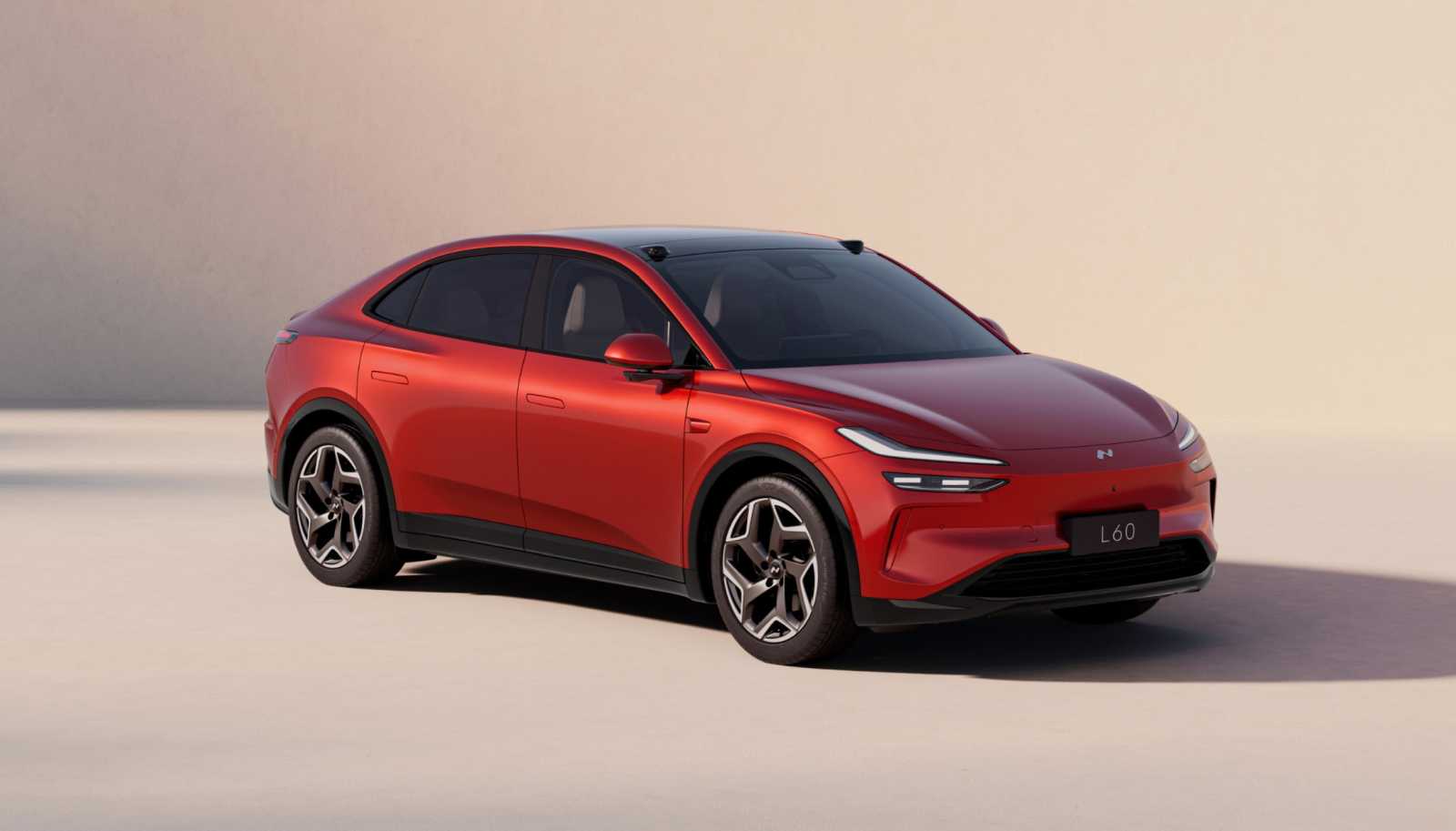
    Nio subsidiary Onvo delivered its 200,000th electric vehicle in Beijing on October 8, handing an L90 SUV to television host Geng Chenchen. The milestone arrived roughly two years after the mass-market brand began customer handovers of its debut model, the L60 SUV, in September 2024.

    Volume reached 198,760 cumulative units by the close of September, with roughly 1,240 handovers completed during the first week of October. That early October tally came during China’s Golden Week holiday, an annual break that routinely halts factory output and showroom traffic across the country.

    Slowing momentum across the third quarter

    The delivery threshold masks an ongoing slowdown across the brand’s retail network. Onvo delivered 8,763 vehicles in September, representing a 42.52 per cent slide from the same month last year and a 0.53 per cent drop from August. September was the brand’s fourth straight monthly decline and its second consecutive year-on-year contraction.

    Quarterly performance reflected the same cooling demand. Third-quarter deliveries fell 26.36 per cent year-on-year to 27,728 vehicles. Across the first nine months of the year, Onvo handed over 70,191 vehicles, a slight increase of 0.97 per cent compared with the same period in 2025.

    Product rollouts and design packages

    Management concentrated its product refreshes in the second quarter to defend showroom volumes. A revised L90 launched in April, followed by the new five-seat L80 SUV in May and an updated L60 in June. The L80 shares platform architecture and body dimensions with the three-row L90, giving the brand two distinct seating layouts on a single manufacturing footprint.

    Fresh styling options followed in September, including the Starlight design package for the L80 and the Starry Gold package for the L90. Upper-trim variants across the range carry Nio’s proprietary Shenji NX9031 driver-assistance chip, LiDAR sensors, and the Nio World Model driver-assistance software suite.

    Shared charging and battery swap infrastructure

    Shared charging and battery-swap operations remain central to Onvo’s pitch to family buyers. Every model in the lineup integrates directly into Nio’s nationwide power network, allowing owners to swap depleted battery packs at existing stations rather than relying solely on wired plugs.

    Physical retail support has expanded in parallel with the vehicle lineup. Onvo now operates 374 dedicated service centers across 213 Chinese cities to handle maintenance and customer repairs.

    The volume test heading into year end

    Meeting annual targets requires reversing the summer contraction during the fourth quarter, historically the strongest retail window for Chinese carmakers. Onvo delivered 107,808 vehicles during 2025, its first full year of operations, leaving the brand needing more than 37,000 deliveries in the final three months of 2026 to exceed last year’s total.

    Showroom conversion rates over October and November will determine whether the recent design packages and hardware upgrades can stabilize monthly orders above the 10,000-unit mark.

  • Dongfeng and Huawei Brand Epicland Weighs Battery Swapping for Second EV

    Dongfeng and Huawei Brand Epicland Weighs Battery Swapping for Second EV

    Epicland, the premium electric vehicle marque jointly developed by Dongfeng Motor and Huawei, has begun preliminary research into adding battery-swap capability to its upcoming second production model.

    The study marks the first time a brand inside Huawei’s automotive ecosystem has explored swappable battery architecture to lower retail costs and accelerate vehicle charging times.

    No final decision has been taken on whether Epicland will build its own proprietary stations or plug into a third-party public network. The brand opened pre-sales for its debut vehicle, the six-seat X9 extended-range SUV, on August 18 with prices starting from 299,800 yuan ($44,210) to 379,800 yuan. Deliveries for that model begin in the third quarter of 2026, with three additional vehicle lines scheduled to follow in 2027.

    Shared Platforms and Battery Networks

    Separating the battery pack from the vehicle purchase price allows carmakers to cut retail sticker prices while matching the refuelling speed of petrol cars. For new brands entering an aggressive price war across China, joining shared networks avoids the heavy capital expenditure of building proprietary charging points across hundreds of cities.

    Dongfeng already maintains joint battery-swap operations with CATL in central Chinese cities including Wuhan and Xiangyang. CATL operated 2,000 Choco battery-swap stations across 180 cities as of June 30, with plans to surpass 3,000 locations by the end of 2026 through partnerships with Changan Automobile, Chery, GAC Group, and Seres.

    Differentiation Beyond Huawei Software

    Hardware differentiation has become urgent for automakers partnering with Huawei. As the tech giant rolls out its Qiankun autonomous driving system and HarmonySpace cockpits across rival brands including Luxeed, Stelato, and Aito, software alone no longer guarantees a distinct competitive edge on showroom floors.

    Other emerging players are making similar calculations. Saidou Technology, backed by Seres, is in discussions to connect its upcoming Aiva brand to CATL’s network ahead of pre-orders for its ME7 model in early 2027. Epicland faces a clear trade-off: adapting its chassis to third-party standard packs requires engineering compromises, while constructing dedicated stations demands massive sales volumes to achieve operational break-even.

    Epicland will confirm the powertrain specifications and commercial launch schedule for its second model ahead of its wider three-vehicle rollout in 2027.