Tag: Baume & Mercier

  • Damiani Group Acquires Iconic Swiss Watchmaker Baume & Mercier from Richemont

    Damiani Group Acquires Iconic Swiss Watchmaker Baume & Mercier from Richemont

    Switzerland’s luxury conglomerate Richemont has transferred the ownership of the distinguished watchmaker Baume & Mercier to Damiani Group of Italy. The financial details of this transaction remain undisclosed.

    Merging Into Damiani’s Luxury Portfolio

    Following this acquisition, Baume & Mercier will integrate into Damiani’s luxury product assortment. Damiani Group’s current portfolio consists of its own brand along with Salvini, Bliss and Calderoni – all renowned jewellery brands. Additionally, it owns Venini, a glassmaking company, and Rocca, a distributor of multi-brand watches and jewellery.

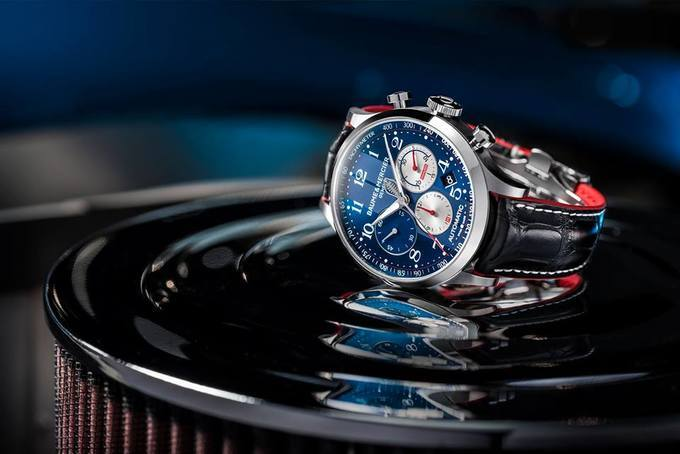
    Baume & Mercier, a Swiss luxury watch company, was initially established as Frères Baume in 1830. It started operating under its present name from 1918. The brand is globally recognized for its sophisticated and high-end wristwatches that seamlessly blend traditional craftsmanship with modern aesthetics.

    Baume & Mercier was incorporated into the Richemont Group during the latter’s formative years in 1988.

    Unlocking Long-term Potential

    Richemont has expressed that Baume & Mercier’s long-term potential can be best achieved under the Damiani Group, considering the latter’s robust presence in Italy.

    Damiani intends to boost Baume & Mercier’s visibility and market penetration by utilizing its widespread multi-brand distribution network. It also plans to establish exclusive mono-brand boutiques in select strategic locations.

    Ensuring a seamless transition, Richemont will continue to offer operational services for Baume & Mercier, for a minimum period of 12 months after the deal closure.

    The transaction is poised to conclude this summer, subject to certain prerequisites.

    Richemont’s Business Areas

    Richemont’s operations span across three primary sectors – jewellery, specialist watches, and fashion and accessories. The group’s portfolio includes esteemed watchmakers such as A Lange & Sohne, IWC Schaffhausen, Jaeger-LeCoultre, Panerai, Piaget, Roger Dubuis and Vacheron Constantin.

    In the quarter ending on December 31, Richemont reported a sales revenue of 6.4 billion euros, marking an 11% growth at constant exchange rates.

    Questions & Answers

    What is the history of Baume & Mercier?
    Baume & Mercier was originally established as Frères Baume in 1830 and began operating under its current name from 1918. It became part of the Richemont Group in 1988.

    What are Damiani Group’s plans for Baume & Mercier?
    Damiani Group aims to enhance Baume & Mercier’s visibility and market reach by leveraging its extensive multi-brand distribution network and opening select mono-brand boutiques in strategic locations.

    What are the primary sectors of Richemont’s operations?
    Richemont operates mainly in three sectors – jewellery, specialist watches, and fashion and accessories.

  • Richemont Group sales soars after YNAP acquisitions

    Richemont Group sales soars after YNAP acquisitions

    Richemont Group sales soared 24 per cent in December quarter, to €3.915 billion. It was largely down to the inclusion of online acquisitions Yoox-Net-A-Porter (YNAP) and Watchfinder, which were consolidated into the group’s accounts on May 1 and June 1, respectively. But even excluding that, the sales growth was still strong at 5 per cent by constant exchange rates.

    By region, European sales accelerated at twice the rate of Asia, up 35 per cent at constant exchange rates, with Asia Pacific – still the company’s largest single geographic market – up by 17 per cent.

    Sales in Europe reached €1.147 billion in the quarter, and in Asia €1.389 billion. Sales in the Americas surged 41 per cent to €801 million and in Japan by 14 per cent to €344 million.

    The only market where Richemont failed to perform was the Middle East and Africa, where sales slipped 3 per cent to €234 million.

    The company’s largest category, jewellery maisons, recorded 8 per cent growth to €1.985 billion, while Richemont said YNAP posted double-digit growth across all regions and solid performances across all its categories. Watchfinder’s sales expanded “more moderately”.

    Excluding the new online business unit, Richemont Group sales grew in all regions, with the exception of the Middle East and Europe. During the latter part of the quarter, sales in Europe were affected by social unrest in France which impacted tourism and led to store closures for six consecutive Saturdays. The disposal of Lancel in June also impacted the year-on-year comparison.

    A 10 per cent increase in sales in Asia Pacific reflected double-digit sales growth in Mainland China and good increases in other main markets. Sales growth in Hong Kong slowed, primarily due to the strength of the Hong Kong dollar versus the renminbi that resulted in lower tourist spending.

    In Japan, a 7 per cent expansion in sales was fuelled by continued domestic and tourist spending as well as the impact of newly opened directly operated boutiques.

    Sales in the Americas rose by 9 per cent, primarily driven by the jewellery maisons.

    Of Richemont’s many brands, Cartier and Van Cleef & Arpels led the way, increasing sales by 8 per cent, driven by jewellery and watches.

    Richemont operates in four business areas: jewellery maisons, being Cartier and Van Cleef & Arpels; specialist watchmakers, being A. Lange & Sohne, Baume & Mercier, IWC Schaffhausen, Jaeger-LeCoultre, Officine Panerai, Piaget, Roger Dubuis and Vacheron Constantin; online distributors, being YNAP and Watchfinder; and other businesses, including Alfred Dunhill, Azzedine Alaïa, Chloe, Montblanc and Peter Millar.

  • How to grow for Luxury brands

    How to grow for Luxury brands

    Luxury brands need to use new technologies and offer experiences for their customers, the second Luxury Society keynote event in Shanghai has been told.

    UCO Cosmetics CEO Arthur Zhang told the event that the early-stage eCommerce model of simply providing a platform for selling products online is dead.

    He said key technologies being experimented and improved upon in China include augmented reality, virtual reality and live-streaming.

    “The millennial generation in China, which already numbers about 300 million people, seeks experiences and emotional connection – they are not just bystanders,” DLG China partner/MD Pablo Mauron told the audience of more than 150 luxury-industry brand executives. “As a result, live-streaming has become a medium for them to express themselves.”

    He told how brands such as Maybelline, Montblanc and Swarovski are taking advantage of these new opportunities.

    Underlining the key message of the event that eCommerce is changing, CEO Thibault Villet of luxury fashion eCommerce platform Mei.com told how a live-streamed show in collaboration with TMall resulted in 65 per cent of the products featured quickly selling out.

    Meaningful data

    Social customer-relationship management (CRM) makes highly targeted messaging and engagement possible, the event was told by Four Seasons Hotels Asia Pacific director of marketing communications John Hamilton. He said the luxury hotel chain has been gaining meaningful data about its customers, which in turn has driven growth. In the past year, through trial-and-error and optimisation, the group has defined a CRM-led content strategy on WeChat.

    Celebrity and key-opinion-leader partnerships can make a big impact in China, said East Entertainment commercial director Qing Dai, who spoke of her experience of partnering luxury brands with appropriate celebrities. One of Easy Entertainment’s most successful was in linking up Cartier with singer/actor Lu Han.

    Baidu GM for East China Wan (Grace) Zhang said Cartier was the most-searched luxury watch brand among the generation born between 1990 and 2000, linked to Cartier’s collaboration with Lu Han.

    Other speakers at the event included Four Seasons Hotel Pudong (Shanghai) GM Arthur Ho, writer Casey Hall of Women’s Wear Daily, Digital Luxury Group founder/CEO David Sadigh and MD for China Pablo Mauron, Baidu senior project manager Di Fu and Sephora China digital manager Vanessa Qian.

    Attendees included representatives of Alexandre de Paris, Baume & Mercier, Bottega Veneta, Bulgari, Cartier, Chanel, Chaumet, Conde Nast, De Beers, Dior, Hublot, Loewe, LVMH, Marc Jacobs, Massimo Dutti, Michael Kors, Montblanc, Nars, Net-a-Porter, Nike, Sephora, Shiseido, Swarovski, TAG Heuer, Tiffany & Co and Vacheron Constantin.

    Luxury Society, published by Digital Luxury Group, is an online destination for luxury-brand executives covering digital and technology matters and with more than 40,000 members across 150 countries.

  • Richemont Asia stores set for cull

    Richemont Asia stores set for cull

    Feeling the pinch from a tough trading environment, luxury goods retailer Richemont has announced restructuring measures, including the closure of stores.

    Richemont Asia sales have declined despite a 26 per cent increase in sales in Mainland China.

    Global sales fell 18 per cent in April, and the company reported a 23 per cent drop in full-year profit.

    Richemont says it is cutting costs in its watch sector and plans to consolidate its global retail presence, particularly in Mainland China, while investing further in jewellery.

    Richemont owns brands including Baume & Mercier, Cartier, Chloe, Dunhill, IWC Schaffhausen, Jaeger-LeCoultre, Lancel, Montblanc, Piaget, Roger Dubuis, Shanghai Tang, Vacheron Constantin and Van Cleef & Arpels.

    “In the near term, we are doubtful that any meaningful improvement in the trading environment is to be expected,” said chairman Johann Rupert, revealing plans for Richemont store closures across its brands.

    Richemont’s operating profit in the year ended March was $2.06 billion, down from $2.67 billion because of the cost of restructuring measures initiated to counter the Asia Pacific downturn. Full-year revenue edged up 6 per cent to $11.08 billion, helped by favourable exchange rates.

    “Our concerns over geopolitical risks and the impact on the behaviour of our clients proved justified,” said the company.

    “Trading conditions in Hong Kong and Macau remained difficult. Only mainland China showed good growth.”

    Richemont’s final quarter was hit by slower tourist spending in Europe after terrorist attacks, while its Hong Kong business continued to bear the brunt of a strong currency which, combined with a slowdown in Chinese growth, deterred mainland tourists.