Tag: beers

  • Coopers Brewery Defies Downturn: Annual Beer Sales Soar Despite National Decline

    Coopers Brewery Defies Downturn: Annual Beer Sales Soar Despite National Decline

    Coopers Brewery, a family-owned independent brewing company, has experienced a slight rise in its annual beer sales, outperforming the overall market that has seen a downturn.

    Annual Sales Report

    In the 2024-25 fiscal year, Coopers Brewery reported total beer sales of 80.6 million litres, marking a growth of 2.4% compared to the preceding year. This contrasts the 0.9% contraction witnessed within the national beer market during the same period.

    Growth in Keg and Packaged Beer Sales

    Sales of kegs, which account for approximately 12.4% of Coopers’ total beer sales, saw a substantial increase of 5.9%. Additionally, the sales of packaged beers also saw a modest uptick of 1.8%.

    Product-Specific Sales Performance

    Sales of malted barley and wheat saw an increase of 3.4%. However, there was a 17% drop in DIY brewing product volumes, a result of reduced consumer demand and restricted space on supermarket shelves.

    Statement from the Managing Director

    Michael Shearer, the Managing Director of the brewery, noted that the figures indicate a resilient performance throughout their beer portfolio. He highlighted considerable consumer demand for Dry 3.5 and Australian Lager, both relative newcomers to their range. Traditional ale products also continued their growth trajectory at 1.2%, while Stout saw a resurgence with a 3.3% rise compared to the previous year.

    Shearer admitted that cost-of-living pressures have made consumers more selective in their purchasing decisions. However, he was optimistic about achieving another year of solid sales growth in a challenging market, expressing it as a testament to the team and their craft.

    Regional Growth and Profit

    Over the course of the year, the company saw sales growth across all states and territories. SA emerged as the largest market in terms of sales volume, while Queensland experienced the most substantial growth at 4.8%.

    International beer exports, excluding New Zealand, which make up around 1% of total sales, fell by 22.3%. Conversely, sales to New Zealand grew by 2.6%.

    In terms of profitability, Coopers Brewery witnessed a decrease in pre-tax profits, which fell from $32.8 million in the previous year to $22.5 million. This shift reflects the investment in a new $70 million visitor center and its associated costs.

    The Visitor Center

    The company described the visitor centre as a generational investment and an integral part of its long-term strategy. In addition to housing a restaurant, the facility also includes a microbrewery and a whisky distillery. Since its inauguration in August of the previous year, the centre has welcomed approximately 60,000 visitors.

    Questions & Answers

    What contributed to the decrease in Coopers Brewery’s pre-tax profits?
    The pre-tax profit decrease reflected the brewery’s investment in a new $70 million visitor centre and its associated costs.

    What sales growth was seen across different product ranges at Coopers Brewery?
    Keg sales rose by 5.9% and packaged beer sales increased by 1.8%. Malted barley and wheat sales grew by 3.4%, but DIY brewing product volumes fell by 17%.

    Which areas experienced the most growth in terms of beer sales for Coopers Brewery?
    In terms of sales volume, SA was the largest market. However, Queensland recorded the highest growth rate at 4.8%.
  • Matthew Ives Named New Ceo Of British Luxury Fashion Retailer Dunhill

    Matthew Ives Named New Ceo Of British Luxury Fashion Retailer Dunhill

    Matthew Ives has been announced as the new Chief Executive Officer (CEO) for Dunhill, a renowned men’s luxury fashion retailer based in Britain. Ives’ appointment is set to take effect from October 13 and he will be reporting directly to Phillipe Fortunato, CEO of Richemont’s fashion and accessories maisons.

    Upon his appointment, Ives expressed his excitement about joining the Dunhill team and working closely with its Creative Director, Simon Holloway. He emphasized his commitment to strengthening Dunhill’s position as a premier British masculine luxury maison.

    Ives brings a wealth of experience in the luxury industry to his new role at Dunhill. He has spent a decade in senior leadership positions at Cartier and Van Cleef & Arpels, both under the Richemont umbrella. Just before his appointment as Dunhill’s CEO, Ives served as the Senior Vice President and Chief Creative Officer at De Beers in London for three years.

    Fortunato expressed confidence in Ives’ ability to lead the company due to his extensive industry knowledge and familiarity with Richemont. He believes that Ives will play a critical role in guiding Dunhill into its next phase of growth.

    In addition to announcing the new CEO, Fortunato took the opportunity to extend his heartfelt appreciation to Andrew Holmes. As the Chief Operating Officer and Chief Financial Officer of Dunhill, Holmes had been serving as the interim CEO since early 2024.

    Questions & Answers

    What is Matthew Ives’ new role at Dunhill?
    Matthew Ives has been appointed as the new CEO of Dunhill, a British luxury men’s fashion retailer.

    What is Ives’ background in the luxury industry?
    Ives brings a decade’s worth of experience from senior leadership roles at Cartier and Van Cleef & Arpels, both under the Richemont umbrella. He also spent three years as the Senior Vice President and Chief Creative Officer at De Beers in London.

    Who has been thanked for serving as the interim CEO of Dunhill?
    Phillipe Fortunato, CEO of Richemont’s fashion and accessories maisons, has thanked Andrew Holmes, the COO and CFO of Dunhill, for serving as the interim CEO since early 2024.

  • Belgium toasts its beer riches with new visitor centre

    Belgium toasts its beer riches with new visitor centre

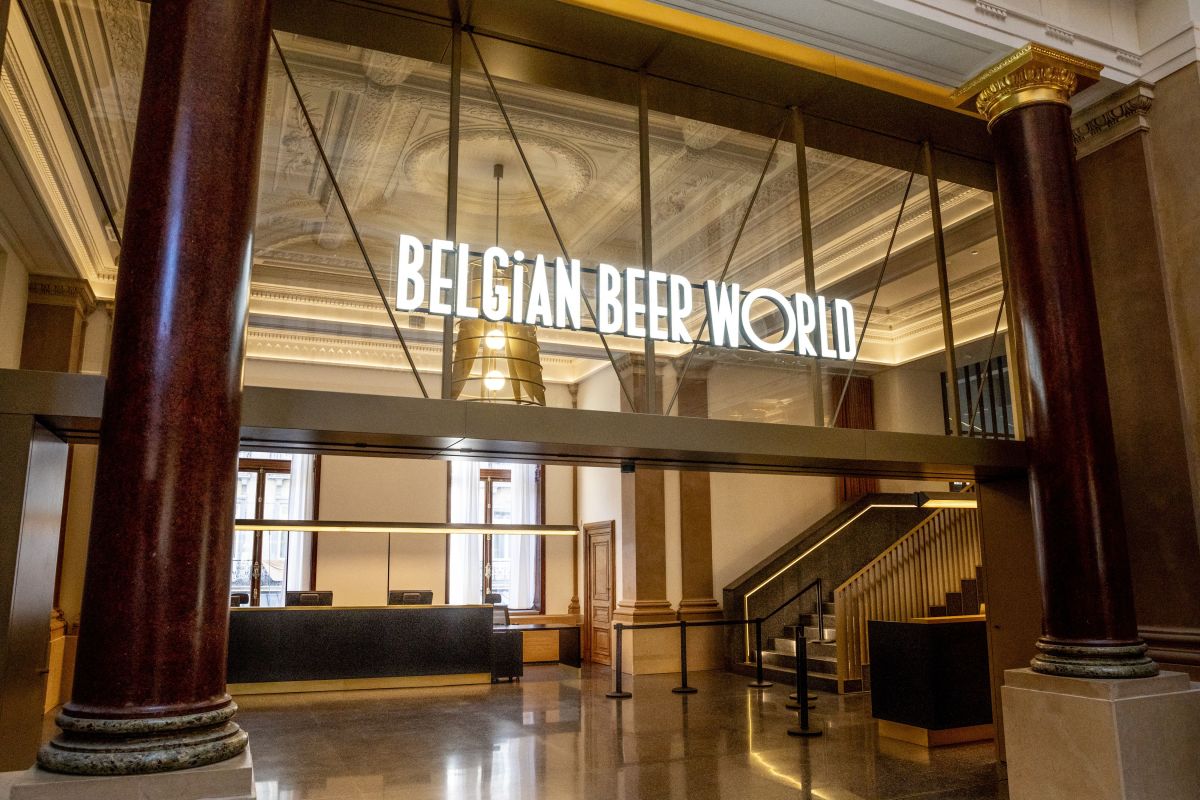
    Belgium is promoting its centuries of beer-making and 430 breweries with a new visitor centre in Brussels that recounts the history of Belgian production and aims to show what is unique about the country’s beer and beer culture.

    Belgian Beer World will open on Saturday in the neoclassical former Brussels Stock Exchange, renovated at a cost of $96.25 million.

    Visitors will learn about “Belgitude” – Belgian identity – and what distinguishes Belgian beer from others – such as the four different fermentation methods and the culture of each beer having its own branded glass.

    “In Belgium there’s more to it than the liquid in the glass,” said Krishan Maudgal, director of the Belgian Brewers Association.

    Belgium produces some 1,600 beers, and its beer culture secured a place on the UNESCO global list of traditions worthy of preservation in 2016.

    The new center shows production in the Middle Ages, when beer was a safe alternative to contaminated water, and hops were introduced as a preservative, and up to the modern day. The tour ends with a beer, suggested by a virtual barman, in the building’s rooftop terrace bar.

    Brussels already has a beer museum, but is unassuming, with old brewing equipment and some insight into beer-making.

    “It’s very typical of Belgium. We are too modest. We are someone who says ‘maybe it’s not necessary’,” said Brussels city Mayor Philippe Close, adding Dublin and Amsterdam were active in promoting their beer cultures.

    He said the center expected to welcome 300,000 visitors in its first year, with adult tickets costing 17 euros.

  • Sabeco to install rooftop solar panels at 9 breweries

    Sabeco to install rooftop solar panels at 9 breweries

    Sabeco has partnered with SP Group, a leading utilities group in the Asia Pacific, for the second phase of its rooftop solar energy system installation and operation.

    Saigon Beer-Alcohol-Beverage Corporation (Sabeco) and SP Group signed a Memorandum of Understanding on Thursday to carry out rooftop solar energy system installation and operation with a maximum output of 10.44 MWp (Megawatt-peak) at nine Sabeco’s breweries.

    This will bring the number of Sabeco breweries adopting solar energy by the end of 2023 to 17.

    “This partnership demonstrates our commitment to facilitating the clean energy transition of manufacturing facilities. Leveraging our comprehensive range of sustainable energy solutions, we look forward to supporting Sabeco towards their energy efficiency goals and co-creating a more sustainable future for Vietnam,” Brandon Chia, Managing Director, Sustainable Energy Solutions (Southeast Asia & Australia), SP Group, said.

    The first phase kickstarted in 2020, receiving VND107 billion ($4,7 million) investment from Sabeco with a maximum output of 9 MWp at Cu Chi, Dak Lak, Phu Yen, Quy Nhon, Song Lam, Khanh Hoa, Can Tho, Soc Trang and Ben Tre breweries.

    Under the new MoU, SP has been commissioned to install and operate the rooftop solar panels at nine breweries in Lam Dong, Ha Tinh, Ha Noi, Tay Do, Vinh Long, Nguyen Chi Thanh, Bac Lieu, and Quang Ngai, and expand the system in Cu Chi.

    The installment is scheduled to be completed and operational by the end of Q3. The system of 17 breweries is estimated to provide almost 23% of electricity consumed at the breweries, or 25 million kWh, equivalent to a reduction of 18,000 tons of CO2 emitted annually.

    “The company has sought to implement initiatives and solutions that support sustainable business over the past few years. We have already embarked on various ESG (Environment, Society and Governance) initiatives through our 4C corporate social responsibility pillars (Consumption, Conservation, Culture and Country). We also have implemented Best Brewery Awards to encourage our breweries to embed sustainability mindset,” Bennett Neo, General Director of Sabeco, said.

    Apart from energy usage, Sabeco has implemented other initiatives to mitigate environmental impacts. The company reduced waste used per liter of beer from 5 liters in 2018 to below 3 liters in 2022.

    Sabeco has embarked on plant-based biomass fuel (rice hulls, sawdust, cashew shell, and leaves) usage instead of using fossil fuel-powered boiler, applying the CIP wastewater treatment system; using sustainable packaging (downgauged cans, lightweighted carton boxes and bottles) and reusing beer glasses and cans.

    Sabeco also promotes other sustainability initiatives which focus on local communities where it operates. The recent project “Light up the Rural”, a part of the three-year strategic partnership between Sabeco and the Central Committee of the Ho Chi Minh Communist Youth Union, has constructed 34km of street lighting that uses solar power in 34 rural areas in 34 provinces across the country.

    This initiative aims to improve socio-economic infrastructure to more than 210,000 households. The project will be expanded in 2023 with more than 39 km of solar street lights to be installed.

    Sabeco operates 26 breweries, 11 member trading companies and a network of hundreds of thousands of selling points across the country.

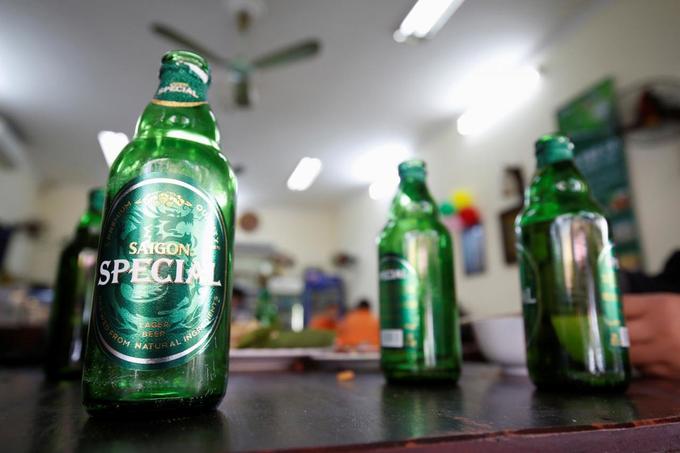
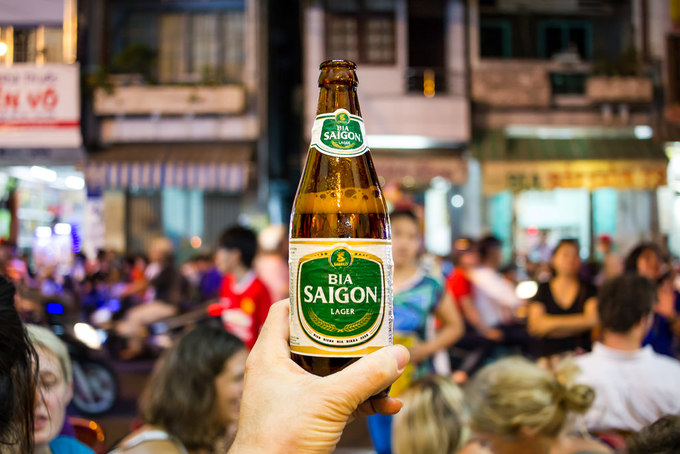
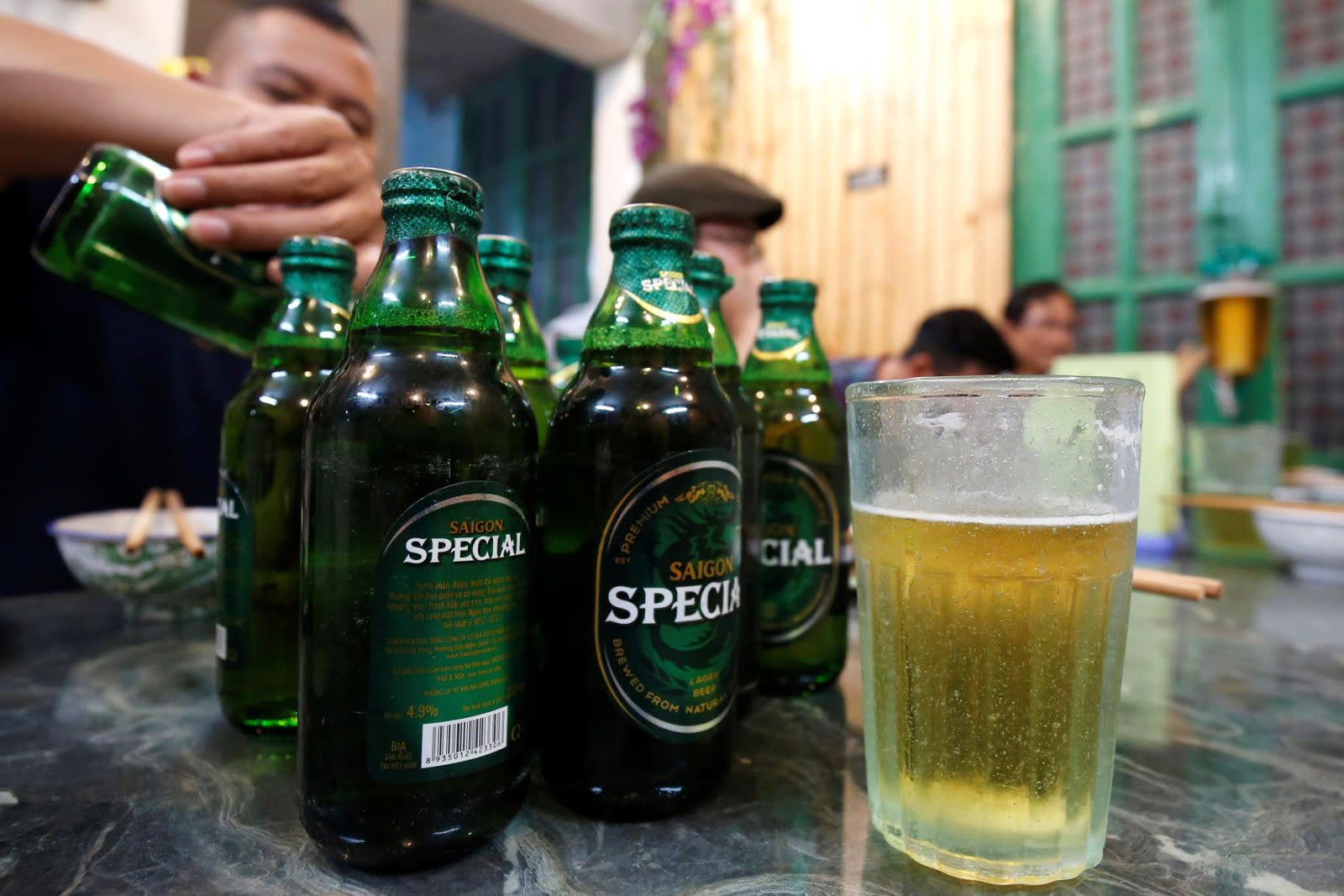
    Sabeco has a wide portfolio of beer brands that are beloved by the people of Vietnam, which includes Bia Lac Viet, Bia Saigon Chill, Bia 333, Bia Saigon Special, Bia Saigon Export, Bia Saigon Lager and Bia Saigon Gold.

  • Sabeco profits soar by 40%

    Sabeco profits soar by 40%

    Brewer Sabeco said its after-tax profit rose by 40% last year to VND5.5 trillion. Vietnam’s biggest brewer had net revenues of VND34.98 trillion, an increase of 32% from 2021.

    These are significant achievements compared to the 2021 results.

    The 2022 profit figure was the highest in the company’s history, and was achieved despite the challenging market conditions and various post-pandemic difficulties.

    The year also marked an important milestone for Sabeco as it entered phase 2 of its transformation journey, focusing on sales, branding & marketing, production, and supply chain.

    The 2022 results also reflected Sabeco’s accomplishments in transforming its core business processes and accelerating its marketing and sales initiatives.

    It is improving cost management and operational efficiency across the entire supply chain by implementing Sabeco 4.0.

    Given the record profit, the board proposed a special dividend of 15%, which was approved at the AGM, bringing the full-year dividends for 2022 to 50%.

    To further enhance shareholder value, it was proposed to issue bonus shares at a ratio of 1:1, and was also approved.

    Sabeco expanded its mid-to-long-term strategic investment initiatives in 2022 to support sustainable business growth as part of its long-term growth plans.

    This includes recent strategic moves to increase ownership in Saigon Binh Tay Beer Group JSC and Saigon Packaging Group JSC. The two companies will become subsidiaries when the process is completed.

    Sabeco also announced plans to increase its stakes in the Western-Saigon Beer JSC from 51% to more than 70%.

    At the meeting, general director of Sabeco, Bennett Neo, said 2022 was a breakthrough year with record profits.

    “We grew our market share and net revenues, and profit after tax reached VND5.5 trillion, an increase of 40% over 2021. This is a result of our collective efforts to drive sales, the right investment strategy and efficient cost management.”

    For 2023 Sabeco has a revenue target of VND40.272 trillion and a profit target of VND5.775 trillion, increases of 15.1% and 5% from the previous year.

    The company said it would continue to strengthen its 4Cs sustainable development commitment, which includes driving ESG initiatives that are in line with its corporate goals and Vietnam’s national strategies.

    The corporation is committed to continuing its efforts as a proud, prominent and responsible corporate citizen to bring out the best in Vietnam.

    The chairperson of the AGM and board member Michael Chye said the business environment remains challenging with various uncertainties caused by the global economy and unpredictable but fierce competition.

    However, he said Sabeco remains committed to investing in opportunities that drive long-term growth and increase shareholder returns.

    “This will enable us to reward our shareholders with sustainable dividends and in line with the company’s long-term growth prospects.”

    A change of general director was also announced at the annual general meeting and will be effective from October 1, 2023. Lester Tan Teck Chuan will become the new general director.

    Lester is currently Senior Vice President, Chief Beer Business, at Thai Beverage PLC and has been at this role since 2020.

  • Asahi Beverages to close Green Beacon brewery

    Asahi Beverages to close Green Beacon brewery

    Asahi Beverages will close its Green Beacon brewery’s operations in North Brisbane in around 10 weeks.

    The closure follows several years of “excellent growth” for Green Beacon, according to the company, and is part of a plan to ensure the company’s growth by boosting brewing capacity across various sites.

    Asahi Beverages will invest in Green Beacon’s original location at the Teneriffe brewpub to increase brewing capacity. The majority of Green Beacon brewing will be moved to Asahi Beverages’ other Fire & Earth Ventures locations in Australia, including Pirate Life in Port Adelaide and 4 Pines in Brookvale, NSW. These additional sites are equipped to handle Green Beacon’s continued expansion.

    The closing of Geebung will lead to the departure of three full-time and two casual employees. The remaining Geebung employees will be transferred to the Teneriffe microbrewery.

    “Geebung has been our home for more than six years and has driven much of our recent success,” said Green Beacon’s GM Richard Shrosbery.

    “However, we are experiencing significant growth and have now outgrown the site. Today’s announcement means Green Beacon can continue its growth trajectory by unlocking capacity constraints, which will help ensure we continue to get it to lovers of Green Beacon everywhere.”

    The company said it will assist employees affected by redundancy and is looking at replacement roles within the Asahi Beverages group.

    Last year, Asahi Beverages acquired Byron Ba premium mixer brand StrangeLove as consumer demand for better-for-you beverages grows.

  • Heineken Vietnam, National Traffic Safety Committee renew strategic partnership

    Heineken Vietnam, National Traffic Safety Committee renew strategic partnership

    Heineken Vietnam is continuing its 14-year partnership with the National Traffic Safety Committee for developing a “road safety” culture and inculcating the habit of “When you drink, never drive.”

    The two-year program has trialed activities to reinforce a “road safety” culture and promote healthy drinking and driving habits among government and other employees based on Heineken Vietnam’s Traffic Safety framework.

    The program will offer comprehensive and practical solutions with the sole purpose of safeguarding people against dangerous consumption and behaviors after getting a grasp of the social context and employees’ habits.

    Tran Huu Minh, head of the NTSC office, said: “The company has proactively organized awareness campaigns for state agencies and enterprises to encourage their staff to adopt healthy habits towards responsible consumption for the benefit of personal health and the community.

    “I hope this program becomes an impactful model program to be implemented on a bigger scale in future.”

    The set of traffic safety regulations and the “When you drink, never drive” framework will be trialed at two units: the Ho Chi Minh Public Transport Management Center, and the Vitranimex Transportation and Trading Joint Stock Company.

    After conducting an examination at these two units and evaluating the results, NTSC will establish a set of standards for the application of “When you drink, never drive” at enterprises and government agencies and seek to make these rules widely available in the coming years.

    “Path to moderation and no harmful use” is one of the core features of Heineken Vietnam’s sustainability program “Brewing a better Vietnam,” Tran Minh Triet, the company’s deputy managing director said

    The 2022-2023 project is an opportunity for Heineken to support and disseminate the “Traffic safety – When you drink, never drive” program to state agencies, enterprises and consumers, he added.

    For years Heineken Vietnam has been building a program for traffic safety and a set of traffic safety laws within the company, including a number of activities to enhance employees’ knowledge and driving skills.

    As part of its commitment to the scheme, Heineken Vietnam has deployed a “Safe Pick-Up” program to ensure they get home safely every day.

    Since 2008 Heineken Vietnam has collaborated with NTSC to simultaneously spread the “When you drink, never drive” message throughout Vietnam.

  • Saigon Beer brewer sees revenue surge by a third

    Saigon Beer brewer sees revenue surge by a third

    Saigon Beer brewer Sabeco saw revenue jump 33% from 2021 to VND35.24 trillion ($1.5 billion) last year as consumption bounced back after two years of Covid-19.

    The brewer’s post-tax profit surged nearly 40% to VND5.5 trillion, the highest level since it was sold to ThaiBev in 2017.

    “The company has improved its production efficiency and implemented cost-saving measures to minimize the impact of higher input costs,” Sabeco said in a statement. “Many promotion and marketing campaigns also helped boost sales.”

    Before the pandemic, the company spent VND3 trillion on promotion and marketing last year, double that of 2019.

    Sabeco’s revenue last year was 8% shy of the 2019 level. However, its revenue quadrupled that of its major competitior in Vietnam, Habeco, which recorded a revenue of VND8.5 trillion.

    Thapana Sirivadhanabhakdi, CEO of ThaiBev, said last year that Sabeco was its “crown jewel” and rejected rumors that the Thai company would sell the brewer.

    Valued at $26 billion, Vietnam is the biggest beer market in Southeast Asia, and No. 3 in Asia behind China and Japan, according to 2021 figures.

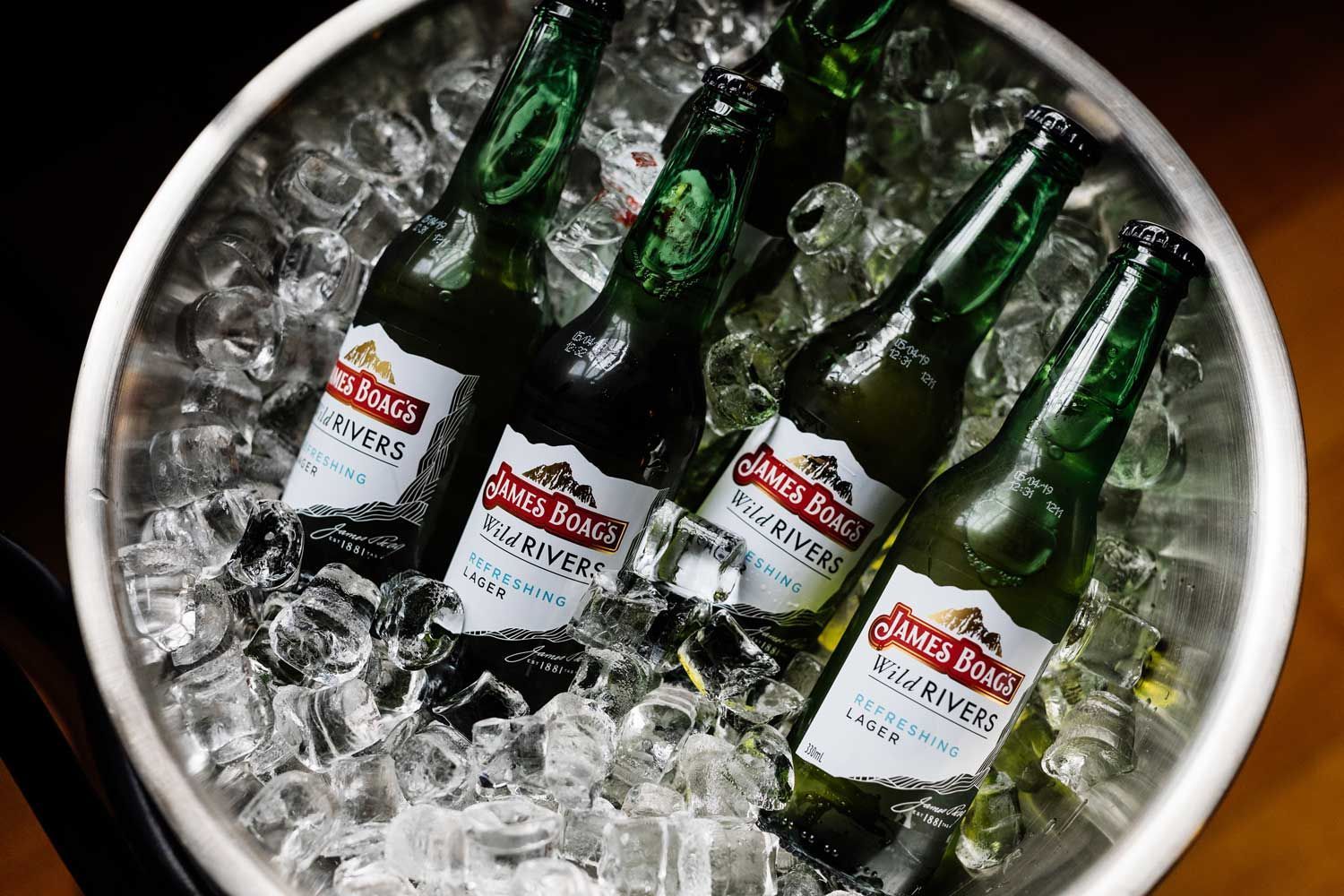
  • Boag’s Brewery tours to continue in Launceston thanks to state government funding

    Boag’s Brewery tours to continue in Launceston thanks to state government funding

    Tours of one of Australia’s oldest breweries — which were set to end in a few days — have been saved at the 11th hour after James Boag’s Brewery received funding from the Tasmanian government to keep them running.

    The Tasmanian government will provide $1 million to keep the Launceston brewery’s visitor centre open.

    As part of the deal, any Tasmanian with a current driver’s licence can get free tours for the next 12 months.

    Lion Australia, which owns Boag’s, announced last week that it would close the visitor centre, citing declining beer consumption, rising costs and the impact of COVID-19 as the reasons why.

    Boag’s Brewery director Nathan Calman said the government funding announcement was a win-win for the Launceston community.

    “The proposal to close the visitor centre and tours was not put forward lightly, but as a response to the significant cost pressures we are facing across our business,” Mr Calman said.

    “The response — an outpouring of immense passion for the continuation of our brewery tours and visitor centre experience — reminded us of just how integral Boag’s is to Launceston.

    Mr Calman said there had been no expectation that the government would provide support to keep the tours operating.

    “This package will help us continue to provide a great tour experience at the Boag’s visitor centre, while we work with the government and other stakeholders to address some of the long-term cost pressures our manufacturing business continues to face,” he said.

    The continued operation of the centre will also save 12 jobs.

    Premier Jeremy Rockliff, who called on Lion to reconsider its initial decision, said the funding would be used to “expand and enhance the tourist attraction”.

    “It’s not only a local cultural icon but a vital part of the local northern economy attracting thousands of visitors a year,” Mr Rockliff said.

    “The unique experience it offers has been a significant drawcard for Launceston for decades, with the benefits flowing to other businesses in the region and across the state.”

    The funding will also be used for a marketing strategy, to promote the tour to interstate travellers.

    Launceston Mayor Danny Gibson said that he was delighted the decision to close the visitor centre had been reversed.

    “We’re thrilled that such a vital component of our visitor economy has been reinstated, not only to the same level but [also with] commitment to expand it.

    “We know that the visitor centre and the tours are consistently ranked highly by visitors to Launceston.”

  • Craft brewers increasing production but downtime is hindering growth

    Craft brewers increasing production but downtime is hindering growth

    New research reveals that while craft brewers increased production by 7.6 per cent compared with the previous three months, the industry average for actual production time remains just 45 per cent.

    The findings come from the Craft Brewers Benchmark Report, a quarterly report prepared by manufacturing performance software company OFS which provides insights into how data can be used to improve production efficiency in the craft brewing industry.

    The report analysed the production of millions of litres of beer by primarily Australian, New Zealand and U.S. craft breweries between April and June this year and looked at key performance benchmark data and overall equipment effectiveness (OEE).

    “This is an industry that’s thriving while leaving so much potential on the table, OFS CEO James Magee said. “That luxury can’t last forever – we need a mindset shift in how the industry collects and leverages data to improve productivity.”

    Despite the challenges, craft brewers scored particularly well for waste efficiency with only two per cent of beer produced that did not end up in cans or bottles, a 28 per cent improvement compared with the previous three months.

    On average, 6517 units of craft beer were produced per hour, 74.2 per cent behind the potential output of 11,353 per hour. On the other hand, unplanned downtime accounted for 25.46 per cent of production time, in line with the previous three months..

    As for the OEE score, the industry earned an average of 44 per cent, a slight increase from 43 per cent.

    Magee noted visibility is key to further improving efficiency, as when craft brewers can see an opportunity in front of them, they don’t miss it.

    “It’s telling that craft brewers manage product waste so well – they barely leave a drop behind,” he said. “Wasted time, however, is harder to view without the right tools in place, and it’s too easy to generalise and make assumptions about output, downtime, and changeovers when you’re relying on a busy crew updating an excel sheet or piece of paper.

    “What we’re hoping to do with these industry snapshots is show the efficiency potential that’s there when craft brewers surface these insights,” Magee added. “It isn’t rocket science, it is literally just an accurate real-time view of what’s happening on the line, and too few have it.”

  • Brewer Sabeco profits fall to lowest level since Thai acquisition

    Brewer Sabeco profits fall to lowest level since Thai acquisition

    Vietnam’s largest brewer Sabeco said after-tax profit fell by over VND1 trillion (US$443 million) last year to VND3.93 trillion, the lowest since it was acquired by a Thai billionaire.
    Its revenues were VND26.37 trillion, a decline of 6 percent. Thaibev owned by Charoen Sirivadhanabhakdi acquired the company in late 2017.

    The firm blamed the Covid-19 outbreaks and subsequent restrictions in many provinces and cities across the country for the decline in performance.

    The firm has undistributed profits of over VND13.66 trillion.

    Vietnamese consumed 1.3 liters of beer per capita in 2020, according to the General Statistics Office. The country has a population of over 98.5 million.

  • Naked Wines about to sell all UK stores

    Naked Wines about to sell all UK stores

    Majestic Wine is reportedly looking to sell its entire UK retail portfolio to focus on its international e-commerce business, Naked Wines.

    Bankers at Rothschild have been contacting private equity firms to buy the British bricks-and-mortar business, which includes around 200 stores, on behalf of the retailer, according to Sky News.

    Majestic Wine acquired Naked Wines in 2015, and appointed the e-commerce company’s founder, South African entrepreneur Rowan Gormley, as CEO of the entire company. Naked Wines now operates in Australia, the UK and the US.

    Gormley told investors last month that Majestic would present a transformation plan in June, which would include growing the Naked Wines business by releasing capital in Majestic. The brands were to be combined into a single management team under the banner of Naked Wines plc.

    “It is clear Naked Wines has the potential for strong sustainable growth and a transformed Majestic business does have the potential to be a long-term winner,” Gormley said at the time.

    “But we risk not maximising the potential of Naked if we try to do both.”

    Gormley said the business would minimise job losses by migrating employees at the closed stores to the revised Naked brand.

    A spokesperson for Majestic told the combination of migrating existing customers to the Naked brand, selling assets and closing stores would lead to the business becoming an “out-and-out growth business”.

    According to Majestic, almost 45 per cent of its business now takes place online, and 20 per cent internationally, providing further growth opportunities should further focus be centered on these areas.

    The spokesperson said that “while a total sale of Majestic Retail continues to be a potential option, it would be wholly unwise to pursue a single-track process and materially limit the potential value that can be realised to drive growth.”

    Naked Wines Australia has been contacted for comment.

  • Beer brands pour big bucks into ads as Vietnam bucks global trend

    Beer brands pour big bucks into ads as Vietnam bucks global trend

    As more and more Vietnamese drinkers take to beer and competition heats up, leading brands are spending big on advertisements.

    Saigon Alcohol Beer and Beverages Corporation (Sabeco), the leading beer producer in Vietnam which brews the well-known Saigon and 333 beers, spent VND1.2 trillion ($52.9 million) on advertising last year.

    While this figure is slightly less than its 2016 outlay, it still places Sabeco on the top of advertisement budgets list in the beer industry, spending more than VND1 trillion spent on product promotion in each of the last three years.

    Meanwhile the producer of Hanoi and Truc Bach beers, Hanoi Beer Alcohol and Beverage Jsc, known as Habeco, spent VND568 billion ($24.6 million) on ads last year, over 3 times its 2014 expenditure.

    The increased spending is a response to Habeco’s declining share of the beer market in recent years, from its heydays of having the most popular brands in Northern Vietnam. The company has been augmenting its advertising budget as “there has been no breakthrough in the marketing activities of the brand,” according to Viet Capital Securities, which claims to provide comprehensive research to assist investors in maximizing profits.

    Sabeco, Habeco, along with Heineken and Hue Brewery (which is owned by Carlsberg) made up 90 percent of the beer market in Vietnam last year. The big four are known to spend big on advertisements as they compete with each other in the Vietnamese market, which is considered to have more advantages than other countries.

    “While beer consumption in many countries has stalled, there is still a lot of potential for this industry in Vietnam,” said Nguyen Van Viet, president of the Beer, Alcohol and Beverage Association (VBA) in a recent conference.

    In China and some European countries, beer consumption has stagnated or even declined slightly. But in Vietnam it is forecast to rise in the coming years, Viet said.

    He is backed by a study of the Asia-Pacific beer market conducted by Euromonitor, which claims to be the world’s leading independent provider of strategic market research.

    The study found that beer consumption in the world has not increased in a decade, but in Vietnam, this figure is increasing rapidly.

    In 2008, Vietnam ranked 8th position in beer consumption in Asia, just 8 years later it had climbed to 3rd position, behind Japan and China.

    In a market dominated by big players, new businesses are having trouble making a stand. Laser, Fosters and Zorok are among the brands that have tried and failed to gain a decent foothold in the Vietnamese consumer. Local media reports have said that the high costs of advertisements had made it difficult for these firms.

    Sapporo, one of the newer entrants, has recorded higher consumption in recent years, but very high marketing costs have seen to it that its profit is not substantial, Viet said.

    Last year, Vietnam consumed over 4 billion liters of beer, and a Vietnamese person consumed 45 liters on average, according to VBA. The country targets production of 4.1 billion liters of beer in 2020 and 5.5 billion in 2035.