Tag: benetton

  • United Colors of Benetton expanding into Myanmar

    United Colors of Benetton expanding into Myanmar

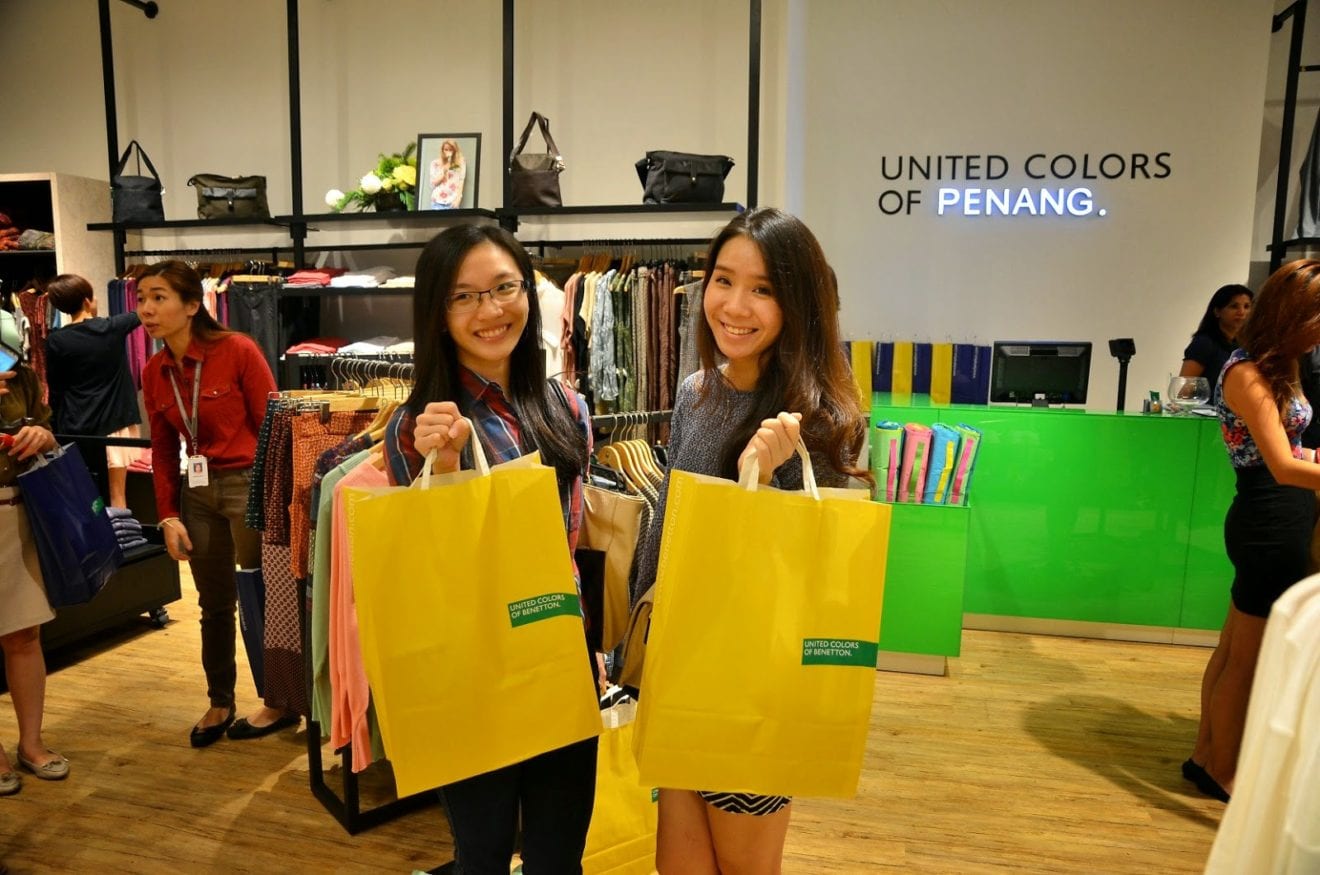
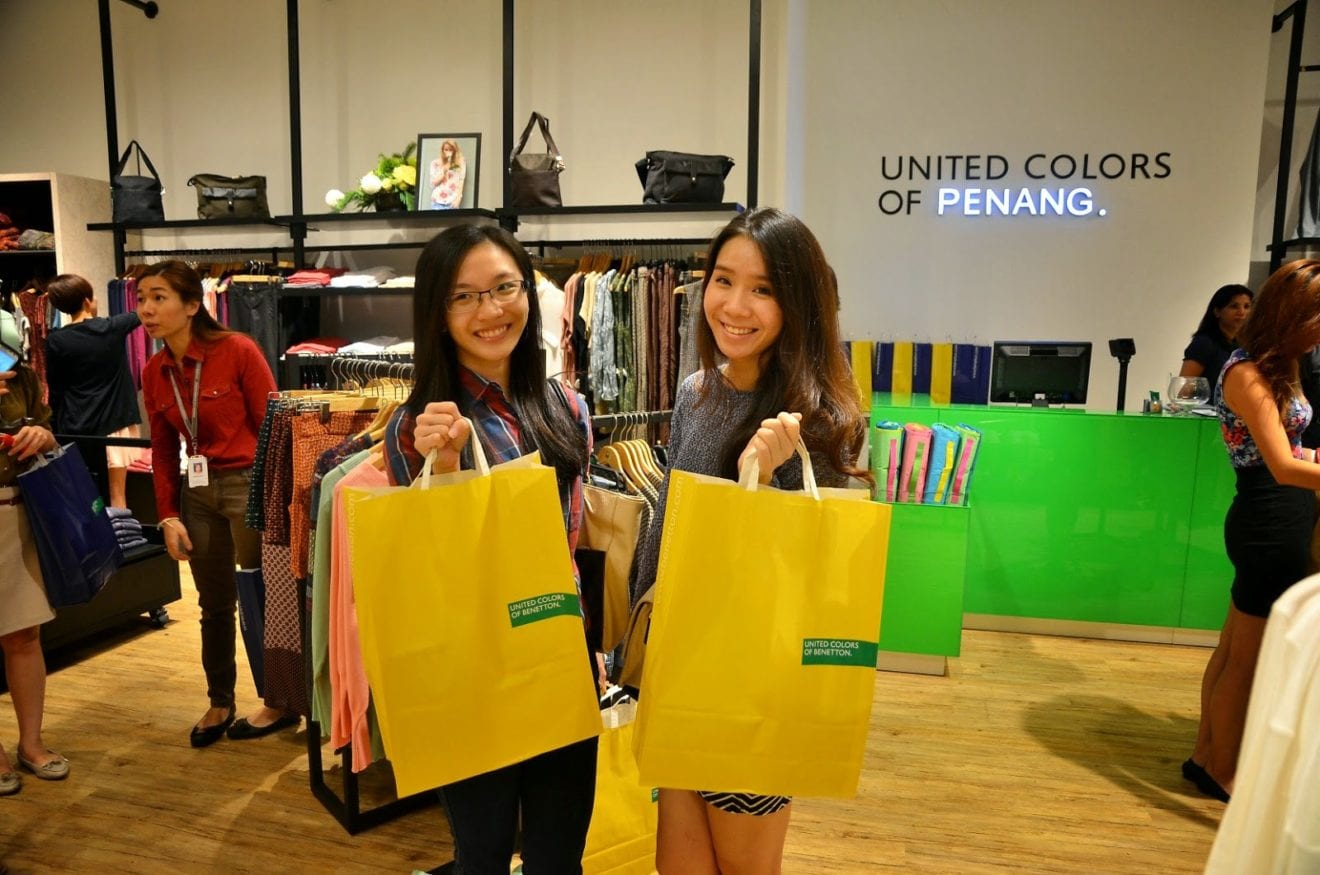
    Italian fashion brand United Colors of Benetton, has released a new collection to celebrate its presence in the Burmese market.

    Benetton entered Myanmar in October 2017 and now has two stores in prominent areas, with plans to further expand its base in the territory over the coming decade. Benetton Group has a global network of 5000 stores.

    “We brought our strong heritage to Myanmar in October 2017 with our first store in Junction City Level 2,” read a statement from the brand.

    “We further expanded with the store in Yangon International Airport … We have interesting plans of expansion in Myanmar next year and are looking forward to catering to the audience with our unique product offering. We have received an overwhelming response so far and will strive towards exciting our consumers with knit, colors and sustainability.”

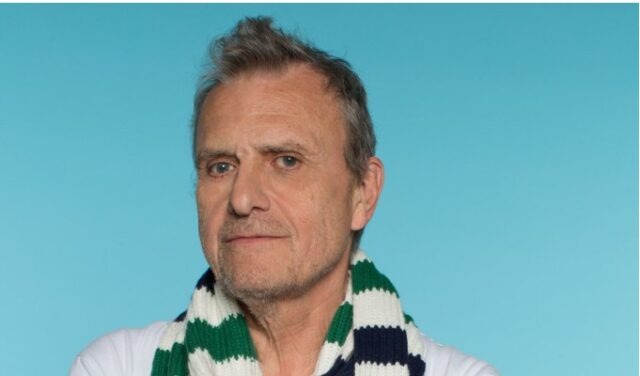
    With the new global creative director Jean-Charles de Castelbajac coming onboard, Benetton has showcased two collections – The Rainbow Machine and The Colour Wave at Milan Fashion Week (AW2019 & SS2020). The collection is expected to hit Myanmar stores in the coming year.

    Benetton’s AW2019 collection has hit stores to offer a chic winter to fashion enthusiasts in the region. The collection was celebrated with a special showcase followed by a creative session at the Junction City store on November 17 attended by the city’s glitterati.

  • United Colors Of Benetton appoints new Artistic Director

    United Colors Of Benetton appoints new Artistic Director

    Fashion designer Jean-Charles de Castelbajac has been appointed artistic director of the United Colors of Benetton men’s and women’s collections. “We are happy to welcome Jean-Charles de Castelbajac into our big family,” announced UCB Chairman Luciano Benetton.“His experience, charisma and ability to forecast tomorrow’s social and fashion trends will constitute a great asset for our brand.”

    Castelbajac has a long career that spans from design to painting, advertising and street art. He debuted in the fashion world in 1968, when he launched a brand created in collaboration with his mother. He then went on to inspire fashion trends such as the ‘anti-fashion’ movement and the alternative use of objects to decorate garments.

    In 1974 he co-founded Iceberg. In 1978 he founded maison Jean-Charles de Castelbajac, which he left in 2016. Over the years he has also collaborated with Max Mara, Ellesse, Courrèges, Rossignol, and Le Coq Sportif. Born from a mix of punk and pop, his style is characterized by the use of strong colors and pop icons, the mix of old and new and a whimsical and irreverent touch.

    “An iconic brand, United Colors of Benetton envisioned the world of today: a pop, colorful, affordable and universal fashion, enhanced by Oliviero Toscani’s powerful images,” commented Castelbajac. “United Colors of Benetton and I have always had a similar take on fashion, characterized by the passion for knitwear and the love of pop and rainbow colors.”

    Castelbajac and Benetton also share a passion for contaminating fashion with art. In his career, the French designer befriended and worked with artists such as Andy Warhol, Miguel Barcelo, Keith Haring, Jean Michel Basquiat, M.I.A and Lady Gaga. His creations have been displayed at New York’s Institute of Fashion and Technology, London’s Victoria & Albert Museum and the Galliera Museum in Paris. In 2018 he was guest artistic director at the Paris Biennale.

    “Thanks to social networks, fashion today is visible to everyone. But it remains affordable only to a few,” Castelbajac said, adding: “Together, United Colors of Benetton and I will seek to create tomorrow’s wardrobe, bringing beauty and style to everyday life, at prices that everyone can afford.”

  • Safilo appoints new executive to head e-commerce

    Safilo appoints new executive to head e-commerce

    Eyewear firm Safilo has appointed Andrea Bulgarelli to the newly created role of digital transformation director, as the Dutch-owned Italian company sets its sights on renovating its e-commerce infrastructure by 2020. An e-commerce fashion veteran, Bulgarelli comes from fellow Italian firm Benetton, which he joined in 2015 as group digital business director.

    Prior to his two year stint at Benetton, Bulgarelli was pivotal in the creation of e-commerce sites at luxury fashion Max Mara from 2007 to 2015, serving as the group global digital and e-commerce director for eight years. He came to Max Mara as operations and innovation director, after two year’s experience in sales.

    He is a graduate in telecommunications engineering and has an MBA in business administration.

    In his new role at Safilo, Bulgarelli will oversee the management of all consumer-facing touchpoints including merchandising planning, direct e-commerce, digital marketing, content production and CRM – all functions that he performed, among others, at Benetton.

    His appointment underpins Safilo’s direct-to-consumer strategy currently being executed, within its industrial plan for 2020.

    “Digital initiatives are at the heart of our growth and development strategy […] thanks to Andrea Bulgarelli’s leadership, we will finally be able to accelerate our e-commerce activities and our digital transformation,” explained Safilo CEO Angelo Trocchia.

    However, Safilo’s most recent financials were far from rosy. On November 3, the group reported third-quarter revenues of €221.5 million, down 9% at current exchange rates compared to the same period in 2017.

    The situation was similar over the first nine months of the year, with revenue down 9.7% to €713.7 million, compared to €790.5 million in 2017.

    Founded in 1934 by Guglielmo Tabacchi in Pieve di Cador, Safilo Group today designs, produces and distributes prescription frames, sunglasses, sports eyewear and helmets under its own five house brands and 32 licensed brands including Dior, Fendi, Givenchy, Moschinoand Tommy Hilfiger and is owned by Hal Holdings since 2008, the Dutch investment firm which holds 37.23% of the company.


  • E-commerce upgrade for Benetton

    E-commerce upgrade for Benetton

    Benetton Group is upgrading and expanding its e-commerce platforms with new online stores for the Sisley and United Colors of Benetton brands.

    Meanwhile, the Italian fashion brand has overhauled its www.benetton.com e-shop to offer customers an increasingly immersive shopping experience. The renewed website is available in seven languages ​​in 24 countries, and features fresh graphics plus an easier browsing experience even on mobile devices.

    Its clean design, including a reorganised menu and improved search engine, follows an analysis of buying behaviour and interviews with consumers.

    The new e-shop and the further development of e-commerce are an integral part of  Benetton Group’s strategy to focus more on an omnichannel approach. It also marks a new phase in the company’s online strategy, as Benetton Group is taking over direct management of the online channel.

  • Benetton Group takes control of Korean operations

    Benetton Group takes control of Korean operations

    In the midst of reorganisation to improve competitiveness, Benetton group has decided to take back its distribution arm in South Korea. Both Benetton brands and Sisley have for a long time been represented in the country via a 50/50 joint venture with a local distributor. The Italian group announced this week it now owns 100% of this structure with the latter becoming one of its subsidiaries.


    Hyung Rae Cho, CEO of the newly created Korean subsidiary – Benetton.

    South Korea is a very important country to the group, since it is the second export market for Benetton after India and the top export country for Sisley. The group’s annual brand sales are estimated at 150 millions euros in the region across 300 points of sale.

    It’s a strategic market too, influential in the Asian region as whole, becoming a sort of base camp for the Italian group.

    Benetton wants to continue in the right direction after taking back the distribution reigns. It revealed it has appointed the country manager of the former structure, Hyung Rae Cho, to the role of CEO of the newly created Korean subsidiary.

  • Benetton stumps up for Rana Plaza fund

    Benetton stumps up for Rana Plaza fund

    Italy’s Benetton Group has announced a US$1.1 million commitment to the Rana Plaza Trust Fund.

    But it wasn’t enough to end the criticism from the Clean Clothes Campaign which has for months singled Benetton out for failing to contribute to the fund.

    To end off the predictable salvo from CCC, Benetton engaged PwC to independently assess what contribution it should make to the fund relative to its share of the clothing sourced from the Plaza. That assessment was then checked by WRAP, an NGO focused on special compliance through global supply chains, which endorsed PwC’s recommendation. Benetton doubled the recommended payment.

    Rana Plaza, in the Bangladesh town of Savar, was the scene of the 2013 disaster where 1129 workers were crushed to death in the collapse of sweatshops producing clothing for western fashion brands.

    Benetton’s contribution follows an earlier $500,000 payment made through the BRAC organisation prior to the trust fund being established.

    “We welcome the PwC report and WRAP’s contribution. We have decided to go further to demonstrate very clearly how deeply we care,” said Marco Airoldi, CEO of Benetton Group. “Whilst there is no real redress for the tragic loss of life we hope that this robust and clear mechanism for calculating compensation could be used more widely. For this reason, we decided to make the PwC report publicly available to all stakeholders”.

    “Benetton has a proud history of social commitment. We believe that by working closely with the right suppliers we can help to improve factory conditions for workers in Bangladesh and in many other parts of the world,” he added.

    But Clean Clothes Campaign was unimpressed.

    “Benetton had a real opportunity to emerge as a leader and prove that their pledges of empathy, understanding, and care for the welfare of the victims were not just some PR spin.  Unfortunately, the true colours of Benetton are now revealed” said CCC spokeswoman Ineke Zeldenrust.

    “In February Benetton announced they would pay ‘within a few weeks’ and that they engaged an independent credible third party to determine how much they should pay.  Today, Benetton finally revealed this to be global accounting firm PricewaterhouseCoopers (PwC). The US based World Wide Responsible Apparel Program (WRAP), which Benetton described as an ‘NGO working on social compliance endorsed the PwC assessment. WRAP is in fact an industry sponsored social auditing and certification organisation with one of the worst track records in the industry. The Garib and Garib factory for example, that went up in flames, killing people, in Dhaka in 2010, was WRAP certified at the time,” the CCC statement continued..

    “Benetton again wasted time, spending money on a process in order to try to legitimise their insufficient payment. It’s deeply troubling that Benetton engaged a firm with no track record on human rights issues to lead their process.

    “Red flags need to go off when the PwC assessment is only endorsed by one of the least reputable auditing firms in a very flawed sector.  Let’s be clear, Benetton’s process was not transparent.  The process excluded all trade unions and labour rights organisation directly involved in compensation efforts in Bangladesh,” says Zeldenrust.

    Benetton was one of 29 brands connected to companies operating in the Rana Plaza building.

    The Italian company said PwC based its report on an assessment from the International Labour Organisation that in total $$30 million compensation should be paid into the Rana Plaza Trust Fund. “PwC calculates Benetton Group’s contribution to be $550,000 based on the level of its commercial association with the Rana Plaza.

    “However PwC has not factored in contributions from other third parties, such as the Bangladesh government and the Bangladesh Garment Manufacturers Exporters Association, unions and others. This means that, if its mechanism were followed by all brands operating at the Rana Plaza, after payments from other third parties the total fund could significantly exceed $30 million.

    “Based on Benetton’s commercial association with Rana Plaza, we believe this is a fair basis to calculate payments to the Rana Plaza Trust Fund as quantified by ILO,” said Sudhir Singh Dungarpur, Partner PwC India.

    “With a tragedy of this scale, no financial compensation can ever really be enough, but we welcome Benetton’s decision to pay more than its calculated share of the fund based on the report published by PwC,” said Avedis Seferian, president and CEO of WRAP. “If everyone took the same approach as Benetton, the overall fund could more than exceed its stated goals”.
  • Benetton takes heat over Rana Plaza fund

    Benetton takes heat over Rana Plaza fund

    The Clean Clothes Campaign says it has confirmed authorization of another round of compensation payments to victims of the Rana Plaza clothing factory collapse.

    Rana Plaza, in the Bangladesh town of Savar, was the scene of the 2013 disaster where 1129 workers were crushed to death in the collapse of sweatshops producing clothing for western fashion brands.

    The Rana Plaza Coordination Committee has this month approved compensation payments to 5000 claimants, who are dependents of the deceased and injured workers. This round of payment is sufficient to pay an additional 30 per cent of each award, making the total amount received by each eligible beneficiary only 70 per cent of the amount they are entitled to.

    The Clean Clothes Campaign has singled out Italian fashion house Benetton for failing to make a promised payment, inferring the company is largely responsible for the short payment.

    “Other companies such as Children’s Place, Inditex (Zara), Mango, Matalan, and Walmart have failed to contribute a significant and proportional amount.

    “With this payment the majority of the funds received into the fund will be distributed and the payment of the final 30 per cent of each compensation claim will only take place once more donations are made to the Rana Plaza Donors Trust Fund, which remains at a US $9 million shortfall,” the campaign said in a statement.

    In the past year, the fund, set up by the International Labour Organisation in January 2014, has received around US $21 million in donations from global brands, the Bangladeshi Prime Minister’s Fund, trade unions and civil society.

    Benetton released a statement at the end of February confirming its intention to donate to the fund, but since then Benetton has remained silent on the matter.

    “Benetton claims it is delaying to allow time for a consultant to advise it on a fair amount of payment, but refuses to disclose any information about who will carry out this work, the methodology with which they will determine the amount, or a date for when a donation will be announced,” said the campaign.

    “The Clean Clothes Campaign urges Benetton to make an immediate payment of at least $5 million to the Rana Plaza Donors Trust Fund – an amount believed to be proportional according to Benetton’s ability to pay, the size of its relationship with Bangladesh and its relationship with Rana Plaza.”

    The campaign says compensation payment amounts are calculated “in line with international standards”. Despite this, brands continue to be reluctant to make “meaningful payments” to ensure that the victims of the Rana Plaza collapse receive full and fair compensation.

    “Now that the next round of payments have been authorised, the fund urgently needs more donations. There will be no more money in the fund, which means that families will then be placed in a precarious situation of not knowing if they will ever receive the full compensation that they are entitled to”, said Sam Maher of the Clean Clothes Campaign.

    “Every single brand has the responsibility to ensure that the victims receive full and fair compensation. Until this is accomplished, brands should recognise that their responsibility to the victims has not been fulfilled.

    “The $9 million shortfall is totally unacceptable, and we need to see all stakeholders involved, particularly Benetton and other brands, step up and fulfill their responsibility”, said Maher.

    “In the immediate aftermath of the disaster, when the industry made all sorts of commitments to the victims of Rana Plaza, we never imagined that full and fair compensation would still be an issue almost two years later.  Any of the companies – Benetton, Walmart, Inditex, Mango – have the ability to fill the gap.  All earn hundreds of millions of dollars in profit each year; money earned on the backs of the workers like those who died in the Rana Plaza collapse.

    “Its time for these brands to stop playing politics with people’s lives, and fill the gap immediately.”