Tag: Bershka

  • Inditex Delivers USD 46.3 Billion Revenue as Zara Refines Store Network

    Inditex Delivers USD 46.3 Billion Revenue as Zara Refines Store Network

    Zara parent Inditex generated USD 46.3 billion in revenue and USD 7.2 billion in net profit for fiscal 2025, leaning on a deliberate push into higher-tier apparel.

    The Spanish group operated 5,444 stores globally across 215 markets as of July 2026, with the Zara banner accounting for 70 percent of group sales alongside Zara Home and Lefties.

    Total Zara store numbers dropped to 1,487 locations by July 2026. The retailer closed smaller footprint units to roll out larger flagship locations integrated with online logistics, while running sub-brands including Zara TRF, Studio, SRPLS and a dedicated beauty range launched in 2021.

    Elevation Strategy Against Ultra-Fast Competitors

    Inditex chair Marta Ortega Pérez steered the brand toward premium fabrics and longer-lasting lines, leaving rock-bottom price competition to cross-border online platforms like Shein and Temu. Her approach shifts Zara from raw turnaround speed toward flexibility and higher unit margins, supported by value subsidiary Lefties across 223 stores.

    Scale gives the retailer pricing use that regional fast-fashion operators struggle to match. Long-term supplier contracts let Zara buy higher-grade textiles at lower unit costs, while internal guidelines cap markdowns to two defined sales periods each year.

    For mall landlords across Asian metropolitan centres like Tokyo, Zara’s migration to massive flagship layouts consolidates prime ground-floor space into fewer, higher-yielding leases. Competitors such as Uniqlo, valued behind Zara at 47th on Interbrand’s 2025 table against Zara’s 41st position, face an Inditex fleet that extracts roughly 85 percent of full ticket prices on retail racks.

    The structural risk sits in production lead times. An entirely new design now takes five weeks from concept to store delivery, up from the 15-day turnarounds achieved in the early 2000s, leaving a wider window for nimbler digital-native rivals to siphon off younger shoppers.

    Centralised Logistics and Asian Sourcing

    Inditex invested more than USD 1 billion annually across 2024 and 2025 to expand warehouse capacity, bringing its new Zaragoza II distribution centre into service in 2025. A 200,000-square-metre design and operations hub opened in Arteixo in October 2025 to house women’s and children’s teams.

    The production network relies on a split manufacturing model. Around half of production comes from suppliers near Spain, including Portugal, Morocco and Turkey, while volume basics like cotton T-shirts are sourced from long-term supplier factories in Asia across a network of 6,684 vendor plants.

    Trend spotters in Arteixo monitor feeds tied to offices in Shanghai, Tokyo and New York, tailoring stock allocations to micro-markets. Japanese stores receive distinct size profiles, Middle Eastern outlets take adapted womenswear, and store inventories mirror local district habits: central Ginza inventory runs closer to Fifth Avenue stock than to suburban floors.

    Store Technology and In-Store Tracking

    Technology deployments across physical units aim to cut handling bottlenecks. Inditex replaced hard security tags with soft tags across all stores by mid-2026 to speed up checkout queues, backed by RFID systems tracking inventory down to single garments.

    Digital selling channels added an artificial-intelligence virtual fitting tool in December 2025, active in 43 markets, allowing shoppers to test collections on digital avatars built from personal photographs.

    The family transition remains anchored by founder Amancio Ortega’s holding vehicle Pontegadea, which controls 59 percent of Inditex alongside commercial real estate holdings in London, Seattle, Paris and South Korea. Ortega, who opened the first Zara store in A Coruña in 1975, ranked 15th on the Bloomberg Billionaires Index in March 2026.

    Bershka opened its first United States store in Miami in August 2026, marking the next expansion phase for Inditex’s non-Zara banners as store counts across the group’s 849-unit youth label realign toward foreign flagship properties.
  • Inditex suffers from late coming winter

    Inditex suffers from late coming winter

    Zara owner Inditex has posted slow like-for-like sales growth due to the unusually warm autumn and adverse currency moves. Inditex, which also owns upmarket label Massimo Dutti and teen label Bershka, posted a 3 per cent rise in like-for-like sales in the six months to the end of November after an “extraordinarily warm September”. Sales bounced back somewhat to 5 per cent in October and November.

    The fashion giant reported an increase in earnings before interest and tax of €3.07 billion from the previous corresponding period.

    In the first nine months of the year, the world’s largest fashion retailer reported a 3 per cent increase in sales to €18.4 billion and a 4 per cent rise in net profits to €2.4 billion.

    According to Inditex, the company didn’t have to cut clothing prices from September like its rivals, which resulted in margin growth of 108 basis points during the third quarter.

    The clothing retailer maintained sales and margin guidance for the rest of the year.

    Pablo Isla, Inditex chair and CEO, said the group’s strong business model, which continues to deliver solid structural growth in all markets, and its constant focus on developing the integrated store and online platform through continued enhancement of technology and systems, have contributed to its performance.

    The company announced last September that all products from all its brands will be made available online by 2020, including in markets where it does not have any stores.

    Isla had said that Inditex wants to make all fashion collections available to all customers wherever they are in the world.

    “Even in those markets which do not currently have our bricks-and-mortar stores,” Isla added.

    Other than Zara, Massimo Dutti and Bershka, Inditex also sells the brands Pull & Bear, Stradivarius, Oysho and Uterque across its network of almost 7500 physical shops. It operates online in 49 markets.

  • Zara lipstick launched online

    Zara lipstick launched online

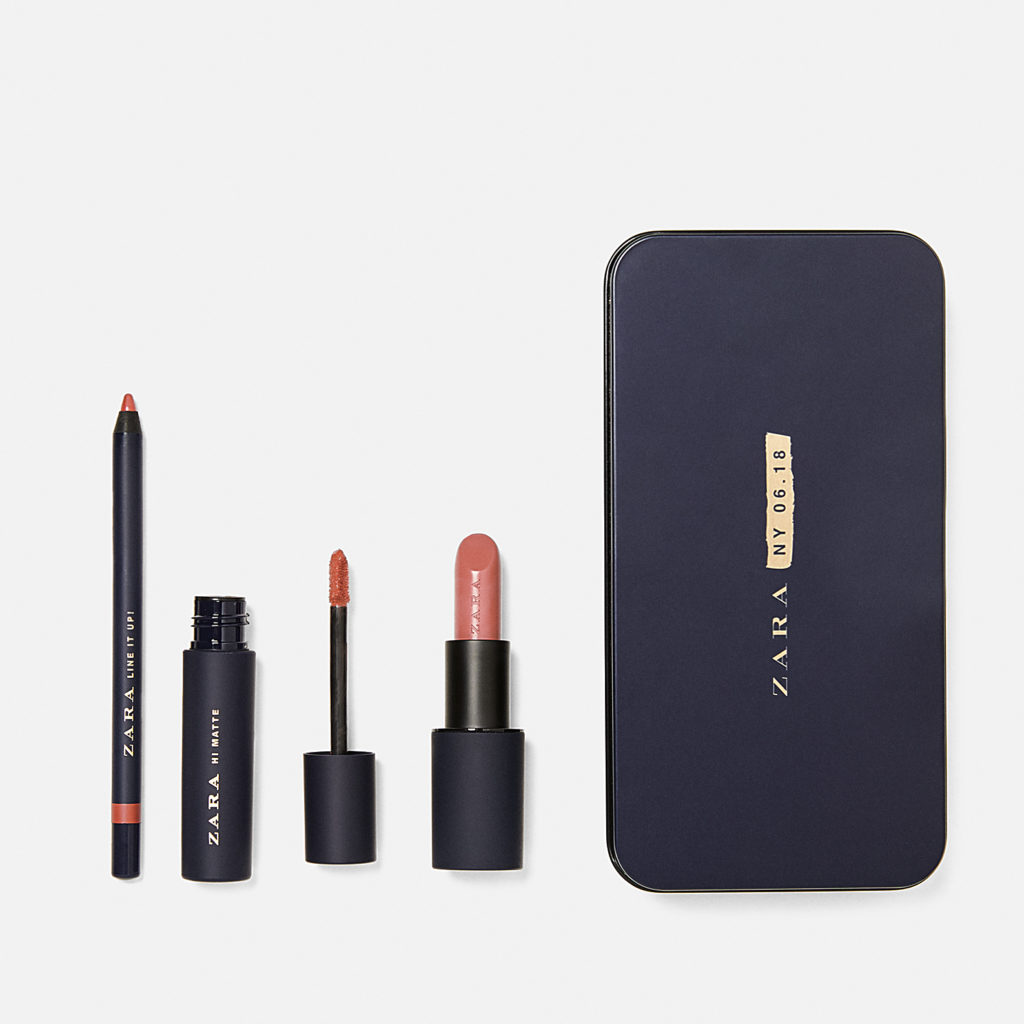
    Zara lipstick goes on sale this week – but only online. The fast-fashion brand’s first lipstick collection – called Zara Ultimatte – marks a continuing expansion of its beauty and cosmetics offer. Sister brands Bershka and Pull&Bear already have makeup lines, targeting younger consumers.

    Parent company Inditex says the collection was “inspired by the kind of makeup needed to create ad campaigns”. It is based on a colour palette created by British make-up artist Pat McGrath, (famous for working with Christian Dior and Armani Beauty, among others).

    The French-made Zara lipstick collection was designed in Los Angeles, featuring 12 high-pigment lipsticks, eight liquid-matte lipsticks, a box kit with three red colours and a limited-edition, behind-the-scenes kit. Prices range from €7.95 to €19.95. While available only on the Zara website, the company will ship worldwide.

  • Inditex to sell all its brands online by 2020

    Inditex to sell all its brands online by 2020

    Zara owner Inditex announced all products from all its brands will be made available online by 2020, including in markets where it does not have any stores.

    Pablo Isla, Inditex chairman and CEO, announced they want to make all their fashion collections available to all their customers wherever they are in the world.

    “Even in those markets which do not currently have our bricks-and-mortar stores,” Isla added.

    Other than Zara, the world’s largest clothing retailer also sells the brands Pull & Bear, Massimo Dutti, Bershka, Stradivarius, Oysho and Uterque across its network of almost 7,500 physical shops. It also operates online in 49 markets.

    In FY2017, Inditex’s online sales saw a 41-per cent increase to reach 10 per cent of group net sales, although it fell short compared to rival Swedish retailer H&M’s which made close to 12 per cent on online sales.

    Isla said all of the Group’s brands will also be adopting the integrated stock management system by 2020 in all the countries in which there is a physical store presence.

    He said the system would make it possible to fulfil online customer orders with store inventory. To date, integrated stock management is in place in Zara stores in 25 markets including Spain, France, Italy, China, the US, the UK and Mexico. Inditex currently has stores in 96 markets. The technology will be completely adopted across the whole group by 2020.

  • Online sales surge boosts Zara owner Inditex

    Online sales surge boosts Zara owner Inditex

    Surging online sales have boosted Zara parent’s Inditex’s net profit in the past fiscal year by 7 per cent.

    Inditex, which also owns brands including Pull & Bear, Bershka and Massimo Dutti, reported an increase in net profit for the 12 months ending January 31 to €3.37 billion (A$5.27 billion) from €3.16 billion a year earlier.

    Sales rose 9 per cent to 25.34 billion euros in the fiscal year, with revenue for online sales growing by 41 per cent.

    In FY17, Inditex invested €1.8 billion in further developing its integrated stores and online model and upgrading its technology. Specifically, the rollout of RFID technology has improved flexibility and response times by integrating stores and online inventories, the company said.

    Pablo Isla, chairman and CEO of Inditex, described it as a year of “solid growth”, and highlighted, “the unique strength” of their integrated stores and online model and its significant growth potential.

    He added that “the prescient investments made in technology and logistics in recent years,” coupled with space optimisation, had positioned the company for continued growth across all its markets.

    The group, which during 2017 opened its first stores in Belarus and launched its online sales platform in India, Vietnam, Singapore, Thailand and Malaysia, was founded in 1975 by Amancio Ortega and has become the world’s largest clothes retailer with eight brands.

    Inditex owns 7,475 shops worldwide, an increase of 183 stores from the previous year when factoring in shop closures, but 29 less than three months earlier.

    Florence Allday, beauty and fashion associate at Euromonitor International, said Inditex faces a period of uncertainty as the changing retail environment and globally volatile currencies make this rapidly evolving market sector even more competitive.

    The fashion conglomerate may be one of the most dynamic players in the industry, Allday said, but the past few months have seen Zara and its direct global competitors vie to remain in favour with their female, millennial demographic in a market that is fast-maturing and reaching saturation.

    Currently, Zara has the fourth largest global market share in the apparel and footwear category, behind Hennes & Mauritz (H&M), Adidas and Nike. Other significant competitors include Asos, Boohoo and Primark.

    Allday said rankings and shares in the global apparel and footwear market remained static in 2016, with sportswear giants taking the top two spots.

    Inditex ranked fourth, maintaining its positioning as one of the leading non-sportswear companies in the world. Inditex’s key rival is H&M, which slightly outperformed Inditex due to more dynamic store expansion and an aggressive pricing strategy. H&M also utilises far more visible marketing, including collaborations with high-profile designers that attract widespread fashion press.

    “Although Inditex does rank higher than H&M in the global footwear market the company will need to utilise its vertical operations and exploit its widespread geographic coverage, to overtake H&M in apparel, capitalising on the narrowing gap between the two rivals,” Allday said.

    “Further still, players such as Fast Retailing [Uniqlo parent] continue to move up the ranks, capturing consumers’ demand for value-orientated product offerings, threatening the dominance of Inditex and H&M.”

    Allday said despite Zara’s status as the world’s largest fast fashion retailer, its sales slowed last year due to a lack of distinction between seasonal collections, and general market saturation.

    “To continue to be a key player in the fast fashion arena, Zara needs to ensure that its constant, uninterrupted flow of new designs and products is matched by a digital retail experience that is equally seamless,” she said.

    “With competitors like Asos, Amazon and Missguided enjoying enormous sales and growth, thanks to their sleek online platforms, Zara must streamline its payment and delivery options to ensure that its online shoppers remain loyal. Consumer attitudes are shifting, preferring to pay more for quality over quantity.”

    “To ensure that it remains relevant, Zara must emphasise the quality and longevity of its garments and justify its low price points to ethically-conscious consumers.”

  • Inditex Rises as Global Expansion Continues

    Inditex Rises as Global Expansion Continues

    Clothing company Inditex international, which owns Bershka and Zara, reports a strong performance for its latest nine months.

    Continuing to roll out its global fully integrated store and online platform, the Spanish group opened outlets in 52 markets during the period. Its store count reached 7504 in 94 markets at the end of October.

    It says like-for-like sales growth remains strong, while global online sales launches are on track. It launched online sales for Zara in India in October.

    Net sales for the nine months reached €17.96 billion (US$21.2 billion), up 10 per cent.

    Gross profit reached €10.3 billion, 9 per cent higher, while gross margin reached 57.4 per cent and EBIT was up 6 per cent to €2.99 billion. Net income was also up 6 per cent to reach €2.3 billion.

    During the nine months, Inditex opened 212 stores including 60 for Zara, 30 for Stradivarius and 13 for Pull & Bear.

  • Bershka SoHo pop-up covers two floors

    Bershka SoHo pop-up covers two floors

    Everything in New York always seems bigger than in real life – even the definition of a pop-up store…

    An 8180sqft Bershka SoHo pop-up which opened its doors this week at 580 Broadway covers two stories of a previously empty retail space. The store is intended to boost the Inditex brand’s image in the US, where it launched an e-commerce platform six months ago.

    Bershka chose the heart of SoHo, one of the world’s most emblematic fashion districts, as the location, where it will trade until the end of the year, displaying all of Bershka’s FW17 collections – Bershka, Bsk and Man, as well as the sports lines, Start Moving, for young men and women.

    Features of the store include leading initiatives to be as eco-efficient as possible, guided by the Leed sustainable building criteria. Additionally, within the store, the Bershka Stage store image has guided all of the furniture and decoration designs. The layout has been similarly adapted for the store space specifically and with the US consumer in mind, offering the trendiest current looks, complete with accessories and footwear.

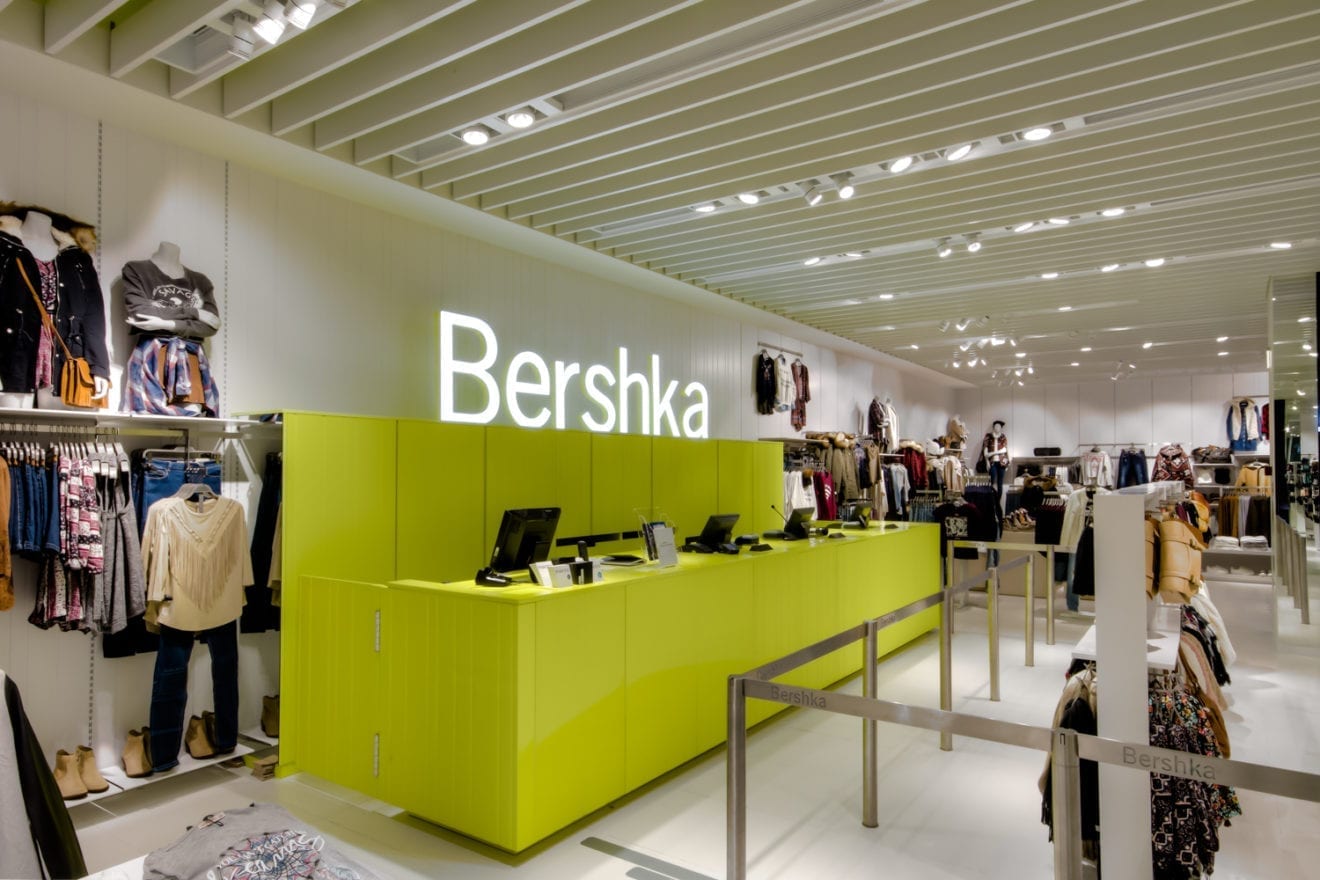
    Bershka Stage is the latest store design concept being rolled out internationally.

    “Inspired by the world of music concerts and what goes on behind the scenes, the Stage aesthetic epitomises Bershka’s DNA: music, fashion and youth,” the company said. “The result is an interior design that is industrial yet airy, with open ceilings that reveal the establishments’ skeletons. The structure is framed by truss scaffolding that runs around its entire perimeter and is used to hang the lighting, speakers and some of the screens that make up the whole look..

    “The Stage concept facilitates the shopping experience by means of more user-friendly and versatile furniture and fittings, making it easier to get around the store and providing a better way of displaying the brand’s garments and, by extension, each season’s new looks.”

    Bershka has 1098 stores in 75 markets across Europe, the Americas and Asia. The brand is forging ahead with an international expansion strategy that has been marked by high-profile openings in recent years in markets such as China, Japan, Taiwan and South Korea, along with flagship store openings on some of the world’s most important shopping streets, including Oxford Street, London, Via Vittorio Emanuele, Milan, Nanjing East, Shanghai, Gran Vía, Madrid, Rue Rivoli, Paris, and Shibuya, Tokyo.

  • Inditex Group sales rise on new stores

    Inditex Group sales rise on new stores

    Zara parent Inditex Group sales rose by 12 per cent in its latest trading year, to January 31, reaching €23.3 billion.

    Growth was achieved in every geographic region where the group is present, and includes contributions from debut stores in Vietnam and New Zealand.

    Same-store sales rose by 10 per cent, up from 8.5 per cent the previous year, with positive same-store sales growth in all geographies and across all brands.

    Net profit was €3.2 billion, up 10 per cent year-on-year, while earnings before interest and tax grew 8 per cent to €5.1 billion.

    Chairman and CEO Pablo described the result as positive against a backdrop of strong prior-year performance.

    Inditex opened 279 stores, net of closures, in 56 markets, across all its brands, ending the year with 7292 stores in 93 countries, a large proportion of the new ones in Asia, including its first Zara in Vietnam, in Ho Chi Minh City.  Other Zara stores opened in China, Thailand, Indonesia and Japan and it refurbished it flagship in the Shinjuku district in Tokyo, one of Japan’s most important shopping districts, which reopened to the public in November.

    A flagship Pull&Bear store opened in Windsor House in Hong Kong and new stores were opened by Massimo Dutti in India and by Oysho in Indonesia. Bershka refurbished its flagship on Nanjing Road East in Shanghai and Zara Home opened a global flagship on Garosu de Seoul in South Korea.

    Since the financial year ended, it has opened online stores in Malaysia and Singapore, taking its online platform to 43 markets.

  • Zara parent company boosted profit and sales

    Zara parent company boosted profit and sales

    Spanish clothes retailer Inditex, has reported its net profit for the first fiscal quarter of 2016 rose 6 per cent, after global sales lifted by 12 per cent.

    Inditex said profit for February through April was 554 million euros ($A843.61 million), up from 521 million euros for the same period last year.

    The company’s shares were up 2.7 per cent at 28.74 euros in Wednesday morning trading in Madrid.

    The company said sales reached 4.88 billion euros, a 12 per cent increase on the same period in 2015.

    Inditex says it opened 72 new stores in the period for a total of 7085 and added 11,900 jobs in the process. During the first quarter, the retailer expanded its reach to 90 markets, having opened inaugural stores in Aruba and Nicaragua. At the end of the first-quarter, the Group reported 7085 physical stores.

    Founded in 1975 by Amancio Ortega, Inditex operates eight store brands including Massimo Dutti, Bershka and Oysho.

  • The World’s Biggest Fashion Retailer is Betting Big on China

    The World’s Biggest Fashion Retailer is Betting Big on China

    Spain’s Inditex, owner of the Zara chain and the world’s biggest fashion retailer, is optimistic about long-term growth in China despite the slowing economy, as demand for its affordable fashion stays robust.

    Inditex, whose Zara brand has lured shoppers this season with a minimalist straight-cut look, teaming muted colors with ankle boots and trousers, makes about 7 percent of its sales in China, analysts estimate.

    Western luxury brands like Burberry and Hugo Boss are suffering from cooling Chinese demand, but mid-market names like Adidas and Zara are faring better.

    “We have no doubt that in China the fashion appetite is large, our brands are better and better known and we are still feeling very optimistic (over a five-year view),” Chief Executive Pablo Isla told analysts on Thursday.

    The group made a sprightly start to the Christmas season as its on-trend offerings allowed it to adapt better than rivals.

    Sales from Nov. 1 to Dec. 3 rose 15% in local currencies, suggesting a slight slowdown in same-store sales from the previous three months. But analysts said it was still a strong performance given rivals like Top Shop have had a slow start to Christmas trading due to mild weather.

    “We can say that Inditex is trading just as strongly in the fourth quarter to date as it did in the third,” Societe Generale analyst Anne Critchlow said.

    In the nine months to end October, net profit rose by a fifth to 2.02 billion euros ($2.2 billion) on sales up 16% to 14.7 billion.

    Isla said newer brands like Zara Home, Bershka and Stradivarius had performed particularly well.

    Gross margin, a closely-watched measure of profitability, slipped slightly to 58.8%, as the strong dollar pushed up prices of garments sourced in Asia, though this affects Inditex less than its peers.

    Inditex sources more goods in or near Europe, helping it adapt more quickly to fashion tastes and speedily deliver new ranges.

    Inditex shares, up 37% this year, were down 1.5% by 1037 GMT, versus a 0.7% fall in the European retail sector.

    Many market watchers have flagged the rich valuation of the stock, trading at around 34 times 2016 projected earnings, according to Reuters data, versus 24 times for rival Hennes & Mauritz hmrzf .