Design firm Dalziel & Pow – which designed Dubai-based Lifestyle’s revamped store in The Dubai Mall – also created an immersive concept store, ‘Her Social Studio’, for Danish fashion brand Pieces. Located within the office headquarters of parent company Bestseller in Aarhus, Denmark, the concept store immerses customers in a multi-faceted hub for co-creation and brand storytelling.
Fusing classic retailing with a working studio, the space is multi-purpose and houses a myriad of brand activations and engagements, from staff training to trialling products and merchandising to customer workshops and styling sessions. The aim, to give any visitor, be it franchisee, partner, supplier or staff member an opportunity to ‘buy into the brand’ through a totally Immersive experience.
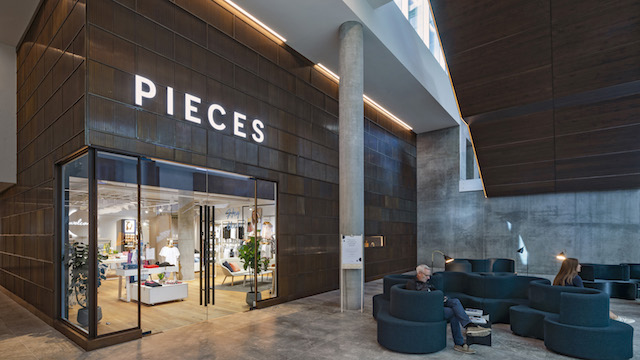
The flexible showroom is broadly divided into two zones – ‘Her Wardrobe’ and ‘Her Studio’.
The retail space ‘Her Wardrobe’ exudes a contemporary Scandinavian aesthetic, reflecting the world of Pieces’ customers – celebrating and empowering them to look good and share their looks in a warm welcoming setting. It’s designed to be a flexible shoppable space, featuring a “coming soon” panel for sneak peeks at future product collections and collaborations. As well as showcasing the store concept it can be used to trial merchandisng and visual merchandising ideas and accommodate a constantly changing programme of events and classes.
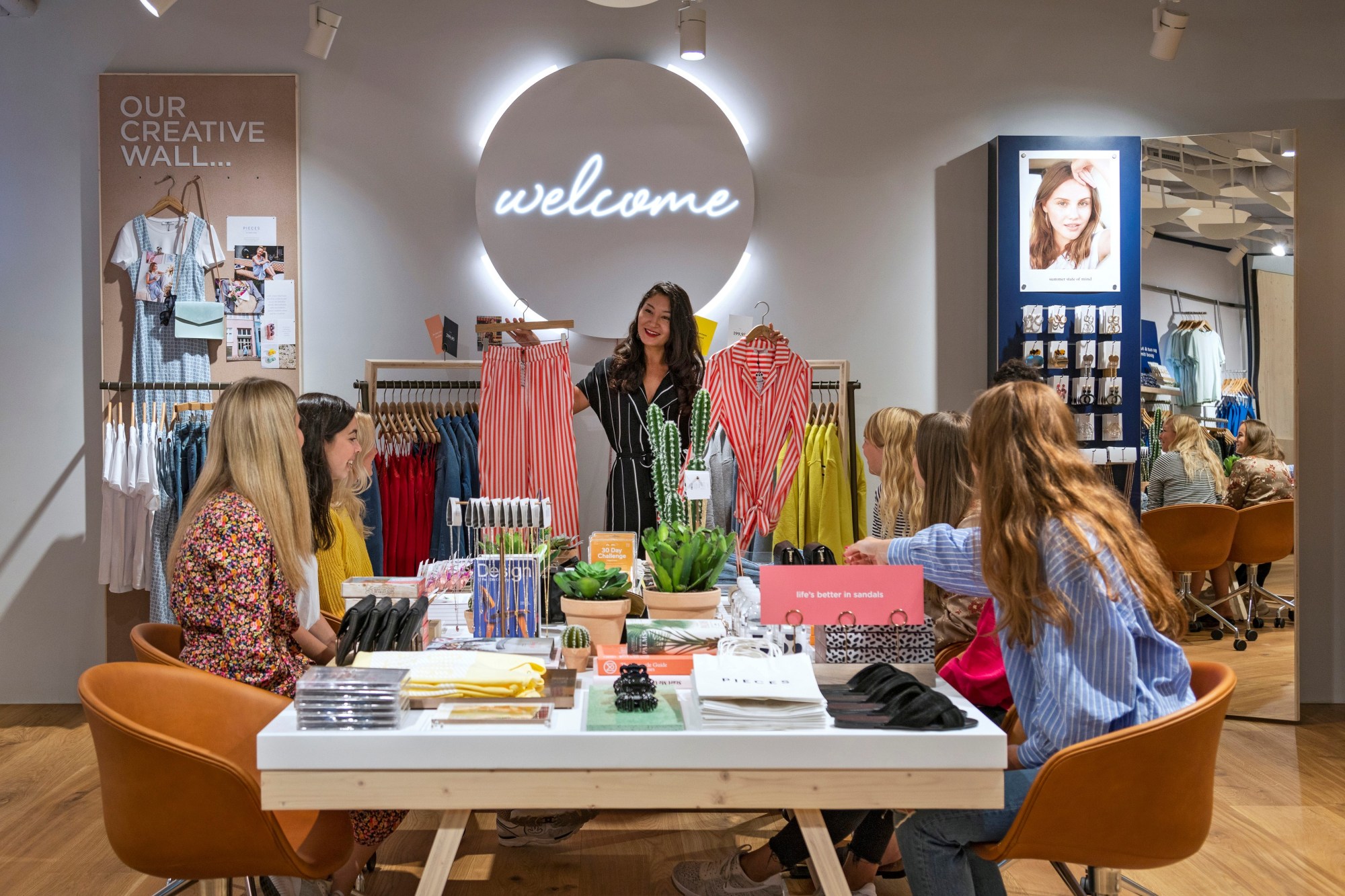
‘Her Studio’ is designed as a co-working space, giving insight into the brand and its creative processes. Customers and partners can relax on informal lounge seating, or access complimentary drinks and gift-wrapping from a concealed ‘Hosting Cupboard’. Perimeter walls throughout act as a vibrant canvas for expressing brand inspiration and charting the creative process – such as a pin board showcasing ‘works in progress’, an upcoming events calendar, a lifestyle mood board and a bold brand manifesto.
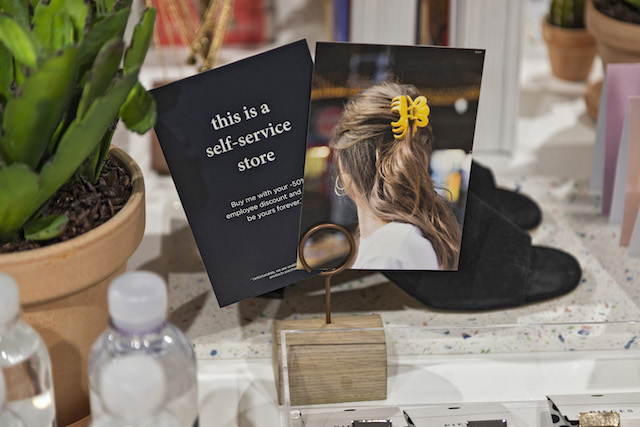
The showroom is 100% self-service – it’s cashless, card-less and most of the time unstaffed. Visitors and staff can make purchases through via their own mobile device. The whole space allows the brand story and retail concept to be told in a truly immersive and seamless way.