Tag: BGF Retail

  • Intellisia Raises ₩3.4 Billion to Replace Consumer Panels with AI

    Intellisia Raises ₩3.4 Billion to Replace Consumer Panels with AI

    Intellisia has raised ₩3.4 billion ($2.5 million) in pre-Series A funding to scale its synthetic consumer research and retail simulation platform across Asia and North America. The round closed above its initial ₩3 billion target.

    Kakao Ventures led the investment, joined by Murex Partners, Capstone Partners, and founder Baek Seung-guk, who committed personal capital to the round. The Seoul-based company builds virtual consumer profiles trained on real-world purchasing data to answer product surveys, evaluate packaging, and simulate retail store behavior.

    Enterprise Traction and Accuracy Metrics

    Traditional consumer research takes weeks or months to recruit panels and return responses. Intellisia runs identical query sets through its platform, TheSurvey.ai, within hours. The company reports an average reproduction rate above 90 percent when testing its synthetic models against actual human survey results.

    That accuracy has converted pilots into commercial contracts across South Korea’s consumer sector. Intellisia has logged more than 200 project engagements, working with packaged food manufacturers CJ CheilJedang, Pulmuone, and Lotte Wellfood, as well as telecoms group LG Uplus, furniture maker Fursys Group, and convenience store operator BGF Retail. More than 60 percent of enterprise proof-of-concept trials converted into paid annual contracts.

    Baek previously co-founded content recommendation engine Dable, which scaled across seven Asian markets before selling to travel platform Yanolja in 2021. He founded Intellisia to apply similar predictive data modeling to consumer behavior testing.

    From Survey Panels to Store Twins

    Packaged goods manufacturers and retail chains across East Asia face compressed product lifecycles and rising sample recruitment costs. Using synthetic consumer cohorts allows brand managers to test dozens of packaging variations or pricing structures before committing physical inventory to supermarket shelves.

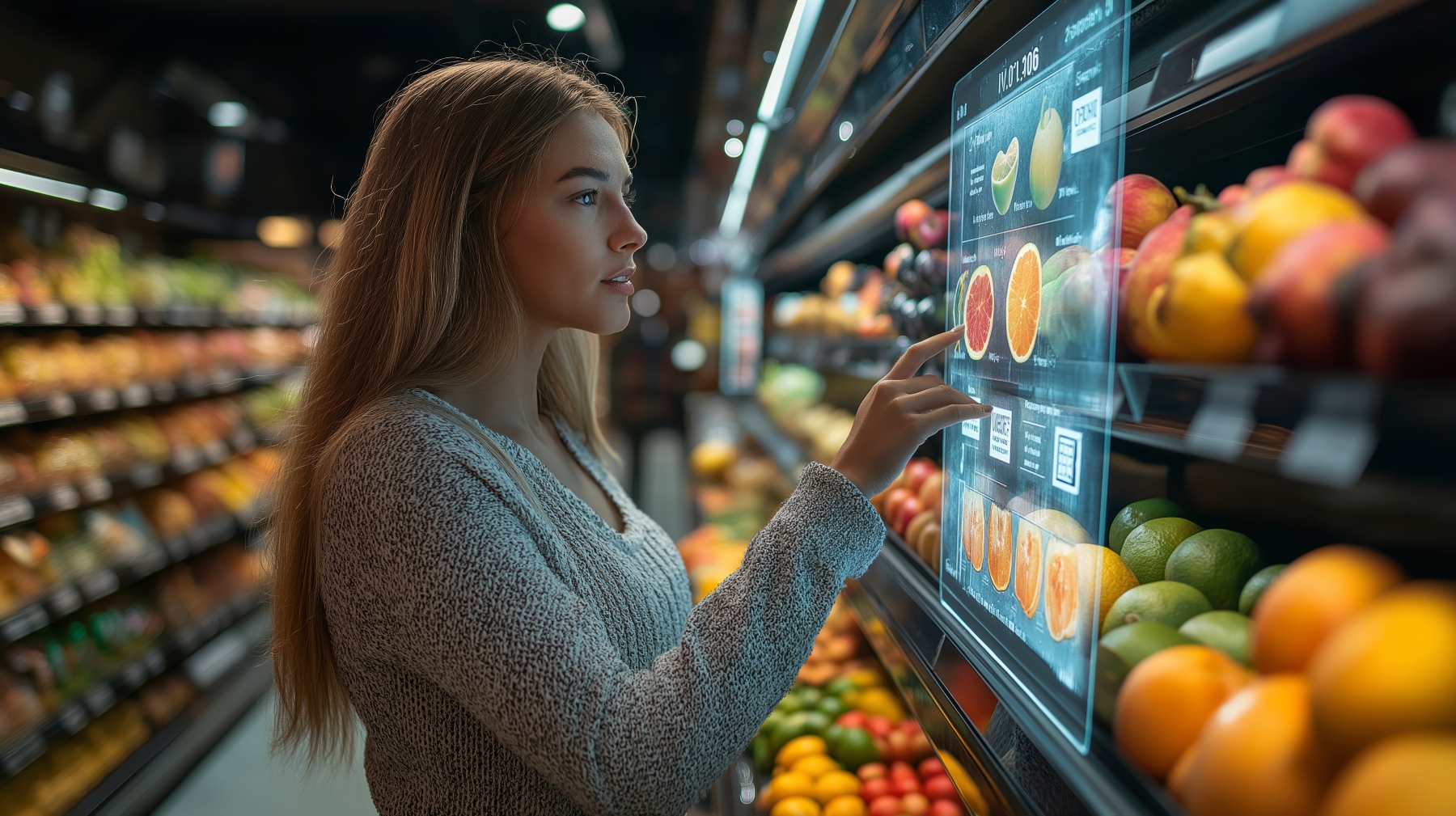
    Intellisia is now pushing beyond questionnaires into physical store simulation. The company is preparing trials for ParaStore, an AI digital twin platform where virtual shoppers interact with store layouts, shelf placements, and merchandising plans. BGF Retail, which operates South Korea’s CU convenience store chain, will test the system for store operations and category management.

    A commercial subscription-based software platform goes live in the fourth quarter of this year, followed by market launches in Japan and the United States next year.
  • CU convenience stores parent records sales leap

    CU convenience stores parent records sales leap

    The operator of South Korea’s CU convenience stores, BGF Retail, has achieved KRW189.5 billion (US$168.9 million) in operating profit last year, a leap of more than 600 per cent over last year. The company said on Tuesday its sales had risen by 515.3 per cent to KRW5.77 trillion ($5.14 billion). The results confirmed market predictions of a major upswing for the firm following demerging into separate holding and operating entities in November 2017.

    However, despite the improved trading figures, net profit dropped 98.1 per cent to KRW47.2 billion ($42.06 million). A statement by the firm explained that profits from some business activities made after the demerger had been attributed to the previous year’s statements.

  • South Korean convenience store openings slow down

    South Korean convenience store openings slow down

    South Korean convenience store openings in South Korea fell last year, according to industry data. Thought to be the effect of increasing labour costs and market saturation, the slowdown has manifested amongst several industry operators – including BGF Retail’s CU, which opened 980 fewer stores than the previous year’s total of 1646; and GS25, which opened 1023 fewer stores last year after launching 1701 outlets in 2017.

    A government advisory to chain stores to maintain more of a distance between competing branches signals a likely continuation of the downward trend, as well as new laws mandating higher levels of paid leave to staff and a higher minimum wage. The same pressures have seen 19 per cent of convenience stores closing at night rather than operate 24 hours, compared with 10 per cent in 2017.

    A statement issued by CU said that the firm is prioritising profitability of existing stores over opening new locations.

  • South Korean convenience stores to sell more own brand

    South Korean convenience stores to sell more own brand

    More South Korean c-stores are set to launch in-house products as local retailers move to attract more consumers with price competitiveness.

    E-Mart24, the convenience-store arm of South Korean retail giant Shinsegae, said it is planning to unveil its own private-label product within this year. Ministop Korea, operator of Ministop, is set to launch its own branded products in September.

    The moves are part of the companies’ broader efforts to find a breakthrough in the saturated South Korean c-store landscape. The size of South Korean convenience stores private-label product market is estimated at around 3.5 trillion won (US$3.15 billion).

    CU, South Korea’s largest convenience-store chain, operated by BGF Retail, released its own brand, Heyroo, in 2015, and GS25, another major convenience-store chain, joined the move with You Us in 2016.

    BGF Retail said sales of its private-label products rose 35.3 per cent year-on-year in 2016. Last year’s revenue was up 19.1 per cent from 2016.

    GS Retail, operator of GS25, said sales of its private-brand items accounted for 36.6 per cent of its total revenue in the first half of this year, excluding revenue generated from cigarettes and services. The company has around 2000 products under private label.

    Another major convenience store chain, 7-Eleven, said sales of its in-house products accounted for 35.9 per cent of this year’s total revenue as of Sunday. It currently has some 1500 products under its private brand.

    “The companies will be able to survive in this saturated market only if they manage to secure consumers who are highly loyal to their private label products,” an industry source said.

    The market size for convenience stores in South Korea surpassed 20 trillion won in 2016, up 18.6 per cent from the previous year, according to industry data.

  • World Cup boosts South Korean convenience stores revenue

    World Cup boosts South Korean convenience stores revenue

    South Korean convenience stores saw their sales more than double in some categories as tens of thousands of South Koreans took to the streets to cheer on their national football team in the first game of its World Cup campaign.

    BGF Retail Co, which operates the country’s largest convenience store chain, CU, said sales of major products at its stores from 6pm Monday to midnight soared as South Korea faced Sweden in their 2018 FIFA World Cup Group F opener.

    Sales of beer surged 124.8 per cent, with revenue from ice cream and water jumping 121.9 per cent and 120.2 per cent, respectively, from the previous week.

    GS Retail Co, which operates GS25, said sales of beer skyrocketed 274.6 per cent on Monday compared with the same day the previous week.

    Police estimated some 17,000 fans joined the mass street cheering in Seoul’s Gwanghwamun Square. Another 6000 fans are estimated to have gathered at Seoul Plaza in front of City Hall.

    South Korea fell to Sweden 1-0. Its next game, against Mexico, will take place in Rostov-on-Don on Saturday.

  • South Korean Convenience Stores Thrive

    South Korean Convenience Stores Thrive

    The growing interest in ready-made meals and other necessities—driven by an increase in single-adult households—has fueled the growth of convenience stores in South Korea, Yonhap reports. These retailers stock daily essentials and food in smaller quantities and are open 24 hours a day, which provides more opportunities for working adults to shop.

    The three biggest chains—7-Eleven, BGF Retail and GS Retail—opened a combined 2,000 new locations this year. Overall, the number of convenience stores in the country jumped to close to 26,000.

    GS Retail, which operates GS 25, generated the largest increase with $3.11 billion in sales from January to September 2015, a 36% bump from the same time period in 2014. Meanwhile, BGF Retail posted a 28.8% rise in sales, while 7-Eleven increased its sales by 26.4%, over the same time period.

    Local convenience stores are capitalizing on the boost in customers by launching their own private-label brands to provide a low-cost alternative to name brands. The stores also have changed up their merchandise mix to include more non-food items in addition to the beverages, cigarettes and instant food items.

    However, the increasing number of convenience stores has begun to saturate the market. Retailers now experience stronger competition from each other, often with stores on opposite sides of the street vying for the same customers.