Tag: BIDV

  • 16 banks to lower loan interests amid Covid-19

    16 banks to lower loan interests amid Covid-19

    Sixteen commercial banks have agreed to reduce interests on existing loans of Covid-hit businesses from now until the end of the year.

    The banks include Vietcombank, Vietinbank, BIDV, Agribank, Techcombank, MB, VPBank, TPBank and Sacombank.

    Lowering interests is difficult, but this is the time when banks need to share the burden with businesses, said Nguyen Quoc Hung, general secretary of Vietnam Banks Association, at a meeting Monday.

    Agribank is committed to lowering its interests by one percentage point on average, while MB will do so for at least one percentage point.

    Sacombank will seek shareholder permission as lowering the interest by one percentage point is equivalent to 40 percent of its profit target for the year. Some other banks will do the same.

    But not all businesses will be eligible for the reduction. Bank leaders said they would focus on companies truly hurt by the pandemic

    “Real estate companies with large profits, export firms or individuals borrowing money to buy cars should not be eligible for the reduction,” said Deputy Director of Techcombank Pham Quang Thang.

    He added companies that are essential to the economy with a large workforce should be eligible.
  • VPBank profits jump 26 pct

    VPBank profits jump 26 pct

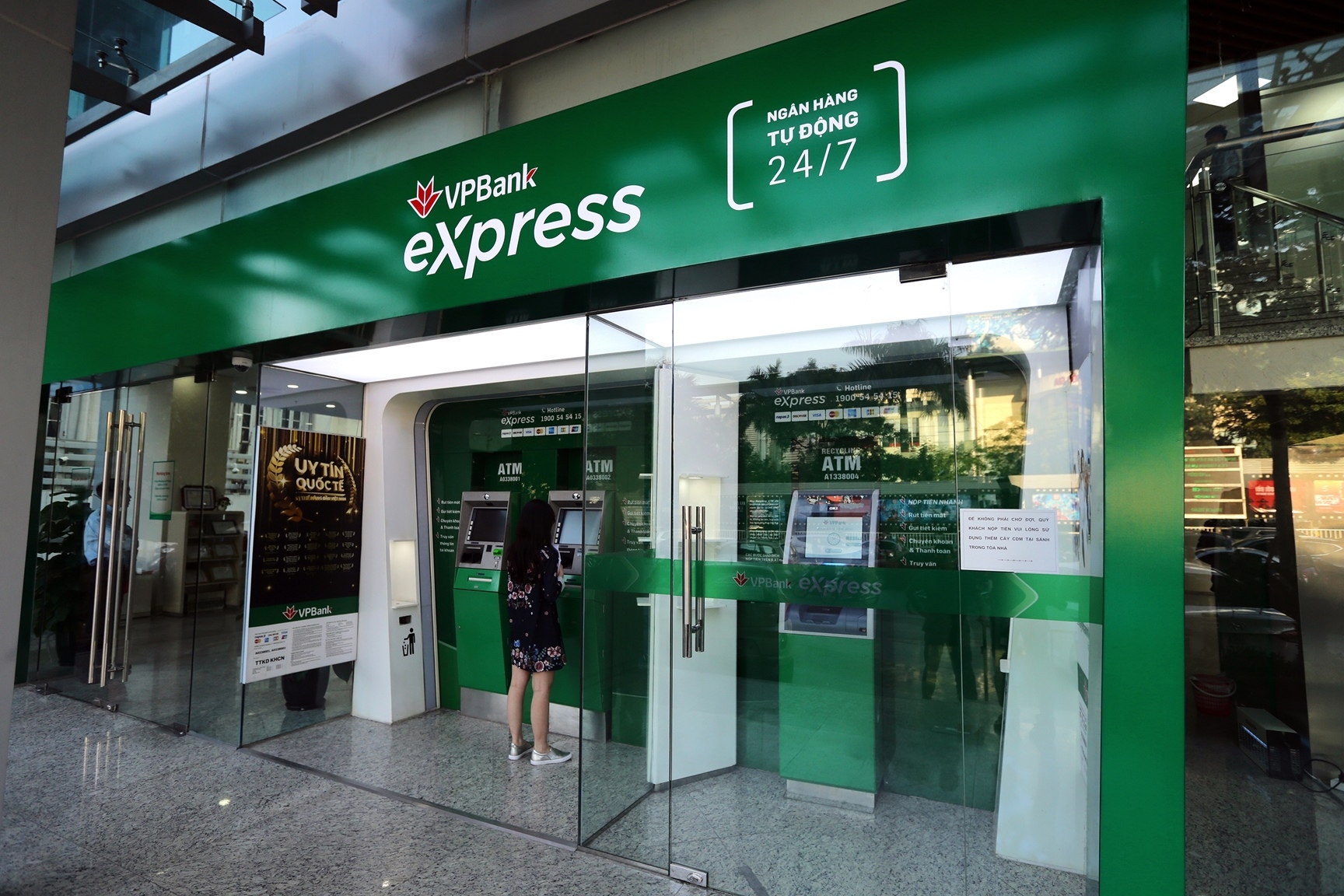
    Lender VPBank reported a 26 percent jump in pre-tax profit last year to VND13 trillion ($564.24 million).

    The second and fourth quarters saw its highest ever quarterly profits of VND3.67 trillion and VND3.62 trillion.

    The lender’s profits exceeded those of state giant BIDV and private lender VIB.

    Its income was up 7.3 percent to VND39 trillion, with interest income accounting for nearly 83 percent.

    Services and securities trading were profitable, but foreign exchange trading caused a loss.

    Credit growth was 13.1 percent, and non-performing loans accounted for 2.9 percent.

    In 2019, VPBank had reported the sixth-largest pre-tax profit behind Vietcombank, Techcombank, Agribank, VietinBank, and BIDV.

  • Big state banks gradually lose credit market share

    Big state banks gradually lose credit market share

    The credit market share of Vietnam’s three largest banks has fallen by 2.7 percentage points in the last two years due to liquidity constraints.

    The three, all state-owned and listed and the country’s largest by assets, Vietcombank, Vietinbank and BIDV, account for 34 percent of all loans outstanding, securities company VDSC said in a note last week.

    But this represents a 2.74-percentage-point fall even as the four largest non-state banks, Techcombank, VPBank, Military Bank (32.42 percent state-owned), and ACB, increased their share of loans outstanding by 1.6 percentage points.

    During the two years ending in the third quarter of 2020, VietinBank’s share fell by 1.96 percentage points, BIDV’s by 0.7 percent and VCB’s by less than 0.1 percent.

    The big fall in VietinBank’s market share is because it has been strapped for cash. There have been no major infusions of capital in the past few years, return on equity has been low, bonuses and employee welfare funds cause a big drain on resources, and the government appropriates much of its earnings.

    This situation has been exacerbated by Basel II standards, which prescribe a capital adequacy ratio (CAR) of 8 percent of risk-weighted assets for all financial institutions. Thus, to lend more, banks have to increase their charter capital.

    Though the Government has agreed to reduce its ownership in state-owned banks from 65 percent to 51 percent by 2025, it has yet to be implemented.

    But the government issued a decree in October allowing state-owned banks to pay dividends in stocks to increase their capital, helping them improve their growth prospects in the medium and long terms.

    According to the State Bank of Vietnam, banks’ total outstanding loans were worth VND8.69 quadrillion ($376.87 billion) at the end of the third quarter.

    Credit growth is expected to be 11 percent in 2020, down from 13.5 percent in the previous year.

  • Vietnam banks among 500 most valuable brands

    Vietnam banks among 500 most valuable brands

    Four Vietnamese lenders, three state-owned and one private, are among the world’s top 500 most valuable brands this year. In an annual ranking by BrandFinance, VietinBank was ranked 242, BIDV, 307, Vietcombank, 325, and VPBank, 361. Last year, VietinBank, BIDV and Vietcombank, three major Vietnamese banks, made it to this elite list, and this year is the first time that a Vietnamese private bank, VPBank, has made it to the Brand Finance Banking 500.

    In this year’s ranking, BIDV is one of top ten banks in the world in terms of brand strength, with growth of 22 percent; while VietinBank is one of top ten banks with biggest Brand Value Change 2018-2019 with a whopping 66 percent increase.

    Chinese bank Industrial and Commercial Bank of China (ICBC) continues to sit on the throne this year, followed by three others Chinese lenders in the top four.

    According to the UK-based Brand Finance, a leading independent brand valuation and strategy consultancy, Chinese banking brands have grown “at an outstanding rate despite fears of an economic slowdown and the rise of protectionism in international trade.”

    It said Chinese banks grew 28 percent on average, achieving $407 billion in total brand value, over $100 billion more than American banks.

    In August last year, Vietnam’s government approved a master plan for banking sector development until 2025 with a vision to 2030.

    The plan envisages at least 2-3 banks in Asia’s top 100 in terms of total assets and targets to have 3-5 banks listed on foreign stock exchanges by 2025.

  • Hana Bank reveals Vietnam expansion plan

    Hana Bank reveals Vietnam expansion plan

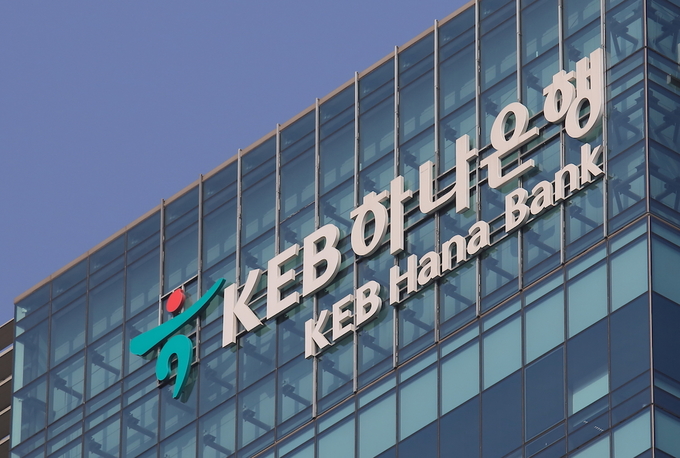
    South Korean banks are setting themselves up to score big in Vietnam as foreign ownership limits would be loosened. South Korea’s second-largest lender by assets, KEB Hana Bank, is interested in buying a 17.65 percent stake in the Bank for Investment and Development of Vietnam (BIDV), a source said. BIDV is currently the second-largest state-owned lender in Vietnam by assets. 95.28 percent of its equity belongs to the country’s central bank, the State Bank of Vietnam (SBV).

    The SBV has “proposed to sell” the stake to KEB Hana for 30 billion won ($26.6 million), said the source, who requested anonymity.

    Last year, Shinhan Bank, a commercial banking unit under Seoul-based Shinhan Financial Group, acquired ANZ Vietnam’s retail unit, bringing along the Australian bank’s 95,000 credit card customers.

    Shinhan Bank has recently become the largest foreign bank in Vietnam with $3.3 billion in assets, surpassing HSBC.

    Vietnam presented a draft securities law in Hanoi earlier this month that would remove the current 49 percent foreign ownership cap in many sectors, allowing majority or even 100 percent ownership of a company.

    Although the limit for banks remains at 30 percent, government economic advisor Can Van Luc said at the draft presentation forum on November 7 that authorities would consider raising this limit for banks on a case-by-case basis, Reuters reported.

    Analysts say Vietnam’s growth potential and deregulation plans make it an attractive market for South Korean banks.

    “Vietnam is the most desirable market among emerging countries,” said Seo Young-soo, an analyst at Kiwoom Securities.

    “It has more advanced urbanization, and its market is more concentrated compared to Indonesia. Its government-driven economic development model is also familiar to South Korean banks, which have grown under the same strategy,” Seo said.

    Data from the Seoul-based regulator Financial Supervisory Service (FSS) show that total assets held by South Korean banks in Vietnam increased 18.9 percent last year to $5.7 billion.

    This ratio is higher than that of foreign lenders overall, whose combined total assets increased 12.9 percent to $42 billion during the same period, FSS said. South Korean lenders’ combined net profit in Vietnam also jumped 28.9 percent last year to $61 million.

    Vietnam has nine wholly-owned foreign banks, four state-owned banks and 31 domestic joint-stock banks.