Retail News CRM

Tag: bikini

  • Kim Kardashian prepares to open first Skims stores

    Kim Kardashian prepares to open first Skims stores

    Kim Kardashian’s underwear label Skims plans to open its first permanent stores next year as it plots retail expansion in the US and abroad.

    Skims is set to debut its first flagship store in Los Angeles in the first half of 2024, followed by a second opening in New York. The 5000-square-foot LA shop will be located in West Hollywood on Sunset Boulevard near streetwear stores such as Supreme and Kith.

    “Kim and I can envision a future where years from today there’s a Skims store anywhere in the world you’d find an Apple store or a Nike store,” said Jens Grede, co-founder and chief executive officer of Skims. “It marks the second chapter.”

    Skims began as a direct-to-consumer business in 2019, but it since has dabbled in physical retail through relationships with department stores such as Nordstrom and Saks Fifth Avenue. In recent months, Skims has opened temporary pop-ups in locations like London’s Selfridges department store and Rockefeller Centre in New York.

    Executives are looking to open at least four stores next year and speed up expansion once those are in place. They’re considering placing shops in domestic markets that attract regional tourism, including Dallas, Atlanta and Miami.

    The company is weighing international flagships as well, after tests in cities like Paris and Hong Kong. On its online shop, 20 per cent of Skims customers are from abroad.

    “Our strategy going forward is to open important stores in the world’s most important cities,” Mr Grede said.

    Skims expects to achieve net sales of about $US750 million ($1.13 billion) in 2023, up from nearly $US500 million last year. So far this year, the business has been trending at 75 per cent year-over-year growth, according to Mr Grede.

    Product expansion has boosted that growth, as Skims branched out from its original selection of shape wear bodysuits into categories like pyjamas and swimwear. Underwear now accounts for a sizeable chunk of its business, and it is now planning to launch a men’s line in October.

    Skims was most recently valued at $US3.2 billion in a 2022 financing round, with total funding now at nearly $US400 million. Investors include hedge fund Lone Pine Capital and venture firms Thrive Capital and Imaginary Ventures. Mr Grede declined to say if Skims is seeking additional capital at this time.

    Ms Kardashian and Mr Grede are interested in one day taking Skims public, but the CEO said there were no short- or medium-term plans for an initial public offering. The company hired a chief financial officer last year.

    “Skims deserves to be a public company – when the time is right,” Mr Grede said.
  • Bondi Venus champions affordable fashion swimwear for the style-savvy girl

    Bondi Venus champions affordable fashion swimwear for the style-savvy girl

    A vibrant, young swimwear brand launching new bikinis for the summer of 2018 ; Bondi Venus champions affordable fashion swimwear and beach clothing for the style-savvy girl about town who wants to make an impact poolside.

    The company behind the brand have almost 3 years of experience in designing, producing and distributing fine, fashion-led garments and accessories and supply some of Asia’s biggest high street retailers.

    Detail is at the forefront of Bondi Venus. Meticulous technique and an attention to extraordinary features is evident in the debut collection. Sophisticated beadwork and embellishment adorns classic bikini styles; while jewel-encrusted brooches and pretty charms facet South Beach’s own designs and prints, lending to the individual character of the range.

    The first collection from this fresh and exciting swimwear brand focusses on three key trends; ‘Bikinis’, ‘Monokinis’ and ‘Trikinis’.

    These three fashion-forward sets combine seamlessly to create a coherent collection of stunning swimwear and beach clothing. Pieces are sold as individual separates and are designed to allow for mixing and matching across the range.

    The Bondi Venus girl is typically aged 18-35, enjoys socialising with friends and looks for a bikini that not only looks great by the pool, but also steps up to the mark after sunset for a moonlit beach party.

  • Seafolly eyes off China in further expansion

    Seafolly eyes off China in further expansion

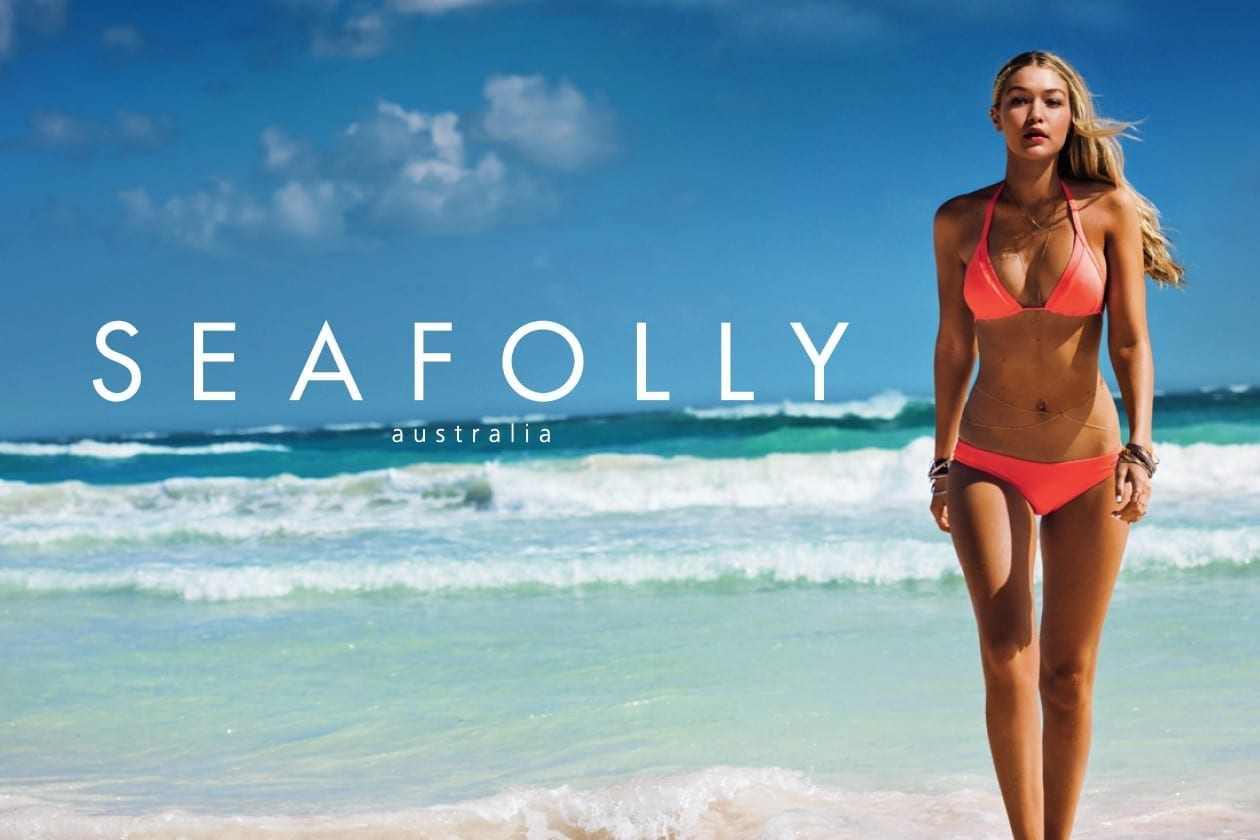
    Armed with a mandate to pursue global growth, Seafolly’s new chief executive Paul Kotrba is eyeing off an expansion into China to further build on the Aussie swimwear brand’s international business, less than a month after opening its first retail store in Europe.

    The former LVMH executive has been busy since joining the 43-year-old business in January, overseeing the final stages of an e-commerce relaunch and bedding down a deal for a flagship store in France’s renowned Rue D’antibes shopping precinct in Cannes.

    But now the retail veteran is looking east to untapped potential in the world’s largest state, in what could be Seafolly’s first significant step in Asia since launching retail stores in Singapore eight years ago

    “We’re looking at China really closely,” Kotrba told. “For cultural reasons and preference, the swimwear category doesn’t have a big footprint … you don’t see a standalone global swim fashion house trading in the market.”

    Kotrba is no stranger to China, having overseen DKNY’s expanding presence in Asia during his time with LVMH, an experience that’s left him both bullish and cautious on the notoriously fickle market.

    “We want to be very methodical and careful,” Kotrba explained. “It’s super competitive and the Asian customer is more educated than most customers around the world … you really need to put your right foot through the door.”

    The swimwear brand, which now sources as much as 45 per cent of its annual revenue outside of Australia, already has three stores in Singapore and has been learning and adjusting its Asian offer for some time.

    Kotrba was tight lipped on specifics but has come to the company looking to drive the international part of its business at a time when the Australian retail sector has come under pressure.

    Australia is still Seafolly’s largest market with 23 stores but a subdued outlook for discretionary retailers is dictating caution.

    “We’re optimising our footprint, I’m not sure we’ll be growing it by significant numbers,” Kotrba said of the company’s local retail presence.

    European pop-ups in the pipeline

    Instead, alongside Asia, Europe has been earmarked for retail growth. With an initial store in France now up and running Kotrba said Seafolly will look to pursue pop-up stores throughout the continent over the European summer.

    “If you’ve spent a summer in Europe you’re familiar with the places that the majority of people go in July and August [such as Mykonos, Greece] … having a short-term presence in some of those key locals is something we’re looking into.”

    Europe, predominately through an extensive wholesale network and concessions in French and British department stores, currently accounts for 20 per cent of Seafolly’s total revenue, with France growing by 46 per cent y/y in 2017.

    The strategy is to test the waters -literally- with pop-up stores, which will then inform decisions about where to establish more permeant operations throughout the Euro-zone.

    Kotrba did not say whether Seafolly had a store target for Europe in mind, but the business will proceed with caution in light of the disruption plaguing bricks-and-mortar retail globally.”

    “We don’t want to open flagships indiscriminately … everyone is coming to grips with the challenging landscape,” he said.

    Seafolly also recently launched new e-commerce platforms in Australia the US and Singapore, introducing a new interface and a variety of new functions.

  • Design first for Victoria’s Secret catwalk show

    Design first for Victoria’s Secret catwalk show

    Victoria’s Secret has engaged Balmain creative director Olivier Rousteing to create styles for its annual catwalk show, with a capsule collection to launch in stores the following day, November 29.

    While the lingerie brand often calls upon designers to create runway pieces, this is the first first time it has partnered with a fashion house on an in-store collection.

    There is also a parallel in that Rousteing has his “Balmain Army”, models who regularly star in his campaigns, while Victoria’s Secret uses star models for its shows.

    For the Shanghai showcase on November 28, the French designer is tipped to choose friends Sara Sampaio, Joan Smalls, Alessandra Ambrosio and Karlie Kloss to model his first mainline foray into underwear.

  • Eres opens first Hong Kong store

    Eres opens first Hong Kong store

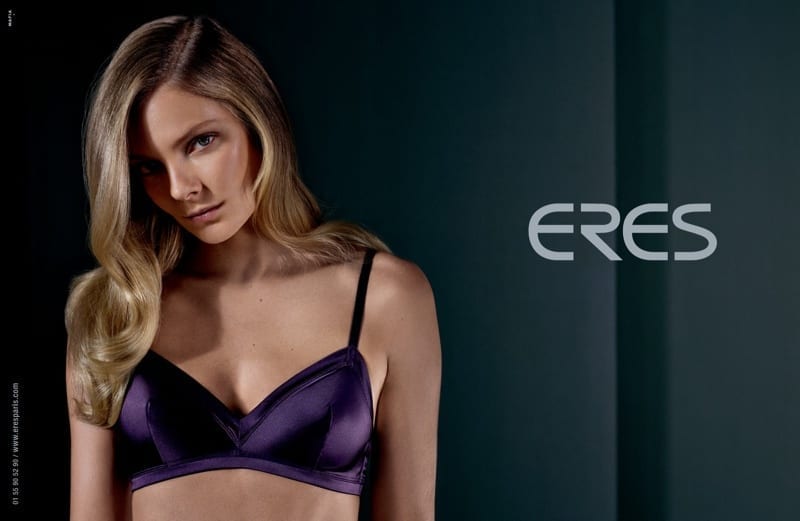
    High-end women’s swimwear and underwear brand Eres has opened in Hong Kong, the first official Eres store in Asia.

    Located in the Harbour City Shopping Mall in Tsim Sha Tsui, the French retailer has brought all its current swimsuits, bikinis and lingerie collections to the shopping hub city and will follow the aesthetic of other Eres boutiques across the globe.

    Part of the prestigious Chanel group since 1997, Eres was founded by Irene Leroux in 1968 as a swimwear label. In 1998, Chanel expanded the brand into lingerie and in 2011, the French brand started opening across the globe, opening stores in Las Vegas, Toronto, Antwerp, Kiev, Saint Bart’s and Sao Paulo.

    In 2013, it ventured into Amsterdam, Moscow, Athens and Connecticut, and opened its first German store in Hamburg in 2014.  In the same year it was scooped up by luxury e-tail giant Net-a-Porter.

    Before Hong Kong, the last Eres store was opened in Houston last year, with more U.S. openings in 2017. In Asia, Eres has a Singapore shop inside the Four Seasons Hotel on Orchard Boulevard and a concession in Japan inside the Isetan department store.

    The brand also recently created a capsule swim collection inspired by Ursula Andress, the Swiss actress who played the first Bond girl.

    Eres Hong Kong is located at 260A, Ocean Centre in Tsim Sha Tsui’s Harbour City complex.

  • Victoria’s Secret to open mega store in Macau

    Victoria’s Secret to open mega store in Macau

    Victoria’s Secret will open a new mega store in Macau on April 27, as the US brand eyes further Asia expansion, following its China debut store opening last February.

    Under parent company L Brands, the 15,000-square-foot Macau full assortment store  — which not only sells its branded accessories and cosmetics but lingerie and sportswear — will bow at St Mark’s Square at The Venetian.

    In addition to the latest collections and pieces, the store will showcase five sets of Victoria’s Secret angel wings – all of which have featured on the runway of past Victoria’s Secret shows. The curate will be on display at The Venetian from April 26 to May 31.

    The news comes as the fashion lingerie conglomerate opened its first standalone store in mainland China in February. The four-story, 25,850-square-foot flagship opened in Shanghai, followed by a 12,294-square-foot store debut in Chengdu one week later. A Beijing store is coming later this year.

    Meanwhile, Victoria’s Secret’s Asia expansion is also taking on a flagship store in Hong Kong. The brand is reportedly taking up prime location in Causeway Bay, the former residence of Forever21. It is slated to open in Hong Kong next year.

    Fellow lingerie maker La Perla has already opened a four-storey flagship store in Causeway Bay in late 2015, located on the iconic, and expensive, Russell Street.

    More and more international retailers are renewing leases in the region as tents in Hong Kong continue to drop, especially in Causeway Bay.

    According to a recent report by Everbright Property Investment Consultancy. For the first quarter of 2017, major lease transaction records in Hong Kong’s high-traffic tourist areas — including Central, Causeway Bay, Mong Kok and Tsim Sha Tsui — featured drops in monthly rents of up to 72% in some cases.

    On average, Causeway Bay witnessed the sharpest rent price decline for the period, down 31%, the report said.

  • Vietnam’s ‘bikini airline’ put to the test

    Vietnam’s ‘bikini airline’ put to the test

    VietJet Air has gone from start-up to Vietnam’s largest private airline in five years. Now it is pushing overseas to keep up that growth and absorb a bumper order of more than 200 planes – no easy task in a cutthroat Asean market.

    The airline, which was set up in 2011, grabbed headlines with its bikini-clad flight attendants. It tapped a rich vein – a fast-growing economy and a young population that was starting to travel more.

    But VietJet’s next step will be more challenging, industry analysts and executives say, as it expands further beyond Vietnam into choked Asean, competitive China or Russia, where VietJet’s fleet of narrow body jets would confine it to the country’s east.

    Infrastructure in the region is clogged and new airport slots are rare. Even Kuala Lumpur, a less crowded airport, is highly competitive, thanks to airlines like Air Asia.

    That has raised questions about VietJet’s ability to absorb one of the region’s largest aircraft orders. “VietJet have been extremely successful in the first five years but what they have done has been entirely domestic,” said Singapore-based analyst Brendan Sobie at consultancy CAPA.

    “The domestic market will start to slow and it is more difficult to expand internationally – some people doubt that they can continue growing at the current rate.”

    According to CAPA, Vietnam’s domestic aviation market grew 30 percent in 2016 to 28 million passengers – nearly five times the growth rate of the broader economy.

    At VietJet’s gleaming offices in Ho Chi Minh City, its chief executive and founder, Nguyen Thi Phuong Thao – also Vietnam’s first female billionaire – outlines plans to push into China, Australia and Russia, where she studied and first worked.

    She dismisses concerns of excess competition, even in China, where local airlines have boomed. More than 10 Chinese carriers have begun flying since the aviation regulator relaxed a six-year suspension on new airline licenses in 2013.

    “Other countries are still doing business with China and VietJet also has its own advantages,” she told.

    “We can ally with Chinese airlines when wanting to expand in the country’s local market.”

    Unlike other new generation carriers in the region who have sought to set up alliances to gain clout without merging, VietJet has resisted.

    Among the airline’s most imminent concerns will be its large aircraft order – more than 200 planes, including more than 100 Airbus A320 family aircraft and 100 Boeing 737 Max 200s – a mixed approach rarely taken by low-cost or new generation airlines, who prefer to streamline engineering needs.

    The Boeing order in particular, announced during a visit by US President Barack Obama, prompted questions over whether the order was placed for political reasons. Ms. Thao dismissed this.

    Industry sources, however, say some of the 200 planes on order may be subject to reconfirmation or other get-out clauses.

    Ms. Thao says the airline has support to finance its orders, worth over $20 billion, but has given no detail. The group has five trillion dong ($221 million) in debt.

    A Boeing spokesman said it had no change to its order. Airbus, which analysts say is most exposed to budget airlines in Southeast Asia including VietJet, declined to comment.

    VietJet ended 2016 with some 40 aircraft but is targeting more than 200 by 2023.

    And it is not without growth potential. Asia Pacific passenger growth is the fastest in the world. The carrier’s pre-tax profit almost doubled last year to over $100 million and it sees its bottom line rising by almost a third this year, thanks to a low cost base.

    An initial public offering to raise $170 million valued VietJet at $1.2 billion. Shares start trading in February.

    “So far, so good,” said analyst Shukor Yusof of Endau Analytics, describing growth so far as “a feat.”

    “But I’m a bit skeptical if this rapid growth can be sustained without affecting the airline’s bottom line.”

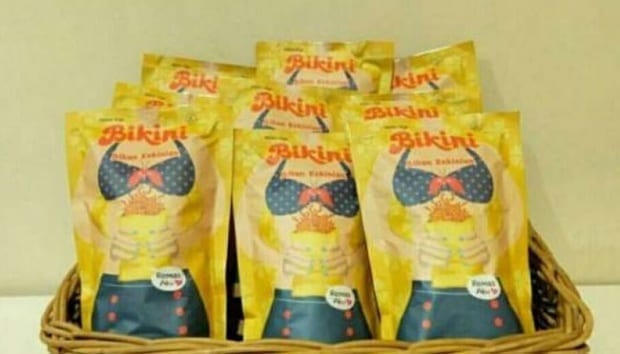
  • YLKI Protests Indecent Bikini-brand Snack

    YLKI Protests Indecent Bikini-brand Snack

    Chairman of Executive Committee of the Indonesian Consumers Organization Foundation (YLKI) Tulus Abadi protested on a Bikini-brand snack product. Tulus said the brand sold in social media is considered as indecent.

    “That is a snack (fried noodle) product with a non-educational, even indecent, brand name”, Tulus said Wednesday, August 3, 2016.

    Recently, information of the Bikini snack circulates through chain messages. The product shows a woman’s body from shoulder to hip with just wearing a bikini. The worst part is the package has “remas aku” (squeeze me) slogan written on it.

    YLKI protested the circulation of the product and asked to recall the product from the market. Tulus requested the National Drug and Food Agency of Indonesia (BPOM) to reprove the manufacturer and demand to shut down any form of sales through social media.

    “Online selling, particularly via e-commerce Olx.com and Bukalapak.com, must be immediately stopped. Consumers must not purchase the product, especially the children,” said Tulus.