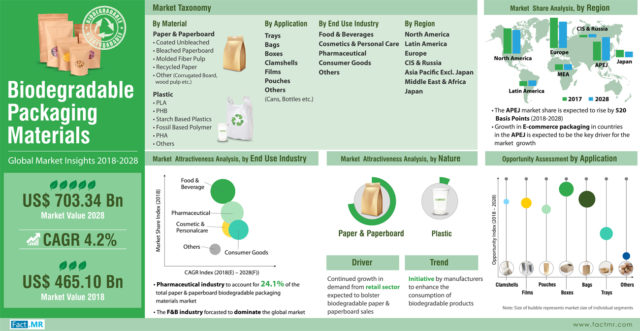
Biodegradable packaging market witnessed moderate growth during 2013 to 2027, and the status quo is envisaged to prevail over the period of forecast 2018 to 2028, according to new Fact.MR study. Volume sales of biodegradable packaging are foreseen to record a modest 4.2% CAGR through 2028, which is anticipated to equal a market value in excess of US$ 703 billion. The study finds that tier 3 players will collectively continue to account for over three-fifth share of the biodegradable packaging market.
Biodegradable packaging market is expected to envisage healthy value CAGR of 4.2% during the period 2018-2028, with revenues surpassing US$ 703 billion by 2028 end. The study also opines that the paper & paperboard biodegradable packaging will retain its undisputed dominance in the biodegradable packaging market, as it may account for more than 95% of the total market revenue by the end 2028. The global war against plastic packaging materials is opening an attractive window of opportunities for paper packaging companies, enticing them into entering the biodegradable packaging market.
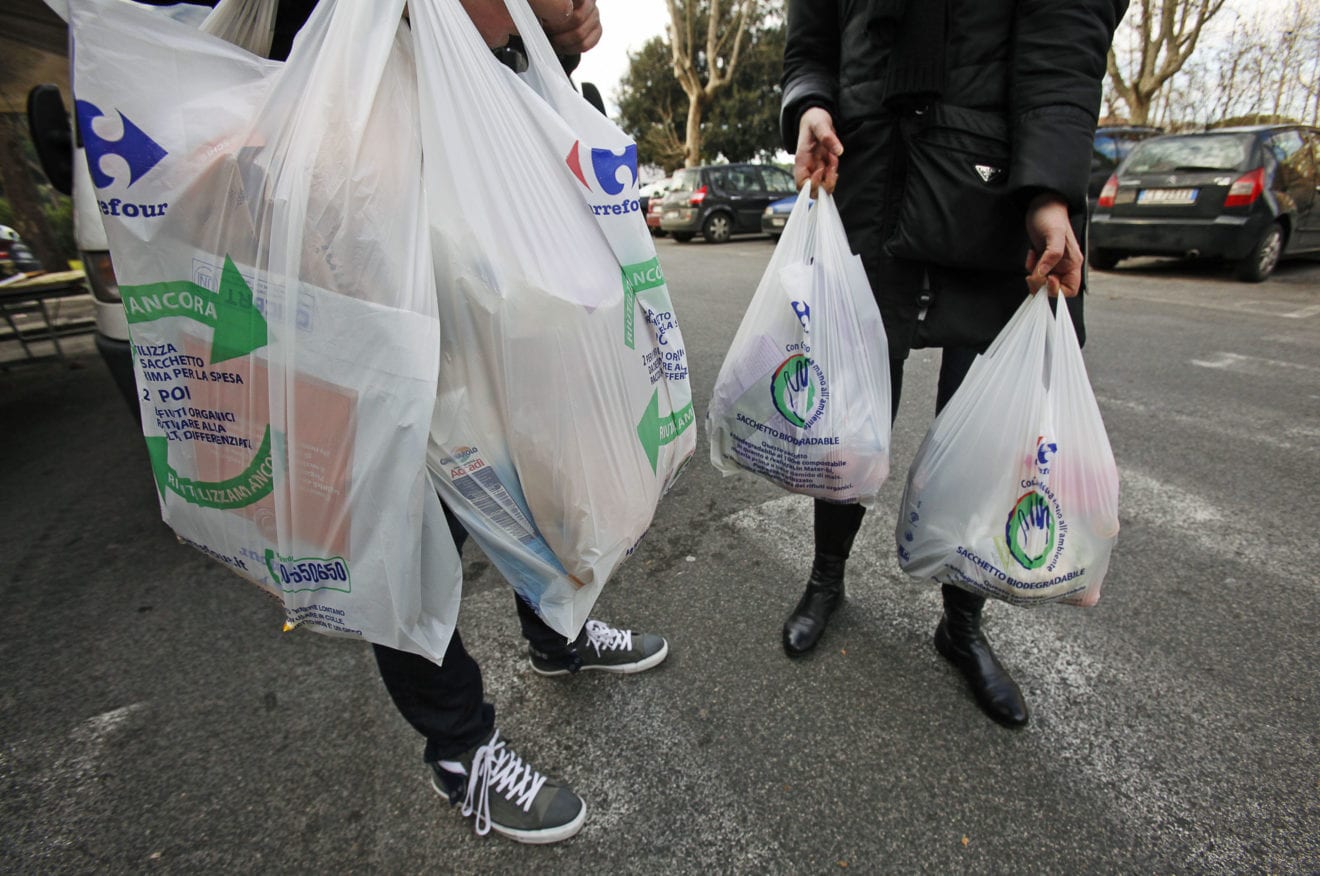
A majority of regulatory bodies and international environmental organizations have proposed a ban on single-use packaging materials to mitigate the perilous effects of non-degradable solid waste on the environment. Increasing environmental awareness and consumer inclination towards making sustainable purchases is providing a major boost to the growth of the market.
Positive effects of the ban on single-use packaging on the biodegradable packaging market are offset by stringent labeling regulations and certification procedures to control false claims about the biodegradability of packaging materials. The market is characterized by the needs to comply with strict quality standards established in various regional markets, which may complicate it for market players to maintain competitive prices of biodegradable packaging solutions.
Meanwhile, the study finds that leading players in the biodegradable packaging market are adopting strategies to acquire their smaller rivals to consolidate a stronger position in the packaging sector. DS Smith plc – a British paper packaging company – recently announced its plans to acquire its Spanish rival Europac Group for over US$ 2 billion, in order to merge the Western European biodegradable packaging market. Another leading player – Smurfit Kappa Group recently completed the acquisition of Reparenco – a paper and recycling company in Netherlands – for €460 million to expand its European biodegradable packaging capacities.
An American manufacturer of biodegradable packaging – WestRock Company recently acquired packaging businesses across the world, including Hanna Group Pty Ltd, Plymouth Packaging, Inc., and Schlüter Print Pharma Packaging GmbH, to establish a stronger presence in the market. The company also revealed its plans to acquire KapStone Paper and Packaging Corp., an American paper company, for a total enterprise value of around US$ 4.9 Bn to leverage KapStone’s expertise in biodegradable packaging using kraft paper.
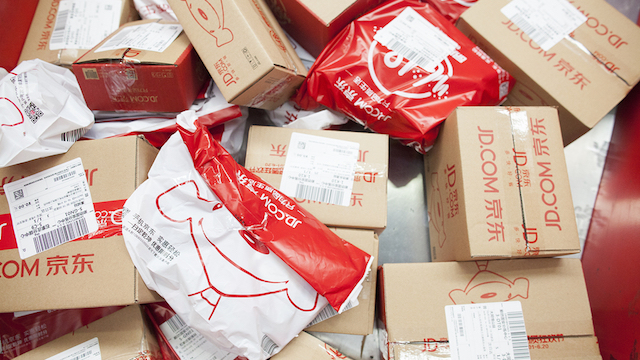
“Increasing growth of the e-commerce sector and popular trends of online grocery shopping is opening new avenues of growth for players in the biodegradable packaging market. Purchasing decisions of environment-conscious consumers are greatly influenced by sustainable packaging materials, which may create high demand for biodegradable packaging solutions in the coming future. Stakeholders in the biodegradable packaging market are shifting their focus on the dynamic trends in the e-commerce sector while adopting their future business strategies,” says a lead analyst at Fact.MR.
The study further states that, among all the leading end-user industries in the biodegradable packaging market, food & beverage industry is expected to account for more than 30% of the total market share throughout the forecast period. Increasing demand for packaged food products, convenience foods, and ready-to-eat meals is reflected in supermarket shelves. Leading market players are introducing biodegradable packaging films, trays, and bags to further improve the fresh food experience for consumers while offering numerous environmental benefits.
Sensing the extraordinary growth opportunities in the biodegradable packaging market for the F&B industry – the Mondi Group recently developed an innovative, paper-based, biodegradable packaging bag for food – Sustainex®, in collaboration with a Polish converter, SILBO. Multifold opportunities for biodegradable packaging in the F&B industry are boosting market players to develop innovative technologies, biodegradable packaging materials, and designs, which is expected to influence the dynamics of the biodegradable packaging market in the upcoming years.