Retail News CRM

Tag: biofuel

  • Vietnam Slashes Gasoline Prices In Response To Global Oil Market Fluctuations

    Vietnam Slashes Gasoline Prices In Response To Global Oil Market Fluctuations

    In response to the global dip in oil prices, Vietnam has reported a decrease in its gasoline prices this past Thursday. This price decrease is largely due to a decrease in demand.

    Price Reductions

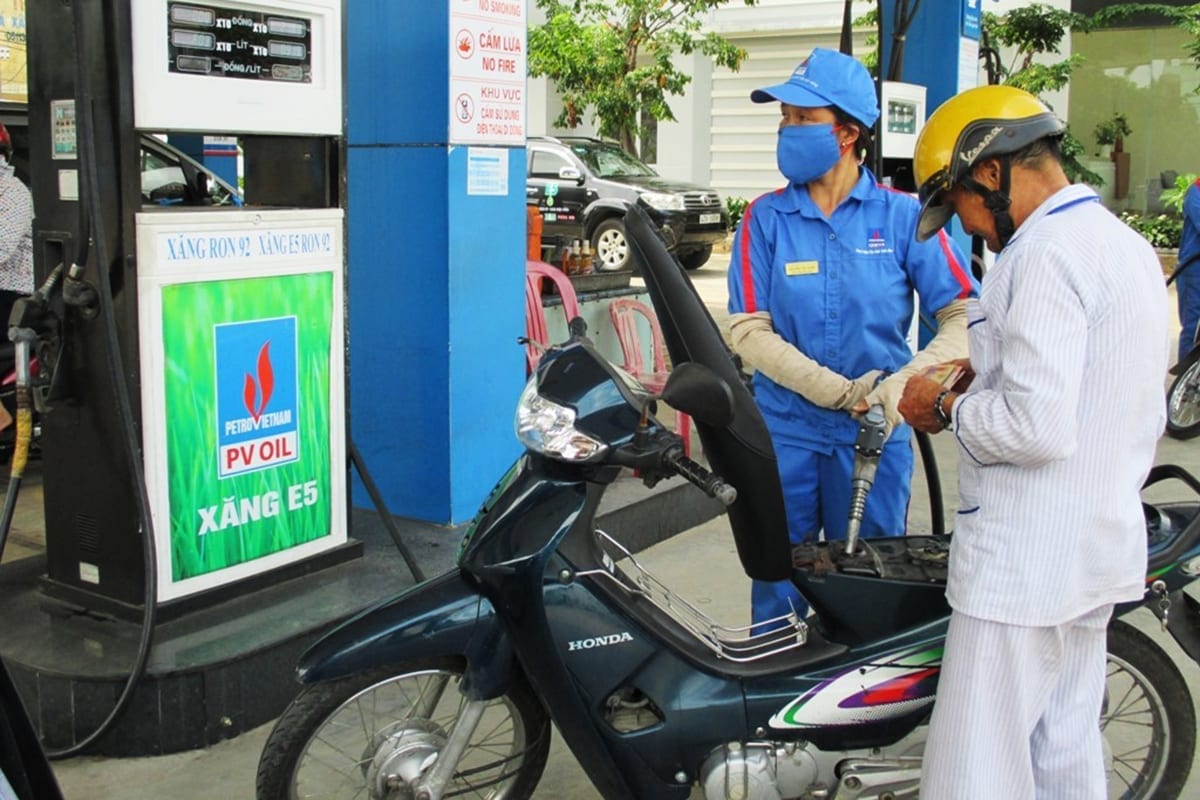
    The widely-used fuel, RON95, saw a reduction by 0.90%, bringing the price down to VND19,720 (US$0.75) per liter. Simultaneously, the price of the Biofuel E5 RON92 also experienced a decrease, falling by 0.88% to VND19,050.

    Global Oil Market Factors

    Numerous factors over the past week have impacted the global oil market. Among these factors was an announcement by OPEC+ of a lower-than-projected increase in oil production for the month of November. Further, a weakened global oil demand and persistent attacks on Russia’s energy facilities by Ukraine also played a significant role in shaping the market.

    As a result of these influences, the price of RON95 on the global market decreased by 1.1% to $78.2 per barrel, while diesel prices decreased by 3.5% to $83.4 per barrel.

    Questions & Answers

    What caused the decrease in Vietnam’s gasoline prices?
    There was a decrease in global oil demand, which precipitated a dip in Vietnam’s gasoline prices.

    How much did the price of RON95 and Biofuel E5 RON92 decrease in Vietnam?
    RON95 saw a decrease of 0.90% to VND19,720 per liter, while Biofuel E5 RON92 decreased by 0.88% to VND19,050.

    What were the primary factors affecting the global oil market?
    The global oil market was primarily influenced by a lower-than-expected increase in oil production for November announced by OPEC+ and weaker global oil demand. Ongoing attacks on Russia’s energy facilities by Ukraine also significantly impacted the market.
  • E10 Biofuel Launches in Three Major Cities Starting August 1: A Sustainable Shift in Retail Energy!

    E10 Biofuel Launches in Three Major Cities Starting August 1: A Sustainable Shift in Retail Energy!

    Hanoi, Ho Chi Minh City, and Hai Phong are set to usher in a new era of green fuel with the launch of E10 biofuel, a blend consisting of 10% ethanol and 90% traditional gasoline, on August 1. This initiative marks Vietnam’s inaugural step toward a nationwide transition to eco-friendly fuels, which is slated to gain momentum by 2026.

    Green Revolution in Fuel

    E10 is not just a nod toward reducing CO₂ emissions; it’s an ambitious project aimed at bolstering domestic ethanol production and diversifying energy sources. The plan is to gradually phase out conventional gasoline in favor of this greener alternative.

    Leading the charge are Vietnam’s two largest fuel distributors, Petrolimex and PVOIL, both of which are gearing up to implement E10 on a larger scale by August 2025. Petrolimex has been busy upgrading storage tanks and refining mixing technology in Ho Chi Minh City, ensuring a consistent supply aligns with its rollout strategy. Meanwhile, PVOIL is focusing its efforts on establishing a solid presence in Hanoi and Hai Phong.

    Familiarizing Consumers with Change

    According to PVOIL chairman Cao Hoai Duong, the August 1 launch serves to introduce consumers to the novel fuel. To further ensure that E10 reaches all corners of the market, the company plans to provide blending services to other distributors, ensuring a stable product supply.

    Petrolimex is optimistic that E10’s cost-effectiveness and environmental advantages, compared to traditional RON95 gasoline, will win over consumers. “What’s not to love about saving money while saving the planet?” they might just say.

    Bracing for a New Era of Ethanol

    As the countdown to launch begins, Vietnam is evaluating its ethanol supply to prepare for the upcoming rollout and its future expansion. Presently, the country boasts six ethanol plants, with two operational facilities producing approximately 100,000 cubic meters annually. At full throttle, Vietnam could generate up to 500,000 cubic meters per year, theoretically meeting the E10 blending demands.

    During the initial phases, the supply chain may lean on imported ethanol. However, the long-term vision is clear: Vietnam aims to rely predominantly on domestic production, establishing a robust agricultural-energy value chain. This transition could create stable demand for feedstock like cassava and corn, whose prices have a habit of performing acrobatics.

    In the backdrop of these advancements, Vietnam has committed to achieving carbon neutrality by 2050, making the emergence of E10 a critical component in its green energy puzzle.

    Questions & Answers

    How will E10 biofuel benefit consumers in Vietnam?
    E10 is expected to offer lower costs and greater environmental benefits compared to traditional gasoline, making it an attractive option for consumers.

    What is the production capacity of Vietnam’s ethanol plants?
    Currently, Vietnam has six ethanol facilities, with two in operation that can produce around 100,000 cubic meters annually, and a potential full capacity of 500,000 cubic meters per year.

    What are the long-term goals for Vietnam’s biofuel sector?
    Vietnam aims to establish a self-sufficient agricultural-energy value chain and ultimately achieve carbon neutrality by 2050, relying predominantly on domestic ethanol production.

  • Biofuel consumption rises in HCM City

    Biofuel consumption rises in HCM City

    A survey of multiple HCMC-based filling stations showed that biofuel consumption rose to 40% from the previous 30%, while that of the fossil type RON 95 gasoline declined to 60% from 70%.

    After the price adjustment, the retail price of E5 biofuel was VND1,500 per liter lower than that of RON 95 gasoline, resulting in a rising number of customers using the biofuel. The majority of customers contributing to the increase in E5 biofuel consumption were owners of trucks, coaches, taxis, Grab vehicles and motorcycles.

    To further enhance biofuel consumption to protect the environment from air pollution due to carbon emissions, many fuel outlets have proposed the competent authorities and fuel wholesale firms arrange promotion activities to introduce the quality of biofuel and guarantee the supply and quality of the product to gain customers’ trust.

    A representative of Vietnam National Petroleum Group (Petrolimex) noted that the group is in the process of expanding its direct retail distribution system and cooperating with many traders to boost the sale of E5 biofuel.

    In addition, Petrolimex suggested the Government promote activities that introduce the quality and benefits of E5 biofuel to residents, apart from adopting measures to tighten control over and monitor the quality of biofuel.

    Fuel supply and consumption in the city remain stable, according to the HCMC Department of Industry and Trade.

    The city saw fuel consumption total over 5,700 cubic meters per day, or 171,570 cubic meters per month, last month, with RON 95 gasoline and E5 biofuel amounting to 3,600 and 2,050 cubic meters per day, respectively.

  • Vietnam revives biofuel plan, sets national switch in 2018

    Vietnam revives biofuel plan, sets national switch in 2018

    After years failing to promote ethanol blended fuel, the government makes a big move to give greener products a better chance.

    After more than two years failing to promote a locally-produced biofuel product in major cities, Vietnam has announced an even more ambitious plan: a national switch.

    The trade ministry said in a new report that it will make sure the 92-octane gasoline A92, currently the most popular grade in Vietnam, is phased out and replaced by the greener E5 in 2018, Tuoi Tre (Youth) newspaper reported.

    The ministry has reportedly ordered top fuel companies PV Oil and Petrolimex, both state-owned, to promote the use of E5. Five percent of the product is ethanol synthesized from cassava, hence the name.

    Studies conducted by the Hanoi University of Technology found that E5 is good for engines while producing fewer emissions.

    Vietnam had planned to make Hanoi, Ho Chi Minh City and some large cities switch to the fuel by the end of 2014. But somehow the product never caught on.

    Industry insiders said a national switch could be “impossible.”

    A member of PV Oil said the domestic supply of ethanol is 150,000 tons a year, which is enough to produce around three million tons of E5, while the demand would be more than 7.5 million tons.

    Government sources said two ethanol plants in the southern province of Binh Phuoc and the central province of Quang Ngai will resume operations soon.

    Fuel companies also said a complete switch to E5 also means they will have to invest in blending facilities specifically for the fuel, which could cost a lot of money and time.

    E5 is now less than 2 percent cheaper than A92. Retailers said the government should offer more tax incentives to widen that margin and make E5 more attractive.

    The more expensive 92-octane grade, A95, is favored by owners of newer vehicle models. It is more environmentally friendly than A92.