Tag: Biometrics

  • Touché and Eddits makes in-store cryptocurrency payments easier

    Touché and Eddits makes in-store cryptocurrency payments easier

    EDDITS and Touché have jointly developed a new solution that significantly simplifies in-store cryptocurrency transactions, allowing customers to make purchases and pay directly in Ether from their own Ethereum addresses in a fully decentralised way. Current in-store cryptocurrency purchases are cumbersome and costly due in part to the difficulties in accessing the buyers’ Private Key. Payment providers are required to manage their user wallets and users must send cryptocurrencies to their payment providers’ managed accounts to transact. The most common way to do so is to generate a QR Code on the merchant’s Point of Sale (POS) machine and scan it with a mobile phone that contains the user’s Private Key to generate payment.

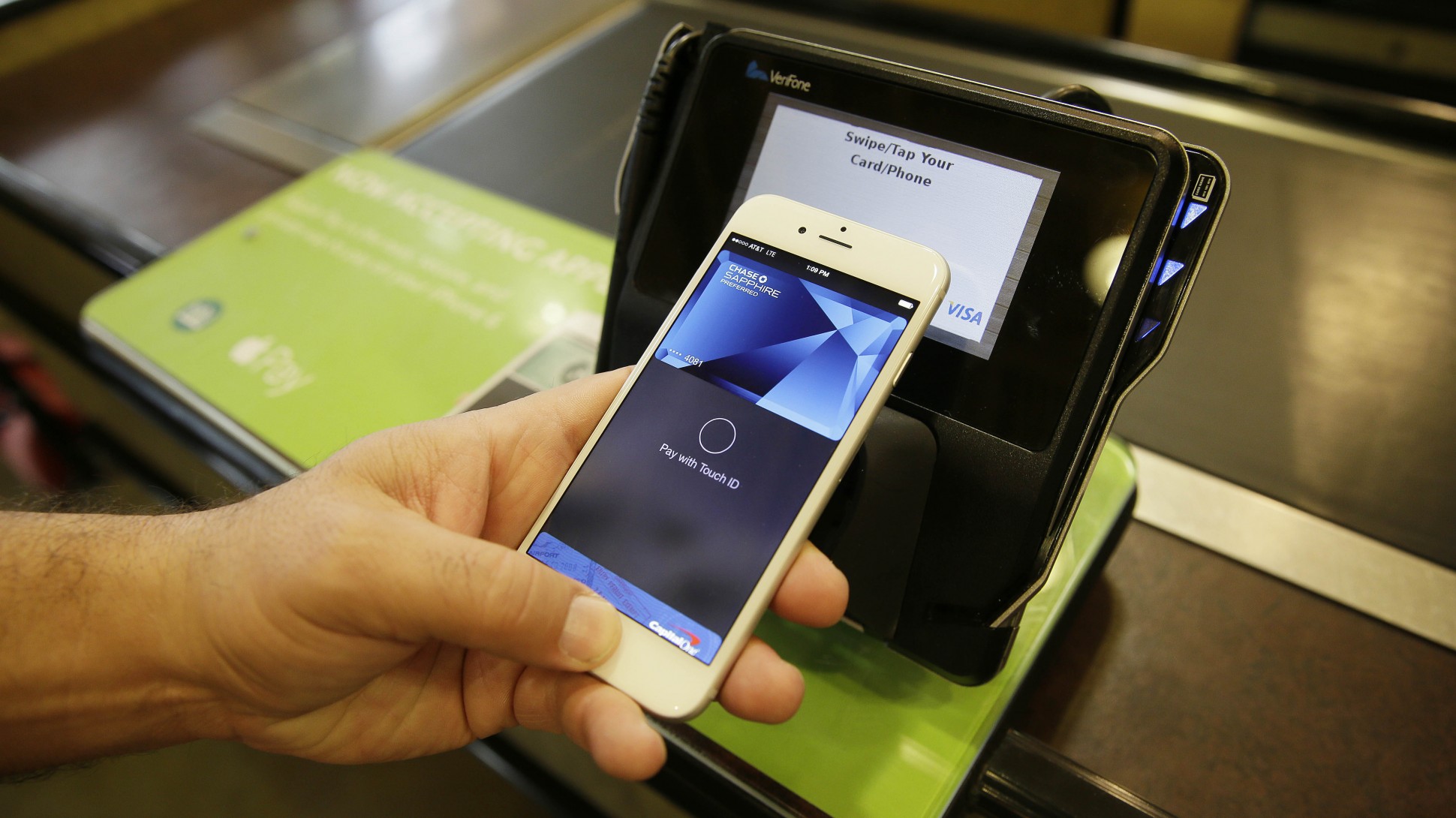
    With the new solution, EDDITS and Touché have for the first time initiated cryptocurrency payment from a POS device that uses only the end-user wallet with a touch of two fingers. Touché’s industry leading biometric POS device authenticates the fingerprints.

    EDDITS, thanks to ERC725 and ERC735-based Smart Contract, enables a user to authorise the payment provider to initiate a payment from its identity to the merchant’s, provided that the proof of authorisation of the transaction is given.

    During the enrolment process, the user’s fingerprints are linked to its identity Smart Contract as claims issued by Touché. When a payment is requested, the user authenticates himself on the device using his fingerprints and authorise the transaction. The data are signed and sent to the payment provider’s Smart Contract. If the fingerprint proof matches the one linked to the user identity, a transaction is generated by the payment provider’s Smart Contract to move the ETH from the buyer identity to the merchant’s one.

    “This innovative payment solution will greatly simplify cryptocurrency transactions for payment providers, removing the need for them to manage user wallets,” said Sahba Saint-Claire, Chief Executive Officer and Co-Founder, Touché. “It will also enhance security for customers since each payment will require cryptographic proof generated on the Point of Sale device at the touch of two fingers.”

    “With EDDITS, we started by linking strong off chain identities to ERC725 Smart Contract in a trustless way in order to ease the KYC of blockchain address owners. Through this cooperation with Touché, we achieved a further step by providing an easy to use yet highly secure in-store payment solution based on the same foundation.” Said Fabrice CROISEAUX, CEO of InTech and creator of EDDITS. “ERC725/735 allows us to leverage the power of blockchain while staying compliant with current regulations.”
  • How biometrics improves customer engagement in retail

    How biometrics improves customer engagement in retail

    A new age of identification technologies has arrived, giving physical stores an opportunity to level the playing field with online retailers.

    And identification technologies, such as biometrics in retail, can create deeper customer engagement more in line with an e-commerce experience.

    A recent Walker study found that by 2020, customer experience will overtake price and product as the key brand differentiator. Today’s customers will expect companies to know their individual needs and to personalise the experience to meet those needs. Equally significant: 86 per cent of these consumers are willing to pay more for it.

    Simply put, customer experience is now the new battleground, and every retailer should think about how to jump on the bandwagon sooner rather than later.

    E-commerce has traditionally held an edge over brick-and-mortar stores, with its ability to provide quality digital customer service and personal experience through the use of algorithms.

    An algorithm can easily detect a shopper who prefers white over black, or jeans over skirt, through past browsing and purchasing history. The next time he/she visits the online store, more personalised recommendations can be made accordingly.

    Now, the same function can be replicated across physical stores, and it doesn’t involve the use of any loyalty programs, membership cards or vouchers.

    To start, imagine entering one of your favourite stores and getting a new pair of jeans. If the store can identify you at the point of sale, through biometrics for example, this can then be the gateway to a data and analytics engine. It will enable the store to recall your purchase history and generate predictive analytics on your consumption habits and preferences.

    The store can recommend new stock which has arrived, like a shirt that would go perfectly with the pair of jeans you bought. And it is in black, your favourite colour. As a loyal customer, you receive a personalised recommendation or offer via an email newsletter, prompting you to visit the store again.

    In traditional cash or card payments, that data would be lost. With more sophisticated identification at the point of transaction, all a customer has to do is to sign up and register their credit cards. When they next transact with that store, restaurant or hotel, the data can be used to create bespoke experiences for that customer. Patterns of behaviour can be identified and digital marketing tactics developed around those insights.

    To top it off, customer-loyalty program entitlements are also applied automatically at every interaction and the customer is notified of the loyalty benefits or credit card promotional offers.

    This eliminates the need for an additional membership card or voucher, making the shopping experience fast, convenient and seamless.

    Biometrics will take the lead

    The next issue is which kind of identification technology will become the norm in the future? In my view, biometric payment systems are a good choice as they can be highly secure if applied correctly. Of those, using fingerprints for payments is by far the least intrusive.

    A recent Visa survey found that 96 per cent of consumers in Singapore would like to use biometrics for making payments, and 41 per cent said it is more secure compared to passwords and personal identification numbers. For a region where cash and credit cards dominate payments, the payment ecosystem remains inconsistent and inefficient. Customers are increasingly concerned with security and privacy issues.

  • Australians prefer biometrics to PINs for payments

    Australians prefer biometrics to PINs for payments

    More than half of Australians prefer fingerprints, voice or retina scans in place of PINs when authorizing, according to research commissioned by Visa.

    The research also indicates that 29% of Australians are ready to use an internet-connected device, like a smart home virtual assistant or connected fridge to make payments on their behalf.

    “Australian shoppers are at the forefront of the global evolution of commerce, providing a big opportunity to merchants and financial services providers to similarly lead their international counterparts in innovation,” Visa group country manager for  Australia, New Zealand and the South Pacific Stephen Karpin said.

    “As the Internet of Things and biometric capabilities become integrated into our everyday experiences, we’ll experience a significant shift in how payments are made. In our lifetime, we will see infinitely more choice in how Australians pay, from watches, fridges and mobile phones, to eyes and fingers. And we’ll experience personalization that we never thought possible, powered by artificial intelligence.”

    Visa estimates over three billion of its cards are circulating globally with about 44 million merchants accepting the Visa card as payment. The card company predicts that with the introduction of connected devices and the continued growth of digital commerce, those numbers will expand 30 billion different ways of paying and 400 million physical and digital acceptance points.

    According to Futurist Anders Sorman-Nilsson, ease of use will drive consumers to adopt new patment and commerce experiences. “Connected, AI enabled devices ready to pay will only be pervasive if the experience is easy, seamless and secure,” he added.

    Many of the new payment methods currently using smartphones rely on biometrics for authentication. More than half of respondents surveyed by YouGov (56%) said they are comfortable using their thumbprint, voice or retina for payment. According to the research, the appeal of biometrics is that it is more secure (45%) and the need to not have to remember a pin/password (40%) is driving consumer adoption and readiness.

    But while consumers are keen to embrace biometric authentication, less than half (39%) of respondents were willing to share their personal information in exchange for convenience in payments.

    Karpin attributes this hesitation to prevailing privacy concerns.

  • Eye recognition set to rival fingerprints for biometrics

    Eye recognition set to rival fingerprints for biometrics

    ABI Research predicts in a new report that fingerprint sensors in smartphones will surge to reach a 95% penetration rate of smartphone shipments by 2022.

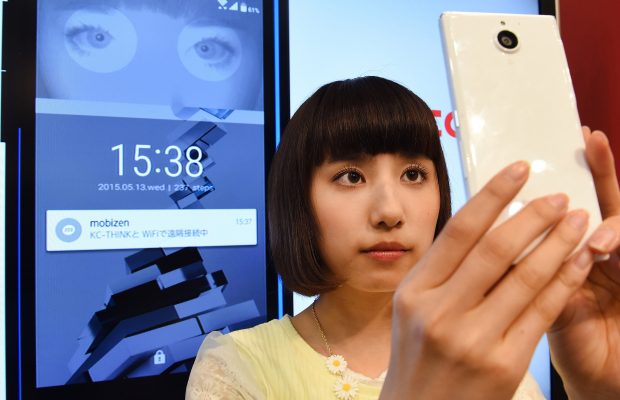
    This will prompt new opportunities for biometric technologies, such as eye recognition, to be utilized as part of novel identification and payment applications for both the banking and governmental markets.

    “While enterprise markets aggressively adopt vein recognition technologies in physical access control applications, eye recognition technologies will soon be one of the most secure modalities for consumer electronics authentication and secure mobile payments,” ABI Research industry analyst Dimitrios Pavlakis said.

    With each passing market quarter, biometric technologies are extending their reach in consumer electronics, while OEMs in the Asia-Pacific region are aggressively driving new implementations.

    This will fuel an exponential growth in mobile banking and payment apps as banks and financial organizations prove to be less timid when embracing new biometric implementations. ABI Research finds that OEMs and service providers are now actively targeting the emerging IoT, smart home, and automotive segments as future growth areas for biometrics.

    “Vein recognition workforce management software and access control solutions in the enterprise market depict an impressive 18% five-year growth rate, boosted by market leaders like Fujitsu and Hitachi,” concludes Pavlakis.

    “Innovative startups like HYPR are making strides in improving biometric blockchain capabilities, while wearable pioneers like Nymi are triggering a domino effect with heart rate-empowered payments.”

  • Biometrics to authenticate 2b m-payments this year

    Biometrics to authenticate 2b m-payments this year

    A new report by Juniper Research predicts the number of mobile payments authenticated by biometrics will climb to to nearly 2 billion this year, up from just over 600 million in 2016.

    The new research found that while Apple Pay had provided the catalyst for initial growth, other leading wallets including Android Pay and Samsung Pay were increasingly offering biometric solutions for authentication.

    Furthermore, the size of the opportunity has been boosted by the greater availability of fingerprint sensors. Juniper estimates around 60% of smartphone models are expected to ship with such sensors this year, with many Chinese vendors incorporating them into mid-range models.

    The research emphasized the increasing momentum behind alternative biometric solutions. It recognized Mastercard as an early leader in this space through its Identity Check Mobile capability, due to go live in the latter part of 2017. Informally known as “selfie pay”, this allows users to scan their fingerprints and/or take selfies to validate their identities and thereby make payments.

    Meanwhile, it expected to see strong adoption of the authentication app recently unveiled by India’s identification authority, through which merchants can verify a customer’s ID via either fingerprint or iris scan. Indeed, since the biometric data is linked to a bank account, the process acts as both authentication and transaction enabler.

    However, the research argued that the key challenge for service providers would be striking the right balance between end-user convenience and solution security.

    Research author Dr Windsor Holden pointed out that “typically, the more secure the solution, the more time-consuming the authentication process. It is essential to offer a range of verification options allowing clients to determine what level of security is required for a given authentication.”