Tag: blade battery

  • BYD Demonstrates 1,000 kW Robotic EV Charging Arm in the UAE

    BYD Demonstrates 1,000 kW Robotic EV Charging Arm in the UAE

    BYD demonstrated an automated robotic charging arm in the United Arab Emirates capable of plugging into electric vehicles and delivering up to 1,000 kilowatts of power without driver intervention.

    Chinese media reports published on November 9 showed the installation, which pairs the high-speed arm with on-site solar generation and battery storage cabinets to buffer electricity demand and prevent heavy spikes on the local municipal grid.

    The robotic arm manages the full replenishment sequence once an electric car enters the designated stall. Sensors run visual recognition and force-feedback controls to pinpoint the vehicle charging port, unlatch the protective exterior flap, and insert the heavy cable directly into the socket.

    How the Hands-Free System Operates

    After pumping power, the arm uncouples the connector and secures the port flap. The hardware accommodates multiple local connector standards rather than relying solely on domestic Chinese charging pin configurations, an essential step for foreign market adoption.

    Chinese technical reports say the 1,000-kilowatt terminal recharges vehicles fitted with BYD’s second-generation Blade Battery to full capacity within nine minutes, while providing a partial top-up in five minutes. The demonstration data omitted baseline state-of-charge figures, testing temperatures, and the specific car model used.

    Automated Parking and Desert Climate Demands

    The carmaker also exhibited an integrated park-and-charge function. A vehicle directs itself autonomously into the bay before signaling the mechanical arm to begin charging, linking autonomous maneuvering with hands-off replenishment.

    That setup targets extreme heat environments across the Middle East. Automated coupling prevents motorists from stepping outside into summer desert heat to wrestle stiff high-voltage cables.

    Commercial real estate owners and fleet managers face steep infrastructure challenges when deploying high-power charging at scale. Megawatt-level installations threaten to overwhelm local substations unless backed by local power reservoirs. By integrating solar arrays and stationary storage into the UAE station footprint, BYD demonstrates a standalone microgrid blueprint that commercial operators can place near retail hubs without triggering costly grid upgrades.

    Competition across export markets is forcing Chinese electric vehicle manufacturers to export complete ecosystems rather than standalone passenger cars. Delivering bespoke robotic infrastructure lets vehicle brands protect premium retail pricing against rival imports while tailoring hardware to harsh Gulf operating conditions.

    Development History and Next Rollout Steps

    BYD spent several years developing automated charging systems, initially engineering robotic dollies to replenish automated guided transport vehicles inside industrial facilities. The firm later shifted that research toward public passenger vehicle hubs.

    Earlier corporate patent filings detailed secondary automated capabilities, including sensor-based reads of tire pressure and automated valve inflation along with non-invasive vehicle interfaces. Those diagnostic functions were absent from the UAE demonstration site.

    BYD has not disclosed commercial pricing, manufacturing schedules, total installation targets, or export plans for markets outside the UAE.
  • BYD Unveils Yangwang Altior Sedan Priced at 2.08 Million Yuan

    BYD Unveils Yangwang Altior Sedan Priced at 2.08 Million Yuan

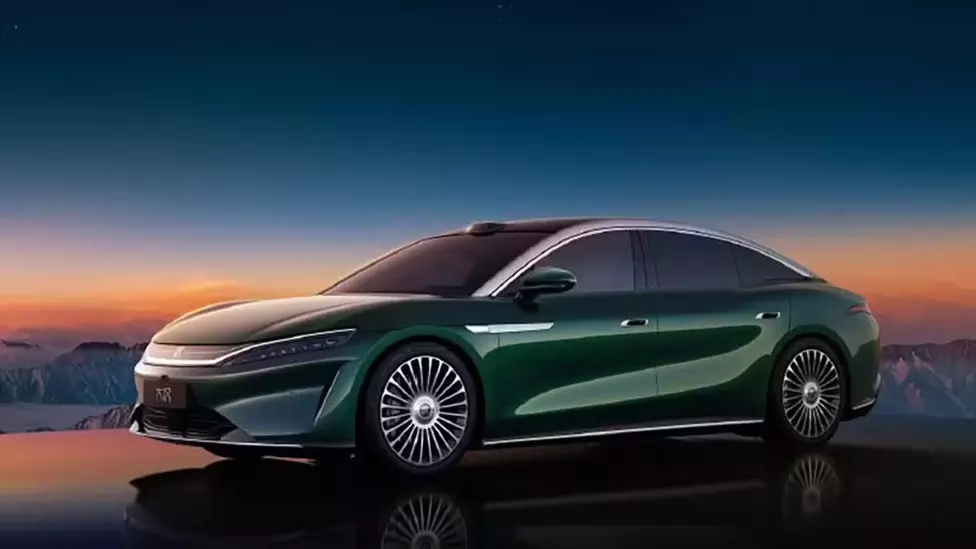
    BYD’s ultra-luxury marque Yangwang unveiled its flagship Altior executive sedan in Abu Dhabi on Saturday, opening pre-orders for a limited production run expected to cost 2,080,000 yuan.

    Securing an allocation for the initial four-seat “Shanhe Dingyun” edition requires a 300,000 yuan ($44,660) deposit from buyers in China, with total global deliveries capped at 399 units.

    A subsequent five-seat version will join the lineup later as BYD targets market share held by traditional benchmarks including the Maybach S-Class and Bentley Flying Spur.

    Cabin appointments and dimensions

    The vehicle measures 5,600 millimetres long, 2,030 millimetres wide, and 1,590 millimetres tall, with a wheelbase stretching to 3,500 millimetres. Coach doors open outward to nearly 90 degrees to clear passenger access, incorporating integrated umbrella compartments inside the door structures.

    Two individual rear seats sit divided by a central console, configured with integrated leg rests, champagne glass storage, and a dedicated rear command interface. Symmetrical woodwork, metal accents, diamond-quilted upholstery, and electric privacy sunshades finish the interior. The Shanhe Dingyun edition pairs brown rock and white jade cabin colours with Hetian jade air vent inlays, aramid fibre door panelling, gold speaker grilles, and cloud-patterned emblems.

    Powertrain and battery engineering

    BYD installed its second-generation Blade Battery in the chassis alongside high-output flash-charging systems designed to cut station dwell times. Chinese light-duty test cycle (CLTC) testing yields a driving range exceeding 1,000 kilometres on a single cycle.

    Yangwang has withheld whether the drivetrain relies solely on traction batteries or includes an internal combustion range extender. The exterior uses a two-tone paint treatment over enclosed aerodynamic wheels, floating centre caps, and a dot-matrix gemstone grille framed by Yangwang’s tripod-style front fascia.

    Competition in the top tier

    Choosing Abu Dhabi for the vehicle rollout confirms Yangwang’s intent to sell directly against the Bentley Flying Spur and the Maybach S-Class in high-net-worth hubs across Asia and the Gulf. Ultra-luxury margins provide substantial cash cover, yet buyers in the two-million-yuan segment historically demand generational brand heritage alongside mechanical performance.

    Convincing institutional fleets and chauffeured executives to abandon German and British badges remains an uphill commercial task. The limited run of 399 cars caps early inventory exposure, letting BYD test buyer price tolerance before ramping volume configurations.

    Sales scale and pipeline

    Hu Xiaoqing, general manager of Yangwang’s sales division, previewed the project under internal codename HU on October 21. The vehicle follows the brand’s earlier launches, including the U7 sedan and the four-seat U8L Dingcang Edition sport utility vehicle released in August.

    Scale across the marque remains narrow, with Yangwang delivering 3,546 vehicles through the first ten months of 2026. The production run now heads toward an unpriced five-seat Altior variant scheduled to enter commercial distribution once initial Shanhe Dingyun deliveries conclude.

  • BYD Launches C12 DUO Electric Coach in UK with 547-Kilometre Range

    BYD Launches C12 DUO Electric Coach in UK with 547-Kilometre Range

    BYD unveiled its C12 DUO battery-electric coach at the Euro Bus Expo in Birmingham, entering the British long-distance passenger transport sector with a claimed range of up to 547 kilometres (340 miles). The 12.3-metre vehicle seats up to 57 passengers and runs on the Chinese manufacturer’s lithium-iron-phosphate Blade battery technology.

    Frank Thorpe, Managing Director of BYD UK Commercial Vehicles, announced that the high-decker was developed specifically for the UK market. It targets tour operators, school transport, and scheduled services between cities, towns, airports, and event venues. BYD offers the model with two battery options, a 429 kWh pack and a 495 kWh pack, capable of charging at up to 215 kW.

    This week’s world premiere follows earlier announcements outlining the Chinese automotive giant’s entry into the UK coach segment. The expansion builds on BYD’s established presence in Britain, where the company has delivered or secured orders for more than 3,000 electric buses across single-deck and double-decker categories.

    Chassis Integration and Operating Specs

    Power comes from two wheel-hub motors generating 150 kW each, matching the drivetrain layout of BYD’s existing urban and intercity bus lines. Integrating the battery cells directly into the vehicle frame increases torsional rigidity while reducing the vehicle’s weight.

    Luggage capacity measures up to four cubic metres, which is slightly less than in conventional coaches of this size. However, the C12 DUO preserves a full 57-passenger seating capacity without compromise. BYD backs the integrated traction battery with a 15-year warranty.

    The platform measures 12.3 metres in length, 2.55 metres in width, and 3.54 metres in height, sitting on a 6.15-metre wheelbase. Build Your Dreams aims to prove that long-distance electric passenger transport is achievable without compromising range, passenger comfort, or operational efficiency.

    Commercial Fleet Expansion Outside China

    Thorpe noted that the success of the company’s battery-electric double-decker and single-decker transit buses in the UK motivated the move into coaches. Across the country, BYD currently offers single-deck buses in lengths of 9.9 m, 10.4 m, 10.8 m, and 11.8 m.

    The manufacturer also supplies the BD11 double-decker in 10.6-metre or 10.9-metre lengths, featuring a maximum battery capacity of 532 kWh.

    “The transition to zero-emission commercial transport is no longer a distant goal, it is an operational reality,” said Frank Thorpe, Managing Director, BYD UK Commercial Vehicles. “With the debut of the C12 DUO, we are demonstrating that sustainable, long-range electric travel is feasible across every transport segment, from dense city centres to intercity corridors across Europe.”

  • BYD Builds 150,000Th Commercial NEV as Heavy Truck Output Ramps Up

    BYD Builds 150,000Th Commercial NEV as Heavy Truck Output Ramps Up

    BYD rolled out its 150,000th commercial new energy vehicle at its Huai’an factory in Jiangsu on October 9. The milestone vehicle was a Q3 electric semi-truck.

    Commercial vehicle sales climbed 28.46 per cent year-on-year to 53,032 units across the first nine months of the year. That growth accelerates an operational pivot toward long-haul freight.

    Power Specs and Heavy Freight Demand

    The Q3 tractor unit uses a Blade Battery setup with peak motor output of 600 kW and dual-gun fast charging. Downtime on intercity logistics routes is critical. Battery replenishment speeds determine whether zero-emission heavy haulage can compete on operating margins with diesel equivalents.

    Long-distance road freight demands sustained power output and dense charging support. These requirements create high technical barriers for battery-electric platforms. The company plans to allocate additional capital expenditure to its long-haul heavy truck lines to expand across primary arterial freight corridors.

    Diverging Growth in Vehicle Lines

    Commercial vehicle volumes are outpacing the rest of the manufacturer’s catalog. Deliveries reached 6,848 commercial units in September alone. That figure rose 113.33 per cent from a year earlier, despite easing 0.88 per cent from August.

    Total group deliveries, including passenger cars, slipped 3.94 per cent to 3,131,576 units through September. Institutional fleet replacement cycles and decarbonisation mandates are cushioning commercial transport. These fleet contracts shield heavy vehicles from retail price wars curbing broader consumer demand.

    Logistics Fleet Shifts Across Asia

    Fleet operators across Asia-Pacific face tightening emissions regulations in urban centres and regional shipping hubs. These rules compel logistics providers to electrify their middle-mile and port-drayage fleets. BYD is positioning its heavy-duty trucks against regional diesel incumbents, shifting electrification from municipal transit to private commercial transport.

    Infrastructure hurdles now outweigh vehicle availability constraints for suppliers and fleet managers. Operators adopting 600 kW dual-gun heavy haulers must secure dedicated grid allocations and depot charging hardware. This requirement concentrates operational risk around depot power supply rather than vehicle range alone.

    Global Expansion Beyond Bus Fleets

    Truck production builds on an eighteen-year commercial vehicle programme that started with municipal electric buses. Dedicated truck research began in 2012. The programme gradually broadened into urban parcel delivery vans, cold-chain trucks and heavy port hauliers with battery-electric and hybrid powertrains.

    Production of the T5 light-duty truck crossed the 10,000-unit threshold in 2025, while the smaller T4 platform debuted in export markets. Commercial operations now span more than 70 countries and territories. These global operations include bundled fleet management software, maintenance contracts and depot charging equipment.

    Factory lines at Huai’an are scaling Q3 output as regional logistics firms begin scheduled fourth-quarter fleet replacements across eastern China.

  • BYD Unveils Dual-Screen Interior for Third-Gen Tang SUV Ahead of Q4 Launch

    BYD Unveils Dual-Screen Interior for Third-Gen Tang SUV Ahead of Q4 Launch

    BYD unveiled the interior of its third-generation Tang on Thursday. The carmaker fitted the five-seat electric SUV with a 35.4-inch screen ahead of a fourth-quarter launch.

    Delivery figures explain the overhaul. Tang family sales dropped 49.87 per cent year-on-year to 81,614 units between January and August.

    Cockpit Overhaul and Space Configuration

    Inside the cabin, an integrated 35.4-inch far-side display and a 30-inch panoramic screen replace the traditional instrument cluster and head-up display. Lu Tian, general manager of sales for BYD’s Dynasty series, said the layout took design cues from sci-fi spaceship consoles. Buyers can choose between two interior color schemes: Dune Beige and Amber Brown.

    Rear seating serves as a key selling point. The second row offers more than 1,000 mm of legroom, and the backrest reclines up to 130 degrees. BYD positions the five-seat model as the technology-oriented 8-series flagship within the Dynasty division.

    Chassis Dimensions and Platform Hardware

    The vehicle measures 5,045 mm long, 1,980 mm wide and 1,760 mm tall, with a 2,950 mm wheelbase. These proportions place it in China’s mid-to-large consumer SUV bracket. It joins the larger 9-series Da Tang, introduced in June, to form a dual-flagship structure.

    Under the floor, the SUV runs on BYD’s second-generation Blade Battery with high-voltage flash charging architecture. Maximum driving range reaches 850 kilometers on the China Light-Duty Vehicle Test Cycle (CLTC). Under standard ambient temperatures, the pack replenishes from 10 per cent to 70 per cent in five minutes. It reaches 97 per cent in nine minutes.

    Driver Assistance and Chassis Control

    Every variant includes the God’s Eye B intelligent driving system as standard factory equipment. The carmaker also installed its DiSus-A intelligent air body control system across the range to adjust ride height and cabin stability automatically.

    Standardising air suspension and advanced driver assistance puts immediate pressure on domestic rivals. Competitors in the 200,000 to 300,000 yuan bracket must match these hardware specifications without adding option packages, even as margin compression limits profitability. The financial risk is that the heavy hardware package could trim BYD’s gross vehicle margins if sales volumes fail to recover quickly.

    Rebuilding the Dynasty Series Lineup

    The Tang badge previously generated high sales volumes for BYD. However, an aging cabin architecture and prolonged gaps between mechanical updates eroded showroom traffic over the past 18 months. Splitting the Dynasty line into separate 8-series and 9-series variants mirrors product segmentation strategies used by competing premium EV brands across Asian markets.

    Following its initial public exterior reveal at the Chengdu Auto Show on August 21, showroom deliveries and official customer pricing across China will take effect before the close of the fourth quarter.

  • BYD Seeks over 8,000 Workers at Xi’an Base as Production Ramps up

    BYD Seeks over 8,000 Workers at Xi’an Base as Production Ramps up

    BYD is hiring more than 8,000 workers across its Xi’an manufacturing complex in September 2026 after finishing assembly line overhauls at the site.

    The northwestern hub is the automaker’s largest production base. It spans four development phases with an annual capacity of 1.5 million vehicles.

    Recruitment notices from local human resource agencies and municipal bureaus show the push covers several divisions. Signing bonuses reach up to 6,000 yuan ($889), paired with monthly wages up to 10,000 yuan for technical staff. Roles in welding, painting and vehicle assembly make up most of the open positions.

    Incentives and Skilled Labor Demand

    Hiring ends temporary operating limits at the plant. Output slowed during the first half of the year as BYD reconfigured machinery for its second-generation Blade Battery and retooled chassis lines. During that tooling phase, the company transferred workers to facilities in Zhengzhou, Hefei and the Shenzhen-Shanwei cooperation zone.

    All four factory sites in Xi’an have returned to standard shifts. Filling technical roles quickly will prevent bottlenecks on final assembly lines. Those lines supply both finished cars and knocked-down kits to international transport corridors.

    The Line Rebuild and Factory Rebound

    Provincial industrial data reflects the factory overhaul. Vehicle output across Shaanxi province fell nearly 50 per cent year on year through the first seven months of 2026 during the plant retooling.

    Production rebounded once the lines reopened. Shaanxi auto output climbed to 138,900 units in August, up 55.4 per cent from July. That was 17.9 per cent higher than August last year, according to China’s National Bureau of Statistics.

    For regional suppliers, the Xi’an ramp-up secures component volumes for the core Dynasty and Ocean series. Component makers that lowered deliveries during spring retooling now face tighter lead times. Automakers competing with BYD across Southeast Asia and Latin America will face fresh pressure as export shipments normalize.

    Domestic Headwinds versus Export Surge

    Plant operations restart against a split in BYD’s customer base. Deliveries hit 440,293 new energy vehicles in August. That was a 17.8 per cent gain year on year and its best monthly volume of 2026.

    Export shipments drove the total. Overseas sales jumped 134.5 per cent year on year to 189,466 units in August, setting a monthly export record. Domestic retail deliveries fell 14.3 per cent over the period as showroom price wars deepened in China.

    That split puts utilization risks on domestic lines. Export variants run on full schedules. Lines built for the home market must defend share against aggressive local discounts.

    Global Assembly Footprint

    Xi’an reached peak output in 2024 when volume topped 1 million vehicles. Matching that mark depends on how fast overseas markets absorb inventory before foreign assembly hubs open.

    BYD continues to tweak its global manufacturing footprint. European advisers say the automaker will eventually need three vehicle assembly plants and one battery hub in Europe to meet quotas and handle tariffs.

    Factory managers in Xi’an are now pushing to clear order backlogs before fourth-quarter shipping deadlines arrive.

  • BYD Denza Launches All-Electric N8L SUV Priced from 299,800 Yuan

    BYD Denza Launches All-Electric N8L SUV Priced from 299,800 Yuan

    BYD rolled out the battery-electric version of its Denza N8L sport utility vehicle in China on Monday, pricing the large six-seater from 299,800 yuan ($44,280).

    The launch introduces a pure electric drivetrain to a flagship family model that previously sold only as a plug-in hybrid, undercutting the hybrid edition’s starting price by 20,000 yuan.

    Battery Power and Fast Charging Hardware

    Denza sells the new all-electric SUV in two configurations. The entry Flash Charging Prestige costs 299,800 yuan, while the higher-spec Flash Charging Flagship retails for 329,800 yuan. Both variants use an 800-volt electrical architecture paired with a 130.15-kilowatt-hour second-generation Blade Battery, delivering a driving range of up to 960 kilometres under China Light-Duty Vehicle Test Cycle standards.

    Propulsion comes from a single rear-mounted electric motor rated at 370 kilowatts, or 496 horsepower. At BYD flash charging stations, the system pushes battery state from 10 per cent to 70 per cent in five minutes, and reaches 97 per cent in nine minutes.

    Body measurements match the hybrid predecessor exactly. The chassis measures 5,200 millimetres in length, 1,999 millimetres in width and 1,820 millimetres in height, riding on a 3,075-millimetre wheelbase with a three-row, six-seat interior. Storage includes a 208-litre powered front trunk equipped with a drainage plug for wet gear. Standard driving hardware incorporates rear-wheel steering that trims the turning radius to 4.58 metres, dual-chamber air suspension, continuous damping control and a roof-mounted LiDAR unit running the God’s Eye 5.0 driver assistance package.

    Shifting Family Buyers Toward Pure Electrics

    By pricing the pure electric model below the plug-in hybrid version, Denza is rewriting the traditional price ladder in China’s premium three-row segment. Automakers historically charged heavy premiums for massive 130-kWh battery packs. BYD is using its vertical cell manufacturing scale to absorb those costs and squeeze rivals such as Li Auto and Nio, forcing competitors to defend margins across the 300,000-yuan family SUV bracket.

    The commercial success of the vehicle relies directly on BYD’s ability to maintain high charging speeds away from urban showrooms. A 960-kilometre nominal range eases highway anxiety, but deploying ultra-fast power cabinets across key highway arteries is what will convince combustion-engine owners to ditch petrol backups for family transport.

    Building Out the N8L Lineage

    Denza introduced the original N8L nameplate in October 2025 as a dedicated plug-in hybrid. The brand updated that hybrid in June with a 75.26-kWh second-generation Blade pack offering 430 kilometres of electric range and flash charging capability, priced at 319,800 yuan.

    BYD operated 10,000 flash charging stations across China as of late August and expects to reach 20,000 operational stations before the end of December.

  • BYD Launches Flagship Sealion 08 SUV in China from $33,890

    BYD Launches Flagship Sealion 08 SUV in China from $33,890

    BYD launched its flagship Sealion 08 SUV in China on Wednesday, priced between 229,900 yuan ($33,890) and 279,900 yuan across eight variants. The mid-to-large model offers battery electric and plug-in hybrid options with five- and six-seat configurations.

    Plug-in hybrid editions run from 229,900 yuan to 269,900 yuan, pairing a 55.843-kilowatt-hour battery with a fuel tank for up to 1,650 kilometers of combined range. Rear-wheel-drive hybrid versions deliver 400 kilometers of battery-only range under CLTC testing, while all-wheel-drive models offer 350 kilometers. Fuel consumption on a depleted battery sits at 4.6 liters per 100 kilometers under NEDC benchmarks.

    Fast charging and hardware specs

    Pure electric versions cost from 239,900 yuan to 279,900 yuan and use a 115.072-kilowatt-hour battery pack. The rear-wheel-drive electric variant delivers up to 900 kilometers of CLTC range with a 370-kilowatt motor, while the twin-motor all-wheel-drive edition offers 800 kilometers. Both powertrains incorporate BYD’s second-generation Blade Battery and flash-charging hardware that lifts battery charge from 10 percent to 70 percent in five minutes.

    Measuring 5,115 millimeters in length with a 3,030-millimeter wheelbase, the SUV includes active rear-wheel steering that tightens its turning radius to 4.95 meters. Dual-chamber air suspension and BYD’s DiSus-A body control system come standard, alongside God’s Eye 5.0 driver-assistance software for urban navigation.

    Defending volume in premium family segments

    The vehicle arrives as domestic competitors crowd China’s family SUV segment, directly targeting rivals such as Xpeng’s G9L and Great Wall Motor’s Wey V8X. BYD is using the Ocean lineup to push its namesake badge into higher price bands, bridging the gap between mass-market commuter cars and dedicated luxury nameplates like Denza.

    Sales momentum for the Sealion badge showed signs of plateauing before this release, with August deliveries dipping 8.86 percent year-on-year to 48,559 units. The series delivered 275,974 vehicles in the first eight months of the year, representing just over 10 percent of the carmaker’s total group volume. Dealerships will watch whether the 08 variant can reverse that monthly slip as deliveries ramp up through the final quarter.

  • BYD Adapts Japanese Kei Car Platform for European Electric Microcars

    BYD Adapts Japanese Kei Car Platform for European Electric Microcars

    BYD will develop compact electric cars for Europe using vehicle architecture and battery technology adapted from its Racco microcar sold in Japan for 2,145,000 yen.

    The plan uses the structural layout of the Japanese mini-vehicle to anchor a new line of small urban cars tailored to export markets. While the Japanese Racco measures 3.40 metres long and 1.48 metres wide, the export derivatives will be larger to match European consumer preferences and safety standards.

    Underfloor Battery Integration

    Central to the export project is the X-Pack battery format developed for the Racco. The design packs the motor inverter and primary control units directly inside the underfloor battery housing rather than mounting them separately in a traditional front motor bay.

    That unit combines with BYD’s lithium iron phosphate Blade cells in a cell-to-body structure where the pack functions as a load-bearing chassis component. By eliminating standalone control housings and shortening internal wiring runs, the company cuts manufacturing costs and frees up passenger space inside short-wheelbase bodies.

    In Japan, the Racco runs on a 36 kilowatt-hour pack and a 47-kilowatt front-axle motor, delivering a range of 320 kilometres. The European variants will use scaled versions of the same integrated platform to hit higher cruising speeds while keeping overall vehicle length under 4.20 metres.

    Positioning Below The Dolphin Surf

    Staying under the 4.20-metre threshold allows BYD to target the European Union’s proposed M1E small-vehicle classification, which is expected to carry regulatory incentives. The planned models will sit below BYD’s existing 3.99-metre Dolphin Surf hatchback.

    European legacy brands have struggled to build profitable electric city cars below the 20,000-euro mark because small battery packs carry high fixed component costs. BYD’s transfer of Japanese kei-car packaging gives the Shenzhen carmaker a direct shortcut into entry-level pricing in Western markets.

    Production of the new compact models could feed into BYD’s passenger car assembly plant in Szeged, Hungary, where trial production began earlier this year.

  • BYD Unveils Third-Gen Tang SUV with 850-Km Range Ahead of Q4 Release

    BYD Unveils Third-Gen Tang SUV with 850-Km Range Ahead of Q4 Release

    BYD unveiled its third-generation Tang electric sport utility vehicle at the Chengdu Auto Show on Friday, targeting a commercial release in the fourth quarter. The redesigned five-seat model offers an all-electric range of up to 850 kilometres and charges from 10 to 70 per cent in five minutes.

    Dynasty sales chief Lu Tian presented the vehicle on the opening day of the exhibition. The launch forms the second half of BYD’s dual-flagship Dynasty SUV strategy alongside the larger Da Tang, which reached showrooms in June.

    Battery specs and charging speeds

    The new Tang measures 5,045 mm in length, 1,980 mm in width, and 1,760 mm in height, with a 2,950 mm wheelbase. Power comes from BYD’s second-generation Blade Battery pack, supplied in capacities of 88.682 kWh and 105.792 kWh. These packs deliver CLTC ranges of 730 km, 830 km, and 850 km depending on trim.

    Under normal temperatures, the vehicle reaches a 97 per cent charge within nine minutes. Cold-weather conditions add roughly three minutes to that benchmark. Regulatory filings show a single electric motor variant producing 300 kW, equivalent to 402 horsepower, with a top speed capped at 250 km/h.

    Every variant includes the God’s Eye B driver-assistance suite, which relies on a single LiDAR unit to manage highway and urban navigation alongside automated parking. The chassis rides on the DiSus-A dual-chamber air suspension system, incorporating an active road-preview function that scans surface conditions ahead.

    Rebuilding Dynasty flagship sales

    The overhaul arrives after an extended sales slump for the Tang nameplate. Volume fell sharply through the first half of 2026 in the absence of major product updates, lingering below 7,200 units monthly from March through May before rebounding to 13,535 deliveries in July.

    BYD tested this premium positioning when it launched the full-size Da Tang EV in June at 239,900 yuan ($35,370). That larger 9-series model logged more than 10,000 customer deliveries in its first month. Alongside the Tang debut, BYD opened pre-sales in Chengdu for its Da Han flagship sedan at roughly $36,800, claiming an electric range of 1,008 kilometres.

    Pricing for the third-generation Tang remains unannounced ahead of official showroom deliveries scheduled before the end of the year.