Retail News CRM

Tag: blue bottle

  • Blue Bottle Coffee Unveils Flagship Store in Harajuku, Japan: A Fusion of Innovative Design and Local Flavors

    Blue Bottle Coffee Unveils Flagship Store in Harajuku, Japan: A Fusion of Innovative Design and Local Flavors

    Blue Bottle Coffee, the renowned global coffee brand, has launched a premier outlet in Harajuku, marking a significant step in its ongoing refinement of its retail format within Japan.

    A New Blend of Retail

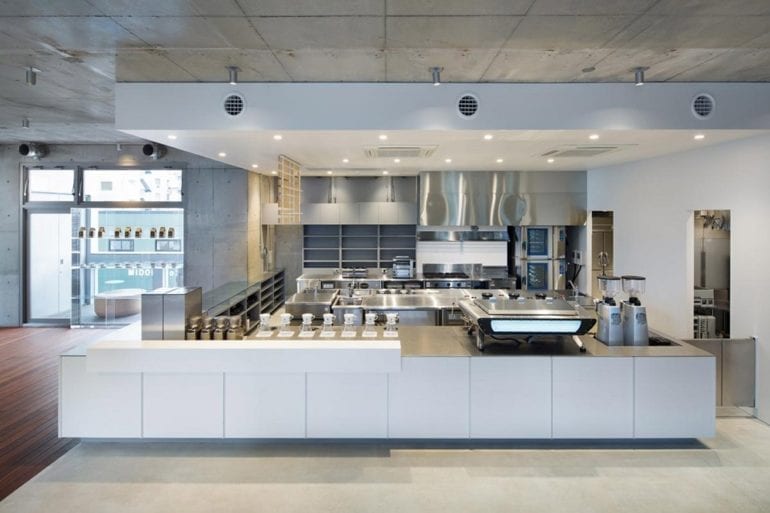
    The Harajuku outlet is nestled in Jingumae near Cat Street, occupying a spatial expanse of approximately 83 square meters and accommodating 26 seats. The store showcases a unique design by Teki Design and harmoniously melds a stainless-steel façade with reflective interiors. This design subtly extracts and mirrors the vibrant streetscape, thereby encapsulating Harajuku’s trademark, visually engaging retail atmosphere.

    The store features a unique layout that departs from the conventional high-throughput service model. Its seating arrangement and spatial design encourage customers to linger, thereby fostering a more experiential approach that surpasses the mere transactional model.

    Brewing a New Retail Experience

    While the Harajuku outlet is termed a flagship store, Blue Bottle Coffee’s primary focus appears to be on format experimentation rather than territorial expansion. The new store introduces an array of innovative beverage offerings such as an updated cold brew along with seasonal drinks. Additionally, it offers a curated food menu designed to cater to the unique tastes of the local market.

    Blue Bottle Coffee first expanded its footprint into Japan in 2015 with the launch of its inaugural store in Kiyosumi, Tokyo. Since then, the brand has exponentially grown and now operates around 30 outlets, with most of them located in the bustling Tokyo metropolitan area.

    In 2021, Blue Bottle Coffee expanded its global presence by inaugurating its first outlet in Singapore, thereby marking its initial foray into the Southeast Asian market.

    Questions & Answers

    What is the new approach adopted by Blue Bottle Coffee in its Harajuku store?
    Blue Bottle Coffee’s Harajuku store adopts an experiential approach, focusing on longer customer dwell times rather than a purely transactional model.

    What new offerings does the Harajuku store introduce?
    The Harajuku store introduces new beverage offerings, including an updated cold brew and seasonal drinks, and a curated food menu tailored to the local market.

    When and where did Blue Bottle Coffee make its first debut in Japan?
    Blue Bottle Coffee first debuted in Japan in 2015 with its initial outlet in Kiyosumi, Tokyo.

  • Popular US chain Blue Bottle Coffee to open first Singapore café

    Popular US chain Blue Bottle Coffee to open first Singapore café

    Renowned US specialty coffee brand Blue Bottle Coffee is set to open its first café in Singapore at Japanese retailer LUMINE’s flagship store in Raffles City Shopping Center.

    “We will share the opening date and hours soon, so please stay tuned for further updates,” the firm said in an announcement on Wednesday.

    This would mark the brand’s first café in Southeast Asia, it added.

    The new café will replace Blue Bottle Coffee’s temporary gift shop, which opened last August as the brand’s entry point into the city-state, .

    Founded in 2002 as a small coffee cart in California, Blue Bottle Coffee has since expanded across the U.S., Japan, South Korea, Hong Kong, and China.

    Its Singapore debut comes through a partnership with LUMINE. Several of the chain’s cafés in Japan are also located within shopping centers operated by the retailer.

    The brand, which calls itself a “destination for coffee lovers,” is expected to feature a seasonally curated espresso menu at its upcoming shop, according to AsiaOne.

    It might also serve snacks like lemon poppy seed pound cake and candied orange scones.

  • Blue Bottle Coffee opens kiosk popup in Hong Kong

    Blue Bottle Coffee opens kiosk popup in Hong Kong

    Coffee brand Blue Bottle Coffee has launched a new pop-up café at Hong Kong International Airport (HKIA) to connect travellers with unique coffee-to-go experience amidst their travels.

    This comes as the brand saw Hong Kong International Airport as a bustling hub for travellers from around the world. By setting up the kiosk at the airport, Blue Bottle aims to cater to a diverse audience of coffee enthusiasts and provide them with a moment of respite and enjoyment amidst their travels.

    Another reason behind the move was Blue Bottle’s ambition to expand its reach in Hong Kong and offer its meticulous craft and care in each cup to travellers passing through the airport. Starting from 5 September 2023, the Blue Bottle  Coffee Kiosk offers travellers enhanced coffee experience ahead of their flights through this coffee-to-go experience from the morning to midnight hours.

    Done in collaboration with local PR agency Dynamic Duo PR (DDPR), the setup of the pop-up kiosk comes along with the brand’s mission of “meeting coffee lovers everywhere so they can experience the best of what coffee has to offer at their convenience”. The pop-up kiosk is promoted via Blue Bottle’s Instagram.

    Fiona Yu, director, global kiosk formats, Blue Bottle, said: “With the opening of our new pop-up kiosk at Hong Kong International Airport, it’s a privilege for us to bring our deep passion for delicious coffee to travellers. At Blue Bottle, our dedication has always revolved around making specialty coffee more accessible, and we’re excited to reaffirm this commitment to connecting people with exceptional coffee experiences with this new location.”

    Founded by James Freeman in Oakland, California, in 2002, Blue Bottle has expanded its footprints across the U.S., Japan, Korea, and Hong Kong over the past 15 years. ⁠Most recently, Blue Bottle Coffee Hong Kong partnered with drinkware brand MiiR to unveil new straw lids to contribute towards sustainability and elevate consumers’ drinking experience. According to Blue Bottle, the flexible silicone straw adjusts to different cup models, while the vacuum-sealed lid ensures spill-free portability. ⁠

  • Blue Bottle makes Mainland China debut

    Blue Bottle makes Mainland China debut

    Blue Bottle Coffee opened its first store in the Chinese mainland on Friday in Shanghai, a city boasting the highest number of coffee shops worldwide.

    Naming its Shanghai debut “Yutong Cafe”, the American coffee chain selected a historic venue by Suzhou Creek, a river that passes through the Shanghai city center, symbolizing its resonance with the local market.

    The two-storey, vintage-looking building houses a selection of classic drip coffee and its signature espresso-based drinks. It also provides snacks inspired by an iconic portfolio from its worldwide operations.

    Unique to the Shanghai store are offerings from merchandise co-created with a local illustrator to a pastry palette featuring local specialties.

    The California-headquartered coffee brand was founded in 2002. Apart from the US, it currently has over 100 branches in markets like Japan, South Korea and Hong Kong.

    A study by Shanghai Jiao Tong University said Shanghai has the most coffee shops of any city globally by January 2021, with more than 6,900 coffee shops in the metropolis.

    Shanghai has vowed to build itself into an international consumption city, promoting the concept of a ‘debut economy’, meaning that businesses from home and abroad are attracted to open their first stores and launch new products in Shanghai.

    Local authorities expect 1,000 such “first stores” in the city to open last year.

  • Inside Blue Bottle Coffee’s trendy new Osaka store

    Inside Blue Bottle Coffee’s trendy new Osaka store

    lue Bottle Coffee, the Nestle-owned American coffee chain, has entered Osaka with a trendy look designed by Tokyo-based studio, I In.

    Customers entering the store are welcomed by an open space filled with the essence of warm wood and bright light through floor-to-ceiling glass windows. In contrast with the wooden floor, the barista’s drip station is made of hairline polished stainless steel, resembling a stage.

    “I thought it would be great if the store could make the series of things that the barista makes and give to customers the most shining, so I lit up the area of ​​the drip station where the barista stands and made it shine like a stage,” said Yohei Terui, founding partner at I In, who is also in charge of designing the store.

    Throughout the cafe, special blue glass, inspired by Blue Bottle’s signature colour, is used to highlight the brand’s message. A coffee-coloured spherical glass chandelier is installed throughout the atrium at the staircase area leading to the second floor.

    Different from the ground floor, the upper floor is dominated by white-coloured materials. Centrestage is a special area stimulating the five senses of visitors. Customers sitting in this area will encounter a sensory experience where music and images, created in collaboration with Panoramatiks, ‘fall’ from the ceiling.

    “It is not just a concept, but a place that really stimulates the five senses of humans,” the design studio described.

  • Korean coffee chains weigh impact of Blue Bottle debut

    Korean coffee chains weigh impact of Blue Bottle debut

    A year has passed since South Korea’s first Blue Bottle Coffee shop opened in Seoul’s eastern Seongsu neighborhood – a trendy hangout spot where young artists and designers renovated existing buildings into art spaces, fine restaurants and cafes to woo customers.

    What impact has this American coffee franchise had on the coffee industry in South Korea?

    Blue Bottle Coffee now runs five shops, located in Seongsu-dong, Samcheong, Yeoksam, Apgujeong and Hannam.

    Among coffee industry analysts, opinions are mixed. Some believe that the newcomer’s focus on specialty coffee has contributed to the expansion of the high-end coffee market, while others say that the company’s influence has been minimal.

    The coffee industry believes that Blue Bottle contributed to the popularisation of specialty coffees, once popular only among coffee enthusiasts, arguing that the market expanded when Blue Bottle opened for business.

    “Blue Bottle made a significant contribution to starting a new era for the South Korean coffee market, spreading the culture of specialty coffee far and wide,” an industry source said.

    “The company will continue to attract more popular interest in specialty coffee.

    There are others, however, who believe that Blue Bottle’s influence in South Korea has been minimal.

    A limited number of vendors and its operational focus on Seoul has led Blue Bottle to be tied up regionally, and most of the customers are hard-core coffee enthusiasts who have limited influence in the popularisation of specialty coffee, they say.

    In addition, Blue Bottle’s shops don’t provide free wireless internet and other convenience facilities normally found in other coffee shops, breaking with tradition as South Koreans commonly visit coffee shops to meet with others.

    “Blue Bottle gained attention when the first shop opened. Now, it struggles to win the heart of South Korean customers,” another industry source said.

    “They should have entered the South Korean market with a better understanding of South Korean customers.”

  • US cafe chain Blue Bottle lifting off in Hong Kong

    US cafe chain Blue Bottle lifting off in Hong Kong

    After months of speculation, US coffee chain Blue Bottle has launched in Hong Kong.

    The modern coffee roaster is currently serving only takeaway coffee from its location in Lyndhurst Terrace due to restrictions on restaurant trading during the coronavirus pandemic.

    The store, expected to open for dine-in services when social-distancing restrictions are eased, features “an industrial medley of timber work surfaces [and] exposed support beams” design, according to LifestyleAsia.

    The store is Blue Bottle’s 22nd venue in Asia. It currently has more than 50 cafes in the US, and recently debuted in Japan and South Korea.

    The brand is known for its single-origin beans and cold-brew coffee which prompted consumer-goods giant Nestle to acquire a 68-per-cent stake for US$425 million back in 2017.

  • California coffee roaster Blue Bottle to launch in Hong Kong’s Central

    California coffee roaster Blue Bottle to launch in Hong Kong’s Central

    Artisanal coffee roaster and retailer Blue Bottle has been rumored to be expanding into Hong Kong since netizens discovered job postings for a brand experience manager and operations director back in August.

    Now, not only is the company seeking a logistics specialist on the ground, but details of a lease deal for a two-story 3000sqft space in Central have emerged.

    Blue Bottle has signed up for the space on Lyndhurst Terrace for six years.

    However, there is still no confirmation of a launch date as yet.

    Blue Bottle Coffee currently has more than 50 cafes in the US, and recently debuted in Japan and South Korea.

    The brand is renowned for its single-origin beans and its cold-brew coffee which prompted consumer-goods giant Nestle to acquire a 68-per-cent stake for US$425 million back in 2017.

  • Blue Bottle Coffee’s industrial-style flagship opens in Seoul

    Blue Bottle Coffee’s industrial-style flagship opens in Seoul

    Blue Bottle Coffee’s first South Korean cafe which opened in Seoul’s artsy Seongsu neighborhood earlier this year, features an industrial-style design with steel surfaces and red-brick fixtures.

    The cafe was designed by Schemata Architects, which has already created several of the brand’s branches in Tokyo, Japan.

    South Korea is the second international market for the US coffee company, which opened its first Tokyo cafe in 2015, inspired by the hospitality of traditional Japanese kissaten (coffee house) culture.

    In the new three-floor, 14,000sqft Seongsu location, each level is dedicated to a different use. The cafe has been designated to the basement – a decision made by the practice after seeing that the ground floor overlooked a busy road often blocked with traffic.

    “Having the cafe in the basement provides a calm and peaceful space away from the bustle on the ground,” the design team explained to Dezeen.

    At its centre is a huge stainless-steel service counter, above which a section of the ceiling has been cut away to provide views to the upper floor.

    Large stacks of red bricks – a material typically used to clad the facades of buildings in Seongsu – have been dotted throughout the space, where brand merchandise like packets of coffee and mugs can be displayed.

    “As a mark of respect for [Seongsu’s] history, we decided to also use brick inside the building,” explained the practice.

    A short set of stairs leads down to a lowered seating area that’s dressed with timber tables and chairs, as well as a couple of long beige sofas.

    The ground level hosts a roastery, a storage room for coffee beans and an area dedicated to cupping: the practice of observing the taste and aroma of brewed coffee. It is all fronted by glass allowing pedestrians outside to see the coffee-making process.

    “The basic design rules for Blue Bottle Coffee cafes remained the same in this project, which is to use a limited number of materials to create a space with a sense of unity and to create a flat relationship between the customers and the staff over the counter,” the practice’s founder, Jo Nagasaka said.

  • Retail sector Korea in future

    Retail sector Korea in future

    Technology and e-commerce trends are reshaping the global retail industry in profound ways, as the rise of online channels threatens to displace more traditional shopping experiences. However, Korea’s retail sector seems to be thriving in the face of this upheaval, with a 6% year-over-year increase in retail sales by Q3 2018. What are the factors fuelling this encouraging retail growth?

    Firstly, improved relations with China and North Korea have energised the retail sector, with duty-free sales registering an impressive 34% year-over-year growth by Q3 2018. While this retail boost can primarily be attributed to the recent surge of Chinese tourists in Korea, it also reflects the growing international popularity of Korean beauty and lifestyle brands.

    E-commerce is also emerging as a key driver of Korea’s retail sector. Online channels have experienced rapid growth since 2010, and will only keep expanding their foothold as Korean consumers start shifting away from brick-and-mortar stores. With Korea’s e-commerce market predicted to grow by 21% this year, traditional retailers will need to find new ways of adapting to this rapidly evolving landscape.

    Some retailers are already turning to artificial intelligence and other Industry 4.0 technologies in an effort to provide consumers with more innovative shopping experiences. For instance, Hyundai Department Store is using Naver’s virtual assistant Clova to answer customer inquiries – whether they relate to store locations or specific purchases.

    Another interesting example is retail giant Lotte Home Shopping, which has developed its own augmented reality system so that customers can visualize how products would look in their home. As these new technologies get ushered into the mainstream, we can expect to see more and more retailers jumping on the AI bandwagon in the next few years.

    However, this doesn’t mean that we should write off the traditional brick-and-mortar experience just yet. Major brands are still banking on attracting consumers with the enduring prestige of high street locations – such as Maison Kitsuné, which recently opened its flagship store in Seoul’s trendy Garosugil district.

    Many global retailers continue to view Seoul, one of the world’s most famous shopping destinations, as a test bed in Asia. With cosmetics brands like Givenchy Beauty and Armani Beauty making their debut in Seoul this year, and renowned F&B brand Blue Bottle Coffee preparing to enter the Korean market in 2019, it’s clear that leasing demand from foreign retailers is still going strong.

    If we look to other segments of the retail industry that are experiencing growth, it’s worth highlighting the surge of fresh food delivery services across the country. With double-income families emerging as a major consumer force, demand for overnight fresh food delivery has also been rising – and major retailers as well as food startups are turning their attention towards this potentially profitable market.

    The rapid expansion of the food delivery market – and of the e-commerce sector in general – is proving to be a windfall for Korea’s logistics industry. Logistics developers are recognizing the need for large-scale modern logistics centers capable of storing and delivering goods nationwide, with faster delivery remaining the market’s key competitive measure. The growing demand for cold chain facilities is expected to fuel a mass redevelopment of older warehouses, especially in the Greater Seoul area.

    So far, Korea’s retail industry has shown remarkable resilience against a backdrop of technological disruption. More brick-and-mortar retailers are offering F&B, AI and entertainment options to differentiate themselves from their e-commerce counterparts; and this trend will only grow as consumers seek out unique shopping experiences. The question is, will Korea’s retail market keep thriving in the long term?  As long as technology continues to enhance – and not supplant – existing retail experiences, we can venture to hope that a bright future is in store for this challenging and dynamic sector.

    -CBRE-

  • Blue Bottle Cafe opens latest Tokyo flagship store

    Blue Bottle Cafe opens latest Tokyo flagship store

    Blue Bottle Coffee has opened its latest flagship café in Tokyo, the sixth one to open in the Japanese capital, as the American coffee outfit expands its retail footprint in Japan.

    Located in Sangenjaya, the San Francisco-based café is situated in a 50-year old low-rise building, which stands at the end of a no-through road between two buildings; located just a 3-minute walking distance from Sangenjaya station.

    Blue Bottle Café enlisted Schemata Architects once again to design the complete space layout. Working with the building’s current fittings, Schemata – the firm behind stores for 3.1 Phillip Lim and Loewe – took inspiration from the designs used with the previous space ownership, resulting in industrial concrete texture mixed with Japanese cedar wood.

    However, the 100-square-metre space does reflect Blue Bottle’s bright and open feel, an aesthetic witnessed in the other five Tokyo outlets. There is specific area for workshops and barista training, along with a “soulful public space” for the local community, in a bid to give the company a strong connection to its most recent Japanese locale.

    Offering more than just coffee and related products, customers can go to the register at the far end of the dead-end road, or stop by the drip-bar and walk around the seating area, before venturing outside to the garden in the backyard area. Walking along the building guest will find an entrance to a gallery also.

    “This building is designed in such a way that customers will experience the continuation of this deep spatial sequence,” said Schemata Architects’ Jo Nagasaka, who is the architect in charge of the store.

    James Freeman founded Blue Bottle Coffee Company in San Francisco in 2002. Still headquartered in Oakland, California, consumer goods giant Nestle acquired a majority stake in the new wave coffee firm earlier this year.

    In 2017, Nestlé acquired a 68 percent stake in the company for some $500 million. The firm has plans to have 55 locations by the end of the year. Blue Bottle stores are located in the Bay Area, Los Angeles, New York City, Washington, DC, and Tokyo.

  • Artsy coffee chain Blue Bottle brews long queues in Tokyo

    Artsy coffee chain Blue Bottle brews long queues in Tokyo

    Japan, famous for green tea, is welcoming artisanal American coffee roaster Blue Bottle with long lines that have at times meant a four-hour wait for a cup.

    The company, which began in Oakland, California in 2002, hopes its early popularity is more than a passing fad. Japan’s consumer culture is littered with manias for Western food imports: pancakes, popcorn, doughnuts, even Taco Bell.

    Success in Japan is important for Blue Bottle, which operates 17 cafes in the San Francisco Bay area, New York and Los Angeles. Japan is its first foray outside of the U.S. Blue Bottle raised nearly $26 million last year to invest in expansion, including financing from Silicon Valley executives, setting the stage for a test of whether an artsy gourmet coffee chain can go big.

    Founder James Freeman, a musician, was inspired by Japan’s old-style “kissaten” coffee-shops: tiny dimly-lit establishments, with good music and a barista behind a wooden counter. Think places for quiet serious thinking and real drip coffee, not sweet, frivolous drinks.

    “We care about every part of the coffee. We call it from seed to cup,” said Saki Igawa, the business operations manager for Blue Bottle in Japan.

    Attention to detail that dovetails with aspects of Japanese culture accounts for part of the coffee chain’s early popularity. The spread of Starbucks internationally, which has created a cookie-cutter coffee culture that some people want to trade up from, is another factor. Blue Bottle is also benefiting from the image problems in Japan of fast food chains and highly processed foods.

    “It’s a new era in eating out,” said food industry consultant Jotaro Fujii who contends that Blue Bottle’s arrival and the decline of McDonald’s in Japan is part of a bigger trend of consumer interest in the safety and quality of the entire food supply chain.

    McDonald’s is suffering declining popularity in Japan, a problem exacerbated after plastic pieces, and even a tooth, was found in its food last year, setting off an outrage among consumers.

    Upscale burger chain Shake Shack, which started as a hot dog stand in New York, is expected to arrive in Japan soon, said Fujii.

    Such chains, including Blue Bottle, are likely to aim for 50 or at most 100 outlets in Japan, not the thousands that fast-food eateries, such as McDonald’s, has achieved here, he said.

    Instead, they will focus on fortifying a brand image, which can lead to other kinds of lucrative businesses.

    Although the prevalent image of Japan might be tea, it has long had plenty of affection for coffee.

    Starbucks has been a hit since arriving in 1995. It now has more than 1,000 shops in Japan. Not a single prefecture (state) is without a Starbucks with one opening in holdout Tottori Prefecture this month — not surprisingly, welcomed with long lines.

    Even convenience stores are serving freshly brewed coffee. Japan also invented “manga-kissa,” or a cafe-cum-library, where you can curl up with a comic book and sip on coffee for hours.

    Such newcomers have hammered the once omnipresent kissaten. Their numbers have dropped by half from the 1980s, or to 77,000 in 2009, according to a Japanese government study.

    But Blue Bottle’s popularity is part of a rediscovery of cafes serving carefully prepared, quality coffee, a trend already long evident in the U.S.

    Blue Bottle’s first Japan shop, which has a roaster, is in Kiyosumi, an older part of Tokyo, chosen because it reminded Freeman, the founder, of Oakland. It opened in February. The second shop, in a backstreet of Tokyo’s fashionable Omotesando, opened in March.

    A third, likely opening later this year in Tokyo’s Daikanyama shopping area, will feature a menu that reflects Blue Bottle’s recent acquisition of San Francisco-based Tartine Bakery, which serves croissants, sandwiches and pastries.

    Blends such as “Giant Steps,” combining African and Indonesian-grown beans for a chocolate taste, sell for 450 yen ($3.75) a cup. A latte costs 520 yen ($4.30).

    On a recent day, the Blue Bottle shop in Kiyosumi, Tokyo, was filled with sunlight pouring through huge windows, the hum of a giant roaster, the fragrant aroma of fresh coffee and a crowd of people.

    Takuya Nakagawa, a 39-year-old hairdresser, who came all the way from rural Toyama Prefecture (state), was impressed with the coffee’s taste and the store’s stylish stark decor. He bought granola and coffee beans as souvenir gifts.

    “I just love the taste,” he said. “This kind of place doesn’t exist in Toyama.”

    True to its inspiration, Blue Bottle is learning from Japan, said Andrew Smith, 29, of San Francisco, a barista and one of three Americans who came to work for the chain in Japan.

    “People here have different ways of conceptualizing about coffee so they taste things differently,” Smith said.

    “They are looking for different kinds of things in coffee. And that is a fun way to learn how everyone in the world perceives coffee differently.”