Tag: bnpl

  • Stricter Bank Underwriting Shifts Credit to Fintech Lenders

    Stricter Bank Underwriting Shifts Credit to Fintech Lenders

    Stricter bank approval standards are steering younger borrowers toward buy now, pay later (BNPL) services, microloans and digital lenders, according to a report from MoneyHero.

    Inflation-driven repayment concerns prompted banks to tighten underwriting and collections, AB Capital Securities noted in an October 2026 commentary. Meanwhile, fintech platforms are deploying alternative data to reach underserved customers.

    A July reopening of online lending licenses by the Securities and Exchange Commission (SEC) could accelerate this migration as more digital competitors enter the market.

    Alternative Screening Fills Bank Deficit

    Digital finance providers rely on alternative data points, including e-commerce transactions and mobile wallet activity, to approve shoppers bypassed by established lenders. Traditional credit bureaus cover only a minority of the population, leaving retail merchants dependent on app-based checkout credit to maintain consumer ticket sizes.

    Smaller transaction sizes typical of buy now, pay later services protect initial loan performance. However, repeat checkout usage by debt-laden shoppers facing persistent inflation creates hidden credit concentrations across unregulated platforms.

    Licensing Reopening Accelerates Platform Entry

    Platform competition intensified after the Securities and Exchange Commission reopened online lending license applications in July. The end of the regulatory moratorium brings fresh capital into mobile instalment lending, multiplying financing options at online and physical retail checkouts.

    The expansion presents operational friction for merchants managing multiple checkout payment integrations. Retailers gaining top-line volume through digital loans risk margin erosion if platforms raise processing charges to cover rising portfolio delinquencies.

    Underwriting Quality Replaces Volume Growth

    Vehicle dealership loan approvals have slowed alongside stricter bank reviews, showing early stress in high-ticket consumer debt. That slowdown confirms that household balance sheets are weakening, even as point-of-sale microloans maintain high headline volume.

    Bank credit screening historically protected established institutions during inflation spikes, while pure-play consumer credit apps absorb higher credit loss rates. The current divergence tests whether algorithm-driven microloans can maintain repayment rates without conventional collateral or documented payroll income.

    The Timeline to Watch

    Consumer platform operators are positioning portfolios ahead of anticipated capital market deadlines. Digital finance operator Maya targets an initial public offering in 2027, making portfolio quality and loan book yields critical metrics for private investors over the coming quarters.

    The immediate metric to monitor will be early delinquency rates across fintech balance sheets through the next quarterly reporting round, which will show whether alternative underwriting can outlast prolonged consumer price pressures.

  • Grab to Acquire Atome Financial in Deal Valued at up to $4.5 Billion

    Grab to Acquire Atome Financial in Deal Valued at up to $4.5 Billion

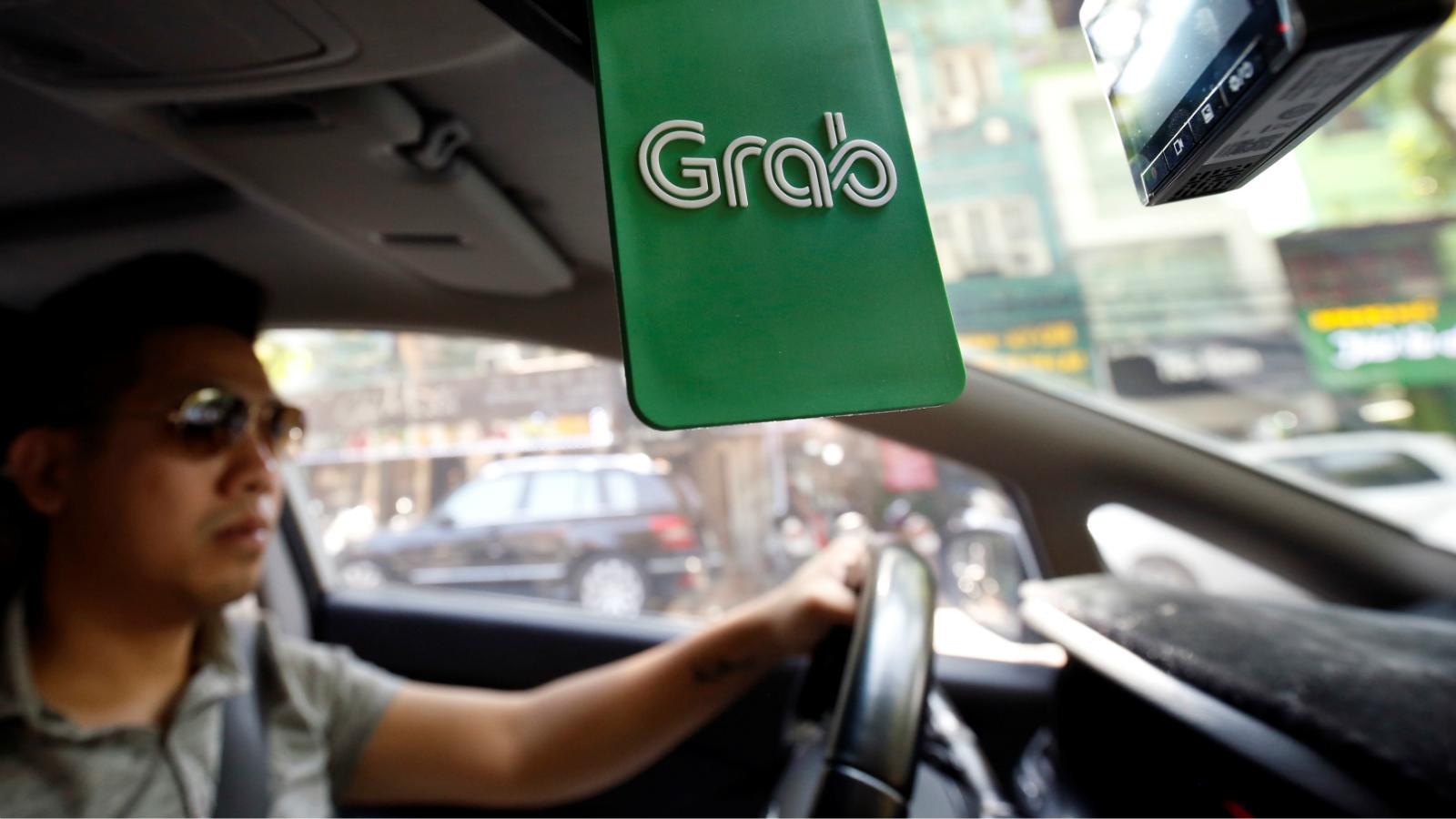
    Grab announced on Tuesday it will acquire buy now, pay later provider Atome Financial in a transaction that could value the Singapore-based lender at up to US$4.5 billion.

    The ride-hailing and delivery platform is paying $1.49 billion for an initial 60 per cent stake. The transaction folds Atome’s consumer cash loans, instalment cards and digital lending books directly into Grab’s financial services arm.

    Valuation and Performance Terms

    Grab agreed to purchase the remaining 40 per cent stake roughly two years after completion. That second payout rests on Atome hitting revenue and EBITDA targets. The eventual valuation will land between $2 billion and $4.5 billion.

    Alex Hungate, Grab president and chief operating officer, said buying Atome bypasses years of building credit models. It also avoids the initial credit losses required to refine underwriting. Grab plans to fund Atome’s consumer loan book through its licensed digital banks in Singapore, Malaysia and Indonesia to lower capital costs.

    Lending Power Inside Southeast Asian Wallets

    Consumer credit in Southeast Asia is consolidating around apps that control daily transactions. Independent instalment lenders face high customer acquisition costs and rising borrowing expenses. Stand-alone balance sheets struggle to compete with platforms that span ride-hailing, food delivery and retail spending.

    Buying Atome prevents rival e-commerce ecosystems and standalone fintechs from locking up merchant checkouts in key growth markets. The risk shifts to default rates on unsecured consumer debt as economic conditions tighten in markets such as Indonesia and the Philippines.

    “Consumer credit in Southeast Asia is increasingly sitting inside large commerce platforms or major wallet ecosystems. As underwriting and collection increasingly become commoditised, distribution becomes more important.”

    From Credit Saison to Regional Scale

    In 2019, Grab entered instalment lending through a joint venture with Japanese credit card company Credit Saison. The platform rolled out pay-later options across Singapore and Malaysia. Regional expansion into the Philippines, Indonesia and Thailand lagged behind dedicated consumer finance specialists.

    The buyout is scheduled to close by the third quarter of 2027. Following integration, Grab expects its enlarged financial services unit to deliver $500 million in adjusted EBITDA by 2028 on a combined gross loan portfolio exceeding $6 billion.

  • Rewards Platform ShopBack Acquires BNPL Startup Hoolah

    Rewards Platform ShopBack Acquires BNPL Startup Hoolah

    The acquisition is part of the Singapore-based platform’s efforts to drive $3.5 billion in sales this year.

    Temasek-backed cashback platform ShopBack has acquired buy now pay later (BNPL) brand Hoolah for an undisclosed sum in cash and stock, according to an announcement on Tuesday.

    The acquisition extends ShopBack’s product offering to include transactions with payment options like BNPL and more. Meanwhile, Hoolah will be able to accelerate its growth through ShopBack, which allows the BNPL player to extend its offerings to over 8,000 merchants and 30 million shoppers across several APAC markets, the announcement said.

    ShopBack, which was valued at $539.4 million in its latest funding round, said the acquisition will transform the shopping experience for shoppers, and provide a one-stop solution for demand generation and user engagement for merchants across the APAC region.

    ShopBack is also expanding its team across the APAC region. According to its LinkedIn profile, it is looking for ahead of marketing in Singapore, who will be responsible for demand growth and user development funnels on both existing and new business initiatives within ShopBack Singapore.

    Hoolah’s however, has experienced a rocky past few months, with layoffs reported at the company, as well as the departure of co-founder and CEO Stuart Thornton, who has since been replaced by fellow co-founder Henry Chan.

    The BNPL space is expanding rapidly and companies are vying for market share, with a number of partnerships established in recent months to expand their reach. Recent deals include Standard Chartered’s partnership with BNPL platform Atome to deliver a wide range of financial services to consumers and merchants across key markets in Asia, as well as its partnership with Kredivo – one of Indonesia’s largest and fastest-growing digital credit platforms.

    U.S. fintech giant also acquired Japan BNPL payments platform Paidy in September for ¥300 billion (about $2.7 billion), while Square, run by Twitter CEO Jack Dorsey bought Australian Afterpay for $29 billion in August.

  • StanChart Inks Buy-Now-Pay-Later Deal in Indonesia

    StanChart Inks Buy-Now-Pay-Later Deal in Indonesia

    The bank’s branch in Indonesia has announced a partnership to offer Buy Now, Pay Later (BNPL) loans to the mass market segment via digital channels.

    Standard Chartered will offer small-ticket loans to customers in Indonesia via its partnership with Kredivo – one of the country’s largest and fastest-growing digital credit platforms, the bank announced on Thursday.

    While Standard Chartered already enjoys a strong position in the retail affluent segment, we are strengthening and expanding our distribution channels to serve mass-market customers more efficiently,» Jeffrey Tan, Standard Chartered head of Consumer, Private and Business Banking (CPBB), Indonesia, said,

    Customers can enjoy a fully digital onboarding and credit application process, with no face-to-face verification requirement, via Kredivo’s coverage of retailers and AI-driven credit scoring capabilities.

    The bank hopes to ride on the accelerating adoption of digital financial services in Southeast Asia’s most populous nation, as well as improving market sentiment and retail sales as vaccination and pandemic-related metrics continue to improve, leading to higher demand for loans.

    This announcement follows Standard Chartered’s recent partnership with BNPL platform Atome to deliver a wide range of financial services to consumers and merchants across key markets in Asia.

    Kredivo has also been expanding of late – in August, the company launched in Vietnam through a joint venture with Phoenix Holding, a family investment company based in the country. FinAccel, Kredivo’s parent company also announced plans to go public via a $2.5 billion SPAC merger. The firm had raised US$90 million in 2019 during a Series C funding round to double down on its Southeast Asian expansion plans.

  • StanChart Enters BNPL Space With Atome Investment

    StanChart Enters BNPL Space With Atome Investment

    The bank has entered a 10-year multi-product strategic partnership with Buy Now Pay Later (BNPL) brand Atome to deliver a wide range of financial services to consumers and merchants across key markets in Asia.

    The partnership, which aims to deliver mobile-first financial services for consumers across Asia, includes a planned $500 million financing to support Atome Financial to expand its regional ecosystem of merchants and customers.

    The partnership will initially include BNPL services, targeting to roll out in Indonesia, Malaysia, Singapore and Vietnam in the next few months, and later expand to include digital lending products, according to an announcement on Wednesday.

  • Payments Platform 2C2P Partners Atome to Grow BNPL Reach

    Payments Platform 2C2P Partners Atome to Grow BNPL Reach

    The regional partnership will support thousands of merchants across Southeast Asia, as competition in the Buy Now Pay Later (BNPL) space heats up.

    Global payments platform 2C2P is partnering Buy Now Pay Later (BNPL) brand Atome, which will allow its network of online and offline merchants across the region to offer BNPL as an alternative payment method to their customers.

    Merchants using 2C2P’s platform in Singapore and Malaysia will be able to offer their customers the option to pay using Atome, either online or in-store, which allows them to make payments over three months with zero interest, service fees or annual fees.

    Headquartered in Singapore, Atome has a presence across Southeast Asia, India and Greater China. The platform was launched in 2019, and currently partners over 5,000 online and offline retailers in nine markets.

    Its partnership with 2C2P is expected to roll out in other markets such as Thailand, Philippines and Indonesia in the near future, the announcement said.

    BNPL payment methods have seen surge in popularity, particularly among millennials and Gen Z consumers. Merchants are also tapping on its growth to increase customer conversion, average order size and repeat sales.

    The market is estimated to grow to $33.6 billion by 2027, with Asia being the fastest-growing regions due to increasing rates of mobile Internet penetration, according to a 2020 study by Coherent.

    Earlier this month, U.S. fintech giant PayPal announced a mostly cash deal to acquire Japan BNPL platform Paidy for ¥300 billion (about $2.7 billion). Square, run by Twitter CEO Jack Dorsey bought Australian BNPL platform Afterpay for $29 billion last month.

  • Razer Fintech Partners Singapore-Based Rely

    Razer Fintech Partners Singapore-Based Rely

    The two sides will collaborate to enable a Buy-Now-Pay-Later solution for merchants in Southeast Asia.

    Razer Fintech, the financial technology arm of Singapore gaming and technology brand Razer, is expanding its fintech offerings and its payments ecosystem for customers with access to a buy-now-pay-later (BNPL) solution provided by Rely, it announced in a statement.

    The service will be offered in Southeast Asia to merchants registered under Razer Merchant Services (RMS), its B2B (business-to-business) solution. RMS includes online payments and a card processing gateway, and the region’s largest offline payment network of over 1 million physical acceptance points.

    This collaboration is also aligned to our longstanding commitment to continue using our know-how in fintech to build new and innovative ways to meet the needs of a burgeoning and digital-savvy youth and millennial segment in Southeast Asia,» Lee Li Meng, CEO, Razer Fintech, said in the announcement.

    The announcement noted the growing popularity of BNPL, citing a Finder survey from October 2020 that said almost 1.1 million Singaporeans have used a BNPL service.

    Founded in 2017, Singapore-based Rely works with brands and enterprise clients such as Qoo10 Singapore, to offer deferred and installment payments for online and offline purchases.

    Rely’s strategic partnership with Razer follows the company’s recent announcement to expand its services in Singapore, Malaysia and South Korea after securing capital from Goldbell Financial Services to process up to S$100 million in buy-now-pay-later transactions.

  • Credit cards declining, Australians switch to new methods

    Credit cards declining, Australians switch to new methods

    A new report from data and analytics firm ilion suggests there is a mass-shift underway in the way Australians finance their purchases.

    According to its inaugural credit card report released on Sunday, Australian consumers under the age of 30 hold over half of all buy now, pay later accounts but just 10 per cent of total credit cards.

    One reason for this may be that banks are traditionally reluctant to give credit cards to younger consumers, who they view as a “more risky demographic group”. This coincided with new, alternate payment methods.

    “With evolving forms of repayments offering consumers more choice in an increasingly fragmented and competitive credit system, Australia is at the tipping point of its credit card cycle,” illion chief executive Simon Bligh said.

    As the payments landscape changes, retailers need to consider whether they should offer alternate payment options, if they haven’t already.

    “Retailers will need to respond to shifts in how consumers want to purchase and pay off their goods and services over coming years, particularly as younger Australians enter adulthood and constitute a growing and more influential proportion of the spending population,” Bligh said.

    While a majority of under 30s still hold a credit card (57 per cent), the long term trend is exponentially changing in the favour of BNPL options.

    Source: illion

    As the ilion report highlights, however, those under the age of 30 are twice as likely as their parents to fall more than two months behind in credit card payments.

    “[This suggests] they have a greater difficulty balancing spending and debt, regardless of their credit limit,” Bligh said.

    “Likewise, the likelihood of failing to pay off credit card debt on time increases if consumers have more than one card, and increases again if those cards are with multiple banks.”

    According to a recent investigation into the BNPL industry by the Australian Securities and Investments Commission, one in six users of the services had become overdrawn, delayed a bill payment or borrowed additional money to overcome payment obligations.

    This stems from the fact that both BNPL and credit cards allow customers to buy something that may be out of their price range, and easily put themselves in a position of becoming unable to meet their repayments.

    “The exponential growth in this industry, along with the risks we have identified, means this will be remain an ongoing focus for ASIC,” ASIC commissioner Danielle Press said.