Tag: Board of director

  • J.Crew’s CEO Jim Brett is leaving the firm

    J.Crew’s CEO Jim Brett is leaving the firm

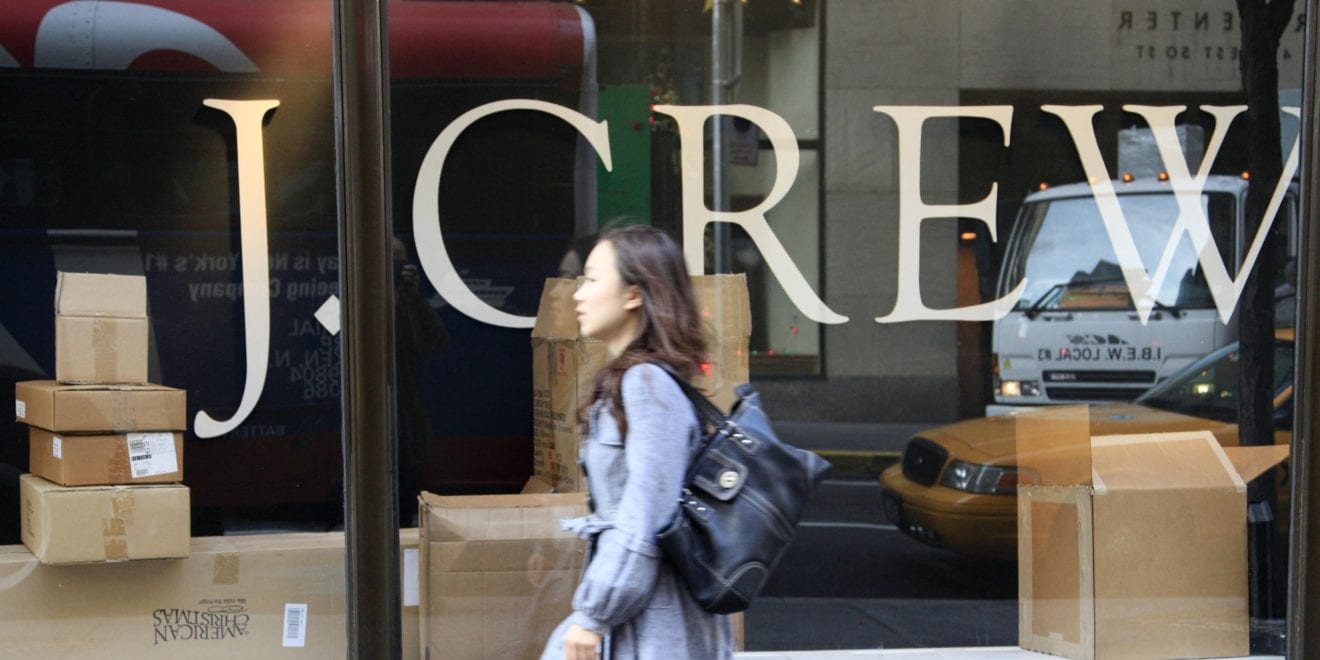
    J.Crew chief executive Jim Brett is exiting the company, the retailer said, and a committee of four executives will step in to manage operations until a replacement is found. The statement said the decision had been mutual between Brett and the board of directors.

    “Returning J.Crew to its iconic status required reinventing the brand to reflect the America of today with a more expansive, more inclusive fashion concept,” said Brett. “However, despite the recent brand relaunch already showing positive results, the board and I were unable to bridge our beliefs on how to continue to evolve all aspects of the company.”

    Brett will be replaced by four executives: chief operating officer Michael Nicholson, chief experience officer Adam Brotman, chief administrative officer Lynda Markoe and Libby Wadle, president of the Madewell brand.

    Brett joined the specialty retailer in July 2017, at a time when the company was struggling with looming debt payments and declining consumer sentiment toward the brand. Over the next year and a half, he overhauled the executive team, bringing in former colleagues from West Elm — where he was CEO — and URBN — where he worked at both Anthropologie and Urban Outfitters — to revamp the brand identity and restructure the business. In 2017, the company was able to bide a bit more time to implement a turnaround, negotiating with creditors to push back the maturity of $566.5 million in debt from 2019 to 2021.

    He lowered prices, launched new brands and tried to reposition J.Crew as an inclusivity-driven, one-for-all label not so tied down by its preppy heritage, especially as it had most recently been interpreted by agenda-setting designer Jenna Lyons.

    In a sharply worded email sent to senior staffers in July 2018, he dismissed Lyons’ work, which turned polarising near the end of her tenure, while laying out his own priorities.

    “PRETTY always sells. A glen plaid jacket with a graphic tee and camouflage pants is anything BUT pretty,” he said. “The new feminist fashion movement is enjoying the POWER of femininity (see latest Dior shows) vs. the last feminist movement which was about women finding power in dressing like men. Femininity is critical — pretty is critical — femininity is powerful. These things are in starch [sic] contrast to Jenna’s masculine, sexual and overtly aggressive J. Crew.”

    While Lyons’ vision had stopped resonating with consumers, Brett’s fix was viewed by some analysts as a watering down of the product. There were too many changes at once — from the introduction of a bare-bones loyalty programme to changes in fabric suppliers to the implementation of a marketplace — all with varying impact. He also continued to discount heavily, something many of J.Crew’s competitors are trying to move away from. Talk of a decline in morale also permeated Brett’s run, with multiple corporate-level employees leaving, including one of Brett’s own hires, chief marketing officer Vanessa Holden, who recently announced her departure.

    In the second quarter of 2018, the group — which also includes Madewell — reported that same-store sales rose 1 percent from a year earlier after 15 straight quarters of decline. Star performer Madewell, which drives about a fifth of sales, saw comps jump 28 percent. Total sales at the company were $588 million, up 3 percent from the same quarter in 2017. The company still experienced a net loss of $6 million, compared to a $19 million loss during the same period last year.

    Whether the company has managed to keep up the momentum will be revealed imminently, as third-quarter earnings are expected to be released this month. The period was marked by J.Crew’s official September relaunch, including the rollout of its #meetmycrew marketing campaign. Just this past week, J. Crew launched another brand, Nevereven, which is also being sold at multi-brand retailers such as Fred Segal in Los Angeles.

    But talk of the company giving up more of its corporate office space to Facebook and Instagram — which occupies the same building — and news of a “for rent” sign in the window its popular men’s concept shop, the Liquor Store, indicates that the J.Crew is still in cost-cutting mode.

  • Lotte founder’s 50-year reign comes to an end

    Shin Kyuk-ho, founder and general chairman of the Korean retailer Lotte, has been removed from his company by shareholders, solidifying the succession of his second son, Shin Dong-bin, and coming closer to ending a family feud that started in 2015.

    Lotte is the country’s fifth-largest family controlled conglomerate, with 90 affiliates here and abroad.

    The shareholders voted in favor of denying the 95 year-old patriarch the position of board director of Lotte Shopping on Friday, which he has held since the affiliate was founded in 1970.

    The elder Shin’s term was terminated on March 20.

    Kang Hee-tae, CEO of Lotte Department Store, and Yoon Jong-min, Lotte Group’s human resource director, were newly appointed to the directors’ post at Lotte Shopping. Friday’s decision has completed the full control of the younger son, Dong-bin, who took his current role in 2011.

    “Lotte Group was able to grow with Shin Kyuk-ho’s leadership until now, but it is time for a new era under the new leadership of Shin Dong-bin,” said Lotte Group spokesman.

    Despite taking the role of chairman, Dong-bin was not allowed to make independent business decisions without the final call coming from his father, who held the board director position at most of Lotte’s affiliates.

    The father has been losing his board director position starting with Lotte International in 2015, followed by Lotte Confectionery and Hotel Lotte in March 2016.

    Lotte Confectionery is the founding company and the foundation of Lotte Group, while Hotel Lotte is the de facto holding company.

    Shin Kyuk-ho has been losing his title since he sided with his older son, Shin Dong-joo, who was trying to take full ownership of the group, and fired Dong-bin and six other executives at Lotte’s key operation in Japan.

    The founder still has several director positions, but his tenure is coming to an end and is unlikely to be extended. His role at Lotte Engineering & Construction is poised to be terminated on Sunday, followed by Lotte Aluminum and the Lotte Giants in coming month.

    Unlike his father, Dong-bin on Friday was appointed as the new director of Lotte Chilsung Beverage during the shareholders’ meeting, which industry insiders say is a necessary step to realigning the organization under his new leadership.

    Hwang Kak-gyu, who has worked with Shin Dong-bin for 27 years, was newly appointed as the CEO of Lotte Confectionery, a position that he will share with Dong-bin and Kim Yong-soo. The company said the decision was made to strengthen the company’s overseas business.

    Meanwhile, Dong-bin has been increasing his efforts to appease China, which has been bombarding Lotte’s business there as a retaliation against the Korean retail conglomerate’s decision to offer its golf course for the deployment of the U.S. antimissile defense system known as Thaad.

    In an interview he had with the Wall Street Journal on Thursday, Dong-bin said, “We definitely want to continue our business in China.”

    He added that he “loves” China and believe there has been a “misunderstanding.

    “If the government asks a private corporation like ours to give up land, then I don’t think we have the luxury of rejecting the government,” Dong-bin was quoted as saying in the Wall Street Journal.

    Lotte Mart, which runs 99 local branches in China, shut down 90 of them in the past couple weeks, partly forced by the Chinese government, which cited safety concerns, and also because of fierce protests in front of its stores.

    Lotte Shopping on Friday announced it will issue new shares worth 230 billion won and borrow 130 billion won in order to maintain its Chinese Lotte Mart branches.

    “Due to the suspension of Lotte Mart operations in China, there is no revenue generated, which we plan to compensate through capital increase,” Lotte Mart explained. “We need to pay local staff and purchase products.”

    Shares of Lotte Shopping jumped 2.61 percent on Friday, closing at 216,500 won.