Tag: body

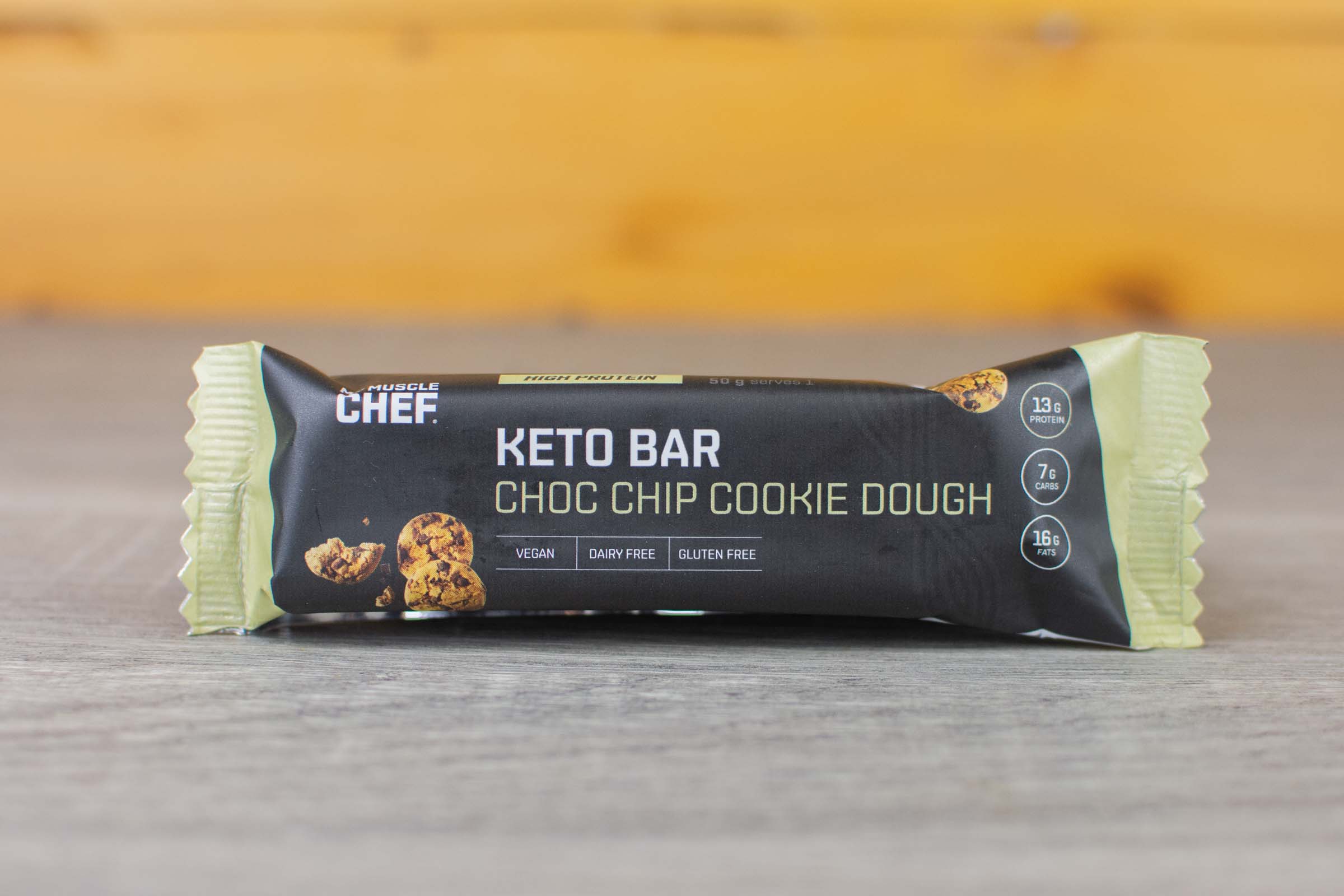
  • My Muscle Chef launches protein cookies

    My Muscle Chef launches protein cookies

    Functional food and beverage company My Muscle Chef has rolled out a new range of protein cookies to help people struggling to hit their protein cookies.

    Macro – short for macronutrients – makes up a food composition in our bodies: fats, carbohydrates, and protein. People who are conscious of their nutrient intake count macros to reach a specific body composition goal.

    Available in three different flavors – Salted Caramel and Macadamia, Choc Chip, and Triple Choc – the new protein cookies are a great choice as an on-the-go snack to top up protein intake while satisfying sweet cravings, said the company.

    “Our new Protein Cookies are a great addition to MYMC’s range of functional, healthy foods and are a great way for our customers to support muscle strength and fuel their recovery,” said Tushar Menon, co-founder, My Muscle Chef.

    Each cookie has 25g of whey protein, nuts, and prebiotic fiber. It also has no added sugars or preservatives and does not use artificial flavors or colors.

    Alex Adcock, head of sales at My Muscle Chef, says most protein snacks on the market are bars and the company has identified an opportunity to offer a more indulgent way for customers to hit their protein goals.

    “With 98 percent of recovery snacks in the market currently being bars, we’ve identified an opportunity for our cookies to meet MYMC’s customers needs perfectly complementing our existing high protein and on-the-go range our customers know and love,“ said Adcock.

    In addition to the Protein Cookies, the company has also launched Custard Protein Bars, and Custard Casein Protein Powder in its range of protein supplements.

    My Muscle Chef Protein Cookies are available online and in select retail stores for RRP $4.50 per cookie.

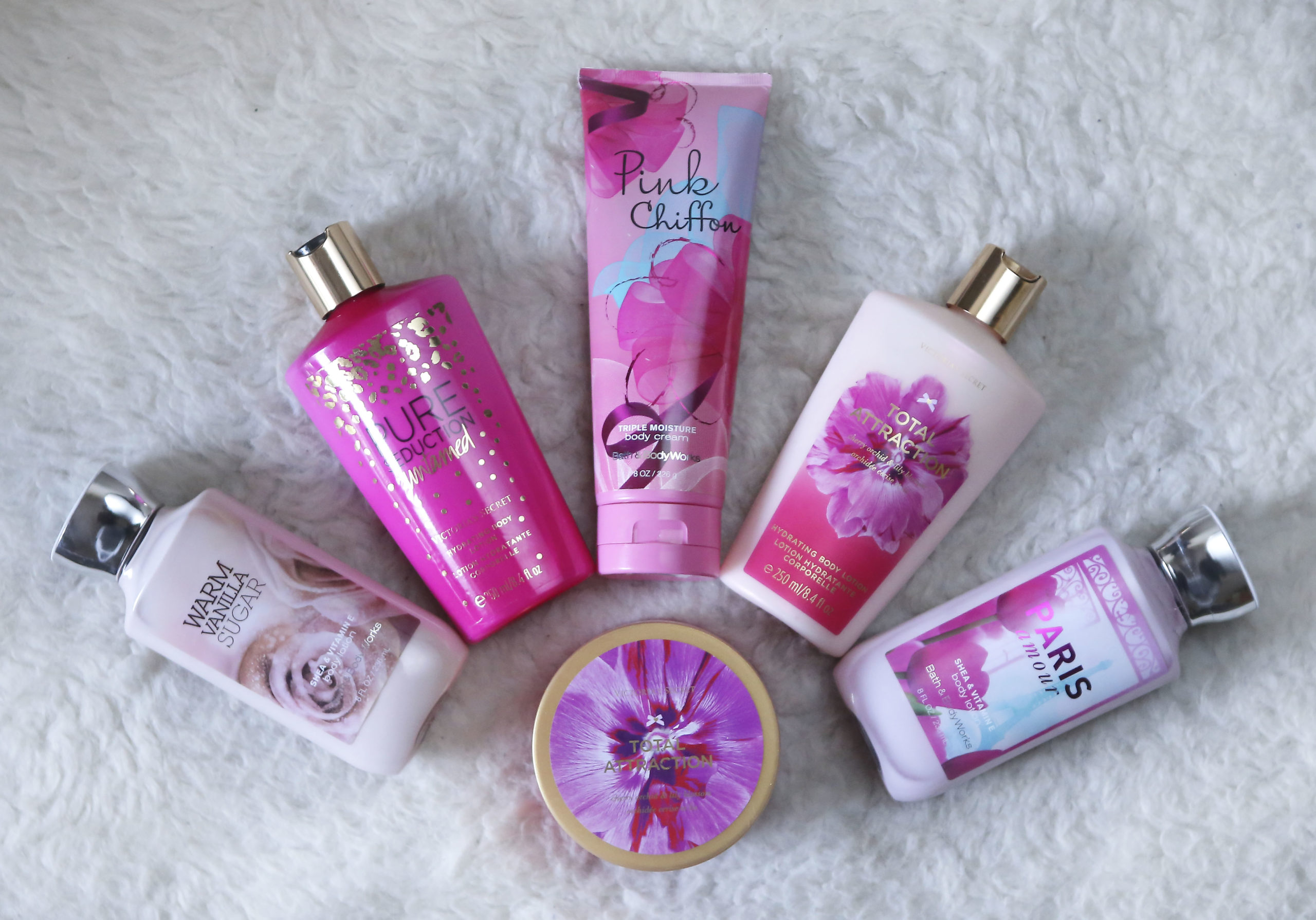
  • Victoria’s Secret, Bath & Body Works to be split into separate companies

    Victoria’s Secret, Bath & Body Works to be split into separate companies

    Lingerie retailer Victoria’s Secret and Bath & Body Works are to be demerged into two separately listed companies after parent L Brands opted not to sell the struggling apparel business.

    “Both Bath & Body Works and Victoria’s Secret are leaders in their respective markets and, as separate businesses, each will be ideally positioned to benefit from a sharpened focus on pursuing growth strategies best suited to each company’s customer base and strategic objectives,” said L Brands chair Sarah Nash.

    The board has been mulling the sale or spin-off of Victoria’s Secret for more than a year, a process that went into hiatus due to the Covid-19 pandemic. Talks were held with “multiple” potential buyers, the company said, is a process during which the company was advised by Goldman Sachs and JP Morgan.

    Neil Saunders, MD at GlobalData, described the decision as “telling”, suggesting that L Brands was not able to secure a bid that it considered compelling.

    “The divorce gives Victoria’s Secret no place to hide. Its numbers will no longer be flattered by the contribution of Bath & Body Works and its management team will be fully accountable to investors. Such accountability is no bad thing and will likely sharpen efforts to enact a genuine turnaround at the company.”

    In preliminary first-quarter results revealed along with the restructuring announcement, L Brands said it expects to record operating income of about US$570 million – $380 million from Bath & Body Works and $245 million from Victoria’s Secret.

    Nash said the company had made “significant progress in the turnaround of Victoria’s Secret business” during the past 10 months, implementing merchandise and marketing initiatives to drive top-line growth, and cutting costs, “which together have dramatically increased profitability”.

    Saunders was less bullish about the achievement saying there was “little evidence” on the surface to support claims the brand is on a pathway to recovery.

    “Last year, sales fell by 29.7 percent. Admittedly, this came against the backdrop of the pandemic, but the full-year performance was somewhat worse than that of the overall apparel market and considerably worse than rivals like Aerie. This is not to say that no progress has been made at Victoria’s Secret; however, the impact on the business has been negligible.

    “L Brands could be relying on the fact that as it enters its new fiscal year, growth rates will look very strong because they come up against soft comparatives from 2020,” he said. “However, this is a mathematical sleight of hand rather than a true indication of progress. Indeed, compared to 2019, sales will probably remain down.”

    He said creating two separate public companies makes sense given the current bull market and the move would likely create value for shareholders over time.

    “This is especially so for Bath & Body Works which, despite being the more successful of the two brands, is often overlooked and overshadowed by its less impressive sibling.”

    Meanwhile, L Brands said CEO Andrew Meslow would continue to hold his position and take the helm of Bath & Body Works after the spin-off. Victoria’s Secret CEO Martin Waters will continue to lead the new standalone business.

    Meslow said he expected L Brands to deliver a record first-quarter earnings result, driven by an exceptional performance at Bath & Body Works and a “significant improvement” at Victoria’s Secret. Final results will be revealed on May 19.

    L Brands operates 2681 company-operated specialty stores in the US, Canada, and greater China, has a further 700 franchised locations worldwide, and sells online.

  • Hisense launches ‘Social TV’ with an interactive menus

    Hisense launches ‘Social TV’ with an interactive menus

    Television and appliance manufacturer Hisense has launched its brand-new interactive system for large-screen social scenarios in the Chinese market.

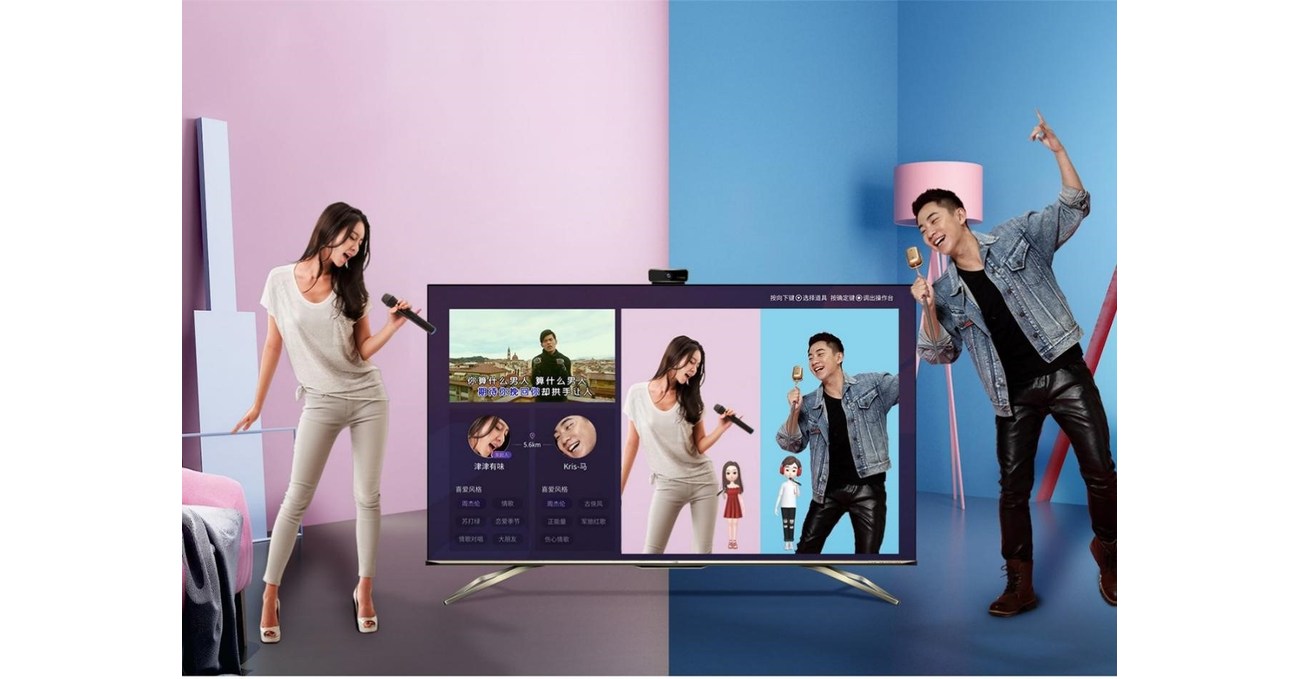
    Hisense’s Social TV with Hi Table will provide users with interactive scenarios such as six-party video chat, cinema sharing, 3D Avatar Karaoke, AI fitness, AI visual recognition, and multi-screen communication, among others.

    One application of the device is 3D Avatar karaoke, which employs 5G technology to allow users to sing karaoke together with online friends in virtual scenarios such as Tokyo or Paris.

    The six-party video chat and cinema sharing functions allow real-time chat with family and friends while watching TV shows and sports matches together.

    With its AI fitness function, the social TV allows users to exercise in their living room under the guidance of AI body posture.

    Hisense’s new 55-inch flagship social TV has a recommended retail price of RMB6499 (US$920).

  • Body Shop Malaysia and Vietnam operator to list

    Body Shop Malaysia and Vietnam operator to list

    The retailer and distributor of The Body Shop products in Malaysia since 1984 has yet to fix the issue price and the opening and closing dates of the IPO. But local news reports have suggested the IPO may raise up to MYR200 million (US$48.6 million).

    InNature has indicated plans to use any IPO proceeds for capital expenditure, working capital and new business development.

    The firm has 89 locations in Malaysia and 26 in Vietnam, including online platforms. It plans to enter Cambodia later this year.

  • The Body Shop launches plastic recycling Endeavor

    The Body Shop launches plastic recycling Endeavor

    Beauty and body care retailer The Body Shop is stepping up its sustainability efforts with the launch of its new recycling scheme that helps consumers recycle their empty packaging. The new initiative, which will launch in Australia on June 10, allows customers to return their empty bottles, jars, tubs, tubes, and pots in The Body Shop stores for recycling.

    The scheme, established in partnership with recycling company TerraCycle, was introduced in the UK, Canada, and France on May 10. It will be introduced in Germany soon.

    In a bid to tackle plastic pollution, the global personal care brand has also announced it plans to purchase 250 tonnes of community-trade recycled plastic from Bengaluru, India, and use them in nearly three million 250ml haircare bottles by the end of 2019.

    According to The Body Shop, it has already started using community-trade recycled plastic in 250ml haircare bottles in partnership with Plastics for Change and soon, the retailer said it will include its bestselling Ginger Shampoo. The bottles will contain 100 percent recycled plastic, excluding the bottle caps.

    Fifteen percent of that will be community-trade recycled plastic; the remainder will be recycled plastic from European sources.

    “The Body Shop will increase the amount of community trade Recycled plastic over time,” the retailer said. “Working with a start-up company and small waste picker communities means starting small and scaling up in a responsible and sustainable manner.”

    This move marks the start of a wider ambition for The Body Shop, which is to introduce community-trade recycled plastic across all plastic used by The Body Shop within three years.

    The company said over the course of three years the program will scale up to purchasing over 900 tonnes of community-trade recycled plastic and help empower up to 2500 waste pickers in Bengaluru.

    The retailer’s new campaign uses experiential marketing to tell people about the plight of waste-pickers in India and how it aims to help them by paying a fairer price for their work.

    “They will receive a fair price for their work, a predictable income and access to better working conditions,” The Body Shop announced. “They will also get help in accessing services such as education, financial loans and healthcare services, and the respect and recognition they deserve.”

    As part of their campaign, The Body Shop has commissioned a portrait of a female waste-picker made from 1500 recycled plastic items hand-collected by waste-pickers in Bengaluru. The installation was on display in London’s Borough Market from May 10 to 11.

    “As a company, we’ve always had the conviction to stand up for our principles when it comes to helping empower people, especially women while protecting our planet,” said Lee Mann, Global Community Trade manager for The Body Shop.

    “Our new partnership with Plastics for Change and our other partners will not only help support waste pickers but also champion plastic as a valuable, renewable resource when used responsibly.”

  • Hong Kong fitness centres named and shamed

    Hong Kong fitness centres named and shamed

    Expressing deep concern for “unscrupulous sales practices” of some Hong Kong fitness centres, the Consumer Council has named and shamed four operators it says targets young consumers with high-pressure sales tactics.

    “After careful consideration, the council today publicly names four fitness centres and strongly reprimands them for their undesirable sales practices targeting inexperienced young consumers,” the council said in a statement. “The complaint cases levelled against the four centres involved some $40,000 on average and in the most extreme case it stunningly reached the sum of $1.75 million.”

    The council said the centres’ behaviour is “detrimental to consumer rights and interests”.

    The four centres shamed are:

    • SML Studio/TIA Studio, CMB Wing Lung Bank Centre, Nathan Road, Mong Kok.
    • Fitness Express, Mongkok Metro, Nathan Road, Mong Kok and Grand Place, Nathan Road, Mong Kok.
    • Legend Fight & Fitness, Russell Street, Causeway Bay.
    • A Plus Fitness, Argyle Street, Mong Kok.

    More than 90 per cent of the complaints the council has received relating to the Hong Kong fitness centres, related to customers aged 25 or younger, and some of the victims were even mentally incapacitated.

    “High-pressure tactics were deployed throughout the course of the sales process. Young consumers, under threat of personal safety, succumbed to the unrelenting pressure to sign the contracts so as to swiftly escape from the uncomfortable situation. Some traders also resorted to unconventional payment methods, including taking the complainants to major chain stores to buy gift vouchers to pay for fitness centre memberships, or requiring bank transfers or electronic payments and in some cases the funds were transferred to the personal accounts of the salesperson.

    “Consumers were generally given only a copy of the signed contract but not an official payment receipt.  Recent complaints have indicated that they were not even given a copy of the service agreement.”

    The council said most complainants were allegedly forced to have a photo or video taken, or were made to declare and sign a statement that they had signed the contract of their own free will, and that they would not make any claims against the company in the future.

    “Since the payments are made indirectly to the fitness centres, and there are no official receipts, it is incredibly difficult for consumers to seek legal redress in the face of such blatant disregard of consumer rights.”

    Targeting the young

    According to the council there has been a growing emergence of small independent Hong Kong fitness centres in areas frequented by young people, such as Mongkok and Causeway Bay, in recent years.

    “Unscrupulous traders have seized the opportunity to set up fitness centres in small premises with limited gym facilities, so it’s hard to believe they have ever had a long-term development plan to provide quality service to consumers.

    “In general, the modus operandi of these centres involves staff first appealing to the sympathy of complainants to help filling out a questionnaire, and then luring them to a nearby fitness centre. Once inside the premises, another sales team take over and use warm and friendly persuasion to lower the targets’ alertness as much as possible. On the pretext of validating the questionnaire, they then coax the targets to hand over their credit cards and identity cards with the actual intention of drawing up a contract and transferring funds.”

    It was further alleged that any attempts to leave the premises were often met with oral and even physical threats of the staff.

    In the past year, the council received 160 complaints against the four fitness centres, involving $6.78 million.  In the case of the highest amount from A Plus Fitness, within just four months, the complainant was persuaded to buy a 15-year membership and 1050 private coaching sessions, totalling more than $1.75 million.  Hundreds of thousands of this amount was borrowed from a moneylender. After explaining that the fitness centre could not open a credit-card account, its staff asked the complainant to make electronic transfers to pay for the membership and coaching sessions through 20 transfers of some $1 million in total.

    Complaints against Legend Fight & Fitness revealed an even more unusual means of payment method. The complainants were taken to nearby electronic goods and personal care chain stores to buy gift vouchers worth tens of thousands of dollars as payment for the fitness expenses.  As the complainants paid for the fitness centre membership with gift vouchers purchased from a third party and the fitness centre kept the receipts for the gift vouchers without giving a copy to the complainants, this will make it difficult for complainants to seek legal remedy in the future.

    Despite repeated enquiries by the council about how the fitness centre converted the gift vouchers to cash and deposited the cash into the company’s bank account, the centre staff refused to respond.

    Of the 237 complaint cases levelled against the four Hong Kong fitness centres between January last year and last February, the council referred 16 complaints to the Customs and Excise Department (CED) for follow-up whereas 51 complainants approached the CED direct to report their cases. Two other cases are currently receiving assistance from the Consumer Legal Action Fund (CLAF).

    Complaints escalate

    The council says that while the number of complaints about sales malpractices have been declining in recent years, after removing complaints relating to fitness centres closing down, those relating to the fitness sector have shown no signs of declining, running at 500 to 700 cases a year.  Complaints about sales malpractices have continued to rise unabated, jumping 88 per cent last year to 415 cases.

    The council advised consumers who felt coerced into signing a contract for an unreasonable amount to discuss the problem with their family immediately and if necessary, contact the Consumer Council or report the business to the Customs and Excise Department or the police.