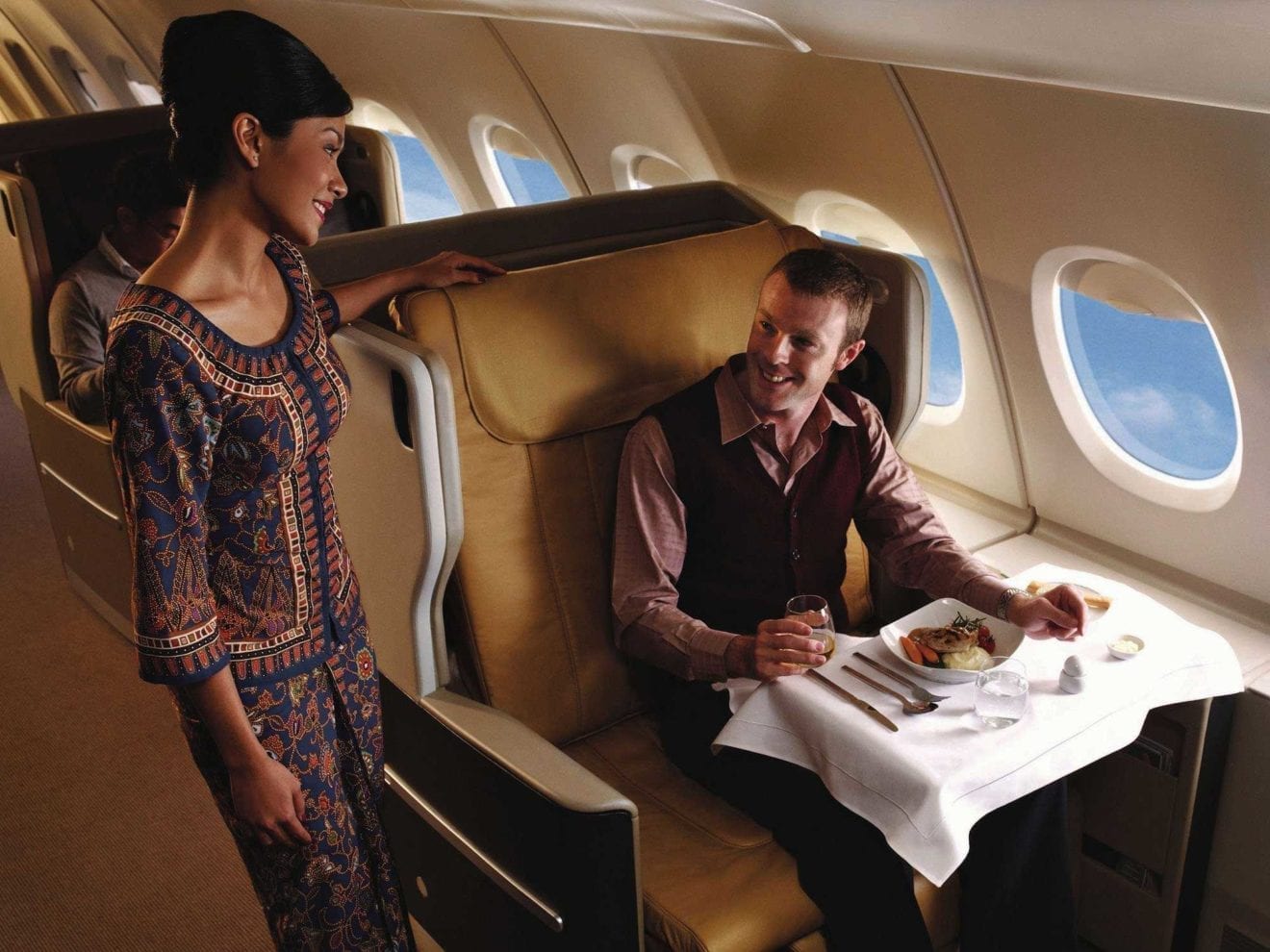
Singapore Airlines will spend more than S$2 billion (US$1.6 billion) to upgrade long-haul cabins across 72 widebody aircraft, introducing sliding doors to business class and larger double-bed suites to first class.
The carrier unveiled the multi-class overhaul on Friday, covering its incoming Boeing 777-9 fleet alongside retrofits for existing Airbus A350-900 jets. Chief Executive Officer Goh Choon Phong presented the plan ahead of the new cabins’ targeted debut in the second half of 2027.
Under the investment programme, centre seats in first class will convert into what the airline calls the largest double bed in commercial aviation. Business class will feature fully flat beds and sliding privacy doors for the first time in the company’s history, alongside refreshed premium economy and economy sections.
Funding and Fleet Allocation
Chief commercial officer Lee Lik Hsin confirmed the carrier is funding the capital expenditure entirely from internal reserves, supported by a cash balance of S$9.1 billion recorded at the end of June. The package includes a S$1.1 billion retrofit plan for the A350 fleet that management first cleared in 2024, absorbing that budget into the wider long-haul fleet overhaul.
Management has declined to place a ceiling on future cabin capital expenditure. Lee stated that unit costs for premium seating hardware outstrip economy outlays by wide margins, keeping the carrier’s capital allocation tilted toward the front of the aircraft where passenger yields remain highest.
The Premium Yield Battle
Rivals across the Asia-Pacific transit corridor and the Middle East continue to direct billions into corporate and leisure travel cabins. Rising jet fuel expenses have squeezed operating margins and lifted base ticket prices, dampening demand among economy class ticket holders while high-end bookings have sustained their revenue contribution.
David Flynn, editor-in-chief of Executive Traveller, observed that the curved first-class architecture positions Singapore Airlines near the top tier globally, while the business-class cabin serves to close a competitive gap with Gulf carriers. Flynn noted that while Qatar Airways continues to lead the category with its Qsuite format, the new hardware gives Singapore Airlines an operational edge over regional peers such as Cathay Pacific and Emirates in functional seat layout.
Certification Hurdles Across Boeing and Airbus
Delivery timelines remain exposed to manufacturing bottlenecks and technical approvals. The bespoke interior fixtures were drafted primarily for the Boeing 777-9, an airframe originally slated for delivery in 2020 that has faced engine trouble, regulatory oversight delays and production halts that pushed launch deliveries out to 2027.
Those delivery slips forced management to widen the retrofit schedule across its existing Airbus A350 fleet. Regulatory certification has emerged as the main operational constraint: while the seating units hold technical clearance for the delayed 777-9, regulators have not yet certified the hardware for the A350 airframe, adding an estimated six-month delay to the installation cycle.
The Long-Haul Flagship Transition
The capital expenditure marks a transitional phase for the airline’s long-haul network as it prepares for the eventual retirement of its double-decker Airbus A380 fleet. Those superjumbos introduced the carrier’s original double-bed concept, but higher fuel burn and ageing airframes make modern twin-engine jets such as the 777-9 and A350-900 the core of its operating economics.
The next concrete operational test arrives in 2027, when German flag carrier Lufthansa is scheduled to take delivery of the first commercial 777-9, providing the regulatory benchmark Singapore Airlines needs before receiving its own airframes and flying the new seats.