
Tag: bolstered

  • China-ASEAN Trade Rockets to $643B in H1 2026 Bolstered by Growing Supply Chain Integration

    China-ASEAN Trade Rockets to $643B in H1 2026 Bolstered by Growing Supply Chain Integration

    In the first half of 2026, trade between China and the Association of Southeast Asian Nations (ASEAN) reached an impressive 4.34 trillion yuan (US$643.2 billion), marking an 18.2% increase from the same period the previous year. With an upswing of 24.5%, intermediate goods trade, including parts, components, and production inputs, accounted for roughly two-thirds of the total trade, amounting to around 2.86 trillion yuan.

    Integration of Chinese and ASEAN Industrial and Value Chains

    The General Administration of Customs of China (GACC) spokesperson, Lyu Daliang, attributed the steady growth in intermediate goods trade to the deepening integration and connectivity between Chinese and ASEAN industrial and value chains.

    In parallel, the latest statistics from Nanning Customs revealed that trade between China’s Guangxi Zhuang Autonomous Region and ASEAN reached 248.21 billion yuan in the first seven months of 2026 – a 2.5% increase year-on-year. This represented a new record for the period. Of note is the fact that trade with Vietnam increased by 3.3% to 183.71 billion yuan.

    Freight trains between Guangxi and Vietnam now operate daily, up from three services a week. These trains carry electronics and machinery southbound and transport tropical fruits like durians and mangosteens northbound.

    Boosting Trade through the Regional Comprehensive Economic Partnership

    The Regional Comprehensive Economic Partnership (RCEP), a 15-member trade agreement involving China, Japan, the Republic of Korea, Australia, New Zealand, and 10 ASEAN countries, has been a crucial framework supporting regional trade.

    All 15 signatories have fully implemented the RCEP since June 2023. The agreement’s rules of origin stipulate that materials originating in one member country and used in production in another member country are considered originating materials of the latter.

    The head of the Institute of International Market Research under China’s Ministry of Commerce, Xu Yingming, stated that the RCEP and the China-ASEAN Free Trade Area have reduced transaction costs and facilitated the closer integration of regional industrial chains.

    An ever-expanding China-ASEAN transport network continues to facilitate the smooth movement of resources while driving a surge in trade. The China-Laos Railway, which began operations in December 2021, recorded 17.17 billion yuan in import-export cargo value in the first half of 2026, a year-on-year increase of 33.8%.

    Questions & Answers

    What was the total value of China-ASEAN trade in the first half of 2026?
    The total value of China-ASEAN trade reached 4.34 trillion yuan (US$643.2 billion) in the first half of 2026.

    How has the Regional Comprehensive Economic Partnership (RCEP) impacted regional trade?
    The RCEP has significantly reduced transaction costs and facilitated a closer integration of regional industrial chains, thereby boosting regional trade.

    What has been the impact of the China-Laos Railway on trade?
    The China-Laos Railway has facilitated the smooth movement of resources and driven a surge in trade, recording 17.17 billion yuan in import-export cargo value in the first half of 2026.
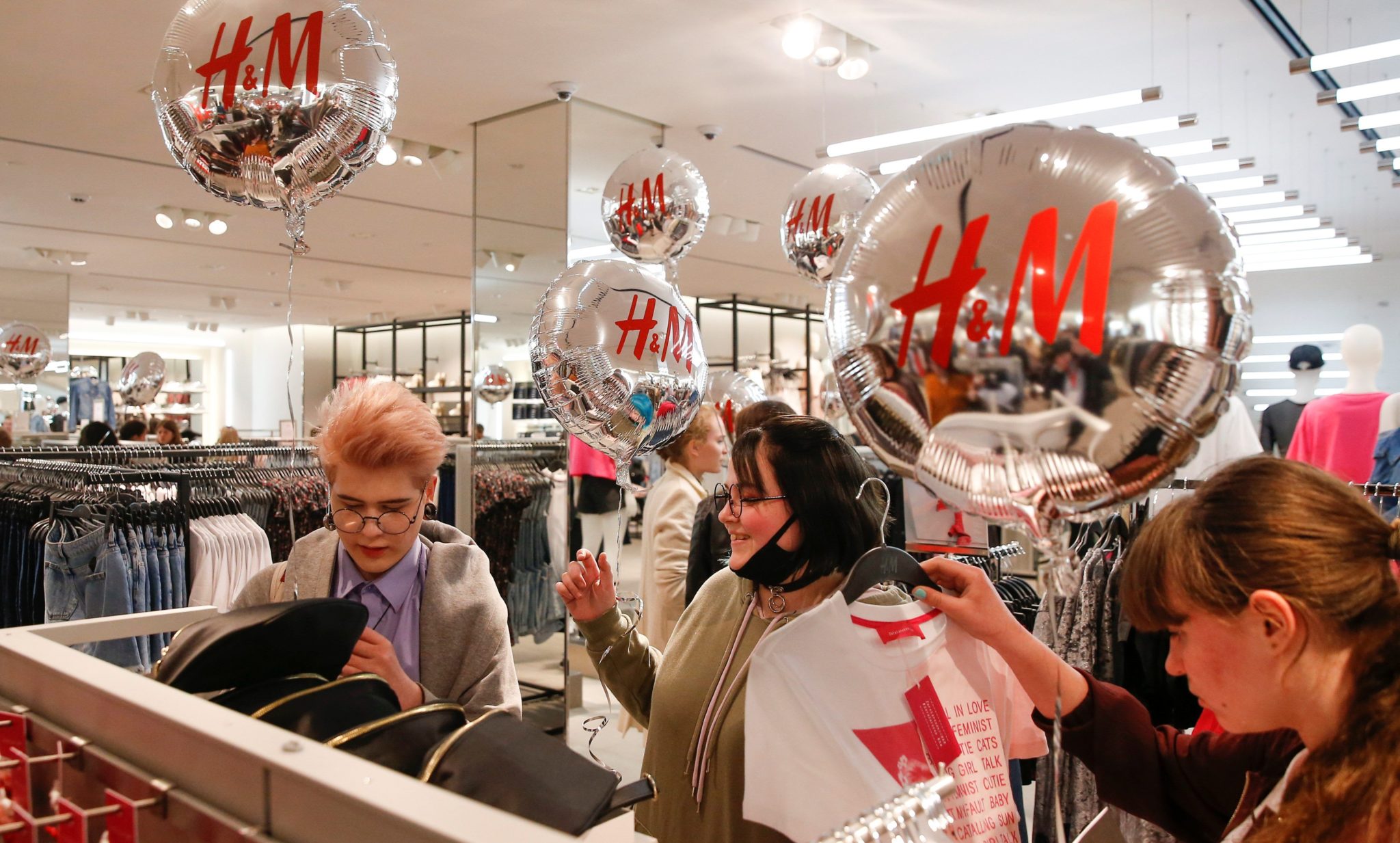
  • H&M Reports 40% Surge In Operating Profit Despite Market Uncertainties And Outlet Reduction

    H&M Reports 40% Surge In Operating Profit Despite Market Uncertainties And Outlet Reduction

    In the third quarter of this year, Swedish fashion conglomerate H&M reported an operating profit increase of 40% to US$523 million, with its operating margin escalating from 5.9% to 8.6%.

    Key Factors driving the Increase

    The company attributed the favorable performance to enhanced customer offerings, better gross margin, and effective cost control. The company’s gross profit reached US$3.19 billion, with the gross margin rising to 52.9%, a substantial increase from the 51.1% recorded in the same period the previous year.

    Despite a 4% decrease in the number of outlets, H&M still managed to boost its sales in local currencies by 2% compared to the same timeframe last year. Nonetheless, the company’s net sales dropped slightly from US$6.24 billion to US$6.03 billion, a decrease largely influenced by a currency translation effect on the SEK.

    Company’s Strategy amidst Uncertainty

    H&M CEO Daniel Erver acknowledged the ongoing market uncertainty and the cautious consumer behavior it has bred. Despite these challenges, Erver emphasized the company’s unwavering focus on improving its customer offerings and maintaining value for money. Erver believes that the company’s strong culture, combined with effective cost control and flexibility, provides a stable foundation for achieving long-term, profitable, and sustainable growth in an increasingly complex environment. The company remains committed to its ambitious sustainability goals.

    Expansion and Digital Transformation

    H&M marked its entry into the Brazilian market in August by launching its first physical and online stores. The company also opened a new flagship store in Paris’ Le Marais, featuring a curated selection and a novel interior design concept. As part of its global strategy, H&M introduced its revamped digital store earlier this year. The brand is focused on upgrading a significant portion of its physical stores by improving layouts, presentations, and incorporating technology to elevate the customer experience.

    Questions & Answers

    What factors contributed to H&M’s increase in operating profit?
    Enhancements in customer offerings, improved gross margin, and effective cost control led to an increase in H&M’s operating profit.

    How is H&M adapting to the ongoing market uncertainty?
    Despite market uncertainties, H&M is focusing on its customer offerings and maintaining value for money. The company aims to leverage its strong culture, effective cost control, and flexibility to achieve long-term, sustainable growth.

    What are H&M’s recent expansion and digital transformation initiatives?
    H&M recently entered the Brazilian market with both physical and online stores. The company has also launched an upgraded digital store and is working on improving the layouts, presentations, and in-store technology at many of its global outlets.