Tag: Bonchon

  • Minor Food Targets 4,500 Outlets by 2029 in Global Franchise Push

    Minor Food Targets 4,500 Outlets by 2029 in Global Franchise Push

    The Minor Food Group Plc plans to expand its network to more than 4,500 food and beverage outlets by 2029, leaning on franchise partnerships to drive cross-border growth. The conglomerate currently runs more than 3,000 stores across 27 countries, meaning the plan requires adding roughly 1,500 locations over the next five years.

    About two-thirds of the group’s current footprint remains concentrated in Thailand. Roughly half of the existing 3,000 outlets run under franchise agreements, and Chief Development Officer Thunyachate Ekvetchavit said the majority of future openings will use the franchise model rather than direct company ownership.

    Targeting High-Density Offshore Hubs

    Management is directing international development toward Indonesia, Vietnam, South Asia and the Middle East. These markets offer favourable consumer demographics and rising discretionary spending on casual dining, giving established multi-brand operators room to scale without committing massive capital expenditure to real estate leases.

    By shifting the capital expenditure burden to local franchisees, Minor Food lowers its exposure to commercial property cycles across volatile emerging markets. The model mirrors the playbook long deployed by global fast-food giants, yet it shifts the primary execution risk directly onto franchisee balance sheets and local supply chain logistics.

    Building Domestic Traffic and Retail Partnerships

    On its home turf, Minor Food is deepening ties with commercial landlords and fuel retailers to secure steady customer footfall. Recent arrangements pair the company with CP Axtra Plc, which operates wholesale brand Makro and hypermarket chain Lotus’s, alongside PTT Oil and Retail Business Plc to place restaurant brands into petrol stations and roadside convenience hubs.

    These tie-ups give the operator captive traffic in non-traditional retail real estate while domestic mall footfall fragments across Bangkok. Securing perimeter retail locations inside high-traffic grocery nodes and highway forecourts shields store margins against rising inner-city commercial rents.

    Scaling Bonchon and Launching Chicho Ramen

    Cross-border scale gained momentum following the acquisition of Bonchon International, which gave the group full control of the Korean fried chicken franchise. Minor Food plans to expand Bonchon into Europe, the Middle East and wider Asian territories, using the established global recognition of the brand to enter territories where its legacy Western fast-food franchises face saturated competition.

    Back in Bangkok, the group is launching a new proprietary concept named Chicho Ramen on 30 October at Lotus’s Sukhumvit 50. Minor Food plans to scale Chicho Ramen to between 90 and 100 stores within three years, seeking to contest a local ramen sector dominated by a single major chain alongside fragmented independent shops.

    Managing Commodity Pressures

    Cost pressures remain contained across the restaurant system despite ongoing geopolitical frictions affecting global shipping routes. Raw material expenses across the supply chain rose about 3 per cent, while logistics costs increased only marginally, cushioned by hedging programs and bulk-purchasing contracts across regional vendors.

    The immediate operational test arrives with the debut of Chicho Ramen on 30 October, which will show whether Minor Food can build another domestic mass-market chain from scratch while hunting master franchisees across the Middle East and Southeast Asia.
  • CP Axtra to Roll Out Five Food Chains Across Makro and Lotus Stores

    CP Axtra to Roll Out Five Food Chains Across Makro and Lotus Stores

    Thai retailer CP Axtra partnered with Minor Food Group in October 2026 to introduce five restaurant brands across select Makro and Lotus stores.

    Under the corporate franchise agreement, CP Axtra will invest in and own the outlets, while Minor Food will manage operations across Dairy Queen, Swensen’s, Gaga Cafe, Bonchon, and The Steak & More.

    Benchawan Ongsri, chief mall officer of CP Axtra, said the partnership deepens collaboration between the two companies under CP Axtra’s Happy & Healthy Mall development strategy.

    How the Corporate Franchise Framework Works

    This arrangement alters standard retail leasing. Instead of acting as a commercial landlord collecting tenant rent, CP Axtra commits capital expenditure directly into restaurant buildouts. Minor Food provides its operational workforce, ingredient supply chains, and management systems across each brand.

    Minor Food operates more than 3,000 restaurants across 25 countries. The group brings established operational protocols to the partnership. In turn, CP Axtra provides prime floor space and immediate customer footfall from its existing grocery shoppers.

    Changing Commercial Terms for Mall Footprint

    Hypermarket operators rarely monetize secondary retail space through this structure. Traditional lease models leave landlords vulnerable to tenant turnover and vacant restaurant units when regional consumption slows. By purchasing franchise rights and paying Minor Food to manage the locations, CP Axtra captures dining sales revenue directly while controlling its tenant mix.

    For Minor Food, the framework secures access to high-footfall grocery properties without burdening its balance sheet with fit-out capital. CP Axtra absorbs the capital risk of store buildouts. Minor Food assumes the operational execution risk across the joint sites.

    Building Out the Happy & Healthy Mall Network

    CP Axtra runs the wholesale chain Makro alongside the Lotus’s supermarket and hypermarket network. The company has steadily remodeled existing properties into lifestyle-focused shopping centers designed to increase customer dwell time beyond routine grocery trips.

    Established fast-casual and dessert brands give CP Axtra dependable footfall anchors. Quick-service dessert concepts Dairy Queen and Swensen’s capture incidental purchases from supermarket shoppers. Casual dining formats Bonchon and The Steak & More draw evening family trade.

    Next Steps for Store Conversions

    Rollout plans begin across high-potential Makro and Lotus’s branches nationwide, prioritizing urban centers with verified footfall data before expanding into provincial hubs. Store opening schedules and initial site selections in Bangkok and key provincial centers will determine the pace of the joint expansion.

  • Minor Group Takes Global Reins: Acquires Full Ownership of Korean Chain Bonchon

    Minor Group Takes Global Reins: Acquires Full Ownership of Korean Chain Bonchon

    Thailand’s Minor Group is set to acquire the remaining stake in Bonchon, a South Korean restaurant chain, thereby becoming its global owner. Headquartered in Bangkok, Minor Group has a significant presence in the restaurant industry with ownership of The Pizza Company, along with being a key franchisee for Burger King and Dairy Queen in Thailand. Since 2019, it has successfully managed over 100 Bonchon outlets across the country.

    A Strategic Acquisition

    Minor Group signed a stock purchase agreement on Monday with VIG Partners, a South Korean domestic private equity fund manager, to take over Bonchon International. It is reported that the sale includes the principal equity owned by VIG Partners as well as the stake held by Bonchon’s founder, Seo Jin-deok.

    Upon the finalization of this transaction, Minor Group will hold complete ownership of Bonchon International. Although the precise transaction amount remains undisclosed, the estimated corporate value of Bonchon is around 300 billion won or approximately US$212 million.

    Established in Busan, South Korea, in 2002, Bonchon embarked on its international journey in 2006 with its first venture in the United States. Since then, it has expanded into roughly 10 markets across North America, Asia, and Europe.

    VIG Partners became the largest shareholder of the restaurant chain in 2018 after purchasing a 55 percent stake for around 60 billion won. The remaining 45 percent stake is owned by Seo, who currently serves as the CEO of Bonchon International.

    The transaction between all parties involved is expected to be concluded by the end of the current month.

    Questions & Answers

    Who is acquiring the remaining stake in Bonchon?
    The Minor Group from Thailand is acquiring the remaining stake in Bonchon, resulting in full ownership of the South Korean restaurant chain.

    What is the estimated corporate value of Bonchon?
    The corporate value of Bonchon is cited to be around 300 billion won or approximately US$212 million.

    Who currently holds the majority stake in Bonchon International?
    Before the acquisition, the majority stake in Bonchon International was held by VIG Partners, a South Korean private equity fund manager. They held 55 percent stake whereas the remaining 45 percent stake was owned by Bonchon’s founder, Seo Jin-deok.

  • Bonchon stays in the Korean fried chicken game in Vietnam

    Bonchon stays in the Korean fried chicken game in Vietnam

    Bonchon, the global restaurant concept known for its Korean fried chicken, celebrates a year with market expansion, sales growth, and a new fast-casual model.

    Despite continued industry challenges due to the pandemic, Bonchon retained its strong year-to-date sales performance. In October, the company registered a 76% same-store sales increase compared to 2021. Bonchon has 15% same-store sales as of Dec. 25, 2021.

    “Sales growth has steadily increased due to strategic enhancements in operations, supply chain, and technological innovation. These strategic shifts have not only allowed Bonchon to build our revenue even further, but also to continue expanding our footprint with new openings across Vietnam,” said Bonchon Vietnam CEO, Mark Kim.

    Innovation of the store design and fine-tuning of the operating system also greatly contributed to Bonchon Vietnam’s performance.

    The store’s innovation in terms of design boasts advantages in brand identity and introduces the image of our Bonchon stores to a younger, trendier customer base. In addition, simplified adjustment and focus on important factors in the operating system have enhanced service quality and customer experience across Bonchon stores nationwide.

    Moreover, with the ability to enter the zeitgeist and respond quickly to market sensitivities, Bonchon Vietnam stayed in the game of the door-to-door delivery era by working closely with home delivery units. This particular delivery service adjustment brought about a significant source of revenue, accounting for 40% of Bonchon Vietnam’s monthly revenue in 2022.

    Additional franchise support has been driven by the integration of newly acquired experienced team members and field business consultants who guide best practices, customer service, food quality, and menu strategy.

    “In the next five years, we will be implementing ongoing strategic shifts in operations, the supply chain, and technological innovation to remain on the current growth trajectory,” Kim added.

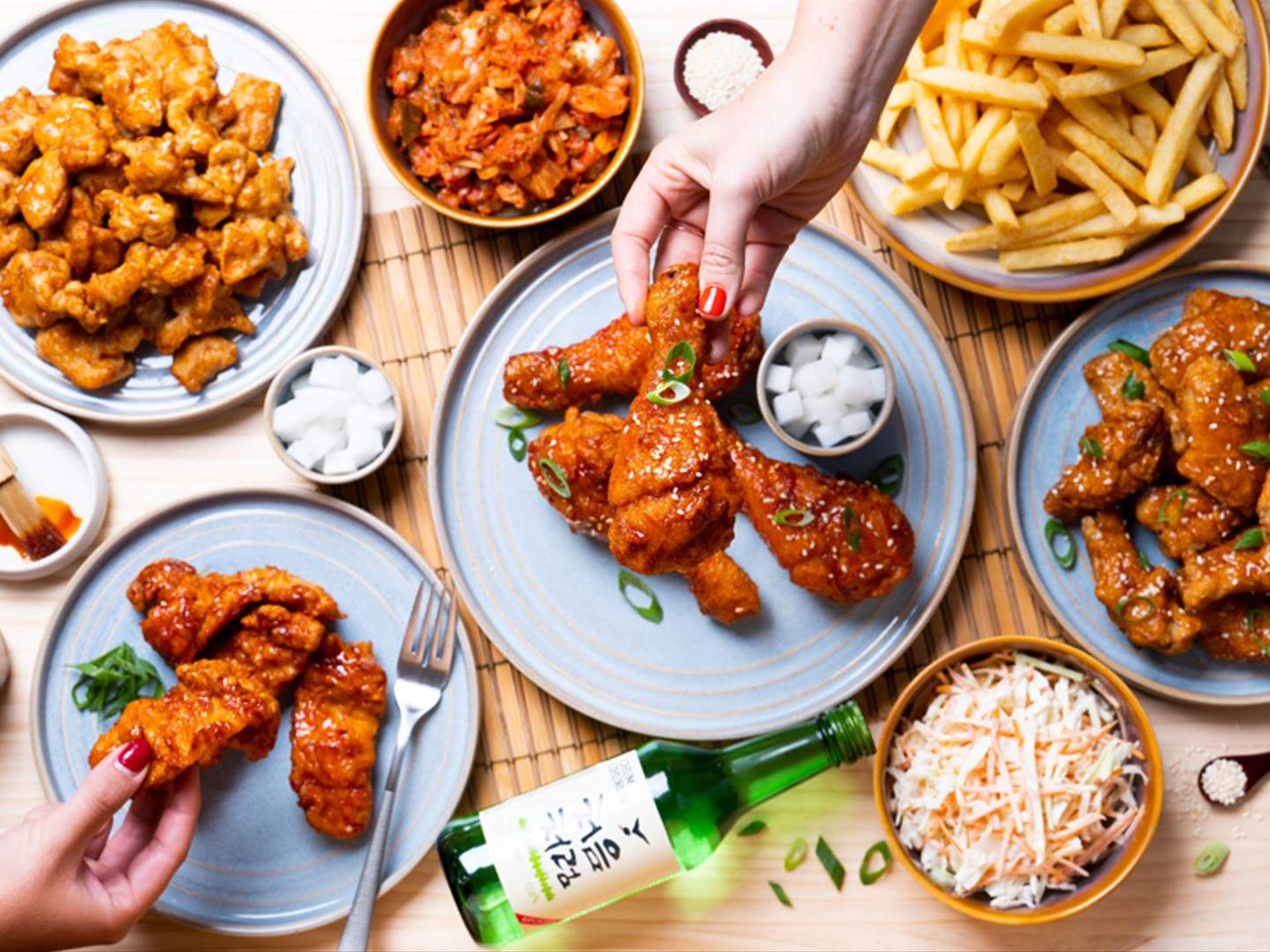
    Bonchon is known for its signature made-to-order Korean fried chicken that is hand battered and double-fried to achieve its signature, crave-worthy crunch, and proprietary sauces crafted in the Bonchon global kitchen in Busan. Every piece of chicken is hand brushed to make each bite perfectly flavorful. Bonchon also offers an authentic Korean fusion menu with Bibimbap, Japchae, Bulgogi, and more.

    Born in Busan, South Korea in 2002, Bonchon’s founder, Jinduk Seo, dreamed of sharing his favorite flavors with the world. Just four short years later, in 2006, Bonchon went on to establish itself in the U.S. The global franchise has been spreading its reach around the world ever since with a notable presence spanning nine countries with more than 400 locations. With no indication of slowing down, Bonchon has recently confirmed new development agreements in France and Australia.

    In 2019, the brand continued to expand to Vietnam. In April 2022, Bonchon celebrated the opening of its ninth store and is preparing to welcome its 10th and 11th this November.

  • Bonchon chicken in Thailand Planning Expansion

    Bonchon chicken in Thailand Planning Expansion

    Thai-headquartered Minor International has bought an effective 70-per-cent stake in the master-franchise rights holder of Bonchon chicken in Thailand.

    The deal sees Minor take controlling interests in Singapore’s Spoonful Pte and Spoonful Thailand, which will drive future expansion of the South Korean fried-chicken chain in Thailand. Minor paid US$79 million for the shares.

    The transaction leaves Mint as the effective operator of Bonchon chicken in Thailand and follows its $66 million purchase of Chicken Time last November, which at the time ran 40 outlets across Thailand. At the time of that deal the company said it was in the process of negotiating with Bonchon’s South Korean owners for the right to expand the network further.

    That pathway has been cleared and Mint says it now owns long-term exclusive territorial rights and the ability to expand and sub-franchise Bonchon chicken in Thailand. It plans to grow the store network to more than 150 restaurants throughout the country by the end of 2024, representing a five-year CAGR of more than 25 percent.

    “This latest investment in the master franchise rights of the Bonchon brand … emphasizes our strategy to enhance our portfolio offerings and further strengthen the restaurant business in Thailand,” said Minor Food CEO Paul Kenny.

    “With almost 10 years of presence in the country, Bonchon brings a highly loyal customer base of Thai millennials and Generation Z, which we will further build on.”

    The expansion strategy will focus on shopping centers and community malls, along with delivery-format stores to capture the fast-growing delivery market. With only two stores outside the nation’s capital of Bangkok currently, key cities in the regions will be targeted as well.

    During the first two months of this year, sales of Bonchon chicken in Thailand have proven resilient amidst the coronavirus crisis, supported by strong delivery sales.