Tag: Boss

  • Frasers Group Boldly Bids $2.3 Billion for Complete Control of Hugo Boss

    Frasers Group Boldly Bids $2.3 Billion for Complete Control of Hugo Boss

    Frasers Group, a prominent UK retail corporation, recently unveiled an unexpected voluntary takeover bid for Hugo Boss. Their goal is to procure the remaining shares of the renowned German fashion brand and obtain complete ownership. Currently, Frasers Group possesses a 26.06% stake in Hugo Boss, and their proposal to acquire the unowned 73.94% stake stands at €38 per share in cash. This proposition elevates the total bid value to roughly US$2.3 billion.

    Frasers Group’s Confidence in Hugo Boss

    Frasers Group’s proposed takeover reflects its sustained assurance in Hugo Boss’s potential and facilitates possibilities for additional business investment. The company regards Hugo Boss as one of its most critical strategic brand associates. Furthermore, Frasers Group continues to back the growth strategy and management team of the fashion firm.

    However, Hugo Boss confirmed that it had received the unrequested bid and emphasized that the company had no prior involvement in coordinating the proposal. The fashion group’s management board and supervisory board will assess the proposal document once it is officially available. Subsequently, they will issue an informed viewpoint for the shareholders.

    The company also assured that it would keep its shareholders and the public updated about any future developments and the following steps as per the legal and regulatory stipulations.

    Frasers’ Association with Hugo Boss

    The affiliation between Frasers Group and Hugo Boss traces back to 2020. This was when Mike Ashley, the founder of Frasers, initiated an investment in the German fashion company. The group also secured representation on Hugo Boss’s supervisory board through its CEO, Michael Murray.

    Questions & Answers

    What is Frasers Group’s current stake in Hugo Boss?
    Frasers Group currently holds a 26.06% stake in Hugo Boss.

    What is the proposed offer per share by Frasers Group for the remaining stake in Hugo Boss?
    The proposed offer by Frasers Group for the remaining stake in Hugo Boss is €38 per share in cash.

    What is the history of the relationship between Frasers Group and Hugo Boss?
    The relationship between the two companies began in 2020 when Frasers Group’s founder, Mike Ashley, started investing in Hugo Boss. Additionally, Frasers Group has representation on Hugo Boss’s supervisory board through CEO Michael Murray.

  • Hugo Boss Triumphs Amid Challenges: Sees Uplift in Annual Sales Regardless of China’s Downturn

    Hugo Boss Triumphs Amid Challenges: Sees Uplift in Annual Sales Regardless of China’s Downturn

    Hugo Boss, a renowned German fashion company, recently disclosed a slight increase in sales for the preceding fiscal year, which concluded with a robust last quarter.

    The company’s sales for the fiscal year 2025 demonstrated a 1% drop, reaching EUR 4.27 billion (US$4.97 billion). This decrease is attributed to unfavorable currency fluctuations and subdued consumer confidence triggered by macroeconomic and geopolitical instability. However, after considering the impact of currency exchange, there was a 2% rise in sales.

    Geographical Sales Breakdown

    Examining sales by region, Hugo Boss saw a 5% decrease in currency-adjusted sales in the Asia-Pacific region, largely due to restrained local demand in China. In contrast, the company enjoyed a 2% increase in revenues in the EMEA region, propelled by advancements in major European markets such as Germany and France.

    Company management emphasized the remarkable growth in the fourth quarter, with a reported 2% sales increase and 7% rise on a constant currency basis.

    Growth Factors

    This positive performance is credited to a resurgence in physical retail, a modest uptick in comparable-store sales, a fruitful holiday season, and impactful brand and product initiatives.

    The Boss Menswear brand saw a 3% increase in currency-adjusted revenues for the year. However, sales for Boss Womenswear and Hugo dropped by 5% and 4% respectively.

    Americas and Licensing Business Performance

    In the Americas, revenues saw a 3% increase, indicative of progressive improvements in the US market. Conversely, the company’s licensing business experienced a 5% decline in sales.

    The fiscal year ended on a high note, with EBIT (Earnings Before Interest and Taxes) growing 8% to reach EUR 391 million. This figure includes a significant 22% uplift in the fourth quarter.

    Hugo Boss CEO, Daniel Grieder, highlighted the rapid transformation of the fashion industry throughout the year. He pointed towards technological innovation, changing consumer preferences, and persistent macroeconomic and geopolitical instability as key influencers on the industry’s trajectory.

    Future Prospects

    Looking ahead to fiscal year 2026, Hugo Boss anticipates a mid- to high-single digit decline in currency-adjusted sales. This projection is based on the initiation of brand and channel realignments.

    Questions & Answers

    What were Hugo Boss’s sales for fiscal year 2025?
    Hugo Boss reported sales of EUR 4.27 billion (US$4.97 billion) for the fiscal year 2025.

    Which region experienced sales growth for Hugo Boss?
    The EMEA region saw a 2% increase in revenues, driven by performance in key European markets such as Germany and France.

    What are the company’s sales expectations for fiscal year 2026?
    Hugo Boss is forecasting a mid- to high-single digit decline in currency-adjusted sales for fiscal year 2026, due to brand and channel realignments.

  • Boss Launches First Athleisure Centric Stores in Indonesia, Amplifies Southeast Asia Presence

    Boss Launches First Athleisure Centric Stores in Indonesia, Amplifies Southeast Asia Presence

    Boss is broadening its market reach in Southeast Asia by introducing its premier athleisure-oriented retail outlets in Indonesia. The brand has unveiled two new stores in Jakarta, located in the prestigious Grand Indonesia and Central Park Mall.

    The store in Grand Indonesia offers an expansive area of roughly 80 square meters, while the Central Park Mall outlet covers a significantly larger expanse of approximately 206 square meters. Both locations are designed with a distinct retail concept aimed at contouring Boss’s athleisure line. The stores feature an array of stainless steel and glass fixtures, flooring with a carbon texture, and concrete-finished walls.

    In order to highlight the technical prowess and performance-centric characteristics of the line, digital screens have been seamlessly embedded throughout the stores.

    These newly unveiled outlets are specifically purposed to house the brand’s performance and sports inclined product categories. They present a carefully curated selection of activewear and lifestyle clothing.

    The product line on offer encompasses collections for golf and tennis, daily casual wear, designs aimed at commuters, and the Boss Performance collection. This latter range is particularly focused on technical fabric and functionality, making it suitable for everyday wear.

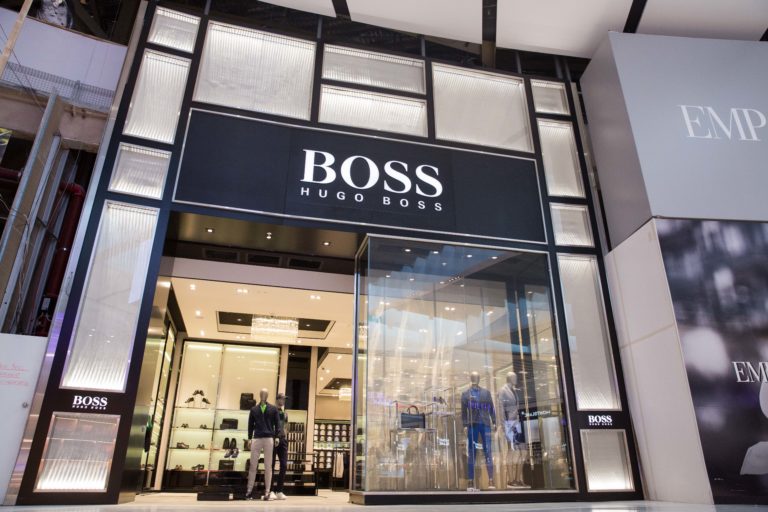
    These recent openings in Indonesia follow the debut of the brand’s biggest flagship store in Southeast Asia, located at One Bangkok. The store is also the location of the brand’s first Boss Cafe in the region.

    Questions & Answers

    What is the retail concept of the new Boss stores in Jakarta?
    The stores are designed to specifically accommodate Boss’s athleisure line, featuring stainless steel and glass fixtures, carbon-textured flooring, and concrete wall finishes.

    What kind of products are available in these new stores?
    The new stores offer a range of activewear and lifestyle clothing, including collections for golf and tennis, everyday casualwear, commuter-focused designs, and the Boss Performance range.

    What is the significance of the Boss store in One Bangkok?
    The store at One Bangkok is the biggest Boss flagship store in Southeast Asia and also houses the region’s first Boss Cafe.

  • Boss Coffee brings back fan-favourite Iced Mocha across Down Under

    Boss Coffee brings back fan-favourite Iced Mocha across Down Under

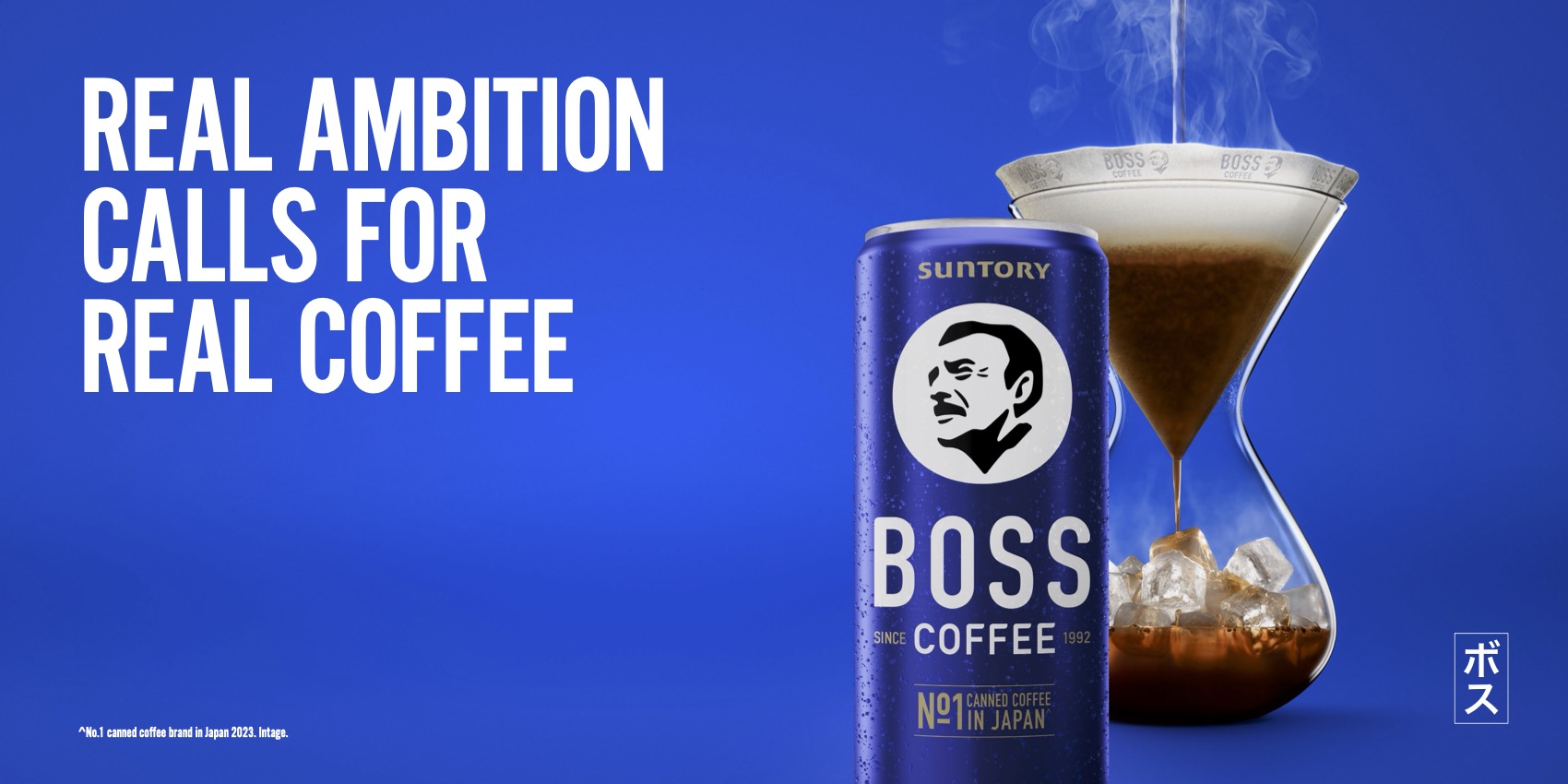
    Suntory Boss Coffee has relaunched its Iced Mocha in Australia and New Zealand, boasting an enhanced recipe that combines flash-brewed coffee and a rich chocolate taste. The drink is designed as a sweet yet invigorating refreshment, targeting busy professionals, students, and any individual in need of a caffeine lift.

    Morgan Loveridge, Head of Market Execution at Suntory Boss Coffee & Future Brands, stated that the revised Iced Mocha has achieved impressive results in taste tests, with a purchase intent of 80%. Consumers have expressed that the addition of Iced Mocha enhances the overall appeal of the Suntory Boss Coffee range.

    Suntory Boss Coffee first entered the Australia and New Zealand market in 2019 and has since secured a significant market share with 52.8% in Australia and 69.5% in New Zealand. The Iced Mocha variety was first introduced to their range in 2023.

    The complete array of Suntory Boss Coffee is accessible in supermarkets, petrol stations, and convenience stores across the two countries.

    Questions & Answers

    What is the revised recipe of Suntory Boss Coffee’s Iced Mocha?
    The improved recipe of Suntory Boss Coffee’s Iced Mocha combines flash-brewed coffee with a rich chocolate flavour.

    Who is the target market for Suntory Boss Coffee’s Iced Mocha?
    The Iced Mocha drink is aimed at busy professionals, students, and anyone needing a caffeine boost.

    Where can customers find the Suntory Boss Coffee range?
    The full range of Suntory Boss Coffee is available in supermarkets, petrol stations, and convenience stores in Australia and New Zealand.

  • Former Wirecard Bosses Indicted

    Former Wirecard Bosses Indicted

    Three ex-Wirecard bosses could face ten years in prison after prosecutors issue indictments, while one former executive is still on the run.

    In June 2020, German fintech Wirecard was forced to admit that there was a 1.9 billion euros ($2.2 billion) hole in its balance sheet, leading to bankruptcy proceedings. Now, three former heads of the firm have been indicted, according to a story in Germany’s Handelsblatt.

    Prosecutors in Munich accuse former Wirecard CEO Markus Braun of professional fraud, misappropriation of company assets, balance sheet falsification, and manipulation of the company’s stock price, according to the 480-page indictment obtained by the German newspaper.

    Oliver Bellenhaus, who managed Wirecard’s Dubai office, and Stephan von Erffa, responsible for accounting, were charged along with Braun, and could face up to ten years in prison. Bellenhaus, alleged to have embezzled millions, has confessed and is the key witness for the prosecution. Testimony he provided so far has led to the imprisonment of Braun and von Erffa.

    Left out of the indictment is Jan Marsalek, the former Wirecard COO, who is a wanted fugitive, and could currently be in Russia, the paper said.

    Investigators say that Braun and his co-defendants were cooking Wirecard’s books as early as 2015, with fake bookings and revenues with partner companies. As a result, it is very likely the former managers will have to stand trial, Handelsblatt said. They are presumed innocent.

    Wirecards auditors, EY, have been dragged into the proceedings, with insolvency administrator Michael Jaffé exploring claims for damages against the auditor. If it can be established that EY made intentional errors when auditing Wirecard’s books, they would be subject to unlimited liability.

    A report last year from Germany’s Institute of Public Auditors known as the «Wambach Report,» didn’t paint a very flattering picture of EY’s auditing of Wirecards books,  another Handelsblatt report said.

  • Boss launches NFT in social impact project

    Boss launches NFT in social impact project

    Premium fashion brand Boss has collaborated with NFT company Boss Beauties to introduce the Boss x Boss Beauties Dream Like a Boss program, which aims to mentor young women.

    One of the Boss Beauties NFTs is on auction until March 12 and the revenue will be donated to the co-created mentorship program. In addition, a limited-edition T-shirt featuring the NFT is being sold on Boss’s website, with a share of sales going to the Dream Like a Boss program.

    According to Boss, the collaboration is an opportunity for both brands “to provide young women from historically marginalised and underrepresented groups with invaluable skills and insights for their professional development.”

    The program will offer mentorship talks, along with real-life business experiences by executives at Hugo Boss and all mentees will be funded by the Boss x Boss Beauties auction.

    “Establishing the Dream Like a Boss program will allow us to give back to our communities, to provide a space for creativity and growth, and to amplify voices that echo our brand values in a supportive and inclusive way,” said Rashmi Verma, head of global diversity and Inclusion at Hugo Boss.

    “Joining forces with Boss Beauties is an important step in creating equal opportunities for all women, and this is just the beginning of many great things to come.”

  • Ferrari Boss Has No Fears Over Electric Future

    Ferrari Boss Has No Fears Over Electric Future

    Ferrari, the sports car maker synonymous with roaring petrol engines, welcomes the shift to electric powertrains and is confident of retaining its lead in the market for high-performance cars, its chairman said on Monday.

    The European Union last month proposed an effective ban on the sale of new petrol and diesel cars from 2035 as part of its measures to combat global warming, posing a challenge to automakers that have made powerful engines a key selling point.

    But Ferrari Chairman and acting CEO John Elkann told analysts on Monday the company known for its ‘Prancing Horse’ logo saw the change in technology as an opportunity.

    “We see the regulation as welcome,” Elkann said, as Ferrari stuck to its main 2021 targets after reporting second-quarter core profits just ahead of expectations.

    “The opportunity set by electrification, electronics, and other technologies that are coming available will allow us to make even more distinct and unique products,” he said.

    Elkann, the scion of Italy’s Agnelli family which controls Ferrari through its investment company Exor, was speaking weeks before new CEO – technology industry veteran Benedetto Vigna – takes the helm on Sept. 1.

    One of Vigna’s tasks could be to forge new partnerships, along the lines of Ferrari’s existing tie-up with Britain’s Yasa, now part of Daimler, to help with the shift to an electric era, Elkann said.

  • UBS Boss Donates to Corona Efforts

    UBS Boss Donates to Corona Efforts

    Sergio Ermotti is donating 1 million francs towards pandemic relief efforts. The UBS boss is working from home in his native Ticino, which borders the hardest-hit area in Europe.

    The Swiss wealth manager’s CEO said he has dispersed 1 million Swiss francs ($1.1 million) in personal funds to his family’s foundations to help with relief efforts. Ermotti is working from home in Montagnola, a small Swiss village overlooking Lake Lugano and near the Swiss-Italian border.

    I hear about the difficult situation in hospitals and people who have lost members of their family. The situation is dramatic! Ermotti told Swiss tabloid Blick in an interview on Monday. His corona donation will be dispensed by a foundation he launched together with his wife and his siblings in 2011.

    Ermotti said the funds will be routed via non-profit organizations to people in need of emergency funds. UBS itself has also been generous, donating 30 million francs for patients and families in Switzerland affected by the virus’ outbreak.

    The crisis represents an opportunity for Ermotti to display UBS’ Swiss credibility: Now, we’re part of the solution and not part of the problem anymore, he told the outlet, alluding to Switzerland’s 2008 bailout of UBS.

    Last week, the Swiss government unleashed a massive bailout, enlisting banks like UBS to help small businesses battered by the crisis. «We received 10,000 loan applications within 36 hours. By Sunday night, all of them were processed and roughly 1 billion Swiss francs approved,» Ermotti said.

    UBS, like Credit Suisse, has pledged to donate any proceeds from the emergency loans to charity. Ermotti ends his nine-year tenure as CEO of UBS in November when Ralph Hamers, head of ING, takes over his job.

  • Hugo Boss sales soar in China and online

    Hugo Boss sales soar in China and online

    Fashion label Hugo Boss has reported a staggering 52-per-cent leap in online sales which helped drive a 9 percent boost in operating profit.

    The German brand, which has been struggling lately, says the fourth-quarter sales growth of 4 percent to euro 825 million reflects the impact of store renovations and a new focus online.

    Operating profit for the quarter was euro 122 million, which compensated for a decline in the preceding three quarters.

    The company said the retail market in Hong Kong remained “difficult” in the latest quarter, but the company achieved double-digit sales growth in Mainland China.

    Currency-adjusted sales in the Americas fell by 7 percent after, which was a 1-per-cent improvement on its third-quarter performance there.

  • AirAsia names new boss in Japan

    AirAsia names new boss in Japan

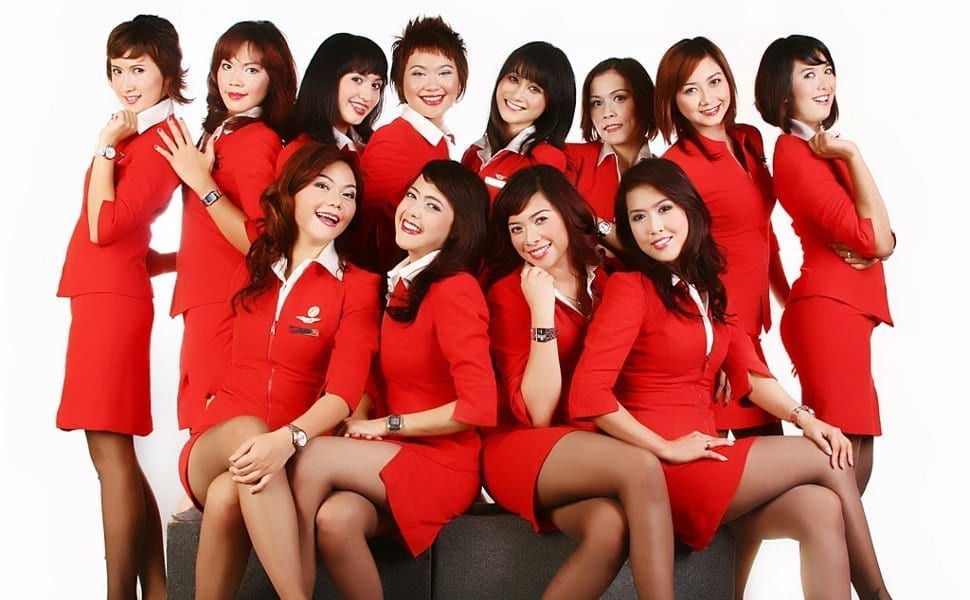
    AirAsia has appointed Jun Aida as representative director and COO to lead AirAsia Japan, effective 1 January 2020.

    Jun will take over from Jenny Mayuko Wakana who will be stepping down 31 December.

    As a member of AirAsia’s senior leadership team, Jun will be responsible for the company’s airline operations in Japan and its future growth.

    AirAsia Group CEO Tony Fernandes said: “Jun brings with him extensive management experience across various industries. We see tremendous potential in Japan and now is the time to catapult AirAsia Japan into its next phase of growth and success.”

    Jun joined AirAsia Group as a senior advisor in 2017. Prior to joining AirAsia, he was managing director for Phoenix Resort Co Ltd besides holding senior management roles in various multinational companies.

  • Hugo Boss growth relies on Asia sales

    Hugo Boss growth relies on Asia sales

    German fashion retailer Hugo Boss sees Asia as a cornerstone of its growth strategy, saying while it already enjoys above-average growth in the region, there is potential for more. In a briefing to investors in London, the company’s managing board said it expects Asia will account for 20 per cent of its global sales by 2022, up one third from the current 15 per cent.

    “The board is convinced the group still has considerable growth potential particularly in Asia. Sales in the region are expected to increase on average at a double-digit percentage rate per year by 2022, with China playing a key role,” the company said in a statement.

    “In addition to the optimisation and expansion of the local retail network, the online business, also in cooperation with various multi-brand platforms, should contribute to above-average sales growth in particular.”

    Globally, Hugo Boss will focus on personalisation and speed to boost brand desirability between now and 2022. The company plans to increase currency-adjusted sales by between 5 per cent and 7 per cent annually for the next four years and grow its operating margin to 15 per cent. Operating profit will grow “significantly faster than sales,” the company said.

    “We have set ourselves high targets for the coming years”, said CEO Mark Langer.

    “We want to grow faster than the market, and expect our operating profit to develop significantly better than our sales. The successful realignment of our brands Boss and Hugo has laid the foundation for this. We will further increase the personalisation of our offerings in the future and speed up central processes in the course of further developing our strategy. Our overall aim is clear: We want to be the most desirable premium fashion and lifestyle brand globally.”

    Personalisation will be developed by adopting a more individualised customer approach, a personalised product range, “a unique shopping experience” and by building on its extensive experience in made-to-measure clothing.
    On the speed front, Hugo Boss plans to make its business processes “considerably more agile”.

    “This will enable the company to react to customer needs and to new market trends even more quickly and flexibly in the future. The existing skills of Hugo Boss in product design and development, our modern logistics and IT infrastructure and the use of digital showrooms will be the key levers,” the company said.

    It also plans to quadruple its own online sales by 2022.

  • Hugo Boss performing well

    Hugo Boss performing well

    German fashion house Hugo Boss has posted better-than-expected sales growth helped by a pick up in sales in China and North and Latin America.

    The business posted a five per cent increase in sales for the first quarter to €650 million (AUD$1.03bn), in currency adjusted terms, boosted by strong growth in China and the Americas. Operating profit has increased slightly at €99 million (AUD$158m) compared to the previous corresponding period, confirming its 2018 outlook.

    Investments in product quality, the digital transformation of the business model and the strong euro have curbed the profit increase.

    Mark Langer, Hugo Boss CEO, said that thanks to the its performance in the first quarter of 2018, they are feeling more confident that the business will achieve its sales and earnings targets for the full year.

    “The strong increase in the group’s own retail business shows that our new collections are being well received by customers,” Langer said. “Our investments in the quality of our products and the desirability of our brands are therefore paying off.”

    Langer said the substantial progress achieved in their online business is also encouraging.

    “This positive performance strengthens our confidence that we will achieve our sales and earnings targets for the full year.”

    Hugo Boss has been making efforts to take the brand more upmarket and expand in womenswear and refocused on premium men’s clothing.

  • Hugo Boss China proves best dressed

    Hugo Boss China proves best dressed

    With second-quarter sales rising by 14 per cent, Hugo Boss China has shined for German luxury fashion house.

    With double-digit sales growth on a like-for-like basis, the Chinese mainland continued to perform significantly better than Hong Kong and Macau, says the company. Sales were also up in Japan.

    In Asia, sales grew by 12 per cent in local currencies to ¥90 million (US$800,000).

    It was Asia/Pacific’s growth that mainly contributed to overall Hugo Boss sales increasing by 3 per cent for the quarter on a comparative store and currency-adjusted basis.

    Sales in freestanding stores and shops-in-shops were 2 and 7 per cent respectively above the previous year’s figures on a currency-adjusted basis. Outlet sales rose by 10 per cent, while online business increased by 9 per cent.

    Despite higher marketing expenses and spending on digital transformation, operating profit was steady.

    At its Investor Day at its head office in Metzingen yesterday, the company announced the implementation of its two-brand strategy, Boss and Hugo. Previously independently managed, the Boss Orange and Boss Green lines have been integrated into the Boss core brand, with the first parts of the new collections going into stores from the end of this year.

    Hugo Boss says it is widening its commercially important entry-level price ranges, continuing to expand its omnichannel services and systematically investing in sales staff training and development. It will also start a step-by-step roll-out of new store concepts for Boss and Hugo.

    In the first half of the year, the group’s store numbers fell by four to 438. As at June 30, five of the 20 store closures agreed upon last year had been completed.

    Its store network in Asia/Pacific was reduced by one. There were five new openings in Korea and Singapore plus six closures in various markets.

    “Our strategic realignment is beginning to take effect with business in the second quarter encouraging,” says CEO Mark Langer, who noted “considerable headway” in its online business. “We are facing the future with confidence.”

  • Studio City retail tenants revealed

    Studio City retail tenants revealed

    Studio City and Taubman Asia, have revealed the lineup of fashion brands that will open inside The Boulevard at Studio City.

    A mix of fashion-forward labels and internationally-renowned luxury brands include Macau’s first Balmain, Macau’s first Belstaff, and Tom Ford’s largest store in Asia, amongst many others. The selection was assembled by Taubman Asia and Melco Crown Entertainment’s combined team of retail specialists to meet Chinese consumers’ increasing desire to express their individuality through high quality, expertly crafted clothing and accessories. Bespoke and personal services will be offered to ensure our shoppers take center stage.

    Taubman says The Boulevard at Studio City will bring “an unparalleled shopping experience” to Studio City.

    “Unlike any retail offering to be found in Asia, the unique 35,000 sqm ‘immersive’ retail entertainment environment brings shopping to life by ‘transporting’ visitors to high-energy street-scapes and entertaining them at every turn with featured streets and squares inspired by iconic shopping and entertainment locations, including New York’s Times Square and Hollywood’s Beverly Hills,” Taubman said in a statement.

    “At the futuristic Times Square Macau, inside The Boulevard at Studio City, a variety of entertainment from ‘virtual’ musicians to film stars will be shown through holographic projections.

    “Leveraging our global expertise increating extraordinary retail environments, and our exceptional relationships with the world’s leading brands, our talented team in Asia has brought together an exciting mix of brands for The Boulevard at Studio City,” said René Tremblay, president of Taubman Asia.

    “Our merchandising and management services are the industry standard for performance and excellence. We are thrilled to welcome these brands to our latest project and are committed to supporting them for the long term.”

    List of brands:

    Aeronautica Militare
    Balmain
    Bank of China
    Belstaff
    Boss
    Bottega Veneta
    Bulgari
    Cigar Emporium
    Coach
    Cosmos Food Station
    Din Tai Fung
    Dunhill
    Emporio Armani
    Fendi
    Girard-Perregaux
    Givenchy
    Glashutte Original
    Graff
    Gucci
    Hide Yamamoto
    Hublot
    ICBC
    Trattoria Il Mulino
    Image Digital
    IWC Schaffhausen
    Jaeger-LeCoultre
    Jaquet Droz
    kate spade new york
    Kenzo
    Longines
    McCafe
    McDonald’s
    MCM
    Michael Kors
    Montblanc
    Philipp Plein
    Piaget
    Prada
    Rainbow
    Rimowa
    Roberto Cavalli
    Saint Laurent Paris
    Shiki Hot Pot Restaurant
    Starbucks
    Tag Heuer
    T Galleria Beauty by DFS
    Tiffany & Co.
    Tom Ford
    UM
    Vacheron Constantin
    Valentino
    Van Cleef & Arpels
    Versace Collection
    Ermenegildo Zegna
    Zenith