Tag: bot

  • Elon Musk Says Tesla Bot Can Solve Labour Shortage, But Has No Timeline

    Elon Musk Says Tesla Bot Can Solve Labour Shortage, But Has No Timeline

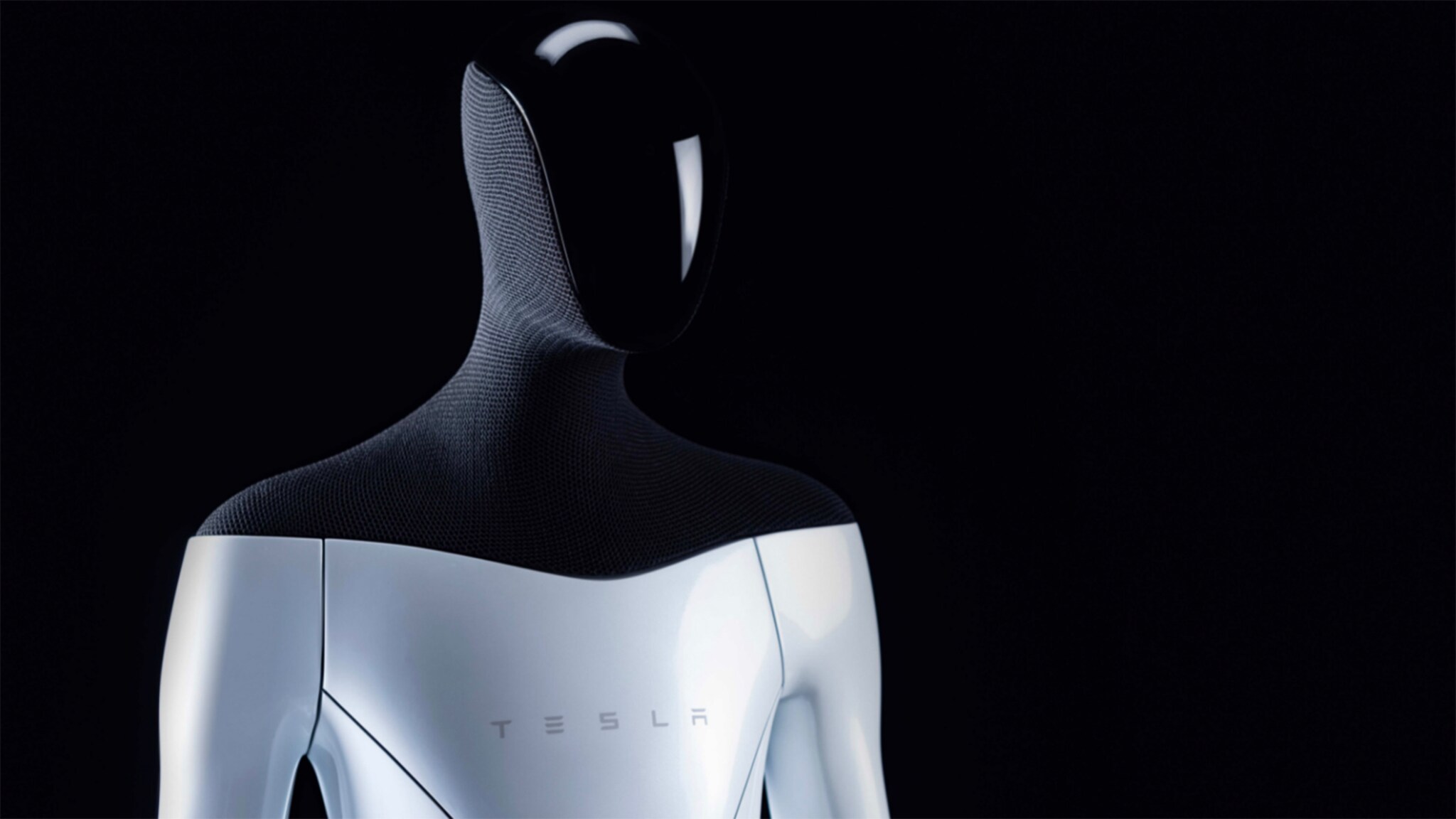
    Elon Musk is at it again and this time around he has said something that will ruffle many feathers considering technologies like AI and automation are displacing many regular jobs. He has claimed that the Tesla Bot which was unveiled earlier this year can solve the labour shortage problem. The Tesla Bot which was showcased earlier this year will allegedly pack in artificial intelligence capabilities aimed at completing general-purpose repetitive tasks.

    Tesla has already started hiring for this Bot and at the Wall Street Journal Conference this year, he revealed, technologies that Tesla has developed for the sake of its self-driving capability is now being adapted to this bot.

    “With the Autopilot and Full Self-Driving, I think we are creating the most advanced practical AI for navigating the real-world and you can also think of Tesla as the world’s biggest robot company – or semi-sentient robot company. The car is like a robot on 4-wheels. We can probably take that same technology and put in a humanoid robot – and have that robot be useful. Essentially, to have the humanoid part, we need to develop some custom actuators and sensors – and essentially use the Tesla Full Self-Driving and Autopilot or generally speaking real-world navigation AI in the humanoid robot,” said the world’s richest man.

    He added, ” I think this can be quite profound. I don’t know exactly when we can get this right but we will get it right.”

    Musk believes this could be a real solution to the labor shortage issue. Already in many countries, population growth is declining – Japan and China being at the forefront and even in India, the growth of the population has slowed down.

    “It has the potential to be a general substitute for human labor over time. The foundation of the economy is labor. Capital equipment is essentially distilled labour. I asked a friend of mine what should we optimize for and he said “gross profit per employee” – fully considered so you got to include the supply chain in that. The fundamental constraint is labor. There are not enough people. I can’t emphasize this enough. There are not enough people. I think one of the biggest risks to civilization is the low and rapidly declining birth rate,” he said.

    Many robotics and artificial intelligence experts have shown a sense of skepticism towards Tesla’s Bot project considering robotics leaders like Boston Dynamics haven’t managed to commercialize their technology which has been in development for years.


  • FedEx’s bot opens possibilities for on-demand, same-day delivery

    FedEx’s bot opens possibilities for on-demand, same-day delivery

    Roxo is an autonomous specialty delivery device, designed to travel on sidewalks and along roadsides, safely delivering smaller shipments to customers’ homes and businesses. Its features include pedestrian-safe technology, multiple cameras and LiDAR allowing the zero-emission, battery-powered bot to be aware of its surroundings. These features are coupled with machine-learning algorithms to detect and avoid obstacles, plot a safe path, and allow the bot to follow road and safety rules. Proprietary technology makes it highly capable, allowing it to navigate unpaved surfaces, curbs, and to even climb deep flights of steps for an extraordinary door-to-door delivery experience.

    Roxo is currently undergoing testing in the U.S. to generate data to ‘train’ the self-driving software and validate safe performance, in compliance with all applicable safety regulations and guidelines. There is significant opportunity in Japan to identify local, case-specific applications to make the best use of the technology to benefit FedEx customers.

    “We are thrilled to have Roxo in Japan, a country that is a global leader in robotics implementation. The FedEx SameDay Bot is truly an innovation opening new possibilities for on-demand, same day, hyper-localized delivery,” said Kawal Preet, president of the Asia Pacific, Middle East, and Africa (AMEA) region at FedEx Express. “As we sit at the intersection of physical and digital networks, Roxo brings a glimpse of the future of logistics, where customers can enjoy same day, contactless delivery services at their doorsteps. With businesses of all kinds embarking on digital transformation, we look forward to collaborating with future-ready companies to advance delivery services in Japan and elsewhere in Asia Pacific.”

    The bot is being developed in collaboration with DEKA Development & Research Corp., a prominent research and development company which also produced the Segway. The bot uses DEKA’s established iBOT electric wheelchair base, capable of negotiating rough terrain, traversing steps, and steep inclines. Its sensors maintain 360-degree awareness of its surroundings and uses artificial intelligence, or AI, to choose the safest path or course of action. With a tall profile it is easy for pedestrians and road users to see. It also uses signals, lights and a signaling screen that clearly communicate its directional intent.

    Roxo was unveiled in February 2019 and has been undergoing tests with major retailers in the U.S. U.S. cities where Roxo has been tested include Memphis, Tennessee; Manchester, New Hampshire; and Plano and Frisco, Texas. It made its first international appearance in Dubai, United Arab Emirates in October 2019 for an experimental project with local businesses including Dubai Airports.

  • Cebu Pacific introduces online chatbot for customer support

    Cebu Pacific introduces online chatbot for customer support

    Philippines-based low-cost carrier Cebu Pacific has launched its online travel assistant, Charlie the Chatbot, to provide 24/7 support for customers.

    Charlie, now available on the airline’s website and official Facebook page, can help answer customers’ frequently asked questions, which include flight bookings, inflight meals, baggage allowance and so on.

    Customers who need help can type in their queries in English one at a time, or choose from a variety of suggested topic options when they open the chatbox.

    Charlie’s capabilities also include assisting passengers with their flight check-in, providing flight itineraries and boarding passes, and sharing details of the airline’s ongoing seat sales and promotions.

    “We’ve always talked about being an enabler of fun and accessible travels, and as part of our thrust to enhance customer experience with the airline, we created Charlie,” said Candice Iyog, vice president for marketing and customer experience at Cebu Pacific.

    “As we officially launch our chatbot, we hope to offer convenience and helpful information within our travelers’ fingertips.

    “Charlie still has a long way to go in terms of learning – just like any chatbot. Rest assured, we are continuously working on expanding Charlie’s knowledge in order to provide our passengers with the best customer experience possible.”

    The airline says Charlie has engaged with more than 393,000 passengers since its inception in January this year.

  • Boomtime ahead for chatbots in E-commerce

    Boomtime ahead for chatbots in E-commerce

    New data from Juniper Research predicts consumer interaction with chatbots in retail will reach 22 billion by 2023.

    The figure represents a sharp increase over an estimated 2.6 billion interactions this year.

    According to the new research report “AI in Retail: Segment Analysis, Vendor Positioning & Market Forecasts 2019-2023”, chatbots in retail will enable effectively automated customer interactions for both online and offline vendors.

    A crucial enabler of this development will be improvements in NLP (Natural Language Processing), which will dramatically reduce the failure rate of chatbot interactions, by making them more natural and valuable for customers.

    Juniper anticipates that retailers who do not adopt chatbots will face strong challenges from more technologically-adept disruptors, who will use chatbots as an extension to the crucial omnichannel retail experience.

    The research also found that chatbots used for customer service have a strong potential to reduce costs; with deployments realizing annual savings for retailers of US$439 million globally by 2023, up from just $7 million this year.

    These potential savings will act as a key “pull” factor, given the margin pressure that many retailers are presently feeling.

    “By embracing automated customer service with chatbots, retailers can act in a more flexible and efficient way,” explained research author Nick Maynard. “The wider retail market means that chatbots are no longer a luxury, they are essential.”

    Meanwhile, sales resulting from interaction with chatbots in retail will reach $112 billion by 2023, up from $7.3 billion this year; representing an annual growth rate of 98 percent.

    The research found these sales will largely be a result of migration from other channels, rather than a new revenue stream. Accordingly, the research emphasized that while retailers must adopt chatbots for ease of use (and to reduce consumer churn), their return on investment will come from efficiencies, rather than new income.

  • Shoppers prefer human interaction over bots, says study

    Shoppers prefer human interaction over bots, says study

    New research reveals 75 per cent of shoppers prefer live-agent support for customer service verses 25 per cent support for self service and chatbots. The research, from cloud contact-centre operator NewVoiceMedia, identified consumer concerns about sharing sensitive information, a lack of understanding of bots and their inability to resolve issues.

    “Chatbots can provide customers with quick answers to frequently asked questions or issues, and the survey notes the benefit of chatbots for certain interactions, such as 24-seven service,” the survey’s authors concluded.

    But when it comes to handling sensitive financial and personal information, most customers are more comfortable with a live agent, and just 13 per cent say they would be happy if all service interactions are replaced by bots in the future.

    Foremost among consumer concerns about using chatbots include:

    • A lack of understanding of the issue (65 per cent).
    • The inability to solve complex issues (63 per cent).
    • The inability of chatbots to provide answers to simple questions (49 per cent).
    • The lack of a personal service experience (45 per cent).

    While less than half of the people surveyed (48 per cent) said they would be willing to use chat bots for service – versus the 38 per cent who wouldn’t – 46 per cent also felt that bots kept them from reaching a live person.

    Banks (82 per cent) and medical services (75 per cent) were the businesses that people were least likely to want to deal with bots.

    Customers prefer live agents for technical support (91 per cent); getting a quick response in an emergency (89 per cent); making a complaint (86 per cent); buying an expensive item (82 per cent); purchase inquiries (79 per cent); returns and cancellations (73 per cent); booking appointments and reservations (59 per cent); and paying a bill (54 per cent). However, when asked about buying”a basic item”, 56 per cent would choose a chatbot over a live interaction.

    The top benefit cited for dealing with chat bots was 24-hour service.

    “When a situation becomes emotional or complex, people want to engage with people”, says Dennis Fois, president of NewVoiceMedia. “As businesses add more customer service channels, conversations are becoming more complex and higher value, and personal, emotive customer interactions play a critical role in bridging the gap for what digital innovation alone cannot solve,” he said.

    “For this reason, companies must find the right balance between automation and human support to deliver the service that customers demand. Frontline contact centre teams will continue to be the difference makers on the battlefield to win the hearts and minds of customers, and organisations deploying self-service solutions should ensure that there is always an option to reach a live agent”.

    There is a sense consumers may warm to chatbots in the future, however, given that younger respondents (aged 18-44) were more open to using chatbots overall and across the individual scenarios compared to older consumers (45-60+).

  • New IoT botnet discovered in the wild

    New IoT botnet discovered in the wild

    Check Point researchers have discovered a brand new botnet – dubbed ‘IoTroop’ – that is evolving and recruiting IoT devices at a far greater pace and with more potential damage than the Mirai botnet of 2016.

    IoT botnets are internet connected smart devices which have been infected by the same malware and are controlled by a threat actor from a remote location. They have been behind some of the most damaging cyberattacks against organizations worldwide, including hospitals, national transport links, communication companies and political movements.

    While some technical aspects lead Check Point to suspect a possible connection to Mirai, this is an entirely new and far more sophisticated campaign that is rapidly spreading worldwide.

    It is too early to guess the intentions of the threat actors behind it, but with previous Botnet DDoS attacks essentially taking down the internet, it is vital that organizations make proper preparations and defense mechanisms are put in place before an attack strikes, the company said.

    Ominous signs were first picked up via Check Point’s Intrusion Prevention System (IPS) in the last few days of September. An escalating number of attempts were being made by hackers to exploit a combination of vulnerabilities found in various IoT devices.

    With each passing day the malware was evolving to exploit a growing number of vulnerabilities in Wireless IP Camera devices such as GoAhead, D-Link, TP-Link, AVTECH, NETGEAR, MikroTik, Linksys, Synology and others. It soon became apparent that the attempted attacks were coming from a variety of different sourcesand IoT devices, meaning the attack was being spread by the IoT devices themselves.

    “So far we estimate over a million organizations have already been affected worldwide, including the US, Australia and everywhere in between, and the number is only increasing. Our research suggests we are now experiencing the calm before an even more powerful storm. The next cyber hurricane is about to come,” Check Point said.