Retail News CRM

Tag: break

  • Ring in New Year 2026 with a Four-Day Break: Boosting Rest, Spending, and Tourism

    Ring in New Year 2026 with a Four-Day Break: Boosting Rest, Spending, and Tourism

    Thursday, January 1, 2026, brings a national holiday to celebrate New Year’s Day. However, the jubilance of embarking on a fresh chapter may be dampened somewhat by the fact that the holiday falls in the middle of the week. This means that workers will return to the office for a day before once more enjoying a break over the weekend.

    An Auspicious Start

    The significance of New Year’s Day may differ from the vibrant Lunar New Year often celebrated in mid-February, but it still carries an aura of tranquility and renewal. It is a moment of introspection as people reflect on the past year and look forward to the new one with anticipation and optimism. This sentiment of hope and positivity is especially pertinent in navigating the complexities of contemporary life.

    A One-Day Holiday Conundrum

    However, as the holiday falls smack in the middle of the week, it presents an awkward predicament. A mere 24-hour respite may not suffice for workers wishing to travel, relax, or spend quality time with family and friends. The disruption in the regular work week can lead to feelings of wasted opportunities and rushed activities.

    Advocacy for Extended Breaks

    In response to this, there has been a recent proposal to allow students in Ho Chi Minh City to enjoy a four-day break for the New Year. An extension of such an initiative to the working population seems plausible and beneficial. Companies could allow employees to take Friday off and compensate by working on the preceding Saturday, December 27.

    This modification would not reduce the total number of working days, and it is unlikely to significantly impact business operations. The potential benefits of a longer break include a more meaningful holiday for millions of workers. It could also stimulate spending and boost the service and tourism sectors.

    Societal Implications

    The societal impact of such an arrangement could be far-reaching. The extended holiday period would enhance the shared festive spirit and positively impact the workforce’s wellbeing. The potential for increased spending and tourism could also stimulate economic growth.

    Questions & Answers

    What is the significance of New Year’s Day?
    New Year’s Day marks the start of a new year, offering a fresh start. It’s a time for people to reflect on the past year and look forward with hope and positivity to the year ahead.

    What is the issue with New Year’s Day falling on a weekday?
    When a holiday falls in the middle of the week, it can disrupt the regular work week and may not provide sufficient time for workers to rest or spend quality time with their families.

    How could extending the New Year’s holiday benefit society?
    An extended holiday could provide a more meaningful break for workers, stimulate spending, and boost the service and tourism sectors. This shared festive spirit could potentially enhance societal well-being and stimulate economic growth.

  • United Airlines Reconnects US and HCMC: Daily Flights Resume After Eight-Year Break

    United Airlines Reconnects US and HCMC: Daily Flights Resume After Eight-Year Break

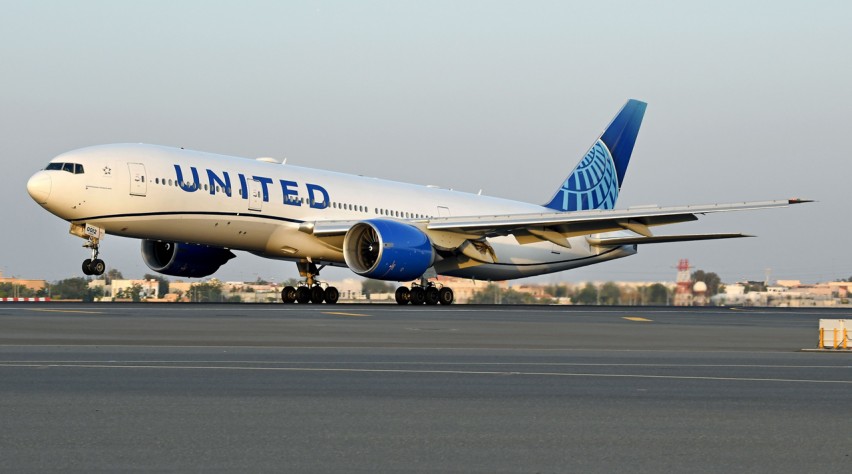
    After an eight-year pause, United Airlines, one of the top three largest American carriers, has restarted its flight operations between two U.S. cities and Ho Chi Minh City (HCMC). As of this week, the airline has begun operating daily flights from HCMC to Hong Kong, which will then connect passengers to Los Angeles or San Francisco, both located in the state of California. For each of these flights, the airline will utilize its wide-body Boeing 787-9 Dreamliner aircraft, which has a seating capacity of 257.

    Historical Precedent

    United Airlines has a distinctive history of being the first U.S. airline to conduct direct flights to Vietnam, following the bilateral air transport agreement in 2003. It maintained its operations between 2007 and 2012, flying to HCMC’s Tan Son Nhat International Airport.

    Fleet and Competition

    Boasting a fleet of over 1,000 aircraft, United Airlines remains a significant player in the American aviation sector, sitting alongside Delta Air Lines and American Airlines in competition for the top spot.

    Up until recently, Vietnam Airlines was the sole carrier providing commercial services between the U.S. and Vietnam. It operated three weekly round-trip flights between HCMC and San Francisco.

    Strategy and Expansion

    In discussing the airline’s decision to resume flights to HCMC, Patrick Quayle, the senior vice president of global network and alliances at United Airlines, stated that this move is a part of the carrier’s expansion strategy in the Pacific region.

    The airline has ambitious plans for growth. By the end of this year, United Airlines expects to serve 32 destinations in the Pacific region. On a worldwide scale, it aims to operate more than 850 daily flights to over 150 international destinations by next year.

    Questions & Answers

    What are United Airlines’ plans for expansion in the Pacific region?
    United Airlines aims to serve 32 destinations in the Pacific region by the end of this year.

    What is the seating capacity of United Airlines’ Boeing 787-9 Dreamliner aircraft used for these flights?
    The Boeing 787-9 Dreamliner aircraft used by United Airlines for these flights has a seating capacity of 257.

    When did United Airlines first operate direct flights to Vietnam?
    United Airlines first operated direct flights to Vietnam following the bilateral air transport agreement in 2003, and continued these operations from 2007 to 2012.

  • Indonesia’s Tomoro Coffee accelerates Southeast Asia expansion

    Indonesia’s Tomoro Coffee accelerates Southeast Asia expansion

    Indonesian coffee brand Tomoro Coffee is planning to expand its retail operations in Southeast Asia with plans to open stores in Malaysia, Cambodia, Vietnam and Thailand.

    The business plans to open 3000 locations across the region next year, with 1000 in Indonesia.

    “Southeast Asia was chosen because the coffee culture in this region has been rooted for more than 200 years and the coffee consumption per capita is quite high,” said Tomoro Coffee’s MD Wang Chao at a press conference.

    Tomoro Coffee, which opened in 2022, has 600 stores in Indonesia and sold 40 million cups last year.

    The brand debuted in China last November with its first store in Shanghai, followed by six locations in Singapore in March and 12 in the Philippines since June of this year.

    Tomoro Coffee is backed by venture capital firm ATM Capital.

  • Flash Coffee to open 300 outlets after fresh funding round

    Flash Coffee to open 300 outlets after fresh funding round

    Tech-enabled coffee chain Flash Coffee has raised US$15 million in its Series A funding led by White Star Capital, aiming to launch 300 stores this year.

    The Series A round sets the total capital raised by Flash Coffee to US$20 million. Investors include Delivery Hero-backed DX Ventures, Global Founders Capital, and Conny & Co.

    The raised funds will be used for accelerating Flash Coffee’s expansion plan in Asia. According to David Brunier, CEO of Flash Coffee, the company will enter into seven new markets this year: Hong Kong, Taiwan, South Korea, Japan, Malaysia, the Philippines, and Vietnam.

    “Our dream is to have a Flash Coffee every 500 meters in all major Asian cities,” said Brunier.

    “We will also build a regional HQ in Singapore and expand our regional tech hub in Jakarta to 50 people to support our vision of fully leveraging technology to improve customer experience, proactively drive growth and significantly increase operational efficiency.”

    Launched in January last year, Flash Coffee business model focuses on grab-and-go physical storefronts that rely on technology, allowing significant cost savings. The company now operates 50 outlets across Singapore, Thailand, and Indonesia.

  • Toyota Reveal New Safety System To Avoid Accelerator-Brake Mix-Up

    Toyota Reveal New Safety System To Avoid Accelerator-Brake Mix-Up

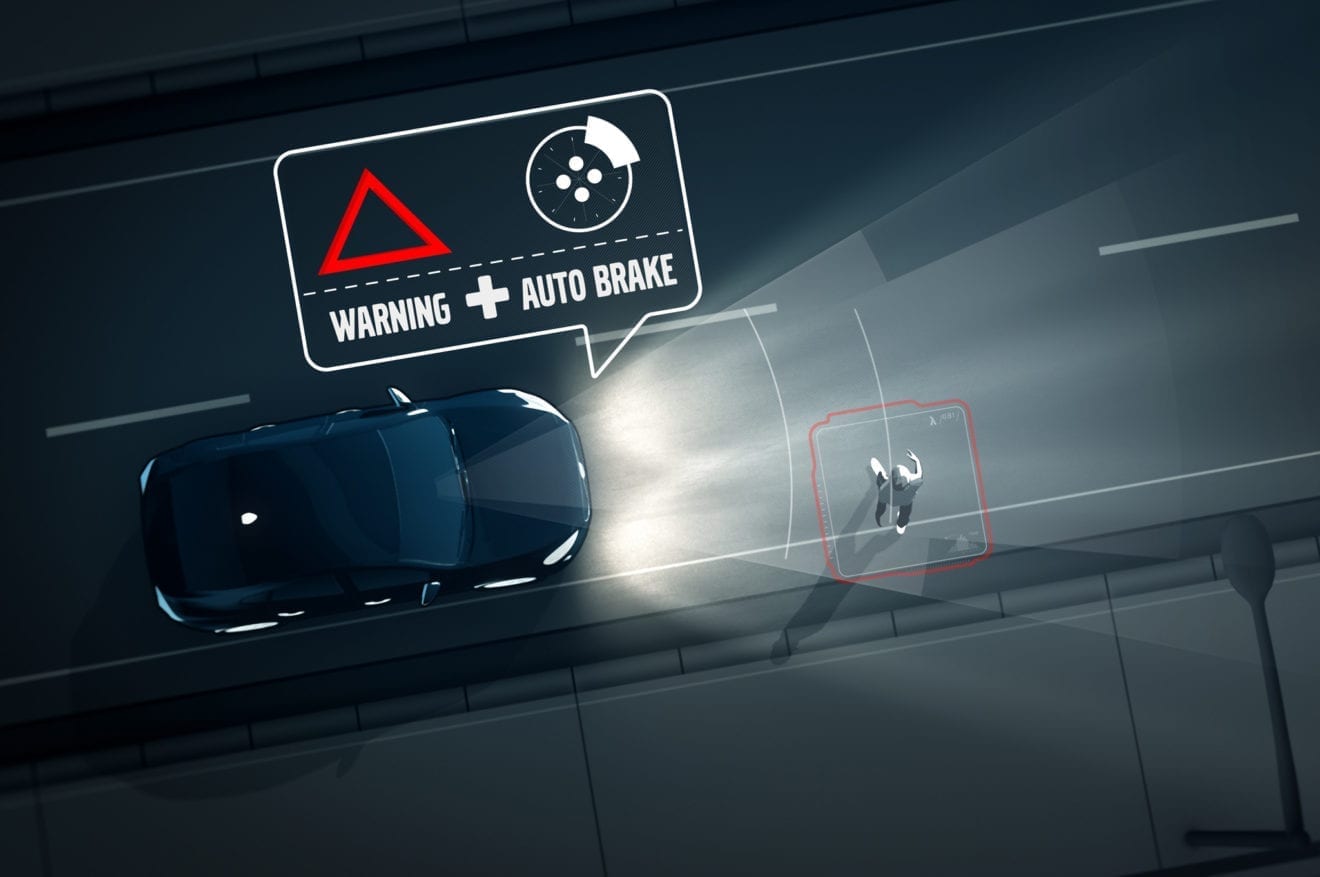
    Toyota Motor Corp unveiled an emergency safety system on Monday that uses big data to ignore the accelerator if it determines the driver steps on the pedal unintentionally. Japan’s biggest carmaker will roll out what it calls an “accelerator suppression function” in new cars from this summer, beginning in Japan. The system is a response to an increasingly common cause of traffic accidents in aging Japan where the driver, often elderly, mistakes the accelerator for the brake.

    Some 15% of fatal accidents on Japanese roads in 2018 were caused by drivers who were 75 years or older, showed a report from the government, which actively encourages elderly drivers to give up their licenses. Toyota’s announcement comes as automakers globally invest heavily in so-called active safety features as they work to develop fully autonomous cars. It also comes in the same year Toyota will act as an exclusive mobility sponsor for the Tokyo Olympics, where it will showcase its fully self-driving e-Palette transportation pods carrying athletes around the Olympic village at low speeds. Among competitors, Honda Motor Co Ltd plans to launch a car this year capable of full autonomy in highway traffic jam situations.

    Nissan Motor Co Ltd released the second generation of its ProPilot driver-assist system last spring, offering hands-free operation for single-lane highway driving. Toyota rolled out its first-generation Safety Sense package in 2015, which included automated emergency braking and a lane departure alert.

    The second generation became available in 2018, adding assisted single-lane highway driving and making the car capable of recognizing pedestrians at nighttime and bicycles. Its new feature was developed using data collected from the internet-connected cars it has on the road.

    Unlike the car maker’s existing safety options, the new system does not require the presence of an obstacle to function.

  • Royal Enfield Recalls 7000 Bullet Motorcycles Over Faulty Brake Caliper Bolt

    Royal Enfield Recalls 7000 Bullet Motorcycles Over Faulty Brake Caliper Bolt

    Chennai-based motorcycle maker Royal Enfield has announced a recall for 7000 units of the Bullet range of motorcycles. The recall affects the Royal Enfield Bullet and Electra 350 and 500 variants that were manufactured between March 20 and April 30 this year. The recall is related to an issue of a faulty brake caliper bolt that failed to meet the required torque quality to standards, according to Royal Enfield and the recall is a proactive measure given the importance of the part concerned.

    Royal Enfield further stated that corrective actions will be carried out on the affected motorcycles under the recall. Customers will have check whether their bike falls under the affected vehicles and need to get in touch with their nearest company authorized service center. The corrective measures will be done by the service center free of cost.

    The Royal Enfield Bullet series is one of the oldest motorcycles to be sold from the manufacturer and retains the retro element in today’s modern-classic era. The Bullet 500 draws power from the 499 cc single-cylinder engine tuned for 27 bhp and 41 Nm of peak torque, while the Bullet 350 uses the 346 cc single-cylinder engine with 19 bhp and 28 Nm of peak torque. Both units are paired with a 5-speed gearbox. Both bikes were updated with the now mandatory ABS safety tech earlier this year to keep up with the new norms. The company is also working on the BS6 versions of its motorcycles, which could see the Bullet series receiving a new powertrain next year.

  • 2020 Mercedes-AMG A35 Sedan Breaks Cover

    2020 Mercedes-AMG A35 Sedan Breaks Cover

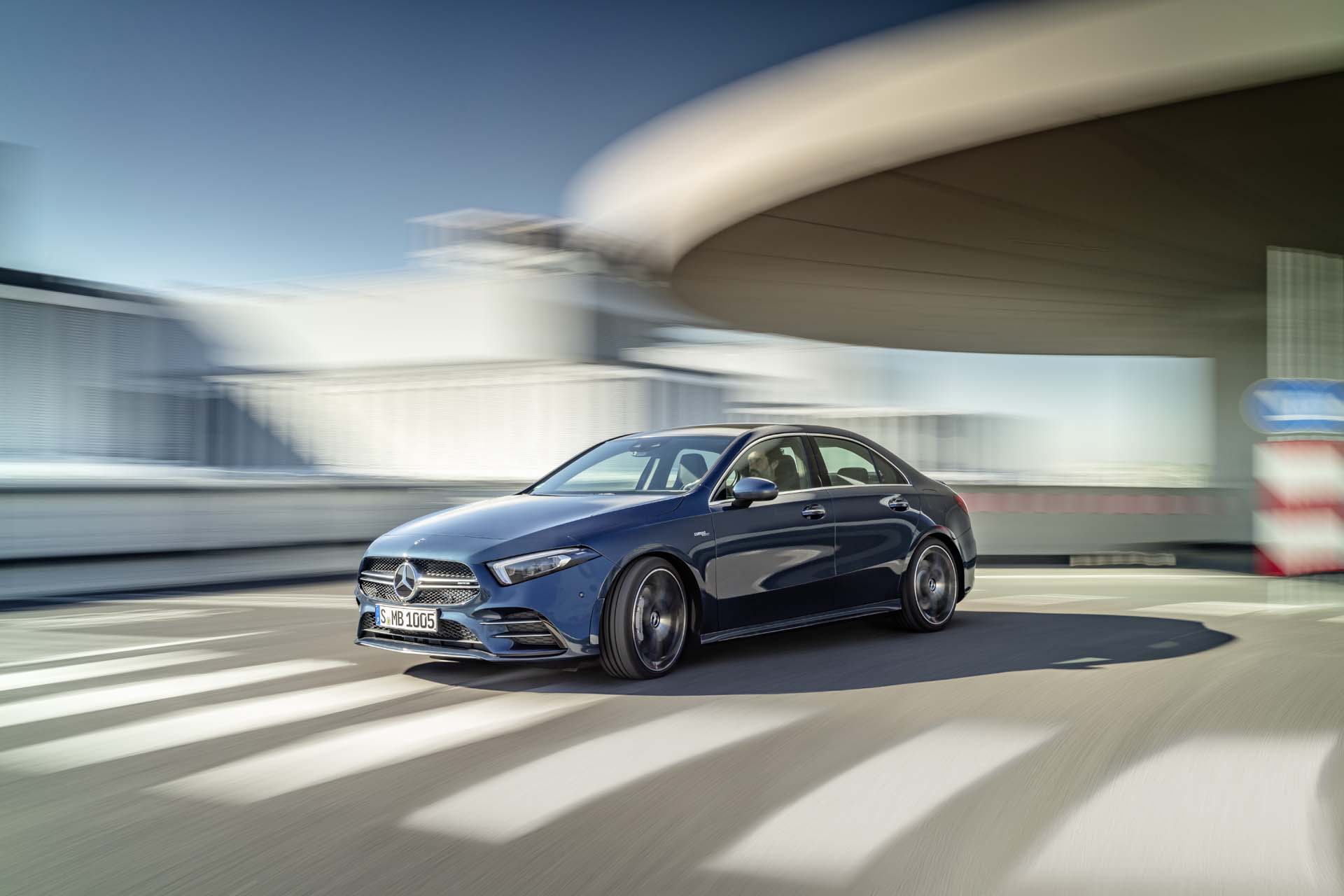
    Mercedes-Benz dropped the curtains on the Mercedes-AMG A35 performance sedan ahead of its public debut at the Paris Motor Show in October this year. The sprightly luxury compact sedan gets the Affalterbach treatment sharing its underpinnings and powertrain with the A35 AMG hatchback, albeit now gets that small boot, making it slightly more practical. The good bit is that the A35 AMG sedan retains the performance of the hatchback churning out an identical 301 bhp from the same motor.

    Visually, the Mercedes-AMG A35 sedan looks similar to the hatch, complete with the bold grille with the massive logo up front, and the sweptback LED headlamps. The wheelbase too remains the same at 2727 mm, while the extended boot is met with a coupe-like roofline that adds to the striking appeal of the model. The rear sports twin exhaust and a lip spoiler integrated into the boot, while the wraparound LED taillights are distinctive and light up the boot’s appearance, quite literally.

    The cabin too is a direct lift from the A35 AMG hatchback. The sedan comes with the AMG flat-bottom, multi-function steering wheel and the extended digital cockpit with the split screen setup for the infotainment system that also uses the MBUX system. The A35 AMG comes with five driving modes, which changes the colour scheme inside the cabin according to the mode you select.

    With respect to performance, the Mercedes-AMG A35 uses 2.0-litre four-cylinder turbocharged engine that churns out 301 bhp on offer. The motor is paired with a 7-speed dual-clutch automatic transmission, while there are wheel-mounted paddle shifters for manual shifts. The A35 also comes with 4MATIC All-Wheel Drive system that sends power to the front wheels but can distribute power to the back as well for a 50:50 split. Furthermore, the A35 comes with individual braking for each wheel, while the suspension is adjustable and can be tuned for comfort on the streets or for attacking corners on a race track.  The performance sedan can do the 0-100 kmph sprint in 4.7 seconds, which is the same as the hatchback.

    The Mercedes-AMG A35 is slated to hit a number of markets by the end of this year including the US. However, it’s not clear if Mercedes-Benz will be bringing the performance sedan to India.

  • Automakers diverge on how fast to deploy automatic braking

    Automakers diverge on how fast to deploy automatic braking

    Big automakers are rushing to launch self-driving cars as early as 2021, but the industry’s major players are moving slowly when it comes to widespread deployment of a less expensive crash prevention technology that regulators say could prevent thousands of deaths and injuries every year.

    Nissan Motor said on Thursday it would make automatic braking systems standard on an estimated 1 million 2018 model cars and light trucks sold in the United States, including high-volume models such as the Rogue and Rogue Sport compact sport utility vehicles, the Altima sedan, Murano and Pathfinder SUVs, LEAF electric car, Maxima sedan and Sentra small car.

    Rival Toyota Motor has said it will make so-called automatic emergency braking standard on nearly all its U.S. models by the end of this year.

    Overall, however, most automakers are not rushing to make automatic brake systems part of the base cost of mainstream vehicles sold in the competitive U.S. market. The industry has come under pressure from regulators, lawmakers and safety advocates to adopt the technology, which can slow or stop a vehicle even if the driver fails to act.

    So far, only about 17 percent of models tested by the Insurance Institute for Highway Safety offered standard collision-avoiding braking, according to data supplied by the auto safety research group backed insurance industry. Many of the models with standard collision-avoiding brake systems are luxury vehicles made by European or Japanese manufacturers.

    The systems require more sensors and software than conventional brakes, and automakers said they need time to engineer the systems into vehicles as part of more comprehensive makeovers.

    Last year, 20 automakers reached a voluntary agreement with U.S. auto safety regulators to make collision-avoiding braking systems standard equipment by 2022.

    Safety advocates have petitioned the National Highway Traffic Safety Administration to begin a regulatory process to require the technologies, but the agency has said the voluntary agreement will result in faster deployment than a formal rule-making process. NHTSA says the technology could eliminate one-fifth of crashes.

    “Do the math. That’s 5 million crashes every year – 20 percent reduction means 1 million less. Those are big numbers,” Mark Rosekind, the NHTSA’s then-administrator, told last year.

    But customers would likely experience the benefits of the technology infrequently. The technology to enable a car to drive itself is far more costly, but industry executives foresee autonomous vehicles driving revenue-generating transportation services that could be attractive to investors.

    General Motors Co (GM.N) offers automatic braking as optional equipment on about two-thirds of its models. The company did not say on Thursday how many vehicles have the technology as standard equipment. GM has not made public its plans to make the technology standard across its lineup.

    “Any time you have a voluntary agreement you have a spectrum of implementation,” Jeff Boyer, GM’s vice president for safety, told Reuters earlier this week. Asked when GM would roll out standard automatic braking, Boyer said, “let’s just say we honor the voluntary commitment.”

    Ford Motor “has a plan to standardize over time,” the company said in a statement on Thursday. Currently, automatic braking systems are optional on several 2017 Ford and Lincoln models, and will be offered on certain 2018 models including the best-selling F-150 pickup truck.

    Fiat Chrysler Automobiles offers automatic braking as optional equipment in nine model lines, using cameras and radar to detect hazards ahead. The company has said it will meet the 2022 target for making the systems standard.

    As 2018 models roll out during the second half of this year, more vehicles will offer automatic braking, said Dean McConnell, an executive with Continental AG’s North American business. Continental’s automatic braking technology systems will be on certain Nissan models.

    “We see it accelerating,” he said. “It varies. There are some (automakers) that are being aggressive” and others that are waiting.

    Nissan did not disclose how much prices for vehicles would rise to offset the cost of standard automatic emergency braking. The 2018 models will be launched later this year. Currently, Nissan, like most carmakers, offers automatic braking as part of a bundle of optional safety and technology features.

    A 2017 Nissan Sentra compact sedan has a starting price of $17,875. To buy the car equipped with automatic braking requires spending another $6,820 for a Sentra SR with a premium technology package.

    German auto technology suppliers Continental and Robert Bosch will supply the systems, Nissan said.