Retail News CRM

Tag: brewery

  • Coopers Brewery Defies Downturn: Annual Beer Sales Soar Despite National Decline

    Coopers Brewery Defies Downturn: Annual Beer Sales Soar Despite National Decline

    Coopers Brewery, a family-owned independent brewing company, has experienced a slight rise in its annual beer sales, outperforming the overall market that has seen a downturn.

    Annual Sales Report

    In the 2024-25 fiscal year, Coopers Brewery reported total beer sales of 80.6 million litres, marking a growth of 2.4% compared to the preceding year. This contrasts the 0.9% contraction witnessed within the national beer market during the same period.

    Growth in Keg and Packaged Beer Sales

    Sales of kegs, which account for approximately 12.4% of Coopers’ total beer sales, saw a substantial increase of 5.9%. Additionally, the sales of packaged beers also saw a modest uptick of 1.8%.

    Product-Specific Sales Performance

    Sales of malted barley and wheat saw an increase of 3.4%. However, there was a 17% drop in DIY brewing product volumes, a result of reduced consumer demand and restricted space on supermarket shelves.

    Statement from the Managing Director

    Michael Shearer, the Managing Director of the brewery, noted that the figures indicate a resilient performance throughout their beer portfolio. He highlighted considerable consumer demand for Dry 3.5 and Australian Lager, both relative newcomers to their range. Traditional ale products also continued their growth trajectory at 1.2%, while Stout saw a resurgence with a 3.3% rise compared to the previous year.

    Shearer admitted that cost-of-living pressures have made consumers more selective in their purchasing decisions. However, he was optimistic about achieving another year of solid sales growth in a challenging market, expressing it as a testament to the team and their craft.

    Regional Growth and Profit

    Over the course of the year, the company saw sales growth across all states and territories. SA emerged as the largest market in terms of sales volume, while Queensland experienced the most substantial growth at 4.8%.

    International beer exports, excluding New Zealand, which make up around 1% of total sales, fell by 22.3%. Conversely, sales to New Zealand grew by 2.6%.

    In terms of profitability, Coopers Brewery witnessed a decrease in pre-tax profits, which fell from $32.8 million in the previous year to $22.5 million. This shift reflects the investment in a new $70 million visitor center and its associated costs.

    The Visitor Center

    The company described the visitor centre as a generational investment and an integral part of its long-term strategy. In addition to housing a restaurant, the facility also includes a microbrewery and a whisky distillery. Since its inauguration in August of the previous year, the centre has welcomed approximately 60,000 visitors.

    Questions & Answers

    What contributed to the decrease in Coopers Brewery’s pre-tax profits?
    The pre-tax profit decrease reflected the brewery’s investment in a new $70 million visitor centre and its associated costs.

    What sales growth was seen across different product ranges at Coopers Brewery?
    Keg sales rose by 5.9% and packaged beer sales increased by 1.8%. Malted barley and wheat sales grew by 3.4%, but DIY brewing product volumes fell by 17%.

    Which areas experienced the most growth in terms of beer sales for Coopers Brewery?
    In terms of sales volume, SA was the largest market. However, Queensland recorded the highest growth rate at 4.8%.
  • Stone & Wood Brewing Innovates With Refreshing Citrus Radler Beer Blend

    Stone & Wood Brewing Innovates With Refreshing Citrus Radler Beer Blend

    Stone & Wood Brewing Company has introduced a new beer blend, Citrus Radler, targeting customers who prefer lighter, more refreshing beverages. This innovative blend combines beer with citrus elements, providing a flavorful twist to traditional beer.

    A New Favorite: Citrus Radler

    The Citrus Radler is described as a light, invigorating beverage with a zestful aroma and taste, characterized by notes of orange, grapefruit, and lemon. Radlers are typically a combination of beer and citrus components, such as lemon soda, lemonade, or freshly squeezed juice.

    Stone & Wood’s unique spin on the Radler is light-bodied and designed for easy consumption. The product is free of added preservatives and is brewed exclusively using Australian malts and hops. Each 300ml can contain a moderate alcohol content of 4 per cent ABV.

    The company describes the Citrus Radler as a “bright and sessionable salute to the Australian golden hour.” It is a carefully crafted blend of Australian pale malts, Galaxy hops, and real Australian lemons, providing a refreshing experience to beer enthusiasts.

    Availability and Pricing

    The Citrus Radler is now available for purchase online and at select retail locations, including BWS and Dan Murphy’s stores. The product is priced at $17 for a pack of four and $60 for a pack of sixteen, providing customers with a range of options that cater to their unique preferences and consumption habits.

    Questions & Answers

    What is the Citrus Radler?
    Citrus Radler is a new beer blend introduced by Stone & Wood Brewing Company, featuring a refreshing blend of beer and citrus elements.

    What are the key characteristics of the Citrus Radler?
    It’s a light-bodied, zesty beverage with notes of orange, grapefruit, and lemon. It’s made using Australian malts and hops and contains no added preservatives.

    Where can the Citrus Radler be purchased and how much does it cost?
    Customers can buy Citrus Radler online or at select BWS and Dan Murphy’s stores. The price is $17 for a four-pack and $60 for a sixteen-pack.

  • Coopers Brewery Taps Into ‘nolo’ Trend With Full-flavoured Non-alcoholic Beer Launch

    Coopers Brewery Taps Into ‘nolo’ Trend With Full-flavoured Non-alcoholic Beer Launch

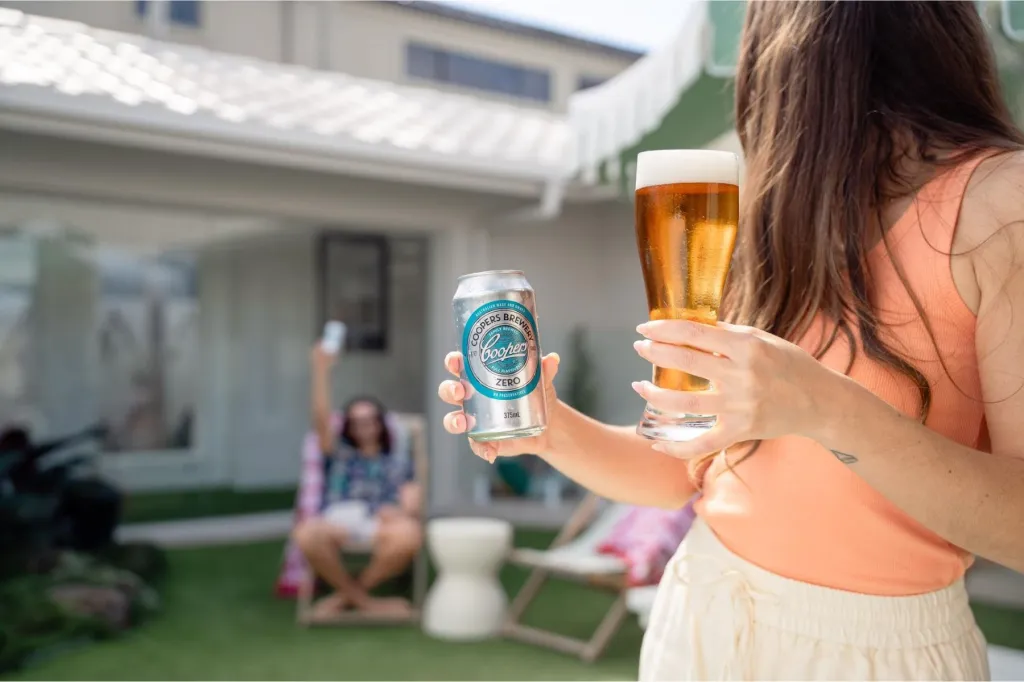
    Coopers Brewery, a family-owned Australian enterprise, has expanded its product offerings to include a non-alcohol beer. The move is in response to increasing consumer demand for beverages commonly referred to as ‘Nolo’, shorthand for ‘no or low alcohol’ beers.

    With an alcohol by volume (ABV) content of less than 0.5 percent, Coopers Zero delivers the robust flavor of a full-strength beer. This new product aligns with the results of the company’s research on evolving lifestyle trends. It was found that young Australians are twice as likely to opt for Nolo beverages.

    A Full-Flavoured Non-Alcoholic Brew

    According to Michael Shearer, Managing Director of Coopers, the new product was specifically developed for those aiming to reduce their alcohol consumption or diversify their drinking habits. “We aimed to create an exceptional, full-flavoured beer to accommodate Australians looking to moderate their alcohol intake or vary their drinking preferences,” he stated.

    Coopers’ healthier alternative is brewed from pale and crystal malts, as well as malted wheat. Each 375ml can contains 49 calories. The beer, characterized by its subtle aroma and moderate bitterness, will be available across Australia starting this month.

    Only last month, the brewery launched a fresh edition of its Vintage Ale.

    Questions & Answers

    What is the alcohol content of Coopers Zero?
    Coopers Zero has an alcohol by volume (ABV) content of less than 0.5 percent.

    What is the calorie content of Coopers Zero?
    Each 375ml can of Coopers Zero contains 49 calories.

    What are the primary ingredients used in the brewing process of Coopers Zero?
    Coopers Zero is brewed from pale and crystal malts, as well as malted wheat.

  • Sabeco’s profit plunges by a third in Q2

    Sabeco’s profit plunges by a third in Q2

    Sabeco, the brewer of Saigon Beer, saw profits plunge 32% year-on-year to VND1.2 trillion ($50.7 million) in the second quarter as rising competition pumped up its marketing expenses.

    Fierce competition with international brewers forced the company to spend more on marketing and distribution, while demand has plunged from last year amid economic challenges, the company explained in its financial report.

    The impact of tightened regulations on driving under the influence and rising costs of ingredient and packaging also contributed to the profit drop, it added.

    In the second quarter last year Sebeco reported a post-tax profit of VND1.79 trillion, the highest since Thai company ThaiBev acquired it in 2017.

    In the first six months this year the company posted a post-tax profit of VND2.2 trillion, meeting 38% of the year’s target.

    Earlier this year Sabeco leaders said that Vietnam’s beer industry was seeing a golden opportunity amid rising income and the potential of increasing exports of non-alcoholic beer.

    Sabeco therefore targets a revenue increase of 15% to VND40.27 trillion and a profit rise of 5% to VND5.77 trillion, a new peak.

    But most analysts have forecast that the company will fail to meet these goals as consumers are tightening their spending amid economic difficulties.

    Vietcombank Securities last month forecast that Sabeco will see revenue increasing only 6% this year.

    SSI Securities expect its revenue to rise 4.7% and profits 5.2%.

  • New Zealand’s Epic Brewing enters liquidation

    New Zealand’s Epic Brewing enters liquidation

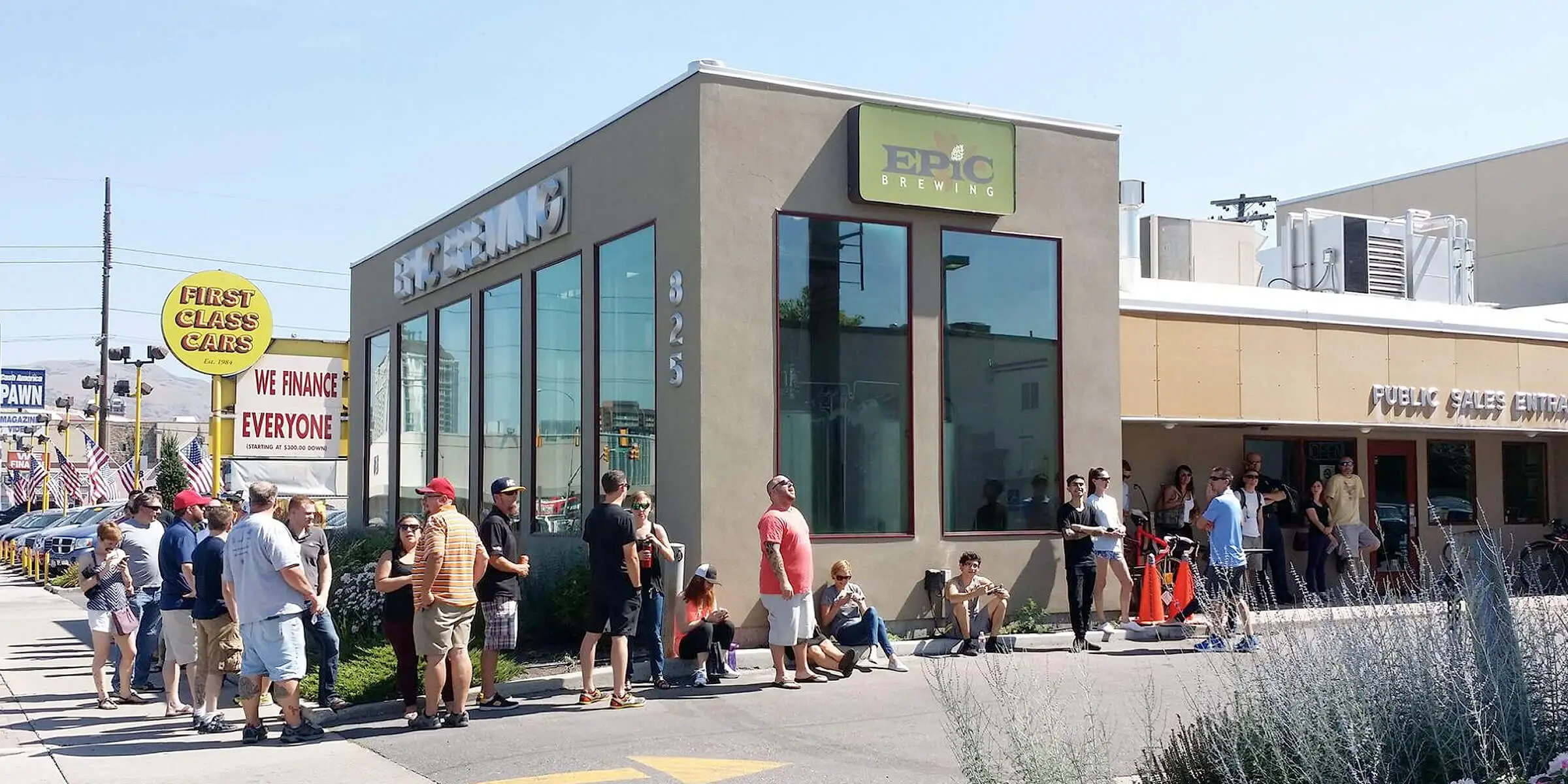
    Auckland craft beer brewer Epic Brewing Company has gone into liquidation. Companies Office records show the business was placed into liquidation by a special resolution of shareholders on Tuesday.

    Damien Grant and Adam Botterill of Waterstone Insolvency were appointed liquidators.

    Owner Luke Nicholas developed the Epic brand in 2005 while working as head brewer for the Steam Brewing Company, the brewing arm of the Cock and Bull pubs in Auckland in Hamilton.

    In 2007 Nicholas and a silent partner bought the Epic brand from the Cock and Bull and continued to use its brewing facility and supply its four pubs.

    Epic Brewing Company have been pushing boundaries and winning awards for more than a decade. (Video first published in November 2019)

    The brewery developed a reputation for producing beers that were big on flavor and aroma – brews like Hop Zombie and Armageddon became cult classics among craft beer drinkers for their use of highly sought-after US hops.

    With the launch of Epic Blue in 2019, the company became one of New Zealand’s first craft brewers to produce a low-carb beer.

    The day’s talking point and stories you don’t want to miss, delivered to your inbox

    According to its website, Epic has 15 employees and operates a taproom in Onehunga.

    The first liquidator’s report is due on August 1.

  • Sabeco to install rooftop solar panels at 9 breweries

    Sabeco to install rooftop solar panels at 9 breweries

    Sabeco has partnered with SP Group, a leading utilities group in the Asia Pacific, for the second phase of its rooftop solar energy system installation and operation.

    Saigon Beer-Alcohol-Beverage Corporation (Sabeco) and SP Group signed a Memorandum of Understanding on Thursday to carry out rooftop solar energy system installation and operation with a maximum output of 10.44 MWp (Megawatt-peak) at nine Sabeco’s breweries.

    This will bring the number of Sabeco breweries adopting solar energy by the end of 2023 to 17.

    “This partnership demonstrates our commitment to facilitating the clean energy transition of manufacturing facilities. Leveraging our comprehensive range of sustainable energy solutions, we look forward to supporting Sabeco towards their energy efficiency goals and co-creating a more sustainable future for Vietnam,” Brandon Chia, Managing Director, Sustainable Energy Solutions (Southeast Asia & Australia), SP Group, said.

    The first phase kickstarted in 2020, receiving VND107 billion ($4,7 million) investment from Sabeco with a maximum output of 9 MWp at Cu Chi, Dak Lak, Phu Yen, Quy Nhon, Song Lam, Khanh Hoa, Can Tho, Soc Trang and Ben Tre breweries.

    Under the new MoU, SP has been commissioned to install and operate the rooftop solar panels at nine breweries in Lam Dong, Ha Tinh, Ha Noi, Tay Do, Vinh Long, Nguyen Chi Thanh, Bac Lieu, and Quang Ngai, and expand the system in Cu Chi.

    The installment is scheduled to be completed and operational by the end of Q3. The system of 17 breweries is estimated to provide almost 23% of electricity consumed at the breweries, or 25 million kWh, equivalent to a reduction of 18,000 tons of CO2 emitted annually.

    “The company has sought to implement initiatives and solutions that support sustainable business over the past few years. We have already embarked on various ESG (Environment, Society and Governance) initiatives through our 4C corporate social responsibility pillars (Consumption, Conservation, Culture and Country). We also have implemented Best Brewery Awards to encourage our breweries to embed sustainability mindset,” Bennett Neo, General Director of Sabeco, said.

    Apart from energy usage, Sabeco has implemented other initiatives to mitigate environmental impacts. The company reduced waste used per liter of beer from 5 liters in 2018 to below 3 liters in 2022.

    Sabeco has embarked on plant-based biomass fuel (rice hulls, sawdust, cashew shell, and leaves) usage instead of using fossil fuel-powered boiler, applying the CIP wastewater treatment system; using sustainable packaging (downgauged cans, lightweighted carton boxes and bottles) and reusing beer glasses and cans.

    Sabeco also promotes other sustainability initiatives which focus on local communities where it operates. The recent project “Light up the Rural”, a part of the three-year strategic partnership between Sabeco and the Central Committee of the Ho Chi Minh Communist Youth Union, has constructed 34km of street lighting that uses solar power in 34 rural areas in 34 provinces across the country.

    This initiative aims to improve socio-economic infrastructure to more than 210,000 households. The project will be expanded in 2023 with more than 39 km of solar street lights to be installed.

    Sabeco operates 26 breweries, 11 member trading companies and a network of hundreds of thousands of selling points across the country.

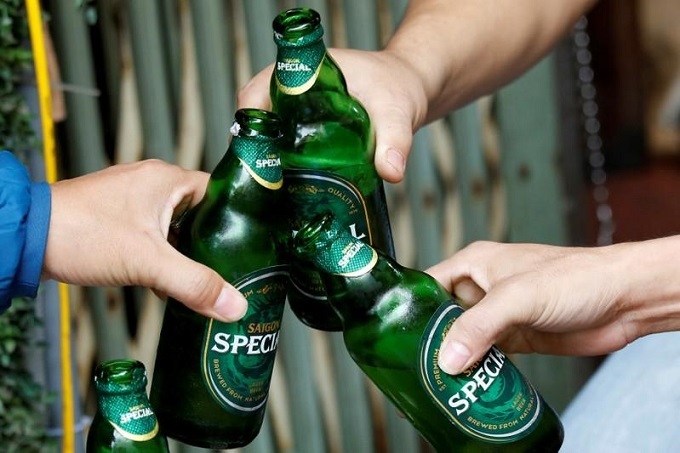
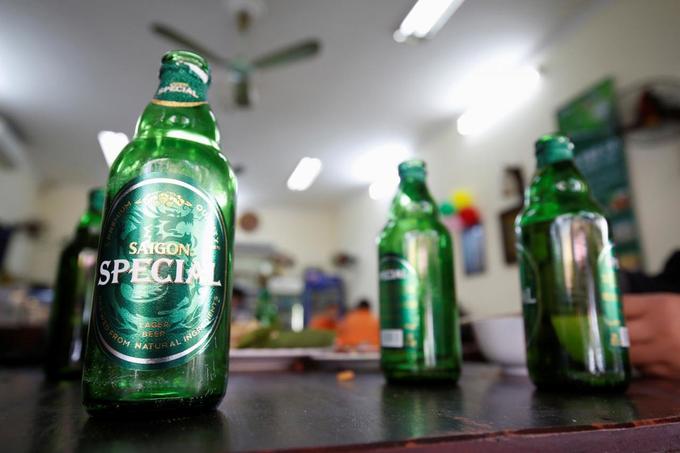
    Sabeco has a wide portfolio of beer brands that are beloved by the people of Vietnam, which includes Bia Lac Viet, Bia Saigon Chill, Bia 333, Bia Saigon Special, Bia Saigon Export, Bia Saigon Lager and Bia Saigon Gold.

  • Boag’s Brewery tours to continue in Launceston thanks to state government funding

    Boag’s Brewery tours to continue in Launceston thanks to state government funding

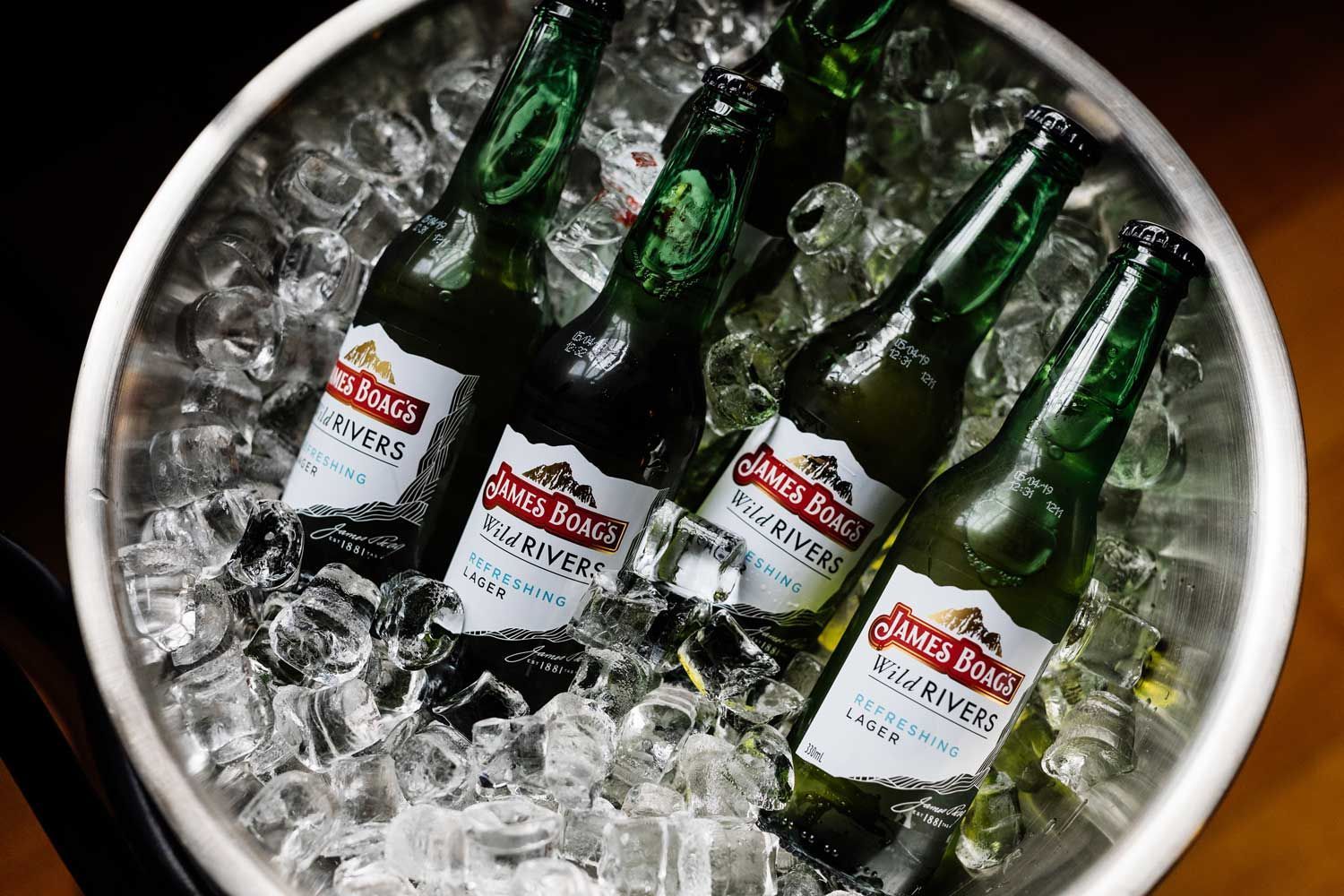
    Tours of one of Australia’s oldest breweries — which were set to end in a few days — have been saved at the 11th hour after James Boag’s Brewery received funding from the Tasmanian government to keep them running.

    The Tasmanian government will provide $1 million to keep the Launceston brewery’s visitor centre open.

    As part of the deal, any Tasmanian with a current driver’s licence can get free tours for the next 12 months.

    Lion Australia, which owns Boag’s, announced last week that it would close the visitor centre, citing declining beer consumption, rising costs and the impact of COVID-19 as the reasons why.

    Boag’s Brewery director Nathan Calman said the government funding announcement was a win-win for the Launceston community.

    “The proposal to close the visitor centre and tours was not put forward lightly, but as a response to the significant cost pressures we are facing across our business,” Mr Calman said.

    “The response — an outpouring of immense passion for the continuation of our brewery tours and visitor centre experience — reminded us of just how integral Boag’s is to Launceston.

    Mr Calman said there had been no expectation that the government would provide support to keep the tours operating.

    “This package will help us continue to provide a great tour experience at the Boag’s visitor centre, while we work with the government and other stakeholders to address some of the long-term cost pressures our manufacturing business continues to face,” he said.

    The continued operation of the centre will also save 12 jobs.

    Premier Jeremy Rockliff, who called on Lion to reconsider its initial decision, said the funding would be used to “expand and enhance the tourist attraction”.

    “It’s not only a local cultural icon but a vital part of the local northern economy attracting thousands of visitors a year,” Mr Rockliff said.

    “The unique experience it offers has been a significant drawcard for Launceston for decades, with the benefits flowing to other businesses in the region and across the state.”

    The funding will also be used for a marketing strategy, to promote the tour to interstate travellers.

    Launceston Mayor Danny Gibson said that he was delighted the decision to close the visitor centre had been reversed.

    “We’re thrilled that such a vital component of our visitor economy has been reinstated, not only to the same level but [also with] commitment to expand it.

    “We know that the visitor centre and the tours are consistently ranked highly by visitors to Launceston.”

  • CUB gets fruity testing new beer sub-category

    CUB gets fruity testing new beer sub-category

    Carlton & United Breweries (CUB), part of Asahi Beverages, has released a new beer range with fruity flavours called Sungazer and Empire.

    The new brews feature malted barley, hops, yeast and water and offers a lager-like finish on the palate. Flavours in the Sungazer range include Watermelon, Raspberry and Mango while Empire offers Strawberry & Lime and Orange & Mango.

    The company says the beers are low in bitterness with “a subtle maltiness” and strong fruit flavours. The brands built on the beverage giant’s existing innovation, particularly with products like Carlton Zero.

    CUB GM of marketing Nicole McMillan said Fruity Beer is a ground-breaking innovation that will help CUB and bottleshops keep pace with evolving consumer tastes.

    “Drinkers have told us they love the tradition of enjoying a beer with mates but increasingly want sweeter flavours and low bitterness in their beverages.”

    She added the brand is committed to growing the beer market in Australia and attracting a new demographic of beer lovers.

    Though the brew is not traditional, McMillan said the brands’ other popular offerings such as Victoria Bitter and Carlton Draught “aren’t going anywhere”.

    The new range is now on sale in major bottleshops in 300ml cans with a 4.2 per cent ABV.

  • Coles partners with brewery to make beer from excess watermelons and bread

    Coles partners with brewery to make beer from excess watermelons and bread

    One of the world’s oldest beer styles is roaring back to life thanks to a truckload of watermelons, 500 loaves of unsold bread, and a creative partnership between Coles Liquor and Melbourne-based craft beer producer Local Brewing Co.

    Local Brewing Co’s limited edition Surplus Sour Watermelon Beer, launched exclusively this week at Liquorland and First Choice Liquor Market, is the first of a series of fruit sour beers made with unsold or excess fruit from Coles’ supermarket suppliers and slated to hit the shelves in the next 12 months.

    Brewed exclusively for Coles Liquor, Surplus Sour Watermelon Beer is made with three tonnes of excess melons donated by long-time Coles produce supplier Rombola Family Farms. In place of brewer’s malt, Local Brewing rescued 300 kilograms of unsold Coles bread to add to the ferment.

    The result is a light, gently fruity, and refreshing beer with a delicate tang that typifies sour beers, one of the fastest-growing craft beer styles in Australia and part of a renaissance of this easy-drinking alternative to traditional ‘bitter’ pale ales.

    Sour beers are synonymous with Belgium, where traditional sour styles such as Lambic have been brewed since early in the 18th century. However, their history can be traced back as far as 4000BC, when brewing involved little more than mixing grain and water together and allowing naturally-occurring microbes to do the rest.

    In addition to yeast, which converts carbohydrates from the grain into alcohol, the microbial population also included lactobacillus, which instead uses carbohydrates to create lactic acid – the same compound that gives sourdough bread its distinct flavor.

    While modern brewing techniques usually avoid so-called ‘wild’ bacteria by using carefully-cultivated strains of yeast to reduce the influence of sour or acidic flavors, the craft beer revolution has reignited interest in traditional styles.

    Local Brewing Co has been creating sour beers on a boutique scale for the last three years however its collaboration with Coles has significantly upscaled production. Importantly for the brewery’s founders, it has also super-charged the positive social impact of a business that was conceived as a social enterprise to help feed those in need.

    Ordinarily, Local Brewing Co contributes the equivalent of one meal from the sale of every four-pack of its beer to food rescue organization SecondBite, which works with charities across the country to help Australians in need.

    However, through this partnership with Coles, co-founder Nick Campbell said Local Brewing would contribute the equivalent of one meal for the sale of every can of its Watermelon Sour beer – four times the usual donation.

    “Our collaboration with Coles Liquor has been incredible – it’s allowed us to brew a genuinely sustainable beer and increase our social impact,” Mr Campbell said.

    “We know from the release of previous sour beers that customers embrace this genuinely unique product and it’s a great way to use food that might otherwise be wasted.

    “Every time we’ve released one of these sours in the past it has been a sell-out in just a few days, so we know customers love the story of transforming rescued food into an entirely new product.”

    Coles Liquor Merchandise General Manager Brad Gorman said the partnership would produce at least three other exclusive fruit sour beers in the next 12 months to meet the growing demand for this style of beer as well as consumer appetite for genuinely sustainable products.

    “We’re already planning new exclusive sours through partnerships with seasonal fruit suppliers in the supermarket business, which will underpin the creation of an exclusive, sustainable sour beer brand that will be unique to Coles Liquor,” Mr Gorman said.

    “Sour beers are a very strong and rapidly growing segment in craft beer and we know our customers love locally made products; it’s a key element of delivering on our ambition to be the local drinks specialist.”

    Fernando Rombola has been supplying watermelons to Coles for the past seven years, during which time he’s seen a significant increase in consumer interest in sustainable agriculture and reducing food waste.

    His company Rombola Family Farms generously donated three tonnes of excess watermelons to the Local Brewing Co, embracing the opportunity to explore an alternative, sustainable route for the fruit, which is otherwise used as compost on the farm.

    “This is super important for us – sustainability is not just about the environment, it’s financial sustainability, it’s sustainability for our people and sustainability for the land, if we are not looking after our land, how are we going to be able to reap the rewards from it?

    “For the first time in my life I had to do an ESG (Environmental, Social, and Governance) statement for the bank on one of our last loans, so there is a lot of interest in sustainability and it’s the right thing to do.

    “If this product is successful, we’d definitely like to see this as a different stream; the more sustainable we are, the more we can grow more with less hectares, which is what we are always trying to do.”

    Local Brewing Co has a long history with SecondBite, partnering with the food rescue group when it was first established to embed philanthropy into the foundations of its craft brewing business.

    “We are so excited that our long running partnership with Local Brewing Co is benefitting from a collaboration with Coles, who we’ve worked with for more than a decade now to end waste and end hunger in Australia,” said SecondBite Chief Executive Officer Steve Clifford.

    “The fact Local Brewing Co is able to increase its support for SecondBite through the launch of this unique sour beer is very exciting for us.

    “We couldn’t be prouder that two of our partners have collaborated to create a product that closes the loop on food waste and provides an opportunity for customers to give back with every purchase.”

  • Habeco Vietnam reports another year of falling profits

    Habeco Vietnam reports another year of falling profits

    Habeco’s profits fell by 23 percent last year to VND667 billion ($28.71 million), the fourth straight year of decline. Hanoi Beer Alcohol and Beverage Corp, as it is formally known, one of Vietnam’s biggest brewers, also reported a 5 percent fall in revenues to VND9.4 trillion ($404.67 million). There was a sharp increase in operating expenses, especially cost of sales.

    After falling for four years profits are now less than half of the 2014 figure of VND1.44 trillion ($62.12 million).

    Habeco’s decline is contrary to the general growth trend as Vietnam remains one of Asia’s biggest beer consumers. According to Euromonitor statistics, while global beer consumption volume remains unchanged last year, the figure for Vietnam soared.

    According to data from the Vietnamese Beer, Alcohol and Beverages Association, on average a Vietnamese person drank nearly 45 liters of beer in 2017, an almost 50 percent jump in two years.

    Many securities firms believe that though Habeco still leads the beer market in the north, it faces challenges like changing consumer tastes and competitive pressure from foreign brands. It has only been able to maintain market share in the low-priced segment, ceding ground in the premium segment to brands such as Heineken, Saigon Beer (now a subsidiary of ThaiBev) and other foreign brands.

    Ban Viet Securities Company’s latest data shows Habeco’s share in the beer market has fallen continuously in the last six years, from nearly 20 percent in 2010 to 18 percent by the end of 2017.

    The reason for this is that the low-cost segment, its strength, is shrinking, said the securities company. The cheap beer segment now makes up of only 8 percent of the market compared to 14 percent seven years ago.

    Vietnam is famous for its beer drinking culture, and it is widely believed that business deals go more smoothly over a few drinks.

    The country is the biggest beer market in Southeast Asia, consuming nearly four billion liters in 2017. It spends on average $3.4 billion on alcohol each year, or $300 per capita, while spending on health averages $113 per person, according to the Ministry of Health.

  • Belgium brewery apologizes to Hindus for using Lord Ganesha as beer icon

    Belgium brewery apologizes to Hindus for using Lord Ganesha as beer icon

    Belgium brewery, The Musketeers, has apologized for using Lord Ganesha as icon representing its Jack’s Precious IPA beer. The translation of the brewery’s (headquartered in Ursel, East Flanders) statement in Dutch, responding to criticism by Hindu community, published on their website, said: “The brewery wants to apologize when they unwittingly hurts a community”; and added that the beer label “in no way intended to hurt anyone”.

    Hindu statesman Rajan Zed, who spearheaded the protest against the Lord Ganesha’s image on Jack’s Precious IPA beer label, in a statement in Nevada today, welcomed the brewery’s apology, calling it a step in the positive direction.

    Zed, who is President of Universal Society of Hinduism, indicated that in the same spirit, the brewery should immediately withdraw image of Lord Ganesha from the beer label, which was highly inappropriate.

    If the Musketeers brewery continued to use Lord Ganesha icon on their beer, they were thinking of approaching the Commission on Marketing and Advertising of Belgium chapter of International Chamber of Commerce, Rajan Zed pointed out.

    Lord Ganesha’s image carrying chef knife in one hand and sausage like object on the other and brewery’s trade mark symbol on his head continued to be shown on Jack’s Precious IPA beer label on brewery’s website today.

    Zed had said that inappropriate usage of Hindu deities or concepts or symbols for commercial or other agenda was not okay as it hurt the devotees.

    Rajan Zed had stated that Lord Ganesha was highly revered in Hinduism and was meant to be worshipped in temples or home shrines and not to be used in selling beer for mercantile greed. Moreover, linking Lord Ganesha with an alcoholic beverage was very disrespectful.

    Hinduism was the oldest and third largest religion of the world with about one billion adherents and a rich philosophical thought and it should not be taken frivolously. Symbols of any faith, larger or smaller, should not be mishandled, Zed had noted.

    In Hinduism, Lord Ganesha is worshipped as god of wisdom and remover of obstacles and is invoked before the beginning of any major undertaking.

    Brewery claims that Jack’s Precious IPA (Alcohol: 5.9%, EBC: 20, IBU: 50), launched in March last, “has the character of a floral bouquet with a citrus accent” and is available in Belgium, the Netherlands, France and the United Kingdom.

  • Heineken joins foreign brewers seeking to slake Myanmar’s thirst

    International brewers are trickling into Myanmar, betting that higher incomes and economic reforms will whip up a thirst for foreign beer in a market that has long been dominated by state-owned firms.

    Heineken NV, the world’s third-largest brewer, on Sunday opened a $60-million brewery joint-venture just outside Yangon, returning to one of Asia’s most promising beer markets after exiting in 1997 amid international condemnation of the human rights abuses of the military government at that time.

    Heineken’s Regal Seven beer is set to rival the Tuborg and Yoma brands by Carlsberg, which in May became the first foreign brewer to set up in Myanmar as it emerges from 49 years of military rule.

    “Myanmar is on faster trajectory of growth and its disposable income will rise for common people in coming years,” said Vijay Dhayal, senior consultant at financial advisors New Crossroads Asia.

    Myanmar’s beer industry is dominated by state-backed Myanmar Brewery, and beer consumption rates are some of the lowest in Asia at just 3.2 litres per person in 2013, according to the latest data from research firm Euromonitor International, well below the 31 litres per person in neighbouring Thailand.

    But with consumer spending expected to rise as economic reforms kick in, foreign brewers hope Burmese will want more beer, especially the branded kind. Euromonitor forecasts the value of the beer market to almost double to $675 million in three years time from an estimated $375 million this year.

    Heinken’s Myanmar brewery is a joint venture with privately owned Alliance Brewery Co Ltd (ABC), majority-owned by local spirits entrepreneur Aung Moe Kyaw.

    Analysts, however, say the dominance of Myanmar Brewery, which has an 80 percent market share, will be tough to crack.

    “This will not be an easy game for foreign firms,” said Alec Maurice, Business Development Officer at consultancy Thura Swiss. “Myanmar consumers are often very loyal to their brands, especially in the beer sector.”