Retail News CRM

Tag: brexit

  • Bentley Hires Jets To Fly Car Parts To Britain During Brexit

    Bentley Hires Jets To Fly Car Parts To Britain During Brexit

    Bentley, the luxury carmaker owned by Volkswagen has booked five Antonov cargo jets to help overcome potential supply bottlenecks in the event of a disorderly exit of Britain from the European Union, the carmaker said on Wednesday. Car manufacturers are securing additional supply routes as policymakers in Brussels and Westminster seek to strike a deal to determine the future trading relationship with continental Europe after Britain exits the European Union.

    Bentley, which makes high-end sports cars, buys 90% of its components from continental Europe, and sells around 24% of its cars into Europe, Chief Executive Adrian Hallmark told the Financial Times’ Future of the Car summit.

    “We have spent two years planning. We have five Antonovs that we have on reserve to fly bodies to Manchester,” Hallmark said, adding that in addition to shifting car bodies by air, Bentley has hiked the level of spare parts stored for production.

    Bentley has booked additional warehouses and planned new logistics routes in case traditional supply methods are hampered by bottlenecks

    “We used to run just-in-time with two days stock. Now we have 14 days of stock. That’s 14 working days, so that’s three weeks of stock,” he said.

    The company has booked additional warehouses and planned new logistics routes in case traditional supply methods are hampered by bottlenecks.

    If Britain fails to secure a negotiated trade agreement with European policymakers, Bentley would be able to absorb 10% import tariffs by raising prices and cutting costs. This would be less damaging than supply disruptions.

    “It is not existential as long as everything flows. Stopping flows is far more dangerous than Brexit tariffs,” Hallmark said, referring to supply bottlenecks.

    This year Bentley expects to sell more than 10,000 luxury cars and to reach breakeven, mainly thanks to a rebound in demand in China, Hallmark said.

    China sales are up 35% when compared with before the COVID-19 crisis. Sales in Europe and the United States up 15% Hallmark said.

    “Overall we are in a position where we will do well over 10,000 sales this year,” he said via Webcast. “We are on the cusp of going beyond breakeven.”
  • HSBC pre-tax profit up 16% at US$19.9 bn in 2018

    HSBC pre-tax profit up 16% at US$19.9 bn in 2018

    Banking giant HSBC said on Tuesday that pre-tax profit rose 16% to US$19.9 billion last year with growth across its global businesses despite a “challenging external environment in the fourth quarter”. The results capped the first full year at the helm of the Asia-focused bank for chief executive officer John Flint, who has vowed growth while keeping a lid on costs as trade tensions between the United States and China rumble.

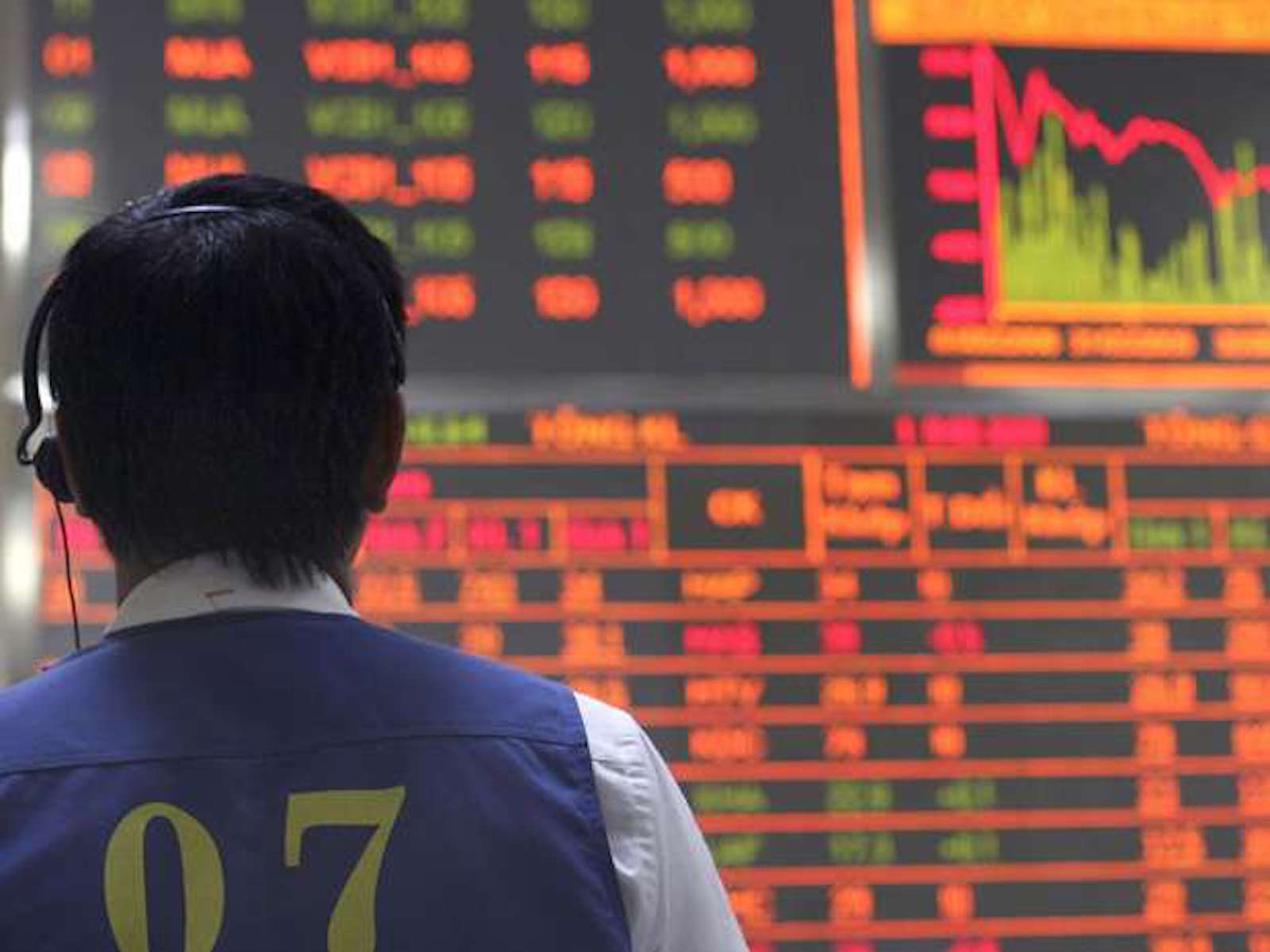
    However, earnings in the last three months of 2018 came in below expectations as Washington’s trade war began to bite globally and hammered the stock markets, especially in Hong Kong and China.

    Adjusted pretax profit fell one percent to US$3.39 billion in October-December, missing the US$4.4 billion consensus average by Bloomberg Newsderived from estimates compiled by the bank.

    Global markets adjusted revenue was down US$202 million to US$1.1 billion over the same period, while wealth management dropped 18%, also to US$1.1 billion.

    Overall the year saw strong growth for HSBC with net profit ballooning 30%to US$12.6 billion while adjusted pre-tax profit rose three percent to US$21.7 billion.

    The bank had to lay off tens of thousands of staff as part of a wide-ranging overhaul that also saw it sell its Brazil operations in 2015.

    But it showed a healthy doubling of profits by 2017, a year that also saw it nominate Mark Tucker as chairman, breaking a longstanding tradition of appointing insiders to the post.

    In a statement attached to Tuesday’s earnings, Tucker and Flint said the bank was prepared to weather fallout from both a possible deterioration in the trade talks between Washington and Beijing and Britain’s impending departure from the EU.

    “The fundamentals for growth in Asia remain strong in spite of a softer regional economic outlook,“ Tucker said in a statement attached to the annual report.

    “The system of global trade remains subject to political pressure, and differences between China and the US will likely continue to inform sentiment in 2019,“ he added.

    With Brexit looming, HSBC followed the other major British financial giants in ring-fencing its UK bank.

    “We continue to prepare for the UK’s departure from the EU” Flint said, adding its operations in France “gives us a major advantage in this regard”

  • Asian shares rise as Trump boosts US-China talks

    Asian shares rise as Trump boosts US-China talks

    Asian stocks climbed Wednesday as US President Donald Trump said he could extend the deadline for a trade deal with China, appearing to boost the prospects of an agreement. Trump said “things are going well” at preliminary talks in Beijing, where top economic officials will gather Thursday seeking an accord to stop sharp US tariff hikes that could damage the global economy.

    “If we’re close to a deal, where we think we can make a real deal … I could see myself letting that slide for a little while,” the US president said of his March 1 deadline.

    He added that he expects a meeting with counterpart Xi Jinping to happen “at some point”.

    The comments all improved market sentiment on the likelihood of a deal to prevent US tariffs on $200 billion in Chinese imports more than doubling next month.

    Washington is demanding changes from Beijing on what it says are unfair commercial practices.

    Tokyo added 1.5%, Hong Kong rose 0.4% and Shanghai gained 0.2% on the news, following Wall Street’s lead.

    However, some analysts struck a cautious tone, noting that much work needs to be completed before a framework agreement is in reach.

    “The rally in stocks has been based on hope rather than any concrete agreements overnight,” warned Oanda senior analyst Jeffrey Halley, predicting short-term volatility to come as headlines emerge from Beijing.

    Sydney shed 0.3%, with calls for a snap election amid political tensions over refugees adding to underwhelming corporate earnings and subdued metal prices.

    Nonetheless, renewed global investor confidence saw a movement away from the greenback, which has enjoyed a strong rally in the past week, to riskier currencies.

    The pound moved upwards closer to $1.29, despite no-deal Brexit fears as Prime Minister Theresa May was accused by the opposition of “running down the clock” and “playing chicken” with Brussels over talks.

    Trump’s suggestion that another chaotic US government shutdown was now unlikely following a deal struck in Congress over border security further fuelled risk appetite.

    The deal to offer nearly $1.4 billion for construction of a Mexico border wall, as well as other security measures, fell far short of Trump’s demands but has been presented as a workable compromise.

    “I don’t think you’re going to see a shutdown,” said the president.

    Elsewhere oil continued its climb after heavyweight Saudi Arabia slashed output and exports fell in crisis-hit Venezuela.

  • Malaysians keen on investing in commercial properties in Australia

    Malaysians keen on investing in commercial properties in Australia

    Malaysian investors in Australia will most likely focus on commercial properties with the implementation of new tax rates targetting foreign buyers of residential real estate, according to Knight Frank Australia.

    The property consultancy, which recently organised a roadshow to gauge investors’ sentiment, noted that the Australian property market remained a key attraction for Malaysian investors despite the recent changes to the country’s property tax law.

    “Despite the recent stamp duty changes imposed on foreigners purchasing residential property, interest from Malaysian private and institutional investors is remarkably strong,” Knight Frank head of commercial sales Paul Henley said in a statement.

    “We expect many commercial, hotel and retail assets transactions from Malaysian investors over the next year.

    “These assets are not impacted by the tax changes, and some residential specialists will still show interest at the right pricing metrics to build scale,” he added, referring to SP Setia Bhd’s recent purchase of an office tower at 288 Exhibition Street, Melbourne, for A$101mil ( S$104.3mil) as an example of the growing interest of Malaysian investors in Australia’s commercial property sector.

    In an effort to limit the amount of foreign money coming into its real-estate market to keep home prices from rising further, the Australian government had implemented new tax laws targetting foreign investors.

    These changes included a stamp duty surcharge of up to 7 per cent of residential real estate, and an extra 10 per cent withholding tax for a property with a market value of more than A$2mil.

    According to Henley, the Australian property market remained attractive to Malaysian investors due to its strong underlying economic fundamentals, including a record-low interest-rate environment.

    Malaysian investments in Australian real estate had averaged at A$750mil over the past six years, although deal flow had not been as prevalent over the past year.

    “With interest rates having dropped to their lowest ever, and a stable political scene with the Federal election result, combined with an ever-growing population, Australia is well-positioned for offshore investors,” he said.

    Separately, Sarkunan Subramaniam, Knight Frank’s managing director for Malaysia, said there was a close connection between Malaysia and Australia because the latter is one of the preferred education and tourism destinations for many Malaysians.

    “Many Malaysians travel there for education… 77 per cent of Malaysia’s ultra-high net worth individuals are expected to send their children abroad for university over the next year,” he said.

    In addition, Sarkunan said there was a growing number of Malaysians visiting Australia, with the rate having risen by more than 40 per cent over the past three years.

    Meanwhile, Knight Frank head of research and consulting Matt Whitby said UK’s referendum to leave the European Union, or Brexit, would likely accentuate global capital flows into Australia.

    “I expect Australia to benefit from Brexit and other global uncertainty, as it remains a safe-haven for investors.

    “With volumes slowing over the past quarter, mainly on the back of limited supply of assets, I expect Brexit will accentuate the capital flows into Australia and volumes will pick up in the second half of 2016,” Whitby said.

    “Australia’s economy is the envy of the developed world, growing at 3.1 per cent as at the March 2016 quarter. Sydney and Melbourne are driving performance, while our population is strong, with a growth average of 1.5 per cent across the country,” he added.


  • SoftBank arranges to buy ARM for $31b

    SoftBank arranges to buy ARM for $31b

    SoftBank has entered a deal to buy chipmaker ARM for a whopping $31 billion to help cement the company’s future in the burgeoning IoT sector.

    The boards of both SoftBank and ARM have unanimously recommended the proposed deal to buy out 100% of ARM and turn the company into a wholly-owned SoftBank subsidiary.

    The proposed buyout of UK-based ARM is the third largest proposed corporate merger of the year, and the first major deal in the UK since the Brexit vote, which has pushed down the value of the British pound to make the prospect more enticing for SoftBank.

    ARM’s core business of designing chips for mobile devices alone does not justify the high purchase price, which is more than 70 times the company’s net earnings for 2015. The company generated a mere $1.5 billion in revenue last year.

    But to counter slowing smartphone sales, ARM has been seeking to diversify into other sectors by designing chips for IoT devices, and this is where SoftBank’s interest in the company lies.

    Speaking at a press conference announcing the proposed merger, SoftBank CEO Masayoshi Son said the IoT is expected to be the “biggest paradigm shift in human history,” and that the investment marks a move to enter at the ground floor of this shift.

    Presentation materials prepared for the deal indicate that 14.8 billion ARM-powered SoCs shipped in 2015. The company is particularly targeting the consumer electronics, enterprise infrastructure, automotive and embedded intelligence segments.

    The deal still requires approval from ARM shareholders and English courts, but subject to these approvals is expected to close in the current calendar quarter.

  • Brexit to bring cheaper British goods into China, JD director

    Brexit to bring cheaper British goods into China, JD director

    Chinese e-commerce giant JD.com said on Friday British goods will come into Chinese market at cheaper prices after the country voted to leave the European Union (EU).

    “British products will be more competitive,” Tony Qiu, director of JD Worldwide, made the remarks in Paris at a news conference after discussing with French companies about coming out on top in the Chinese market.

    Since British people voted to leave the EU last Friday, the pound has dropped almost 8 percent against the dollar, accompanied with plunges in global stock markets.

    He said it’s not clear yet whether the Brexit will impact the company’s business.

    JD does have the ambition to sell goods to the European people in the long run, he added.

    JD.com, China’s second largest e-commerce platform, has already partnered with French brands, such as L’Oreal and Evian, to direct sell French cosmetics and drinks through its on-line channel.

    JD.com together with Alibaba Group, the biggest player in the field of e-commerce, account for about 80 percent of online retail sales in China.

    In late June, Wal-Mart sold its online retail site Yihaodian to JD.com. The deal will see Wal-Mart become a retailer inside Yihaodian rather than have a separate online store entirely. The partnership with JD.com is seen as a way for the US giant to gain a stronger foothold in the highly competitive Chinese e-commerce market.

  • Hong Kong jewellers to feel Brexit hit the most

    Hong Kong jewellers to feel Brexit hit the most

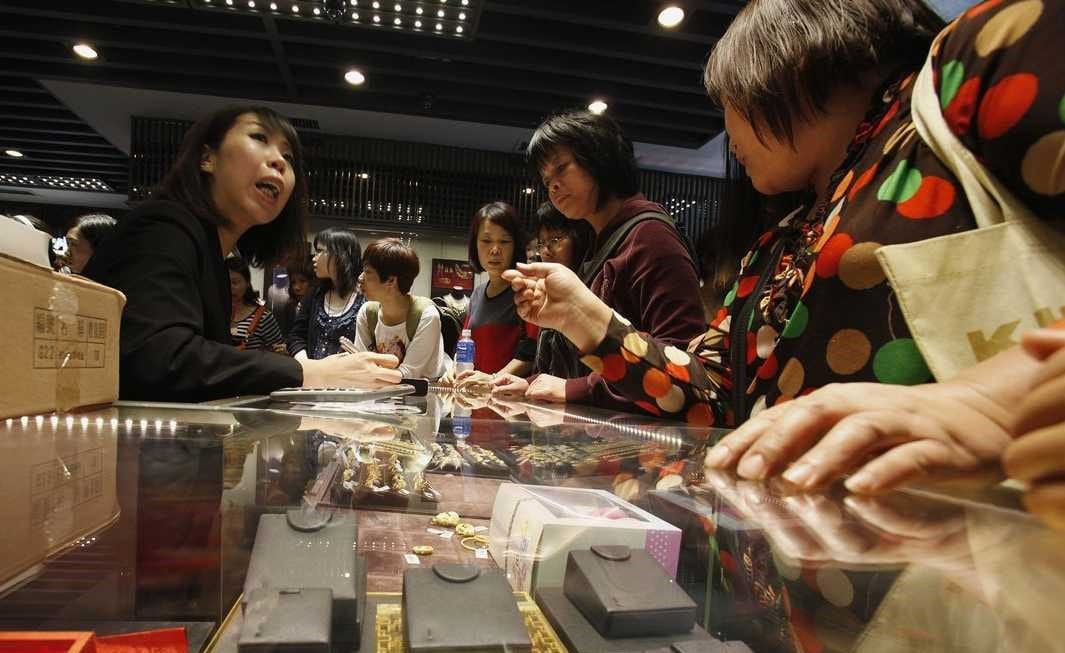
    The retail sector in Hong Kong is finding it difficult to keep their boat afloat amidst the decline in mainland tourists since a year ago. Now, the Britain’s vote to leave the EU is likely to make matters from bad to worse for the Hong Kong’s retail sector, says reports.

    A recently released Hong Kong government report showed retail sales slipping to 12.5 per cent Y-O-Y in the first quarter to HK$115.2 billion, from HK$131.6 billion in the same period last year. The total number of retail establishments also dropped sharply to 64,498, fewer by 1,400 from the first quarter last year. And there have been 10,000 retail sector job losses in the past year, with the number of employees also down to 320,400 by the end of first quarter.

    Apart from the decreasing number of tourists, outbound travel is expected to grow on the back of a stronger US dollar and weaker Chinese yuan, resulting in less spending in Hong Kong, say industry experts.

    Industry analysts have predicted for a much worst conditions for the upcoming future, after Brexit triggered global uncertainty. The situation is expected to push higher the value of U.S. dollar. Also, the experts have forecasted for an outright recession in Hong Kong this year.

    Hong Kong being financial hub and its currency peg, their economy is expected to be hit the hardest in Asia, say experts. The Hong Kong dollar, meanwhile, which is pegged to the greenback, is expected to appreciate significantly after the Brexit, say reports.

    In its latest note, the Morgan Stanley analysts say demand, too, for commercial property is likely to be impacted by weaker Hong Kong economic growth and the sluggish labour market, says reports.

    The experts further predict that the only the only bright spots in the overall retail market gloom, however, were recommendations from Bank of America Merrill Lynch and China International Capital Corp to invest in Hong Kong jewellery makers, which they said should benefit from the rising price of gold, amid global risk aversion fuelled by the Brexit.

    As per the reports, both maintained ‘buy’ ratings recently for Luk Fook Holdings, a Hong Kong gold-jewellery retailer. “Luk Fook would be the biggest beneficiary from the recent upward trend in the gold price due to its smallest hedging ratio of 15 per cent to 20 per cent,” BoA Merrill Lynch analysts said as per reports.

  • HSBC, Standard Chartered Caught Between ‘Brexit’ and China

    HSBC, Standard Chartered Caught Between ‘Brexit’ and China

    Two big U.K. banks’ shares tanked over the past couple of days, and unlike the British pound, they’re not weakening because of the so-called “Brexit” referendum — although that certainly doesn’t help.

    Instead, their fall may have a lot to do with the market and economic turmoil that has been taking place in China.

    The London-listed shares of emerging markets-focused bank Standard Chartered (SCBFF) fell by 10% at one point on Tuesday morning after it reported its first annual loss in more than 25 years.

    The bank reported a loss before tax of $1.5 billion last year, in sharp contrast to 2014’s profit of $4.2 billion.

    On Monday, HSBC’s (HSBC) shares fell in an otherwise rising market after the bank, which is the biggest in Europe and one of the biggest in the world by assets, reported a loss of $858 million before tax in the fourth quarter of last year, vs. a profit of $1.7 billion in the fourth quarter of 2014.

    HSBC, which is doing a lot of business in Asia and was even thinking of moving its headquarters there before deciding earlier this year to remain in London, eked out a 1% increase in pretax profit for full 2015 to $18.87 billion, but its adjusted loan impairment charges were up 17% at $3.7 billion over the period.

    The weak results of the two banks chime with rising investor worries about the exposure of U.K. banks to Asia, and particularly China, at a time when European banks have been making investors nervous again.

    Richard Barnes, senior director at Standard and Poor’s credit rating agency, received many questions about the risk of European banks’ exposure to Asia last week during an analyst call, and said the region was important particularly for HSBC and Standard Chartered.

    However, “we’ve seen European banks generally retrenching from a number of regions in the world including Asia … banks are trying to reduce exposure,” Barnes said, adding that, in China, “banks look again at their exposure to state-owned enterprises and are focusing on the ones that are likely to be supported by the government in a downturn.”

    HSBC has been deeply involved in the liberalization and deepening of China’s capital markets, having successfully negotiated a majority stake in a new, nationally licensed securities joint-venture in the mainland. HSBC Group Chairman Douglas Flint acknowledged in a statement on Monday that “China’s slower economic growth will undoubtedly contribute to a bumpier financial environment,” but he added that the country “is still expected to be the largest contributor to global growth as its economy transitions to higher added value manufacturing and services and becomes more consumer-driven.”

    He said this transition is driving the bank’s focus on the Pearl River Delta as a priority growth opportunity, as the area is a concentration of high-tech, research-focused and digital businesses.

    HSBC’s exposure to mainland China is around $143 billion, according to its annual report; of these, $135 billion are loans to other banks or non-bank financial institutions, sovereign and corporate loans, while $8 billion are loans to retail clients.

    China is perhaps even more important for Standard Chartered and has helped reduce the bank’s loss over the past year. Its Greater China business showed a pre-tax profit of $1.37 billion last year, compared to a loss of $1.33 billion in its European operations. In terms of exposure to China, Standard Chartered listed $77.67 billion in loans to customers in the country.

    The two banks would normally be sheltered from fears over their exposure to China by their presence in one of the strongest financial centers in the world, London. But with uncertainty in the U.K. rising because of the referendum on EU membership, expect a few particularly volatile months ahead for HSBC and Standard Chartered.