Tag: BRI

  • Bank Rakyat Indonesia Reports 11.25% Drop in H1 Net Income, Reaching $1.63B

    Bank Rakyat Indonesia Reports 11.25% Drop in H1 Net Income, Reaching $1.63B

    The latest financial results from Bank Rakyat Indonesia (BRI) unveil a challenging landscape, as the bank’s net income dropped to $1.63 billion (IDR 26.53 trillion) in the first half of 2025. This marks an 11.25% decline from the same period last year, raising eyebrows among industry observers and stakeholders. Basic and diluted earnings per share were reported at IDR 174, reflecting the pressures faced over the past year.

    A Closer Look at Income Streams

    Total interest and shariah income also experienced a dip, totaling $6.3 trillion (IDR 102.38 trillion), which represents a reduction of 2.59% year-on-year. Operating income slid by 9.18%, landing at $2.15 billion (IDR 35.01 trillion), spotlighting ongoing challenges in generating strong revenue amid economic headwinds.

    Provisions Rise, Loan Dynamics Shift

    In a notable shift, net provisions for impairment losses surged to nearly $1.45 billion (IDR 23.5 trillion) in the first half of 2025, compared to IDR 21.37 trillion in H1 2024. This uptick signals rising caution in the lending environment, suggesting potential strains in loan repayment capabilities among borrowers.

    On the brighter side, BRI reported a 6% year-on-year growth in loans, showing resilience in consumer and corporate segments, which expanded by 9.45% and 15.6%, respectively. However, KUPEDES loans, the bank’s flagship micro-lending product, underwent a striking contraction, with its contribution to total loans dropping to 13.6% in June 2025 from 16.8% in 2023. This shift has led to a reduced bank-only loan yield, as pointed out in a separate report by UOB Kay Hian.

    Margins and Market Sentiment

    Despite these challenges, the net interest margin (NIM) held steady at 7.76% for H1 2025, demonstrating a degree of stability amidst fluctuating operating conditions. It seems that while some sectors may be tightening their belts, BRI is navigating through with a blend of caution and strategy.

    Questions & Answers

    What contributed to BRI’s decline in net income for H1 2025?
    BRI’s net income fell primarily due to decreased operating income and rising provisions for impairment losses, reflecting a challenging lending environment.

    How did BRI’s loan dynamics change in the first half of 2025?
    Loans overall grew 6% year-on-year, with growth in consumer and corporate loans; however, the bank’s KUPEDES micro-lending product significantly contracted.

    What does BRI’s net interest margin indicate?
    BRI’s net interest margin of 7.76% suggests a stable lending environment despite the challenges, indicating the bank’s ability to manage its interest income effectively.
  • Bank Rakyat Indonesia Earmarks Funds For E-commerce

    Bank Rakyat Indonesia Earmarks Funds For E-commerce

    Indonesia’s first digital bank, Bank Rakyat Indonesia announced on Monday that it has earmarked $1 million for Indonesia Mall, an early-stage assisted e-commerce program that aims to help small enterprises open new revenue channels by participating in the online retail market.

    To serve the growing numbers of micro and small-medium enterprises (MSMEs) populated by the region’s e-commerce boom, Bank Bank Rakyat Indonesia (BRI) rolled out Indonesia Mall in October 2018 with the goal to bring MSMEs online and give them easy access to a larger local and overseas markets.

    Indonesia Mall, an in-house program of the bank, helps small companies post their listings on Bank BRI’s Indonesia Mall e-stores, plus help them package and photograph products. It also provides logistics, shipping, and inventory, and even facilitates overseas exports.  So far, Indonesia Mall has signed up more than 10,000 MSMEs and those that have joined the program have reportedly seen revenues rise by 40 percent on average, the bank said in a statement on Monday.

    Many MSMEs in Indonesia continue to have limited access to the formal financial sector, with large swaths of the population still remaining unbanked.  By not having bank accounts, these enterprises would have difficulties collecting payments online.

    MSMEs employ 116.7 million people – more than 97% of the total national workforce, according to data from Indonesia’s Central Statistics Agency. However, less than 15 percent of MSMEs have proper access to financing.

    Indonesian e-commerce is growing at an average of 16.3 percent annually and is now worth 238 trillion Rupiah (US$16.6 billion), according to Global Data. This growth is expected to spike further by 2023, with the industry value predicted to reach 436 trillion Indonesian Rupiah (US$30.3 billion), reflecting growth of nearly 85 percent.

    Bank BRI-assisted MSME partners range from individual craft artisans to small snack-makers, tailors, and more. Their products can be directly purchased via major e-commerce platforms such as Tokopedia, Shopee, Bukalapak, Blanja.com, Blibli.com, Qoo10 in Singapore, and others.

    Indonesia Mall aims to offer MSMEs infrastructure, ecosystem, and capacity for business and resources developed with the goal of helping its partners sell within Indonesia, as well as overseas.

    To this end, Bank BRI cross-sells products on Indonesia Mall with its credit cards, debit cards, and other programs. Besides selecting and curating a top product list, Indonesia Mall also runs marketing campaigns on most major e-commerce platforms so as to keep its sellers’ products visible on an ongoing basis.

    Bank BRI is the largest microfinance institution and is one of Indonesia’s leading commercial banks and the country’s largest lender by assets.

  • Indonesia’s BRI Signs Partnership Agreement With Alipay

    Indonesia’s BRI Signs Partnership Agreement With Alipay

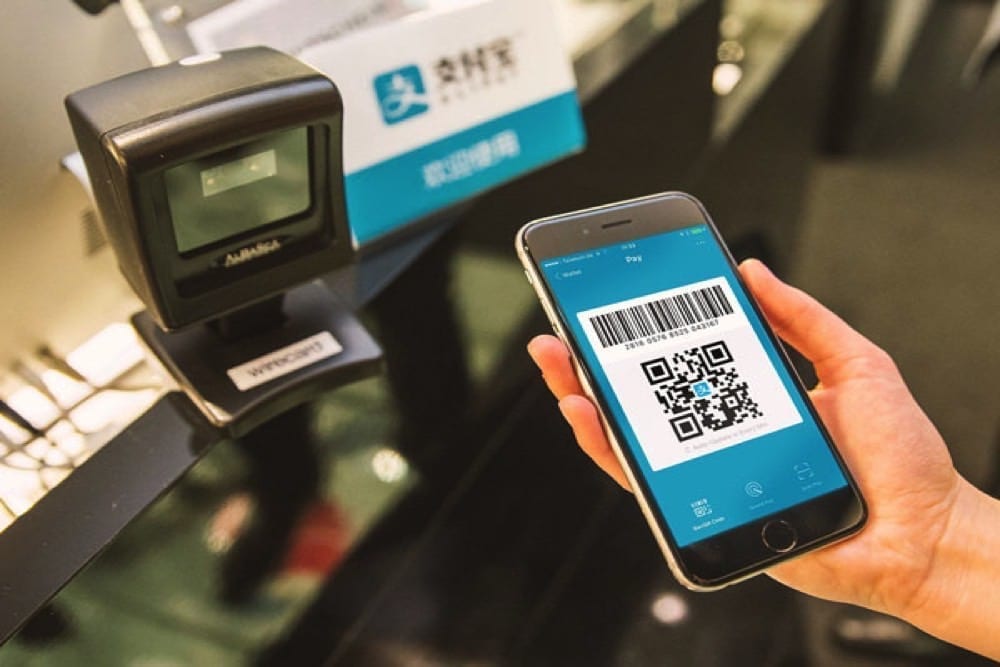
    Bank Rakyat Indonesia, Indonesia’s biggest state-owned lender, started the year with key strategic announcements, including an alliance with Chinese payment platform Alipay and plans to acquire a local insurance company and a small lender. BRI signed a memorandum of understanding with Alipay, a subsidiary of Chinese technology giant Alibaba, on Thursday to secure an opportunity to serve the growing number of Chinese tourists visiting Indonesia.

    “As China has its own payment system, we must be able to facilitate their [Chinese tourists’] needs. This move is aimed at supporting the country’s tourism industry,” Handayani, consumer director at BRI, said after an extraordinary shareholder meeting on Thursday.

    He said there are several matters that must still be discussed, including the acquisition of a permit.

    “We are currently integrating the business operation. We are now developing the IT system [for the service],” Handayani said, adding that the payment service will be launched in tourism areas, such as Bali, first.

    About 2 million Chinese tourists visited Indonesia between January and November last year, representing a 14 percent increase from the corresponding period in 2017.

    Insurance Company

    In addition to the partnership with Alipay, the lender has also set aside Rp 1.5 trillion ($105 million) this year to acquire an insurance company focused on covering property damage. BRI currently only has a life insurer, BRI Life.”This year, we want to have an insurance company. We are going to have a complete service in the financial industry,” BRI president director Suprajarto said.

    He said BRI was still observing the market and exploring several candidates before making a choice. The acquisition is slated for completion in the first half of this year, he added.

    Suprajarto said the acquisition of a general insurer would take precedence over the plan to acquire a small lender.

    This is because the Financial Services Authority (OJK) has asked BRI to acquire a lender in the categories BUKU I (banks with core capital below Rp 1 trillion) or BUKU II (banks with core capital between Rp 1 trillion and Rp 5 trillion).

    “It requires a large amount of funding, so we are now focusing on organic growth [instead of acquiring another lender],” Suprajarto said.

    BRI posted Rp 23.5 trillion in net profit in the first nine months of last year, which was 15 percent higher than the same period in 2017, thanks to a 17 percent surge in loan growth to Rp 809 trillion between January and September.

    BRI Appoints Deputy President Director

    BRI also announced the appointment of Sunarso as deputy president director and the dismissal of Jeffry J. Wurangian as commissioner and Kuswiyoto as director of corporate banking.Handayani said the changes were subject to approval by central bank.

  • HSBC Appoints New Chairman for Singapore

    HSBC Appoints New Chairman for Singapore

    HSBC Singapore appointed Mukhtar Hussain as chairman effective this week, the company said in a statement. The local subsidiary of HSBC  includes the retail banking and wealth management business in the city-state. It was formed when the bank incorporated its retail operations in May 2016.

    «Mukhtar’s presence, experience and counsel will go a long way to support our three-year growth plans – not just for retail banking – but across all of our business lines,» said Tony Cripps, chief executive officer of HSBC Singapore.

    Regional Knowledge

    On the consumer banking side, HSBC will tap on Mukhtar’s regional knowledge to provide oversight of the bank’s strategy to capture the personal wealth that is flowing from Asean markets into Singapore.

    «On the institutional side, his role in spearheading HSBC’s regional activity in support of BRI will be invaluable in advising Singapore on how it can further position itself as a strategic partner of this multi-decade investment programme,» said Cripps.

  • BRI, BCA unveil new digital banking products for Indonesia

    BRI, BCA unveil new digital banking products for Indonesia

    In a bid to expand their customer base, state-owned lender Bank Rakyat Indonesia (BRI) and private lender Bank Central Asia (BCA) have invested in new digital banking products.

    BRI director Indra Utoyo said the new product was slated to launch before the end of the year. “Our new digital banking product will offer micro, retail and consumer loans,” Indra said last Thursday.

    He added that the product was expected to expand the lender’s customer base and beef up its micro, retail and consumer loan business.

    BRI’s new digital banking product would include the latest omni channel feature and biometric technologies, said Indra, adding that the bank had invested Rp 500 billion (US$ 34.83 million) to develop the new product.

    Meanwhile, BCA has unveiled its plans for a new digital banking product that promises simpler transactions on e-commerce platforms. The product is expected to launch in October.

    “The [digital banking] service will support transactions made through credit cards, debit cards and bank transfers,” said BCA financial director Vera Eve Lim on Monday, adding that the product would also offer support for financial settlements.

  • BRI Syariah Floats 2.6bn Shares for Rp510/unit

    BRI Syariah Floats 2.6bn Shares for Rp510/unit

    Bank BRI Syariah has been listed as an issuer at the Indonesia Stock Exchange today, May 9. With the code BRIS, BRI released more than 2.6 billion new shares or 27 percent of its paid up capital.

    BRIS IPO price was set at Rp510 per share. The SOE Ministry’s deputy for restructuring and business development said BRI Syariah is the first sharia issuer to be listed at the IDX.

    “With the price, BRI Syariah managed to be oversubscribed twice,” president director Moch. Hadi Santoso said here on Wednesday.

    BRI Syariah is the subsidiary of Bank Rakyat Indonesia established in November 2008. As of March 2018, BRI Syariah’s assets amounted to Rp94.7 trillion.

    Hadi said the IPO proceeds will strengthen the company’s capex and help BRI Syariah included in the BUKU III banks category.

  • BRI posts net profit of Rp25.8 trillion

    BRI posts net profit of Rp25.8 trillion

    State-owned lender Bank Rakyat Indonesia (BRI) last year posted a net profit of Rp25.8 trillion, up 2.18 percent from a year earlier.

    The profit growth was attributable to the banks prudential efforts as indicated by a rise in the ratio of reserves to non-performing loans to 170.53 percent in 2016 from 151 percent in 2015.

    The 2016 income was mostly contributed by fee-based income which grew 25.2 percent to Rp9.2 trillion, BRI President Director Asmawi Syam said in a press conference here on Tuesday.

    Meanwhile, net interest income increased 16.2 percent to Rp65.7 trillion, he added.

    “The interest income was fueled by credit growth which reached 13.8 percent or Rp635.3 trillion,” he said.

    BRI Vice President Director Sunarso said the banks net profit grew only 2.18 percent as it adopted prudential principles amidst economic downturn and an upward trend of the banking industrys non-performing loans.

    “The profit did not fall short of target. It continued to grow positively,” he said.

    By adopting the prudential principles, the bank managed to keep down its non-performing loan ratio in 2016 to 2.03 percent from 2.02 percent (gross), while its reserve ratio rose to 170 percent from 151.5 percent.

    He said the banks loan-to-deposit (LDR) ratio reached 87.7 percent and its capital adequacy ratio (CAR) stood at 22.9 percent.

  • BRI Launches JCB Platinum Credit Card for Travelers

    BRI Launches JCB Platinum Credit Card for Travelers

    PT Bank Rakyat Indonesia (Persero) Tbk. (BRI) and PT JCB International Indonesia, a subsidiary of JCB International Co., Ltd., the international operations subsidiary of JCB Co., Ltd. (collectively “JCB”), today announced the launch of the BRI JCB Platinum Credit Card in the BRI JCB Indonesia Open 2016. The card will be ready in the market in the next spring 2017.

    Bank BRI is a leading bank in Indonesia with an extended network of more than 10,000 outlets and more than 100,000 e-Channel outlets. JCB brand cards are currently issued in 21 countries and territories with 95 million cardmembers around the globe. BRI has cooperated with JCB for JCB card acceptance at BRI merchants with BRI EDC machines since April 2016. The launch of this new product is the next step of the partnership.

    BRI JCB Platinum Credit Card is a strategic complement to the BRI product line for the consumer segment, especially as a credit card product to tap the traveler segment.

    BRI JCB Platinum Cardmembers can enjoy special features such as:

    1. Double BRI points at all merchants such as restaurants, airlines, golf courses and car rental.

    2. Triple BRI points for transactions overseas.

    3. 0% installment conversion for all transactions overseas for the first 12 months.

    BRI points earned by BRI JCB Platinum Cardmembers can be converted into airline miles, exemptions of card annual fees and a variety of other exciting promos.

    “We are optimistic about issuing 50,000 cards from early Q1 2017 until Q4 2017,” said Sis Apik, Managing Director of BRI.

    “BRI believes that this JCB brand credit card will grab the travel segment, increase the BRI number of cards and card usage for travel, for both domestic and overseas destinations,” he added.

    To give extra convenience to BRI JCB Platinum Cardmembers who travel abroad, JCB provides a variety of features that support travel needs such as free access to 28 airport lounges in Japan, 26 lounges in China, 2 lounges in Korea, and 1 lounge each in Singapore, Thailand, and Hong Kong.

    Besides that JCB provides JCB Plaza Lounge in several world-class business and travel destinations: Tokyo, Paris, Honolulu, Hong Kong, Guam, and Singapore. Last but not the least JCB also provides free wifi hotspot access and discounts at many selected merchants in Japan.

    “JCB is very excited and proud to have a partnership with BRI for the issuance of BRI JCB Platinum Credit Card that means JCB market share expansion in the premium credit card segment in Indonesia. Our strategy to tap the premium segment has resulted in 60% growth in the number of JCB cards in the market since 2014,” said Koichiro Wada, Director PT. JCB International Indonesia.

    “As you may know traveling overseas is increasing year on year especially to Asian countries, therefore we are confident that the BRI JCB Platinum Credit Card with special features for travelers will be very interesting for Indonesians who love to travel, and increase the cashless society in Indonesia,” he added.

    The uniqueness of the BRI JCB Platinum Credit Card is not only the card features, there is also the card design of the Nuri Irian bird which is an exotic bird from the jungle of Papua, East of Indonesia. It expertly mimics diverse sounds and has charming feathers, ranging from blue, red, and green that dominate the whole body as well as black on the head, back and neck.

    In addition to beauty, the Nuri Irian bird also illustrates openness and freedom as the species loves being outdoors and singing beautifully. This is in line with the purpose of the BRI JCB Platinum Credit Card issuance for the traveler as well as the spirit of BRI and JCB to always develop and present new products and give the best service to their customers.

  • BRI Syariah plans to conduct IPO

    BRI Syariah plans to conduct IPO

    PT Bank BRI Syariah, a sharia compliant subsidiary of state lender Bank Rakyat Indonesia, plans to conduct an initial public offering (IPO) of its shares in 2018 to boost alternative funding sources.

    “During the IPO we will float our shares worth Rp1 trillion to the stock exchange,” BRI Syariah President Director Moch. hadi Santoso said after a press conference here on Wednesday.

    The decision to turn the bank into a publicly listed company was taken to strengthen capital structure particularly at “Tier 1”, he said.

    The bank wants to strengthen its capital through various funding sources to expand its financing business. Moreover, the bank wants to expand its financing portfolio from retail and business segments to infrastructure financing, he said.

    “After the IPO, we will continue to expand our business. This year we have been engaged in infrastructure financing,” he said.

    Also this year, the bank has explored several commitments for infrastructure financing. But its amount is not yet significant to boost the business growth of PT Bank Rakyat Indonesia Ybks subsidiary,” he said.

    The BRI Syariah has set itself the target of boosting its financing growth at 13 percent year on year from to Rp18.8 trillion from Rp16.5 trillion at the end of this year.

  • BRI Goes Digital for Cashless Society Program

    BRI Goes Digital for Cashless Society Program

    Bank Rakyat Indonesia (BRI) has been revamping its digital banking services as part of its “cashless society” program and in support of the central bank’s Non-Cash Payment Movement (GNNT), a senior BRI official said last week.

    BRI Consumer Director Sis Apik Wijayanto said the top small-business lender intends to reduce cash to a minimum for every transaction.

    “This is the digital era, tech support is crucial. The goal is to improve payment efficiency and offer customers  the utmost convenience,” Sis said.

  • BRI records net profit of Rp25.2 trillion

    BRI records net profit of Rp25.2 trillion

    PT Bank Rakyat Indonesia Tbk. made a net profit of Rp25.2 trillion in 2015, representing a 4.5 percent growth from Rp24.2 trillion it made in the previous year.

    “The growth is driven by an increase in the interest income that reached Rp82.2 trillion, reflecting a growth of 13.5 percent from the previous year,” the state-owned lenders president director, Asmawi Syam, said here on Wednesday.

    The banks non-interest income reached Rp14.2 trillion, up 21.4 percent from the previous years figure, taking the total income of the lender to Rp96.4 trillion, 14.6 percent above the previous figure.

    Outstanding loans distributed by Bank BRI till 2015-end reached Rp558.4 trillion, reflecting a growth of 13.9 percent year-on-year compared to the same period of the previous year. These loans were given across all business sectors.

    Credits to the micro-sector, which is the core business area of the bank, grew by 16.8 percent year-on-year to reach Rp178.9 trillion with the number of customers increasing to 7.8 million from 7.3 million, year-on-year.

    “Credit growth in the micro-sector was driven by the re-launch of a smallholder credit program (KUR) by the government in the middle of August 2015,” he said.

    Since its launch on August 18 2015, Bank BRI has extended Rp16.2 trillion in credits to more than 920,000 businessmen across the country through the KUR program.

    Credits to non-state-owned companies in the corporate segment grew 31.5 percent year-on-year to Rp75.1 trillion while credit to the consumer segment grew 9.8 percent to Rp88.5 trillion.

    Credits to state-owned companies were up 9.6 percent to Rp81.2 trillion and to small commercial and medium businesses rose 7.5 percent to Rp134.7 trillion.

  • BRI eyes syndicated loans as it opens Singapore branch

    BRI eyes syndicated loans as it opens Singapore branch

    State-owned Bank Rakyat Indonesia (BRI) will provide syndicated loans as part of a strategy to attract Indonesian companies following the opening of the lender’s branch office in Singapore.

    The lender will allocate at least US$100 million in the first year to Indonesian companies that are seeking offshore funding, an executive says.

    “We are aiming to lend at least $100 million of syndicated loans in the next 12 months. We already have some prospective loans in the pipeline, but the process will not be instant,” Azizatun Azhimah, general manager for BRI’s Singapore branch, said on the sidelines of the branch opening on Wednesday.

    Loans for any projects would be assessed based on their potential value, feasibility and compliance to the lender’s requirements, Azizatun said.

    BRI president director Asmawi Syam said the bank saw syndicated loans as a prospective type of lending to help boost its international business as well as finance infrastructure developments in Indonesia.

    “We can learn much about that type of loan in Singapore and collaborate with local and international banks here to grab opportunities.”

    According to Asmawi, demand for infrastructure financing will increase as more Singaporean investors get attracted to start investing in Indonesia’s infrastructure and other sectors following President Joko “Jokowi” Widodo’s visit to the city-state on Tuesday, saying that “the launch of BRI Singapore branch is well timed with the state visit”.

    “President Jokowi has invited Singaporean investors to help develop our infrastructure, so that BRI hopes to build a bridge between them and Singaporean and international banks as BRI is more experienced in financing infrastructure projects in Indonesia, such as power plants, seaports, airports and toll roads,” Asmawi said.

    President Jokowi met over 150 Singapore business leaders at a dialogue on Tuesday to discuss Indonesia’s economic priorities, foreign investments and partnerships in conjunction with his state visit to meet Singapore’s Prime Minister Lee Hsien Loong.

    Indonesia, Southeast Asia’s largest economy, needs to boost its infrastructure development and revitalize its manufacturing sector so as to achieve 7 percent economic growth by 2019.

    Asmawi said BRI was prepared to join the competition in the international banking business as it would ensure the competitiveness of the pricing offered by its services, adding that “our overall services will cover funding and lending facilities for corporate customers, including treasury, priority banking and trade finance”.

    “The Singapore market has big potential, so that we hope to break even in revenue in the second year, which is faster than the average overseas branches of banks,” Asmawi said while refusing to mention the revenue target.

    The new Rp 30 billion (US$2.2 million) Singapore offshore branch adds to BRI’s four existing overseas offices — BRI New York Agency, BRI Cayman Island Branch, BRI Hong Kong Representative Office and BRI Remittance Office.

    The Singapore branch will be able to provide wholesale banking services, such as trade finance and remittance as well as wholesale fund management.

    The branch, which is categorized as an “offshore branch” according to Monetary Authority of Singapore’s (MAS) regulation, has limited operation in wholesale or corporate banking services. Meanwhile, foreign banks under the “full branch” category in Singapore are allowed to operate wholesale and retail banking services as well.

    MAS granted the license to BRI in June after the bank applied in 2013 to be one of the players in Singapore’s foreign bank market in preparation for the ASEAN Economic Community’s (AEC) financial and banking integration in 2020, when certain grades of banks and financial companies will be allowed to operate freely across the region.

    On the sidelines of the launch, Coordinating Economic Minister Sofyan Djalil said the government applauded BRI’s move in entering Singapore’s banking market as the city-state was famous for being difficult to penetrate due to tight restrictions and requirements for foreign banks.

    “This action is positive because we are entering the AEC, so that our banks should prepare themselves to operate regionally. By being exposed more to the international market, BRI is expected to tap more resources to improve itself and its customers as well as to contribute to Indonesia’s economy.”


  • Bank Rakyat Indonesia launches country’s first floating bank

    Bank Rakyat Indonesia launches country’s first floating bank

    Bank Rakyat Indonesia (BRI) has launched a floating bank to make banking accessible to people residing in remote islands or coastal areas.

    The bank which has been named Teras BRI Kapal will currently provide its services to the Thousand Islands regency off north Jakarta. Its services would cover six islands including Pramuka Island, Tidung Island, Kepala Island, Untung Jawa Island, Harapan Island and Panggang Island, reported the Jakarta Post.

    The banks plans to introduce additional boats eventually to further expand its services to other remote islands.

    BRI president director Asmawi Syam was quoted a saying: “We want to provide services for people in coastal areas who previously did not receive optimum banking services.”

    The boat that will comprise 11 staff members including crew, guards and four BRI officers, a teller, a customer service officer and two account officers will provide services including savings, loans and money transfers. It will operate from Monday to Friday.

    As per plans, the bank will launch a new floating boat branch every year and will invest $1.11m (£710,872, €1.02m) on each branch.

    It also plans to cover areas including Ternate in North Maluku, Bau-bau in Southeast Sulawesi and Tanjung Selor in North Kalimantan in the future.