Tag: brick and mortar store

  • Online retailer Taobao endorses physical store in Malaysia

    Online retailer Taobao endorses physical store in Malaysia

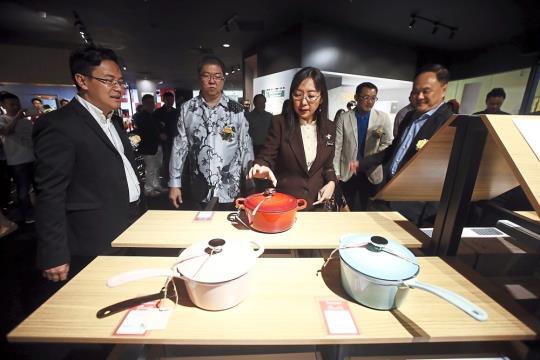
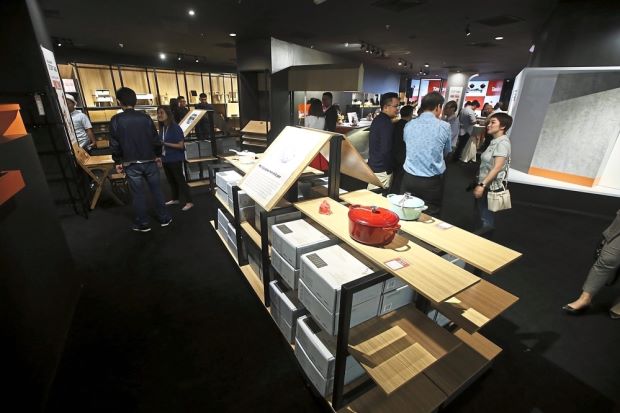
    Chinese online retailer Taobao is endorsing a spin-off physical store in Malaysia. The 5000sqft Taobao Selection store in Kuala Lumpur’s Viva Home Shopping Mall is the first in Southeast Asia, opening in collaboration between local operator Lumahgo, Taobao spinoff Tmall World, and lifestyle furniture retailer Lorenzo. It retails curated products from Tmall.com selected for the Malaysian market alongside furniture offerings.

    Lumahgo CEO Fabian Kong said: “We are developing a new retail system that caters to Malaysians, which will bring a new retail technology experience to local retailers … We are helping Tmall World to sell the selected products in Malaysia for customers who do not know how to shop online”.

    A reported 98 per cent of furniture purchases are made offline in Malaysia.

    Taobao’s owner Alibaba Group is contributing to the project by providing big-data tools and a technology platform. The collaborating partners will open a second Taobao Selection store will open in Sabah early next year.

  • ‘Physical and online retail will co-exist in the future in India’

    ‘Physical and online retail will co-exist in the future in India’

    The retail sector in India has been evolving at a swift pace. Rapid urbanisation and digitisation, rising disposable incomes and lifestyle changes – of particularly the middle-class – are major contributors to the revolution of the retail industry.

    In a freewheeling chat, Anuj Puri, Chairman – ANAROCK Property Consultants talks about what canbe expected from the Indian retail industry going ahead. Excerpts:

    How do you see retail industry shaping up in India?

    Retail is back with a big push. A lot of foreign brands are looking to enter India, a number of Indian brands are expanding rapidly, a number of new Indian brands are opening up retail stores. Equally, I see a huge amount of promptness within the Indian retail real estate on the bounce back of organised retail in India. Modern retail is growing fast. 10 years ago, the contribution of modern retail format was only 2 percent and today it is getting into the double digits.

    Which retail format will come out clear-cut winner in future?

    There will be newer formats that will be very important to get into the retail real estate spaces. F&B and new formats in entertainment will continue to do very well.

    Anything which is experiential and cannot be bought online and has an ability to touch, feel, taste, hear and smell, those formats in the physical space will continue to do well.

    With e-commerce expanding at a rapid pace, what is future of malls in India?

    Expanding e-commerce in India has a positive impact on the physical retail real estate. E-commerce space cannot divulge into physical space. Both of them are integrating with each other like Walmart has recently bought Flipkart, Amazon in setting up its physical stores, there are number of e-commerce players which are planning to set up their retail stores and many e-retailers are also investing/ buying existing physical stores. We can say it is an integration of e-commerce and physical space.

    What is the future of malls a few years from now?

    Going ahead, technology is going to play a big role for both retailers and mall developers. The taste of the consumer coming in, the ability to drive the footfalls to the right stores, to understand the demographics of the people who are coming into mall are all going to be important learnings which the mall developer will pass on to his partners – the retail brands.

    In future, technology will integrate the experience, partners and will help in driving the sales, deriving right retail formats in the malls. Just like in the more mature markets, where technology plays a huge role in the mall operation, similarly it will be replicated in India as well.

    How can the malls stay relevant to the consumers for years?

    It is true that a mall has to continue to change its skin. It is necessary to bring something new to attract different retailers. Change is a perennial process. Malls must continue to attract footfalls by adapting to change.

    What is your outlook on retail spaces in Tier II cities and beyond?

    Big retailers are occupying a huge space in Tier II cities as the profit margins are very high and the rentals are low. Also, since consumers coming to these stores have more time to spend, they have an ability to experience on the entertainment, leisure, retail and food. We are not only bullish on Tier II cities but Tier III cities as well. Retailers are often seen complaining about lack of good retail real estate spaces in India.

    How do you see this changing in the future?

    At this point of time, we are starved for good quality retail spaces. It is absolutely true that there are more retailers who want to get into the malls which are successful. We are hopeful that over the next 2-3 years there will be a better equilibrium because there are number of malls that are under-construction and it is expected that these malls will be able to cater to the increasing requirement of retailers.

    I also think that these mall developers who are building up the malls have also learnt that how to build, operate good quality malls and how to attract right kind of retailers within those malls.

  • Online retailers open brick and mortar stores

    Online retailers open brick and mortar stores

    While many traditional retail stores have embraced technology by having an online presence, online retailers are now opening physical stores (mainly concept stores) in Malaysia, in line with global trends, to gauge feedback on products.

    Retail consulting firm Retail Group Malaysia (RGM) managing director Tan Hai Hsin (pix) said there are still many customers who want to see, feel and touch the products before they decide to buy.

    “They cannot do this online. Customers do not want the hassle of returning products and re-ordering again. To meet this need, online retailers open physical stores,” he said.

    “Also, you can get better feedback on your products and services when you interact with your customers face-to-face. It is easy to give feedback online, but it tends to be short and not comprehensive,” he added.

    Tan said this is not just a trend in Malaysia, but also around the world, with the trend becoming common in the US, the most matured market for online retail.

    Online fashion retailers that have opened physical stores in Malaysia include Christy Ng (five stores), FashionValet (four stores), Bawal Aidijuma (22 stores), Poplook (three stores), Imaan Boutique (six stores), Reebonz (one store) and Finelycup (one store).

    Online foods & beverage retailers that have physical presence here include Fatbaby ice cream (one store), Foodmarket (one store) and Epic Fit Meals Co (three stores).

    Other online retailers that have joined the bandwagon include online grocery store Redtick (three supermarkets), electronics company Xiaomi (five Mi stores) and online jewellery store Jeoel (four stores).

    Tan pointed out that the main difference between (stores of) brick-and-mortar retailers and online retailers is that customers can order online while they are in the physical stores of online retailers.

    “Some customers may like a fashion item but the colour is not available in store but online.

    “They can order online immediately after they have inspected the product. Some customers do not want to carry the products with them after payment as they still want to walk around and visit other places. Some are buying the products for others and instead of carrying the items themselves, they can arrange for it to be delivered directly to the recipients,” Tan explained.

    In terms of locations, he said online retailers open their physical stores anywhere, with some choosing quality shopping malls to build their brand image. Some choose to open in shoplots that can be used as their office, distribution centre, central kitchen and/or storeroom. Some opt to open in locations where most of their customers are residing. Some select locations near their homes.

    “For traditional brick-and-mortar stores, the opening of physical stores by online retailers is seen as new competition to them. If they (brick-and-mortar retailers) do not offer e-commerce facility to their existing customers, they will be left out in the near future,” Tan said.

    Online retailers are setting up physical stores in shopping malls, but the number is still relatively low, he noted.

    “Retail trends change over time. Retailers need to change with time. Or else, they will be phased out.”

    Just like grocery trade in the last 50 years, Tan said it all started with provision shop, then evolving to mini-market, supermarket, overseas supermarket, foreign hypermarket, gourmet food hall, to today’s online grocery store.

    He pointed out that e-commerce would not be replacing physical stores anytime in the near future. In recent years, both sides of the retailing formats crosses over each other’s territory and this trend will continue.

    “The future of retailers should be multi-channel. A retailer is no longer able to operate solely based on physical store, they need to sell their products via other channels as well. Thus, winning retailers are those who are able to offer not only physical stores, but also online shopping sites,” said Tan.

  • Generation Z prefers in-store shopping decisions

    Generation Z prefers in-store shopping decisions

    An overwhelming number of generation Z, also known as post-millennials, prefer visiting a store as the final step in their shopping process, new research has found.

    In its Evolution of Retail 2017 Generation Z shopper survey, Euclid Analytics found that 66 per cent of the demographic prefers in-store shopping, while 28 per cent wants to interact with store staff members.

    This mobile-first generation – by broad definition, aged under 22 – uses digital to research products, but then prefers to go to the store to touch and try out items before buying, says the survey. The challenge for retailers will be to figure out a way to help cater to this new approach.

    Generation Z prefers to get in and get out when it comes to shopping behaviour, the survey also shows, with 53 per cent saying they dislike browsing in stores and 31 per cent saying it is hard to find items in stores. Meanwhile, 26 per cent want retailers to provide a more tailored shopping experience.
    Euclid Analytics CEO Brent Franson says retailers should reach out to generation Z at this early stage to introduce their brands and forge enduring relationships.

    “Our findings highlight some great opportunities for them to connect with this mobile-first population that is still very much interested in meaningful in-store experiences. Winning their loyalty will mean getting creative about using mobile and social marketing outreach in their physical stores.”

  • Innovate or die: Singapore retailers advised to reinvent as brick and mortarshops lose luster

    Innovate or die: Singapore retailers advised to reinvent as brick and mortarshops lose luster

    Some brands are even advertising via Snapchat.

    In a fast-paced and technologically-savvy city-state such as Singapore, brick and mortar shops of retailers, however traditional, may not be adequate anymore.

    According to a report by Cushman and Wakefield, Italian luxury brand Prada, for example, has announced plans to advertise via Snapchat, and will be offering their range of goods online.

    Additionally, the Singapore Tourism Board is using WeChat and Baidu Connect, and other online travel services and social review sites to reach out to independent Chinese travelers.

    “Thus, it is essential for all major stakeholders to reinvent their operations to drive the retail scene forward,” the report noted, highlighting the inevitable paradigm shift.

    Meanwhile, to combat the surge of e-commerce, the report said retailers are increasing F&B components in shopping malls and department stores, as such experience-based concepts are irreplaceable by online retail.

    “For instance, Muji Café and Meal will be opening their second outlet in Raffles City, and a cluster of 16 restaurants will open in Wisma Atria’s Japan Food Town. In addition, Robinsons the Heeren welcomed Angela May Food Chapters in this quarter,” the report added.


  • Retail’s new reality

    Retail’s new reality

    The reality of retail is shifting. Retailers now operate in an environment of big data, new technologies, blooming online marketplaces, hybrid consumption patterns and fragmented needs. Shoppers are more empowered and increasingly demanding when it comes to retail expectations.

    At last month’s Marketing’s full-day conference, Retail Marketing Hong Kong 2016, marketers and delegates were together to explore how technologies could really help drive their business forward and convert single transactions into loyal consumers.

    WCH_0909

    Online shopping is one obvious area and big moves are underway. But the online world moves fast and traditional Hong Kong retailers do not.

    Simois Ng, head of marketing communications at Sony Corporation of Hong Kong, shared some of the local people’s online purchase patterns: Only 13% of them buy electronics online, while 75% of the shoppers buy air tickets.

    She said in the electronics industry, there are so many dealers and physical stores in the city, it’s natural for customers to try out and then finish the transaction at the brick-and-mortar shop.

    DSC09412

    She added that even though customers shop at its official online store, almost 90% of them select to pick up at the physical store.

    E-commerce and new mobile payment solutions were basically non-existent just a decade ago. Innovation today is everywhere. New delivery methods, showrooming, connected retail, access to real-time customer data and purchase history … today’s retail market is exciting.

    By just clicking a mouse or touching a screen, shoppers can buy nearly any product online – from groceries to cars, from travel insurance to air tickets.

    At the panel discussion, PRIZM’s director Jeffrey Hau pointed out that while online payment seemed to be the last thing retailers assumed they needed to worry about when it comes to e-commerce, he said it was an issue because many stores can’t process transactions properly from one in every three customers due to some poorly designed payment gateway.

    WCH_0938

    Edmund Wong, director of MyDress.com, echoed the point and said many brands still treated e-commerce as part of their marketing project as if it were just another sales channel to the mix.

    Wong said e-shop deserves a seat at the table; Hau agreed with him and said online shopping is indeed an added value activity to brands.

    In addition to offering mobile and online services, many argue that “an experience” has to evolve alongside the digital world. Making sure people have the right experience is critical.

    In the past, HMV was just a shop selling CDs and DVDs, but in the 21st century, Robert Esser, CEO of HMV Media & Entertainment, said the company had decided to inject new concepts into the 100-year-old brand.

    At its Central flagship store, it has seen the two-floor outlet revamped with a warmer interior design, adding a modern F&B area, expanding the vinyl area and also adding a lifestyle section to offer headphones, figurines, books, magazines, stationery, backpacks and accessories to enhance the customer’s experience.

    Earlier this year, the household name kept pushing forward and opened another flagship store in Causeway Bay that reinvented itself from the “supermarket-style” CD stores to the modern “place to dwell” of the new generation store in Hong Kong.

    HMV2

    While traditional marketing was all about pushing a brand’s message to consumers, in the era of the consumer, as Dane Fisher, managing director at Infiniti Motor Asia and Oceania, said at his keynote presentation, marketers need to add value to the relationship with their consumers.

    Fisher stated that auto shoppers are doing more research than ever before. On average, each potential customer will go to 24 different touch-points while researching their car purchase – from customer review sites to videos and third-party sites.

    “It’s a double-edged sword: the greater the number of touch-points, the harder it is to be useful and engaging at each interaction. The plus side is it has given us more opportunities to make a meaningful connection,” Fisher said.

    infiniti-nest-accelerator-2-01-800

    That’s why the carmaker recently launched an accelerator programme for start-up companies to add value to the ecosystem its customers inhabit.

    One of the programme finalists, Precision Services, produced a smart electric bike, which is light and foldable. It won the backing of Infiniti so the bike will now be an Infiniti-branded product.

    Alongside these innovations, start-ups are bringing new ideas and new energy into the space and traditional retailers are realising how they also must innovate at levels they had never imagined. And it’s not just innovation for innovation’s sake.

    Mobile is a key resource for customers when it comes to researching and making purchase decisions, therefore some retailers tap technology, such as collecting users’ locations, accessing their photo albums or even analysing their emails to gain more consumer insights.

    Ayaz Akhtar, country manager of Survey Sampling International Hong Kong, reminded the audience that corporations needed to be careful not to cross the line because if consumers’ shared data was not used properly, “a connected world can turn against you very quickly”.

    He cited a study by SSI that indicated 65% of Hong Kong respondents found it “extremely/very creepy” for businesses to analyse their emails.

    He explained there is no benefit to the consumer when a business is analysing their email, especially when emails can contain very confidential or sensitive information so people will not feel comfortable sharing emails that have personal information.

    He added if brands could provide benefits to consumers’ daily lives, those means of technologies are rated as being less creepy.

    As social media has disrupted the balance of power between brands and customers, more and more companies are reaching out to influencers in the hopes of raising product awareness or even boosting sales.

    No stranger to social media, last year Hong Kong Airlines utilised the popular black bear mascot Kumamon to promote its first flight service to Kumamoto Prefecture in Japan.

    Ming Chan, general manager of brand centre at Hong Kong Airlines, said with the “meet and greet with Kumamon” street event, it attracted more than 6,000 participants which enhanced the airline’s brand image.

    Kumamon

    Chan added that at the end of the day, staff members were the best brand ambassadors and influencers because “they endorse your company spontaneously”.

    The airline offers nine free quotas in the nomination list for discounted tickets, covering staff’s family and friends. She said this can nurture the word of mouth to influence better business results.

    In the past, a little differentiation in a brand’s strategy would go a long way, but today’s brands need to navigate through a complex maze of information and multiple touch-points as technology has made the journey less linear and more social.

    Dennis Chung, assistant vice-president of product marketing and solutions consulting at HKT, said for a successful digital marketing campaign, it depended on how well you understand the target audiences.

    When we think of the complexities of retail and digital commerce today, Daniel Hagos, client success director at Emarsys, said it was vital for retailers to take the step and go beyond the limits of human knowledge and begin to adopt a more progressive perspective on customer intelligence.

    WCH_0495

    He said a customer’s data can power actionable intelligence, building messages that reach the consumer when the moment is right, on the device they prefer, and with a promotion that will get them to buy.

    He added automation, for example, uses data from online and in-store interactions to target first-time shoppers who may be ready to make their second purchase.

    Hagos explained this period between a first and second purchase is a huge opportunity for retailers to lay the foundation for a positive customer experience and long-term loyalty.
  • Online shopping will never defeat brick-and-mortar shops in Singapore: report

    Online shopping will never defeat brick-and-mortar shops in Singapore: report

    Store-based retailing will continue to rule.

    The rise of e-commerce will be insufficient to dethrone brick-and-mortar shops in Singapore, according to a report by RHB Research.

    RHB noted that even if the popularity of online shopping continues to grow, traditional shops will retain the upper hand because of their wider reach.

    “We think the e-commerce business is unlikely to impact retailers to a large extent. Based on Euromonitor’s 2015 data, non-store retailing made up a mere 6.2% of the overall retail market in Singapore. Given its small scale at the moment, we think it is unlikely for the e-commerce sector to make a dent on the brick-and-mortar stores domestically,” RHB said.

    Even if the e-commerce sector grows at a much higher rate, RHB reckons that traditional stores will continue to dominate.

    “If non-store retailing growth rates were to double Euromonitor’s assumption every year, brick-and-mortar stores would still dominate at least 88% of the market share, even after five years. Hence, this suggests that the e-commerce business is unlikely to result in any big changes within the domestic retail scene,” said the report.