Tag: brick-and-mortar

  • Sensormatic Solutions Forecasts Peak 2026 Holiday Shopping Days in Asia-Pacific

    Sensormatic Solutions Forecasts Peak 2026 Holiday Shopping Days in Asia-Pacific

    Sensormatic Solutions issued its annual foot traffic forecast for the 2026 holiday shopping season across retail markets in Asia-Pacific. The predictive traffic analysis targets store operators and mall owners preparing staffing, inventory, and promotional schedules for peak year-end commercial dates.

    The analytics provider tracks in-store sensor data and historical shopper volume to identify the days expected to generate the heaviest physical store traffic. Store chains use these projections to align workforce rotas, supply chain delivery windows, and loss prevention protocols ahead of peak trading surges.

    Data modeling for store operations

    Physical store operations face tighter labor margins and shifting shopper patterns across regional commercial centers. Accurate traffic modeling gives floor managers the lead time needed to schedule floor staff during peak hours while avoiding overstaffing during quieter morning trade.

    Inventory distribution across store networks depends on matching replenishment runs with peak footfall periods. Bottlenecks at cash desks and fitting rooms quickly erode conversion rates when customer traffic outpaces front-line coverage.

    Shifts in regional holiday footfall

    Retailers across Asia-Pacific face divergent calendars, from November promotional events to traditional December holiday spending and regional year-end sales. Compressing shopping activity into fewer peak days raises operational pressure on store teams and physical checkout infrastructure.

    Mall landlords also rely on traffic forecasts to coordinate security deployment, crowd management, and extended operating hours. Misjudging peak hours leads to congested parking facilities and frustrated shoppers.

    Balancing physical stores and online fulfilment

    Physical stores increasingly double as local fulfilment nodes for click-and-collect orders during peak shopping periods. When in-store shopper volumes surge, staff dedicated to picking and packing online orders compete for floor space with walk-in customers.

    Store networks that separate stock management from front-of-house service maintain higher customer satisfaction during traffic spikes. Clear footfall visibility prevents floor staff from being pulled away from direct customer service during critical trading hours.

    Preparing for peak trading dates

    Sensormatic Solutions provides annual traffic benchmarks to help retail chains assess their performance against broader market averages. Comparing individual store entry numbers against market footfall trends helps operators evaluate the return on holiday marketing spend.

    Retailers across the region will monitor preliminary footfall tallies as peak holiday campaigns launch across Asia-Pacific retail corridors.

  • Uniqlo to Double Japanese Flagship Count to 20 in Ten-Year Strategy Shift

    Uniqlo to Double Japanese Flagship Count to 20 in Ten-Year Strategy Shift

    Uniqlo will double its network of Japanese flagship stores to roughly 20 locations over the next decade as parent Fast Retailing pivots away from standard shopping mall outlets.

    The apparel group currently runs about 10 flagship or flagship-equivalent premises across domestic city centres, anchored by 3,000-square-metre destinations in Tokyo’s Ginza and Osaka’s Umeda districts. Future domestic openings will focus on major regional hubs such as Nagoya and Sapporo alongside central Tokyo retail corridors, targeting local foot traffic and spending from inbound foreign tourists.

    “Every major city in Japan needs a flagship store,” Fast Retailing chairman and chief executive Tadashi Yanai said. He added that the group sees little value in opening conventional stores that function solely as transaction counters.

    Demographic pressures reshape store networks

    As of late May, Uniqlo operated 785 retail locations across Japan. That count reflects an 8 per cent drop from its peak of roughly 850 outlets in August 2013, following years of flat domestic store numbers.

    A shrinking domestic population and the rise of digital commerce have forced the company to rethink its physical footprint. Stores in Japan now operate less as basic distribution points and more as brand showrooms where customers handle garments and interact with services before buying across omnichannel channels.

    Exporting the Western retail model

    The domestic overhaul mirrors Fast Retailing’s recent playbook in Europe and the United States, where it secured historic buildings and prominent high-street addresses. Those two Western regions together account for nearly 20 per cent of total group revenue and have delivered double-digit sales growth since the pandemic.

    RetailNews Asia views this as a clear signal that the era of aggressive suburban store expansion in mature Asian markets is over. Just as department stores in regional Japan have retreated, fast-fashion operators must concentrate capital into higher-yielding, destination-scale flagships that can capture international tourism spend while digital channels absorb routine replenishment sales.

    Fast Retailing is also preparing to apply this revised large-format strategy to its broader store networks across Southeast Asia and mainland China over the coming fiscal years.

  • Shein’s Brick-and-Mortar Debut: A Lifeline or Death Blow for Department Stores?

    Shein’s Brick-and-Mortar Debut: A Lifeline or Death Blow for Department Stores?

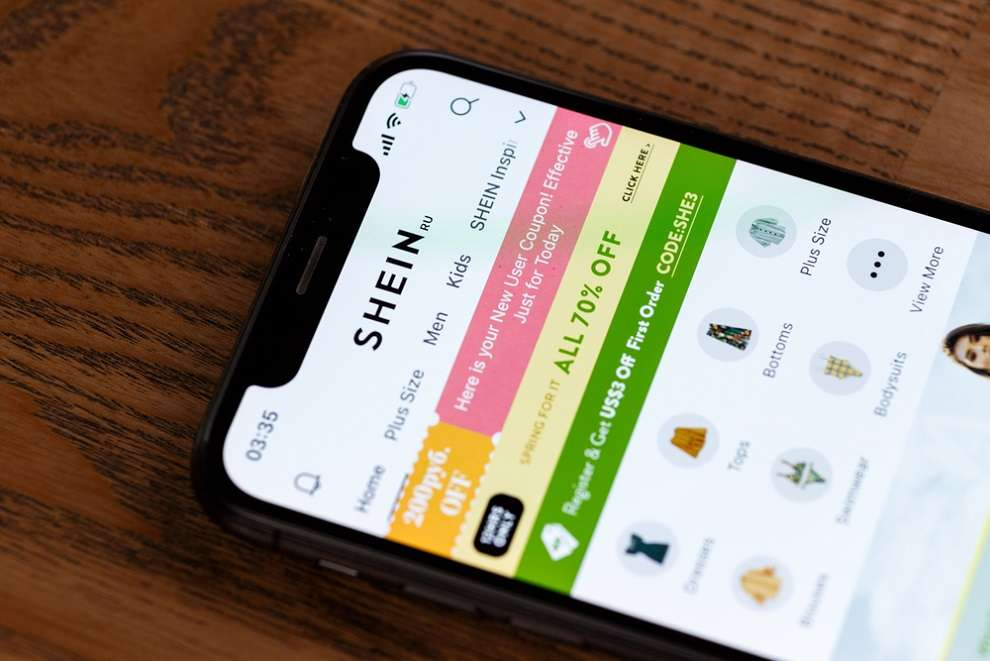
    The recent entry of Chinese budget retailer Shein into the flagship BHV in Paris has stirred up a political storm, adding to the ongoing struggles of department stores worldwide. These traditional retail outlets are grappling with the seismic shift of consumers towards online shopping and ultra-fast fashion.

    Shein opened its inaugural brick-and-mortar shop in the BHV department store, situated on the Rue de Rivoli in the heart of Paris, earlier this month. This move sparked a backlash from lawmakers and fellow retailers, who argue that Shein’s low-cost business model has been detrimental to the traditional shopping streets of France.

    For BHV, a store recognized for its diverse array of products, this partnership was a strategic move designed to lure younger consumers. This demographic has increasingly turned to online platforms, such as Shein, for a variety of needs, ranging from cosmetics to fashion.

    The shift to online shopping, further exacerbated by the pandemic, has posed a significant challenge to department stores around the globe, with many still struggling to recover from a steep decline in physical footfall during the crisis.

    New Threat from Ultra-Fast Fashion

    Laetitia Henry, general manager of the iconic Printemps Haussmann store in Paris, noted that while competition from other large local department stores was once the norm, the rise of online platforms has led to a new international threat. Ultra-fast fashion can replicate a designer dress in as little as three weeks and sell it for a fraction of the original cost.

    This competitive landscape has prompted top-tier department stores like Macy’s to close outlets, while Saks Fifth Avenue’s parent company, Saks Global, is exploring divestments to manage its debt.

    The Société des Grands Magasins (SGM), which acquired BHV from the Galeries Lafayette group two years ago, is banking on its partnership with Shein to safeguard its future. On the day of Shein’s launch at BHV, store traffic surged by 50%, with a quarter of Shein’s customers going on to make additional purchases at BHV.

    Department Stores Innovate to Attract Consumers

    Several prominent French department stores, including Printemps, Galeries Lafayette, and LVMH-owned Le Bon Marché, have sought to redefine themselves as lifestyle destinations. They are aiming to attract more shoppers by offering unique luxury experiences.

    Le Bon Marché, for instance, organizes regular events such as concerts and dance performances. Printemps offers fine dining and beauty treatments, even featuring an in-store ice rink during the holiday season. Galeries Lafayette invested over 100 million euros (approximately US$115.06 million) in renovations during the pandemic, which helped boost visitors and foot traffic.

    However, these innovative strategies have not been as successful for mid-range stores trying to break into the luxury experience market. These stores are keenly observing the publicity generated by Shein’s partnership with BHV.

    Late payments to brands at BHV have resulted in product shortages, impacting sales and causing job security concerns among workers. Despite these challenges, SGM president Frederic Merlin maintains that retailers should collaborate with new models like Shein’s. He argues that moving forward is vital, even in the face of criticism.

    However, the launch of Shein’s physical outlets hasn’t been without controversy. When Shein’s Paris store opened, France temporarily suspended its French marketplace after discovering inappropriate items for sale on the platform.

    Questions & Answers

    Has the shift towards online shopping affected traditional department stores?

    Yes, the move towards online retailers and ultra-fast fashion has posed a significant challenge to traditional department stores, many of which are still struggling to recover from the pandemic-induced drop in footfall.

    What strategies have department stores adopted to stay relevant in the market?

    Department stores have been attempting to innovate in various ways. Some are partnering with online retailers like Shein to attract customers, while others are reinventing themselves as lifestyle destinations, offering unique luxury experiences such as concerts, fine dining, and beauty treatments.

    Did the opening of Shein’s store in BHV increase footfall?

    Yes, the launch of Shein’s shop in BHV led to a surge in store traffic by 50%, with a quarter of Shein’s customers making additional purchases at BHV.

  • Asia’s Retail Revolution: The Rise Of E-commerce And The Reinvention Of Brick-and-mortar Stores

    Asia’s Retail Revolution: The Rise Of E-commerce And The Reinvention Of Brick-and-mortar Stores

    With the rapid evolution of retail landscapes in Asia, understanding current trends is more critical than ever for industry players. The momentum generated by shifting shopping behaviors continues to challenge traditional models, sparking innovation across sectors from e-commerce to brick-and-mortar.

    The Surge of E-Commerce and Its Impact on Retail

    As consumers increasingly gravitate toward online shopping, e-commerce has burgeoned into a dominant force in the Asian retail market. In 2022 alone, e-commerce sales in Asia surged to around 1.04 trillion USD, capturing nearly half of the global e-commerce market share. This boom not only reflects a shift in consumer preference but also highlights the pressing need for retailers to adapt swiftly to this digital-first environment. Retailers are investing heavily in user-friendly apps, streamlined logistics, and personalized shopping experiences to captivate the evolving demographic of online shoppers.

    Brick-and-Mortar Retail: Reimagining the In-Store Experience

    Yet, the physical store isn’t surrendering its relevance just yet. In fact, many retailers are creatively transforming brick-and-mortar locations into immersive experiences that go beyond mere shopping. Think of stores as destinations where consumers can engage with products firsthand, attend specialized events, or even participate in exclusive workshops. This experiential approach brings a vibrant twist to conventional retail, ensuring that customers aren’t just passive buyers, but active participants in their shopping journey. Ultimately, the goal is to create an environment where purchasing becomes a delightful experience rather than a mundane task.

    Asia’s Unique Consumer Behavior: The Playful Twist

    What sets Asia apart in the retail scene? An intriguing blend of cultural diversity, rapidly changing technology, and age demographics. Millennials and Gen Z, who comprise a substantial portion of consumers, favor brands that resonate with their values, placing an emphasis on sustainability and social responsibility. Ironically, this demographic enjoys frequenting stores—not just for shopping but as social hotspots where they can unwind or snap that perfect Instagram shot. Who would have thought that retail therapy could also be about capturing social media fame?

    Future Trends and Challenges Ahead

    As we look to the future, the retail industry must navigate complex challenges, including supply chain disruptions and evolving consumer expectations. Retailers in Asia are employing omnichannel approaches, allowing for seamless transactions across platforms, while also leveraging data analytics to comprehend consumer behavior better. The key to thriving in this competitive sphere lies in the ability to embrace change and innovate continuously.

    In a rapidly evolving retail landscape, one thing remains clear: while the tools and platforms may change, the heart of retail will always be about connecting with customers in meaningful ways.

    Questions & Answers

    How is e-commerce shaping the retail market in Asia?
    E-commerce has become a juggernaut in Asia, accounting for around 1.04 trillion USD in sales in 2022 and significantly reshaping how consumers shop, pushing retailers toward more digital-first strategies.

    What innovative strategies are brick-and-mortar stores employing?
    Retailers are transforming physical stores into immersive experiences, offering exclusive events and interactive workshops that make shopping a more memorable journey beyond mere transactions.

    What consumer trends are influencing retail strategies in Asia?
    The Asian consumer landscape is shaped by Millennials and Gen Z, who prioritize brands that align with their values of sustainability and social responsibility, and seek engaging social experiences in retail spaces.

  • The revival for brick-and-mortar fashion retailers?

    The revival for brick-and-mortar fashion retailers?

    These are dark times for brick and mortar fashion retailers. As e-commerce grows and consumer behavior changes, the US has seen over 7,000 store closings in 2017.

    Investment bank Credit Suisse even predicts 25% of American shopping malls to close by 2022. The UK is no different, with an average of 16 high street stores closing every day last year. In this scenario, many brick and mortar retailers are finding that a couple mannequins, clothing racks and nice lighting no longer suffice to lure shoppers into coming inside, let alone to turn them into loyal customers.

    In a quest to look more attractive, a growing number of fashion retailers are drawing inspiration from art galleries, museums and magazines to plan their stores’ architecture, décor and product display.
    “By presenting goods for sale in a ‘highbrow’ setting, they increase the perceived value of products, which also creates more of an experience for the consumer”, said Petah Marian, Senior Editor of Insight at the trend forecasting company WGSN.

    However, in the fast-paced times we live in, even the most eye-popping of shops still needs to revamp itself from time to time to keep consumers interested. While museums and art galleries may be a source of inspiration, the pace in which pieces are replaced shouldn’t resemble a museum at all. A recent study revealed that online stores which constantly launch new products tend to sell more than those which are perceived by consumers as stylish. However, the latter takes longer to change their collections.

    If even e-commerce companies must speed up to not be swept away by competition, what can be said of brick and mortar retailers?

    Another report by The Future Laboratory advised stores to become “hubs of activity, with ‘rewards’ such as exclusive products, immersive experiences or lifestyle services”. Indeed, no less than 75% of Generation Z consumers prefer stores that provide a “memorable and encouraging offer”.

    This dynamism imperative might explain why the biggest cities of the world are seeing a growing number of so-called “concept stores”. Although the term is sometimes used loosely to describe retail spaces that look different than usual, it usually refers to shops which, in addition to looking “artsy”, also offer an ever-changing curated selection of products from several categories.

    It’s a smart move: ever-changing, so that consumers always feel there’s something new to discover in store. Curated, because they often find it difficult to filter all the options they come across in a world saturated by information and products. Shoppers who are overwhelmed by choice tend to look for trustworthy sources to inspire their purchases, according to trend forecaster Pernille Kok-Jensen, director at Dutch research agency Mare.

    Think of the concept store as the retail equivalent of the social media influencer. Speaking of social media, that explains why so much attention is given to product display and décor: retailers aim to look “instagrammable”. After all, today’s consumers are avid social media users and Instagram is on a quest to become an e-commerce platform.

    But perhaps the most interesting thing to be noted about this type of shop is that fashion is placed alongside other product categories which used to be sold separately, such as books, homeware and food. Some even go as far as offering workshops, concerts and other cultural activities — just like a real museum or art gallery would. “Spending on clothing in developed markets is not growing at the same rate of other categories. In some markets, it is even in decline. That means retailers need to branch out in order to maintain profitable growth”, explained Marian. Fashion is now part of a more holistic view of style.

    Concept stores’ rise in popularity can, therefore, be related to the rise of “lifestyle”. As fashion brands expand into new product categories to have customers “fully immersed into their world”, as Gucci put it when releasing its homeware line, so do stores. After all, why restrict oneself to just one product category, when one can cater to more needs and be present at all moments of customers’ lives?

    “The books we read, the clothes we wear to the skincare we use are all indicative of the lifestyle we are aspiring to create”, explains Marian.

    No wonder established apparel giants, such as the H&M Group, are jumping in the concept store bandwagon as well. In addition to expanding H&M’s product offering to include homeware, the fast fashion giant has recently launched a new brand, Arket.

    Defined by H&M itself as a “modern day market”, the store features menswear, womenswear, childrenswear, homeware, beauty products and a café. Its website even includes a recipe section. At Arket, products are displayed in a minimalistic style reminiscent of Scandinavian museums — remember H&M’s motherland is Sweden.

  • Why luxury will still need brick-and mortar

    Why luxury will still need brick-and mortar

    Guests who visited Chanel’s Mademoiselle Privé at PMQ in Hong Kong got more than they bargained for.

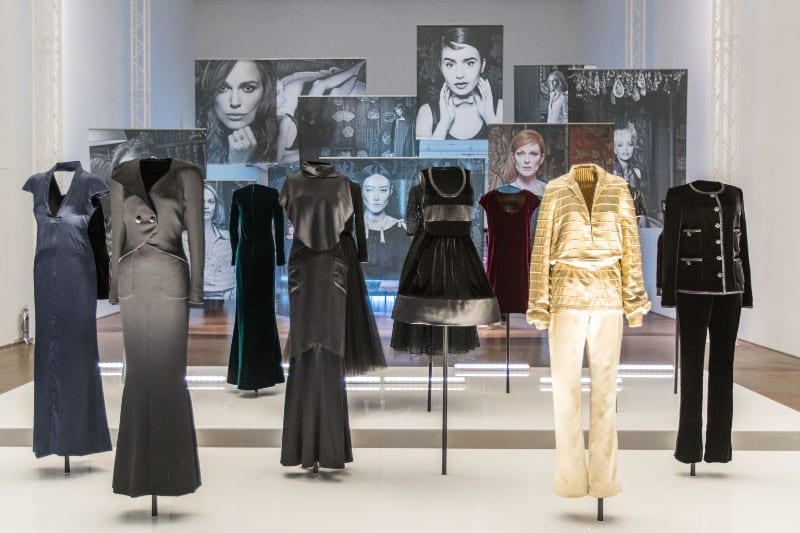
    The luxury maison took its exhibition to the next level, blending augmented reality (AR) with physical experience. With the help of a virtual tour app on the smartphone, the many icons of the luxury maison, from the No.5 fragrance to the couture ateliers, were brought to life.

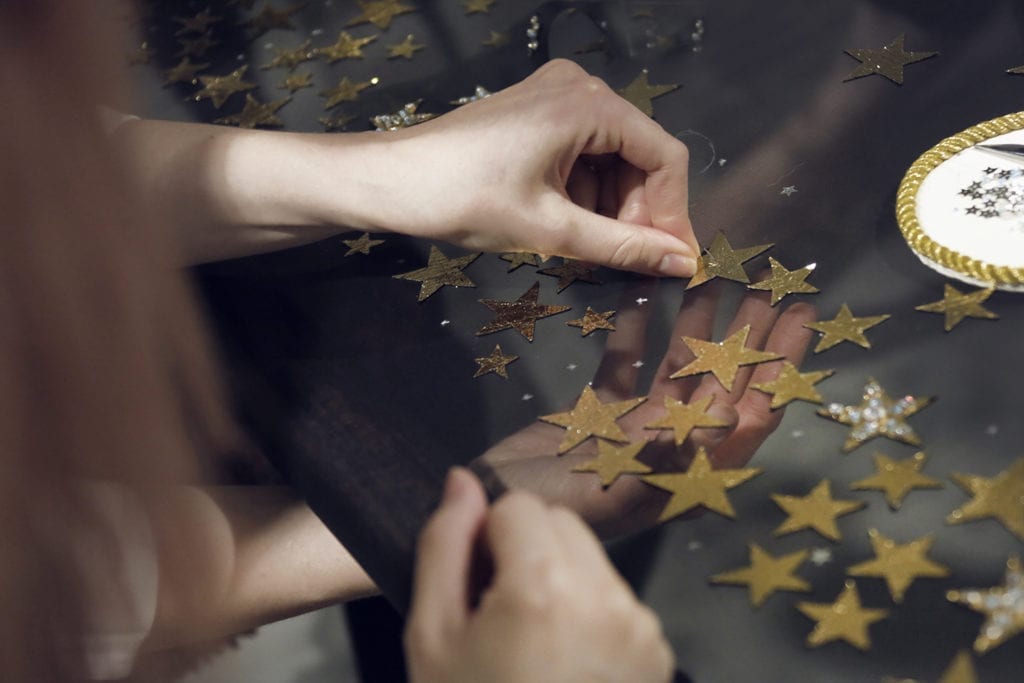
    Apart from exhibits that highlighted the maison’s heritage and savoir-faire, exclusive workshops were held to allow guests to try their hands at Chanel’s prized know-how, such as embroidery and high jewellery making.
    “Chanel is about more than a [mouse] click,” says Bruno Pavlovsky, the brand’s president of fashion. “Despite our investment in e-services for our customers, we still need to have the physical touch for them to understand the brand, to see and try the products. For us, all the digital developments and experiments are [designed to provide] better services for our customers in the boutiques.”

    While luxury brands continue to invest in digital storytelling and services, they are not forgetting about the physical experience either, now even more so than ever. They are not only focusing on retail spaces but also institutions to promote heritage and savoir-faire.

    Chanel’s Mademoiselle Privé exhibition, which travelled from London’s Saatchi Gallery to D Museum in Seoul, is hardly the only example. The maison is launching a Gallery Gabrielle Chanel exhibition space in Paris’s prestigious Palais Galliera fashion museum as well as a permanent location that will bring the house’s metiers d’art ateliers from Maison Lesage to Lemarié under one roof, expected to open in 2020.

    Apart from Chanel, other heritage houses are preserving their legacy through permanent institutions to reach existing and potential customers.

    Pavlovsky agrees on the importance of physical experience when it comes to branding.

    “We are not talking products but the values of Chanel and what makes the brand unique, which is more difficult than talking about the shoes or bags,” he says. “There’s nothing to buy at the exhibition. It’s for people to see, learn and better understand the brand. We believe that it’s quite important that in our key markets, we can share and offer that to our customers.”

    Even in their new retail concepts, brands are integrating their heritage, DNA and patrimony into the designs. Louis Vuitton’s Place Vendôme flagship store – restored from a heritage building circa 1714 and designed by Peter Marino – features more than 30 works by 22 artists ,including a 2015 portrait of a young Louis Vuitton by Yan Pei-ming.

    The Boucheron flagship store, also in Place Vendôme and under renovation, will be paying tribute to the house’s rich heritage.

    “We are renovating the full building in a patrimonial way,” says Hélène Poulit-Duquesne. “The objective is to redo it as if it was being built at the end of the 18th century. It’s our family house.”

    The flagship store, which is set to open doors in September 2018, will include a salon dedicated to hosting educational gatherings.

    The association between arts and fashion has been widely embraced by luxury maisons and many highlight the connection with permanent art spaces and cultural centres, such as the Fondation Louis Vuitton, which opened in Paris four years ago, as well as Fondazione Prada in Milan, which opened its new permanent location in 2015.

    Now luxury brands are also lifting the curtains of their ateliers to put their prized artisanal skills in the spotlight by hosting workshops and classes for customers to get a taste of their craftsmanship.

    Chanel’s Lesage workshops, which allowed fans to learn basic embroidery as part of the exhibition programme, were a sell-out. The pictures and posts on social media platforms proved how successful the classes were.

    While Chanel’s only hosting the classes during exhibition periods, Van Cleef & Arpels has taken the mission further and established L’ecole in Place Vendôme, Paris. Since 2012, the permanent address has been the venue for the brand to host a variety of classes on subjects from the history of jewellery, gemmology as well as savoir-faire.

    The Parisian school made its overseas debut in 2014 and hosted classes for fans in Hong Kong and came back for a third run just last year due to overwhelming results. “We’ve been asked by students to bring it back,” says Nicolas Bos, CEO, and president of Van Cleef & Arpels. “These programmes need some time and repetition to establish. So when we take them abroad, the mindset is that it’s going to last and develop over a long period of time. It’s really about education.”

    It is important to show the rare craftsmanship behind the brand, Pavlosky adds. “Because it’s difficult,” he says. “You cannot  be a good craftsman without the experience. In this digital world, it’s important to remind everyone of that.”

    Digital integrations might be how luxury brands do business today, but physical experience, be it in brick-and-mortar stores or for brand communications, has not been forgotten. As the aptly coined term “phy-gital” suggests, the future of luxury experience might require both experiences going forward hand-in-hand.

    “Both physical and digital aspects are really important, but when you buy a €2 million
    [HK$19.1 million] necklace, you would want to have a full ceremony,” Poulit-Duquesne says.

    Bos also believes that digital and physical experiences complement each other.

    “Definitely the digital world provides fantastic opportunities but we create jewellery that is meant to be experienced, touched and worn. So we really believe in physical experience. The more you offer on digital experiences, the more you need to develop physical experiences to match.”

  • Clothing shoppers prefer stores

    Clothing shoppers prefer stores

    Shopping in-store is still the dominant means of buying apparel in Asia-Pacific, according to the latest study from research company YouGov.

    A poll of 9037 people across the region in December reveals that more than 79 per cent have shopped in a physical store in the past year. This is particularly prevalent for Hong Kong, Australia and Malaysia, where the figures were 88, 85 and 84 per cent respectively.

    Local markets and street vendors attracted 28 per cent of consumers in APAC. They were the most popular in Vietnam, the Philippines and Malaysia, where 41, 38 and 36 per cent of respondents respectively bought apparel.

    Websites turned out the second most popular way to buy apparel. Over the past year, 45 per cent of APAC respondents went online to shop for clothing and accessories, while in China the figure was 75 per cent.

    As yet, apps have not broken into the mainstream, being used for clothing purchases by only 15 per cent of those polled. Apps were most popular in Indonesia, China and Singapore (19, 18 and 18 per cent respectively).

    YouGov says young people are more than six times as likely to have shopped via an app than older generations, and more than twice as likely to have shopped using a website in the past year.

    Between the ages of 16 and 24, 51 per cent shopped using a website over the past year and 19 per cent used an app. By contrast, just 24 per cent of respondents 55 years and older shopped using a website and only 3 per cent via an app.

    Conversely, shopping in-store is most popular with older generations – 90 per cent of those 55 and older have shopped in store compared to 75 per cent of 16- to 24-year-olds. Yet local markets and street vendors seem to buck the trend, being more popular with young people (35 per cent in the 16 to 24 age bracket buy from markets compared with 23 per cent of over 55s.

    The most popular reason for shopping online is that it is quicker than going into a store, with more than half of online and app shoppers says prices are also an advantage.

    However, 78 per cent of buyers like to try out apparel before they buy it, 73 per cent want to check the quality first, and 56 per cent simply enjoy shopping around.  

  • Online boom not deterring global retailers

    Online boom not deterring global retailers

    Global retailers are undeterred from expanding their bricks and mortar stores this year despite growing online sales, says a new report.

    In the seventh edition of How Active Are Retailers Globally?, real estate service company CBRE also says China remains the top target market of global retailers in Asia-Pacific. Its study covered more than 150 major international brands based in the Americas, Asia Pacific and EMEA.

    While European countries dominate the target destinations this year, China is the top target market in Asia-Pacific and the fourth most popular globally, with 27 per cent of retailers looking to expand there. This is followed by Hong Kong in sixth position (24 per cent), Japan seventh (22 per cent) and Singapore ninth (21 per cent).

    Globally, the top three were Germany (35 per cent), France (33 per cent) and the UK (29 per cent).
    China and Hong Kong maintained fourth and sixth place respectively, while Japan (seventh), Singapore (ninth) and Australia (11th) all rose higher in the rankings, up from 13th, 18th and 15th respectively.
    Most Asia-Pacific markets saw increased interest for this year compared with last, except for China and South Korea, which softened somewhat, says the report. Meanwhile, interest in Southeast Asia surged, with Malaysia (10 per cent), Indonesia (9 per cent ), Thailand (8 per cent), Vietnam (8 per cent) and The Philippines (8 per cent) all receiving more than double the interest they saw last year, when those markets achieved only between 1 and 3 per cent.

    When questioned about the risk factors facing them in the coming year, brands indicated that real estate cost escalation (56 per cent) and unclear economic prospects (42 per cent) continue to be at the forefront of their minds.
    “We’re seeing more of a challenging economic environment, and concerns such as high  operating costs and a lack of quality space mean retailers are somewhat more wary this year,” says CBRE head of research for Asia Pacific Dr Henry Chin.

    “However, even as markets such as China and Hong Kong are seeing a slowdown, we see increasing numbers of opportunistic retailers looking to enter markets like Hong Kong, supported by strong underlying consumer demand. Japan and Australia remain attractive, while Southeast Asia showed strong growth because of opportunities for retailers around an expanding middle class and stronger economic growth.”

    He says there are still opportunities for retailers to grow their business in Asia, as the region has four of the top 10 most popular destinations worldwide.
    “The goal now for all brick-and-mortar retailers is to build an engaging offer that encourages people to stay longer and spend more,” says CBRE senior director and head of retailer representation Joel Stephen.
    Of the brands surveyed, 83 per cent suggest their physical store expansion plans for this year will not be affected by the growth of eCommerce, and only 22 per cent see online retailing as a threat to their business.

    At the same time, retailers are cautiously optimistic about physical expansion. Of those questioned, 17 per cent have large-scale ambitions, many of them looking to open more than 40 stores this year (up from 9 per cent last year). Most retailers (67 per cent) are considering up to 20 stores.
    “A physical store in key locations is still critical to the strength of a brand’s image,” says Stephen. “Stores still need to create an emotional affinity with shoppers, and customers still feel a need to go into stores, to touch a product and enjoy the feel-good factor associated with a particular brand experience.

    “The store is integral to the shopping journey and can be used in a number of different ways, such as to click and collect, research of the product or brand, or to test the product. It isn’t solely about the transactional side.”

    In a new trend, a fifth of brands, largely from the Americas and EMEA, intend to expand into travel hubs such as airports and train stations this year to gain access to high footfall in busy locations. However, for Asia-Pacific retailers, shopping malls are still the most-preferred destination by far (nearly 90 per cent).
    While globally the key concern for brands in lease negotiations is “lease length”, Asia-Pacific retailers are most concerned with turnover rent clauses as well as changing consumer behaviour (40 per cent), which is higher than the global average (31 per cent).

  • CEO stresses value of physical stores, not just e-commerce

    CEO stresses value of physical stores, not just e-commerce

    Electrical goods, information technology and furniture retailer Courts Asia believes that while e-commerce has been gaining popularity, retailers should not neglect their brick-and-mortar operations. The Singapore-based company also sees technology and renting in suburban areas as important revenue sources.

    Terry O’Connor, Group CEO of Courts Asia (Photo by Courts Asia)

    Terry O’Connor, group CEO of the Singapore-based retailer, said that physical stores still play an important role for retailers. “Especially in the case of high-demand products like the latest smartphone, customers want to make sure they get one, rather than waiting for it to be delivered another day,” he said. O’Connor noted that online shoppers do not necessarily prefer delivery, as they may not be home to receive the goods when they arrive. “About half of our customers buy online and then collect (the goods) from the store,” he said.

    Investing in technology is also crucial for retailers to grow their business. Courts Asia recently implemented a queuing system recommended by Google for their online peak periods. “The system stops the website from crashing by having a slightly moderated waiting time of one to two minutes, so everyone effectively ends up transacting faster,” he said. “It has really helped in terms of the conversion rate and reduced some of the abandoned online shopping carts,” he observed. Courts Asia saw higher sales on 2015’s Black Friday and Cyber Monday peak shopping days compared with a year earlier.

    For retailers entering a new market, renting space in suburban areas can reduce costs and gain access to more customers. O’Connor warned that new retailers “will have to pay high rent from day one” if they instead start their business by renting space in the central business district or prime areas. He added that this in turn increases costs significantly and result in the retailer losing out on customers who live outside the city.

    He also suggested that investing in areas that complement the core business is an important step in a company’s expansion. “A lot of retailers that have gone into a completely different field have failed, as it is not their core skill set,” he said. Retailers should go to “the most adjacent category which has a synergy to what they already sell.”

    Courts Asia has grown into one of the largest retailers in Southeast Asia, with 80 stores totaling over 148,600 sq. meters of retail space. Originally named Courts, the company began as a furniture retailer in the U.K. It was established in Singapore and Malaysia in 1974 and 1987, respectively. In 2012, it was renamed Courts Asia and listed on the main board of the Singapore Exchange. In 2014, Courts Asia entered the Indonesian market.