Tag: bridge

  • Bangkok’s $29M Green Transit: New Pedestrian, Cycling Bridge to Span Chao Phraya River

    Bangkok’s $29M Green Transit: New Pedestrian, Cycling Bridge to Span Chao Phraya River

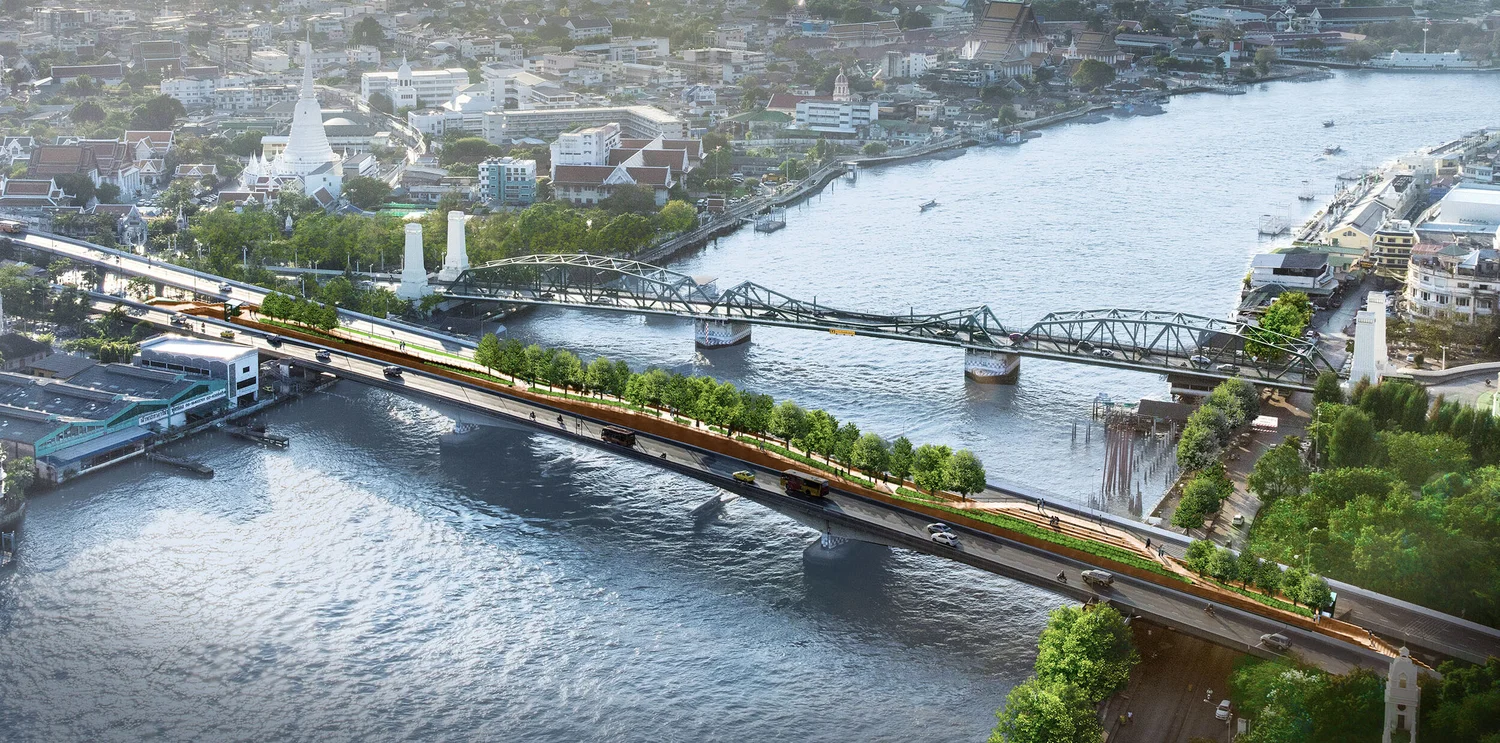
    Bangkok’s local government recently announced a THB1 billion (US$29 million) project to construct a pedestrian and bicycle bridge across the Chao Phraya River. The project, led by Bangkok Governor Chadchart Sittipunt, aims to provide greener transportation alternatives to residents and visitors, with the goal of completion by 2030.

    Connecting Bangkok’s Historic Districts

    The planned bridge will connect the city’s MRT network with pedestrian pathways, providing an urban landmark that promotes a sustainable pedestrian environment. This will link the two historic districts of Songwat and Khlong San. The existing river crossings have been a problem for pedestrians and cyclists, as they’re primarily designed for heavy vehicle traffic. The ferry services’ operation hours are limited, leaving non-motorized commuters with few and frequently unsafe options.

    Governor Chadchart stated that the project aligns with his administration’s objective of developing people-centric infrastructure in conjunction with the city’s main road network. “The city needs a landmark, a bridge across the Chao Phraya River specifically for pedestrians and cyclists since there are enough bridges for cars,” he stated. The Governor also noted that this project would contribute positively to the local community economy and help bridge the gap between the historically overlooked Phra Nakhon and Thonburi districts.

    A New Urban Legacy

    The planned bridge will span 300 meters and be up to 10 meters wide. The project planners have assured that no further land appropriation would be necessary, thus reducing disruption to long-standing riverside communities. The design includes plans to utilize rooftop spaces on adjoining buildings for community shops and street food vendors to help promote local businesses.

    Pichai Wongwaisayawan, Dean of the Faculty of Architecture at Bangkok University, referred to the bridge as crucial “social infrastructure”. Rather than just providing a physical crossing, the bridge connects people, cultures, and transportation systems. “The real value of this bridge is in its ability to connect all transport systems – trains, boats, walkways, or bicycles,” said Pichai. He added that the city needs an interconnected network of public spaces more than landmarks. If the bridge becomes the start of a network of riverfront walkways linking communities and public transit, it will serve as an enduring urban legacy.

    Questions & Answers

    What is the purpose of the new bridge project in Bangkok?
    The bridge is designed to provide green transportation options for residents and tourists, linking two historic districts and connecting the city’s MRT network with pedestrian pathways.

    How will this project impact the local community?
    The project is expected to boost the local community economy by including plans for community shops and street food vendors. It also aims to bridge the gap between the Phra Nakhon and Thonburi districts, which were often overlooked in the past.

    What is the expected completion date for this project?
    The bridge is targeted for completion by 2030.
  • Digital Bridge Unveiled: China and Cambodia Debut Historic Subsea Cable System

    Digital Bridge Unveiled: China and Cambodia Debut Historic Subsea Cable System

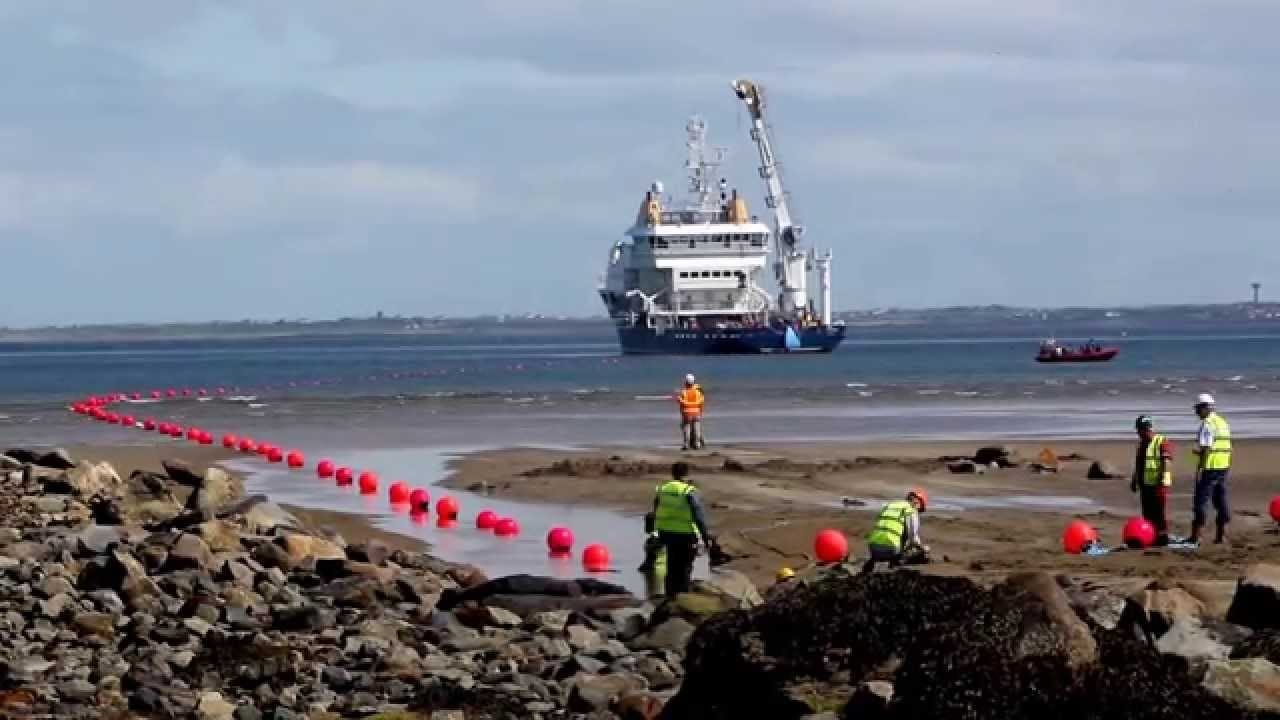
    China Unicom Global, in partnership with Cambodia’s Ministry of Posts and Telecommunications (MPT), has made significant strides in the global telecommunications arena with the successful landing and installation of the Sihanoukville-Hong Kong (SHV-HK) submarine cable system. This monumental achievement establishes a direct digital link from Sihanoukville, Cambodia to the Tseung Kwan O Industrial Estate in Hong Kong SAR.

    First State-Owned International Submarine Fiber-Optic System in Cambodia

    The collaborative venture between the MPT and China Unicom Global has produced the inaugural state-owned international submarine fiber-optic system in Cambodia. Produced and deployed by HMN Tech, this significant investment, costing an estimated USD 165 million, is set to enhance high-capacity optical transport across the South China Sea.

    The SHV-HK subsea system spans an impressive 2,938 kilometers and features a main trunk with two additional stub cables, paving the way for potential expansions in the future. Boasting a design capacity of a whopping 80 Terabits per second across four fiber pairs, this cable has the capacity to support over 3.2 million simultaneous streams of 4K ultra-high-definition video or manage massive enterprise cloud transfers.

    Hong Kong’s Role in the Ambitious Project

    China Unicom Global is managing the Hong Kong segment of this ambitious project. The cable reaches the shore at a Beach Manhole (BMH) specifically located in the Tseung Kwan O Industrial Estate. Supplementing the overall infrastructure are the Power Feeding Equipment (PFE) and Submarine Line Terminal Equipment (SLTE) located at China Unicom Global’s global center and cable landing station in the Tseung Kwan O Industrial Estate. These installations will guide traffic effectively into the major local carrier-neutral data centers.

    Questions & Answers

    What is the length of the SHV-HK submarine cable system?
    The SHV-HK submarine cable system stretches for approximately 2,938 kilometers.

    What capacity does the SHV-HK submarine cable system hold?
    The cable system has a design capacity of up to 80 Terabits per second, which can support over 3.2 million simultaneous streams of 4K ultra-high-definition video or extensive enterprise cloud transfers.

    Who are the key players involved in this project?
    China Unicom Global and Cambodia’s Ministry of Posts and Telecommunications (MPT) have partnered to complete this project, with HMN Tech manufacturing and deploying the cable system.

  • Revamping Bangkok: A Sneak Peek at Pedestrian-Centric Vision for New Cycling Bridge Over Chao Phraya River

    Revamping Bangkok: A Sneak Peek at Pedestrian-Centric Vision for New Cycling Bridge Over Chao Phraya River

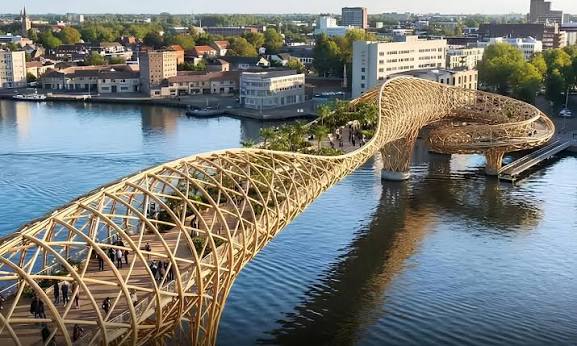
    Bangkok is currently evaluating proposals for a pedestrian and cycling bridge across the Chao Phraya River. This initiative is part of an effort to rejuvenate the city’s historic old town and create a fresh, urban landmark. The Bangkok Metropolitan Administration has recently released concept images, which include designs from an acclaimed international architecture company, MVRDV.

    Bridge Vision

    The proposed bridge aims to enhance cross-river connectivity between Phra Nakhon and Thonburi districts. At present, citizens largely depend on road bridges or limited-hour ferry services for these crossings. The bridge is intended solely for pedestrians and cyclists, filling a crucial gap in Bangkok’s transportation infrastructure.

    In addition to serving as a safe route for daily commutes, the bridge is also expected to boost cultural tourism in historic communities on both sides of the river. It provides a platform for walking, relaxing and appreciating river views, reflecting Bangkok’s “walkable city” principles. These principles emphasize an improved quality of life, reduced reliance on cars, and the promotion of environmentally sustainable modes of transport.

    Project Status

    Officials have indicated that the project is currently in the study and preliminary design phase, with an environmental impact assessment being prepared. Any actual construction is yet to be approved and will be subject to review and budget sanctions by the Bangkok Metropolitan Council.

    Questions & Answers

    What is the purpose of the proposed bridge?
    The bridge aims to enhance cross-river connectivity and boost cultural tourism. It is intended solely for pedestrians and cyclists, filling a gap in Bangkok’s transportation infrastructure.

    What principles is the bridge project based on?
    The bridge project reflects Bangkok’s “walkable city” principles which emphasize an improved quality of life, reduced reliance on cars, and the promotion of environmentally sustainable modes of transport.

    What is the current status of the bridge project?
    The bridge project is currently in the study and preliminary design phase. Any construction is yet to be approved and will be subject to review and budget sanctions by the Bangkok Metropolitan Council.

  • Singapore Strengthens Europe-asia Link, Promotes Sustainability & Innovation At Inaugural Conference

    Singapore Strengthens Europe-asia Link, Promotes Sustainability & Innovation At Inaugural Conference

    Singapore, during the maiden “Europe Conference 2025”, solidified its position as a reliable conduit connecting Europe and Asia, fostering sustainability, innovation, and enduring collaboration across the continents. The Singapore Business Federation (SBF) and the European Chamber of Commerce Singapore (EuroCham) co-hosted this event, which served as a tribute to six decades of robust relations between Europe and Singapore. The event, held on October 14, 2025, garnered participation from more than 300 individuals across seven nations, underlining the profound engagement between the two regions.

    Future Anchored in Sustainability and Innovation

    The conference, underpinned by the theme of “Sustainability & Innovation”, brought together industry pioneers, policymakers, and innovators to delineate strategies for creating resilient, future-proof economies. The speakers emphasized the dire necessity of cross-border collaboration and partnerships spanning diverse sectors to sail through global uncertainties and stimulate sustainable growth.

    Building Bridges in a Changing World

    Singapore’s Minister for Foreign Affairs, Vivian Balakrishnan, initiated the conference with a keynote focusing on intensifying Europe-Singapore relationships. Balakrishnan underscored the importance of enhanced cooperation in digital and green economies, robust backing for multilateralism, and tighter ASEAN-EU collaboration. He also motivated European firms to leverage Singapore as a launchpad for their Southeast Asian ventures.

    Family Businesses as Catalysts of Change

    A stand-out session, steered by Federico Donato of MG Partners MFO, highlighted the escalating role of family-owned entities in fortifying Europe-Asia connections. Speakers including Peter Vyncke of Vyncke NV and Gan See Khem of HMI Medical elucidated how family businesses strike a balance between tradition and transformation, from handling generational transitions to embracing innovation without compromising their core values.

    Scaling Innovation Through Partnerships

    In an additional panel, headed by Marcus Lam, Executive Chairman of PwC Singapore, business leaders discussed how the Singaporean ecosystem can propel innovation. Industry experts, including Lawrence Wu of EDP Renewables APAC and Juliana Kua of the Ministry of Trade and Industry, shared practical strategies to assist businesses at various stages of their transformation journeys.

    Hub for Collaboration and Growth

    The conference served not just as a dialogue platform but also a networking opportunity. Participants engaged in cross-industry networking, explored foreign market prospects, and formed partnerships aimed at crafting resilient, future-proof business ecosystems. SBF Chairman S. S. Teo said, “The inaugural Europe Conference 2025 accentuates Singapore as a link connecting Europe and Asia. By collaborating with our European counterparts, we are cementing a foundation of trust, innovation, and long-term collaboration.”

    Milestone for Europe-Asia Connectivity

    The event, supported by partners such as Gulf Air, BPM LLP, EDP, Jason Marine, and PSA International, denoted a crucial landmark in promoting Europe-Asia connectivity. It highlighted Singapore’s persistent role as a strategic hub fuelling digitalisation, resilience, and sustainability – the primary forces moulding the future of international business.

    Questions & Answers

    What was the focus of the inaugural Europe Conference 2025?
    The conference focused on “Sustainability & Innovation” and aimed at bringing together industry leaders, policymakers, and innovators to chart strategies for creating resilient, future-ready economies.

    What role does Singapore play in connecting Europe and Asia?
    Singapore acts as a strategic hub that drives sustainability, innovation, and long-term collaboration between Europe and Asia.

    How can European firms leverage opportunities in Southeast Asia via Singapore?
    European firms are encouraged to use Singapore as a springboard for their ventures into the rapidly evolving Southeast Asian market.

  • Thailand to build new bridge to Cambodia

    Thailand to build new bridge to Cambodia

    The Thai government is constructing a new bridge to link Chanthaburi province in eastern Thailand with Pailin province in Cambodia, with an estimated cost of 15 million baht (US$431,400).

    During his visit to the Ban Pakkad border checkpoint in Pong Nam Rong district on Nov. 21, Deputy Prime Minister and Interior Minister Anutin Charnvirakul highlighted the bridge’s potential to boost cross-border trade and tourism between the two nations.

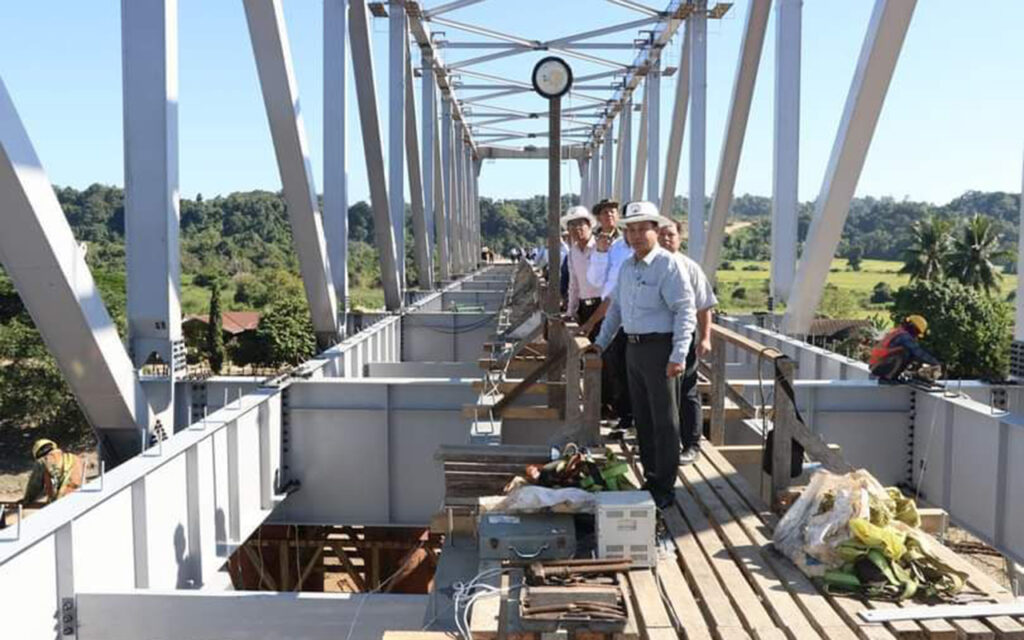
    Named the New Chanthaburi-Pailin Friendship Bridge, this concrete structure will replace the temporary steel bridge currently connecting the two provinces. The new bridge will span approximately 40 meters and include 3-meter-wide pedestrian walkways on each side of the vehicular lanes.

    With its improved design and infrastructure, the bridge is expected to significantly enhance logistics and trade efficiency between Thailand and Cambodia, fostering stronger economic ties.