Tag: BTC

  • FTX Debacle Promts Revolut to Delay its Cryptocurrency Launch

    FTX Debacle Promts Revolut to Delay its Cryptocurrency Launch

    Revolut is delaying its entry into cryptocurrencies, postponing the launch of its RevCoin in the wake of the collapse of the FTX exchange.

    Switzerland’s most popular neobank, Revolut, is holding back on its planned entry into minting its cryptocurrency.

    We are scoping the market conditions and assessing the best time to launch RevCoin in the coming months, a spokesman for the UK’s most valuable fintech told the news outlet. Revolut initially planned to launch RevCoin towards the end of last year, but management opted for a delay as FTX imploded in November.

    The project was confirmed in an interview CEO Nik Storonsky conducted with The Block in May of last year. RevCoin will run on Ethereum and work similarly to airline mileage incentive programs, with users earning rewards on how frequently they use the service.

    Storonsky is an ex-Credit Suisse derivatives trader who founded Revolut in 2014. He is worth $7.1 billion, according to Forbes.

    In Switzerland, the neobanks services are available via Credit Suisse.

  • Crypto is Dead. Long Live Crypto in 2023

    Crypto is Dead. Long Live Crypto in 2023

    The crypto industry is facing a very difficult 2023. In the longer term, however, there is no reason why it should not rise from the dead again, as it has in the past.

    Skeptics have long suspected it, and now they see themselves vindicated by the fiasco surrounding the now-bankrupt crypto exchange FTX in which the whole crypto boom was built on sand. Bitcoin, Ether, and pretty much every other token and altcoin is nothing more than a big scam, designed solely to take hard-earned money out of the pockets of speculative investors and gullible crypto enthusiasts.

    Spectacular bankruptcies, sensational hacks, and scams are hard to beat for audacity along with billion-dollar collapses, brazen scandals, and embarrassing confessions truly made for an annus horribilis in the crypto industry. The year 2022 was the first full year that cryptocurrencies definitely hit the mainstream, but looking back, it seemingly turned out to be a complete disaster.

    Cascading Collapse

    Beginning with stablecoin Terra and its sister token Luna in May, the crypto pyramid collapsed this year, triggering a domino effect that took the entire crypto market down with it, via industry giants like Celsius Network, Voyager Digital, and Three Arrows Capital (3AC), to FTX and BlockFi. Meanwhile, hackers are estimated to have absconded with over $3 billion in 2022 alone. Over two-thirds of the total market capitalization of cryptocurrencies evaporated into thin air during the year.

    This is not what a foundation built on confidence looks like. Fear, uncertainty, and pessimism appear to be at unprecedented levels around crypto, and numerous investors have lost interest and exited the cryptocurrency market.

    Is History Repeating Itself?

    And so the prophets of doom repeat their mantra the crypto market is dead, put into an early grave by pure speculation, especially since the two most important cryptocurrencies, Bitcoin and Ether, are seen as a fad, without use and not backed by any physical asset.

    To be sure, at least 95 percent of all tokens are junk, with many of them unlikely to survive the crypto winter in which the industry finds itself. But is the industry doomed? The market already crashed by more than 80 percent in the crypto crashes of 2014 and 2018, and yet the industry emerged stronger from each of these crises.

    External Influences

    The short- to medium-term outlook for the crypto market looks pretty bleak with 2023 expected to be a better year, albeit a very difficult one, while the long-term future still appears hopeful and promising.

    Most of the catalysts contributing to the crypto market crash since November 2021 cannot be attributed to the underlying technology. That was mostly attributable to external factors, like tighter central bank policy, fraudulent crypto players, and dubious business models.

    As painful as the crypto winter is, the associated shakeout and recovery process is healthy in the long run since weak competitors with obvious design flaws are being punished by the market and weeded out.

    Above all, the excesses of the wild speculation of recent years are being mercilessly pulled up by their roots. The disillusionment is likely to drag on for quite a while, so it seems rather unlikely bitcoin will return to its all-time high any time soon, not least because the low-interest phase that encouraged speculation is now over.

    Capital Market Cycles

    Boom-and-bust cycles are the essence of all capital markets. But cryptos as a controversial asset class, seem to attract far more media attention than other investment vehicles. Often lost in the general noise is that in the absence of adequate global regulation and due to their young age, cryptos like Bitcoin and Ether are still very vulnerable to dislocation. Both, however, have uses beyond mere speculation or criminal activity, as is often accused.

    Bitcoin is increasingly used as a rapid money transfer method via the Lightning network, while Ether is evolving into a currency for the Web3 and Metaverse. What is needed are stronger guardrails providing more legal and investment certainty in the crypto world in the future.

    At the same time, it would be illusory that all risks can be regulated away. The task of governance rules lies in creating a consistent and reliable regulatory framework. With stronger regulation, trust, and acceptance of crypto assets increase. If leading financial institutions like Blackrock and Goldman Sachs continue to back crypto, it will ultimately attract new investors.

    Innovative and Promising

    Healthy crypto companies are not taking things lying down, but taking advantage of opportunities that present themselves for new business ideas. And, last but not least, the blockchain industry spans far more than just out-of-favor cryptocurrencies. The tokenization of digital assets is seen as having a promising future, with increasingly attractive use cases popping up. The technology can lead to a more efficient, transparent, and accessible securities trading system.

    As long as the blockchain industry continues on its innovation course, and clearer global regulation provides a healthy foundation for the future, there is no reason why the crypto industry will not rise from the ashes once again, as it has done in each case in the past. Especially in an industry as dynamic as the blockchain industry, new technologies may emerge tomorrow that no one is even thinking about today.

  • Vietnamese buy Bitcoin in hope it has bottomed

    Vietnamese buy Bitcoin in hope it has bottomed

    Many investors are buying Bitcoin after the cryptocurrency’s price fell to US$20,000, its lowest level since December 2020. Thanh Binh of HCMC says he turned off notifications on his crypto trading app after buying it at $38,000 and losing over VND40 million ($1,720).

    But he has returned and bought a 10th of a token after prices dropped below $20,000.

    “The market has bottomed out and will recover by the end of this year, and so this is the right time for buying in,” he says hopefully.

    Hai Ly of the southern province of Dong Nai has invested VND70 million in Bitcoin and Ethereum, the two largest tokens by market cap. She wanted to diversify her portfolio and thinks their current prices are reasonable.

    She says Bitcoin operates in four-year cycles, and prices fall sharply at the end of each cycle before scaling new peaks.

    “The current cycle started in January 2019 and ended between May and July this year. Considering other factors, the current crypto slump is not abnormal.”

    Prices will recover and hit a new peak by mid-2023, she says.

    Many investors see an opportunity in the current fall in cryptocurrency prices though the recent sell-offs wiped billions of dollars from the market.

    Search related to Bitcoin has surged to the highest levels in a year according to data from analytical website Google Trends.

    Hope is also fueled by rumors that Binance, the largest cryptocurrency exchange, has quietly bottom fished a large amount of Bitcoin.

    Over 100,000 tokens have been added to the exchange’s cold wallet (physical device that keeps cryptocurrency completely offline), crypto-focused site Coingape has discovered from on-chain data.

    They amount to 0.5 percent of all mined Bitcoin and are worth over $2 billion at current prices. But CEO Changpeng Zhao denies it, saying the increase “means more users deposited in Binance.”

    Money is also coming into crypto-centric investment funds. They have raised over $125 million in the week ended June 6 and $506 million in the year-to-date, asset management company CoinShares reported.

    Short-term Bitcoin funds, mainly used for speculating on the cryptocurrency’s slump, received $1.3 million. Bitcoin is being traded the fastest in a year, Yahoo Finance said.

    But there are risks associated with bottom fishing Bitcoin and other cryptocurrencies, experts warn.

    Le Sy Nguyen, ASEAN regional manager of crypto exchange Bybit, says current prices are not attractive.

    The collapse of cryptocurrency Luna and its paired stablecoin Tether, and recent interest hikes in the U.S. have greatly affected market sentiments, with many investors opting out trading on extreme fear.

    “Anything can happen in this [volatile] period, which poses great risks to investors who try to benefit from bottom fishing in the short term.”

    He says investors should invest for the long term or wait until the market stabilizes. “But no one can be sure whether it has hit bottom.”

    The slump could prolong until the end of this year, he says.

    The founder of a digital assets startup, who does not want to be named, says it is impossible to give advice on whether to buy or not at the “current sensitive time.”

    “It is inappropriate to evaluate digital assets using methods used for stocks, as they do not generate income like companies The number of wallets, users and transactions are key indicators of this market.”

  • Cryptominers unplug rigs as bottom falls out of market

    Cryptominers unplug rigs as bottom falls out of market

    Cryptominers are powering down operations, even selling equipment, as cryptocurrency prices continue to plummet. Nguyen Binh, a cryptominer in the southern Dong Nai Province, said his rigs can mine almost one Ethereum (around $2,000) a month, but hardly breaks even.

    “Electricity bills have taken away half of what I earned. With depreciation and operation and maintenance costs, I am losing money.

    “If prices of Bitcoin or Ethereum (the two largest cryptocurrencies) cannot recover in the next few months, more miners will have to shut down their machines.”

    He estimated that miners are losing 30-40 percent on selling graphic processing units, a key component in mining.Minh Nghia, administrator of a mining group, said some miners have disassembled their rigs to resell but are unable to find buyers despite falling prices.

    “Some told me they sold all their hardware and tokens but still cannot recoup their losses.

    “Financially independent miners can keep mining and wait until prices increase, but those who borrowed are finding themselves in hot water: They either sell their equipment and suffer losses or keep mining and cannot pay electricity bills and interest.”

    Experienced miner Tan Ha said many have unplugged their rigs.

    “GPUs, like other electronic devices, have a certain lifespan. It is not ideal to keep them running amid a plummeting crypto market, and so some miners choose to power down operations until prices recover.

    He said there is a high chance that prices might not recover for a long time.

    Bitcoin, the largest cryptocurrency by market cap, has fallen to $28,720 on May 18, the lowest in two years and down by half compared to its all-time peak of over $68,000 last November.

    Meanwhile, cryptocurrencies overall have lost nearly $800 billion in market value in the past month, according to data site CoinMarketCap, as investors fret about tightening monetary policy.

  • Securing Digital Assets Gets Physical

    Securing Digital Assets Gets Physical

    As bad as losing money in the current market for cryptocurrencies might be, losing them altogether would be even worse.

    By some estimates, some 20 percent of all bitcoin has been lost for various reasons, including theft, forgotten passwords, or wiping out a hard drive, leading to a loss in value of well over $100 billion. What is there to do?

    One way to try to get back lost, stolen, or misplaced digital assets is to hire a firm that specializes in recovering them, although the price can be quite steep. One such company is the father and son team that founded cryptoassetrecovery.com which charges 20 percent of the value of the recovered assets. The duo estimated that around $4.7 billion is lost assets are recoverable. Still, if you have lost, say $10 million in Bitcoin, that might be a small price to pay.

    Going to the Ballet

    So much is written about the digital world, that it might be surprising that one way to help secure cryptocurrencies is with a physical wallet. These do not have a connection to the internet and are referred to as a cold wallet, while a hot wallet is a form of digital storage accessible via a device or computer.

    Ballet is a U.S.-based company that offers a physical wallet having a two-factor cryptographic private key securely concealed on the physical wallet itself, allowing the wallet to function as a bearer asset similar to cash or gold. A companion app, Ballet Crypto, serves as a digital interface for physical Ballet products and provides all the essential functions of a cryptocurrency wallet while allowing private keys to remain securely offline.

    A cold wallet would make more sense for someone planning to hold onto a cryptocurrency for a longer period. The drawback of losing a cold wallet is that you lose access to your investments, and the investor is in the same boat trying to recover assets.

    From Freeports to Fintech

    While the exact origins of freeports are subject to debate, the idea took hold around the time of the Renaissance as a way of attracting trade. Modern versions are often at airports and outside of customs areas. Malca-Amit is one company that has numerous vaulting facilities at several airports globally, including Zurich, where it offers storage for high-value assets including diamonds, gems, jewelry, gold, and other precious metals.

    In addition, it provides services the for luxury goods industry, high-net-worth individuals, and international banks access to a global team of experts in logistics, security, customs houses, and special operations (i.e. security) professionals.

    It also provides courier services for those goods and transportation of artworks. So that Warhol or Picasso you bought in New York and needs to be shipped to your home, Malca-Amit will handle the door-to-door delivery.

    It is now taking its experience in this traditional business of protecting and storing assets by offering physical vault protection to digital assets, in what they call «deep cold» storage either for individual clients or as a custodial service.

    What this means is the private key required to access the digital assets is secured offline, as part of the customer’s physical wallet, which we protect in state-of-the-art facilities. These are the same facilities used to safeguard the assets of investment-grade banks, luxury brands, and digital asset custodians explains Mark Titmarsh, who is head of digital assets at Malca-Amit.

    Titmarsh stresses that if a private key is lost or it is stolen, the thief has control of the assets in the case of theft. By physically storing wallets, customers remain in control of their private keys. This is because the private key is only generated when both private key elements on the physical Ballet wallet are combined, which are protected under seal. Whilst the wallet is in our care the private key elements will never be revealed. It’s pretty simple, we provide the physical infrastructure to keep the wallet and private key elements safe he says, noting that the firm is backing the assets against loss with full liability coverage.

    Casascius Coins

    While digital bitcoin is online on the blockchain, the Casascius coin can only be accessed by the person in possession of the coin’s private key, which is stored under a tamper-proof hologram that allows the owner of the physical coin to claim the associated Bitcoin.

    Holders of Casascius coins, which were introduced in 2011, can also be storied with Malca-Amit and are also covered by the same liability insurance.

  • Technical Standards To Simplify Digital Payments

    Technical Standards To Simplify Digital Payments

    The Swiss Bitcoin Association recommends the first technical standards for simplified payment verification (SPV) using digital currencies, eliminating the need to download entire the blockchain for transactions.

    Switzerland’s Bitcoin SV Technical Standards Committee today recommended its first digital currency standard for simplified payment verification (SPV), enabling transactions to occur without having to download the entire blockchain.

    This standardized format is now in use across three prominent ecosystem applications, the Bitcoin SV node software, Merchant API (mAPI), ElectrumSV and ElectrumX.

    The first BSV technical standard progressing to the recommended stage – the final stage for technical standards – represents a significant achievement for the Bitcoin SV Technical Standards Committee, says Technical Committee Chair Steve Shadders.

    The Swiss government today adopted a report on the digitalization of the financial markets, identifying opportunities and risks and laying out action points for the coming years.

  • Cryptocurrency Mana, Surged to an All-Time High amid Excitement over Facebook Rebranding

    Cryptocurrency Mana, Surged to an All-Time High amid Excitement over Facebook Rebranding

    With Facebook announcing a name change to Meta to demonstrate its new focus on the metaverse, something exciting happened in the cryptocurrency sphere. The price of MANA, a cryptocurrency dealing in virtual land, rose to an all-time high.

    On Saturday, CoinMarketCap data reported that the price was at $4.16, a 400% rise. That was after posting a paltry $1.47 per token only a few days earlier.

    MANA falls under the Decentraland platform that emerged in 2017, around the same time Margex was established. To know more about Margex, it is where users can transact properties on this metaverse platform using nonfungible tokens. Like ether, MANA revolves around Ethereum.

    The Dentraland platform offers users the opportunity to acquire land and upgrade it in their preferred environment – for instance, theme parks and casinos.

    Companies that operate in this space are interested in the developments at Facebook. Other metaverse-centered crypto currencies like AXS and SAND showed investor interest. However, MANA was the strongest performer, especially immediately after Facebook’s CEO made the announcement.

    Facebook CEO announced the name change to META on October 28 and demonstrated the giant company’s determination to steer away from its social media identity. The CEO Mark Zuckerberg said this in his address, “Today we are seen as a social media company, but in our DNA we are a company that builds technology to connect people, and the metaverse is the next frontier just like social networking was when we got started.”

    Facebook changes to Meta

    It is not surprising that Facebook made this bold move. The industry and the society at large are leaning towards the futuristic online world where they can enjoy new experiences. They desire to be at the meeting point of the virtual and real worlds.

    Augmented reality, immersive technologies, and virtual reality have been gaining popularity in recent years. These technologies were bound to grow through investments from giants like Facebook. It is inevitable because they are part of the digital reality. Experts opine that soon, even gazes, motions, and gestures will be part of the experiences.

    The question on everyone’s mind is whether this token will remain on fire for long.  Currently, MANA appears to be in a consolidation period. Consolidation is usually welcome because it not only offers the token the chance to wind down on the relative strength index (RSI) but also prepares for upcoming rallies.

    At the time of writing this piece, MANA, like SAND, seemed to be moving sideways. Oppositely, AXS has consolidated its position for the last month and is recovering after Facebook’s announcement, albeit without many strides. MANA and the likes may be consolidating and cooling off, but you still need to consider them for your portfolio.

    Margex, a cryptocurrency derivatives trading platform that was formed only a year ago is one such option. Within a short period, the platform has proven itself as reliable for professional trading. Its simplicity means that even new traders are at home here.

    One of the key features of this platform is 100x leverage that means that one can earn high profits, as long as he or she knows how to maneuver the market.


    The market has been awash with negative reviews related to price manipulations and unwarranted liquidations. None of these price controls are at Margex. Your profits are your profits.

    With the virtual reality market poised to be worth $1 trillion within five years, blockchain-based platforms are expected to benefit the most. The internet as all know it today is bound to manifest differently thanks to the metaverse as 3-D environments develop. It is at the backdrop of this fact that the metaverse token prices are most likely to strengthen in the future and offer many opportunities to traders.


  • Australian Regulator Warns of Lacking Crypto Protection

    Australian Regulator Warns of Lacking Crypto Protection

    The Australian Securities and Investments Commission cautioned investors about cryptocurrency risks, noting that they are «on their own» for the time being as efforts are underway to develop regulations.

    Consumers should approach investing in crypto with great caution, said ASIC chair Joe Longo at the recent Australian Financial Review Conference.

    At present many crypto-assets are probably not ‘financial products for the most part, for now at least, investors are on their own.

    Not unlike markets elsewhere, demand for crypto-assets and related services is on the rise in the country with big four lender Commonwealth Bank of Australia recently becoming the first in the sector to roll out a retail offering that will cover 10 cryptocurrencies by 2022.

    Crypto is on our doorstep, here and now, and being driven by extraordinary consumer and investor demand. The implications for consumers are potentially huge, Longo added.

    ASIC does not strive to eliminate risk. But, nor should we ignore it.

  • El Salvador Plans to Build World’s First Bitcoin City

    El Salvador Plans to Build World’s First Bitcoin City

    El Salvador continues to position itself as a crypto hub leader with its latest plans to build a Bitcoin City with bonds backed by the same digital currency.

    El Salvador President Nayib Bukele announced plans to build the world’s first Bitcoin City on Saturday as part of a week-long event to promote the South American nation as the hub of choice for cryptocurrency.

    Invest here and make all the money you want, Bukele said. If you want bitcoin to spread over the world, we should build some Alexandrias.

    El Salvador became the world’s first country to adopt bitcoin as legal tender in September.

    According to the tech-savvy 40-year old, the city would be built in the eastern region of La Union and be powered by geothermal energy from a volcano.

    Also, no taxes will be levied except for value-added tax of which half will be used to fund related bonds issued with the other half used to pay for services like garbage collection.

    El Salvador plans to issue the bitcoin-backed bonds in 2022, Bukele added.

  • Singapore-Based Crypto Platform Inks Blockbuster Sports Deal

    Singapore-Based Crypto Platform Inks Blockbuster Sports Deal

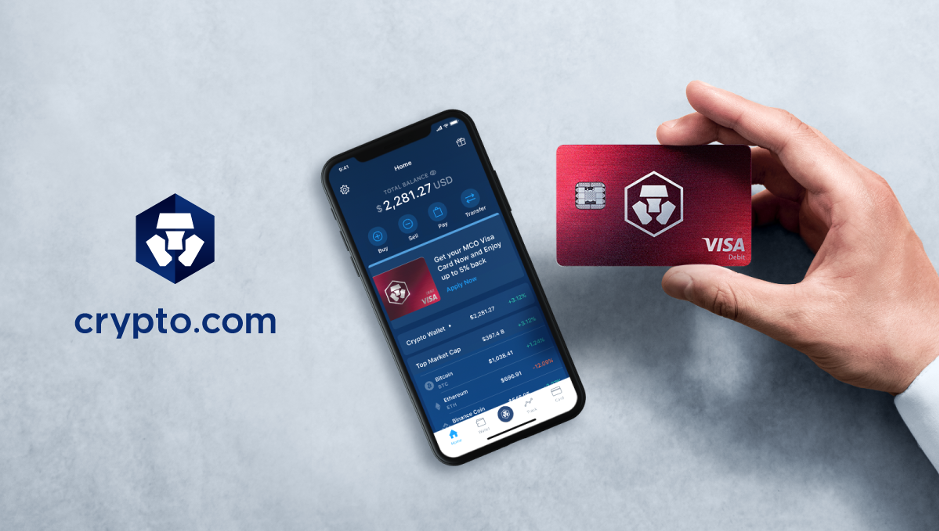
    Crypto.com has bought the naming rights to the arena that is home to NBA team Los Angeles Lakers, in what is said to be one of the largest naming deals in sports history.

    The Staples Center in Los Angeles, home to the Lakers basketball team as well as the L.A. Kings hockey team and women’s basketball team Los Angeles Sparks, will be renamed the Crypto.com Arena, following a $700 million deal announced on Wednesday.

    The partnership, which takes effect on December 25, will last for 20 years, and ends the arena’s 22-year partnership with the office supplies retailer.

    The deal underscores the rapidly growing influence and widespread adoption of Crypto.com’s cryptocurrency platform and NFT marketplace worldwide, Crypto.com said.

    Crypto.com was founded by e-commerce exec Kris Marszalek as Monaco in 2016, before its rebranding as Crypto.com in 2018. The platform boasts more than 10 million customers today. The crypto exchange’s logo already adorns the jerseys of the National Basketball Association (NBA) Philadelphia 76ers team.

    Earlier this year, rival crypto exchange FTX became the first crypto business to secure naming rights to a major sports venue when it paid $135 million for the naming rights to the home of NBA team Miami Heat in a 19-year deal. Crypto.com then secured a sponsorship deal with hockey team Montreal Canadiens to have its logo brandished on the ice at its home arena, the Bell Centre.

    The platform’s native token, CRO, currently the 16th largest cryptocurrency by market cap, jumped 35 percent in the 24 hours after the announcement to reach $0.545.

  • ZA Adds Digital Asset Capabilities

    ZA Adds Digital Asset Capabilities

    ZA International has established a partnership with BC Technology Group which operates the city’s only licensed digital asset platform. ZA International and BC Technology Group have entered into a mutual collaboration agreement, according to a statement. ZA will use BC Technology Group as its exclusive digital asset trading partner via its Hong Kong-licensed digital asset platform OSL.

    On the other hand, BC Technology will leverage ZA’s tech capabilities in areas such as facial recognition and machine learning to enhance user experience on its trading platform.

    Both ZA and OSL remain in growth mode with the former reportedly considering the acquisition of Hong Kong’s largest non-bank lender late last year and the latter recently making a series of global hires.

    The digital asset industry presents a thriving future, and fintech companies are well-positioned to promote the universal application of digital assets in Hong Kong through capitalizing on their technological advantages, said ZA International president Wayne Xu.

  • Vietnam to trial virtual currency

    Vietnam to trial virtual currency

    The Vietnamese government has ordered its central bank to study virtual money using blockchain technology over three years amid rising interests in this type of currency.

    The State Bank of Vietnam will be in charge of studying and trialing the use of virtual money from this year until 2023 as part of key objects in mastering core technologies, according to a government decision.

    The government does not give a clear definition of virtual currency and assets.

    For now, cryptocurrencies remain an illegal means of transaction in Vietnam. However, the trading of Bitcoin and the like is popular with many investors using foreign platforms and social media to make money from this asset.

    Vietnam has the second-highest rate of cryptocurrency usage among 74 economies, according to a survey by market researcher Statista.

  • Beijing’s Crypto Crackdown Sends Mining Abroad

    Beijing’s Crypto Crackdown Sends Mining Abroad

    Cryptocurrency miners in China are shifting their operations to other markets abroad following Beijing’s latest crackdown.

    A committee from China’s State Council announced on Friday that it would crack down on crypto, specifically naming Bitcoin as a major concern.

    The government will crackdown on bitcoin mining and trading behavior, and resolutely prevent the transfer of individual risks to the society, said the committee led by Vice Premier Liu He.

    Although the statement stopped short of communicating or signaling an outright ban, miners in China – estimated to account for as much as 70 percent of global crypto supply – are already planning to shift their operations abroad.

    Huobi Mall, an arm of major cryptocurrency exchange Huobi, said over the weekend that it had suspended its custody business and is now contacting overseas service providers to export mini rigs in the future.

    Crypto mining pool BTC.TOP also announced the suspension of its China business over regulatory risks and its founder Jiang Zhuoer said that the firm will mainly conduct its crypto mining operations in North America in the future.

  • Hong Kong to Bar Retail Access to Cryptocurrencies

    Hong Kong to Bar Retail Access to Cryptocurrencies

    The Hong Kong government is seeking to restrict cryptocurrency access to wealthier investors amid an ongoing global crackdown by regulators.

    Cryptocurrency exchanges operating in Hong Kong will have to licensed by the Securities and Futures Commission (SFC) and limit access to professional investors – defined as individuals with a portfolio of HK$8 million ($1.03 million) – according to government proposals published on Friday.

    Hong Kong’s Financial Servies and Treasury Bureau (FSTB) said it had been consulting the market on the changes since last year and intends to advance its proposals into law in the upcoming 2021-22 session of the city’s legislative assembly.

    The FSTB continues to advance the regulatory changes despite concerns by local players that the restriction against retail access could drive exchange abroad and investors to unregulated channels.

    According to the FSTB, confining the services of a [virtual asset] exchange to professional investors is appropriate at least for the initial stage of the licensing regime.

    Hong Kong authorities’ move to tighten on crypto coincides with similar regulatory efforts elsewhere including China’s crackdown on mining and trading as well as U.S. tax proposals to report cryptocurrency transferal of over $10,000.

  • Saxo Launches Crypto FX Trading in Singapore

    Saxo Launches Crypto FX Trading in Singapore

    Saxo Markets customers in Singapore will be able to trade in major cryptocurrencies as FX spot pairs.

    The online trading and investment platform’s new cryptocurrency offering enables customers to trade bitcoin, ethereum and litecoin against EUR, USD, and JPY from a single margin account, Saxo announced in a statement on Wednesday.

    Clients can trade and hedge both long and short exposure in the three cryptocurrencies, which will be in the form of derivatives and not the actual coins.

    Pairing cryptocurrencies with FX makes it more appealing to investors who are more active in the market as it offers a trusted and secure way to trade cryptos, Saxo said.

    Trading via ETNs for example lets more investors access this product in a way that works for their portfolio and makes the most of its volatility. It’s also fundamentally less risky than using cryptocurrency wallets where access can, and has, been lost to dramatic effect, Adam Reynolds, Asia Pacific CEO, Saxo Markets, said in the announcement.

    According to Saxo, its existing range of over 30 different cryptocurrency trackers and ETNs, which so far this year have seen trading volumes exceeding the entire turnover for the whole of 2020 –  a year in which volumes surged 130 percent.