Tag: bugis junction

  • 6ixty8ight Singapore expands by opening stores

    6ixty8ight Singapore expands by opening stores

    Hong Kong lingerie brand 6ixty8ight is trebling its Singapore store network. 6ixty8ight Singapore will open new stores at Tampines 1 on December 1 and at Bugis Junction this week. They follow the brand’s debut at VivoCity in July.

    The Bugis Junction 6ixty8ight Singapore store will take up340sqm of space, a little larger than the 270sqm site at Tampines 1 – but both are considerably larger than the first store, which is just 185sqm.

    6ixty8ight was founded in 2005 by Hop Lun Group which has manufactured lingerie for many international brands for more than 25 years. Its strategy was to use its manufacturing expertise to create underwear for Chinese women. Such a course did not cannibalise sales from its manufacturing customers, which primary target western markets. It was the first time the manufacturer had developed its own label.

    The brand, which targets women aged 15 to 30, has found a ready market in Hong Kong, Taiwan and South Korea where its value offer and fun store decor has differentiated it from rivals. It now has more than 150 stores in the region.

  • WeChat Pay embarks on first mall partnership in Singapore

    WeChat Pay embarks on first mall partnership in Singapore

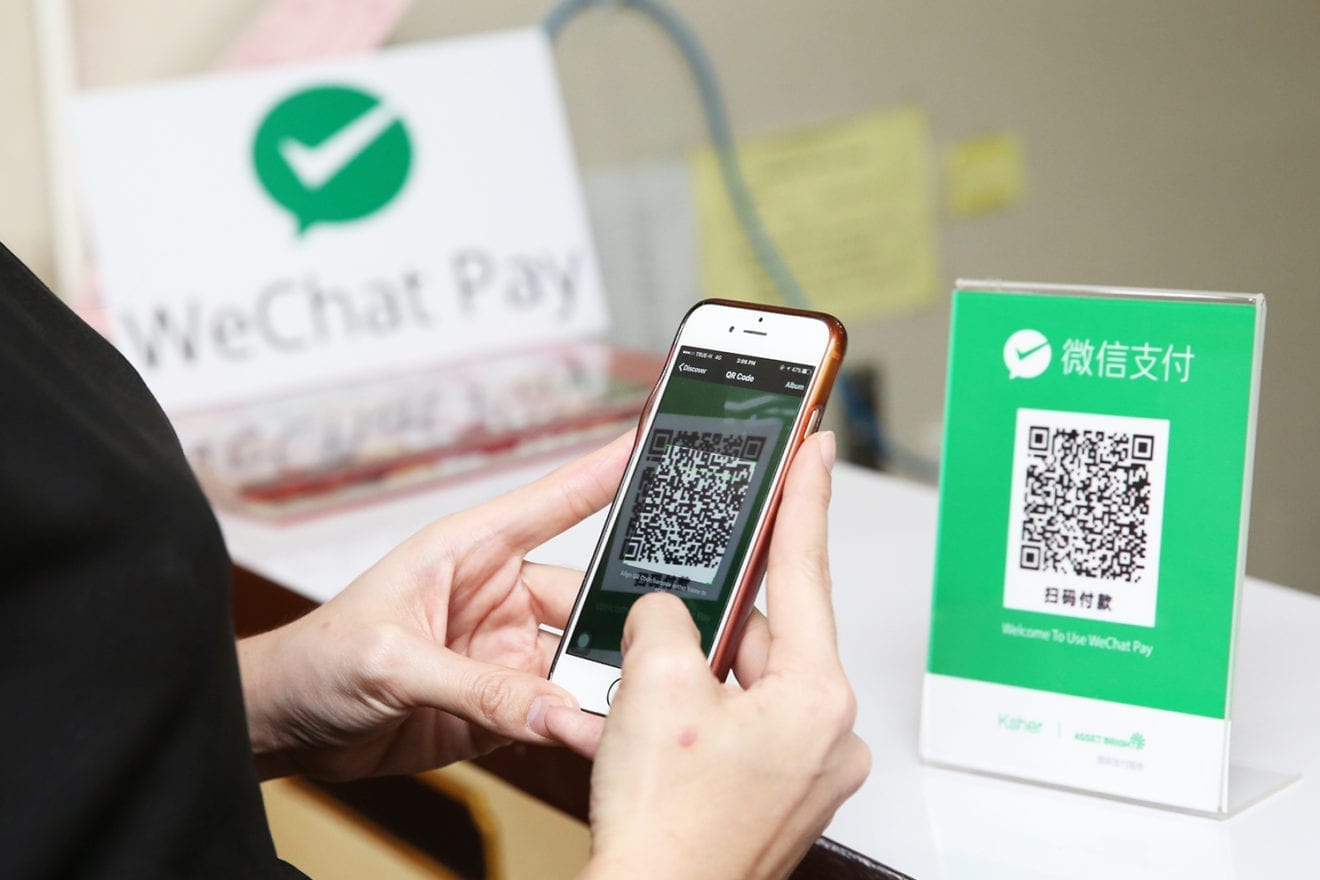
    Mobile payment platform WeChat Pay has announced its first mall partner in Singapore.

    WeChat Pay is rolling out cashless payment services across retail and F&B outlets in the popular Bugis Junction and Bugis+ malls, centrally located in Singapore’s Civic and Cultural District.

    GM Ivy Ang said the malls are particularly popular with young Chinese tourists. “Together with WeChat Pay, we will offer exclusive campaigns tailored for young Chinese travellers in Singapore. As we head into the Golden Week holidays and end-of-year festivities, we will continue to offer customised promotions and targeted campaigns to WeChat users through its many communication platforms and marketing channels, so our shoppers enjoy a rewarding shopping experience,” she said.

    “In this digital age, where we see more and more shoppers going cashless. Partnering with WeChat Pay is thus a very relevant initiative,” she added.

    Grace Yin, WeChat Pay’s director of overseas operation added: “The Bugis arts, culture, and entertainment district is especially popular with young Chinese tourists, which makes Bugis Junction and Bugis+ ideal to mark WeChat Pay’s first mall partnership in Singapore.”

    With the launch, Bugis Junction and Bugis+ will be the first malls in Singapore to accept WeChat Pay as a mobile payment platform across its wide range of commercial offerings. To celebrate the introduction of the new payment platform, the mall is hosting exclusive offers for shoppers to get rewarded with virtual money packets and receive cashback coupons.

    WeChat Pay is one of the leading mobile payment solutions in China. It is currently available in over 40 countries and regions across the world in 13 currencies and has more than 800 million monthly active users.

  • Deja vu? Malls reuse Xmas decor for CNY

    Deja vu? Malls reuse Xmas decor for CNY

    If Chinese New Year decorations at shopping malls are looking somewhat familiar, it is likely because they have been up since Christmas.

    Malls have transformed their Christmas ornaments and themes into Chinese New Year trimmings.

    By doing so, the malls say they have saved money, reduced waste and managed to turn over the decorations in a shorter time.

    Orchardgateway’s fantasy underwater world decor was planned to cover both festivals, as the dates were almost “back to back”. This year, Chinese New Year falls on Jan 28, just a month after Christmas.

    “We maintained the fantasy underwater world setting but added koi fish to bring out the Chinese New Year flavour and mood,” said its spokesman.

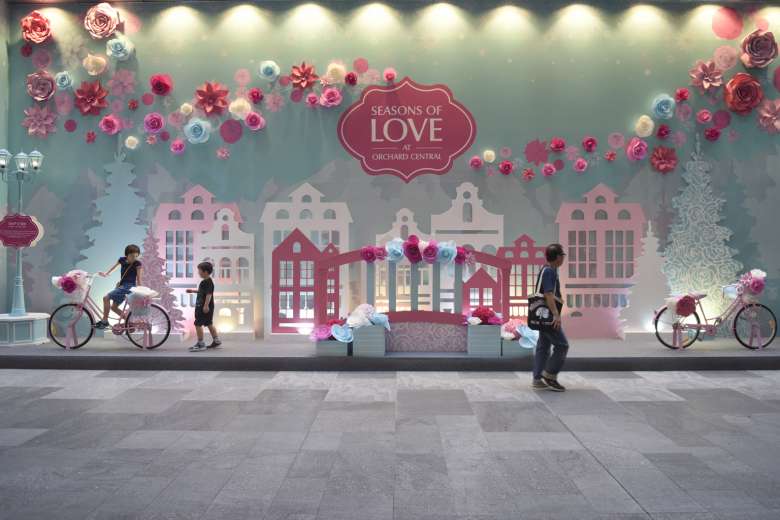
    Orchard Central said it saved up to 60 per cent in cost from repurposing its Christmas ornaments for the upcoming Chinese New Year, instead of replacing them with a new set-up. It has even combined its Chinese New Year decorations with Valentine’s Day decorations, with a turquoise and pink theme. 313@Somerset (above) has also changed its decorations. 

    She added that koi fish, which were added to a seascape of corals, symbolise good fortune, prosperity, longevity and success. The mall managed to save 30 to 40 per cent in cost and wastage as a result.

    Orchard Central, which is owned by Far East Organization, said it saved up to 60 per cent in cost by repurposing Christmas ornaments, instead of putting up a new set-up.

    In fact, the mall has combined its Chinese New Year decorations with Valentine’s Day decorations with a turquoise and pink theme, featuring cages and artificial flowers.

    More than half of the materials from the decor can be recycled. Far East’s other malls, such as Clarke Quay Central and Square 2, are also repurposing decorations.

    Over at CapitaLand Malls’ Bugis Junction, the Christmas tree is now a giant spiral bamboo plant.

    “What used to be whimsical waxed moustaches – not unlike the kind Santa typically sports – have now been turned into the upturned branches of the bamboo arrangement, signifying good luck for the coming Year of the Rooster,” said CapitaLand Mall Asia’s head of retail management in Singapore, Ms Teresa Teow.

    Farther west, the Star Vista converted its larger-than-life Christmas bauble centrepiece into a tangerine, signifying prosperity and fortune.

    The mall has donated some of its Christmas decorations to the Singapore General Hospital, which will sell them to raise funds for the hospital’s Needy Patients Fund.

    Ms Valerie Toh, 29, an office manager, said she did not notice the similarities in the decorations.

    “Given the not-so-good economy, I think people will appreciate the malls cutting down on wastage rather than spending needlessly,” she said.

  • H:Connect brings Korean style to Singapore

    H:Connect brings Korean style to Singapore

    Contemporary South Korean fashion brand H:Connect, fronted by Korean celebrity Yoona of Girls’ Generation, has officially opened its first Southeast Asian store at Bugis Junction in Singapore.

    The brand plans to make the most of the rising appeal of hallyu, or the Korean Wave, across Southeast Asia, which is driving Korean exports of fashion, entertainment and cosmetics in particular.

    It joins more than 300 H:Connect stores across South Korea, China and Taiwan, including a flagship store in the Gangnam district of Seoul.

    In its new Singapore store, the 10-year-old brand features it latest collection for men and women, separated into three themes: City Dweller (understated designs), Nostalgic Insta (combining vintage denim with floral prints and embellishments) and Athleisure (statement sweaters, pullovers and denim with a Korean street-style vibe).

    Prices range from S$19 (US$13.64) for basic tops to $129 for jackets and overcoats.

  • Will Reits save or kill Singapore’s shopping malls?

    Will Reits save or kill Singapore’s shopping malls?

    REAL Estate Investment Trusts (Reits) were once hailed as the saviours of Singapore’s shopping malls. The theory was that single-owner malls would never match malls run by Reits. And at first, that seemed obvious. After all, compare malls like Sim Lim Square and Ming Arcade (single-owner) to Plaza Singapura and Bugis Junction (run by CapitaLand). The latter command higher rents, are more actively promoted, and don’t expose you to at least seven different diseases when you sit on the toilet bowl. But in a recent Business Times report, there’s a hint that the opinion has changed:

    How are Reits turning into the villain of retail?

    In a recent Business Times report, a number of people were consulted on the reasons for Singapore’s struggling retail scene. With a vacancy rate of 8.8 per cent in the Orchard area, it’s become a hot button topic. Most of the responses covered the oft-repeated reasons: a decline in tourism, the rise of online shopping, economic uncertainty, and so forth. But some responses, such as these, stood out:

    The decline of mainstream retail can be explained by Reits, lack of transparency and online retailing. Most of the retail space in Singapore is owned by Reits whose singular objective is to maximise profits in the short to mid-term.” – Paul Lim, Chief Executive Officer, Secura Group Ltd.

    Also:

    The biggest problem is that investing in real estate is still considered to be a relatively easy way of making money…Together with Reits, this inevitably leads to an oversupply of retail space. That there is now much empty retail space is partly self-created by players in the real estate industry.”  – Lim Soon Hock, Managing Director, PLAN-B ICAG Pte. Ltd.

    Putting the blame on Reits is not a recent development. In fact, we already heard grumbling back in 2014. During the Budget Debate that year, Worker’s Party Non-Constituency Member of Parliament Yee Jenn Jong brought up the issue. He was addressing the perception that Small and Medium Enterprises (SMEs) were being pressured out of business by Reits, which constantly seek to raise rental rates.

    In order to understand the conflict, we need to grasp the basic idea behind retail Reits.

    The role of Reits

    It’s hard to find common ground here. Depending on who you ask, Reits are either the great hope for Singapore’s malls, or abusive landlords who beat their tenants like stepchildren in a fairy tale.

    The point of a retail Reits is to let investors play landlord, without actually buying property themselves. When you buy units in a Reit, you pool your money with other investors to buy retail space (e.g. Malls like Funan Centre). You, along with other shareholders, get dividends based on the rental income that the Reit is able to collect. The more profitable the Reit’s malls are, the more money you make.

    Retail Reits use property managers to decide which malls to buy, and undertake Asset Enhancement Initiatives (AEI) to make the mall more attractive. This is why malls run by Reits are all shiny and clean, and why they constantly have the best Christmas decorations, New Year promotions, Valentine’s events, etc.

    In theory, this means Reits are good for malls. Now I’m not going to name and shame, but we all know there are malls in Singapore that look like post-war Stalingrad. Run down, with entire floors of vacant shops, and the sole decoration being a Christmas tree the security guard put up in 1978.

    Reits mean active asset management, and state of the art malls that are built to pull shoppers. That should be a good thing; the better a mall looks, the more business its shops will get. But then, there’s also…

    The dark side of Reits

    One reason Reits are so attractive is that they’ve been great passive investments (at least, until recently.) By law, Singapore Reits have to pay out 90 per cent of their profits as dividends. They need to publish quarterly reports that detail foot traffic, the profitability of various malls, and the expenses and returns on AEI.

    This places a lot of pressure on the Reits managers. They need to constantly weed out less profitable tenants, and they’re compelled to keep rental rates high. Not only does their bonus depend on it, they have shareholders to answer to. Picture how that affects the insides of a mall:

    Supermarkets take up too much floor space, and generate fewer dollars per square foot. Boom, your favourite Giant or Cold Storage is closed. Now it’s replaced with a dozen smaller shops, all selling branded crap that costs four times your annual income.

    Bookstores don’t make as much money as before. Well we all love literacy, but they can’t cope with the 20 per cent rental rate hike next month. So they’re gone too, replaced with equally short-lived stores. (The new stores will stick around until the next rental rate hike, which is perpetually around the corner.)

    Love little fashion boutiques? Well you’d better blow half your pay cheque in there, before a chain like Uniqlo or Desigual comes along and offers way more money for the space.

    Retail Reits, you see, are relentless, profit-generating machines. And it’s increasingly common to hear complaints that SMEs are driven out of brick and mortar stores by their rent raising antics. Pretty soon, every mall will be a bland mix of the same giant brands, and Din Tai Fung (which apparently wants to be in every mall on the planet).

    Who’s right?

    So far, the situation is unclear. On the one hand, Reits may have the expertise and muscle to bring back the crowds, even in the face of declining tourism and economic struggles. On the other, Reits’ insatiable appetite for rental income may be the very cause of malls dying.

    At present, all we’re hearing are desultory remarks by the occasional business owner or retail space expert. That’s because there are bigger issues to contend with, such as adapting to the online shopping market. That’s a common enemy that both Reits and brick and mortar stores face.

    But as the situation gets worse, ready your popcorn. The accusations and yelling will eventually go into full swing.

  • CapitaLand Malls ‘resilient’ to tough times

    CapitaLand Malls ‘resilient’ to tough times

    CapitaLand Mall Trust says its portfolio of “necessity malls” has proven resilient to the challenging economic and retail period of the last year.

    CapitaLand Mall Trust Management (CMTML), the manager of CapitaLand Mall Trust (CMT), has reported a distributable income for 2015 of S$392.0 million, up 4.4 per cent on 2014.

    Danny Teoh, Chairman of CMTML, said CMT has delivered a good set of financial results in 2015.

    “Distribution per unit to unitholders for 2015 increased 3.8 per cent to 11.25 cents, underscoring the underlying strength of our portfolio – made up of predominantly necessity shopping malls connected to or near transportation hubs serving large catchment areas.”

    Teoh says the trust reinforced its leadership position as Singapore’s largest real estate investment trust with the acquisition of Bedok Mall on October 1.

    “In addition, we unlocked value for unitholders with the sale of Rivervale Mall on December 15, where we recognised a gain of about S$72.7 million. Going forward, CMT’s established track record in proactive mall and asset management will ensure that we remain well-positioned to continually create value for our unitholders.”

    Wilson Tan, CEO of CMTML, said tenants’ sales per square foot and shopper traffic increased by 5.3 per cent and 4.9 per cent respectively last year.

    “Portfolio occupancy remained high, registering 97.6 per cent at December 31.”

    Clarke Quay achieved more than 90 per cent committed occupancy for the reconfigured space in Block C. Anchored by Zouk, a world-class dance club, Block C also comprises popular food and beverage (F&B) and entertainment outlets such as DV8 Club, a top notch live Mandopop concert club; Warehouse, a restaurant and bar with live music; Privé Clarke Quay, a new bar concept by lifestyle group Privé Group; Maziga Café & Bollywood Club, an Indian restaurant helmed by the team behind the Punjab Grill; and the highly anticipated Ramen Keisuke Lobster King, the latest offshoot of the well-known ramen chain Ramen Keisuke.

    “Singapore’s largest outlet mall IMM Building further enhanced its shopping experience and increased its total number of outlet stores to 85 with new designer brands such as Outlet by Club 21, Juicy Couture and Cole Haan. It also boosted its F&B offerings with additions such as Dôme Café. We will continue to transform our malls through asset enhancement initiatives and reinforce our relevance to the communities that we operate in,” said Tan.

    CapitaLand Mall Trust owns 16 shopping malls, strategically located in the suburban areas and downtown core of Singapore, comprise Tampines Mall, Junction 8, Funan DigitaLife Mall, IMM Building, Plaza Singapura, Bugis Junction, Sembawang Shopping Centre, JCube, Raffles City Singapore (40.0% interest), Lot One Shoppers’ Mall, 90 out of 91 strata lots in Bukit Panjang Plaza, The Atrium@Orchard, Clarke Quay, Bugis+, Westgate (30 per cent interest) and Bedok Mall.

    CMT also owns 122.7 million units in CapitaLand Retail China Trust, the first China shopping mall REIT listed on SGX-ST in December 2006.

  • Under Armour Singapore store largest yet

    Under Armour Singapore store largest yet

    The new Under Armour Singapore store at Bugis Junction is the fast-growing sportswear brand’s largest in the city, and second largest in Southeast Asia.

    The fashionable sportswear brand is growing rapidly, especially in Asia where it has 15 solo-brand retail stores and a presence in nine markets.

    The new Bugis Junction store is 2960 sqft (275 sqm), a fraction smaller than its largest, the 3000 sqft store at the Pavilion in Kuala Lumpur, Malaysia.

    An instantly recognisable statuesque Under Armour logo is proudly erected at the front of the new brand house, while the concept for it echoes the industrial and gym-inspired interiors displayed in existing Under Armour brand houses, retaining the signature accents consistent to all global Under Armour stores – including the use of metal and wood furnishings and the Under Armour Thrones, large black leather seats with the logo stitched in red built within the footwear zone.

    Under Armour says the Bugis Junction store “embodies a retail experience that awakens the fierce and high- intensity energy and signature philosophy of the Under Armour brand”.

    It is the first store to exclusively stock the basketball range and childrenswear, and will soon exclusively stock the Hunting, Tactical and Outdoor series.

    “Bugis Junction has been a key locale for entertainment, recreation and retail for both the youth and working professionals for decades. With many specialised gyms and fitness destinations in the area, Under Armour Bugis Junction is the ideal complement to kickstart or to maintain a fit and healthy lifestyle,” explains Michael Binger, CEO of Triple, the local licensee of the brand.