Retail News CRM

Tag: building

  • Lacoste Unveils New Flagship Store in Historic Hong Kong Pedder Building, Bolsters Brand with Local Artistic Collaborations

    Lacoste Unveils New Flagship Store in Historic Hong Kong Pedder Building, Bolsters Brand with Local Artistic Collaborations

    In a strategic move to align its retail footprint with a site steeped in local history and prominent architecture, Lacoste has inaugurated a new flagship store in Hong Kong. This elegant location is situated in the Central district’s Pedder Building, a Grade 1 historic structure with a rich history that dates back to 1933. The premises had previously been home to Shanghai Tang’s flagship, as well as a briefly operated Abercrombie & Fitch store.

    Store Design and Collaborations

    The store’s interior layout showcases a modern reinterpretation of the building’s original arches, cleverly employing them as spatial dividers to create distinct sections for womenswear, menswear, sportswear, and the brand’s iconic polo line. Lacoste has gone the extra mile to tailor the design elements of the store to the local context; this includes an eye-catching neon installation and a series of customisable apparel patches inspired by local visual aesthetics.

    The flagship store also serves as a platform for the brand’s collaborations with both regional and international artists. Hong Kong-based artist Alvin CK Lam has contributed a unique interior painting inspired by the Pedder Building’s facade and the city. The store also features furniture pieces manufactured by Belgian artist Mathilde Wittock of MWO Design. These pieces, made from upcycled tennis balls, are a creative nod to Lacoste’s tennis history and commitment to circular design initiatives.

    Collection Highlights

    To celebrate the store’s opening, Lacoste has rolled out a limited-edition Hong Kong capsule collection. This collection features graphic interpretations of Victoria Harbour, the skyline of the city, and the Pedder Building. Customers can also shop for items from the brand’s Spring/Summer 2026 runway collection at the store.

    Commenting on the new flagship store, Eric Vallat, CEO of Lacoste, said, “We wanted to encapsulate Lacoste’s identity in a way that reverberates with Hong Kong’s cultural vitality. While Lacoste has its roots in tennis, the brand has always gone beyond sports. This store encapsulates a lifestyle defined by movement, elegance, and freedom.”

    Just last month, Lacoste revamped its branding, introducing a new typography, colour palette, and a fresh look for its iconic crocodile logo. The updated typography brings back serif characters, giving a nod to earlier versions of the brand’s visual language.

    Questions & Answers

    What is unique about the interior layout of the new Lacoste flagship store in Hong Kong?

    The store utilises the original arches of the Pedder Building as spatial boundaries, creating separate sections for different product lines.

    Who are some of the artists Lacoste collaborated with for this store?

    Lacoste collaborated with regional artist Alvin CK Lam, who created a custom interior painting, and Belgian artist Mathilde Wittock, who designed furniture pieces using upcycled tennis balls.

    What is significant about the limited-edition Hong Kong capsule collection?

    The collection features graphic interpretations of Victoria Harbour, the city skyline, and the Pedder Building, symbolising a connection between the brand and the local context.
  • Vietnamese firm seeks main investor status in Long Thanh airport

    Vietnamese firm seeks main investor status in Long Thanh airport

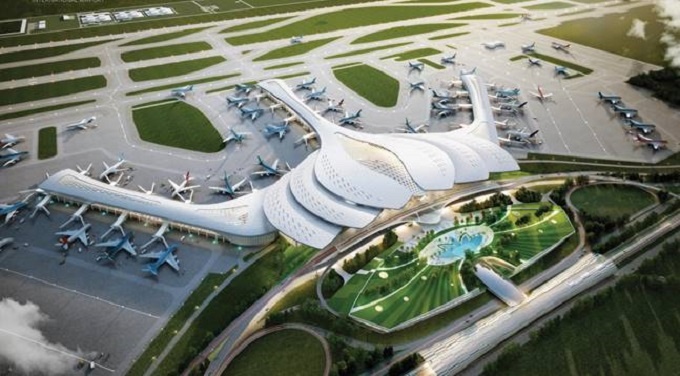
    The Airports Corporation of Vietnam (ACV) desires to be the main investor in the Long Thanh International Airport. ACV, which operates 21 airports in the country, has proposed that it contributes more than a quarter of the $5.4 billion needed to build the new Long Thanh International Airport. Lai Xuan Thanh, chairman of ACV, said that the corporation is ready to contribute $1-1.5 billion needed for the first phase of the mega airport to be built in Dong Nai Province, neighboring HCMC.

    In a proposal to the Ministry of Transport, ACV has said that its initial contribution will be used for major components of the airport including the terminal, runways, parking lots and cargo areas, worth a total of $3.77 billion, according to the Vietnamese government’s website.

    The airport operator is currently working with the Ministry of Transport and Dong Nai authorities on acquiring about 1,800 hectares for the first phase of the airport.

    Most of the targeted area is now covered by plantations belonging to the Dong Nai Rubber Corporation where 200 families reside.

    The Ministry of Transport has asked the consultancy consortium of the airport, JFV, to finish an environmental impact report next month.

    The consortium, comprising of three Japanese, one French and two Vietnamese companies, will also need to submit the feasibility report for the airport by June.

    In turn, the ministry “will submit the feasibility report to the National Assembly in October. If it is approved, bidding will start in 2020 and construction in 2021,” Transport Minister Nguyen Van The told local media recently.

    The Long Thanh International Airport, to be built in three phases over three decades, is set to become Vietnam’s largest airport.

    The first part is scheduled for completion in 2025, when the new airport will be able to handle 25 million passengers a year. The next two phases will run from 2030 to 2035 and from 2040 to 2050.

    Experts have previously warned that the construction cost of the airport could double every five years.

    Lying 40 kilometers east of HCMC, the airport is expected to take up the overflow from the largest existing airport in the country, Tan Son Nhat International Airport.

    Once completed, Long Thanh International Airport will have an annual capacity of 100 million passengers and five million tons of cargo.

    The tourism surge of recent years in Vietnam has resulted in demands for an upgrade of existing airports and construction of new ones.

    The country welcomed 12.5 million air passengers last year, up 14.4 percent from 2017, according to the General Statistics Office.

  • Link REIT Buys Beijing Mall for RMB 2.56B

    Link REIT Buys Beijing Mall for RMB 2.56B

    Link REIT has reached a conditional agreement to acquire a RMB2.560 billion (US$368.8 million) shopping centre in Beijing. The property, Beijing Jingtong Roosevelt Plaza, is a seven-storey mall housing 268 retail tenants, with 576 car parks on two additional underground levels. Link said in a stock exchange filing that the property is located in Tongzhou, the eastern gateway to China’s capital, a rapidly developing district about 20km from central Beijing. It is in an established residential area with 30 per cent of the district’s population living within a 3km radius.

    The property has good connectivity, located on Beiyuan South Road, the district’s main artery, is a high-quality community mall with an occupancy rate of 96.2 per cent and a dynamic mix of retailers including food and beverage, fashion/accessories, kids/education and lifestyle, health and beauty, along with a cinema.

    Leases for about 20 per cent of the four year old centre’s tenancies (by space) expire in 2020, providing Link with an opportunity to enhance rental reversion and performance of the property by upgrading the trade mix.

    Link expects the net property income of the mall will increase, in turn bosting the capital value of the property, benefiting unitholders.

  • Pelni and Pertamina building a cruise ship

    Pelni and Pertamina building a cruise ship

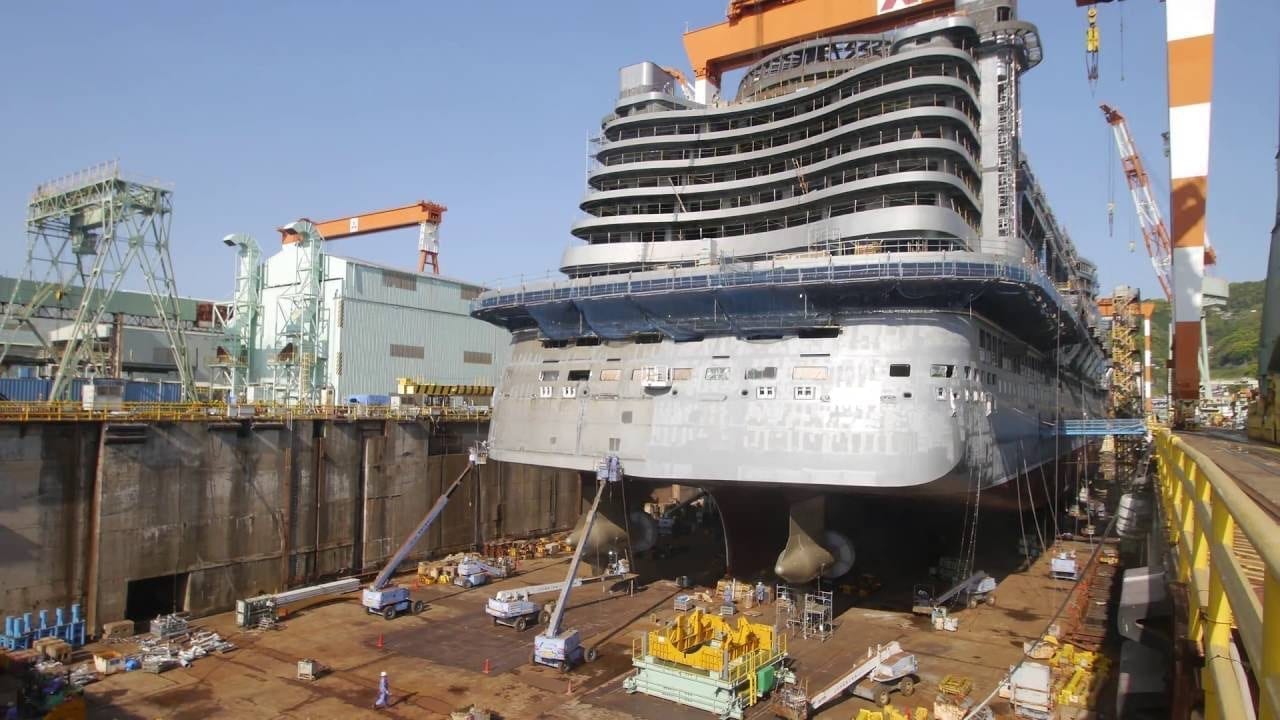
    State shipping company PT. Pelayaran Indonesia (Pelni) will team up with Patra Jasa, a subsidiary of state-owned energy company PT. Pertamina, to build a cruise ship, to support the countrys tourism industry.

    “We already signed a memorandum of understanding (MoU) to build a cruise ship to support the countrys tourism industry especially in 10 tourist destinations,” head of the Kupang branch of PT Pelni Adrian said here on Saturday.

    The ship is being built in South Korea expected to be completed and to be operational in 2018, Adrian said.

    Earlier Pelni and Patra Jasa planned to buy a cruise ship, but the plan could not be realized with a regulation banning government agencies including state companies to buy second hand goods from abroad.

    “Therefore, Pelni and Pertamina decided to build one that would take a year for completion,” Adrian said, adding the cruise ship would serve transport to 10 tourist destinations recognized by the government.

    The ten tourist destinations include Labuan Bajo and under sea destination in Riung, East Nusa Tenggara.

    Currently Pelni operates not only passenger ships but it also has ship for the transport of cargoes and livestock and tourists.

    Business in passenger transport has declined as most passengers choose air transport which much faster.

    “Mr (Ignasius) Jonan , when he was transport minister, once told us that it was time for Pelni to focus on other lines of business, but business in passenger transport continues,” Adrian said.

    He said business in tourism industry is growing that cruise ships is important . The government has been more aggressive in developing its tourism industry to make use of the countrys tourism wealth .

    The government is set to double the number of foreign tourists visiting the country to around 20 million in 2019.

  • Thailand’s green material Industry and the green building trend

    Thailand’s green material Industry and the green building trend

    In the midst of today’s environmental movement, green buildings (buildings designed to be environmentally friendly through more efficient use of resources) are popping up more and more in Thailand.

    Using data from green building credentialing bodies like the U.S. Green Business Council (USGBC), which developed the Leading in Energy & Environment Design (LEED), and the Thai Green Building Institute (TGBI), which developed Thailand’s Rating of Energy and Environment Sustainability (TREES), EIC found that the number of certified green buildings and buildings in the process of accreditation in Thailand has risen substantially, increasing from six buildings in 2007 to 243 buildings in 2015.

    With EIC’s estimate of 294 green buildings in 2016, the average annual growth rate for green buildings in Thailand is 54%. Thailand’s green building area increased from 40 thousand square meters in 2007 to 4.3 million square meters in 2015, and it is estimated that it will reach 5.0 million square meters by the end of 2016, pushing average growth to 71% per year (Figure 1).

    Green buildings in Thailand consist of office buildings (around 40%), retail stores and shops (around 30%), and other structures such as factories, residential buildings, hotels, and schools (around 30%) (Figure 2).

    Although the costs of building green are higher than construction costs for conventional buildings, it is the benefits they offer that are responsible for the expansion of green structures today.

    The average cost of building green in Thailand is 20,700 baht per square meter, which is about 5.2% higher than the average conventional building cost of 19,700 baht per square meter (Figure 3).

    This is because building green involves more restrictions in choosing materials and in designing building systems, as well as additional fees for obtaining LEED or TREES credentials. However, owners can gain both monetary and non-monetary advantages from green buildings. Monetary benefits include a decrease in building management expenses like electricity and water costs that can be reduced by 10% or around 90 baht per square meter per year, and up to about 21% or 180 baht per square meter per year by the fifth year after the completion of the project (Figure 4). These numbers are comparable to the decrease in energy costs of  well-known green building Energy Complex.

    The Energy Complex building contains 192 thousand square meters of utility space and has reduced building management costs per year by about 28 million baht, or about 146 baht per square meter per year.  Another monetary advantage for green building owners is increased rents. Rents for green buildings are around 30% higher than those of conventional buildings in the same area, or about 230 baht per square meter per month (Figure 4). Non-monetary benefits include significantly higher worker productivity in green buildings compared to conventional buildings, deduced from sick day records and illnesses caused by sick building syndrome.

  • PCCW Global to build international carrier exchange in Hong Kong

    PCCW Global to build international carrier exchange in Hong Kong

    PCCW Global has entered into a long-term collaboration agreement with Keppel Data Centres Holding to co-develop and market an international carrier exchange in Hong Kong.

    PCCW Global is the international division of major operator HKT, and Keppel Data Centres is a joint venture between Keppel Telecommunications & Transportation (Keppel T&T) and Keppel Land. These companies are themselves subsidiaries of Singapore-listed Keppel Corporation.

    The exchange will be fitted to Tier III specifications to ensure uptime of up to 99.982%. Construction is expected to be complete in the fourth quarter.

    The new facility will offer connectivity-related managed services to facilitate interconnects. It will be located in the same building as the Hong Kong point of presence for the 100Gbps Asia-Africa-Europe 1 subsea cable, which is also expected to be ready for service in Q4.

    The building will also be connected to PCCW Global’s backhaul network to link the international carrier exchange to numerous subsea cable landing stations. This will allow the exchange to be used as a gateway to mainland China.

    “We are happy to partner with PCCW Global for our first investment into the Hong Kong colocation market, which benefits from the city’s status as a key telecommunications and financial hub, as well as its connectivity to other hubs in Singapore, Amsterdam, London, and Sydney,” Keppel T&T CEO Thomas Pang said.

    “The expansion of Keppel’s data center footprint to Hong Kong is another step towards creating a data center value ecosystem that goes beyond colocation to providing value-added services and connectivity for our valued clients.”

  • Trafigura-Backed Puma Building $100 Million Myanmar Facility

    Trafigura-Backed Puma Building $100 Million Myanmar Facility

    Puma Energy International, the fuel retail and storage company spun off from commodity trader Trafigura Pte Ltd., is building a $100 million facility in Myanmar and seeking other deals in the once-isolated Asian country that’s opening to more foreign investment after elections this month.

    The storage tank facilities for bitumen and petroleum products at Thilawa Port, 23 kilometers (14 miles) south of the capital, Rangoon, will have a capacity of about 97,000 cubic meters. Based in Singapore and with major operations in Geneva, Puma is the first foreign company granted permission to build oil storage facilities in Myanmar, Chief Financial Officer Denis Chazarain said in an interview.

    “It is a really promising market,” he said of Myanmar, the Southeast Asian nation that suffered a half-century of isolation under a military junta. Puma is targeting potential retail service station deals as well as lubricants, marine fuel and wholesale markets, he added.

    Puma is one of 11 foreign companies that have applied for a government tender to form a joint-venture with state-owned Myanma Petrochemical Products Enterprise for a liquid petroleum gas distribution business. LPG is a staple fuel used for cooking in Myanmar, positioned on a potentially key trade route between China and India.

    “Puma Energy is interested in all segments of the market in Myanmar,” Chazarain said.

    Myanmar’s voters last week handed Aung San Suu Kyi’s opposition party an overwhelming majority, giving her a free hand to choose the next president and push through legislation. Investors and foreign companies, including Puma, are seeking details of the Nobel laureate’s plan to attract investment needed to spur economic growth, create jobs and boost wages. The nation’s military still controls two of the nation’s biggest conglomerates, which invest in everything from mining to banking.

    Puma already has an exclusive agreement to be the sole foreign distributor of jet fuel in Myanmar as part of a joint venture with MPPE. Puma has invested about $50 million in the aviation venture, Chazarain said.

    Mozambique Expansion

    Trafigura, the third-largest independent oil trader, is the biggest shareholder in closely held Puma with a 49 percent stake. Jonathan Pegler, Trafigura’s co-head of crude oil, is returning to Geneva from Singapore to become Puma’s global head of supply and trade. He will be responsible for sourcing products and oil for Puma’s growing network of 88 terminals in 46 countries.

    Puma officially opened two new terminals in Mozambique on Thursday, the company said in a statement. The 115,000 cubic-meter Matola bitumen and fuel terminals bring the company’s total capacity in Mozambique to 275,500 cubic meters, making it Puma’s second-largest storage site in Africa.

    Chazarain said he expects the company’s sales volumes to be about 20 million cubic meters this year. The company executed a series of recent acquisitions including the purchase of Murphy Oil’s shuttered Milford Haven facility in the U.K., which it has converted to storage. It also purchased BP Plc’s bitumen business in Australia and its regional jet fuel business in Puerto Rico.

    Those deals helped Puma increase third-quarter pretax earnings by 5 percent to $177 million, the company said earlier this week.