Retail News CRM

Tag: Bukalapak

  • Indonesia’s Bukalapak to scale down to virtual products

    Indonesia’s Bukalapak to scale down to virtual products

    Indonesian e-commerce firm Bukalapak said on Tuesday that it would stop selling physical items on its marketplace soon, amid tough competition from TikTok’s Tokopedia and Sea’s Shopee in Southeast Asia’s largest economy.

    Bukalapak, which went public in 2021, said in a statement that it later would only sell virtual products ranging from mobile phone credits to streaming vouchers. Customers have until February 9 to make last orders for certain items, Bukalapak added.

    “Bukalapak will undergo a transformation in an effort to increase focus on virtual products … we fully understand that these changes will impact the sellers and we are committed to making this transition as smooth as possible,” the company said.

    Shares of Bukalapak were down 4.1 percent to 117 rupiah on Wednesday as of 0519 GMT.

    On the day of its market debut in August 2021, Bukalapak shares had soared by the daily limit of 25 percent to 1,060 rupiah a piece as investors looked to get a piece of the company that raised $1.5 billion in its initial public offering.

    But over the three years since its listing, Bukalapak has faced fierce competition from Indonesia’s e-commerce market leader Shopee, which is owned by Southeast Asian technology firm Sea, and from Tokopedia.

    Tokopedia, another homegrown e-commerce company, is now majority owned by ByteDance’s TikTok, which acquired 75.01 percent of the shares from local tech conglomerate GoTo early last year.

    Bukalapak reported a loss of 593.23 billion rupiah ($36.62 million) in the first nine months of 2024, according to its latest financial results.

  • Indonesia’s Bukalapak kicks off $1.1 billion IPO

    Indonesia’s Bukalapak kicks off $1.1 billion IPO

    Indonesia’s Bukalapak launched an up to $1.13 billion IPO ahead of next month’s listing, marking the country’s biggest issue in over a decade amid rising investor appetite for tech stocks in a region boasting a growing consumer class, according to a term sheet seen by Reuters.

    The e-commerce company, which counts Singapore sovereign investor GIC and Microsoft among its backers, is set to be valued at $5.6 billion at the top end of a price range, doubling the company’s valuation from two years ago.

    Details of the IPO are currently being announced at an investor briefing.

    Reuters reported on Thursday that Bukalapak, the country’s fourth-biggest e-commerce firm, was targeting raising more than $1 billion in its IPO, 25% more than previously planned.

  • Indonesia’s Bukalapak aiming for up to $800 million in IPO

    Indonesia’s Bukalapak aiming for up to $800 million in IPO

    Indonesian e-commerce firm Bukalapak is keen to raise as much as US$800 million in an initial public offering (IPO) in August, two people with knowledge of the matter said, the first of two big tech listings in Jakarta this year that will add long-sought luster to the local bourse.

    A mid-year debut could see it become Indonesia’s biggest listing in 10 years and the largest ever for the country by a startup. But those milestones will likely later be overtaken by the planned listing of GoTo – a new company to be formed by the merger of e-commerce rival Tokopedia and ride-hailing and payments firm Gojek.

    Tapping a sharp pick-up in investor interest in Southeast Asia’s rapidly expanding technology sector, Bukalapak, the country’s No 4 e-commerce firm, is aiming to sell 10 to 15 percent of the company and wants a valuation of between US$4-5 billion, the people said.

    A confidential listing prospectus has been submitted to the Indonesia stock exchange, one of the sources said.

    Proceeds from the offering could range between US$500 million and US$800 million depending on investor demand and market conditions, said the sources who were not authorized to speak on the matter and declined to be identified.

    Bukalapak, which said in 2019 it was valued at more than US$2.5 billion, declined to comment.

    The 11-year-old startup which claims to have more than 100 million users has a plethora of big-name investors backing it including Microsoft, Singapore sovereign wealth fund GIC, local media conglomerate Emtek, the investment arm of Standard Chartered, and South Korean web portal Naver Corp.

    Bukalapak was originally aiming to raise US$300 million from its domestic listing before looking to merge with a special purpose acquisition company (SPAC) in the United States, but it is now focusing solely on its IPO, one of the sources said.

    The listing, which sources say is set to take place mid-August, is a victory for Indonesia’s bourse which has been conducting an extensive charm offensive to convince the country’s thriving startups to list locally instead of heading to the US.

    Stagnant for many years, Indonesia’s total IPO deal value took a further hit during the coronavirus pandemic, more than halving in 2020 to US$470 million, Refinitiv data showed. So far this year, 15 companies have raised a combined US$125 million via IPOs.

  • Bukalapak Establishes Strategic Partnership with Microsoft to Enhance Indonesian E-commerce

    Bukalapak Establishes Strategic Partnership with Microsoft to Enhance Indonesian E-commerce

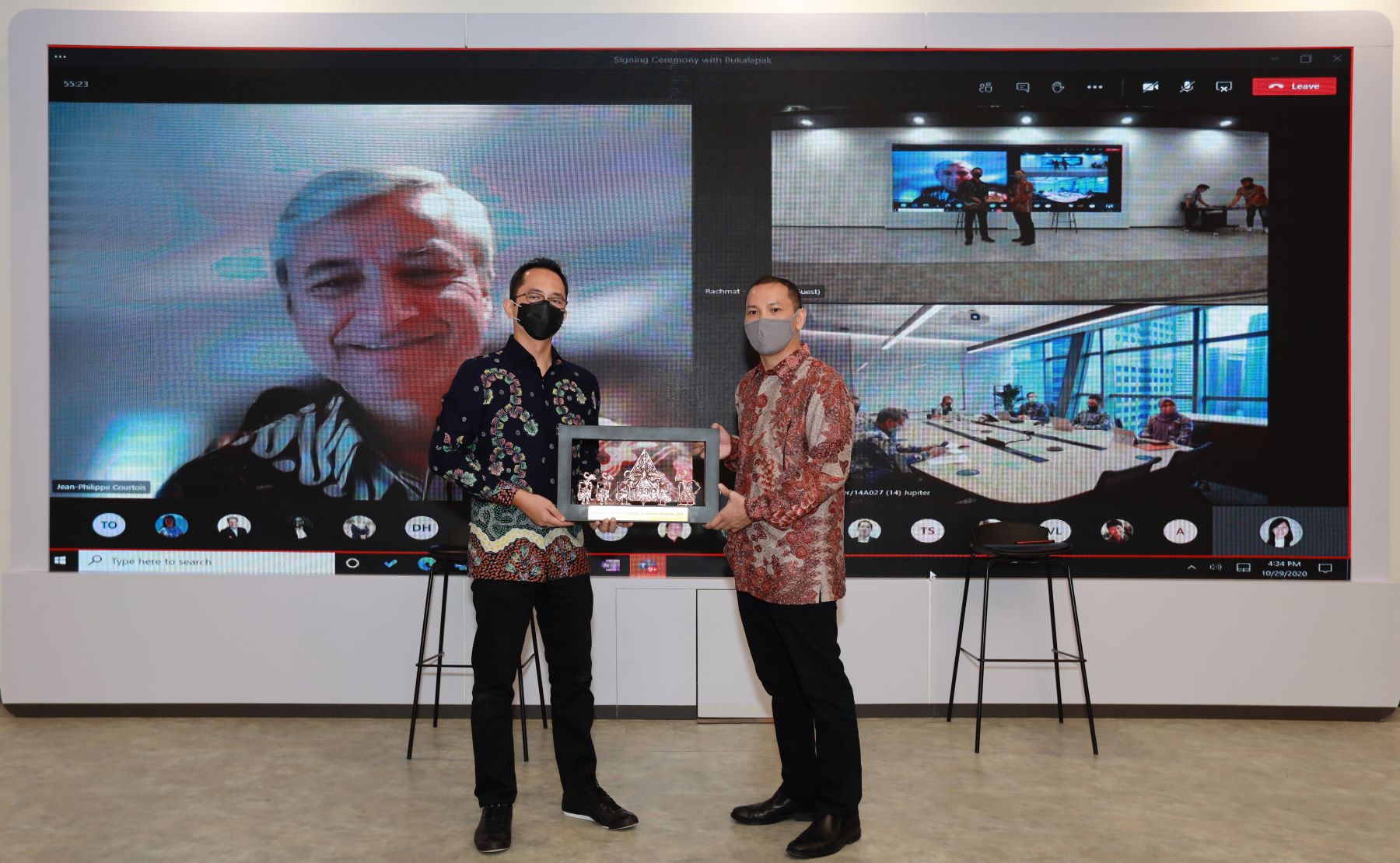
    Microsoft and Bukalapak, one of Indonesia’s leading e-commerce platforms, have formed a strategic partnership to reshape how e-commerce is conducted in the country. Kicking off the collaboration between the two companies, Bukalapak will adopt Microsoft Azure as its preferred cloud platform and Microsoft will make a strategic investment in Bukalapak.

    The partnership will leverage Microsoft’s expertise in building a resilient cloud infrastructure to support Bukalapak services for more than 12 million micro, small and medium enterprises, and 100 million customers.

    “This partnership signals a deep collaboration with Microsoft on an array of technology projects that will transform the technology-driven commerce solutions and operations solution and operations in Indonesia,” said Rachmat Kaimuddin, CEO of Bukalapak. “As a global technology leader, Microsoft’s confidence with Bukalapak highlights our position as the leading homegrown technology player in Indonesia and our continued objective to create a positive impact on our country and customers.”

    Through this partnership, Bukalapak and Microsoft will collaborate on key initiatives including:

    • Building resilient infrastructure – Bukalapak will adopt Microsoft Azure as its preferred cloud platform to support its more than 6 million online merchants, 6 million offline merchants and 100 million customers.
    • Bridging the digital gap – The companies will explore opportunities to help make the digital world relevant for every individual daily.
    • Skilling – Providing digital skills training for Bukalapak employees and their merchants.

    “Bukalapak and their services have had real and enduring impact on Indonesian society, and their innovation mindset in a rapidly changing market will create new opportunities for merchants, businesses and consumers,” said Haris Izmee, President Director of Microsoft Indonesia. “We are excited to empower Bukalapak with a trusted cloud, that allows them to scale their customer experience on Microsoft Azure. Through this partnership, merchants and consumers will have a more efficient and reliable buying and selling experiences, which in turn, creates business resilience and helps in accelerate growth in the Indonesian digital economy.”

    As a leading e-commerce platform in Indonesia, Bukalapak was founded with the singular mission of empowering Indonesia through digital technology. The company also offers financial services and payment options for its users, including but not limited to, gold and mutual funds’ investments, bill payments and credit services. They aim to transform the economy beyond e-commerce, by digitalizing traditional warungs (mom and pop kiosks) so every business in Indonesia has access to the online economy.

  • BukaGlobal boosts its regional expansion Growth

    BukaGlobal boosts its regional expansion Growth

    Indonesian e-commerce platform BukaGlobal has launched in Singapore, Malaysia, Brunei, Hong Kong and Taiwan.

    Developed by Bukalapak, the platform will connect 4 million Indonesian sellers to the global market. At the moment, products sold on the site include health and beauty items, pantry lines and handicrafts from only qualified sellers in Jakarta and Tangerang. More sellers are set to join progressively.

    Customers in five countries can order products starting from 500gm with delivery time usually six to 11 days, depending on the destination.

    “We want to break down barriers that hinder young and small entrepreneurs from competing on a global playing field, primarily on access, infrastructure, and connectivity,” said Fajrin Rasyid, Bukalapak’s co-founder and president.

    “With BukaGlobal, Indonesian products are readily accessible by consumers anywhere in the world through a fast and reliable platform.”

    Fajrin said Bukalapak chose Singapore and the other four markets as there are many Indonesians there and the people in these countries understand Indonesian culture.

    The firm is working with Singapore startup Janio for end-to-end cross-border logistics.

  • Indonesia’s E-commerce Market Larger Than Estimated; Consumer Habits Changing

    Indonesia’s E-commerce Market Larger Than Estimated; Consumer Habits Changing

    E-commerce accounted for 8 percent of total retail sales in Indonesia last year, on course to reach 18 percent by 2023, fueled by changing behavior among tech-savvy customers who are willing to spend more for convenience, according to a recent study by American multinational investment bank Morgan Stanley.

    The study estimates the size of Indonesia’s e-commerce market at $13 billion in 2018, having grown by 50 percent annually over the past two years. It suggests that the e-commerce market in Southeast Asia’s biggest economy may follow a similar growth trajectory to that of China and expand by at least 32 percent annually over the next five years to $52 billion in 2023.

    “This is notably above our previous estimate of $7.3 billion, or 4.4 percent of sales, partially due to better data availability but also due to the rapid growth in the user base… Indonesia is now only five years behind China in terms of penetration,” Morgan Stanley wrote.

    A separate study by global tech giant Google and Singapore’s Temasek, published last December, put the size of Indonesia’s e-commerce market at $12.2 billion in 2018 and $53 billion in 2025.

    The Morgan Stanley study, based on interviews with 1,582 respondents in eight Indonesian cities, suggests that the growth trend is still in an early stage, with many indicating that they only started shopping online in the past year.

    “Interestingly, 65 percent of the respondents in our survey had only started shopping online within the past year, and the majority believed e-commerce would become their main method of shopping over time,” the investment bank wrote in the report published on Tuesday.

    “There are 195 million smartphone users in Indonesia and only about 30 million online shoppers. The growth potential of the user base is still clearly huge,” it wrote.

    Apart from smartphone penetration, low data costs and the growing number of people with bank accounts serve as crucial enablers for continuing e-commerce growth, Morgan Stanley said. Data costs about 50 US cents per gigabyte in Indonesia, compared with $2.1 per gigabyte in China. About 49 percent of the adult population in Indonesia now has a bank account, compared with 20 percent in 2011.

    Apparel 

    Clothing and footwear fuel the sales growth, with 93 percent of respondents indicating that they bought items in this category online in the past 12 months. Half of them buy apparel at least once a month, Morgan Stanley said. In comparison, only 16 percent and 25 percent, reported that they purchased consumer electronics and mobile devices, respectively, which is the most common category in early state e-commerce.

    The study also noted changing customer behavior, which would likely affect their interaction with traditional brick-and-mortar stores. Three in every four customers said they would check for promotions or prices online before buying anything offline, Morgan Stanley reported.

    Seven in every 10 said they would continue shopping online, even if it meant they would have to pay for delivery. Morgan Stanley said this reflects consumers’ “willingness to pay for convenience.”

    “Fast shipping was the primary reason for preferring one website over another,” the bank said.

    Retailers 

    The trend presents challenges to traditional retailers to remain profitable and provides a powerful platform for small brands to challenge established manufacturers.

    “Our analysis reaffirms our medium-term concern for apparel-focused retailers like [Matahari Department Store]. The average transaction size for apparel online, per our survey, is similar to Matahari’s basket size,” Morgan Stanley said.

    “For beauty and personal care companies like Unilever, the combination of e-commerce and digital media is making it easier or cheaper for smaller companies to build brands and offer nationwide distribution,” it wrote.

    Everybody’s Game

    Investment in Indonesian internet companies has steadily risen over the past two years, which saw them attract at least $7.4 billion in capital in 730 deals.

    With all this potential growth, Morgan Stanley has yet to see clear winners in the country’s e-commerce market.

    Four players control most of the formal e-commerce sales: Lazada, Shopee, Tokopedia and Bukalapak, with the top three each controlling between 20 percent and 30 percent of the market. Bukalapak was in the low teens, according to the Morgan Stanley’s estimation.

    Lazada, a pioneer of e-commerce in Southeast Asia, is still the most preferred platform, according to the bank’s survey

    “Lazada had high usage rates across categories and genders. The cash-on-delivery option was one of the key drivers of the preference,” it said.

    Shopee was second overall in terms of usage and preference, being more popular in smaller cities and among people buying baby products, toys, and beauty and personal care products.

    “Tokopedia’s preference and usage were lower beyond Jakarta in our survey. Its usage rate was only 38 percent in second-tier cities like Surabaya, Medan and Bandung, compared to 62 percent in Jakarta,” Morgan Stanley said.

    A surprising find in the survey is that Tokopedia and Bukalapak both enjoy more than 80 percent customer recognition, but less than 50 percent had made purchases on their platforms within the past 12 months.

    “For Southeast Asia, we remain convinced that its e-commerce platform is being undervalued. Our survey not only confirms the popularity of Shopee but also that its users are willing to pay for delivery, which solidifies its path to profitability,” Morgan Stanley said.

  • Millennials Dominate Indonesia’s Online Shopping Scene

    Millennials Dominate Indonesia’s Online Shopping Scene

    Millennials are driving growth in Indonesia’s e-commerce industry as they buy a wide range of items, from clothes and gadgets to phone credit and electricity tokens, from online outlets with increasing frequency, according to a recent report from market research and consulting firm Ipsos Indonesia. The E-Commerce Outlook 2018 report released on Monday looked at the profiles of 32 million online shoppers in the country.

    The study drew results from an online survey in August. Ipsos Indonesia said the study served as an exploratory stage to be followed up by a more extensive survey planned for next year.

    The study found that 64 percent of online shopping is dominated and driven by millennials, both in terms of product categories and revenue, Ipsos research director Andi Sukma said, referring to the 25-30 age group.

    “They are made up of young families that have a minimum income of Rp 4 million [$280] per month,” said Indah Tanip, an associate director at Ipsos Observer.

    Most millennials are drawn to e-commerce for its convenience and competitive prices, the rise of financial technology and online payment platforms, such as OVO and Go-Pay, which have also encouraged more millennials to purchase their phone credit and pay bills through e-commerce apps, the Ipsos report said.

    The report also identified the five most-visited e-commerce sites: Tokopedia, Shopee, Lazada, Bukalapak and Blibli.com.

    Citing data from the Indonesian Internet Service Providers Association (APJII), Ipsos said the wider availability of broadband internet in the country has helped fuel e-commerce growth. About 72 percent of Indonesians living in urban areas and nearly 50 percent in rural-urban areas have internet access.

    The E-Commerce Outlook 2018 report also looked at community habits, online service accessibility, popular e-commerce sites and consumers’ preferred payment methods.

  • Bukalapak Joins Hands With Tanamduit to Sell Mutual Funds Online

    Bukalapak Joins Hands With Tanamduit to Sell Mutual Funds Online

    E-commerce platform Bukalapak has partnered with online investment platform Tanamduit to introduce mutual fund products to first-time retail investors. The partnership will see local asset management firms Bahana TCW Investment Management, Batavia Prosperindo Asset Management and Sucorinvest Asset Management offer five new investment products, ranging from equity to fixed-income funds, on Bukalapak’s mutual funds platform BukaReksa.

    At its launch in January 2017, BukaReksa only featured money market fund products offered by CIMB Principal Asset Management and Mandiri Manajemen Investasi.

    But to capture a larger market, Bukalapak joined hands with finance marketplace Bareksa in December 2017, adding four more asset management firms, Kresna Asset Management, Syailendra Capital, Ciptadana Asset Management and BNP Paribas Investment Partners, to the platform

    BukaReksa now features nine asset management firms offering 21 investment products, compared with Bareksa, which has 31 asset management firms offering 160 investment products.

    “We hope our partnership with Tanamduit can boost financial literacy and investment in the country,” said Destya Danang Pradityo, head of payment and financial services at Bukalapak.

    Through the BukaReksa platform, customers can invest from as little as Rp 100,000 to Rp 1.5 million ($7-$104) in mutual funds.

    Destya said BukaReksa has at least 120,000 registered customers, with around half of them active investors from across the archipelago.

    “We believe online investment will become part of our lifestyles. Our collaboration with Bukalapak forms part of our mission to educate people on the benefits of investing,” said Muhammad Hanif, business development director at Tanamduit.

    With rapid technological development and the growth in online transactions, e-commerce players see opportunities to provide various services, including financial and investment products. This has seen the emergence of fintech startups offering mutual fund investment has been a trend over the past three years.

    Aside from Bukalapak, other online marketplaces also joined hands with Bareksa, such as Tokopedia, which in April this year launched Tokopedia Reksadana, offering mutual funds through local asset management firm Syailendra Capital.

    Another fintech startup, Invisee, has also been offering mutual fund products online in partnership with various asset management firms since last year.

    According to Halim Haryono, deputy director of investment supervision and development at the Financial Services Authority (OJK), the number of people investing in mutual funds increased 16.25 percent year-on-year to about 930,000 by October this year, due to the rise of online mutual fund marketplaces.

    Only about 400,000 people invested in mutual funds in 2016, Halim said.

  • Bukalapak teams up with TIKI to ease delivery

    Bukalapak teams up with TIKI to ease delivery

    E-commerce platform Bukalapak kicked off on Wednesday the expansion of its partnership with courier service and logistics company TIKI to facilitate small and medium enterprises (SMEs) in selling their products.

    The new partnership will enable vendors to accelerate product delivery.

    For instance, TIKI provides a “booking code” feature in which vendors can fill in the data of senders and receivers online before sending the packages. When vendors arrive at a TIKI branch, they do not need to wait for TIKI employees to fill in the information anymore.

    “There will be [system] integration between Bukalapak and TIKI. The new features will be launched soon,” Bukalapak co-founder and chief financial officer Muhammad Fajrin Rasyid told at its headquarters in Kemang, South Jakarta.

    Another new feature offered to vendors is pick-up service that allows TIKI couriers to pick up goods from the vendors’ locations. Bukalapak has more than 1.7 million vendors with more than 38 million products offered on its online marketplace. About 500,000 vendors at Bukalapak use TIKI’s services.

  • Harbolnas Boosts Online Shop Sales

    Harbolnas Boosts Online Shop Sales

    Hundreds of online stores are taking part in the online shopping national day (Harbolnas) held from December 12 until December 14, 2016. The Harbolnas brings profit not only to customers, but also online shop administrators.

    For example, Bukalapak.com booked a total of 400,000 transactions during the two days of Harbolnas.

    Bukalapak Brand Manager Ambrosia Tyas, said that most of the customers are attracted by the discounts and special offers presented during the Harbolnas. “The number of transactions are five times higher compared to the 2015 Harbolnas,” Ambrosia said on Wednesday, December 14, 2016.

    Not only massive discounts, Bukalapak also provided customers with chances to bargain for their goods. Products highly sought after by customers are smartphones, laptops, and cameras. “Customers are attracted to a different shopping experience,” Ambrosia said.

    In addition to Bukalapak, Lazada Indonesia also recorded massive Rp 143.4 billion revenue on the first day of Harbolnas. Most customers bought fashion items, household appliances, and health and beauty products.

  • Bukalapak CEO Shows Confidence in Indonesia’s Internet Business

    Bukalapak CEO Shows Confidence in Indonesia’s Internet Business

    Ahmad Zaky, CEO of Indonesian e-commerce company Bukalapak.com, said that the growth of Indonesian internet business has the ability to compete with Japan and ASEAN countries. One of the strong supporting factors of Indonesia’s internet business is demography.

    “Our population mostly consists of young internet users,” Zaky said at the Investor Summit Grand City Expo event in Surabaya, Friday, August 19, 2016.

    Zaky predicted that currently, around 60 percent of the Indonesian population has access to the internet. Combined with the demography factor, Zaky forecasted that all Indonesian citizen will be able to use the internet in the next five years. “In the next five years, people not using the internet will feel alienated,” Zaky said.

    Zaky added that the rapid development of smartphone technology is another factor that supports the growth of internet users. “I can’t imagine, within the next 10 years, everything must have already use digital technology,” Zaky said.

    Zaky also compared the number of Indonesian population, which could reach up to 300 million, with Japan’s population. “Japanese population is not that many. It tends to decrease,” Zaky explained.

    Another driver of Indonesian internet business, according to Zaky, is the increasing sales of smartphones. Zaky said that smartphone sales could reach as high as 3.5 million in just one month. As a result, Zaky asserted that in the next two to three years, there will be 100 to 150 million smartphone users in Indonesia. “This is why I am confident that the internet business in Indonesia could exceed Japan,” Zaky explained.

    Zaky said that in order to overrun ASEAN and Japan internet companies, local internet business players must be able to dominate the domestic market.

    Other supporting factor, as Zaky explained, is the number of potential customers in Indonesia. For example, Zaky said that the largest number of Google PlayStore customers is from Indonesia. Foreign applications such as BlackBerry Messenger, Whatsapp, and games like Clash of Clans or Pokemon Go, are mainly downloaded by Indonesians. “Now imagine if Indonesian people were to create games or applications to be sold at PlayStore,” Zaky said.

    However, Zaky also highlighted the challenges that must be faced in the era of global competition, one of which is price competitiveness. Zaky said that nowadays, people can buy cheaper goods from China rather than Indonesia through e-commerce. “Well this will depend on the President’s discretion in developing the needed infrastructure,” Zaky said.

    Nevertheless, Zaky remains optimistic that the current economic growth can strengthen Indonesia’s position in the Asian region. “If we can conquer Indonesian [market], we can conquer ASEAN,” Zaky concluded.