Tag: bursa malaysia

  • Asia OneHealthcare Files Draft IPO for 4.38 Billion Shares

    Asia OneHealthcare Files Draft IPO for 4.38 Billion Shares

    Malaysian hospital operator Asia OneHealthcare filed a draft prospectus for an initial public offering of up to 4.38 billion shares on Bursa Malaysia, the Securities Commission Malaysia website showed on Wednesday.

    US-based private equity firm TPG explored strategic options for the hospital group in April alongside Maybank and UBS, examining a domestic float that could value the business at around 30 billion ringgit ($7.4 billion).

    The preliminary filing omits the target offer price, total deal value and debut listing date.

    Structure of the Offering

    The deal relies overwhelmingly on vendor divestment. Controlling shareholder HLT Healthcare Holdings Singapore, the vehicle through which US buyout firm TPG holds its stake, is selling up to 3.86 billion existing shares.

    Asia OneHealthcare itself will issue 521.1 million new shares to raise primary capital. If underwriters do not exercise an over-allotment option of up to 657.1 million additional existing shares, HLT Healthcare Holdings Singapore will retain a 73.9 per cent controlling interest in the group once the transaction closes.

    Institutional buyers will take the bulk of the float. Up to 3.77 billion shares are earmarked for domestic and foreign institutional funds, while the remaining 615.5 million shares are allocated to the managing director, eligible staff, contributors to the business and the Malaysian public.

    Balance Sheet Recovery and Capital Allocation

    Proceeds raised from the newly issued shares will fund physical expansion across the hospital network, routine facility maintenance, medical machinery purchases, partial debt reduction and listing costs.

    The company turned around its bottom line in the financial year ended March 2026. Net profit hit 344.4 million ringgit, reversing a net loss of 85.8 million ringgit logged during the prior twelve months.

    Revenue expanded by 13.6 per cent year on year to reach 3.29 billion ringgit, underpinned by steady patient traffic and broader service volume.

    Asset Footprint and Market Read Across

    Asia OneHealthcare runs 23 private hospitals across Southeast Asia, anchoring 22 medical centers in Malaysia alongside a single hospital facility in Vietnam. Private equity houses and hospital groups across ASEAN continue to treat Malaysia as a primary regional hub for both high-margin medical travel and domestic middle-class elective care.

    For regional healthcare assets, this Bursa Malaysia filing sets a visible valuation benchmark. Private hospital assets in Southeast Asia have traded at steep multiples in private transactions, but institutional appetite on public bourses remains selective around balance sheet use and capital expenditure overheads.

    A public listing establishes a liquid price floor for competing operators seeking consolidation or secondary sell-downs. The heavy weighting of secondary shares signals TPG’s structured partial exit strategy while leaving operational control squarely inside the holding structure.

    The Road to Listing

    The draft submission follows exploratory work initiated in April, when TPG tapped Maybank and UBS to examine liquidity options for the healthcare platform, including the Kuala Lumpur initial public offering.

    The draft document submitted to the Securities Commission Malaysia omitted the final institutional bookbuilding range, the exact offer price, total gross proceeds and the formal listing debut date. Regulators must complete the draft review and clearance process before underwriters publish the definitive prospectus and open retail application books.

  • Bursa Malaysia Edges up to 1,596 Points on Bank Gains

    Bursa Malaysia Edges up to 1,596 Points on Bank Gains

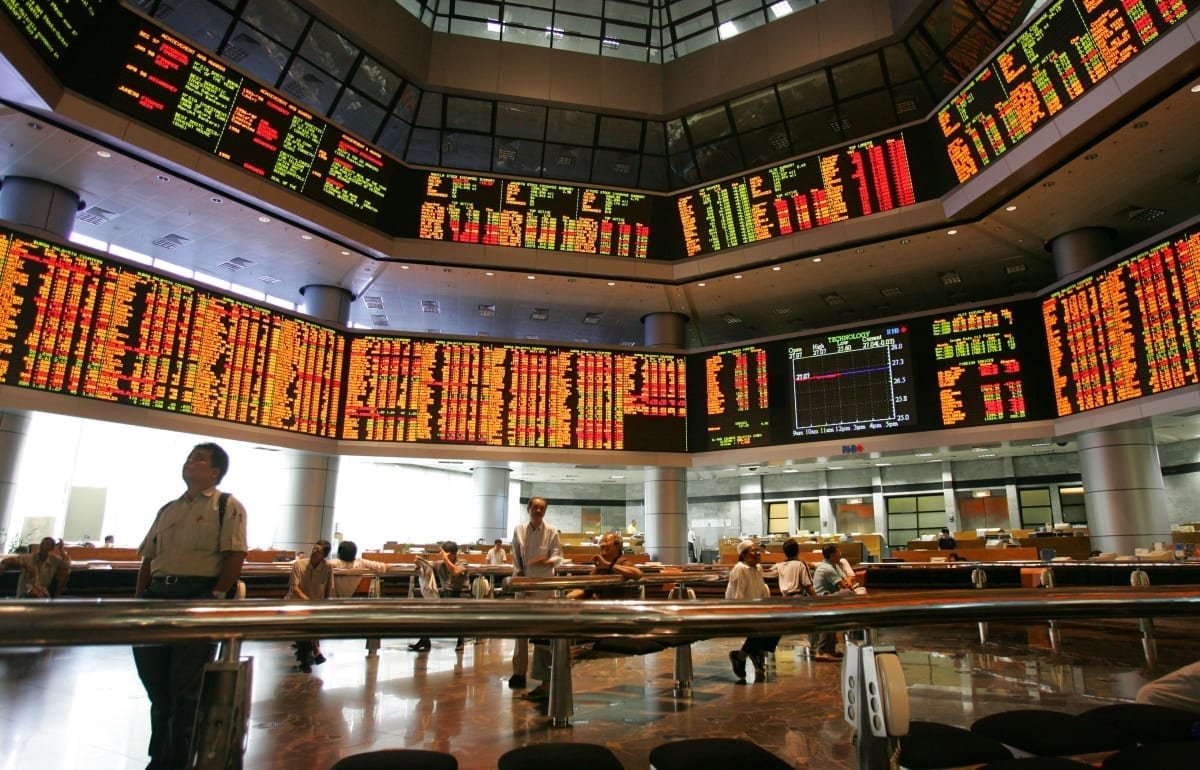
    Bursa Malaysia’s benchmark index edged up 0.36 points to 1,596.11 in early Tuesday trade as gains in heavyweight commercial lenders offset broad weakness across secondary counters.

    The marginal 0.02 per cent advance recovered an opening drop of 3.18 points to 1,592.57, though decliners outpaced advancers 201 to 156 across the broader exchange. Morning volume reached 180.64 million units worth RM90.02 million.

    Trading remained divided between domestic financial counters and export-oriented industrial names. Investors tracking Wall Street overnight gains looked for traction following a 1.11 per cent rise in the Nasdaq Composite and a 0.41 per cent lift in the S&P 500, where buyers returned to artificial intelligence semiconductor and memory hardware producers. That overseas bounce failed to spark a broad rally in Kuala Lumpur, where 302 counters traded unchanged and ten remained suspended.

    Lenders and Consumer Stocks Hold the Line

    Large commercial banks provided the primary support for the headline index during early exchanges. Malayan Banking added four sen to trade at RM9.94, Public Bank picked up one sen to RM4.72, and CIMB Group rose two sen to RM7.17. Hong Leong Bank held steady at RM21.10. Those advances lifted the Financial Services Index by 55.25 points to 18,546.22.

    Consumer and industrial heavyweights also found buyers. Food manufacturing major Nestle climbed 40 sen to RM90.30 to lead the top gainers list. Energy shipper MISC advanced 14 sen to RM9.49, refiner Petron Malaysia added 11 sen to RM3.45, and aluminum producer Press Metal gained five sen to RM6.73.

    Selling pressure hit utilities and infrastructure names, capping the index’s upward room. Tenaga Nasional dropped six sen to RM12.92, while YTL Power slipped five sen to RM5.21.

    Yield Pressure Weighs on Tech and Construction

    Elevated fixed-income yields in the United States continued to cast a shadow over rate-sensitive regional assets. The US 10-year Treasury yield held near 5.15 per cent while the 30-year yield stood around 5.48 per cent, keeping capital cautious toward emerging market equities.

    Technology equipment and assembly counters saw selective selling despite the overnight recovery in US chip stocks. Automated test equipment supplier KESM dropped 15 sen to RM4.54, and engineering solutions group UWC gave up nine sen to RM7.21. In building materials and construction, Kerjaya Prospek shed 10 sen to RM3.22, while ceramic tile manufacturer Kim Hin lost 8.5 sen to 80.5 sen.

    Apex Securities noted the split in investor sentiment as global interest rate pressures collided with domestic capital allocations.

    “the FBM KLCI is likely to trade within a range, with investors remaining selective and favouring domestically driven and defensive counters,”

    the brokerage said.

    Sector Divergence Deepens Across Secondary Boards

    Broader market gauges drifted lower as mid-cap and Shariah-compliant equities failed to mirror the banking index. The FBM Emas Index dipped 1.31 points to 11,908.38, while the FBM Top 100 Index fell 1.18 points to 11,704.04. The mid-cap FBM Mid 70 Index declined 17.71 points to 17,116.03, and the FBM ACE Index eased 1.58 points to 5,391.71.

    Shariah counters faced heavier selling, pulling the FBM Emas Shariah Index down 13.83 points to 11,860.36. The Plantation Index dropped 62.97 points to 8,590.4. In contrast, the Energy Index added 1.67 points to 825.23, supported by global crude prices trading near US$100 per barrel, while the Industrial Products and Services Index crept up 0.40 points to 174.5.

    Speculative retail counters dominated trading volume without driving major index shifts. GIIB rose 1.5 sen to 70.5 sen, and Ni Hsin picked up one sen to 45.5 sen. Zetrix AI and OCR stayed flat at five sen and 4.5 sen, respectively. Medical glove producer Top Glove eased half a sen to 88.5 sen, and healthcare firm LYC fell one sen to half a sen.

    Domestic Defensives Face Real Estate Headwinds

    The morning session shows institutional funds directing liquidity into large-cap balance sheets while avoiding debt-funded expansion plays. In retail, commercial development, and logistics, property developers and real estate investment trusts face higher borrowing costs because US long-term yields remain elevated above 5 per cent.

    Construction contractors linked to hyperscale data center infrastructure maintain a separate stream of domestic order book momentum. Yet the broader real estate ecosystem is operating with tighter capitalization spreads, leaving consumer staples and cash-generative banking operations as the primary defensive refuge for local asset managers.

    Market participants are now watching whether benchmark crude can maintain the US$100 per barrel threshold to support domestic energy counters, while keeping a close eye on the 1,600 psychological barrier for the FBM KLCI.

  • Bursa Malaysia Climbs to 1,635 as Financial Counters Lead Early Trade

    Bursa Malaysia Climbs to 1,635 as Financial Counters Lead Early Trade

    Bursa Malaysia opened higher on Monday as the benchmark FTSE Bursa Malaysia KLCI gained 5.01 points to reach 1,635.88 within the first ten minutes of trade.

    The 0.31 per cent advance built on the previous Friday’s close of 1,630.87, aided by softer United States payroll figures that dampened expectations of immediate monetary tightening by the Federal Reserve.

    Trading across the Kuala Lumpur exchange showed broad participation in the opening hour. Advancing stocks outnumbered decliners 224 to 158, while 337 counters remained unchanged, 2,054 went untraded and 24 faced suspension.

    Banking and energy counters advance

    Lenders provided the primary push for the index. Malayan Banking, Public Bank, and CIMB each climbed four sen to RM10.06, RM4.70, and RM7.69 respectively, driving the Financial Services Index up 97.59 points to 19,138.10.

    Utility giant Tenaga Nasional also added four sen to trade at RM13.00. Energy stocks followed suit, pushing the sector index up 2.57 points to 835.60, while the Plantation Index gained 2.23 points to 9,058.78.

    Healthcare provider IHH Healthcare moved against the upward trend, shedding six sen to RM7.74.

    Trading volume and market breadth

    Total market turnover reached 206.30 million shares valued at RM98.78 million during early exchanges. Technology and manufacturing counters saw heavy volumes among retail and institutional accounts.

    VS Industry gained three sen to 32 sen, while Notion VTec added four sen to 74.5 sen. GB Bond rose half a sen to 23.5 sen, SFP Tech picked up one sen to 28.5 sen, and Dagang NeXchange traded unchanged at 51.5 sen.

    Renewable energy and industrial engineering names led percentage gains. Samaiden climbed 19 sen to RM3.03, UWC gained 16 sen to RM7.73, Critical Holdings rose 15 sen to RM2.61, Mi Technovation added nine sen to RM5.30, and Solarvest advanced eight sen to RM4.25.

    Regional pressures and bond yields

    External macroeconomic indicators continue to dictate capital flows across Southeast Asian bourses. Rakuten Trade equity research head Thong Pak Leng noted that elevated benchmark borrowing costs and commodities keep local sentiment selective.

    Brent crude traded at US$102.25 per barrel while the US 10-year Treasury yield held at 5.28 per cent, maintaining pressure on emerging market valuations. In Hong Kong, the Hang Seng Index slipped below the 24,000 threshold as selling hit technology and financial listings.

    For consumer brands and industrial suppliers across Malaysia, higher bond yields and fuel costs present direct friction against corporate margins and transport overheads. Investors are filtering allocations toward cash-generative banking and energy plays while trimming positions in high-multiple consumer staples.

    Consumer decliners and index levels

    Consumer bellwether Nestle recorded the sharpest decline of the morning, dropping 32 sen to RM89.20. Industrial and tech decliners included Vitrox, down 14 sen to RM10.32, Kobay Technology, losing 12 sen to RM2.18, and Kelington, shedding five sen to RM8.58.

    Secondary indices tracked the main board higher. The FBM Mid 70 Index rose 28.14 points to 17,510.07, the FBM Emas Index added 33.81 points to 12,204.38, and the FBM ACE Index climbed 31.41 points to 5,560.87.

    Rakuten Trade projects the FBM KLCI to fluctuate between 1,625 and 1,635 points through the remainder of the session as bargain hunters test resistance levels.

  • Carlsberg Malaysia Takes Seventh Consecutive Equity Return Award with 125.8% ROE

    Carlsberg Malaysia Takes Seventh Consecutive Equity Return Award with 125.8% ROE

    Carlsberg Brewery Malaysia Berhad won two honours at The Edge Billion Ringgit Club Awards 2026, logging a 125.8 per cent return on equity for 2025. This secured the Shah Alam brewer its seventh straight win for highest return on equity in consumer products and services.

    The company also took the corporate responsibility award for Bursa Malaysia listed firms with market capitalisations between RM1 billion and RM10 billion. Out of 1,060 listed companies, only 183 qualified for the club this year.

    Three-Year Capital Efficiency Numbers

    Rolling metrics for the award tracked performance from 2023 through 2025. Return on shareholders funds stood at 177.8 per cent in 2023, 134.3 per cent in 2024 and 125.8 per cent in 2025. These figures stem from tight working capital controls. They also reflect steady cash generation from Shah Alam brewing and distribution across Malaysia and Singapore.

    Holding equity returns above 120 per cent through input cost swings demands strict pricing and rapid inventory turns. Southeast Asian commercial brewers operate on thin margins. Regional tax structures and retail margins leave no room for operational bloat.

    Supply Chain Audits and Governance

    The governance award recognised an expanded responsible sourcing programme across third-party suppliers. This framework aligns procurement with Malaysia’s National Action Plan on Business and Human Rights 2025 to 2030. It also updates internal labour standards across regional vendors.

    Rating agencies responded with higher marks. MSCI ESG Ratings upgraded the Malaysian unit to AAA. Meanwhile, FTSE4Good Bursa Malaysia maintained its four-star rating on the stock.

    Regional Brewery Margins and Risks

    Consumer goods producers across Southeast Asia face a divided market. Premium beer lines protect margins in major cities. General retail spending, however, faces persistent caution. The slide in return on equity from 177.8 per cent in 2023 to 125.8 per cent in 2025 shows this pressure. Higher production overheads and currency shifts continue to squeeze regional returns.

    Competitors across the region face similar margin pressures. Heineken Malaysia and regional importers have turned to supply chain automation and selective price hikes to defend profitability. Primary operational risks centre on input costs and utility tariffs. Higher energy expenses can quickly erode factory margins if volume growth slows.

    Community Funding and Capital Outlays

    In community funding, the brewer’s Top Ten Charity Campaign passed RM600 million raised in 2025. The platform has supported more than 700 vernacular schools since its 1987 launch. It runs alongside the company’s broader sustainability programme.

    Managing director Stefano Clini indicated capital will flow into plant capabilities, brand lines and internal systems. Investors now turn to fourth-quarter volume figures and the interim dividend declaration to see whether returns stay above the 120 per cent threshold.

  • Bursa Malaysia Opens Higher Before Trimming Gains to 1,666.81

    Bursa Malaysia Opens Higher Before Trimming Gains to 1,666.81

    Bursa Malaysia opened higher on Tuesday morning before trimming its advance, with the benchmark index easing 0.13 of a point to 1,666.81 at 9.10am.

    Trading volume reached 314.78 million shares valued at RM148.07 million, supported by selective bargain hunting across consumer, plantation, and financial counters.

    Market breadth stayed positive across the wider exchange in early trade. Advancers led decliners 265 to 150, while 294 counters were unchanged, 2,164 remained untraded, and 11 stayed suspended.

    Consumer and Energy Heavyweights Drive Divergent Moves

    Consumer goods companies posted sharp split movements during the morning session. Food and beverage manufacturer Fraser & Neave led the gainers board, rising 50 sen to RM23.10.

    Packaged food giant Nestle Malaysia moved in the opposite direction, dropping 48 sen to RM89.22. That drop positioned the food manufacturer among the session’s steepest decliners alongside insurer Allianz Malaysia, which fell 20 sen to RM21.10.

    Downstream fuel retailer Petron Malaysia advanced 21 sen to RM4.00, buoyed by shifting sentiment as easing tensions in West Asia pushed Brent crude oil prices lower. Semiconductor and technology equipment makers also found support, with Malaysian Pacific Industries adding 18 sen to RM42.98, while Pentamaster and MI Technovation each rose 16 sen to RM5.56 and RM5.82.

    Banking Stocks Draw Morning Capital

    Lenders provided steady support to the benchmark index as capital rotated into dividend-yielding financial counters. Malayan Banking added two sen to RM10.40, and CIMB Group rose four sen to RM7.69. Public Bank moved lower by one sen to RM4.78.

    Utility provider Tenaga Nasional shed 10 sen to RM12.94, while private hospital operator IHH Healthcare traded unchanged at RM7.62.

    Aviation and penny stocks dominated early trading activity. AirAsia rose two sen to 55 sen, building active retail turnover. Building materials firm BMS gained 1.5 sen to 15 sen, and Kinergy Advancement added half a sen to 40.5 sen. Artificial intelligence plays AIMAX and Zetrix AI traded flat at one sen and 20 sen, respectively.

    Valuations and Sector Rotations

    Rakuten Trade Sdn Bhd vice-president of equity research Thong Pak Leng noted that the domestic equity market presented attractive entry levels following softer trading last week. “Market valuation remains decent, currently at below the 16.5 times price-to-earnings average,” Thong said.

    Institutional and retail flows have increasingly concentrated on domestic-facing cash generators. For retail operators and consumer goods suppliers, pricing discipline and raw ingredient costs continue to dictate corporate margins on the ground, creating clear performance gaps between diversified beverage producers and legacy packaged food manufacturers.

    Plantation operators saw mixed pricing in morning trade. United Plantations fell 12 sen to RM33.30 despite modest underlying gains across the broader agricultural sector. Sunway Healthcare retreated nine sen to RM2.20.

    Mid-Cap and Shariah Gauge Gains

    Broader market indices traded in positive territory despite the slight retreat on the headline composite gauge. The FBM Mid 70 Index climbed 51.93 points to 17,741.07, and the FBM ACE Index rose 19.87 points to 5,336.30.

    The FBM Emas Index gained 12.17 points to 12,410.78, while the FBM Top 100 Index added 8.48 points to 12,198.93. The FBM Emas Shariah Index advanced 8.07 points to 12,244.83.

    Sector-specific indices tracked upward across the board. The Financial Services Index gained 25.65 points to 19,517.12, the Energy Index picked up 2.14 points to 847.57, the Plantation Index added 1.10 points to 9,411.59, and the Industrial Products and Services Index rose 0.69 of a point to 184.19.

    Market participants are tracking whether the benchmark composite index holds within its expected range between 1,665 and 1,680 points as institutional volume builds through the trading week.

  • Sunway Healthcare Starts Work on $196M Hospital in Johor

    Sunway Healthcare Starts Work on $196M Hospital in Johor

    Sunway Healthcare broke ground on an RM800 million ($196.2 million) tertiary hospital in Johor. The project is its first medical facility in Malaysia’s southern state.

    Planned for completion in 2030, Sunway Medical Center Iskandar Puteri will house more than 400 beds. It will employ over 1,400 healthcare staff.

    Located inside Sunway City Iskandar Puteri, the hospital sits within a 2,000-acre development launched in 2014. Around 7,000 residents live in the township today. Developers have completed more than 30 per cent of the master plan and sold roughly 2,000 homes.

    Expanding Footprint Across Johor

    The Iskandar Puteri facility anchors a series of specialized care projects across the state. Sunway Healthcare plans to open the Sunway Fertility Centre at Sunway Citrine in 2027. An ambulatory care centre will follow in 2028 near the upcoming Johor Bahru to Singapore Rapid Transit System link.

    Group leadership is also evaluating dedicated elder-care properties in the area. By 2032, the company intends to operate eight hospitals throughout Malaysia. That network will exceed 3,400 beds.

    Cross-Border Healthcare Demand

    Placing medical assets near the Singapore border targets two patient groups: local residents in suburban corridors and international medical tourists seeking private care at lower currency valuations. The Johor-Singapore Special Economic Zone adds tax and operational incentives to draw cross-border traffic.

    Competition for clinical talent will intensify for regional operators such as IHH Healthcare and KPJ. Medical staffing remains tight across Southeast Asia. Execution will depend on hiring and retaining senior doctors across competing networks.

    Consolidated Balance Sheet Backing

    Funding for the Johor site follows Sunway Healthcare’s debut on the Main Market of Bursa Malaysia in March. The business posted a net profit of RM111.48 million on revenue of nearly RM1.26 billion for the six months ended June 30. Those results represent year-on-year gains of 39 per cent and 27 per cent respectively.

    Sunway Group, led by founder Jeffrey Cheah, controls diversified holdings in construction, real estate, education, and infrastructure. Cheah’s net worth stood at $5.3 billion in April, ranking him eighth among Malaysia’s wealthiest individuals.

    Next Milestones for Delivery

    Site preparations included buying four land parcels within Sunway City Iskandar Puteri for RM45.37 million to accommodate the medical campus. Construction schedules now track progress on the RTS corridor connecting Johor Bahru and Singapore.

    Operations begin with the fertility clinic launch in 2027. That opening will test the southern medical network before the main hospital opens in 2030.

  • Eddie Ong Raises Hextar Retail Stake to 35.42%, Triggering Mandatory Offer

    Eddie Ong Raises Hextar Retail Stake to 35.42%, Triggering Mandatory Offer

    Hextar Retail Bhd major shareholder Datuk Eddie Ong Choo Meng has triggered a mandatory takeover offer for the company after his investment vehicle, Hextar Portfolio Sdn Bhd, raised its stake to 35.42 per cent.

    Hextar Portfolio acquired 22.41 million shares at prices not exceeding the cash offer price of 43 sen per share, increasing the collective stake held with Ong to 164.7 million shares from 142.29 million shares on Sept 1.

    Crossing the 33 per cent threshold requires Ong and parties acting in concert with him to make a mandatory offer for all remaining shares, following a conditional voluntary takeover offer announced on Aug 10.

    Crossing the mandatory threshold

    Filings from principal adviser RHB Investment Bank show the group held 30.6 per cent, or 142.29 million shares, on Sept 1. By 5pm on the transaction date, the offerors also secured valid acceptances for 0.15 per cent of the company, with another 0.08 per cent under verification. That brought their confirmed stake to 35.57 per cent.

    Hextar Portfolio confirmed the offer price will stay at 43 sen. Neither the offeror nor concert parties bought shares above that price during the reference period, exempting them from an upward price revision under Malaysian takeover rules.

    Expansion beyond picture frames

    Tighter control lets the sponsor group speed up capital reallocation inside an operating business that has shifted far from its roots. For minority investors, the cash offer sets a firm price floor.

    Heavy ownership concentration also centralises supply chain decisions between manufacturing and consumer-facing units. Controlling shareholders can route procurement internally through existing logistics, chemical inputs and retail channels, though public investors remain exposed to governance and allocation risks across disparate divisions.

    What happens next on Bursa Malaysia

    Hextar Retail started as Classic Scenic, a wooden picture frame moulding manufacturer running nine production facilities across Rawang in Selangor and Bidor in Perak. The business later diversified into food and beverage operations and apparel retailing, taking the Hextar name to align with Ong’s wider corporate stable.

    The offerors plan to maintain Hextar Retail’s listing on the Main Market of Bursa Malaysia. They will not take the company private if the required public shareholding spread stays intact.

    Independent advisers will dispatch the formal offer document detailing closing dates, verification tallies for the pending 0.08 per cent stake, and the final deadline for shareholder acceptances.

  • BYD and Bus Cap Plan Electric Commercial Vehicle Plant in Malaysia

    BYD and Bus Cap Plan Electric Commercial Vehicle Plant in Malaysia

    BYD Malaysia and local manufacturer Bus Cap signed an agreement in Shenzhen to develop a joint electric commercial vehicle platform in Perak. The deal targets local electric bus assembly and manufacturing. It also covers sales and after-sales operations.

    Under the exclusive memorandum, the partners are evaluating assembly sites and supply chains across the northwestern state. Capital commitments and operating structures depend on definitive contracts.

    Expanding Beyond Bus Fleets

    Bus Cap listed on Bursa Malaysia’s ACE Market in June 2026. Its coach-building roots date back to 1968 through subsidiary Sin Hock Leong Coach Works. BYD commercial vehicle division general manager Luo Zhongliang said the venture could broaden into electric trucks, vans, forklifts, and rail transit hardware. These would serve Malaysia and neighboring Southeast Asian markets.

    Executive director Bernard Ng Chong Yan said the alliance pairs BYD vehicle technology with local engineering. It also uses existing fleet customer relationships.

    Questions Over Passenger Plant

    The commercial venture gives BYD another production foothold in Malaysia as uncertainty surrounds its separate passenger car plans. In August 2025, BYD announced a 600,000-square-metre Tanjung Malim assembly plant scheduled for the second half of 2026. Malaysia’s Ministry of Investment, Trade and Industry said earlier this month that it has received no confirmation that BYD will proceed with that project as planned.

    Negotiators must now finalize binding agreements to lock in the Perak project’s investment budget and production start date.

  • Foreign buying on Bursa slows to RM146.8m last week

    Foreign buying on Bursa slows to RM146.8m last week

    Foreign funds snapped up RM146.8 million net of local equities last week during the holiday-shortened week. “Foreign funds resumed their entry into stocks listed on Bursa for the fourth consecutive week albeit at a slower pace compared to the preceding week,“ MIDF Research said in its weekly fund flow report.

    It said last Monday saw a moderate net inflow of foreign funds worth RM37.3 million, extending the daily buying streak to nine days. However, this foreign buying spree came to an end on the next day as international funds sold RM12.8 million net, coinciding with the local bourse’s 0.4% slide to settle at 1,690 points.

    Risk appetite was weak on Tuesday following the overnight 2.8% slump in Brent crude oil price combined with the anticipation ahead of the Sino-US trade negotiations.

    Notwithstanding this, offshore investors returned to Bursa on Wednesday at a tune of RM65.1 million net, the highest foreign net inflow during the week.

    The catalyst responsible for the boost of foreign net inflows on that day was 0.4% increase in Brent crude oil price as US President Donald Trump’s administration slaps sanctions on Venezuela’s state-owned oil company while Saudi Arabia had a deeper output cuts in January than initially pledged.

    The momentum of foreign net inflows continued on the last trading day of the week as foreign investors bought RM57.2 million net.

    “We opine that the sentiment was partially supported by the Malaysia’s exports in 2018 which grew by 6.7% to reach almost RM1 trillion. Meanwhile, the FBM KLCI was little changed, declining by less than 1% on Thursday ahead of the long weekend and festive season.”

    The month of January 2019 saw a foreign net inflow of RM1.03 billion or US$249.3 million, the first monthly net inflow since September last year.

    “In comparison with the three other Asean markets we monitor, Malaysia has the second lowest foreign net inflow while Indonesia leads,“ said MIDF.

    Foreign investors were the only group which saw a weekly increase in average daily traded value, jumping by 21.0% to remain above RM1 billion for the second week running.

  • Bursa Malaysia’s Q4 earnings fall 6.2% to RM51.9m

    Bursa Malaysia’s Q4 earnings fall 6.2% to RM51.9m

    Bursa Malaysia Bhd’s net profit in the fourth quarter ended Dec 31, 2018 (Q4FY18) was down by 6.2% to RM51.9 million, from RM55.27 million a year ago, mainly due to lower contribution from the securities segment.

    Revenue for the quarter declined 8.7% to RM128.9 million, compared with RM141.2 million in the previous corresponding quarter.

    The exchange has approved a second interim dividend of 11.6 sen per share for FY18, amounting to about RM93.7 million which is payable on Feb 28, 2019. With that, the total dividend (including special dividend) declared for the year amounts to 33.6 sen per share.

    Bursa’s full-year net profit was slightly up by 0.4% to RM224.04 million, from RM223.04 million a year ago, while revenue decreased by 1.2% to RM550 million, against RM556.8 million previously.

    For the year under review, securities market trading revenue increased 2.4% to RM265.8 million from RM259.6 million in FY17, mainly due to higher average daily trading value (ADV) for securities market’s on-market trades (OMT) in FY18.

    However, non-trading revenue saw a marginal decrease of 0.1% to RM165.9 million from RM166.1 million in FY17 due to lower listing and issuer services revenue.

    Bursa CEO Datuk Seri Tajuddin Atan said despite market volatility and challenging global economic environment, the exchange’s financial performance remained resilient.

    “Throughout the year, to create a more facilitative environment, we continued implementing initiatives to further enhance the vibrancy and liquidity of the market,” he added.

    At 2.35pm, Bursa’s share price was trading 7 sen or 0.9% lower at RM7.32 on 751,900 shares done.

  • Bursa slips on Wall Street, oil price slump

    Bursa slips on Wall Street, oil price slump

    Bursa Malaysia was not spared the fallout from this week’s rout on Wall Street and the slump in crude oil prices, with the FBM KLCI sliding 15.34 points to close at 1,695.37 points today. Most sectoral indices on the local bourse ended in the red today, save those for construction, healthcare, utilities and the ACE Market, and the FBM Fledgling Index.

    The selloff on Wall Street has been led by technology stocks, and the New York stock market’s gains for 2018 have been wiped out with the latest plunge on Tuesday.

    The Dow Jones Industrial Average and the S&P 500 ended at their weakest since late October on Tuesday, diving 553 points or 2.2 % and 49 points or 1.8 % respectively. The technology-heavy Nasdaq declined 117 points or 1.7 %, the lowest it has hit in seven months.

    Energy stocks also took a beating after crude oil prices slumped 6.6%.

    Rakuten Trade Sdn Bhd head of research Kenny Yee said that the performance of the local bourse is attributable to developments on Wall Street and the decline in crude oil prices – which will be used as the “relevant excuse” by investors to take profits given the recent climb in stock prices.

    Asked if the selling will persist, he said this will depend on Wall Street’s performance.

    Yee projects the FBM KLCI to trade around the 1,680 level, which he said is a well-supported position.

    He noted that selling could also be induced by the expected dip in third quarter corporate earnings, in which further downgrades on corporate earnings growth are expected.

    “We were deep into the tech bubble and now it is bursting. The bubble is not totally without fundamentals but prices rose too much over a long period of time. For the US, it is only starting and for Malaysia the oil price drop marked our peak. We were just trying to recover before the bursting of this bubble hit us,” explained Inter-Pacific Securities Sdn Bhd head of research Pong Teng Siew.

    “There is no cover currently. All asset classes are being hit. Bonds, stocks, commodities, properties, cryptocurrencies … all are being hit. Even gold is going nowhere,” he said.

    Asked if this will continue, Pong noted that the market does look like continuing its bearish streak in all asset classes as the tide of liquidity is flowing out at the moment.

    Sapura Energy was the most active counter on Bursa Malaysia yesterday, surging 4.17% to 37.5 sen with 87.49 million shares traded.

    Malaysian Pacific Industries was the top loser, falling 4.08% to RM11.74 on volume of 480,600 shares.

  • Foreign selling on Bursa Malaysia last week halves to RM247.1m

    The net amount sold by foreign investors last week shrank by more than half from RM531.8 million to RM247.1 million, the smallest weekly attrition so far this year.

    The pace at which international investors are disposing of stocks listed on Bursa Malaysia has been slowing down for the past four consecutive weeks, MIDF Research said in its weekly fund flow report.

    The research firm noted that global investors were net sellers on every single day except on Wednesday, which saw a foreign inflow worth RM71.7 million net, the first since June 29.

    The local bourse ended 0.91% higher at 1,753 points that day after Federal Reserve Board chairman Jerome Powell’s reaffirmation of his upbeat assessment on the US economy.

    Bursa Malaysia’s Asian peers, namely South Korea, Taiwan and the Philippines, also experienced a surge of inflows on the same day.

    MIDF Research said foreign net selling that occurred on other days remained well below RM100 million, a level deemed moderate, while Thursday recorded the highest foreign net selling during the week at US$95.6 million net.

    “Notwithstanding this, the FBM KLCI marked its nine-day winning streak on the same day supported by the rise in construction stocks following the announcement that the KL-Singapore HSR project will be deferred instead of being unilaterally cancelled,” it added.

    However, MIDF Research said the reduction of outflows to RM64.6 million net on Friday coincided with the 0.26% decline in the FBM KLCI amid profit-taking activity in telecommunication stocks as they led decliners.

    MIDF Research said Malaysia’s year-to-date foreign net outflow has reached RM8.31 billion or US$2.07 billion, offsetting approximately 80% of last year’s RM10.33 billion inflow.

    “Nevertheless, this figure is still the second lowest outflow amongst the four Asean markets we track, standing below the Philippines which has a year-to-date outflow of US$1.31 billion net.”

    The research house added that participation amongst foreign investors, retailers and local institutional funds remained upbeat as each of their average daily traded values stood above RM1 billion, RM800 million and RM2 billion, respectively.

  • Govt said to be looking to replace CEO of Bursa Malaysia

    Malaysia is looking to replace the chief executive officer of the national stock exchange, two sources said today, the latest in a series of top management changes initiated by the newly elected government.

    The sources gave no reason why the government was considering replacing Datuk Seri Tajuddin Atan at Bursa Malaysia. His term is due to end in March next year.

    A government adviser briefed by a minister said that the matter had been “one of the priorities” raised during a weekly Cabinet meeting today, but no conclusion was
    reached.

    “It was discussed … it’s just that they could not come to a decision,” said the source, who requested anonymity.

    Addressing a news conference after the Cabinet meeting, Prime Minister Tun Dr Mahathir Mohamad said the issue had not been tabled. “I did not see it on the table,” he said.

    Two sources have said among the names being considered as potential replacements for Tajuddin include an external candidate based in Hong Kong, and two internal candidates.

    Bursa Malaysia declined to comment. “We do not comment on speculative news,” a spokesman said.

  • Bursa Malaysia opens lower

    Bursa Malaysia opens lower

    Bursa Malaysia opened lower, extending yesterday’s losses on continued selling in selected heavyweights and in line with most regional peers, dealers said.

    At 9.17am, the benchmark FTSE Bursa Malaysia KLCI (FBM KLCI) was 6.01 points lower at 1,839.02 from Tuesday’s close of 1,845.03.

    The index opened 1.63 points weaker at 1,843.40.

    On the broader market, losers led gainers 202 to 137, while 183 counters were unchanged, 1,386 untraded and 20 others suspended.

    Volume stood at 185.91 million units valued at RM105.46 million.

    Public Investment Bank Bhd said the FBM KLCI may trade lower today as attention remains on Italian politics, with the benchmark sovereign debt yield turning around, as buyers re-emerged for the country’s 10-year paper.

    “On Wall Street, the S&P 500 gained as much as 0.3%, helped by signs the US-China trade war appeared to be abating, but suffered a late afternoon swoon to close 0.3% down for the day,” it said in a research note today.

    Among heavyweights, Maybank was two sen higher at RM10.90, Public Bank rose 22 sen to RM25.42, Petronas Chemicals improved one sen to RM8.44, while TNB shed 10 sen to RM15.24 and CIMB declined five sen to RM6.60.

    For actives, AirAsia X and Destini gained one sen each to 39 sen and 23.5 sen respectively, MyEG earned half-a-sen to 94 sen, while Hubline and PUC were flat at nine sen and 20.5 sen.

    The FBM Emas Index slid 38.07 points to 12,806.52, the FBMT 100 Index decreased 38.69 points to 12,609.62 and the FBM Emas Syariah Index dipped 81.97 points to 12,793.51.

    The FBM 70 lost 37.48 points to 15,068.35, but the FBM Ace advanced 1.60 points to 5,282.82.

    Sector-wise, the Finance Index was 30.89 points higher at 18,476.08, while the Plantation Index improved 4.71 points to 7,944.63 and the Industrial Index fell 18.83 points to 3,286.82.

    The physical price of gold as at 9.30am stood at RM159.97 per gramme, up 33 sen from RM159.64 at 5pm yesterday.

  • AmBank committed to driving business forward

    AmBank committed to driving business forward

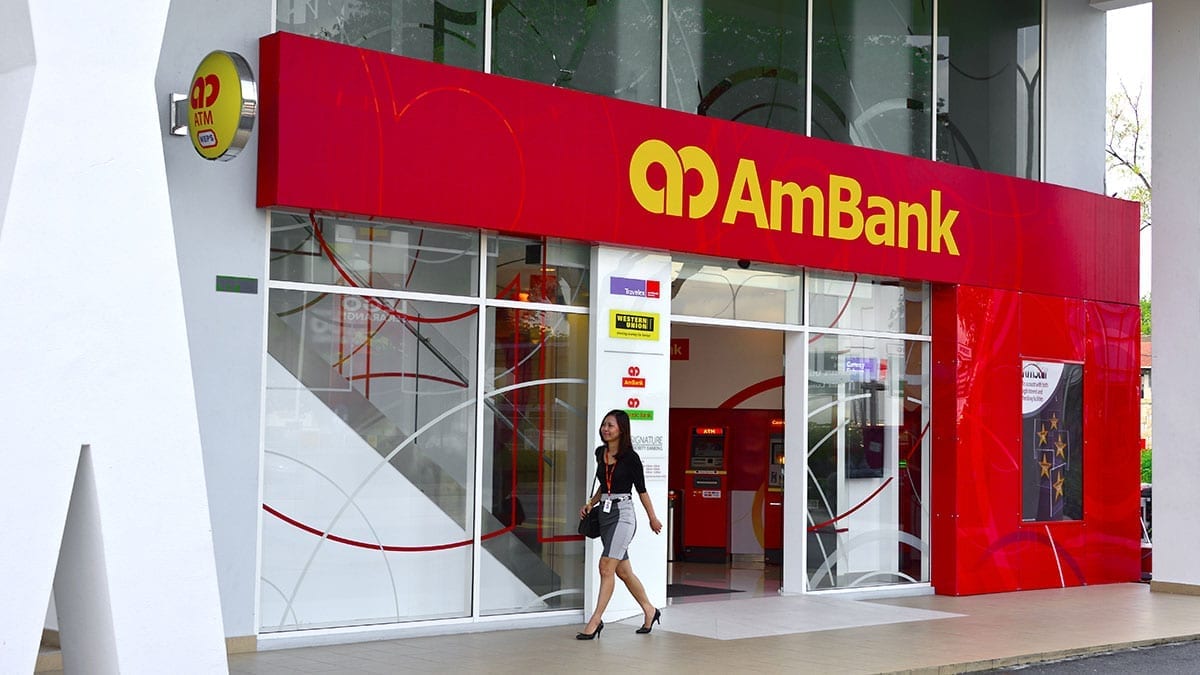
    AMMB Holdings Bhd remains fully committed to driving its banking business (AmBank Group) forward despite its major shareholders looking set to exit the group. The Australia and New Zealand Banking Group (ANZ) is the most substantial shareholder in AmBank Group, holding a 23.78% stake, and provides support in board and senior management representations, risk and financial governance, product offerings and new business developments.

    However, ANZ has been restructuring its businesses and is retreating from Asia with a slew of divestments in the region.

    Most recently, ANZ said in February that it would close its Laos retail products and services to shift attention to its institutional banking business in the country, after selling its retail businesses in the Philippines and Vietnam.

    Last year, it divested its 20% interest in Shanghai Rural Commercial Bank and its life insurance business.

    In 2016, ANZ sold its retail and wealth management businesses in five markets in Asia, including Singapore, Hong Kong, China, Taiwan and Indonesia, to Singapore’s DBS Bank Ltd.

    ANZ has been trying to sell its stake in AMMB since 2016 and talk that ANZ is close to divesting its stake – including to Retirement Fund Inc (KWAP) – has been reported many times, but to no avail after AMMB and RHB Bank Bhd scrapped plans for a merger last year.

    AMMB group CEO Datuk Sulaiman Mohd Tahir said exiting does not mean that the major shareholder (ANZ) is just going to “throw away the business and lose money as a result”, but it wants to sell to a partner who is able to provide it the value that it wants.

    “There is the question of finding a new partner. In Malaysia, it is also not so easy to simply dispose of it to anybody that you want out there, because you got to have regulatory approval, consents and requirements,” he told in an interview.

    He added that so long as ANZ continues to be a shareholder, it remains active in the participation of AmBank as it also wants the bank to do well.

    “They (ANZ) were much involved in my top four strategy in terms of driving the business. Even when we were reviewing the strategy, looking at performance, they (ANZ) were very much involved. We still have two representatives from ANZ on various boards,” said Sulaiman.

    Meanwhile, AMMB chairman Tan Sri Azman Hashim will be retiring from six entities in the AmBank group in stages over a two-year period announced last year and he has reiterated that he will eventually sell his stake in AMMB. Azman’s indirect interest in AMMB stands at 12.97%.

    Sulaiman said Azman built the bank and spent 30-40 years running the business,and he has every intention to make it the best.

    “Of course, age catches with him. My intention is he continues to grow the business until one day the business has done so well and you’re ready to leave and of course you’d like to leave it in good hands.

    “This is a valuable franchise for him (Azman). And for ANZ, they won’t just walk out at any price. So long as they’re still here, the intention is to continue to drive the business the best it can be.”

    Sulaiman said AmBank is growing in all forms, and with the right segments and products, while its digital journey is part of ensuring that it invests in the right kind of businesses.

    “They (ANZ and Azman) remain fully committed to driving the business, because no one wants to leave the organisation that you have built for so long and to see it go down the drain. The involvement of Azman and ANZ is as good as it could ever been.

    “They also recruited me to make sure I drive the business because they have a view on where and how it should be, what it can possibly be and my job is to make sure I deliver that,” said Sulaiman.

    Moving forward, Sulaiman said AmBank will continue to work towards achieving its aspiration to be among the top four banks in the country by 2020. The key growth segments identified are the mass affluent, affluent, small and medium enterprises and mid-corporate, which are on a growth trend.