Retail News CRM

Tag: bus

  • Passenger, goods transport volume sees strong surge in H1

    Passenger, goods transport volume sees strong surge in H1

    The transport sector carried over 2.17 billion passengers in the first half of 2023, up 15.9% year-on-year, heard a conference hosted by the Ministry of Transport in Hanoi.

    In the review period, about 1.10 billion tonnes of goods were transported, up 15.9% compared to the same period last year.

    The volume of railway passengers has experienced a strong increase in the period, recording a revenue growth of 138.92% compared to the same period last year.

    The aviation sector has basically met the demand. Some international routes have gradually recovered to the pre-pandemic level. The Ministry of Transport has also implemented various solutions to reduce flight delays and cancellations, and better the quality of air transportation services.

    The maritime sector has paid attention to implementing a project to develop Vietnam’s shipping fleet; simplifying administrative procedures, strongly applying information technology and the national one-stop-shop mechanism for 11 administrative procedures at 22 maritime port authorities nationwide.

  • Volkswagen Brings Back The Microbus Together With A Battery

    Volkswagen Brings Back The Microbus Together With A Battery

    Volkswagen will show a production version of its long-awaited ID.Buzz, an electric reincarnation of its beloved Microbus or Kombi, on March 9 and plans to launch it in the United States in late 2023, the company said on Friday.

    The ID.Buzz is one of “the most anticipated and most hyped” models anticipated from the Volkswagen brand since the company launched its new Beetle in the late 1990s, Scott Keogh, head of Volkswagen’s North American operations said during a media call.

    Volkswagen Chief Executive Herbert Diess tweeted on Thursday “The legend returns on 03/09/22!” The tweet contained a sketch of the profile of the ID.Buzz van.

    Volkswagen has shown a series of prototypes for a new Microbus over the past decade. But those prior show vans – the Budd.E and the Bulli – never made it to production, to the frustration of fans of the vehicle.

    Keogh said that a three-row version of the ID.Buzz will launch in the United States, where the original microbus became an icon of the counterculture, in late 2023 or early 2024. Volkswagen will launch a two-row version in Europe.

    “You want to get to 100,000 units before you localize,” Keogh said.

    Volkswagen will ramp up production of its ID.4 electric SUV at Chattanooga this year.

    Earlier Friday, Volkswagen said U.S. sales of its VW brand vehicles rose 15% in 2021, driven largely by strong sales of gasoline-fueled SUVs such as the Atlas and Tiguan.

    Shortages of vehicles caused by chip supply chain problems will continue to limit vehicle production and sales in the United States through 2022, Keogh said.

    He said he believes as many as two million potential car buyers did not buy a vehicle in 2021 because of the lack of supply, creating pent up demand for this year and beyond.

  • Hanoi buses keep losing passengers

    Hanoi buses keep losing passengers

    Hanoi single-trip ticket passengers reached 63.6 percent of its annual goal, dropping 36 percent year-on-year, while monthly tickets decreased by 34.3 percent compared to 2019.

    Hanoi Transportation Corporation (Transerco) total revenue in 2020 was VND2.5 trillion ($108 million), fell 17.5 percent year-on-year, said Nguyen Thanh Nam, CEO of Transerco, at the Transerco 2020 Review Conference held recently.

    Nam said the company is struggling due to market slump. In 2020, Hanoi bus had to cut 80 percent of the trips from March 22 and stop operating from April 1 to April 22. It had no income during the said period yet still had to pay for the operating cost and other expenses.

    The reasons were social-distancing and passengers being reluctant to take the bus during the pandemic, resulting in a fall in the number of passengers and single-trip ticket sales.

    The free bus passes policy for the elders also contributed to the single-trip ticket sales drop. Airport bus and city-tour bus without price support also had to cut trips as the number of passengers, mostly especially foreign tourists, dropped in 2020.

    Transerco revenue in 2021 and the next few years will hardly revive due to the Covid-19 pandemic, free bus passes policy for the elders, and traffic congestion, Nam said.

    Hanoi has set the goal of 20 percent of commuters using public transport in 2021 and 30-35 percent in 2025.

  • Muji bus targets customers in Japan’s mountains

    Muji bus targets customers in Japan’s mountains

    Household and consumer goods retailer Muji has built a Muji bus – a store inside a revamped tourist coach targeting consumers living in Japan’s mountainous regions.

    The new Muji to Go mobile store launches alongside Muji’s largest store internationally which has opened in Tokyo’s Naoetsu Shopping Centre. Its aim is to help revitalize the brand within its home market by targeting consumers who cannot conveniently access city stores – especially older customers.

    The store will begin selling goods next month before fully launching in September with a stock of clothing, stationery, and daily-use supplies. The project will additionally allow Muji staff to converse with remote consumers and learn more about their needs and concerns

    A second mobile store is likely to be launched in Sakata city, Yamagata in the near future.

    More information and photos on Designboom.

  • Sephora reveals final four cities on ‘Beauty Bus’ tour

    Sephora reveals final four cities on ‘Beauty Bus’ tour

    Sephora has announced Christchurch, Wellington, Hamilton and Auckland as the final four cities to be visited by the retailer’s double-decker ‘Beauty Bus’ in July.

    The Beauty Bus will feature Sephora’s own products, as well as Fenty Beauty by Rihanna, tarte, Huda Beauty, Marc Jacobs Beauty on-board, but the products will not be available for purchase.

    “The Sephora Beauty Bus is all about the Sephora experience,” Sephora national artistry lead Alphie Sadsad said.

    “We have an online presence in New Zealand via our online store and app already, so this tour is all about letting our customers swatch, try and play with the products they’ve never seen in person.

    “Come in, try something new and then shop the full Sephora assortment online if you liked what you tried. It’s a whole new way of shopping, and we are excited for New Zealand to be the first to experience it.”

    Wrapped in Sephora’s white and black stripes, the 11-metre bus also offers custom-built makeup stations manned by Sephora makeup artists.

    The Beauty Bus is traveling around New Zealand next month in anticipation of the retailer’s first store in the country, set to open on Queen Street in Auckland in early July.

    The locations of the bus tour were chosen in the retailer’s ‘bring Sephora to your town’ competition, which encouraged Kiwis to vote for the chance to have the bus visit their town.

    While the brand has been tightlipped about its store launch, it is believed to be part of a larger push into the Asia market, which will also see stores opening in Korea and Hong Kong.

    Sephora Asia president Benjamin Vuchot has earlier said New Zealand will be a key market in building the Sephora brand in Asia.

    “This expansion to a new market will allow Sephora to continue to amplify global beauty trends locally, elevate what our clients expect of the in-store experience and bring fresh, digital touch points to the retail environment,” Vuchot said.

    Sephora Beauty Bus locations and dates:

    • Cathedral Square, Christchurch – 12 to 4 pm, 6 July
    • Northlands Mall, Christchurch – 12 to 4 pm, 7 July
    • Oldins Plaza, Wellington Waterfront – 12 to 4 pm, 10 and 11 July
    • Garden Place, Hamilton – 12 to 4 pm, 13 July
    • The Base, Hamilton – 12 to 4 pm, 14 July
    • Sylvia Park, Auckland – 12 to 4 pm, 17 July
    • The Viaduct, Auckland – 12 to 4 pm, 18 July
  • Korea’s KT 5G bus hits the road

    Korea’s KT 5G bus hits the road

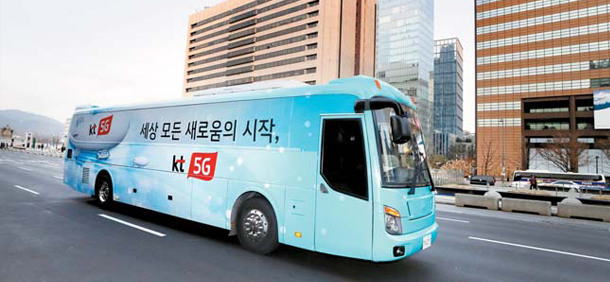
    Are you curious about all the hype over 5G? A ride on a 5G-powered bus may answer some questions. Mobile carrier KT announced Tuesday that people can sign up for free rides on its 5G bus. The bus will be connected to its ultra-fast 5G wireless network and will demonstrate devices that can be used to enjoy new media services like KT’s GiGA Live TV. GiGA Live is a head-mounted display – thick goggles with a screen embedded inside. GiGA Live supports virtual reality (VR) media services, including live sports broadcasts, as well as 360-degree films.

    VR and augmented reality (AR) are commonly cited as the technologies that have the most to benefit from 5G network. Because 5G promises up to 20 times faster speeds than LTE, it can transfer large volumes of data quickly in real-time, which is integral to the proper operation of VR and AR services.

    Those who want to take 30-minute sojourns on the 5G bus can apply online at www.kt5Gbus.com. The bus will run in the Gwanghwamun area from Jan. 15 to 24, and Gangnam Station from Jan. 25 to Feb. 2. Rides will be offered five times a day, excluding Sundays and Mondays.

    “5G network makes it possible to transfer huge volumes of information safely and in real-time,” said Park Hyun-jin, head of KT’s 5G business. “We will continue to offer innovative 5G services that can provide new experiences and value to consumers.”

    Earlier this month, KT added 5G-capabilities to its barista robot B;eat in Samsung Life Insurance’s Seocho District office. The robot, which looks like an advanced vending machine, can now recognize customers’ presence and send real-time footage of orders to human managers.

  • Bus-assembly line fire inflicts $11m loss

    Bus-assembly line fire inflicts $11m loss

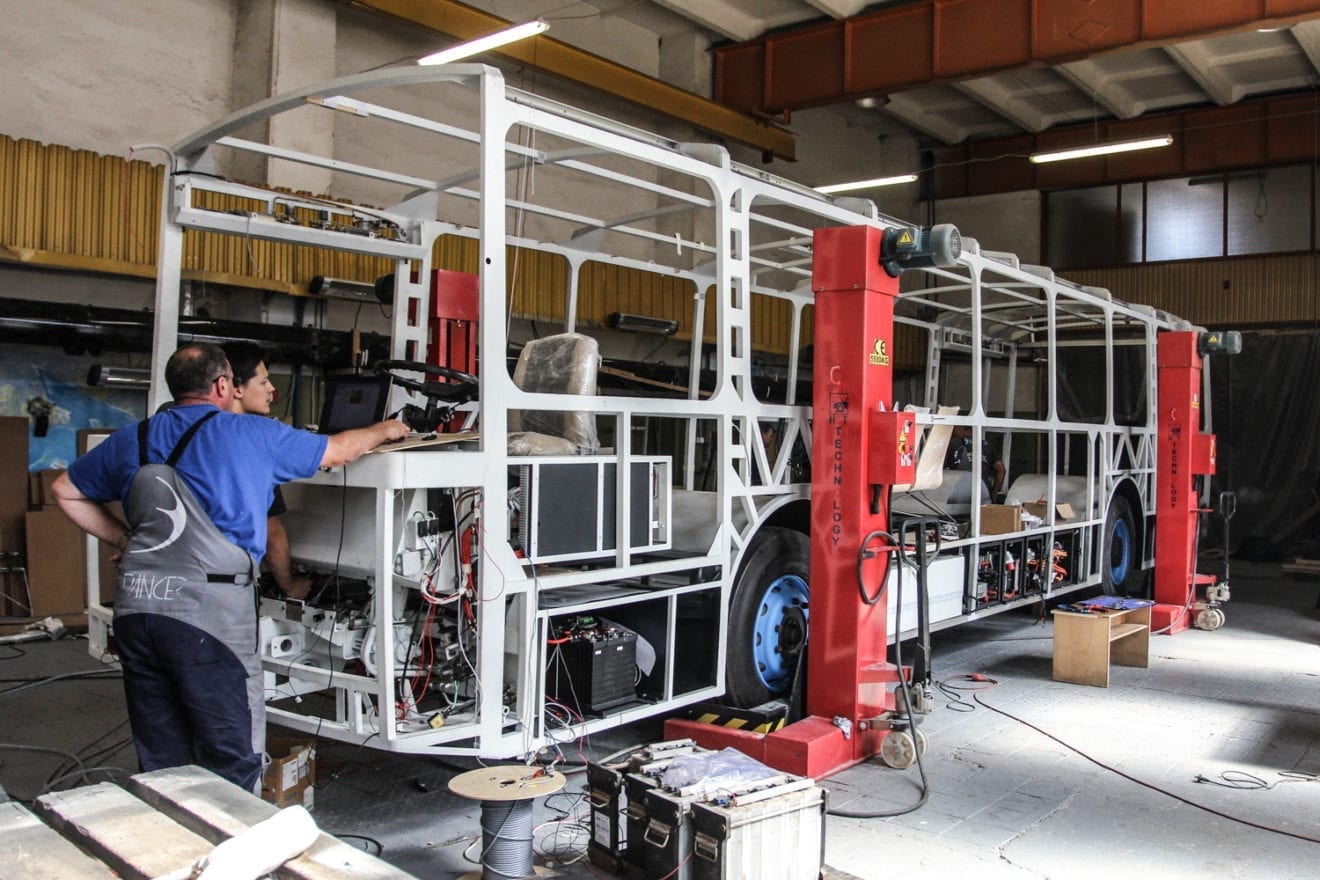
    A fire that broke out at two sites of a bus assembly plant early this month destroyed spare parts and components worth VND250 billion (US$11 million). A bus is assembled at its plant by the Truong Hai Automobile joint stock company (Thaco) in Quang Nam Province. Production was resumed nine days after a fire broke out at the plant on February 2.

    The assessment was revealed by Chairman of the Truong Hai Automobile Joint Stock company (Thaco), Tran Ba Duong, at a press conference on Sunday in central Quang Nam Province, where the plant is located.

    He said initial investigations point to the fire being caused by short-circuits.

    The fire broke out on February 2 after working hours at around 6pm at the Chu Lai-Truong Hai Auto Manufacture and Assembly Complex and blazed for around three hours.

    Components and accessories stored in the 5,400sq.m assembly workshop were burnt, Duong said.

    He said over 1,000 workers in the complex and firemen from Quang Nam, Quang Ngai, Da Nang, soldiers and staff of the Chu Lai Airport joined hands to stamp out the fire and remove components out the workshop.

    The plant resumed operations on Sunday after an initial investigation and recovery, he added.

    “The fire was out of reach of the plant’s automatic extinguishing system. It took four hours to mobilise a large fire-fighting force and extinguish the blaze,” Duong said.

    ‘Our fault’

    “It’s our fault that we collected components and accessories to service big orders while a new production line was under construction,” he said.

    Duong said Thaco had an insurance deal with the HCM City-based Bank of Investment and Development Bank (BIC) and Da Nang-based PVI for a total of VND638 billion ($28.2 million).

    He said BIC had asked an independent unit, Viet Nam International Adjuster (VIA) to assess the damage.

    The accident is still under investigation and final results will be announced after the probe is completed, he said.

    Also present at the conference was Dinh Van Thu, Chairman of the provincial People’s Committee. He said the fire was a lesson in fire prevention not only for Thaco, but other companies in the province’s industrial zones.

    Thu said Prime Minister Nguyen Xuan Phuc had asked the province to speed up the investigation and help the business resume production soon.

    The Thaco chief said the fire had delayed delivery of buses by three days to seven days.

    Thaco has invested US$400 million in constructing the Chu Lai-Truong Hai Industrial Complex, which has a logistics centre, car production factories, a vocational training college, a seaport, storage facilities and shipping services.

    Last year, Thaco earned total revenues of VND65 trillion ($2.8 billion), a 40 per cent growth, contributing VND18 trillion ($796 million) to the State budget.

    The nation’s biggest automaker plans to build three more plants with the total annual capacity of 215,000 trucks, vans, commercial cars, and achieve a localisation ratio of 16 per to 46 per cent.

    It currently manufactures and distributes Korea’s Kia model, Japan’s Mazda and France’s Peugeot. It has exported its cars to Laos, Cambodia, Myanmar and Columbia.

    Thaco plans to earn revenues of VND71 trillion ($3.1 billion) this year, equivalent to two per cent of the country’s Gross Domestic Product.

  • Despite problems at home, SMRT eyes Indonesian market

    Despite problems at home, SMRT eyes Indonesian market

    Transport operator SMRT has been awarded the tender for the construction of a public rail project in Bandung, the Mayor of Indonesia’s third-largest city said, a development that has elicited a thumbs-up from analysts.

    Local media in Indonesia had reported in recent days that SMRT will be the project operator for the Light Rail Transport (LRT) in Bandung. Bandung Mayor Ridwan Kamil was quoted in the reports as saying that in the initial stage, SMRT will build the LRT Corridor 1, a 10.2km route from Babakan Siliwangi to Leuwipanjang.

    In a Facebook post last Monday (Sept 19), Mr Kamil wrote SMRT had been awarded the tender for Corridor 1 and that construction would begin by next year if everything went well.

    In the wake of those reports, SMRT on Monday (Sept 26) said in a regulatory filing with the Singapore Exchange (SGX) that its wholly-owned subsidiary, SMRT International, had on Sept 9 submitted together with T-Files Indonesia a formal bid to participate in a tender for the construction of a public rail project in Bandung, about 180km from Jakarta.

    SMRT said in its filing that it had not received official notification of the tender award and that no agreement had been reached on any of the terms with regard to the construction and implementation of the project. It declined to comment beyond the SGX filing.

    Assistant Professor Yang Nan, Department of Strategy & Policy at NUS Business School, said: “Obviously this is an interesting project. Even if it doesn’t promise immediate high returns, SMRT is eyeing the future. As the largest economy in Asean, Indonesia has very underdeveloped transport infrastructure but is ready to catch up quickly.”

    He added: “Getting an early and strong foothold in these new markets is crucial for rail expansions and SMRT’s move is in this direction. I’m optimistic about SMRT’s perspective in winning this and future tenders, for its specialties and experiences operating in the Asean market.”

    CMC Markets Singapore analyst Margaret Yang said: “Indonesia is a fast-growing emerging economy, with a large population and high demand for infrastructure upgrading. This would be a good opportunity for SMRT to explore new business in Asean’s largest economy.”

    The latest development comes two years after SMRT International joined a consortium to provide consultancy services and secured first rights to operate and maintain the Jakarta Eco Transport monorail, due to commence operations next year.

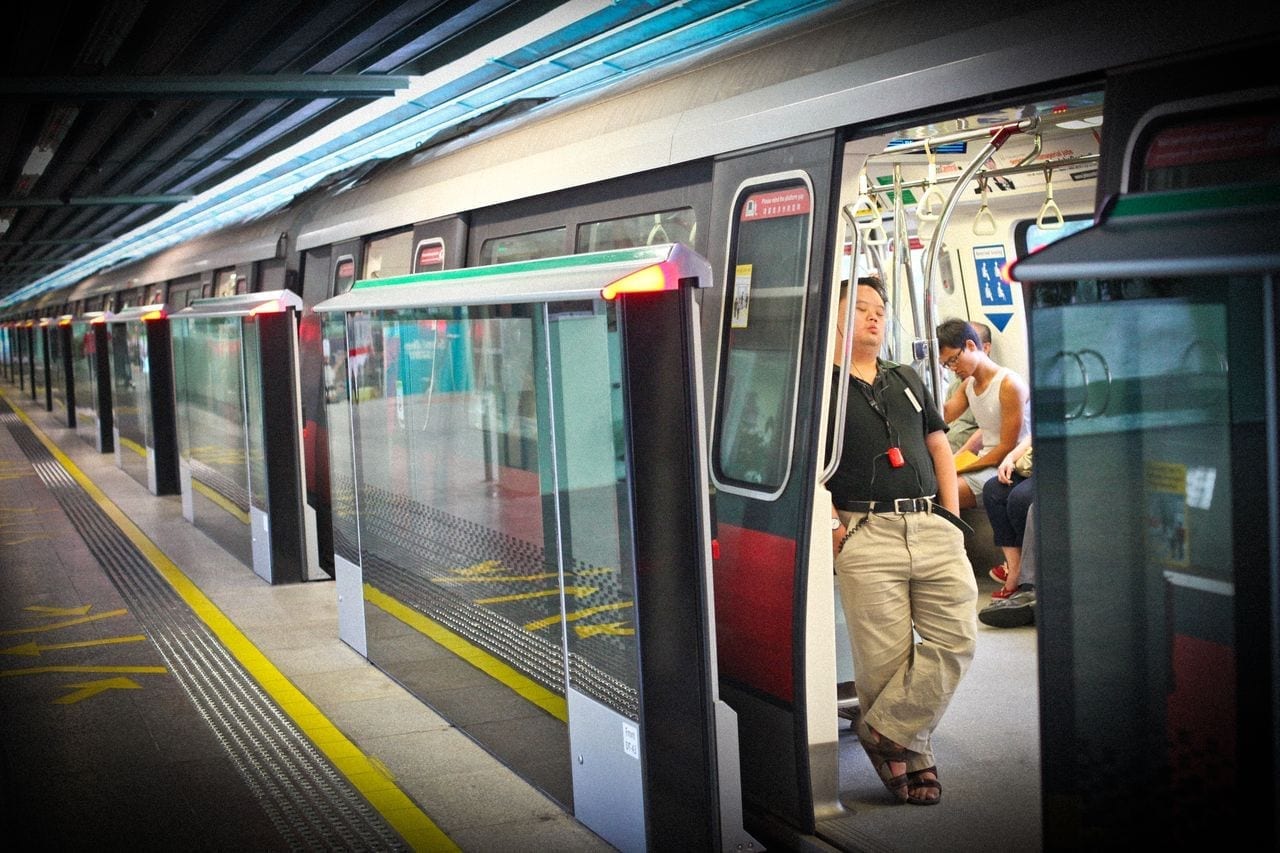
    At home, SMRT has come under heavy criticism in recent years as frequent train disruptions and delays on its various lines held up passengers on their daily commutes.

    In March, two employees carrying out routine maintenance work on a track near Pasir Ris MRT Station were killed after they were hit by a train approaching the platform. In July, SMRT said it had sent back 26 China-made trains to the manufacturer for repairs after cracks were found in them.

    Earlier this month, SMRT said it had not been able to determine the source that caused the intermittent loss of signalling communications on the Circle Line last month, which led to days of train service delays.

    Transport analyst Park Byung Joon, who lectures at SIM University, said that any operator with a long-enough history in operations will have its own record of mishaps. “As a train operator, it has a responsibility to the public, of course, but as a commercial entity there is nothing wrong for a business expansion opportunity,” he said.

    “Despite some recent operational hiccups suffered by SMRT, it is still a very strong operator of trains. As an operator of trains, it can bring in its knowledge on how to oversee the construction project and what kind of considerations you have to have for safety concerns. This kind of knowledge can be very useful for the consortium.”

    This Thursday, SMRT shareholders will vote on state-owned investment fund Temasek Holdings’ proposed buyout of the public transport company and experts have mixed views on how news of the Indonesian tender will affect the vote.

    Temasek’s wholly-owned subsidiary Belford has proposed to buy the 46 per cent of SMRT shares that the state-owned fund does not already hold, by way of a scheme of arrangement at S$1.68 per share.

    More than 50 per cent of shareholders present in person or by proxy must vote to approve, and they have to hold at least 75 per cent of the value of SMRT shares among those present. This excludes shares held by Temasek, which is not eligible to vote.

    SMRT said in Monday’s filing that the company does not expect the Indonesian bid to have a material impact on its net tangible assets per share or earnings per share (EPS) for the current financial year.

    “There shouldn’t be a material impact on shareholder’s decision due to the uncertainty surrounding the bid, and no material impact on its tangible assets or EPS in the near term,” said Ms Yang.

    However, Mr Yang disagreed.

    “The shareholders may vote for SMRT to remain publicly-listed as they see this announcement as something that can boost the future stock value of SMRT, and an opportunity to receive higher future dividends,” he said.

  • StarHub trialing mesh network on buses

    StarHub trialing mesh network on buses

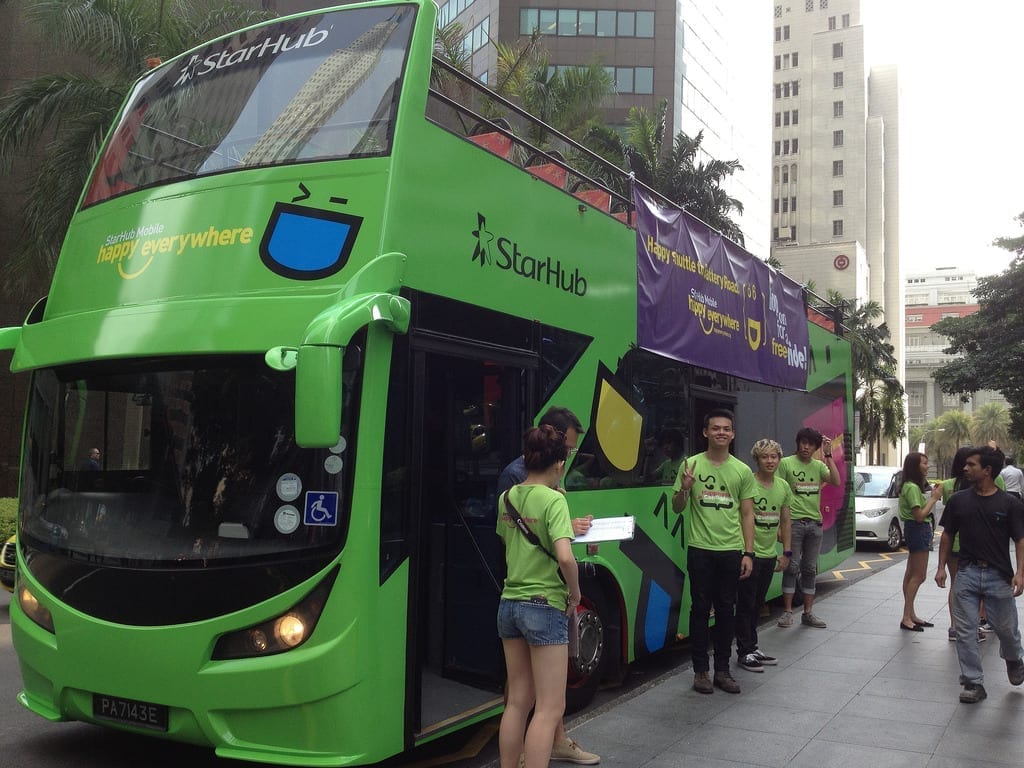
    Singapore’s StarHub has teamed up with the National University of Singapore, charter bus company ComfortDelGro Bus and “Internet of Moving Things” company Veniam for a mesh network of connected vehicles pilot.

    The trial at the university’s Kent Ridge campus is involving using buses as mobile WiFi access points connected to one and other and to fixed points in buildings on campus.

    Wireless mesh access points on the buses are being powered by a combination of 4G, WiFi and dedicated short range communications (DSRC) technology.

    The approach is designed to extend WiFi coverage will providing connectivity for a large number of IoT devices.

    Stephen Lee, Head of StarHub i3 (Innovation, Investment, Incubation), said companies will also be able to use the anonymized data generated to address Singapore’s logistic and transportation challenges.

    “This mesh platform at NUS allows StarHub to explore how we can use data generated from the platform to help companies in the logistics and transport sectors improve their operations and planning,” he said.

    “We look forward to working with more commercial partners to expand the network to other parts of Singapore and find new ways to analyse and utilise the data collected in order to address various urban concerns and challenges facing the transportation and logistics industry.”

  • Self-driving bus unveiled in Tokyo

    Self-driving bus unveiled in Tokyo

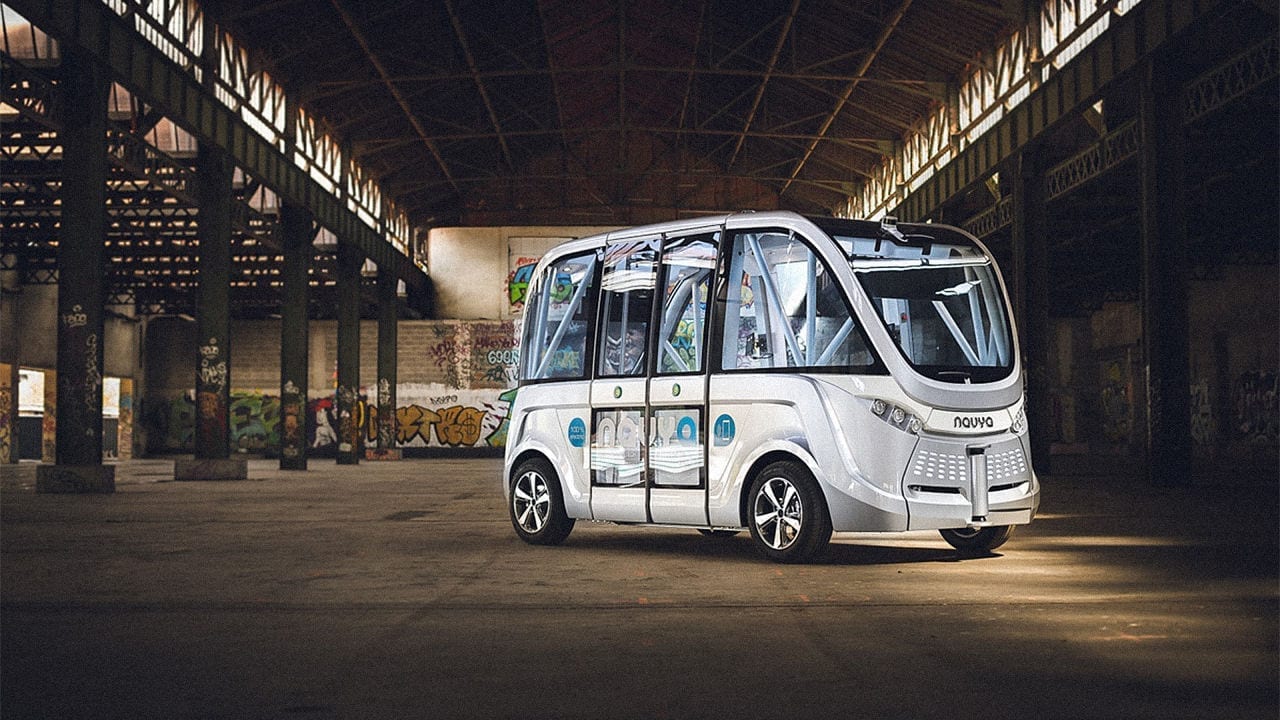
    Japanese technology firm DeNA Co. showcased its first self-driving bus in Tokyo on Thursday, unveiling a vehicle that runs on electricity and can carry 12 passengers.

    The EZ10 Robot Shuttle, developed in conjunction with French company Easy Mile, will first be used at a shopping facility in Japan’s Chiba prefecture next month and has a maximum speed of 40 kilometres per hour (25 miles per hour).

    Last month bus company PostBus unveiled a self-driving electric shuttle in the Swiss city of Sion. Automated driving technology is currently in the spotlight with the U.S. National Highway Traffic Safety Administration investigating a May 7 fatality of a Tesla Model S driver using autopilot technology.

    “We take safety very seriously,” Hiroshi Nakajima, general manager of DeNA’s automotive business, told a news conference. “Because we worry that there may be a serious accident, we take double or triple safety checks and begin from there.”

  • USW Seeks Tariffs on Bus and Truck Tires From China

    USW Seeks Tariffs on Bus and Truck Tires From China

    The United Steelworkers (USW) union has filed yet another petition asking the U.S. Government to impose anti-dumping and countervailing duties on tires manufactured in China. This time, the union is targeting truck and bus tires.

    The petition was filed Jan. 29, 2016.

    In it, the USW cites import data from the International Trade Commission (ITC), which points to an increase of more than 650,000 tires imported in the first nine months of 2015 compared to the same period in 2014.

    Jan.-Sept. 2014 Jan.-Sept. 2015
    Customs value $787,313,598 $817,636,180
    Number of tires 6,048,859 6,701,201

    The USW has filed a petition seeking tariffs on truck and bus tires imported into the U.S. from China. It’s the second tariff request this month affecting the commercial tire business.

    The USW has filed a petition seeking tariffs on truck and bus tires imported into the U.S. from China. It's the second tariff request this month affecting the commercial tire business.

    As the petition notes, “the volume of subject imports from China is significant by any measure.

    “From 2012 to 2014, the U.S. imported from 6.3 million to 8.4 million truck and bus tires a year from China, valued at close to over a billion dollars each year. China exported more tires to the U.S. than all other countries combined throughout the period.”

    In the latest Modern Tire Dealer Facts Issue, published in January 2016, MTD estimated U.S. truck tire imports from China for 2015 at 9.4 million, up 14.6% from the previous year.

    The petition covers all truck and bus tires with a “TR,” “MH” or “HC” suffix, as well as all tires listed in the “Truck-Bus” section of the Tire and Rim Association Year Book. Like the petition seeking tariffs on OTR tires from China, Sri Lanka and India, the truck and bus petition includes tires whether or not they’re mounted on wheels. The only truck or bus tires excluded from the petition are recycled and retreaded tires, and non-pneumatic tires, such as solid rubber tires.

    The USW is asking the ITC to gather and compare prices on four sizes of tires:

    11R22.5 (14 or 16 plies, load range G or H, any speed rating)

    11R24.5 (14 or 16 plies, load range G or H, any speed rating)

    295/75R22.5 (14 plies, load range G, any speed rating)

    285/75R24.5 (14 plies, load range G, any speed rating)

    In its petition, the USW says it represents workers at truck and bus tire production facilities in the U.S. Those plants are operated by Bridgestone Americas Inc. and Goodyear Tire & Rubber Co. Additional truck and bus tires are produced by non-union workforces for Continental Tire the Americas in Mount Vernon, Ill., General/Yokohama in Mount Vernon, Ill., and Michelin North America Inc. in Spartanburg, S.C.