Retail News CRM

Tag: Businesses

  • AI-Empowered Cyberattacks Prompt Businesses to Revamp Cybersecurity Tactics: Insights from Kaspersky

    AI-Empowered Cyberattacks Prompt Businesses to Revamp Cybersecurity Tactics: Insights from Kaspersky

    The integration of artificial intelligence (AI) technologies is necessitating a significant shift in business cybersecurity protocols. The evolving landscape of cyber threats is becoming increasingly complex due to the swift adoption of AI. Previously, successful cyberattacks required substantial planning and advanced technical proficiency, but AI has streamlined the process, decreasing the entry-level threshold for novice cyber threats.

    The Impact of AI on Cyber Threats

    AI has revolutionized the modus operandi of experienced cyber attackers, offering them speed and efficiency. Furthermore, it has also armed less skilled individuals with new capabilities. Vladislav Tushkanov, group manager at an AI technology research center, explains that AI technology allows both skilled and unskilled individuals to expedite their operations. Novice cyber attackers, who were previously required to spend extensive amounts of time learning programming, can now efficiently execute cyber threats.

    AI is being employed to create sophisticated phishing emails, imitated voices, images, and videos that are convincing and challenging to identify. Deepfakes have become an emerging hazard in the corporate world. An engineering firm in the UK reportedly suffered a loss of approximately US$25 million in 2024 when an employee was tricked into transferring funds due to a deepfake video call.

    AI’s capabilities extend beyond deepfakes and can support various stages of cyberattacks, such as reconnaissance, message customization, and evading detection by security systems.

    AI: A Double-edged Sword

    According to recent research, 72% of businesses express grave concerns regarding cyber attackers’ utilization of AI. Traditional defensive measures struggle to counter rapidly evolving and unpredictable threats. Simultaneously, AI proves to be an essential asset for bolstering cybersecurity. It allows organizations to detect threats with greater speed, mechanize aspects of the response procedure, and improve predictive abilities, thereby shifting from a reactive to a proactive security strategy.

    “To effectively manage the increasing number of alerts and to prevent analysts from becoming overwhelmed, machine learning is essential. It copes efficiently with these tasks and allows professionals to focus on complex or business-critical tasks,” Tushkanov said.

    However, the successful incorporation of AI in cybersecurity involves more than just technology. Businesses also require skilled personnel, practical implementation experience, and a solid data foundation.

    The Role of AI in Incident Investigation and Decision Making

    According to sources, AI is currently used to analyze and classify around 460,000 malware samples daily. This, combined with proprietary data, processing methods, and model training infrastructure, forms the foundation of increasingly complex cybersecurity strategies.

    Despite the significant advances of AI, it is not yet equipped to replace human expertise in incident investigation and decision-making processes. Risk assessments and response strategies still heavily depend on professional judgment. “At this point, the human role remains essential,” Tushkanov said, implying that while AI systems might support decision-making in the future, they cannot replace the need for human expertise.

    Questions & Answers

    Q: How has AI impacted cyber threats?
    A: AI has streamlined the process of executing cyber threats, reducing the need for substantial planning and advanced technical skills. It has made it easier for less experienced individuals to launch successful cyberattacks.

    Q: What is the role of AI in cybersecurity?
    A: AI plays a crucial role in enhancing cybersecurity. It allows organizations to detect threats quickly, automate parts of the response process, and enhance predictive capabilities.

    Q: Can AI replace human expertise in incident investigation and decision-making?
    A: Currently, AI cannot replace the need for human judgment in risk assessment and response strategy formulation. Despite the significant advances in AI, human expertise remains essential in incident investigation and decision-making processes.


  • Thailand to Levy Taxes on All Foreign Online Purchases in Boost to Local Businesses

    Thailand to Levy Taxes on All Foreign Online Purchases in Boost to Local Businesses

    Beginning January next year, Thailand will impose taxes on all foreign goods sold through online platforms, thereby ending the current exemption on low-value imports priced under 1500 baht (US$46.30).

    Creating a Fair Market

    According to Panthong Loikulnan, the Director-General of the Customs Department, the objective of this move is to level the competition for local businesses and increase government revenue. The current situation gives foreign goods an edge over Thai businesses, putting Small and Medium-sized Enterprises (SMEs) at a disadvantage.

    New Tax System for Imports

    The newly instated system will subject all imported goods, regardless of their value, to customs duties and Value-Added Tax (VAT) as required by the law. This change supersedes the existing tariff exemption, which will be phased out by the end of this year.

    Goods priced below 1500 baht currently represent over 30 billion baht ($927 million) in annual imports. Loikulnan estimates that imposing an average 10 per cent duty could generate at least an additional 3 billion baht ($92.7 million) in government revenue each year.

    The proposed system will primarily rely on data verification from online platforms and random inspections to ensure compliance. Furthermore, Thailand’s customs department is currently in discussions with major e-commerce operators to directly link their sales and import data.

    Protecting Domestic Retailers

    Loikulnan believes that this reform will help establish a fair market for domestic retailers who are already paying taxes and are particularly impacted by the wave of low-cost imported products.

    In his opinion, delaying the implementation of such a system would put Thailand at a disadvantage since many other countries are grappling with the same issue: domestic sellers pay taxes, while foreign goods are imported tax-free.

    Lump-sum Tax Proposal

    For the long term, Loikulnan suggests introducing a “lump-sum tax”, which implies a flat rate of 20 to 30 per cent per imported package. This would simplify the system and increase efficiency. However, he acknowledges that such a change would necessitate legislative amendments and would take time to implement.

    Questions & Answers

    What is the objective of Thailand’s new tax system?
    The aim is to level the playing field for local businesses and increase government revenue.

    How will the new system work?
    All imported goods, regardless of their value, will be subject to customs duties and VAT. The system will rely on data verification from online platforms and random inspections to ensure compliance.

    What is the proposed “lump-sum tax”?
    The “lump-sum tax” refers to a flat rate of 20 to 30 per cent per imported package, suggested as a long-term solution to simplify the system and increase efficiency.

  • Thailand Abolishes Tax Exemptions for Online Purchases from Abroad: A Boost for Local Businesses

    Thailand Abolishes Tax Exemptions for Online Purchases from Abroad: A Boost for Local Businesses

    Thailand is set to impose taxes on all foreign goods sold through online platforms starting from January of next year. This move marks an end to the existing exemptions granted to low-value imports that are priced under 1500 baht (US$46.30).

    Creating a Fair Business Environment

    Panthong Loikulnan, the director-general of the customs department, has said that the motivation behind this change is to establish a more level playing field for local businesses and to increase government revenue. He stated, “The absence of duties grants foreign goods an advantage over Thai businesses. This is particularly unjust to our SMEs.”

    In the new system, all imported goods, regardless of their value, will be subject to customs duties and value-added tax (VAT) as mandated by law. This change is set to replace the existing tariff exemption which is due to expire at the end of this year.

    Currently, imported goods priced below 1500 baht account for over 30 billion baht ($927 million) in annual imports.

    Loikulnan has indicated that enforcing an average 10 per cent duty could generate at least an additional 3 billion baht ($92.7 million) in government revenue each year.

    Ensuring Compliance

    The system will primarily depend on data verification from online platforms. Random inspections will also be carried out to ensure compliance.

    Thailand’s customs department has been engaging in discussions with major e-commerce operators, including Shopee and Lazada, to directly link their sales and import data.

    Loikulnan stated that this reform will assist in leveling the playing field for domestic retailers who are already paying taxes, particularly the small and medium-sized enterprises that are affected by the surge of low-cost imported products.

    He expressed concerns about the delay in implementing this process, stating that, “If we procrastinate, we will find ourselves at a disadvantage because all other countries are beginning to face the same issue: domestic sellers pay taxes, but foreign goods are imported tax-free.”

    Future Suggestions

    For the longer term, Loikulnan suggested introducing a “lump-sum tax”, which would be a flat rate of 20 to 30 per cent per imported package. He believes this would help simplify the system and increase its efficiency. However, he noted that such a change would necessitate legislative amendments and would require time to implement.

    Questions & Answers

    What is the motivation behind the imposition of taxes on foreign goods sold online?
    The introduction of the tax is aimed at creating a level playing field for local businesses and increasing government revenue.

    How will the system ensure compliance?
    The system will primarily depend on data verification from online platforms, with random inspections being carried out to ensure compliance.

    What is the ‘lump-sum tax’ that is being suggested for the longer term?
    The ‘lump-sum tax’ refers to a flat rate of 20 to 30 per cent per imported package. This is aimed at simplifying the system and increasing its efficiency.

  • Adapting To Trade Changes: Fedex Bolsters Support For Asia Pacific Businesses Amid Market Shifts

    Adapting To Trade Changes: Fedex Bolsters Support For Asia Pacific Businesses Amid Market Shifts

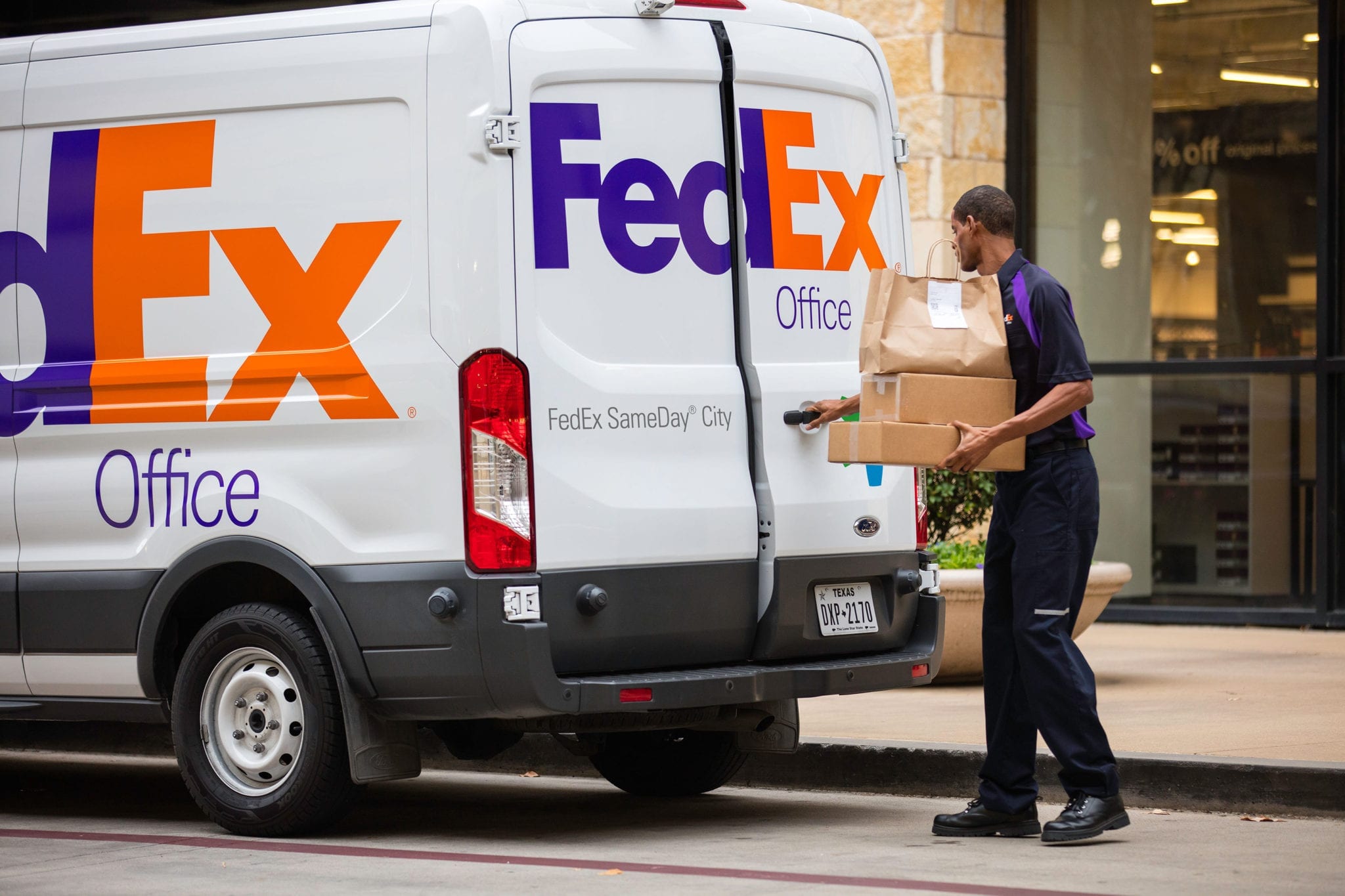
    Federal Express Corporation, a world-leading express transportation company, is enhancing its support for businesses throughout the Asia Pacific. This move is in response to adapt to shifting market priorities, alterations in tariffs, and changes in customs regulations.

    In response to recent modifications to the U.S. de minimis exemption rules, FedEx arranged a series of webinars across nine markets in the Asia Pacific. These sessions attracted over 3,800 customers ranging from small- and medium-sized enterprises to multinational corporations. The webinars offered valuable insights on maintaining operational efficiencies, customs clearance, avoiding unexpected costs, and enhancing shipping automation. This has equipped businesses with the necessary tools and guidance to navigate the intricate trade environment of today.

    Trade Priorities and Market Shifts

    Feedback received after the webinars underlined two significant trends in cross-border trade priorities: Delivered Duty Paid disbursement fees and shipment duties and taxes.

    Whilst one-fourth of the APAC businesses surveyed still regard the United States as their primary market, over 40% are planning to redirect their attention to Intra-Asia (22%) and Europe (21%) over the coming year.

    Cost control and duty visibility are key concerns, with 25% of APAC businesses emphasising the need for clear pre-regulatory volatility. The difficulty of keeping pace with ever-changing rules has been cited by 27% of businesses as a significant barrier to trade.

    Salil Chari, Senior Vice President of Marketing and Customer Experience for the Asia Pacific at FedEx, stated, “We are working closely with our customers to ensure they maintain efficient access to vital markets. We are leveraging our deep regulatory expertise, innovative digital tools, and the strength of our global network to help Asia Pacific businesses improve cost and duty transparency, reduce clearance friction, and unlock new growth opportunities across the region and Europe with confidence.”

    Strengthening Cross-Border Business

    In response to businesses’ increasing demand for greater trade guidance and digital solutions to support supply chain diversification and cross-border trade expansion, FedEx plans to expand its comprehensive suite of offerings.

    FedEx is one of the leading entry-filers in the U.S. and provides 24/7 support to ensure smooth shipment movement across more than 220 countries and territories. For U.S.-bound trade requiring particular attention, FedEx’s U.S. Tariff Hub offers updated guidance on tariffs, required documentation and customs policies.

    Furthermore, 27% of APAC businesses are seeking automated tools to expedite customs clearance. To this end, FedEx continues to invest in digital trade solutions, such as the industry-leading AI-enabled Harmonized Tariff Schedule code-lookup feature and a Customs AI chatbot.

    FedEx is also working to strengthen connectivity across critical intra-Asia and Asia-Europe trade corridors to support Asia Pacific businesses looking to diversify beyond the U.S.

    Questions & Answers

    What initiatives has FedEx introduced to support businesses in the Asia Pacific?
    FedEx has arranged a series of webinars providing insights on maintaining operational efficiencies, customs clearance, and cost management. They are also expanding their suite of offerings to include automated tools for customs clearance and strengthening connectivity across critical trade corridors.

    What are the top concerns of APAC businesses according to the feedback received by FedEx?
    The top concerns are cost control, duty visibility, and the difficulty of keeping pace with changing trade regulations.

    What digital solutions has FedEx introduced to support customs clearance?
    FedEx has introduced an AI-enabled Harmonized Tariff Schedule code-lookup feature and a Customs AI chatbot to help expedite the customs clearance process.

  • 9Pay Streamlines Payment Solutions, Easing Transactions for Foreign Businesses in Vietnam

    9Pay Streamlines Payment Solutions, Easing Transactions for Foreign Businesses in Vietnam

    Vietnam is rapidly positioning itself as a go-to destination for foreign direct investment (FDI), yet many international businesses are still grappling with the complexities of payment operations. Issues such as local collections, disbursements, and cross-border payments present formidable barriers. Here, licensed domestic payment intermediaries like 9Pay are stepping up to address these hurdles.

    As reported by the Ministry of Planning and Investment, Vietnam’s registered FDI soared to nearly $18.4 billion by the end of May 2025, representing a remarkable 51.2% year-over-year increase. However, this surge doesn’t necessarily translate to a smoother operating environment, particularly for foreign firms entering the Vietnamese market for the first time.

    Despite holding legal registration and investment licenses, many FDI companies face significant challenges with domestic payment collection, local payment channel integration, and processing cross-border transfers. According to 9Pay, an intermediary licensed by the State Bank of Vietnam, three main factors contribute to these ongoing issues.

    Complex Procedures Hinder Profit Repatriation

    Repatriating profits or making payments to overseas service providers is a complicated affair in Vietnam. The EuroCham Q1 2025 Business Confidence Index shows that over 70% of European businesses report “little or no improvement” in administrative procedures. Companies find that outbound payments often take much longer than expected due to stringent documentation requirements, encompassing invoices, contracts, financial statements, and tax approvals. To add another layer of complexity, foreign exchange regulations demand strict compliance with commercial banks, which can be notably inflexible.

    Struggling to Access Local Payment Solutions

    While over 90% of domestic transactions are conducted via digital channels—bank transfers, QR codes, and e-wallets—foreign companies in sectors like e-commerce and logistics are often hamstrung by language barriers and unclear regulations. The absence of end-to-end service providers only compounds their difficulties.

    Endless Barriers to Opening Corporate Accounts

    To set up a corporate bank account, businesses must navigate a minefield of documentation, including investment certificates, capital contribution paperwork, rental agreements, and tax codes, with the entire process taking anywhere from three to six weeks. For those without a Vietnamese legal entity or local representative office, this requirement can be especially daunting. Currency volatility and the costs associated with foreign exchange only add to the challenges businesses face.

    In this evolving landscape, licensed payment intermediaries like 9Pay are crucial to developing Vietnam’s digital financial infrastructure. Positioned as a strategic partner for international companies across sectors such as e-commerce, fintech, and education, 9Pay aims to bridge the gap between Vietnam’s domestic market and global businesses.

    9Pay: More than Just a Payment Processor

    “We are more than just a payment solution provider; we are financial and legal partners who understand the intricacies of the Vietnamese market,” asserts Nguyen Quang Thinh, CEO of 9Pay. This initiative helps foreign enterprises navigate everything from payment integration to cash flow optimization, all while ensuring compliance with local regulations tailored to the specific needs of each business.

    With an expansive digital financial ecosystem, 9Pay enables businesses to accept payments via popular Vietnamese methods, including bank transfers, QR codes, e-wallets, and domestic cards. Remarkably, it’s one of the few intermediaries in Vietnam able to handle high transaction volumes swiftly and securely, making it a go-to solution for e-commerce platforms.

    Empowering Foreign Enterprises

    Further amplifying its services, the 9Pay e-wallet offers a user-friendly personal payment system that equips Vietnamese users with the tools to deposit, withdraw, pay bills, and seamlessly transact with businesses. By processing sales revenue, refunds, and payments to partners with impressive speed and accuracy, 9Pay removes some of the stress from the equation.

    Thanks to robust technology infrastructure and 24/7 customer support, 9Pay assists partners in managing cash flow needs efficiently, enhancing operational effectiveness while minimizing financial strain. The company’s ability to tap into synchronized data allows it to accurately predict emerging client needs, making it a preferred choice among banks and partners.

    Operating under the esteemed PCI DSS (level 1) security certification, 9Pay collaborates with over 50 domestic banks and e-wallets. Its impressive partner roster includes major financial organizations like MasterCard, VISA, and various prominent Vietnamese banks, positions it as a heavyweight in the payment intermediary arena.

    Future Ambitions and Market Positioning

    In an increasingly complex regulatory landscape, 9Pay offers foreign companies not just advanced technology but also the expertise to navigate Vietnam’s intricate legal and tax frameworks. As such, international firms can minimize legal risks while optimizing their operations.

    “Our goal is to standardize payment records, helping businesses navigate these complexities effortlessly,” adds Thinh. Businesses simply need to coordinate with 9Pay to manage all transactions, eliminating the need to juggle multiple banks or service providers while ensuring full legal compliance.

    By 2027, 9Pay aims to establish itself as Vietnam’s leading digital finance platform for foreign investors, providing comprehensive solutions that span payment technology, cash flow management, tax compliance assistance, and operational efficiency boosts. The focus will be particularly strong on sectors like cross-border e-commerce and digital services, which are witnessing high transaction volumes.

    Currently, 9Pay supports over 1,000 foreign enterprises, chiefly from Singapore, South Korea, China, Hong Kong, and the EU, with ambitions to double this number within three years. In 2025, the company targets an annual revenue growth of 30% from its FDI clients as demand for cash flow management surges.

    As global supply chains undergo significant adjustments in the aftermath of the pandemic, Vietnam emerges as a pivotal nexus for international business. To effectively capitalize on this dynamic landscape, foreign firms need proficient, legally compliant, and locally attuned financial platforms. With a partner like 9Pay, they can unlock operational efficiency and regulatory assurance amid the intricacies of Vietnam’s business environment.

    Founded in 2018, 9Pay Joint Stock Company is a licensed intermediary by the State Bank of Vietnam, delivering a suite of comprehensive financial solutions, including e-wallet services, payment gateways, and the innovative TingTing Payment Sound Box.

    Questions & Answers

    What challenges do foreign direct investment firms face in Vietnam?
    Foreign businesses often struggle with complicated administrative procedures, lengthy documentation for profit repatriation, and integration with local payment solutions due to language barriers and unclear regulations.

    How does 9Pay aid foreign businesses operating in Vietnam?
    9Pay functions as both a financial partner and a payment intermediary, providing tailored solutions that simplify payment integration, enhance cash flow management, and ensure compliance with local regulations.

    What are 9Pay’s future goals in the financial services sector?
    9Pay aims to become Vietnam’s leading digital finance platform for FDI firms by 2027, expanding its offerings to include comprehensive payment solutions and aiming for annual revenue growth of 30% from its foreign clients.

  • Amazon Australia launches B2B store it says will help businesses cut costs

    Amazon Australia launches B2B store it says will help businesses cut costs

    Amazon Business, a new platform designed to streamline operations and decrease expenses for organizations of various sizes, has been introduced by Amazon Australia. The platform will feature focused sections for kitchen and pantry goods, cleaning and sanitation products, alongside stationary, IT commodities, and maintenance solutions.

    Addressing Business Needs

    Amazon Business aims to cater to the specific needs of business buyers, offering them tailored features for convenience. These include exclusive business pricing and volume discounts on eligible items. The platform also provides options for single or multi-user business accounts, Business Prime, and dedicated customer service.

    The introduction of this platform comes at a critical time when inflating expenses have been impacting small-to-medium-sized businesses (SMBs) in Australia. Research reveals that 92% of these SMBs have experienced a rise in operational costs over the past three years. Consequently, 83% of them have been compelled to transfer these expenses to their customers.

    Furthermore, the same research unveiled that over 80% of Australian SMBs have had to increase their prices by an average of 13% due to the escalating cost pressures.

    Gearing Up for Expansion

    Lena Zak, Country Manager of Amazon Business Australia, expressed excitement about the new platform. Zak emphasized the benefits of Amazon Business, stating that this development would be highly advantageous for the numerous SMBs operating across Australia. Zak further highlighted that Amazon Australia has substantially invested in enhancing its operations network to facilitate a smooth, speedy, and reliable shopping experience for its customers.

    With this latest launch, Australia becomes the eleventh country to offer Amazon Business, joining the ranks of countries like the U.S., U.K., Germany, Japan, among others. Since its debut in 2015 in the U.S., Amazon Business has expanded its customer base to over 8 million worldwide. The platform reportedly generates approximately $35 billion in annual gross sales.

    Questions & Answers

    What is Amazon Business?
    Amazon Business is a platform designed to simplify operations and reduce costs for organizations. It provides business-only pricing, quantity discounts, and options for single or multi-user business accounts, among other features.

    What does the launch of Amazon Business imply for Australian SMBs?
    The launch comes at a time when rising operational costs have been impacting Australian SMBs. It aims to offer them a streamlined, cost-effective way of procuring necessary items, thereby helping them manage their expenses.

    How has Amazon Business performed since its inception?
    Since its launch in the U.S. in 2015, Amazon Business has grown to more than 8 million customers globally. The platform reportedly generates approximately $35 billion in annualized gross sales.

  • Vietnam’s 100 best places to work in 2024

    Vietnam’s 100 best places to work in 2024

    The Vietnam 100 Best Places to Work list for 2024 features familiar names such as Unilever and Vingroup, while Danish toy maker Lego and property developer Capitaland make their debuts.

    Unilever Vietnam maintained its top position in the large business section in the 11th annual list released by recruitment consultancy Anphabe and market researcher Intage.

    The British company’s open workplace environment and emphasis on lifelong learning programs align with its sustainable development goals, Anphabe said.

    Others in the top 10 include Vingroup, U.S. healthcare solutions provider Abbott, Japanese food manufacturer Acecook Vietnam, U.S. beverage maker Coca-cola, and tech giant FPT.

    In the medium-sized business section, U.S. beverage maker PepsiCo Food Vietnam ranked first for a second straight year.

    The company is hailed as having a dynamic and innovative work environment, with robust training programs and attractive benefit policies.

    Lego, pharmaceutical firm Imexpharm and Singapore’s Capitaland Development Vietnam are some new names in the list.

    The list is based on evaluations of 700 businesses in 18 sectors by polling 65,000 employees.

    The researchers also conducted in-depth interviews with 253 company CEOs and human resource directors to evaluate their talent recruitment and retention strategies.

  • Foreign businesses step up investment, recruitment in Vietnam amid global shift

    Foreign businesses step up investment, recruitment in Vietnam amid global shift

    Foreign companies, especially Chinese, are investing and hiring more staff in Vietnam to shift their production to the country or expand.

    In the first half of the year recruitment and payroll services provider Adecco saw a 10% year-on-year jump in demand for personnel in manufacturing.

    The positions included specialists and senior quality assurance and supply chain managers with a common requirement being moderate proficiency in Chinese.

    “As Vietnam is attracting lots of foreign investment, there is increasing demand for workers proficient in English and other languages, particularly Chinese, to strengthen connections with international partners,” Adecco said.

    Headhunter Navigos Search reported that manufacturing companies with Chinese investment are shifting to or expanding their operations in Vietnam.

    They require a diverse workforce, with 68.3% preferring experienced personnel and nearly 22% seeking management skills.

    Navigos Search added that demand has increased in the high-tech, components, electronics, and automobile sectors.

    According to recruitment firms, the recent surge in labor demand in the manufacturing sector indicates that foreign companies are embracing the supply chain shift to Vietnam.

    The world’s second largest economy has been one of the top investors this year, with Hong Kong and mainland China accounting for $2.53 billion or 23.4% of new FDI.

    More Chinese companies are relocating due to the China Plus One strategy, which involves diversifying production.

    FDI disbursement hit a four-year high of $12.55 billion, with most of the money going into industrial zones in the north.

    In the second quarter Bac Ninh Province attracted several new investments such as Taiwanese electronics giant Foxconn’s 14.26-hectare circuit board plant worth $383 million in its Nam Son – Hap Linh Industrial Park.

    This month industrial real estate developer KCN Vietnam began work on the second phase of a project that will add over 80,000 square meters of mixed-use warehousing and high-quality storage space in the DEEP C Industrial Zone in Hai Phong City.

    It is launching more projects in anticipation of higher demand from foreign clients as Hai Phong is one of three localities attracting the most FDI in the country.

    In fact, the demand is so high that foreign firms are even considering industrial zones that have yet to be completed.

    Kinh Bac City, another industrial real estate developer, said it has received inquiries for a 20-hectare battery plant from a South Korean investor and a 60-hectare induction cooktop and oven manufacturing factory from a Chinese enterprise, both in Trang Due 3 Industrial Park in Hai Phong. The zone is set to open once it gets approval from authoritie.

    According to HSBC’s July report, Vietnam is a “top FDI destination, surpassing other Southeast Asian countries” amid the global production shift due to its competitive costs and labor.

    Over the past 20 years the country has emerged as a major manufacturing hub and integrated into the global supply chain. Its exports have grown at over 13% annually since 2007, primarily driven by foreign enterprises.

    Its wages for manufacturing workers are lower than in China while other costs, such as energy prices, are also competitive.

    The country has the second lowest electricity rates for production in Southeast Asia and relatively inexpensive diesel, a fuel widely used in industrial manufacturing.

    Another appealing factor is the active support from the government through the tax system.

    The corporate income tax rate is 20% and the government offers tax waivers, deferrals and cuts to aid businesses.

    “Vietnam’s integration into the global value chain has significantly increased over the years and is now comparable to that of Singapore.”

    To sustain the strong investment flow, Vietnam needs to advance further up the manufacturing chain and increase the use of local inputs in production.

    A shortage of skilled labor could pose a challenge to developing high-tech sectors such as semiconductors, logistics and maritime transport. The country’s infrastructure quality, ability to digitalize, streamline trade processes, and energy supply are also factors.

  • Newly registered enterprises in Laos increases sharply

    Newly registered enterprises in Laos increases sharply

    In 2022, Laos had a total of 18,076 newly registered enterprises, with a total registered capital of about US$7.5 billion, an increase of 42.94% compared to 2021, statistics of the country’s Ministry of Industry and Trade revealed.

    The positive signals from the business registration situation in 2022 have proved Laos’s determination in bringing the economy through a difficult period to recover and develop.

    According to the ministry, the country’s reopening of its door after the pandemic has created favorable conditions for international visitors to enter Laos, which has created a positive impact on the tourism industry.

    With the recovery of the economy post Covid-19 pandemic and the Lao Government’s efforts in prioritizing macroeconomic stability and controlling inflation, the confidence of the country’s businesses has gradually bounced back.

    Besides, the increase in the number of newly registered businesses in 2022 has partly shown that the macroeconomic management solutions are implemented in the right direction, creating confidence and optimism for the people and business community after two years of Covid-19 outbreak.

    Currently, the Lao Government, ministries and branches are supporting businesses to grab opportunities to grow, while improving the business investment environment, as well as issuing timely, transparent and favorable policies, creating motivation for businesses in the country.

  • Number of new businesses, registered capital highest ever

    Number of new businesses, registered capital highest ever

    138,100 businesses were established in Vietnam this year, the highest ever, with the government’s initiative to increase the quantity and quality of enterprises bearing fruit.

    In terms of volume, the figure was up 5.2 percent year-on-year, while their registered capital also climbed a new high at over VND1,730 trillion ($75.1 billion), up 17.1 percent year-on-year, according to the General Statistics Office.

    This meant the average registered capital was VND12.5 billion ($542,000) per business.

    An additional 39,400 businesses resumed operations this year, up 15.9 percent from last year. But the year also saw 43,700 businesses filing for dissolution, up 41.7 percent year-on-year.

    The surge in the business numbers and registered capital is happening as the government seeks to improve its administrative policies to support enterprises as part of a plan to have the private sector spearhead economic growth.

    Prime Minister Nguyen Xuan Phuc said at a meeting with business leaders on December 23 that the large number of businesses dissolving each year, including big ones, was a matter of concern.

    Government agencies have been making proposals in this regard. In July, the Ministry of Finance proposed to the National Assembly that it considers scrapping corporate income tax on micro and small enterprises.

    There are about 760,000 businesses operating in the country. Vietnam targets taking this up to 1 million next year.

    Vietnam’s GDP growth of 7.02 percent in 2019 exceeded the parliament’s target of 6.6-6.8 percent as well as forecasts by several international organizations like the WB and the ADB. It had slowed from a record 7.08 percent in 2018, but remained the second highest growth figure in the last decade.

  • FWO on underpayment: Self-disclosure no longer enough

    FWO on underpayment: Self-disclosure no longer enough

    Big business wage thieves looking for a soft response from the workplace watchdog are going to be disappointed, with fair work ombudsman Sandra Parker declaring an intention to be hands-on with big firms who confess underpayments.

    Speaking at a Council of Small Businesses Australia summit in Melbourne on Thursday, Parker said some large companies have been “sloppy” in their payroll practices, failing to keep their houses in order.

    “We’re getting a lot more companies coming to us self-disclosing large underpayments, many of them going back many years,” Parker said.

    “They had been previously saying to us that they’re trying to fix it and we should, therefore, leave them alone to get on with it.”

    “That’s not what we’re going to do.”

    Big businesses confessing underpayments to the Fair Work Ombudsman (FWO) will be required to, at a minimum, enter into court-enforceable undertakings.

    This will involve multi-year external audit plans, training programs, contrition payments, and a condition to publicly apologize to the community.

    “If they aren’t willing to cooperate with us on that basis, then we will obviously carefully consider litigation,” Parker said.

    The list of big businesses caught in alleged wage theft scandals in recent years is lengthy, including franchise networks such as 7-Eleven, Domino’s, Caltex and Retail Food Group.

    More recently, jewelry retailer Michael Hill and men’s clothing retailer M.J. Bale admitted to underpaying workers, while the case of celebrity chef George Calombaris’ company MADE Establishment stealing wages has been well-publicized.

    Calombaris agreed to pay a $200,000 contrition payment under his enforceable undertaking with the FWO for the more than $7.8 million his company underpaid workers in wages and superannuation.

    The extent of the payment, notwithstanding MADE’s backpay bill, angered some, including the lawyer who represented workers at the company, who said the payment was not enough.

    Parker said there’s been a “huge shift” in public attitudes towards wage theft recently, with the federal government now preparing to introduce tough new laws to criminalize underpayment.

    “[It has] made everyone stop and think about what that means. We’ve never had a criminal system in workplace relations,” she said.

    Parker, whose office was spun out of Michaelia Cash’s Department of Jobs and Small Business and into Attorney-General and Industrial Relations Minister Christian Porter’s portfolio earlier this year, said she’s been in discussion with the government over its proposed crackdown.

    “We’ve said to the [Industrial Relations] Minister and the department that the majority of businesses do the right thing,” Parker said.

    Parkers comments come as the federal government prepares to move ahead with a broad-based review of Australia’s workplace laws, including examining its in-principled support for migrant worker task force recommendations.

    That task force, overseen by former ACCC boss Allan Fels, found the exploitation of migrant workers is “widespread and entrenched” in Australia, as calls grow in the community for decisive action.

    “The community is saying enough is enough,” Parker said on Thursday.

    The government is being lobbied to consider simplifying the workplace compliance framework for corporations, including by ditching the Fair Work Commission’s Better Off Overall Test (BOOT), which regulates the approval of enterprise bargaining agreements.

    Treasurer Josh Frydenberg said earlier this week the government will prioritize evidence-based reforms to Australia’s workplace laws.

    “We are interested in further workplace relations reform that is evidence-based, pragmatic, protects workers entitlements and produces clear gains to the economy and working Australians,” he said.

    The FWO will also be handing out more compliance notices to businesses underpaying workers, amid efforts to streamline its enforcement efforts.

    Parker said a 12-month review of her office’s regulatory model has resulted in a refined focus that should be simpler for businesses.

    It comes as the ombudsman juggles its role as a source of education and advice about workplace laws with increasingly strong community expectations about addressing worker exploitation.

    “We’ve gone back to the act, and we’ve gone back to looking at exactly what it is the parliament and the community requires of the Fair Work Ombudsman,” Parker said.

    “We’re going to be using statutory compliance notices a lot more than we were before,” she said.

    Parker said compliance notices aren’t punitive and don’t constitute an admission of guilt, with the focus instead on rectifying any underpayments and educating business owners.

    “If people come to us, if they’re willing to work with us, they’re willing to use our tools, we’re not going to prosecute them or take them to court for mistakes,” Parker said.

    The FWO issued 220 compliance notices in the 2017-18 year, recovering more than $950,000 in unpaid wages. Three litigations were commenced against employers who did not comply with notices.

    Those numbers are expected to increase over the coming year as the FWO continues its compliance efforts, particularly in the fast-food, retail and cafe sectors.

    “If a business doesn’t comply we will give them a warning and an opportunity to give a reasonable excuse,” Parker said.

    “We will also take them to court if they don’t comply, and we will seek a penalty, both for the failure to comply with the notice and the original contravention.”

    A balancing act

    Tasked with prosecuting cases of deliberate wage underpayment while helping businesses trying to do the right thing, Parker faces an increasingly precarious balancing act in the coming years as the government ratchets up penalties for wage theft and small business advocates question the complexity of workplace laws.

    Asked Thursday about the perception of the FWO among small businesses, Parker said her office was focused on creating quicker solutions.

    “We want to implement a quicker [sic] solution when we come across underpayment then we have in the past,” Parker said, saying compliance notices would enable the ombudsman to deliver better outcomes for firms.

    “We will issue [compliance notices] more quickly, and there will be more of them.”

    The ombudsman has a series of online resources to help businesses remain compliant with their legal obligations, including a comprehensive (and free) pay calculator tool.

  • Nearly 9,000 new companies launched in Vietnam in January

    Nearly 9,000 new companies launched in Vietnam in January

    A strong start for the economy in the new year after a record high number of new openings in 2016. Vietnam’s business community has hit the grounds running in the new year. Official reports showed that 8,990 companies opened in January, up 8 percent from last year. Their registered capital surged 52.3 percent to VND90.3 trillion ($4 billion) in total.

    The new companies are expected to create 104,100 jobs. In comparison, there were 8,320 new companies with 124,000 new jobs in January last year.

    Nearly 5,600 suspended companies also resumed operations last month.

    The number of businesses shutting down increased 18.3 percent year-on-year to 1,583.

    Vietnam hopes to see over one million businesses in operation by 2020. It is now halfway to that point.

    The country saw a record number of business openings of 110,000 last year, strengthening hopes for robust growth and strong investment in the near future.

    Officials from the labor ministry reportedly said that Vietnam aims to create 1.6 million jobs this year, roughly the same figure last year.

    More than 3 percent of the country’s urban adults are unemployed while the rural rate is nearly 2 percent.

  • Businesses to explore Indonesia

    Businesses to explore Indonesia

    Pakistan’s businessmen should take advantage from the large Indonesian market, an envoy said. Ambassador of Indonesia Iwan Suyudhie Amri, talking to the Lahore Chamber of Commerce and Industry (LCCI) Vice President Nasir Saeed, said bilateral trade needs to be enhanced as Pakistan and Indonesia are potential markets.

    Ambassador Amri said Pakistan’s rice and meat have great demand in Indonesia and therefore Pakistan’s businessmen should avail this opportunity.

    He said the LCCI is playing a significant role to strengthen the trade and economic relations between the two countries.

    Saeed said the implementation of Pakistan-Indonesia preferential trade agreement will begin a new era of cooperation and serve as a foundation for enhanced economic and trade cooperation.

    He said local businesses will increase exports to Southeast Asia’s largest economy under the preferential trade agreement.

    “There is also a lot of scope for Indonesia to make investment in Pakistan. Indonesia has a fairly advanced petro-chemical, rubber, plywood, telecommunication and tourism industry,” he added.