Tag: cafe

  • Shake Shack lands in Singapore

    Shake Shack lands in Singapore

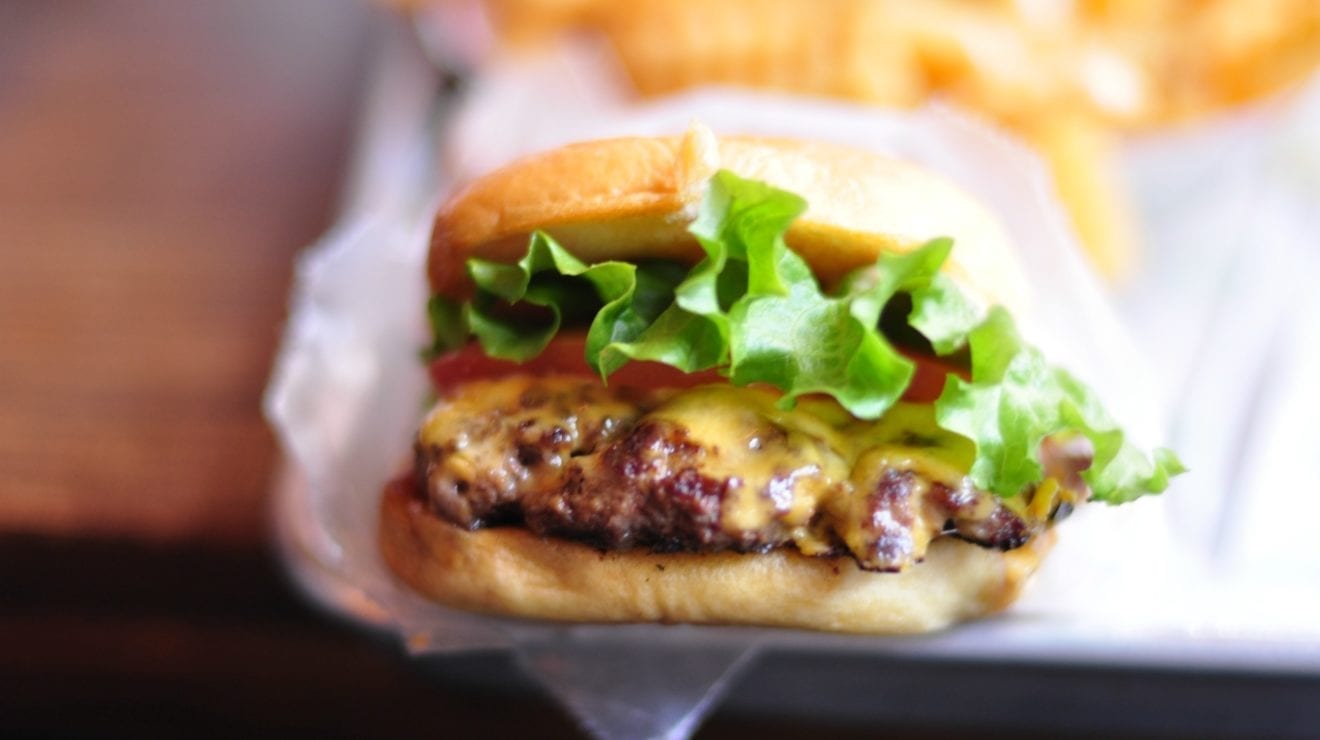
    American fast-food restaurant Shake Shack is landing in Singapore. The New York burger chain is opening up a location in Singapore’s awaited Jewel Changi Airport mall. In partnership with SPC Group, the South Korea-based restaurant distributor, Shake Shack said the firm took its time to discover the ideal location for the Madison Square Park-founded chain.

    “For years we’ve been looking for the right opportunity to enter the Singaporean market given its regional importance, and we’re thrilled to have found the right strategic partner and an ideal launch location,” said Michael Kark, Shake Shack’s vice-president of global licensing

    “Our flagship site will be in the stunning Jewel Changi Airport, home to more than 2,000 trees, harkening back to Shake Shack’s birthplace in NYC’s Madison Square Park.”

    To facilitate the market entry, Shake Shack said it also plans to work with local purveyors and producers to create unique offerings for the Singapore community. Shake Shack is no stranger to Asia.

    The company first entered the region in 2015 in Tokyo’s Gaien Park, before opening 10 outlets in Japan and seven in South Korea.

    In 2017, the firm opened a Hong Kong flagship.

    Shake Shack, in conjunction with SPC Group, intends to open a second location in Hong Kong planned for Pacific Place closer to 2019, as well as stores in Shanghai and Manila next year.

    Jewel, a new joint venture between Changi Airport Group and CapitaLand, houses over 280 shops across seven storeys from Basement 2 to Level 5.

    As well as Shake Shack, the retail space will also see the arrival of American fast food chain A&W, which left the Singaporean market a decade ago. The commercial development is slated to open March 2019.

  • Dunkin’ to be seen as coffee place in future

    Dunkin’ to be seen as coffee place in future

    Global fast-food chain Dunkin’ plans to reposition itself as a coffee chain – but it will still sell fresh donuts. Just a month after Dunkin’ Donuts unveiled rebranding, including dropping ‘Donuts’ from its name, the company has announced a strategy to put quality coffee at the core of its menu

    Dunkin’ has previously revealed a US$100 million budget to revive its market position in its core US home market. Now it says half of that investment will be spent on espresso machines and other restaurant equipment enabling it to accelerate its beverage-led strategy. The company says Dunkin’ franchisees are also making a substantial investment in the initiative, which is focused on growing its market share of the hot and iced espresso category.

    “Espresso is one of the fastest-growing coffee categories, particularly among younger consumers, and with our coffee credentials we believe we have a tremendous opportunity to improve our awareness and credibility among espresso drinkers,” said Tony Weisman, chief marketing officer at Dunkin’ US.

    The company is promising “an entirely new espresso experience for customers” in its US restaurants by the coming holiday season, featuring new state-of-the-art espresso equipment, a new espresso recipe, extensive restaurant training and new espresso cups.  Dunkin’ will serve “handcrafted hot and iced espresso beverages” – including lattes and cappuccinos – “featuring a rich, smooth, balanced taste that meets the profile preferred by espresso customers, and in particular younger espresso drinkers,” the company said in a statement.

    Dunkin’ will support the launch with a comprehensive marketing campaign. New espresso cups are bright orange and feature an exclamation point, a symbol the company says positions the espresso beverages as bold, new and exciting.

    “Relaunching espresso in our restaurants nationwide has been a tremendous undertaking, from installation of the new espresso machines, to the creation of the new, bolder taste profile, to the extensive employee training,” said Dunkin’ US COO Scott Murphy. “This is a transformative initiative, and it would never have happened without the total alignment and support of our franchisees.”

    All espresso beverages served at Dunkin’ US restaurants will continue to be made with 100-per-cent espresso beans sourced from Rainforest Alliance-certified farms.

  • Japan’s % Coffee to open in China

    Japan’s % Coffee to open in China

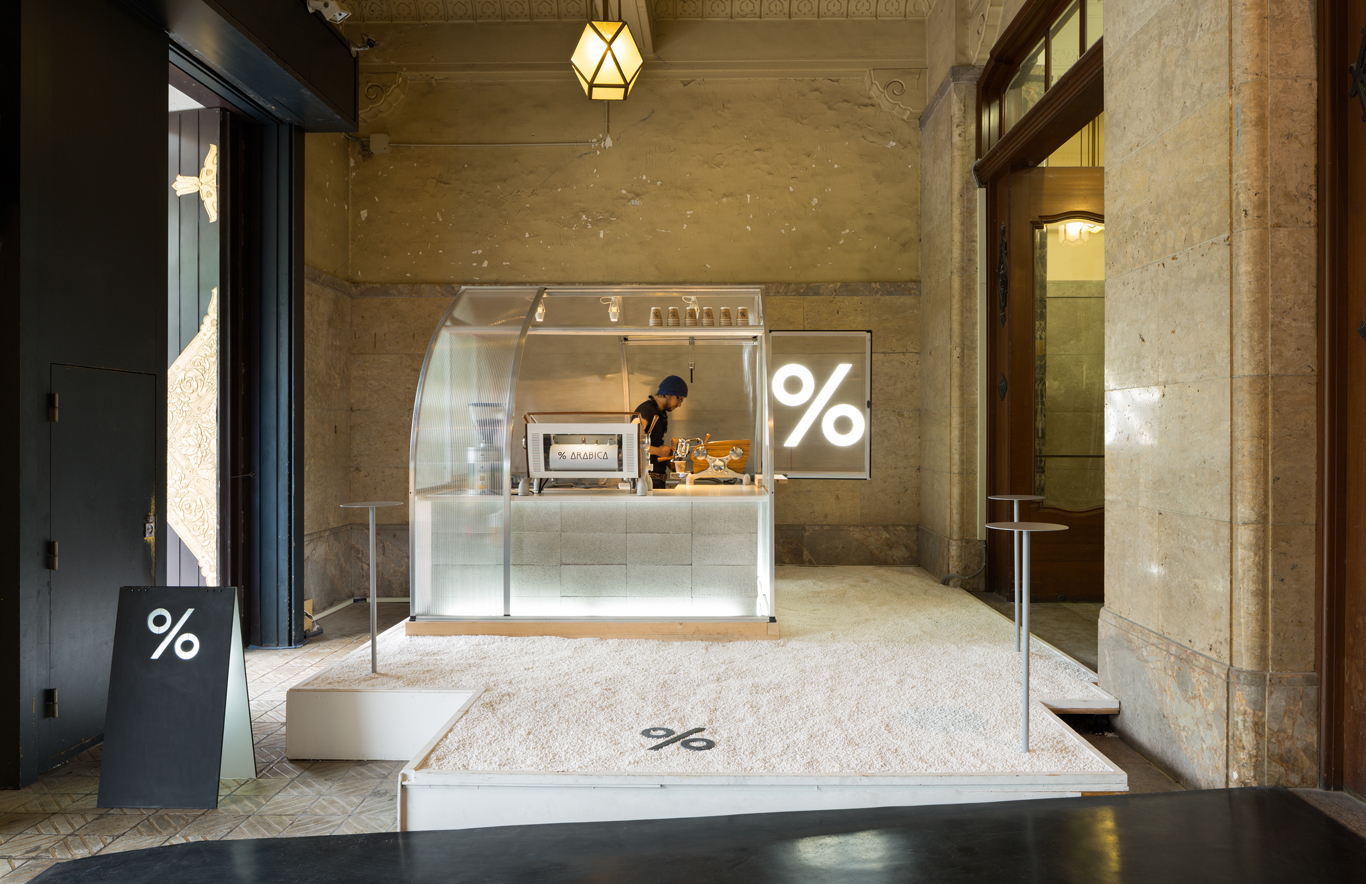
    Japanese cafe chain % Coffee is preparing to launch new locations in China and Hong Kong. The business is planning to open its fourth Hong Kong store at Monster Mansion in the middle of next month, its 27th location worldwide. Meanwhile, the franchise’s head roaster Takahiro Uemisha is stationed in Shenzhen preparing for the opening of three locations in the city, scheduled to open within the coming months.

    Shanghai will see two % Coffee stores emerging in Xintiandi and Fangsuo Bookstore. Both locations are being designed by the brand’s new architect Alexis Dornier.

    The Kyoto-headquartered coffee chain is preparing to open its first store in Singapore as well as plotting expansion into Indonesia, Malaysia and India.

    With its slogan “See the world through coffee”, % Coffee has built a strong following via social media. As well as its Asian foray, the company has outlets in Germany and several Middle East markets, with plans for France, Morocco and Canada.

    The Japanese cafe chain was founded in 2014 by Japan-born Kenneth Shoji who grew a love for the beverage while studying in California.

  • Saigon cafés, restaurants facing the heat for accepting Bitcoin payments

    Saigon cafés, restaurants facing the heat for accepting Bitcoin payments

    Authorities in Ho Chi Minh City will be working with the country’s central bank to “handle violations” at several restaurants and coffee shops in the city that have been accepting Bitcoin as payment, an official from the bank said on Tuesday.

    Nguyen Hoang Minh, deputy director of the State Bank of Vietnam’s Ho Chi Minh City branch, maintained that virtual currencies such as Bitcoin are illegal, and the issuance, provision and use of Bitcoin violates the rules.

    Several coffee shops and restaurants in the city have been accepting Bitcoin as payment so the municipal administration has agreed to cooperate with the central bank to deal with these violations, Minh told a meeting with the central bank’s deputy governor Dao Minh Tu.

    “We have also asked the city’s police department to work with us.”

    The heaviest punishment for using cryptocurrencies in Vietnam is a fine of VND200 million ($8,800).

    However, we found a restaurant in District 1 that allows customers to pay for their drinks and pizzas using Bitcoin.

    A staff there said customers only need a Bitcoin code to pay for their meals, adding that this method is more beneficial for the restaurant because Bitcoin payments do not appear on tax declarations.

    Prices at the restaurant follow the current value of Bitcoin on the world market, which was $16,500 on Wednesday.

    The value of the cryptocurrency has been rising rapidly this year, reaching an all-time high of $19,783 on Sunday, an increase of 20 times compared to January.

    The heat that Bitcoin has created globally has been felt in Vietnam, and 1,478 pieces of hardware were imported into the country to “mine” for the currency in the first ten months of this year, according to official government data.

    As explained by Business Insider and Investopedia, the process of mining Bitcoins involves miners solving complex mathematical problems, and the reward is more Bitcoins generated and awarded to them.

    The participant who solves the puzzle first gets to place the next block on the block chain, a public ledger that records all Bitcoin transactions, eliminating the need for a third party to process payments, and claim the rewards.

    Miners verify transactions and prevent fraud, so more miners equals faster, more reliable and more secure transactions. According to current Bitcoin protocol, 21 million coins is the cap and no more will be mined after that number has been reached.

    Yet as currently regulated, the hardware imported into Vietnam for Bitcoin mining is not prohibited.

    In October, the central bank issued a statement saying that “from January 1, 2018, the act of issuing, supplying or using illegal means of payment may be subject to prosecution in accordance with the provisions of Article 206 of the Penal Code 2015.”

    The only payment methods allowed in the country are issued or controlled by the State Bank.

    The central bank has warned organizations and individuals in Vietnam not to invest in Bitcoins or conduct transactions in the currency, saying they would be taking a huge risk with no legal protection.

    “Bitcoin transactions are anonymous and can be used for money laundering, drug trafficking, tax evasion and illegal payments,” the bank said.

    Also in October, Vietnam’s top technology university FPT said it was looking at ways to let its students pay their tuition fees using Bitcoin.

  • A Permanent Pokemon Cafe is Coming to Japan

    A Permanent Pokemon Cafe is Coming to Japan

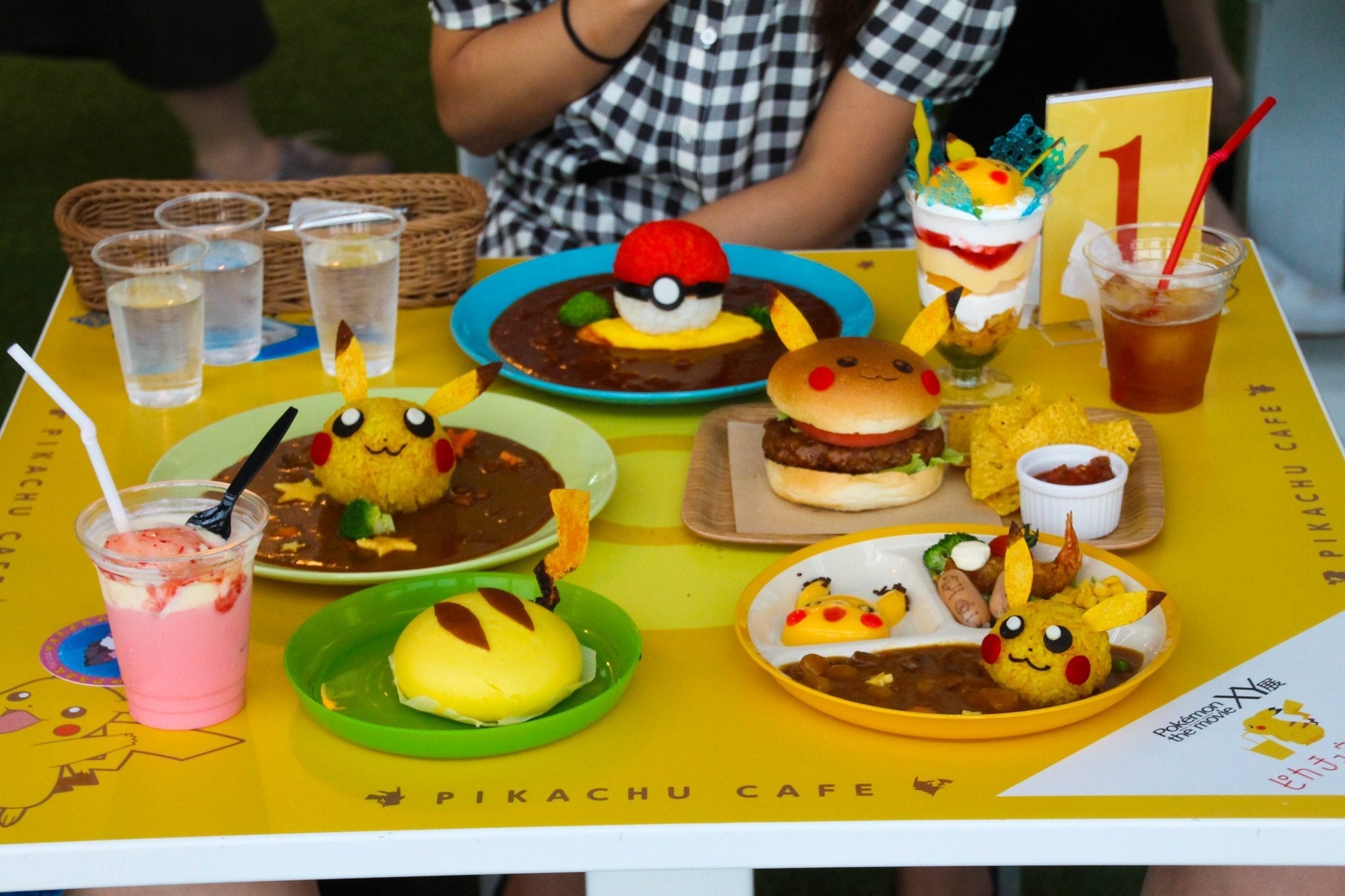
    Tokyo is getting the first ever permanent Pokemon Cafe. The Pokemon Company International announced that a new Pokemon Center “DX” retail store was opening up in the Takashimaya Nihombashi, an upscale department store in Japan. One of the main draws for the new retail center is that it will also have a permanent Pokemon Cafe restaurant, which will serve Pokemon-themed dishes to shoppers and tourists.

    Pokemon Center stores are usually big draws in Japan, as they have just about every kind of Pokemon goodie imaginable. From specialty plushes and figures to clothes and even stationary, the Pokemon Centers are major retail attractions all around Japan.

    Typically, Pokemon Cafes are pop up restaurants that only exist for a few months at a time. Both Japan and Singapore have hosted Pokemon Cafes before, but this is the first time that a Pokemon cafe is putting down roots.

    The new Pokemon Center DX and Cafe is expected to be a major tourist attraction when it opens in Tokyo next year. Tokyo already has three Pokemon Center stores, including the massive “Mega Tokyo” location. The new Pokemon Center DX will be the twelfth Pokemon Center store in Japan, each of which has its own mascot Pokemon and specialty merchandise.

    The Pokemon Center and Cafe will open on March 14, 2018, so start planning your Tokyo vacation now.

  • Harry Potter cafe opens in Mong Kok

    Harry Potter cafe opens in Mong Kok

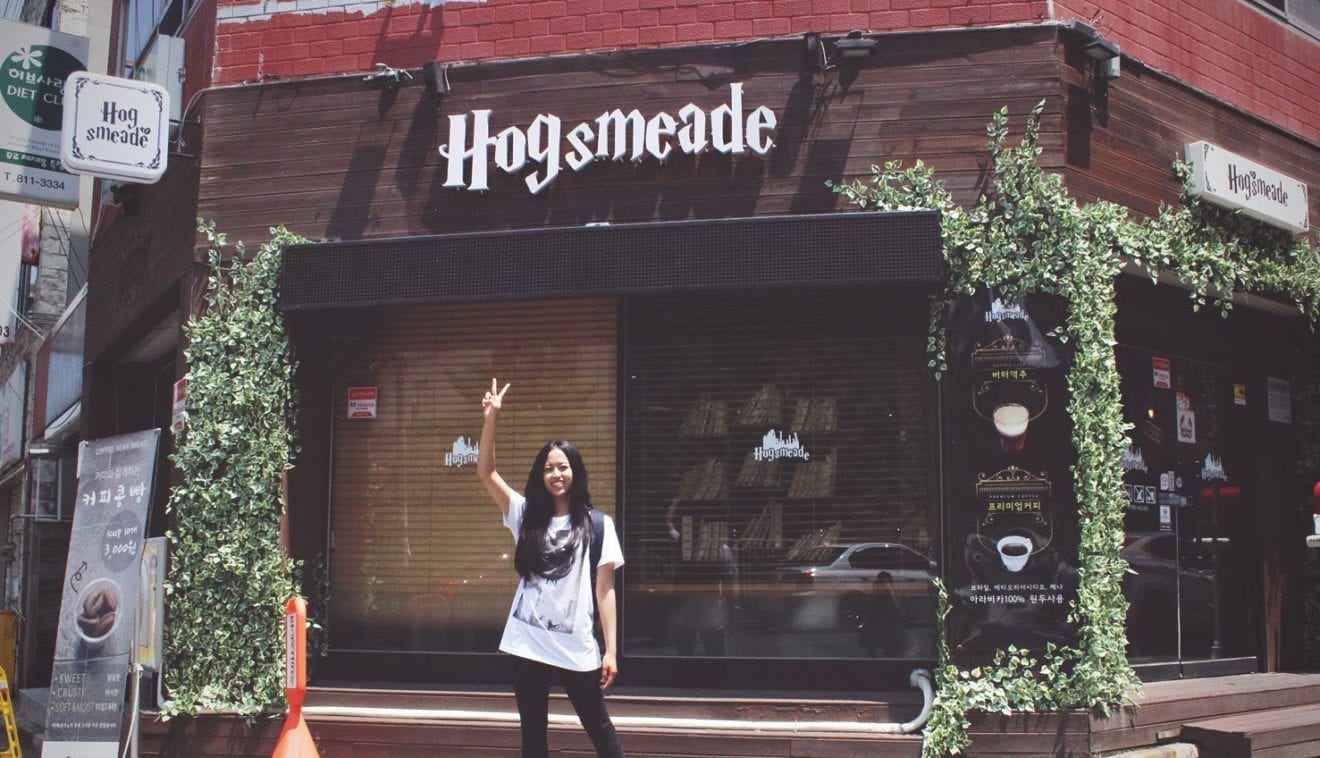
    A Harry Potter cafe has opened in Hong Kong, named 9¾ Cafe after the hidden Hogwarts Express platform at King’s Cross Station in London.

    On Yin Chong Street in Mong Kok, the cafe features wall-mounted wands and broomsticks, stuffed owls, portraits of witches and wizards, and candlelight (electric).

    There is even a half-disappearing luggage trolley, as featured at King’s Cross Station, complete with Hedwig in a cage.

    On the drinks menu are some Harry Potter-specific concoctions, such as the Polyjuice Potion, Amortentia love potion, golden Felix Felicis (aka “liquid luck”), and Veritaserum. Visitors 18 years and older can down a pint of Butterbeer.

    For food, the cafe serves Western starters and mains named after mythical creatures and charms from the Harry Potter series, such as the soft-shell crab Aragog salad, Romanian longhorn pumpkin pasta (after one of the dragons from Goblet of Fire), and Prior Incantato cream of mushroom soup.

  • McDonald’s USA revamps McCafe

    McDonald’s USA revamps McCafe

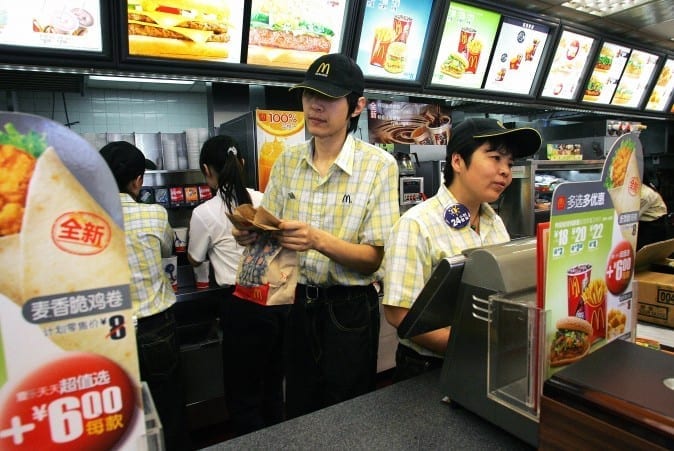
    McDonald’s USA has revamped its McCafe brand, introducing new imagery and new beverages.

    Originally launched in Australia in 1993, the coffee concept has been rolled out in an increasing number of markets internationally in recent years but had traditionally underperformed in McDonald’s home country.

    Now, president Chris Kempczinski believes he can change that.

    “This is just the start of our McCafe commitment. We understand how important the coffee culture is for consumers and we are committed to meeting that demand at the taste, convenience and value only McDonald’s can offer,” he said, announcing the relaunch.

    “This is a central part of our growth strategy and we can’t wait to share what’s next.”

    McDonald’s UAS will now offer cafe-quality espresso beverages and an expanded retail offer in its McCafe stores across the country.

    An expanded menu now includes Caramel Macchiato, hot or iced; Cappuccino, with French Vanilla, caramel or hazelnut flavours, and fresh-brewed Americano. For a limited time, all small-sized beverages will be offered at US$2 a cup.

    Early next year, McCafe will expand its retail presence by partnering with The Coca-Cola Company to introduce a line of bottled, ready-to-drink McCafe Frappe beverages in three flavors: Caramel, Vanilla, and Mocha.

    New image

    In addition to the menu additions, the refreshed McCafe look will include a new brand logo and packaging McDonald’s says will evolve with the seasons. McDonald’s will also begin transitioning to an updated and expanded McCafe presence in-restaurant with a sleek, modern look in 2018 as part of its evolving ‘Experience of the Future’.

    “Our new McCafe beverages start with 100 per cent Arabica beans that are freshly ground and skillfully made on demand,” said Chef Dan Coudreaut, VP culinary innovation, with McDonald’s USA.

    As part of the upgrade, McDonald’s has introduced new coffee makers, “allowing for the new espresso-based beverages to be handcrafted with a consistent, flavourful taste” in nearly all of McDonald’s USA’s 14,000 restaurants.

  • Mango Tree Cafe Hong Kong opens another outlet

    Mango Tree Cafe Hong Kong opens another outlet

    Mango Tree Cafe Hong Kong has opened another outlet – this one at Yoho Mall in Yuen Long. It is the second of the chain’s cafe-restaurants to open this year, the earlier one at Taikoo Shing in January. The Hong Kong cafes are run in partnership with 1957 & Co, however it is difficult to ascertain the exact size of the chain. The brand’s Hong Kong website is still “under construction” and its Facebook page refers to a single cafe in Tsim Sha Tsui. Another outlet at Causeway Bay appears to have closed down.

    The new Yoho Mall site features a rainforest-inspired interior, and an exclusive menu including Thai classics such as curries and pad thai.

    Meanwhile, the Thai brand is planning to expand worldwide. It initially found success in Japan, where it has 11 locations including six cafes in Tokyo. It also has an outlet in Macau.

    Its cafes are designed specifically for shopping malls, says Mango Tree Restaurants global MD Trevor MacKenzie. The company also has plans to expand its restaurant concept in international airports, building upon the success of its two initial outlets at Bangkok’s Suvarnabhumi Airport.

    Worldwide, the company has 66 outlets across various brands, including 13 Mango Tree flagship restaurants, 14 Mango Tree Cafes, six Mango Tree Kitchens, five Mango Tree Bistros and two Mango Tree Delis, plus Mango Chili. The company also runs 24 Coca Restaurants.

  • Blockland Lego cafe takes constructive approach

    Blockland Lego cafe takes constructive approach

    A new cafe in Chiang Mai, Blockland Lego, has nearly 200 sets of the building blocks for customer use. Paying THB140 (US$4) an hour, customers of all ages can build the Lego masterpieces of their dreams. The cafe provides the more expensive sets including those featuring Marvel Comics superheroes and Star Wars (its Death Star collection comprises more than 4000 pieces and retails at more than THB16,000).

    Blockland Lego owner Taewon Park, a South Korean expat, says he decided to open the business in Chiang Mai following the popularity of Lego cafes in his country. He was also inspired by his nieces and nephew, who are Lego fans.

    His shop, in Ruamchok Mall, also hires Lego enthusiasts as workers, who can help customers with their constructions by request.

    “There are 194 Lego sets in my shop,” says Park, who is buying another 75.

  • Alibaba cafe without cashier attracts queue

    Alibaba cafe without cashier attracts queue

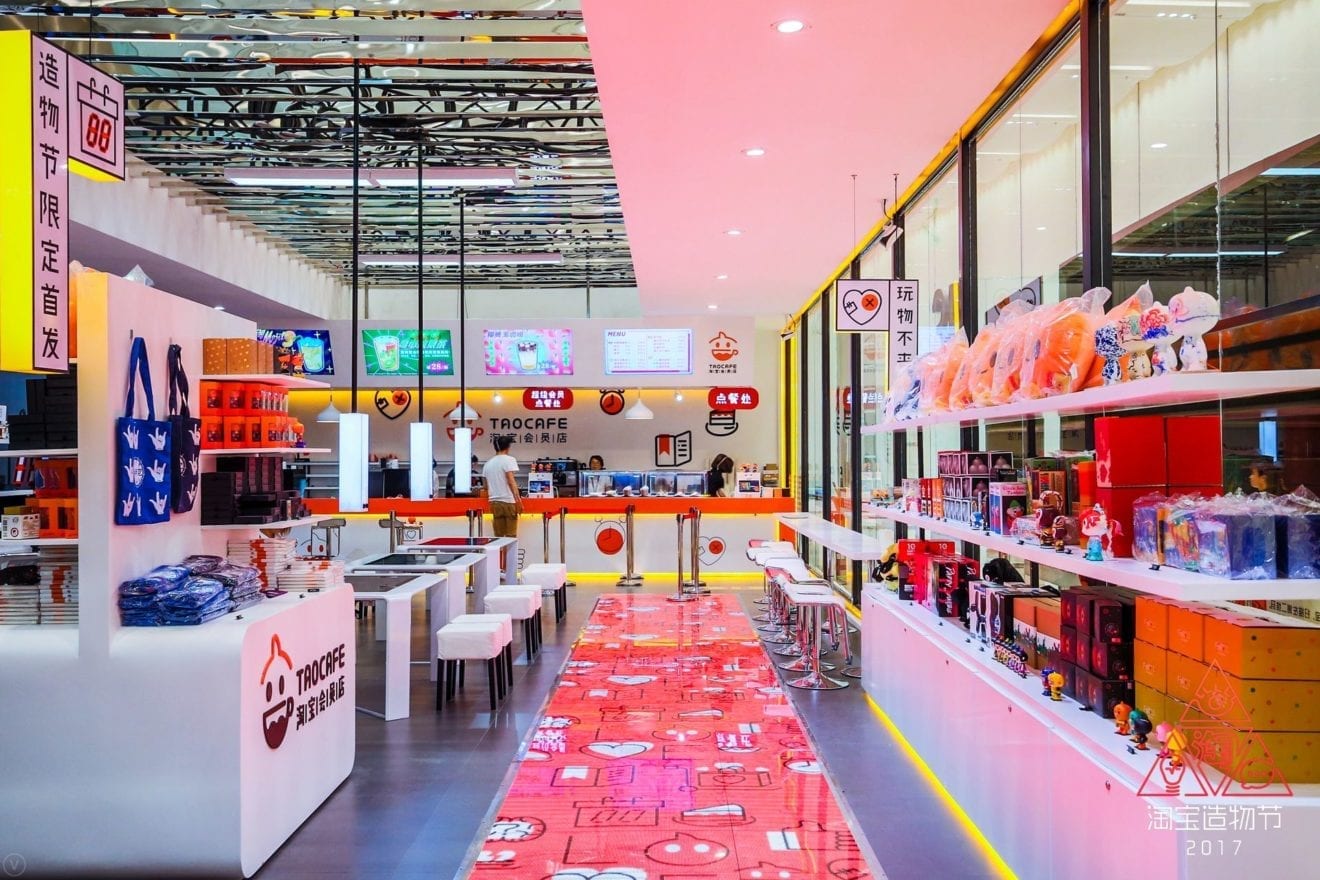
    An Alibaba cafe without a cashier attracted a queue of shoppers for its opening in Hangzhou. Entry into Tao Cafe is via smartphone scan through ticket gates similar to those at subway stations.

    Offering drinks, fast food and snacks, the 200 sqm store can accommodate 50 customers. To enter and make a purchase, shoppers need only a smartphone with Alibaba’s Taobao e-commerce app. The store’s e-shopping system developer, Alibaba subsidiary Ant Finance, has assigned a team to help customers.

    A woman shopper says she enjoyed the experience of buying a cup of coffee in the store. “Your profile picture is shown on the screen after you place an order. It also shows the wait time. There is no hassle of waiting for your name to be called like in ordinary cafes.”

    A tourist from Shenzhen says helpers told him to pick up goods slowly from the shelf so the system has time to confirm his selection. “We need to learn – it is a whole new shopping experience.” As he walked out of the cafe, his bill was automatically paid via the e-payment account on his smartphone.

    Ant Finance senior technical advisor Zeng Xiaodong says the cafe combines automated visual sensors and facial recognition to reduce error rates.

    All goods in the cafe are digitalised, he says. Each commodity, its placement on the shelf and its purchase are subject to digital recognition.

    “This store is our endeavour to explore new modes of brick-and-mortar retail combined with e-commerce,” says Alibaba CEO Zhang Yong.

    Theft test

    The system has been tested by technicians pretending to steal items, but the checkout machines recognised their selections and processed the charge.

    “It’s not about Alibaba wanting to open cafes, it’s about digitalising the footprints of visitors to an offline store,” says Alibaba Group chief marketing officer Chris Tung.

    He says offline retailers can improve by adopting online data capabilities to link the identity of the customers and optimise their shopping experience. “The more a user browses, the better the system understands their interests, and the better it can provide more relevant and personalised messages for them – it’s a healthy cycle.”

    Once retailers understand what their customers need online, the products can be allocated to the physical store.

    “The cafe is just a demonstration of what can be done for retail,” says Tung.

    Smart shopping has attracted attention after an unmanned 24-hour BingoBox convenience store opened in Shanghai last month. Customers must register in advance using social-media app WeChat or Alibaba’s mobile wallet app Alipay, then scan a QR code to enter the 10 sqm store, where goods are about 20 to 30 per cent cheaper than those in other convenience stores.

    Once customers have completed their purchase they scan another QR code to exit the store.

    BingoBox has raised US$15 million in funding to expand its business, and says only four staff members are needed to run about 40 stores.

  • Foreign cafes’ struggle in Vietnam

    Foreign cafes’ struggle in Vietnam

    Australian-owned Gloria Jean’s Coffees recently decided to close its last store in Vietnam, ending a 10-year stint in Hồ Chí Minh City and Hà Nội due to slow expansion, high rents and an unsuitable business model.

    Gloria Jean’s Coffees arrived in the country in 2006 after a local firm signed a franchise contract with it expecting the business would develop well like it did in Thailand and Malaysia.

    This was based on the fact that the chain served Arabica coffee, a relative novelty in Việt Nam where the robusta bean rules.

    Việt Nam, the world’s number two coffee producer after Brazil, is known to have one of the fastest growing coffee retail markets, along with Indonesia, Turkey and India.

    However, the Australian coffeehouse chain was only able to open six outlets in Hồ Chí Minh and one in Hà Nội in the first six years.

    Nguyễn Phi Vân, the first franchisee of Gloria Jean’s Coffee in Việt Nam, told that the demise was due to the adoption of a business model that had been developed in Australia for the local and regional markets.

    Later on, even after Gloria Jean’s Coffees International allowed its franchise in Việt Nam to make some changes to its products to adapt to local people’s tastes, the going remained really tough due to many reasons including fiercer competition from both foreign and domestic rivals like Starbucks, The Coffee House, Phúc Long, Urban Station, and Trung Nguyên.

    Gloria Jean’s Coffees is not the only foreign cafe whose business has failed in Việt Nam.

    Last year New York Dessert Café (NYDC) said goodbye to its customers in Việt Nam via its Facebook page, promising to “return someday.”

    Brought to Việt Nam in 2009 by a Singapore Group, NYDC used to be one of the most popular foreign coffee chains in HCM City. It had expected to open 20 outlets in Việt Nam.

    What when wrong for the foreign cafés?

    Many coffee industry insiders said in the food and drink sector, the coffee area in particular, it is not easy for foreign players in Việt Nam even if when they have famous brands.

    Some foreign coffee chains serve normal customers in their native countries but only affluent ones in Việt Nam.

    Because of this they often choose prime locations in major cities for their shops, meaning very high rents and skyrocketing overheads.

    Not surprisingly, their prices are often two or three times the prices at local cafes.

    The attractiveness of foreign coffee products is also affected by their localisation: some beverages are made under foreign formulas but with domestic materials, meaning they do not seem “authentic” and put off foreign customers in Việt Nam.

    However, locals too do not enjoy coffee made using foreign formulas and prefer local cafes.

    The increasingly fiercer competition is another important factor contributing to the foreign coffee chains’ failure.

    Market observers pointed to the increasing dominance of affordable local coffee chains like Passio Coffee, The Coffee House, Phúc Long, Highlands Coffee, Urban Station, and Trung Nguyên.

    These have also intensified investment in design and décor to give foreign cafes a run for their money in terms of looks.

    Besides, customers there can get comfort foods that foreign cafes do not have such as phở (phở), bún (vermicelli soup), bread, hủ tiếu (rice noodle soup), and rice.

    But according to analysts, international coffee brands continue to be interested in the Vietnamese market.

    US chain PJ’s Coffee opened its first outlet in HCM City recently and a second within two months. It hopes to have at least 10 additional stores in the next five years.

    A spokesperson for TRG International, the franchisee of PJ’s in Việt Nam, said each shop would be different and are based on lessons from the former.

    This is also seen at Starbucks, where each shop has its own style with a specific group of customers in mind.

    Banks await debt trading market

    Banks’ bad debts now seem to be lower than in previous years. But the total amount remains high, affecting the lenders’ business as well as their goal of reducing interest rates.

    An analyst at a securities company said that as of March 31 Sacombank had the highest bad debts rate, an estimated 4.89 per cent, followed by Eximbank with 3 per cent, BIDV with 2.14 per cent, and MB with 1.35 per cent.

    Data from the State Bank of Việt Nam (SBV) indicates that the banking sector’s bad debt rate as reflected in balance sheets is under 3 per cent.

    Some banks may however have significant amounts of off-balance sheet assets and liabilities.

    In December 2016 the bad debts reported in balance sheets, bad debts managed by the Việt Nam Asset Management Company (VAMC), and latent bad debts was around 8.86 per cent of total outstanding loans, according to the SBV data.

    The VAMC’s handling of bad debts is too slow, according to banks and many of them are looking for ways to buy back the bad debts they had earlier sold to it, hoping to settle them by themselves.

    Some of them even plan to trade bad debts.

    At shareholders meeting this year, the bosses of many lenders like VIB, OCB, VietinBank, Techcombank, MB, SCB, ACB and VPBank proposed plans to buy back most of their bad debts from the VAMC.

    Vietcombank has already bought back all its bad debts totally worth VNĐ4.3 trillion (US$184.43 million).

    Analysts said the reason for this is that sooner or later the Government would force the banks to put all their bad debts in the balance sheet instead of allowing some to be off it.

    So buying back the bad debts from the VAMC makes sense since they can keep it all in one place to make things less unwieldy.

    So why did they not take this route in the first place instead of selling to the VAMC?

    The chief of a bank admitted that the VAMC had come to the rescue of the banks in their darkest hour.

    Analysts said thanks to consigning their bad debts to the VAMC for a few years, the banks have had the time and conditions to recover enough to handle their bad debts by themselves.

    Besides, most lenders had expected the VAMC to miraculously fix their bad debts, and this had not happened, they said.

    But not all banks are capable of buying back their bad debts, only those that have low bad debt rates of under 1.5 per cent and abundant resources.

    Some also plan to participate in the debt selling and buying market.

    At its recent shareholders meeting, Vietcombank tabled a proposal to set up a debt selling and buying company for approval.

    Last week the bank got a licence from the SBV for debt trading.

    VIB shareholders also approved a plan to buy debts estimated at VNĐ6 trillion (US$264.32 trillion) from credit institutions.

    Market observers see a trend, saying many banks are keenly awaiting a debt market, which is expected to take shape soon.

    Another encouraging sign for banks is that their bad debts are becoming attractive to investors since more than 70 per cent have properties as collateral and the real estate market is recovering strongly.
  • Launch of inaugural Café Cambodia 2017 and Franchise & Licensing Cambodia 2017

    Launch of inaugural Café Cambodia 2017 and Franchise & Licensing Cambodia 2017

    Phnom Penh took center stage as the host for the inaugural Café Cambodia 2017 and Franchise & Licensing Cambodia 2017. The exhibitions mark one of largest gathering of visitors from the local business community and the region and members of the coffee industry including baristas, café and coffee purveyors, coffee roasters, equipment distributors and members of the public. Malaysia is the shows’

    Official Country Partner, supported by Perbadanan Nasional Berhad (PNS). The inaugural shows were officially opened by His Excellency Cham Prasidh, Senior Minister, Ministry of Industry and Handicraft, Cambodia. The official opening this morning was also graced by the presence of Yang Berhormat Dato’ Henry Sum Agong, Deputy Minister, Ministry of Domestic Trade, Co-operatives and Consumerism (MDTCC),Malaysia, Dato’ Sri Hasan Malek, Malaysia Ambassador to Cambodia, Yang Berbahagia Dato’ Sri Jamil bin Salleh, Secretary General, Ministry of Domestic Trade, Co-operatives and Consumerism, Malaysia and His Excellency, Mr Pak Sokhom, Secretary of State, Ministry of Tourism, Cambodia.

    Franchise and Licensing Cambodia 2017 and Café Cambodia 2017 offer exhibitors and participants a hub and a B2B platform for key decision makers to source for new business opportunities and explore new collaborations. Franchise & Licensing Cambodia 2017 will showcase well known Asian and international brands in various industries such as F&B as well as the educational and services sectors.

    This hub also serves the industry as a source for café supplies and equipment to cater to the demands of the rising number of specialty coffee drinkers. The show will gather coffee and tea industry players showcasing products such as coffee beans, specialty coffee, specialty tea and beverages, juices, coffee machine, roasting machines and equipment.

    Cambodia has enjoyed steady economic growth in the last two decades. This growth, the favourable investment climate, supportive infrastructure, the presence of established banking and financial institutions and a large domestic consumer market of 16 million population are important reasons why the two shows are timely and will be well received as Cambodia has been attracting an increasing number of international franchise brands and operators especially those in the food and beverage business.

    Café Cambodia plays host to the Cambodia National Barista Championship (CNBC) presented by Gourmet Beverage Solutions (GBS). This inaugural championship brings together Cambodia’s top baristas to showcase their talents and compete for the coveted title of National Champion. The competition focuses on promoting excellence in coffee and seeks to advance the barista profession regionally and globally.

    Positioned as the perfect place to meet coffee professionals of Cambodia and the ASEAN region and to understand the growth of Asia’s franchise, licensing and coffee industries under one roof, the shows boast of a comprehensive programme for visitors who can look forward to learn from franchising and licensing experts, attend an exciting line-up including live presentations, demonstrations and workshops on every aspect of the coffee, tea, gelato and baked goods industries. There is also an extensive range of specialty coffees and teas from around the world to sample. The 3-day exhibition will also be teeming with networking and business opportunities for trade visitors who are looking to elevate their business aspirations. Franchise & Licensing Cambodia exposition offers abundant opportunities for entrepreneurs and prospective franchisees to meet face to face with representatives of international brand concepts across various industries.

    Café Cambodia and Franchise & Licensing Cambodia are co-organized by Conference and Exhibitions Management Services (CEMS) with CamGlobe Business & Investment Consultancy, and are supported by the Cambodia’s Ministry of Commerce, the Ministry of Industry & Handicraft, and the Ministry of Tourism.

    Franchise and Licensing Cambodia is supported by Asiawide Franchise, Cambodia Franchise Association and World Franchise Associates. The Cambodia National Barista Championship is presented by Gourmet Beverage Solutions.

  • Growing Internet café lures Chinese company

    Growing Internet café lures Chinese company

    Chinese computer-peripherals firm Shenzhen Rapoo Technology (Rapoo) is penetrating the growing local Internet Café (iCafé) sector to secure a dominant position in the market.

    The iCafé business is a growing industry here, according to Rapoo Philippines Retail Sales Manager Lem Estiva.

    “A lot of well-known i Cafes, like The Net.Com (TNC) and WarGods, have started expanding and actually franchising,” Estiva told the BusinessMirror on the sidelines of the company’s gaming peripherals launching in early April. “So it’s really a growing business.”

    He said the growth prompted the firm to introduce its gaming peripherals in Manila. He added the series of gaming peripherals they brought into the local market are categorically divided for two types of markets: retail and iCafés.

    “We have entry-level gaming peripherals targetting basically the iCafés for that,” Estiva said. “Meanwhile, the midrange and high-end level —that would be for personal use—target the retail market.”

    A little late

    ESTIVA disclosed they tried to reach out to some of the big local iCafés, including TNC and Mineski Corp. for possible partnerships. However, Estiva said they were a little bit too late.

    “We’ve been communicating with them, I guess for the last several months,” he said.

    Estiva added there was discussion before at the possibility of Rapoo being an original equipment manufacturer for TNC.

    “We provide them the products and have them rebrand it,” Estiva said. “Apparently, we came in a little too late.” Estiva, however, said they are “very hopeful” they can “eventually find other partners”. The Rapoo executive said they are also planning to form their own local eSports team before the year ends.

    “That’s one of our plans this year. I have quite a number of [team] names in my head,” Estiva said. “But I’m keeping them a secret.”

    Since 2014 Rapoo has been signing with teams and athletes, mostly from China, in various eSports titles, including “League of Legends” and “Dota 2”.

    Estiva said some of the iCafé operators already have First-Person Shooter and Dota 2 teams.

    “Usually they discuss with sponsors during the last quarter of the year about partnerships,” he said. “And we just came in the second quarter of this year.” Estiva said he expects the sponsorship by Rapoo starts next year.

    Peripherals

    Rapoo, which has market capitalization of $1.1 billion, began selling in the Philippines a series of wireless mice and keyboards in 2013.

    Last month the company has brought into the country its gaming peripheral series under a subbrand called “VPRO”.

    It is selling two gaming headphone models, which costs P1,515 and P2,945 each. Rapoo has four models of mice to cater to Filipino gamers with prices ranging from P1,245 to P2,190. Three of the four models are for entry-level users that are designed for ambidextrous gamers.

    For its gaming keyboard series, Rapoo VPRO brought nine different models in the Philippine market with prices ranging at a low of P1,265 and P6,730.

    Different league

    ACCORDING to Estiva, the company has an edge against competitors because of its pricing structure. “There are competitors, but we are on a different league. Some of them would be very expensive and for a new brand in the local market, we must have something different to offer on the table,” he said.

    Estiva said Rapoo is “very comparable in terms of design and durability with a very popular [brand].”

    “But it’s competitor’s product expensive,” he said. “So we come up with something similar but with an affordable price.”

    Estiva said Rappoo offers customers a direct product replacement if the products bought were deemed defective within its one-year warranty period.

    Estiva said Rapoo has its own dedicated research and development (R&D) team to ensure their products are of high quality—a way to defy the common Filipino notion that China-made products are substandard ones.

    “That’s why we have an R&D team to check all the products, because we know the reputation [here] of made in China products,” he said. “And because we are competing with other brands who have been in the business for years, we are not going to grow, or worse, we are going to die if we don’t actually provide very good products to the public.”

    Estiva said Rapoo aims to have its brand to be known as “something that would live for a long life”.

    Top three

    AT present Rapoo has two authorized distributors of its products in the Philippines: Techtron Systems Corp. and Philteq Enterprise Inc., according to Estiva. He said a third distributor is currently out of the question, as it could affect the retail price of Rapoo products in the market.

    “Probably the two distributors are enough. Because in the case of Techtron, they handle pretty much the bigger types of resellers and then Philteq would handle the growing ones or those in the mobile business,” he said.

    “So, I think we have pretty much a good balance with those two distributors. Having three would probably create a price war with the resellers,” he added.

    Rapoo Regional Sales Director Johnson Zhang said Rapoo is top three in the Philippine market, traling behind Taiwan-based firm A4Tech Co. Ltd. and Swiss company Logitech International SA. “We are trying our best to get more market share in the market,” Zhang told the BusinessMirror.

    Rapoo Philippines Country Manager Aileen Chua said the company’s revenue from the local market grew by 30 percent in 2016 from 2015. However, Chua did not disclose the company’s top line in the previous fiscal year.

    Plans

    Even with a 30-percent growth, Chua said she sees Rapoo could still perform better in the country, as much of their sales operations are focused in Luzon, particularly in Metro Manila.

    “We feel that we have penetrated Metro Manila well. However for provincial [operations], we are kind of poor in that aspect, because we don’t have the dedicated manpower assigned in those areas of the Visayas and Mindanao,” she said. “Hopefully, this year we could put up some people there who can help us promote the brand.”

    Zhang said the Philippines stands out compared to other countries in the Asia-Pacific region where Rapoo distributes its products.

    “The Philippines is performing quite good compared to most of the countries [where Rapoo is]. It performed very well,” Zhang said. “I think it’s because we have a very strong local team, and because of our quality products and cost-effective performance.”

    Estiva added the Philippines is better than other countries where Rapoo distributes its products in terms of sales target, revenue and market visibility.

    Zhang said Rapoo is currently developing its first wireless mechanical keyboard to be at par with other competitors. He said the company plans to launch it by the end of the year.

    “A lot of other brands are developing wireless gaming [peripherals], so we are also developing the same.”

    Estiva added the firm also plans to introduce in the country its product line for unmanned aerial vehicles or commonly known as a “drone”. According to him, the company has already introduced its drone called “Xiro” in the world market.

  • Thai specialty coffee growers tip cafe boom

    Thai specialty coffee growers tip cafe boom

    Despite many cafes closing in the past year, the Thai coffee-shop business is expected to grow 15 to 20 per cent this year.

    According to specialty coffee growers, the growth will be driven by the country’s economic improvement and higher demand from coffee drinkers.

    Specialty Coffee Association of Thailand (SCATH) president Apicha Yaemkesorn says coffee shops can be easily opened on every corner in Bangkok and major provinces, and more will be seen as there are many new offices and condo buildings.

    “The growth can also be expected to spread into small provinces and towns in the near future.”

    Fewer than 10 per cent of Thais drink coffee, and those who do drink about 1.2 cups a day on average, compared with three cups a day for American coffee drinkers.

    While about 30 to 40 per cent of coffee shops closed last year, the number of new entrants increases every year.

    Apicha says that opening a coffee shop is not hard in Thailand as only a small budget is needed and coffee makers are inexpensive. “It is an ideal business for new entrepreneurs, but many of them have lack knowledge about coffee and cafe management skills.”

    This year Thailand is projected to have a 15 per cent rise in arabica coffee planting areas in the north and a 5 per cent increase in robusta planting areas in the south. Rubber and palm growers in the south have turned to growing coffee because of low prices for rubber and palm oil.

    Coffee beans can be harvested about three or four years after planting, says the Office of Agricultural Economics.

    Apicha estimates the longer droughts in Thailand will reduce the supply of local arabica coffee beans to 7000 tonnes this year from 9000 tonnes last year, while robusta coffee beans will total 15,000 tonnes, down from 17,800 tonnes.

    Arabica coffee beans are priced at about 180 baht (US$5.10) a kilo in Thailand and 80 to 90 baht/kg for robusta.

    Volatile climate change and longer droughts are pushing Thai coffee bean prices higher than in Cambodia, Laos, Myanmar and Vietnam, which see prices around 95 to 105 baht/kg.

  • Many ‘Firsts’ at SEA’s Largest Coffee Tea and Bakery Event

    Many ‘Firsts’ at SEA’s Largest Coffee Tea and Bakery Event

    Visitors to the Café Asia 2017, International Coffee & Tea Industry Expo (ICT) 2017 and Sweets & Bakes Asia 2017 will witness several ‘firsts’ at the 5th edition of the international coffee show and 4th edition of the annual gathering of bakers here, including the inaugural Tea Masters Cup Singapore and the first-ever Singapore Coffee in Good Spirits Championship.

    The concurrent shows mark the largest gathering of the tea and coffee industries in Southeast Asia and celebrate the vibrant café scene in Singapore. The organiser will welcome more than 150 exhibitors from 20 countries to the comprehensive one-stop showcase of innovations and technologies in all things coffee, tea and baked goods when the shows open on March 2, 2017 at the Marina Bay Sands Expo and Convention Centre. Some 11,000 baristas, café and coffee purveyors, coffee roasters, tea and baked ingredients suppliers, equipment distributors and members of the public are expected to converge at the region’s largest coffee, tea and baked goods event.

    From the traditional kopi-O to a cup of perfectly-brewed espresso, Singaporeans’ love affair with coffee is undeniable. With rising affluence, appreciation of coffee as an artisanal foodstuff, like wine, has grown in sophistication. It is therefore not surprising to see more cafes serving a variety of cold brews and drip coffees concocted using the latest technology and equipment.

    Similarly, the demand for baked and pastry goods is being driven by changing lifestyles globally, fuelling market expansion and demand for gourmet baked goods.  Bakers are also challenged by the appetite for healthier fortified baked products.

    The Café Asia series has established itself as Southeast Asia’s trade and consumer event dedicated to the café and teahouse communities. It brings together café and teashop owners, managers, importers, exporters, distributors and suppliers of machinery, equipment, and raw materials. It is a dynamic B2B platform for the sourcing and buying needs of key decision makers and for them to explore new opportunities for collaboration and distribution of new products.

    Concurrently, the International Coffee & Tea Expo 2017 serves as a springboard for local and international industry players to tap into Asia’s huge market potential, and for them to gain in-depth insight of the latest market trends and developments. The platform also offers them opportunities to raise brand awareness and to forge strategic business contacts among key suppliers, industry buyers and exhibitors.

    The fourth edition of Sweets & Bakes Asia showcases a range of products and services for the baking and confectionery industries’ supply chain, from machinery to equipment, to ingredients and packaging. It serves as a one-stop hub for baking and confectionery industry professionals to source for suppliers and vendors, to explore business opportunities, as well as to stay up-to-date with the latest innovations and developments in the industry.

    The concurrent events boast of a comprehensive programme for visitors who can look forward to an exciting line-up including live presentations, demonstrations and workshops on every aspect of the coffee, tea and baked goods industries. There is also an extensive range of specialty coffees and teas from around the world to sample. The 3-day exhibition will also be teeming with networking and business opportunities for trade visitors who are looking to elevate their business aspirations.

    The line-up of programme has also been designed to offer insights on the latest trends for the cafe industry. This includes an exploration of exotic coffee and tea from Rwanda, ‘Rwanda Coffee & Tea: Shift from Quantity to Quality’, a demonstration on the art of making gelato in ‘The Craft of Gelato/Ice Cream Making and Demonstration of Fun Flavours’ and a case-study presentation on ‘Starting a Café in a Coffee Producing Country: Example of Laos’.

    Visitors can also embark on a Coffee Education Tour to learn from a panel of experts on the importance of coffee beans selection, how coffee beans are roasted, on what makes a good coffee machine and how the choice of milk can determine the quality and taste of the brew.

    Aspiring baristas, brewers, latte artists and bakers will be fascinated by the competition standards of the seven National Championships hosted by the event. New to this year’s edition are two competitions held to celebrate the art of tea-brewing and the art of mixology. The inaugural Tea Masters Cup Singapore will see local tea specialists demonstrate their skills in different ways of working with tea, with three judging categories namely, Tea Preparation, Tea Pairing and Tea Tasting. The first-ever Singapore Coffee in Good Spirits Championship promotes innovative beverage recipes that showcase barista’s mixology skills and creativity in illustrating the harmony of coffee and alcohol. The winners of these championships will proudly represent Singapore on the world stage at the respective championships to be held later this year.

    Returning to the event this year are the national coffee championships: Singapore National Barista Championships, Singapore Latte Art Championship, Singapore Brewers Cup Championship and Singapore Cup Tasters Championship. Watch some of Singapore’s best baristas, brewers and latte artists contend for the national titles and the opportunities to represent Singapore at the world coffee championships.

    The Singapore Bakery & Confectionery Championship 2017 attracts top bakers and confectioners to showcase their skills to create the most delicious and delightful breads and pastries. Watch these bakers from some of the best hotels and bakeries here in Singapore compete as they knead, bake and work magic with their creations into stunning displays of edible art.

    You and your camera crew are cordially invited to the official opening of Café Asia 2017, International Coffee & Tea Industry Expo 2017 and Sweets & Bakes Asia 2017 and to relish some perked-up moments at an event wholly dedicated to celebrate the vibrant cafe culture in this region. This multi-sensory event will be held at

    Marina Bay Sands

    Sands Expo & Convention Centre, Hall E

    Thursday, 2 March 2017 at 9am

    Media registration begins at 8.15am