Retail News CRM

Tag: Cainiao

  • Cainiao launches new hub in Indonesia

    Cainiao launches new hub in Indonesia

    Cainiao Group, the logistics arm of Alibaba, has officially launched its first warehouse in Indonesia as part of a regional hub expansion plan.

    Situated in GIIC Deltamas Cikarang, Bekasi Regency, east of Jakarta, the new Cainiao Cikarang Logistics Park is the third warehouse to be added to the company’s planned warehouse network of ‘chubs’ in Southeast Asia.

    The project has a total land area of 320,000 square metres and encompasses six warehouses covering 170,000 square metres. Cainiao said these ‘cHubs’ are strategically located near key transportation nodes and manufacturing hubs like Indonesia to boost connectivity to global markets.

    The Alibaba logistics unit is confident about the country’s strong potential and demand for warehousing capabilities as industry experts forecast rapid eCommerce growth and increasing customer expectations for fast and affordable deliveries.

    “The vision is for Cainiao Cikarang Logistics Park to pave the way for future full chain capabilities to support manufacturers for their logistics and trading needs, such as fulfillment and sorting for local deliveries, import and export for B2B and B2C businesses, smart supply chain management, and logistics technology such as IoT, automation and warehouse management systems,” Cainiao noted.

    Factoring in sustainability and local climate characteristics, the logistics park project also features skylights, incorporated into warehouse rooftops, as well as a natural ventilation system that will ensure a comfortable environment with energy savings in mind.

    Cainiao shared the project received strong interest from local businesses prior to the official launch and achieved a 75 percent occupancy rate. Tenants include PT Senopati Fujitrans Logistic Services (Senfu), PT SGMW Indonesia (Wuling Indonesia), CJ Logistics, Klog, Haier and Lazada. Work is underway to expand the overseas warehouse network in Thailand and Vietnam.

    “We have witnessed immense potential in Southeast Asian region and have been actively investing to expand our warehouse network in order to cater to the needs of local businesses. We are thrilled to finally announce this new warehouse, our first infrastructural investment in Indonesia and third in the region. Our strong network and expertise in logistics and supply chain capabilities will help our partners and customers in Indonesia accomplish more in less time and boost local and regional trade activities by streamlining workflows and processes across the value chain,” said Eric Xu, Vice President, Cainiao Group.
  • Alibaba To Develop Self-Driving Trucks With Logistics Unit Cainiao

    Alibaba To Develop Self-Driving Trucks With Logistics Unit Cainiao

    Chinese e-commerce leader Alibaba Group Holding Ltd plans to develop self-driving trucks with logistics subsidiary Cainiao, Chief Technology Officer Cheng Li said on Thursday.

    Cheng also said Cainiao aims to introduce 1,000 autonomous delivery robots in China over the next year.

    The announcement comes as dozens of startups, automakers, and large technology firms, such as internet search leader Baidu Inc, accelerate work on self-driving vehicle systems, which are widely expected to bring a sea change to the transportation industry.

    Other self-driving truck makers include U.S. firm TuSimple Holdings Inc, which listed shares in April.

  • Cainiao Launches Reverse Logistics Channel to Provide Cross-Border eCommerce Goods Return Service in Hong Kong

    Cainiao Launches Reverse Logistics Channel to Provide Cross-Border eCommerce Goods Return Service in Hong Kong

    Cainiao Smart Logistics Network, (“Cainiao Network”), the logistics arm of Alibaba Group Holding Limited, today announced the launch of its reverse logistics channel to offer cross-border eCommerce goods return service to Hong Kong customers. Approximately 85 percent of the goods bought on Alibaba’s eCommerce platforms – Taobao and Tmall, and delivered by Cainiao, will be eligible for returns within seven days. Non-returnable goods include food and health products/ supplements. There are plans to launch a direct reverse logistics channel with Mainland China in other key markets such as Singapore, Malaysia, Taiwan, Macau and Russia.

    The streamlined reverse logistics channel comprises 42 drop-off locations across Hong Kong island and a digital customs clearance system. The entire return process can be monitored in real-time by customers on the Taobao app.

    Currently, the eCommerce industry lacks a stable and cost-efficient reverse logistics channel to cater to the needs of merchants’ and Hong Kong customers due to challenges in customs clearance and cross-border logistics. Industry data revealed that the return rates in eCommerce sits at approximately 20 percent, and this figure surges to 30 percent during the holiday season. However, without a reliable goods return service, 31 percent of the customers have kept unwanted items to avoid the hassle of returning them. With an easier return experience, 96 per cent would shop with a retailer again.

    Today, goods returns form an integral part of the holistic online shopping experience, and central to good customer experience and loyalty. Therefore, we are aiming to simplify the returns process with the launch of the first reverse logistics channel between Mainland China and Hong Kong, and deliver a more seamless and fuss-free shopping experience amid the eCommerce boom. As Taobao and Tmall’s official logistics provider, we are continuously leveraging cutting-edge technology and industry partnerships to create a more efficient cross-border logistics service to benefit businesses and consumers,” says Ray Cheuk, Head of Operations (Hong Kong), Cainiao Network.

    This announcement comes after the recent launch of its delivery guarantees to provide assurance and offer protection against late deliveries, damaged and lost goods, while offering value-added services such as customer support via WhatsApp and goods returns.

  • Singles Day 2018 faces delivery challenges

    Singles Day 2018 faces delivery challenges

    Alibaba and its partner retailers will face a massive challenge ensuring flawless delivery of millions of parcels all over China and beyond given the expectations of further growth on Singles Day 2018 next week.

    “As the event grows, the logistics challenge becomes bigger and bigger,” observes retail analyst Pascal Martin, partner at OC&C Strategy Consultants.

    “During last year’s event 812 million parcels were delivered just on Tmall. Observers are betting that this year’s milestone might be more than 1 billion parcels.”

    And, says Martin, although brands don’t like to talk about it, there is also a huge challenge in taking care of large quantities of returned goods.

    “11.11 is a massive test bed for Alibaba’s backbone infrastructure: the network of partners that make it all possible, from payment to delivery to data management, as well as AI and cloud technologies that are put to work to ensure a successful event.”

    Alibaba’s Cainiao Smart Logistics Network says it has upgraded its technology to cope with the expected increased volumes from 11.11 this year. The company boasts more than 30 million sqm of warehousing worldwide and a logistics field force of more than 3 million people.

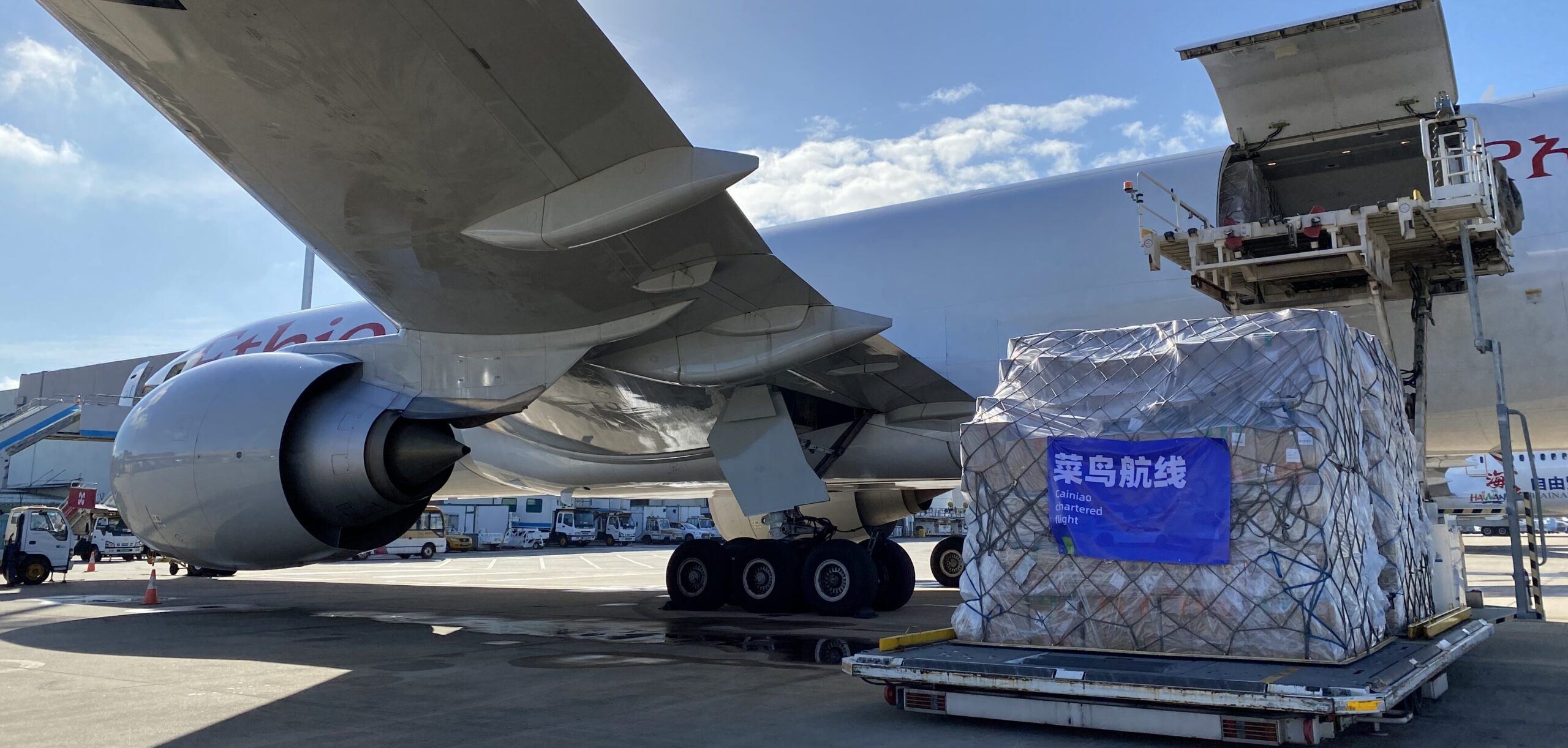
    Domestically, Cainiao has opened a new robotic warehouse, expanded its Internet of Things (IoT) systems and built out its platform’s last-mile reach. For cross-border deliveries, more than 1000 shipping containers and 51 charter planes are booked, ready to speed orders across the world.

    Cainiao VP Ben Wang says while nobody knows how many orders Singles Day 2018 will generate, the logistics company needs to keep upgrading systems, anticipating growth and seeking higher efficiency, because of customer expectations.

    “It was only five years ago that parcel orders surpassed 100 million for the first time. Back then it took nine days to deliver the first 100 million parcels,” said Wang. “Last year, it took less than three days (2.8 days) to deliver the same number of parcels. Consumers increasingly want faster, better delivery, so that’s what we’re doing. This year, we’re striving to achieve a new high, leveraging the beauty of scale and technology.”

    Delivery “within minutes”

    Cainiao’s preparations this year also reflect the changing demands of logistics in the New Retail era. For the first time, goods ordered during 11.11 will be delivered directly from stores to customers during the Festival – sometimes within minutes. Short-distance delivery services will be available in more than 280 cities.

    “Cainiao is the logistics backbone of Alibaba’s New Retail strategy,” Wang said. “We are providing an online and offline, cross-platform supply-chain solution to merchants and enabling them to cut inventory costs, while increasing operating efficiency, especially around 11.11 ­– the busiest season of the year. Ultimately, consumers will enjoy a brand-new shopping experience, as delivery service will always be on-demand.”

    Martin expects Singles Day 2018 to include more partners, not only online but also offline, leveraging Alibaba’s New Retail ecosystem. For example, Tmall 3000+ convenience stores, Hema and RT Mart supermarkets, Suning and Auchan, will be fully integrated into the event.

    The event will also be expanding beyond China through Lazada, the Southeast Asia online platform owned by Alibaba.

    “We expect to see participation of an increasing number of international brands that are taking advantage of the Tmall Global platform – number one by far among Chinese cross-border platforms – to get introduced to Chinese consumers without any direct presence in China for many of them.”

    And diversification will be another key factor in this year’s event, he says.

    “It’s not just about purchasing products, it’s also increasingly about purchasing a variety of services, from videos on Youku to mobile games on UC, theatre tickets on Taopiaopiao, music on Xiami music, travel on Feizhu, etc… All of this will not happen without challenges.”

    Yet another test, says Martin, is for Alibaba to expand the event beyond its group companies.

    “Right now, most of the non-Tmall companies participating in the 11.11 event are Alibaba Group companies. Getting non-group companies to embark on the 11.11 band wagon will be the next step to sustain continued growth of the event in future years.

    “Finally, to keep the event fresh and exciting, Alibaba will need to continue to surprise increasingly demanding Chinese consumers with entertainment and festivals to delight them around the event. 11.11 has become much more than a commercial fair, it is now a major annual milestone in China’s cultural calendar.”

    Last year’s 11.11 event saw GMV reach 254 billion RMB (US$36.6 billion) including 168 billion RMB on Tmall alone. That turnover represented a 43.5 per cent increase over the 2016 GMV.

    Singles Day 2018 will mark the event’s 10th anniversary.

  • Cainiao-led Joint Venture to Build New Logistics Hub at HK International Airport

    Cainiao-led Joint Venture to Build New Logistics Hub at HK International Airport

    Cainiao Network (“Cainiao”), the logistics arm of Alibaba Group, announced today that it will lead a joint venture to invest approximately US$1.5 billion (approximately HK$12 billion) to build a world-class digital logistics center at Hong Kong International Airport, the world’s busiest cargo airport.

    Cainiao will lead the project through its controlling joint venture with China National Aviation Corporation (Group) Limited and YTO Express. The companies hold a 51%, 35% and 14% stake in the joint venture respectively. With advanced environmental protection standards and state-of-the-art technologies, such as automated warehousing and temperature-control solutions, the center will be put into operation in 2023 with an estimated gross floor area of 380,000 square meters. It will include air cargo processing center, sorting center and order fulfilment center, among other functions. The center will handle tens of millions of parcels every year to meet the surging cross-border e-commerce needs of global SMEs, bringing an incremental cargo volume of approximately 1.7 million tonnes per annum to the Hong Kong International Airport when the center operates in full capacity, and reinforcing the city’s position as a key gateway in the global logistics chain.

    The move forms part of Cainiao’s broader effort to expand and strengthen its global logistics network. Just last week, Cainiao unveiled plans to open five hubs in five cities around the world – Dubai, Hangzhou, Kuala Lumpur, Liège (Belgium) and Moscow. The new Hong Kong hub will mark another enhancement to this network. It is also part of Alibaba’s commitment to invest more than 100 billion yuan in an efficient smart logistics network that drives 24-hour delivery in China and 72-hour delivery to the rest of the world.

    “The Hong Kong hub will be yet another milestone on our way to achieving our goal of 72-hour global delivery, and will further empower SMEs locally and globally to more readily tap the benefits of more inclusive globalization through cross-border e-commerce,” said Wan Lin, President of Cainiao Network. “The Hong Kong International Airport has been the world’s busiest cargo airport for many years. As an important gateway for global goods to enter the mainland China market and vice versa, Hong Kong is of strategic importance to Cainiao and we have a strong commitment to help the city address the surging needs of the future.”

    Cainiao already has three Global Fulfillment Centers in Hong Kong which are operated by its partners. As well, Cainiao opened an airfreight route between Hong Kong and Belgium last month. This is its second such international airfreight route specially for e-commerce parcels following the opening of its HangzhouMoscow route earlier this year.

  • Jack Ma at the Global Smart Logistics Summit 2018

    Jack Ma at the Global Smart Logistics Summit 2018

    Cainiao’s 2018 Global Smart Logistics Summit was held 31 May 2018 in Hangzhou.

    Alibaba Group will invest over 100 billion yuan to build the technical backbone for a smart logistics network aimed at improving delivery reach and efficiency, as well as sharply driving down logistics costs, said Jack Ma, Executive Chairman of Alibaba Group at the 2018 Global Smart Logistics Summit.

    The network mainly aims to push 24-hour delivery across China and push logistics costs down to less than 5% of China’s gross domestic product from around 15% at present, and thereby increasing profit margins for the manufacturing industry and logistics sector. It also aims to push 72-hour delivery to the rest of the world.

    Over the past five years since its establishment, Cainiao Network, Alibaba’s logistics affiliate, has witnessed an increasingly intelligent logistics industry as a result of the joint efforts of Cainiao and its partners. Through technology innovation and open collaboration, Cainiao has currently reduced cross-border shipping time from an average of 70 days to less than 10 days for some countries.

    The number of B2C parcels that go through customs clearance is now one million every day. Within China, Cainiao’s same-day and next-day delivery now covers 1,500 counties and districts.

    “This network is not only national, but global. This is what we will work closely with our partners to achieve and bring benefits to all,” said Ma. “As the industry will increasingly become tech-driven, Cainiao aims to be the ‘brain’ of the logistics industry. Since the first day of its birth, Cainiao’s mission is not to deliver goods, but to help delivery firms to deliver goods by building a network that links all logistics elements and connects every deliver person, every warehouse, every hub, every city, and every house.”

    Today, about 100 million parcels are processed through Cainiao’s logistics platform every day. What has made it possible is Cainiao’s efforts in driving industry digitalization. For example, the electronic bills and labels have helped digitize and standardize the industry infrastructure.

    China’s logistics landscape has undergone massive change in recent years, reaching unprecedented scale. Ma noted the industry started from zero ecommerce parcels and is now delivering 130 million parcels per day, while there are about five million people working at courier and food-delivery companies in the country, and seven delivery companies have gone public.

    With that pace of change, it’s not unreasonable that the peak handling during the company’s 11.11 megasale will become the daily average a decade later.

    “We want to build this network to help the industry to meet the future needs,” said Ma. “Today, the industry can process 100 million packages a day. In the future, we will need to process 1 billion packages a day. The logistics industry need to get prepared for that with a robust infrastructure.”

  • Tmall and Intersport launch interactive megastore in Beijing

    Tmall and Intersport launch interactive megastore in Beijing

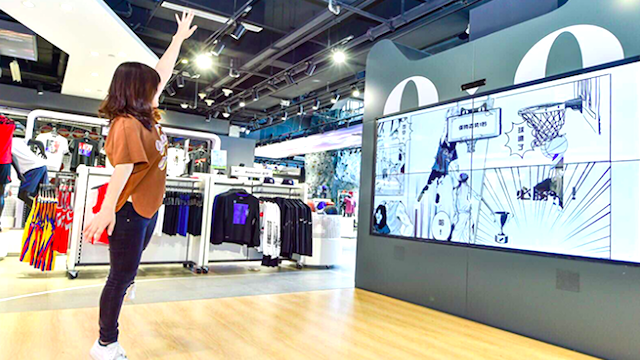
    Tmall and Intersport unveiled a co-branded store in Beijing yesterday, complete with interactive features that offer consumers in China a more engaging and informative shopping experience.

    Under the new name “Tmall x Intersport,” the two-story, 1300sqm space that sits in Beijing’s tourist hotspot Qianmen has been transformed into a futuristic megastore. The revamp underscores that more global brands are recognising the power of New Retail—tech-driven retail model pioneered by Alibaba that captures the best of online and offline shopping experiences.

    “We believe Tmall is the ideal partner in our endeavour to further our engagement with Chinese consumers by providing them the best-quality and most-fashionable sports goods in the market,” said Victor Duran, CEO of the Switzerland-based sportsgoods retailer Intersport.

    Established in 1968, Intersport has more than 5000 branches in 44 countries. It sells sports brands such as Nike, Puma, Reebok, Adidas, North Face and Dynatour. Intersport made its foray into China in 2013 and opened its Tmall flagship store in September 2016.

    “These new in-store technologies provide consumers in China an unprecedented shopping experience that is both entertaining and educational so they can have fun while shopping for the exact products that meet their unique demand,” the CEO said.

    Currently, Intersport has 24 stores in China with the goal of expanding to at least 100 – a combination of larger flagship stores in major cities and smaller specialty stores – during the next couple of years. “It makes sense to have Tmall technologies to be the link to connect all the stores together,” Duran said.

    New Retail is the new solution

    Many industry watchers have pointed to New Retail as the solution for brick-and-mortar retailers feeling the squeeze from e-commerce. By harnessing engaging technologies, store owners can attract more customers through both online and offline channels. Moreover, these technologies can generate insights to help businesses gain a more-precise view of China’s market trends and customer preferences.

    “We are excited to see an extensive range of Tmall’s New Retail technologies and features under one roof in Intersport’s store,” said Jessica Liu, president of Tmall Fashion and Luxury. “What’s even more encouraging is to see our merchants embracing the New Retail concept and exploring its potential. When customers try out these features firsthand, we are confident that they will see the convergence of online and offline shopping as the future of retail.”

    The Tmall and Intersport store is the latest example of how Alibaba’s New Retail technology is helping brands build up and reimagine their business in China since the push began in late 2015. To date, Tmall Fashion has collaborated with over 400 brands, including top names such as Burberry and Zara, and upgraded more than 50,000 storefronts all over China. Liu said the goal is to increase the collaboration to 1000 brands and help digitise 200,000 storefronts nationwide in the next year.

    Educate your customers

    At the grand reopening yesterday, customers were welcomed by an array of state-of-the-art technologies and augmented reality-powered interactive games. For example, the Smart Shelf and the Smart Shoe Mirror can instantly tell customers all the information they need about a certain shoe they pull from the shelf. This way, the customer can make a more-informed decision on whether or not the products fit their individual demands.

    Education on how a product suits an individual’s needs is an especially crucial element in the sportswear and gear market in China, said Tom Birtwhistle, director of China digital strategy at PricewaterhouseCoopers.

    With a government-led mandate to become more physically fit, and as China gears up to host the 2020 Summer Olympic and the 2022 Asia Games, Chinese customers are becoming more interested in adopting an active lifestyle, he added.

    “Chinese consumers are massively curious in learning about new brands and products. For new sports they want to be educated on the activity and understand how technical features can enhance their performance,” said Birtwhistle.

    His research indicates growth in the athletic fashion category is outpacing China’s overall fashion market. The segment is forecast to see 9 per cent growth annually in sales between 2017 to 2020, versus just 4 per cent for men’s and women’s fashion.

    At the smart megastore, shoppers can also get wardrobe tips from an AI Shopping Assistant – an interactive mirror that recommends related accessories or items that complement the article of clothing they are trying on.

    Can’t find what you want in the store? No problem. The megastore is equipped with Cloud Shelf technology, a virtual shelf that quadruples the volume and production selection customers can choose by simply tapping on the touchscreens, according to Tmall.

    A 24-hour interactive window display at the store’s main entrance means people can shop at the megastore around the clock. By using motion-sensor technology, the giant screen wall can distinguish the gender and approximate age of the passersby and recommend the best type of shoes for that person.

    Those who don’t want to lug heavy shopping bags or bulky shoe boxes around the streets of Beijing can opt to have their purchases delivered to a designated address anywhere in the country. Cainiao, Alibaba’s logistics service, can make the delivery in as quickly as two hours for locations within 5km of the store. Next-day delivery is also available for locations outside of Beijing.

    By scanning the QR code of a product on their phones, customers of the Tmall and Intersport store can also place the products in their Virtual Shopping Bag, so they can still buy the item online after they leave the store.

  • Alibaba promises faster deliveries to US

    Alibaba promises faster deliveries to US

    Cainiao, Alibaba Group’s logistics affiliate, has agreed to work with the US Postal Service to speed delivery of merchandise ordered by US consumers on Alibaba’s international online shopping platforms.

    Under a Memorandum of Understanding (MoU), Cainiao and the US’s national mail carrier agreed to collaborate on the development of enhanced shipping solutions for cross-border eCommerce. In addition to helping provide more efficient shipping channels into the US for Chinese merchants and manufacturers selling on Alibaba’s AliExpress global-shopping website, the USPS will also work with Cainiao to expand its worldwide shipping capabilities, especially in South America, according to a press release.

    The global B2C cross-border eCommerce market is expected to grow from $230 billion in 2014 to $1 trillion in 2020, according to a report from global consulting firm Accenture and AliResearch, Alibaba Group’s research arm. To reduce barriers to shipping small parcels quickly on a global scale, Alibaba and related companies have been working with several national mail carriers including Singapore Post and Spanish Post.

    Cainiao VP Wan Lin cited the agreement with the USPS as “a key part of Alibaba’s globalisation strategy and our vision to enable consumers around the world to enjoy the convenience and benefits of e-commerce”.

    With more than 600,000 employees, the USPS is the leading postal and shipping service provider in the US, the world’s biggest consumer market.

    Cainiao and the USPS said by working together they are aiming to make it easier and more efficient for Chinese companies to sell and deliver goods directly to the homes of US consumers by improving the way goods purchased from China are processed and handled during international shipping.

    “As cross-border eCommerce grows rapidly, it is critical that we evolve shipping services to the next level, with shorter delivery times and easier methods to track a shipment,” said Wan in a statement.

    “The collaboration between Cainiao and USPS will enable us to create new solutions and ultimately improve the overall customer experience.”

  • Tmall.com launches massive grocery campaign

    Tmall.com launches massive grocery campaign

    Tmall.com has launched a RMB 1 billion (US$161 million) online grocery promotional campaign targeted at Beijing users.

    The Alibaba eCommerce subsidiary has teamed up with Cainiao, the logistics affiliate of Alibaba Group, to offer same-day delivery services to Beijing city residents.

    Online grocery shopping is a rapidly growing eCommerce segment and a strategic area of interest for Alibaba Group. The convenience of online grocery shopping has already drawn in millions of users. According to Kantar Worldpanel, China’s FMCG (fast moving consumer goods) eCommerce penetration rate was 36 per cent in 2014, while McKinsey says 40 percent of Chinese consumers have bought food online.

    Tmall Supermarket will run its promotion three times a day, allowing Beijing-based Internet users a chance to win ‘red packets’ that subsidise their grocery purchases. The promotion will end on July 31.

    Beijing residents who order from Tmall’s supermarket before 11 am will be eligible for same-day delivery service. In the future, Tmall Supermarket and Cainiao plan to roll-out same-day delivery services to Shanghai and other Chinese cities.

    Jeff Zhang, president of Alibaba Group’s China Retail Marketplaces, said Tmall Supermarket will draw on Alibaba Group’s complete eCommerce ecosystem – including Alibaba’s advantage in logistics, strength in online payments, big data and cloud computing, to bring consumers the most convenient and secure online shopping experience for quality products.

    Tmall Supermarket was established in 2012 and provides a one-stop shopping solution for Chinese users looking to purchase authentic food products, cosmetics, beverages, snacks and imported items. In the past year, Tmall Supermarket’s Beijing area GMV soared more than 700 per cent with 90 per cent of consumers shopping on their mobile phones.