Tag: calling

  • OCBC Enhances Customer Security with Innovative In-App Calling Feature to Combat Rising Fraud

    OCBC Enhances Customer Security with Innovative In-App Calling Feature to Combat Rising Fraud

    Singapore’s OCBC bank is set to introduce a secure in-app calling feature across its retail and business banking platforms. This move comes as a response to a significant increase in scams involving impersonation and a decreasing faith in traditional phone-based verification systems.

    Introducing In-App Calls

    OCBC’s new in-app calling feature will be incorporated into its digital banking apps. This feature offers customers a safer, more convenient way of contacting the bank’s customer service center, particularly for those travelling overseas. Users will be able to avoid international dialing charges thanks to this feature.

    The feature will be made progressively available to retail customers starting November 2025, following its initial rollout to corporate users via the OCBC Business app in June 2025. This development is highly relevant considering the bank handles over 8,000 calls from overseas customers each month.

    Moving Away from SMS OTPs

    As the entire industry begins to shift away from SMS One-Time Passwords (OTP), OCBC recognizes the increasing threats posed by scammers who exploit phishing techniques and social engineering attacks. The availability of personal data online has also compromised the effectiveness of traditional security questions.

    To provide a more secure communication channel, OCBC will route calls directly through its authenticated app environment. This environment is secured using biometrics or access credentials and a digital or hard token. Security questions will only be used for high-risk transactions.


    Expansion to Outbound In-App Calls

    OCBC plans to extend the in-app calling feature to outbound calls by the first half of 2026. This will allow contact center and anti-fraud teams to connect with both retail and business customers via the secure app environment.

    Impersonation scams have become a significant concern in Singapore, especially those involving government officials. The use of in-app calls can help users distinguish between legitimate outreach and fraudulent calls as they are significantly more challenging for scammers to mimic.

    Enhancing OCBC’s Digital Security Framework

    The introduction of the in-app calling feature is part of OCBC’s wider strategy to bolster trust and safety in digital banking. This strategy spans across retail, SME, and corporate segments.

    As scams become more sophisticated and tactics more inventive, banks in Singapore are speeding up their transition away from vulnerable verification methods. They are working towards strengthening secure, app-based ecosystems to ensure customer safety and trust.

    Questions & Answers

    What is the purpose of OCBC’s new in-app calling feature?
    The new in-app calling feature is designed to provide customers with a safer and more convenient way to contact the bank’s customer service center, particularly for those travelling overseas.

    When will the in-app calling feature be available to retail customers?
    The in-app calling feature will be made progressively available to retail customers starting from November 2025.

    How does the in-app calling feature enhance security?
    The in-app calling feature enhances security by routing calls directly through an authenticated app environment, secured using biometrics or access credentials and a digital or hard token. Security questions will only be used for high-risk transactions.

  • Vodafone to sell New Zealand subsidiary for $2.23b

    Vodafone to sell New Zealand subsidiary for $2.23b

    Vodafone Group has arranged to sell a 100% stake in Vodafone New Zealand to a consortium of investors for NZ$3.4 billion ($2.23 billion).

    The consortium comprising New Zealand infrastructure investment company Infratil and Canadian investment company Brookfield Asset Management have executed a conditional agreement to buy out Vodafone’s New Zealand subsidiary.

    Under the agreement, Infratil and Brookfield will each contribute NZ$1.03 billion towards the purchase price, with the remainder to be funded through debt reduction and equity conversion.

    Vodafone New Zealand is the market’s largest mobile operator and second largest retail fixed broadband provider, with over 1,500 mobile sites and over 10,000km of cabling nationwide. The operator generated revenue of NZ$2 billion for the financial year ending in March.

    Pending approvals from New Zealand’s Overseas Investment Office and Commerce Commission, the merger is expected to close by the end of August.

    Upon completion of the merger, Vodafone Group and the new owners of Vodafone NZ plan to enter a multi-year partnership that will cover arrangements such as preferential roaming deals.

    The partner agreement is also expected to give Vodafone NZ access to Vodafone Group’s global IoT platform and centralized procurement agreements.

    Vodafone NZ CEO Jason Paris described the agreement as to the “best of both worlds” for its customers.

    “We’ve got the backing of two new world-class and long-term investors plus we can continue to tap into Vodafone’s global expertise, including all the services our customers value such as global roaming, global procurement, and the world’s largest IoT platform,” he said.

    “The key things will stay the same – our strategy, our people, our management team, our brand, and our ability to tap into Vodafone’s global products and services. What changes is our owners, who back our ambitious plans for New Zealand and who share our views on the importance of creating sustainable, long-term profitability in order to reinvest in the future.”

  • Google Duo group video calling goes live

    Google Duo group video calling goes live

    Google Duo, the video chat mobile app developed by the Mountain View company, received a couple of important updates in the last year or so. Among them, group video calling was added to the app less than a month ago, but it was only made available in a few countries.

    Starting today, Google has expanded the availability of the group video calling feature to more countries, including the United States, Canada, and India. Even Google seems to confirm the new feature is available in “select regions,” but no list of markets is available yet, so we’ll have to rely on reports coming from users.

    With group video calling, Google Duo users will be able to select up to four contacts that they can call simultaneously. Simply swipe down and press the “Create Group” option in order to start adding the contacts you want to call.

    Although the feature only supports four contacts in a group call, Google plans to slowly increase the number of people that you can call simultaneously with Google Duo, although no timeframe is available at the moment.

  • Telecom Fiji to deploy 10G PON

    Telecom Fiji to deploy 10G PON

    Telecom Fiji has announced it will deploy the first all-optical 10G PON fiber network in the South Pacific, in partnership with Huawei.

    The operator plans to use the network to deliver gigabit network services for both households and enterprise customers.

    Huawei has been contracted for the deployment, which is aimed at enhancing the operator’s customer experience while significantly reducing networks operations and maintenance costs.

    “By adopting this 10G PON solution, the competitiveness of our fixed broadband in Fiji has now significantly enhanced… We are fully confident to maintain our technological leadership in the South Pacific island markets,” Telecom Fiji general manager of sales and marketing Joseph Naua said.

    “We are also proud to work in partnership with Huawei on the deployment of the 10G PON network. At present, the 10G PON network deployment is moving on a fast track, and Huawei will continue to invest and innovate in the ultra-broadband domain.

  • 5G Apple iPhone likely to appear next year

    5G Apple iPhone likely to appear next year

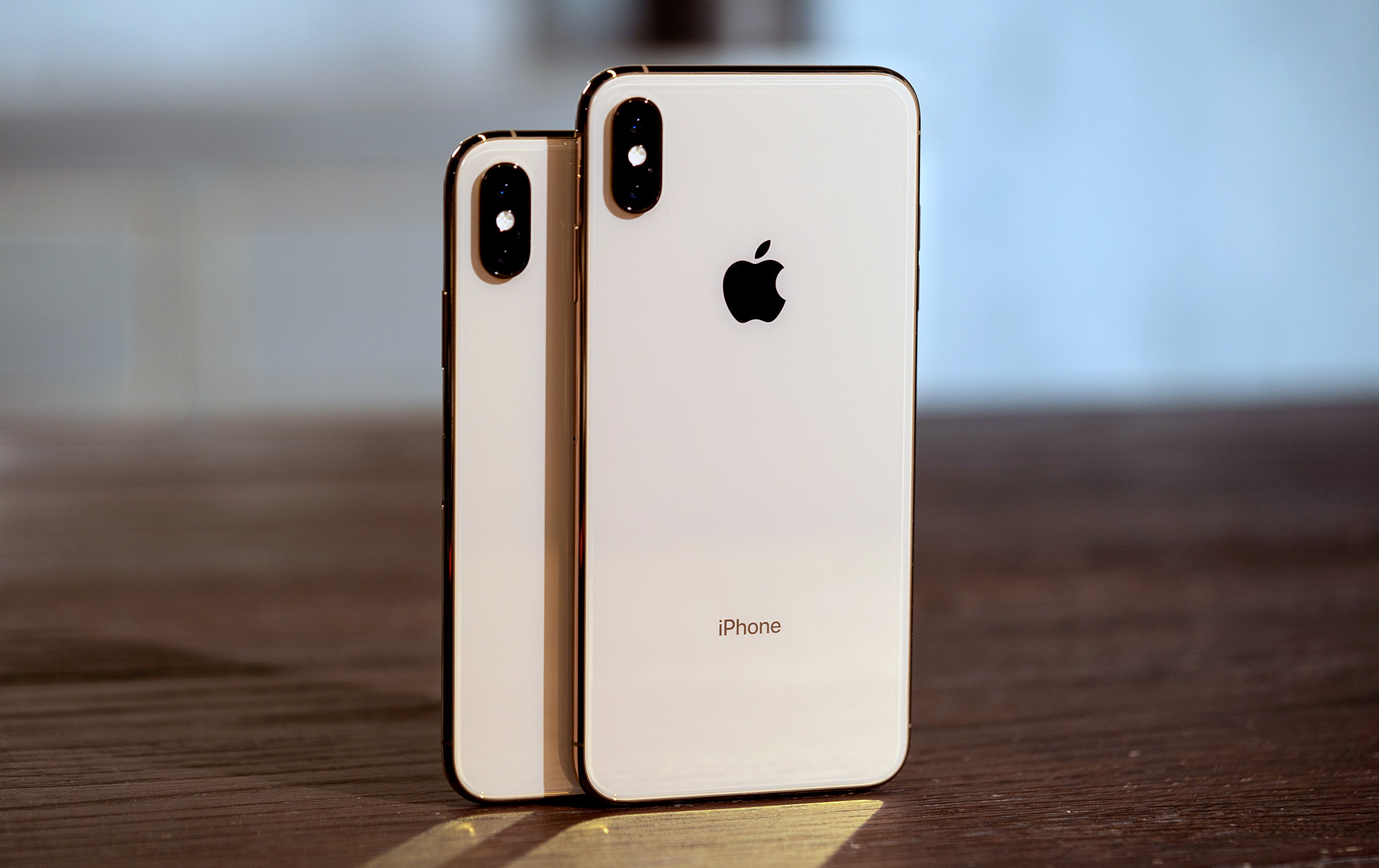
    With several Android manufacturers releasing 5G enabled phones this year (and technically the Moto Z3 with the 5G Moto Mod is the first), Apple iPhone users might wonder when they will have the opportunity to buy a 5G iPhone. We don’t expect it to happen this year, and one analyst said earlier this month that it won’t happen next year either. Timothy Arcuri, who hangs his hat at the Union Bank of Switzerland (UBS), believes that Intel won’t have its 5G modem chip available in time for Apple to introduce a 5G phone in 2020.

    Sure, Apple could turn to Qualcomm to provide it 5G modem chips, but the two firms have been battling each other in court over numerous issues ranging from patent infringement to anti-trust violations. A new trial will start soon in San Diego with Apple and its contract manufacturers seeking billions of dollars from the chip maker. Besides, Qualcomm reportedly refused to sell its 4G LTE modem chips to Apple for the iPhone XS and iPhone XR.

    Those familiar with the situation say that Intel has been missing deadlines as it develops the XMM 8160 5G modem chip. In order for Apple to unveil a 5G iPhone next September, Intel would have to deliver sample parts to Cupertino early this summer and a final version of the chip’s design by early next year. But Intel says that it is fully capable of delivering its 5G modem chip to Apple in time for a 5G iPhone to be launched in 2020.

    Last November, Intel said that it expected to start shipping the XMM 8160 5G modem chip during the second half of this year, and it would appear as though no changes have been made to those plans. In a statement emailed to Fast Company, Intel wrote, “As we said in November 2018, Intel plans to support customer device launches in 2020 with its XMM 8160 5G multimode modem.”

    From 2011-2015, Apple used only Qualcomm modem chips for the iPhone. In 2016 and 2017, both Qualcomm and Intel supplied Apple with modem chips for the iPhone. Last year, with Apple and Qualcomm suing each other, Apple stuck with Intel for the part and expects to do the same this year. Apple is known to be a rather demanding customer (Intel has had three project managers handle its modem business with Apple thus far), and the profits from selling Apple these chips is not overwhelming. But Intel needs the revenue to justify the expense of building 10nm and 7nm fabrication platforms in order to keep up with TSMC. The Intel 7560 modem chips used on the 2018 iPhone models were manufactured using the 14nm process. This means that newer modem chips will contain more transistors than older versions, allowing them to have improved performance and consume less power. But this can also backfire as far as Intel is concerned. As part of its deal with Intel, Apple gets to be first in line to have its chips roll off the assembly line. That means other chip orders that might be more profitable to Intel must wait until Apple’s order is completed.

    Other chip makers like Samsung and MediaTek are apparently not being considered. UBS’ Arcuri says that if Intel’s chip isn’t ready for next year as he believes, neither company would be able to fulfill the order in time to deliver the goods for 2020. Meanwhile, rumors that Apple is designing its own 5G modem chips are apparently true. The company reportedly has 1,000 to 1,200 engineers developing such a component. Additionally, Apple has allegedly hired RF engineers from both Qualcomm and Intel who are said to be toiling away in San Diego. Any modem chip designed by Apple would have to be manufactured by a company with production capabilities like TSMC or Samsung. A self-designed 5G modem chip for the iPhone would probably not be found on the device until 2021 at the earliest.

  • Skype automatically answers calls on Android due to a bug

    Skype automatically answers calls on Android due to a bug

    If you’re using Skype for your day to day communication with friends, co-workers or business partners, there’s a high chance that you’ve been affected by a nasty bug that makes the app automatically answer all calls on Android devices.

    Microsoft is probably the only one that can tell for sure when exactly the issue started to manifest for the first time, but reports go back as far as January, probably soon after the developers updated the app. Sadly, it appears that the issue now affects even more users, as we’re seeing lots of recent reports posted on Microsoft’s support forum.

    For the time being, there’s no workaround to prevent Skype from answering calls that you want to ignore, so the only way to avoid the issue is to uninstall the app until Microsoft fixes it. Not even having the “Answer incoming calls automatically” option disabled will not stop Skype from doing just that.

    The good news is Microsoft has already identified the issue and managed to patch it, but only in the latest Skype preview app. If you want to continue to use the app without being affected by the bug, you can download the beta until the final version gets updated later this month.

  • SmarTone launches multi-device Wi-Fi calling

    SmarTone launches multi-device Wi-Fi calling

    Hong Kong’s SmarTone has introduced Wi-Fi calling for multiple devices using equipment provided by Ericsson.

    The new Wi-Fi calling service allows customers to pair up to five personal devices that lack SIM cards – including tablets, computers and smart watches – to enable operator voice calls via Wi-Fi connections.

    Devices can be located across different Wi-Fi access points, and calls can be seamlessly transferred to a user’s smartphones. The service also supports multiple simultaneous calls using the same number.

    Ericsson has adapted its existing Wi-Fi calling offering to support multi-device functionality. The company is offering an end-to-end platform comprising the evolved packet core, IMS, user data management and OSS/BSS.

    “SmarTone has always focused on delivering outstanding experience to our customers. With the trend of more and more customers using multiple devices nowadays, we offer Wi-Fi calling for multi-device service to our customers,” SmarTone CTO Stephen Chau said.

    “We believe the new capability to extend our voice service to devices without a SIM-card is adding genuine convenience to our customers.”

    A recent Ericsson ConsumerLab survey of basic Wi-Fi calling users in the US showed that four in five are very satisfied with the service. Around one in three international smartphone users are aware of the technology, Ericsson said, and of these seven in 10 find the prospect appealing.